Mastering Your Kitchen: The Benriner Mandoline, Turning Slicer, and Essential Safety
The culinary world is filled with innovative tools designed to make meal preparation faster, easier, and more enjoyable. Among these, the mandoline slicer stands out for its ability to produce consistently thin, uniform cuts of vegetables and fruits. However, with great efficiency often comes the need for heightened awareness and safety. This article dives deep into two popular kitchen gadgets – the Benriner mandoline and the Benriner turning slicer – offering insights into their best uses, advantages, potential pitfalls, and, crucially, how to operate them safely, especially with the indispensable addition of kevlar gloves.
My journey into the nuances of mandoline safety took an unexpected turn after sharing a recipe for summer squash spaghetti. A reader’s excited, yet slightly ominous, message – “I just ordered the mandoline! My husband is shaking his head. Just wait!” – immediately painted a vivid, concerning picture in my mind: kitchen accidents, worried spouses, and perhaps even an emergency room visit. This lighthearted comment served as a stark reminder of the inherent risks associated with such sharp kitchen tools and underscored the absolute necessity of discussing safety protocols alongside their culinary benefits. It became clear that providing comprehensive guidance on these tools was not just helpful, but imperative.
The Versatility of the Benriner Mandoline
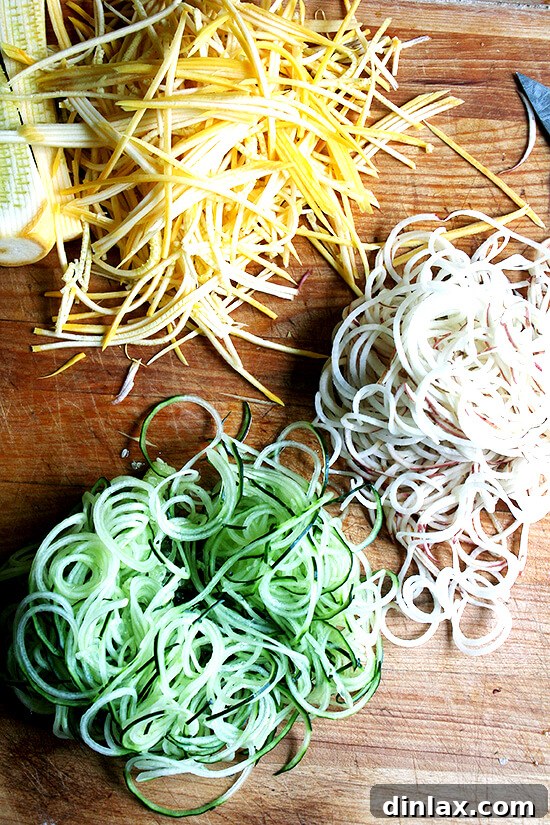
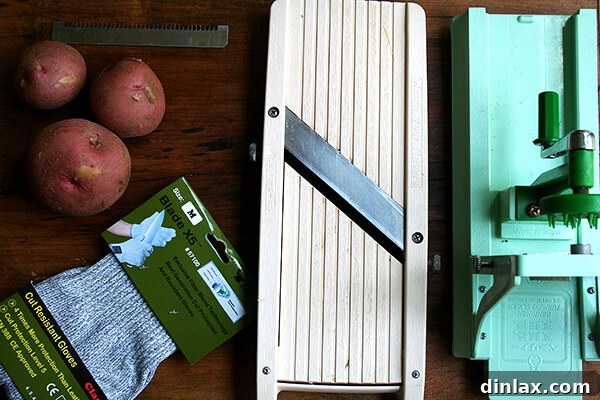
Let’s begin with the star of many kitchens: the Benriner mandoline. Renowned for its precision, this Japanese-made slicer quickly became my preferred tool for achieving those exquisitely long, thin wisps of vegetables, particularly for dishes like the aforementioned summer squash spaghetti. Its design allows for incredible versatility, making it ideal for a multitude of tasks:
- Julienned Vegetables: Effortlessly create perfectly uniform julienne strips of summer squash, cucumbers, carrots, or bell peppers for salads, stir-fries, or garnishes.
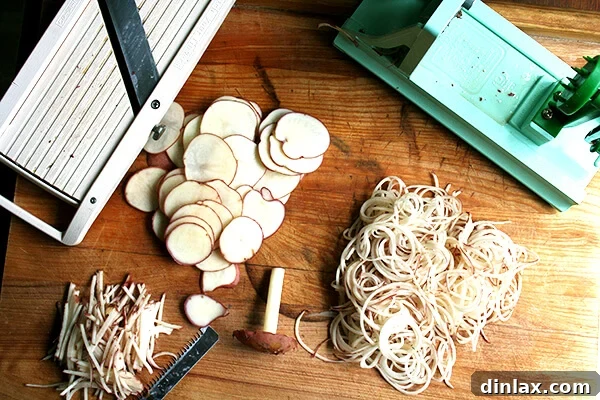
- Perfect Potato Slices: Transform potatoes into paper-thin rounds for homemade potato chips, gratin, or delicate scalloped potatoes. The consistent thickness ensures even cooking every time.
- Delicate Salad Additions: Achieve wafer-thin slices of radishes, kohlrabi, or fennel to add a crisp, elegant touch to any salad without overwhelming other ingredients.
- Onion and Cabbage Prep: Slice onions thinly for caramelizing or pickling, and shred cabbage finely for coleslaw, greatly reducing prep time compared to a knife.
- Adjustable Precision: Unlike many mandolines that stop at quarter-inch or eighth-inch slices, the Benriner can be finely adjusted to produce truly paper-thin cuts. This level of precision is invaluable for professional-looking presentations and delicate textures.
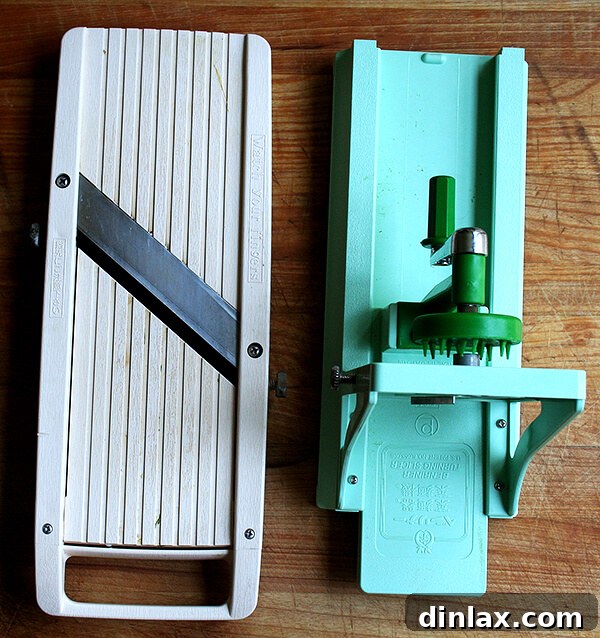
Beyond its cutting prowess, what truly sets the Benriner mandoline apart for home cooks is its thoughtful design. Measuring a compact 13.5 x 6 x 1 inch, it’s remarkably easy to store. This small footprint means it fits snugly against the inside wall of a kitchen cupboard, granting easy access without cluttering precious counter space. This is a stark contrast to older, bulkier mandolines (like one I recall my mother owning), which often come in cumbersome boxes, destined to live forgotten in the basement due to their inconvenient size and storage requirements. Accessibility truly encourages regular use, and the Benriner excels in this aspect.
Addressing the Mandoline’s Limitations and Prioritizing Safety
While the Benriner mandoline is a fantastic tool, it is not without its considerations. To maximize its utility and, most importantly, ensure safety, a few key points must be kept in mind:
1. Secure Placement is Key
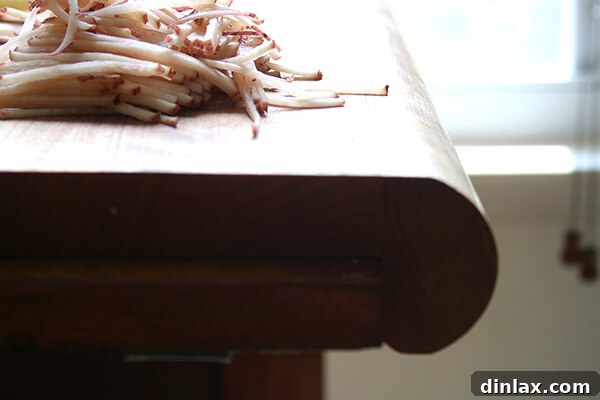
Because the Benriner is a handheld device, it requires a stable base during operation. Without proper anchoring, the tool can slip, leading to uneven cuts or, worse, injury. I’ve found a wooden cutting board with a raised back ledge to be the perfect solution, providing a secure grip against the counter. Other effective methods include bracing it against a kitchen wall (if your counters aren’t excessively deep) or even using a heavy object like a brick to prevent movement. Stability is paramount for controlled slicing.
2. The Imperative of Cut-Resistant Gloves
Perhaps the most critical safety advice for any mandoline user is the acquisition of protective gear. The Benriner, like many traditional mandolines, does not typically come with a robust protective plastic shield, or such shields are often misplaced, rendering the tool dangerously exposed. This design choice, while contributing to its compact nature, increases the risk of serious injury.
This is where kevlar gloves become an absolute game-changer. As a fellow reader, Dee G, wisely commented on the pasta post: “Love my mandoline, and I use it with no fear after purchasing kevlar gloves from Amazon. I could never make the pushing thing work for me and always used my fingers…a dangerous proposition. Those gloves are simply fantastic! And you really only need one, so buy a pair and share with a friend. I promise you’ll use that mandoline much more often!”
Dee G’s advice is spot on. These cut-resistant gloves provide an invaluable layer of protection, instilling the confidence needed to glide vegetables swiftly and efficiently across the razor-sharp blade. The psychological barrier of fear is removed, allowing for more focused and productive slicing. Investing in a pair of kevlar gloves is not just a recommendation; it’s a non-negotiable step for anyone serious about using a mandoline safely and regularly. They transform a potentially intimidating tool into a safe and efficient kitchen workhorse.
3. Not a One-Size-Fits-All Solution
Even with kevlar gloves, the Benriner mandoline isn’t the optimal tool for every cutting task. For instance, attempting to julienne potatoes with the mandoline can be surprisingly challenging. The density and shape of potatoes can make consistent julienning difficult and sometimes frustrating. This limitation highlights the need for other specialized tools that can handle specific vegetable characteristics more effectively.
Introducing the Benriner Turning Slicer: A Complementary Kitchen Powerhouse
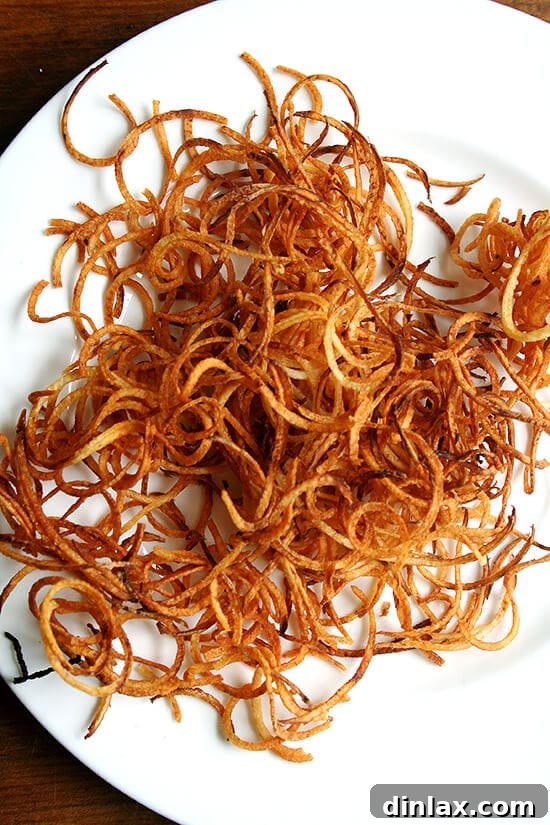
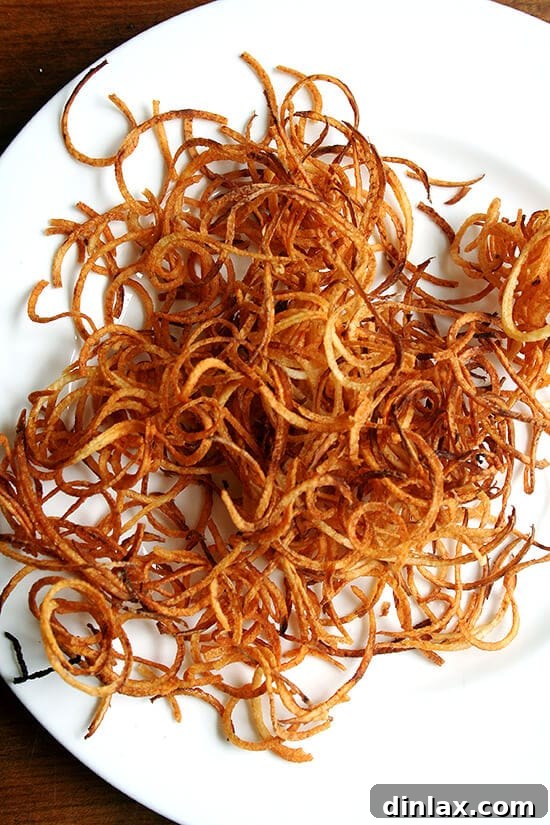
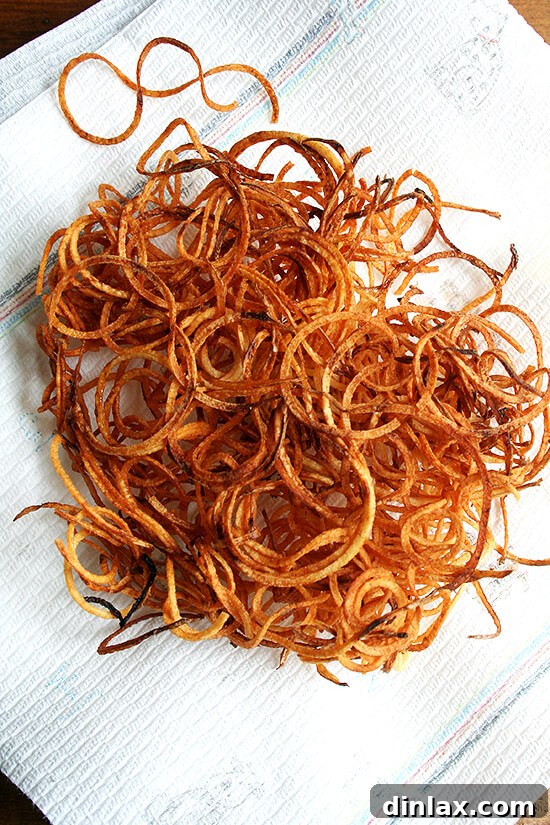
This is where the Benriner turning slicer shines, carving out its own unique and invaluable niche in the kitchen. Over time, I’ve discovered its distinct advantages, especially for tasks where the mandoline falls short. For instance, in contrast to the mandoline’s struggle with julienning potatoes, the turning slicer performs this task with magical ease, effortlessly transforming a single potato into a beautiful, continuous web of thinly sliced strands – perfect for making homemade frites or an impressive frites nest.
The turning slicer excels at creating long, continuous strands or spirals of vegetables, making it ideal for:
- Spiralized Vegetables: Produce vegetable “noodles” from zucchini, carrots, or beets for healthy pasta alternatives or vibrant salads.
- Garnishes: Create elegant, long ribbons of cucumber or radish for sophisticated plating.
- Unique Textures: Its ability to produce different shapes and lengths opens up new culinary possibilities for texture and presentation.
- Enhanced Safety: For certain vegetables, particularly those that are small or oddly shaped, the turning slicer can be a much safer tool than a traditional mandoline. Its design often keeps fingers further away from the blade, providing peace of mind for those who might be apprehensive about using a mandoline.
If the thought of using a mandoline, even with gloves, still makes you anxious, the turning slicer offers a fantastic, safer alternative for many slicing needs. It’s not just a secondary gadget; for specific applications and for safety-conscious cooks, it can become a primary tool.
Making Your Choice: Mandoline vs. Turning Slicer (or Both!)
Ultimately, the choice between a Benriner mandoline and a turning slicer, or indeed owning both, depends on your specific cooking needs and comfort level. If your goal is primarily to achieve consistently thin, uniform slices for gratin, chips, or delicate salads, and you’re committed to using proper safety measures like kevlar gloves, the Benriner mandoline is an exceptional choice. Its compact size and unparalleled precision make it a workhorse.
However, if you frequently prepare dishes that benefit from long, continuous strands, spiralized vegetables, or unique garnishes, the turning slicer is an invaluable addition. It excels where the mandoline might struggle and offers a notably safer operation for certain vegetables. For those who prioritize safety above all else or find mandolines intimidating, the turning slicer presents an excellent, less daunting option.
My recommendation? If your kitchen has the space for another specialized gadget, the Benriner turning slicer absolutely deserves a spot. It complements the mandoline beautifully, filling gaps in its capabilities and offering a safer, more efficient solution for specific tasks. When combined with the Benriner mandoline and, crucially, a pair of kevlar gloves, you’ll be equipped with a formidable arsenal for precise, safe, and efficient vegetable preparation.
Recipe Spotlight: Cucumber, Feta, and Mint Salad
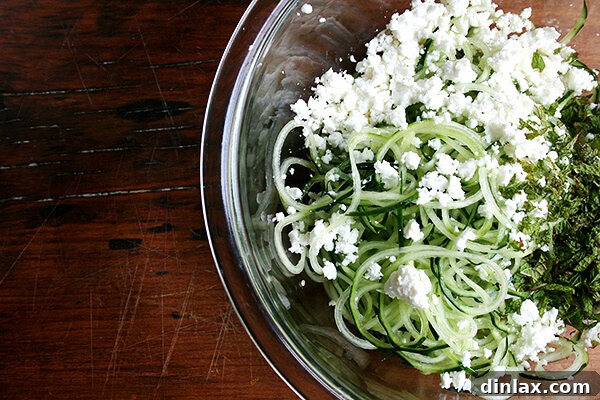
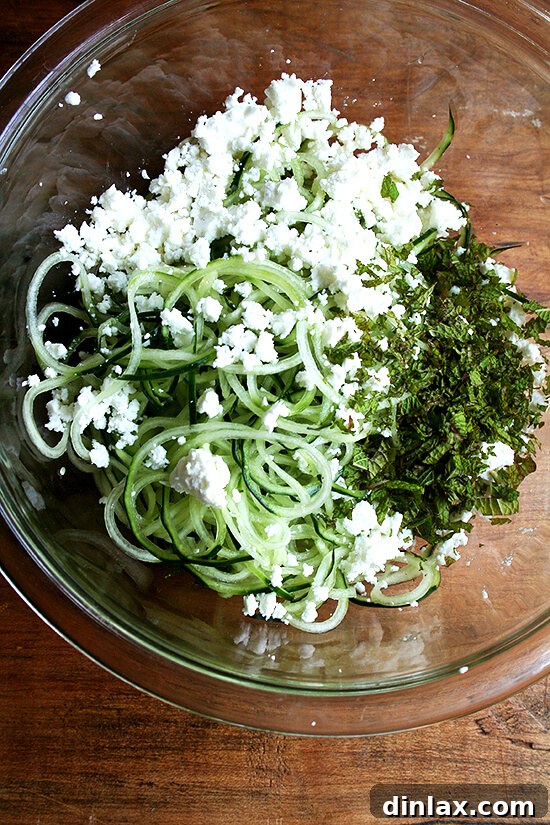
This vibrant and refreshing salad is the perfect accompaniment to grilled meats or fish, showcasing the delicate textures achievable with precise slicing. Here, we can utilize either the mandoline or the turning slicer for the cucumber, adapting based on desired presentation and safety preference.
Cucumber, Feta and Mint Salad
Author: Alexandra Stafford at alexandracooks.com
Total Time: 10 minutes
Ingredients
- 2 medium cucumbers, julienned, diced, or thinly sliced into rounds
- 1/2 cup crumbled feta cheese
- 1/4 cup fresh mint, thinly sliced
- 2 tablespoons extra-virgin olive oil
- 2 tablespoons white balsamic vinegar
- Salt (to taste, optional)
Instructions
- Prepare your cucumbers using your preferred method:
- Using a Mandoline: For consistent, thin rounds or julienne strips. Always use kevlar gloves for safety.
- Using a Turning Slicer: For long, elegant strands. Note: If using a turning slicer, the strands can be quite long and potentially awkward to serve. You may want to gently chop the cucumber “nest” into shorter, more manageable pieces before combining with other ingredients.
- Using a Knife: For those without a slicer, simply thinly slice or dice the cucumbers by hand.
- In a medium bowl, combine the prepared cucumbers, crumbled feta cheese, and thinly sliced mint.
- In a small bowl, whisk together the extra-virgin olive oil and white balsamic vinegar.
- Pour the dressing over the cucumber mixture. Toss gently to ensure all ingredients are well coated.
- Taste the salad and season with salt if necessary. Often, the feta cheese provides enough salinity, so additional salt may not be needed. Serve immediately for best freshness.
Prep Time: 10 minutes
Visual Guides: See the Tools in Action
To further illustrate the techniques and safety considerations discussed, here are some helpful video demonstrations: