In today’s fast-paced world, finding wholesome, convenient snacks can feel like a challenge. Many store-bought options are laden with hidden sugars, artificial ingredients, and preservatives. This quest for healthier alternatives often leads us back to our kitchens, armed with a desire to understand exactly what goes into our food. My own journey recently led me to a startling discovery about a common ingredient and, ultimately, to perfecting a recipe for homemade no-bake granola bars that are not only incredibly delicious and chewy but also packed with genuinely healthful ingredients.
The Unsettling Truth About Sweetened Coconut
My culinary awakening began innocently enough, during a week of Passover when my inbox delivered a mouth-watering image of macaroons. As I delved into the recipe and comments, one particular remark jumped out at me, challenging my long-held assumptions about sweetened coconut: “I can’t fathom why you would want sweetened coconut for anything, it’s full of preservatives and has the consistency of wet shredded Styrofoam. There’s sugar in the recipe anyway – do yourself a favor and get unsweetened coconut, it’s already sweet and delicious.”
While the tone was perhaps a tad blunt, the message resonated. I had always used sweetened shredded coconut in my beloved granola recipe, a staple I hadn’t considered altering in years. But the comment spurred me to investigate. A quick glance at the ingredients list on my pantry’s bag of sweetened shredded coconut revealed: desiccated coconut, sugar, water, propylene glycol, salt, and sodium metabisulfite (to retain color).
Decoding Propylene Glycol: A Closer Look at Food Additives
The term “propylene glycol” immediately caught my eye. A quick search unveiled it as a “synthetic liquid substance that absorbs water and is used by the chemical, food, and pharmaceutical industries as an antifreeze when leakage might lead to contact with food.” The Food and Drug Administration (FDA) classifies it as an additive “generally recognized as safe” (GRAS) for use in food. This classification, however, immediately raised a red flag.
While “generally recognized as safe” sounds reassuring on the surface, it implies a level of acceptance rather than a guarantee of outright health benefit or complete inertness. For an occasional treat like a macaroon or a slice of quick bread, the minuscule amount of propylene glycol might truly be negligible. But for an ingredient consumed nearly every morning in a bowl of granola? This phrase prompted a deeper consideration. The absence of a “contains 2% or less of…” clause before the ingredient further fueled my concern. My personal philosophy leans towards consuming ingredients that are unequivocally beneficial or neutral, not merely “generally recognized as safe,” regardless of the quantity. This realization ignited a mission to clean up my pantry, starting with coconut.
From Granola to Granola Bars: A Journey of Healthier Substitutions
My first step was to reformulate my daily granola. I replaced the sweetened shredded coconut with unsweetened flaked coconut—a single-ingredient product: natural unsulfured coconut. The results were astounding. The granola browned perfectly, cooked in the same timeframe, and clustered beautifully upon cooling. When enjoyed plain or with milk, its sweetness was virtually identical to the original. Paired with plain yogurt, a touch of honey easily balanced the slightly reduced sweetness. This effortless substitution proved that healthier choices don’t necessarily mean sacrificing flavor or texture. (A quick note of caution: while this swap was seamless for me, unsweetened flaked coconut may not always be a direct substitute for sweetened shredded coconut in all recipes. Always exercise a little care and judgment when experimenting.)
With my granola recipe successfully updated, my attention turned to my granola bars, which also relied on sweetened shredded coconut. Before I could even begin my own experiments, a serendipitous conversation with a friend at the park introduced me to an entirely new recipe. Her family had crowned her a culinary goddess for consistently producing chewy, Quaker Oat-like granola bars at home, often making double batches several times a week. This was exactly the kind of inspiration I needed.
The Quest for the Perfect Chewy No-Bake Bar
I was eager to try her recipe, and I’m incredibly glad I did. These granola bars didn’t just hold together at room temperature—a common pitfall for many no-bake creations—they also achieved the elusive, super-chewy texture reminiscent of the best store-bought varieties. This was a feat I had previously believed only achievable through a complex array of artificial ingredients. My goal became clear: develop a truly healthy, incredibly chewy no-bake granola bar that required no processed cereals and no candy-like additions. It might sound “boring” to some, but to me, it means peace of mind and delicious satisfaction whether I grab one in the morning, at noon, or even for a late-night snack.
My journey involved four distinct rounds of trial and error, meticulously documented below, leading to what I consider the ideal granola bar. The recipe evolved significantly, transforming from one primarily using instant oats and Rice Krispies cereal to a more wholesome blend of oats, sliced almonds, unsweetened coconut, and wheat germ. The beauty of this recipe lies in its adaptability; you can easily customize the dry mixture with your favorite additions like dried fruit, various nuts, seeds, wheat bran, oat bran, or even a sprinkle of chocolate chips. While I’ve settled on my preferred “glue” combination of coconut oil, brown rice syrup, and Lyle’s Golden Syrup, there are also viable alternatives for these binding agents.
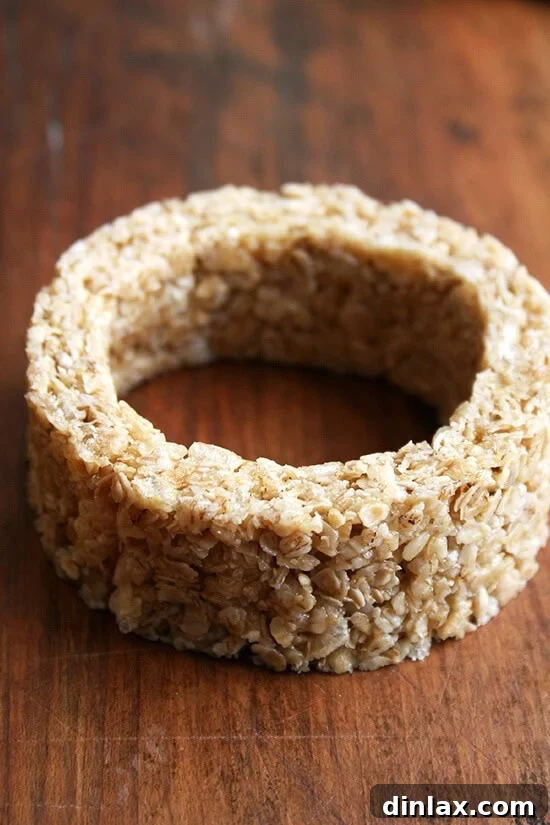
I once thought I had found the perfect granola bar when it arched into a backbend on my kitchen table. But these new bars? They’re practically ready for Cirque du Soleil! They demonstrate an unparalleled flexibility and resilience that truly sets them apart.
Important Note: Not all sweetened shredded coconut contains propylene glycol. Always check the ingredient list on your bag before making a blanket dismissal. For instance, Trader Joe’s brand does not include it.
The accompanying photos throughout this post showcase variations from my experimental rounds, illustrating the journey to the final recipe:
Above: Granola bars from Round 1, showcasing the initial texture.
Above: My preferred replacement for sweetened shredded coconut: natural, unsweetened flaked coconut.
Above: A delightful mix of oats, unsweetened coconut, sliced almonds, wheat germ, and crispy brown rice cereal – a snapshot from an earlier round of experimentation.
Above: Comparing traditional Rice Krispies with Crispy Brown Rice cereals, evaluating their impact on texture and healthfulness.
Above: The essential components for the “glue” that binds these bars together – a crucial element for their signature chewiness.
Above: The binding mixture, expertly combined and ready to transform dry ingredients.
Above: The “glue” bubbling gently on the stovetop, indicating it’s reaching the perfect consistency.
Above: Crispy Brown Rice cereal, a fantastic alternative to traditional Rice Krispies, offering satisfying texture without additional sweetness.
Above: The delightful mix of dry ingredients coated with the sweet, sticky “glue.”
Above: The granola bar mixture spread evenly in the prepared pan, ready for compaction.
Above: The crucial step of pressing down the mixture tightly to ensure well-formed, cohesive bars.
Above: The mixture firmly pressed into the pan, patiently waiting to set before cutting.
Above: A close-up of the finished, perfectly set granola bars, ready to be enjoyed.
Above: Another angle showcasing the enticing texture and wholesome ingredients of the final granola bars.
Above: The neatly cut bars, demonstrating their integrity and readiness for snacking.
The Four-Round Experiment: Perfecting the Granola Bar Recipe
Before diving into the detailed breakdown of my experimentation, a disclaimer: while the list of ingredients might seem daunting at first glance, the truth is that only brown rice syrup can sometimes be tricky to find. Furthermore, the beauty of this recipe lies in its flexibility—the dry ingredients are highly customizable, and you absolutely don’t need to include processed cereals. You can truly tailor these to your preference!
Here’s how the recipe evolved through four distinct rounds of trial and error:
Round 1: Establishing the Base and Identifying Initial Concerns
The original recipe I started with provided a simple framework:
- Dry ingredients: 2 cups quick oats, 1 cup crispy rice cereal
- Wet ingredients: 1/4 cup each of butter or coconut oil, brown rice syrup, and honey or brown sugar
- Flavorings: salt, vanilla, and a few tablespoons of raisins.
For my first attempt, I made a few modifications:
- Dry ingredients: 2 cups quick oats, 1 cup Rice Krispies cereal.
- Wet ingredients: 1/4 cup coconut oil, 1/4 cup brown rice syrup, 1/4 cup golden syrup*.
- Flavorings: 1 teaspoon kosher salt (increased from 1/8 tsp for better balance), 1 teaspoon vanilla. I omitted raisins entirely, as my eldest child has an aversion to them.
*My discovery of golden syrup was a game-changer. I sought it as a substitute for corn syrup in other recipes and found it consistently delivers a chewier texture than honey, making it ideal for these bars.
Round 1 Results: The texture was nothing short of incredible—perfectly chewy, rivaling the best store-bought granola bars imaginable. However, two issues emerged: they were a bit too sweet for my palate, and I was reluctant to regularly purchase Rice Krispies cereal, an item not typically found in my pantry.
Round 2: Optimizing Sweetness and Ingredient Quality
My next objective was to find a healthier alternative to Rice Krispies. In the natural foods aisle, I discovered Erewhon Crispy Brown Rice cereal, boasting a simple ingredient list: organic brown rice, organic brown rice syrup, and sea salt. My hypothesis was that by maintaining the total dry weight (approximately 225 grams) of the oats and crispy rice cereal, the texture wouldn’t be compromised, and the different cereal might also help with the sweetness. So, I substituted Crispy Brown Rice for Rice Krispies by weight.
- Dry ingredients: 200 grams (about 2 cups) quick oats, 25 grams (less than a cup) Crispy Brown Rice cereal.
- Wet ingredients: Same as Round 1.
- Flavorings: Same as Round 1.
Round 2 Results: Success! The bars achieved perfect sweetness while retaining that incredible chewy texture. At this point, I felt confident that I had established an ideal ratio of dry ingredients (225 grams) to wet ingredients (3/4 cup).
Round 3: Enhancing Nutrition and Texture Diversity
Despite the excellent texture from the first two rounds, I found the bars still leaned slightly towards a “Rice Krispie treat” consistency—delicious, but not quite the sophisticated chewiness I envisioned for a granola bar. The next logical step was to reduce the amount of crispy rice cereal and incorporate more wholesome, nutrient-dense ingredients, while keeping the total dry ingredient weight between 225 and 235 grams.
- Dry ingredients: 1 cup (100 g) quick oats, 1/2 cup (18 g) crispy brown rice cereal, 1/2 cup (42 g) unsweetened flaked coconut, 1/2 cup (56 g) sliced almonds, 3 tablespoons (16 g) wheat germ.
- Wet ingredients: Same as Round 1.
- Flavorings: Same as Round 1.
Round 3 Results: This batch hit the sweet spot—perfect sweetness and texture. Reducing the crispy brown rice cereal successfully eliminated the “Rice Krispie treat” resemblance, yielding a more complex and satisfying chew. The addition of coconut, almonds, and wheat germ not only enriched the flavor and texture but also significantly boosted the nutritional value, making them feel like a more substantial and healthful snack.
Round 4: The Final Refinement – Eliminating Processed Cereal Altogether
At this stage, my primary remaining goal was to remove the need to purchase any processed cereal whatsoever. While Crispy Brown Rice cereal (especially the Erewhon brand) has a relatively clean ingredient list, it’s still a processed food, and if I can avoid buying an extra item, I prefer to. For the ultimate batch, I eliminated the crispy brown rice cereal entirely, redistributing its weight to the oats.
- Dry ingredients: 118 g quick oats (which is the combined weight of 1 cup quick oats plus 1/2 cup crispy brown rice cereal from Round 3), 1/2 cup (42 g) unsweetened flaked coconut, 1/2 cup (56 g) sliced almonds, 3 tablespoons (16 g) wheat germ.
- Wet ingredients: Same as Round 1.
- Flavorings: Same as Round 1.
Round 4 Results: The texture experienced only the slightest compromise—these bars could still perform a backbend! The flavor remained as lovely as ever. This small trade-off in chewiness was entirely acceptable for the benefit of eliminating another ingredient purchase and embracing an even more whole-foods approach. Once my current box of crispy brown rice cereal is gone, I will happily continue with this cereal-free version.
Chewy No-Bake Granola Bars
5 Stars 4 Stars 3 Stars 2 Stars 1 Star
No reviews
Author: Alexandra Stafford at alexandracooks.com
Total Time: 2 hours 25 minutes
Yield: 18 bars 1x
Description
Adapted from this Momables recipe.
Notes: I have not personally experimented with butter, but feedback suggests it works well. Brown rice syrup can sometimes be challenging to find; I usually locate it in the gluten-free aisle of larger grocery stores like Wegmans. While my preferred binding agent is Lyle’s Golden Syrup for its superior chewiness, my friend, who makes these bars regularly, consistently uses honey with great success. Be aware that using brown sugar as a substitute tends to yield a less chewy bar. Most importantly, the dry ingredients can be fully customized to your taste. The key is to aim for a total weight of approximately 225 – 235 grams of dry ingredients to ensure the correct consistency with the given amount of wet ingredients.
Ingredients
- 1 cup (100g) quick-cooking oats*
- 1/2 cup (18g) low-sugar crisp rice cereal** (optional)
- 1/2 cup (42g) unsweetened flaked coconut (Bob’s Red Mill is a great brand)
- 1/2 cup (56g) sliced almonds
- 3 tablespoons (16g) wheat germ
- 1 teaspoon (8g) kosher salt
- 1/4 cup coconut oil or butter
- 1/4 cup brown rice syrup
- 1/4 cup Lyle’s Golden Syrup or honey or brown sugar
- 1 teaspoon vanilla extract
* While I primarily use quick oats, rolled oats might also work. If you only have rolled oats, you might try a brief pulse in a food processor to break them down slightly. I plan to experiment with rolled oats and will update my findings.
** I used Erewhon Crispy Brown Rice cereal, which is available in the natural foods section of many grocery stores. If you prefer to omit the cereal entirely, simply increase the quantity of oats (or another chosen dry ingredient like more nuts or seeds) by 18 grams. This adjustment will not impact the flavor, but expect a slightly less chewy texture in the final bars.
Instructions
- Prepare your pan: Line an 8×8-inch or 9×9-inch baking pan with parchment paper, allowing some overhang on the sides for easy removal. If you have metal clips, use them to secure the parchment paper to the pan’s edges. Both pan sizes work well; the 8×8-inch pan will yield slightly thicker bars, but the chewiness factor remains consistent. Set the prepared pan aside.
- Combine dry ingredients: In a large mixing bowl, combine the quick oats, crisp rice cereal (if using), unsweetened flaked coconut, sliced almonds, wheat germ, and kosher salt. It’s important that this total mixture weighs approximately 225 – 235 grams for the best results, giving you flexibility to adjust ingredients to your preference while staying within this weight range. Once mixed, set aside.
- Prepare the “glue”: In a small saucepan, combine the coconut oil (or butter), brown rice syrup, and Lyle’s Golden Syrup (or honey or brown sugar). Place the saucepan over high heat, ensuring you have a heat-proof spatula and a timer readily available. As soon as the mixture begins to bubble vigorously, immediately reduce the heat to low or medium-low. Stir the mixture constantly for 4 minutes. You may need to briefly remove the pan from the heat initially if the bubbling becomes too intense, then return it to continue cooking at a gentle bubble. The goal is to maintain a gentle bubbling for the entire 4-minute duration.
- Combine and press: After 4 minutes, remove the pan from the heat. Immediately pour the hot liquid mixture over the dry ingredients in the large mixing bowl. Add the teaspoon of vanilla extract and stir thoroughly with your spatula until all the dry ingredients are evenly coated. (While you could add vanilla to the hot pan, I prefer adding it at this stage to prevent it from sizzling off and potentially losing some of its flavor potency.)
- Form the bars: Transfer the warm granola bar mixture into your prepared pan. Use your spatula to spread it evenly. Place another sheet of parchment paper directly on top of the mixture. Then, using your hands or the flat bottom of a measuring cup, press the mixture down as tightly and evenly as possible. This firm compaction is crucial for bars that hold together well. Allow the bars to set at room temperature for at least 2 hours before cutting them into individual bars.
- Prep Time: 15 minutes
- Cook Time: 10 minutes
Final Thoughts on Your Homemade Snack Journey
My journey to these chewy no-bake granola bars has been a rewarding one, highlighting the importance of scrutinizing ingredient labels and embracing the power of homemade goodness. From the initial discovery about propylene glycol to the meticulous experimentation with various dry and wet ingredient ratios, every step has led to a recipe that I am proud to share. These bars are more than just a snack; they are a testament to the fact that healthy eating doesn’t have to be bland or complicated.
Whether you’re looking for a quick breakfast, a midday energy boost, or a wholesome treat, these granola bars fit the bill perfectly. They offer the satisfying chewiness of store-bought versions without any of the questionable additives. The flexibility of the recipe also means you can make them your own, adapting the nuts, seeds, dried fruits, and even the “glue” components to suit your dietary needs and taste preferences. I encourage you to embark on your own homemade snack journey, starting with these incredibly versatile and delicious no-bake granola bars. Experience the joy and peace of mind that comes from knowing exactly what goes into your food, and savor every bite of these truly wholesome creations.