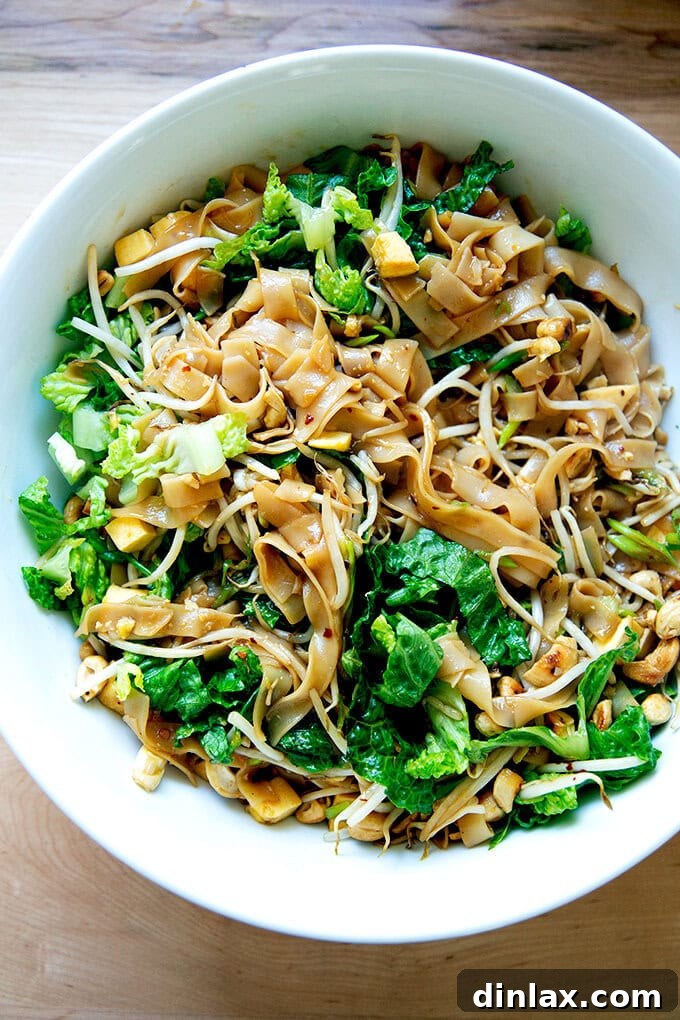
Embark on a culinary journey to Thailand from the comfort of your kitchen with this delightful Rad Na recipe. This classic Thai stir-fry, renowned for its comforting balance of savory flavors and unique textures, is a dish that truly captures the essence of Southeast Asian street food. Rad Na, often translated as “Noodles in Gravy,” features wide rice noodles pan-fried to perfection, then bathed in a luscious, savory sauce, and traditionally adorned with crisp bean sprouts, fresh scallions, and a choice of protein. It’s a symphony of taste and texture that promises to transport your palate.
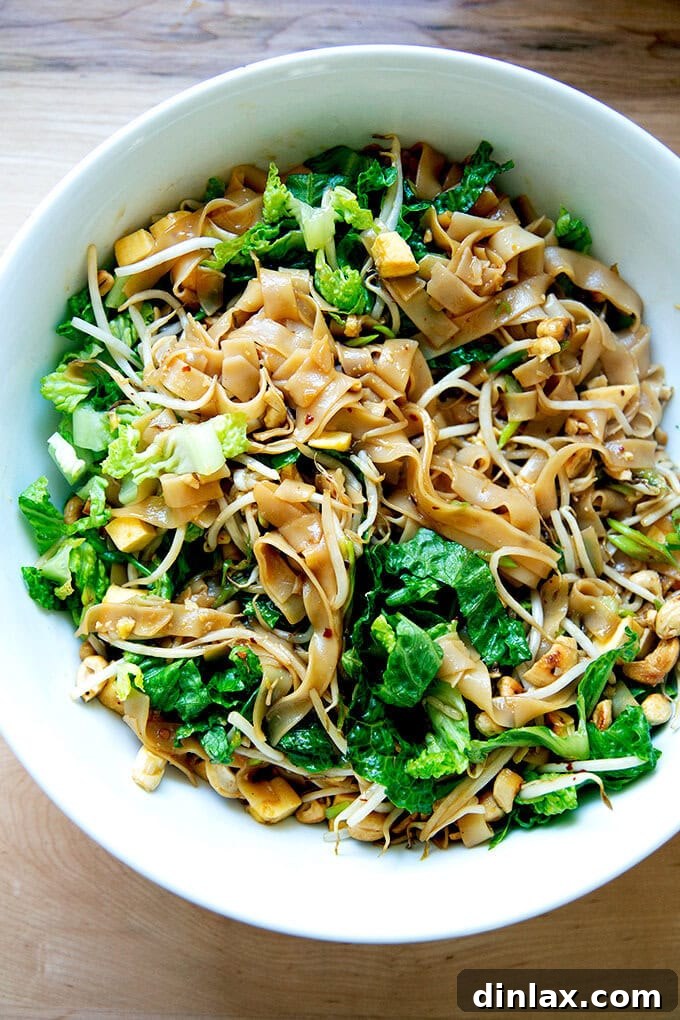
My personal love affair with Rad Na began serendipitously during my early days in Philadelphia. One memorable weekend, while organizing my pantry, I stumbled upon a treasure trove of Asian noodles: dried lo mein, udon, soba, ramen, dangmyeon, and several packages of wide rice noodles. The sight of those broad, flat rice noodles instantly conjured vivid memories of Rad Na, a cherished dish I frequently ordered from The Continental, a charming restaurant just a stone’s throw from my first apartment.
The Continental’s Rad Na was a revelation. It was a perfectly executed stir-fry, traditionally prepared with fresh rice noodles, your choice of protein (meat, seafood, or tofu), and an abundance of crisp bean sprouts. What made their rendition truly unforgettable was the ingenious addition of shredded Romaine lettuce served beneath the warm, sauce-slicked noodles. This unexpected combination of tender noodles, vibrant, savory sauce, crunchy bean sprouts, and cool, crisp Romaine created an irresistible harmony of flavors and textures. I found myself craving it so often that no more than a few weeks would pass before I was back, savoring another bowl of this exquisite dish.
My passion for Rad Na eventually led me to recreate it at home. Inspired by a recipe in Aliza Green’s Starting with Ingredients, I began experimenting. This was back in 2006, when I still lived in Philadelphia and had easy access to an incredible Asian market. A quick bike ride would yield slabs of fresh rice noodles, mountains of bean sprouts, and any “exotic” ingredient my recipe called for, from dried shrimp to fermented black bean paste. Those were indeed dreamy days for an enthusiastic home cook, where culinary exploration felt limitless and ingredients were always within reach. (You can find my earlier recipe here!)
However, circumstances change, and so too must recipes adapt. In recent times, sourcing fresh wide rice noodles became less convenient, prompting me to develop a version that seamlessly incorporates readily available dried rice noodles. Furthermore, I decided to re-evaluate the traditional Rad Na sauce, which typically features oyster sauce. The last time I used oyster sauce, I was genuinely disappointed by its flavor, which felt overly processed. A glance at its ingredient list – a mix of sugar, flavor enhancers, yeast extracts, oyster extracts, artificial colors, and preservatives – confirmed my suspicion. It simply didn’t align with the fresh, clean flavors I sought.
A little research and culinary experimentation gave me the confidence to simplify the sauce by replacing oyster sauce with a carefully measured amount of soy sauce. While this substitution might subtly alter some of the traditional nuances, I found the resulting flavor profile to be incredibly satisfying and complete. The rich interplay of fish sauce, tangy rice vinegar, umami-rich soy sauce, and a touch of brown sugar, combined with the textural delights of toasted cashews, perfectly cooked egg, fresh scallions, and crisp bean sprouts, ensured that this Rad Na remained as utterly irresistible as ever. It’s a testament to how simple, high-quality ingredients can create profound and memorable flavors.
Essential Tips for Perfect Rad Na Thai Noodles:
- Mise en Place – The Golden Rule of Stir-Fries: The total cooking time for this Rad Na dish is incredibly fast – often just about a minute in a hot wok. This rapid cooking demands that all your ingredients are meticulously prepped and laid out before you even turn on the heat. This French culinary term, meaning “everything in its place,” is paramount here. Ensure your scallions are thinly sliced, nuts are perfectly toasted and roughly chopped, and your egg is cooked and cubed or ribboned. Having everything ready eliminates frantic scrambling during the high-heat cooking process, allowing you to focus on technique and timing for a flawless result. Think of it as a well-choreographed dance where every component is poised for its entrance.
- Noodle Selection and Preparation: While fresh wide rice noodles are traditional and offer a distinct chewiness, dried wide rice noodles (ideally 10 mm) are a fantastic and convenient alternative, delivering excellent results. You can often find these in the Asian aisle of larger supermarkets or, more reliably, at your local Asian market. Online retailers are also a great source; I recently ordered this particular brand and was very pleased with their performance. When cooking dried noodles, always refer to package instructions for the optimal boiling time, aiming for an al dente texture that holds up well in the stir-fry without becoming mushy. Overcooked noodles can break apart, diminishing the dish’s integrity.
- The Unmistakable Crunch of Bean Sprouts: Bean sprouts are not merely a garnish in Rad Na; they are a vital component, lending an essential fresh crunch and delicate texture that contrasts beautifully with the soft noodles and rich sauce. I was delighted to discover fresh mung bean sprouts at my local Shop Rite, making them accessible. If you find bean sprouts elusive, don’t despair! You can substitute them with finely chopped endive or thinly shredded Savoy cabbage. These alternatives offer a similar crispness and mild flavor, ensuring you don’t miss out on that satisfying textural contrast.
- Mastering the Egg: The egg adds both richness and protein to Rad Na, making it a more substantial meal. There are a few ways to prepare it, depending on your comfort level and desired outcome:
- Direct Scrambling in the Stir-Fry: If you possess a confident hand and good wok technique, you can certainly scramble the egg directly into the stir-fry with the noodles, or push the noodles to one side of the pan and cook the egg separately before mixing it in. While efficient, I personally find my results with this method can be inconsistent, often leading to unevenly cooked or overly broken egg pieces.
- Joanne Chang’s Water Bath Baked Eggs: For a consistently perfect, sliceable egg, I highly recommend Joanne Chang’s water bath baked eggs. I’ve integrated this method into my weekly meal prep routine, and it’s a game-changer. Having a beautifully baked slab of egg on hand is not only fantastic for breakfast sandwiches (as seen in this Instagram video) but also provides a convenient source of protein for stir-fries like Rad Na. The even texture and ease of slicing make it ideal. You can find Joanne’s recipe online with a quick search.
- Crêpe-like Omelet (Thin Egg Ribbons): Another elegant and effective method, detailed within the recipe instructions, is to prepare a thin, crêpe-like omelet. Simply whisk two eggs with a pinch of salt and cook them in a large, non-stick pan over low heat, swirling the pan to create a very thin “pancake.” Cook until just set, then roll it into a tight coil and slice it into delicate ribbons. This method not only adds a lovely visual appeal but also ensures the egg is evenly distributed throughout the dish. See the video below for a visual guide.
Here’s a visual play-by-play to guide you through crafting your own perfect Rad Na:
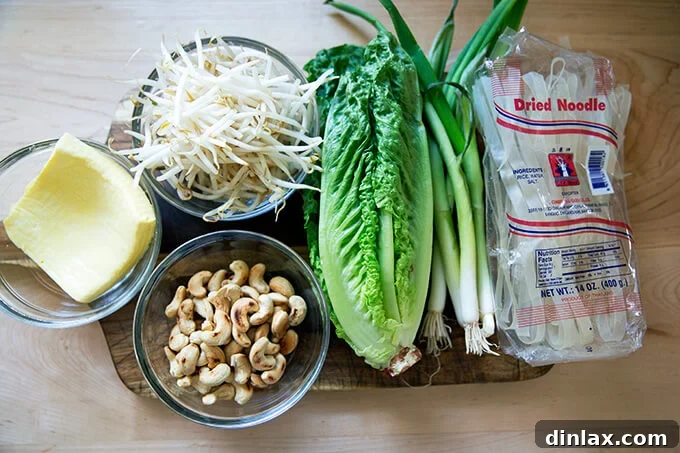
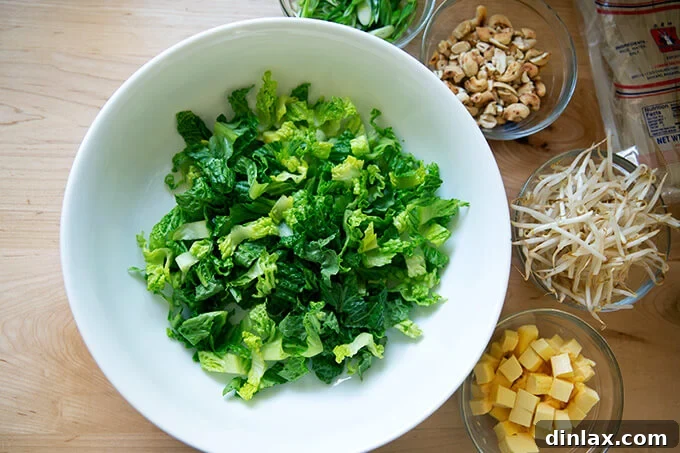
First, gather all your fresh, high-quality ingredients. A successful stir-fry relies heavily on having every component ready and accessible when you begin cooking. This initial step of preparation sets the stage for a smooth and enjoyable cooking experience, ensuring you’re not scrambling for items once the wok is hot.
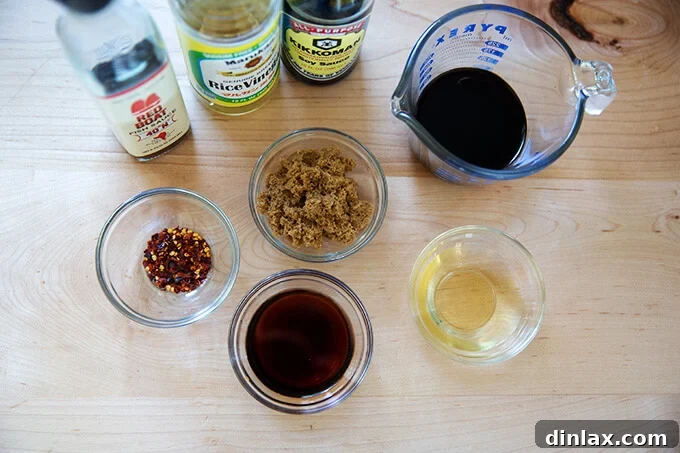
Next, combine the key elements for your flavorful Rad Na sauce. Whisk together brown sugar for sweetness, soy sauce for umami depth, fish sauce for that unmistakable Thai savory note, tangy rice vinegar, and a touch of water. This creates a beautifully balanced sauce that will coat your noodles and elevate every bite. Having the sauce pre-mixed is crucial for the rapid cooking process.
Now, focus on prepping your fresh garnishes and protein. Slice the crisp Romaine lettuce into bite-sized pieces and transfer it to your serving bowl. Thinly slice the vibrant scallions, roughly chop your roasted cashews or peanuts, and either slice or cube your pre-cooked egg, depending on your preferred method. These ingredients add crucial texture, color, and flavor to the final dish.
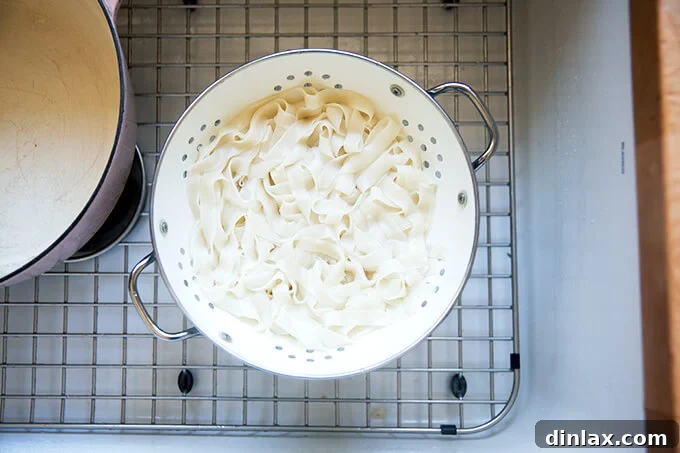
With your ingredients prepped, it’s time to cook the dried rice noodles. Bring a large pot of water to a rolling boil and carefully add the noodles. Cook them according to package directions, typically for 4 to 6 minutes, ensuring they are al dente – tender but still firm to the bite. Once cooked, drain them thoroughly in a colander. Remember, do not rinse the noodles; the starch clinging to them will help the sauce adhere better.
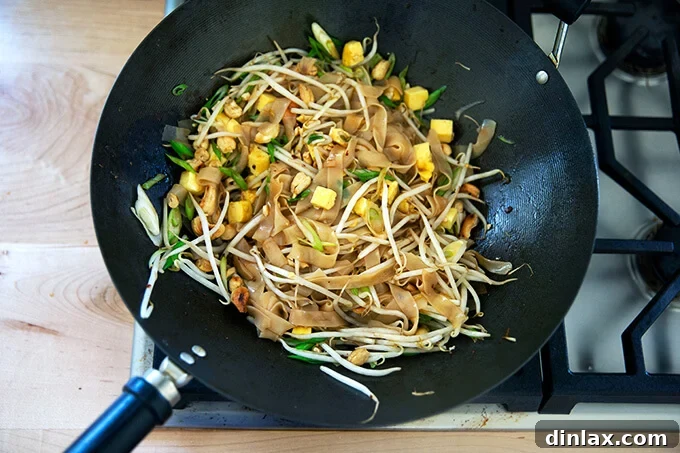
Now for the exciting part – the stir-fry! Heat your wok or large skillet over high heat until it’s smoking slightly, then add a neutral oil. Immediately toss in the crushed red pepper flakes for a hint of heat, followed by the drained rice noodles. Use tongs to quickly coat the noodles in the hot oil and chili flakes, then pour in your prepared sauce. Continue tossing to ensure every noodle strand is slicked with the savory glaze. Finally, add the remaining ingredients: bean sprouts, scallions, egg, and nuts, stirring vigorously for about a minute. This is where your careful mise en place truly pays off!
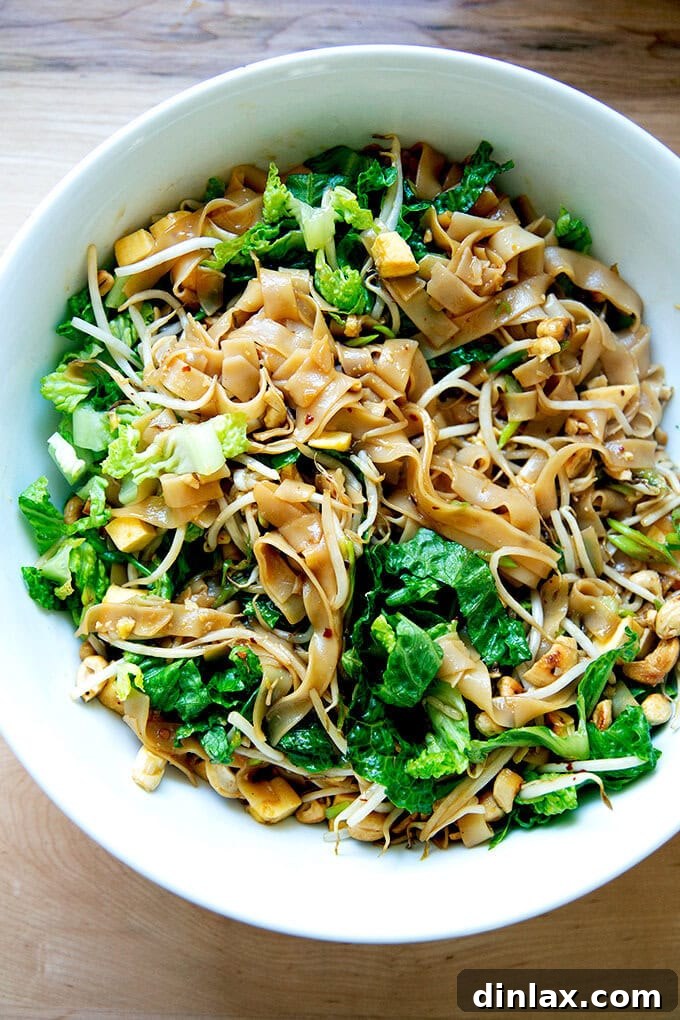
Once the stir-fry is complete, promptly transfer the hot, fragrant noodle mixture directly over the bed of chopped Romaine lettuce in your serving bowl. The residual heat from the noodles will slightly wilt the Romaine, softening it just enough to integrate perfectly without losing its refreshing crunch. This classic presentation from The Continental is what makes this Rad Na truly stand out.
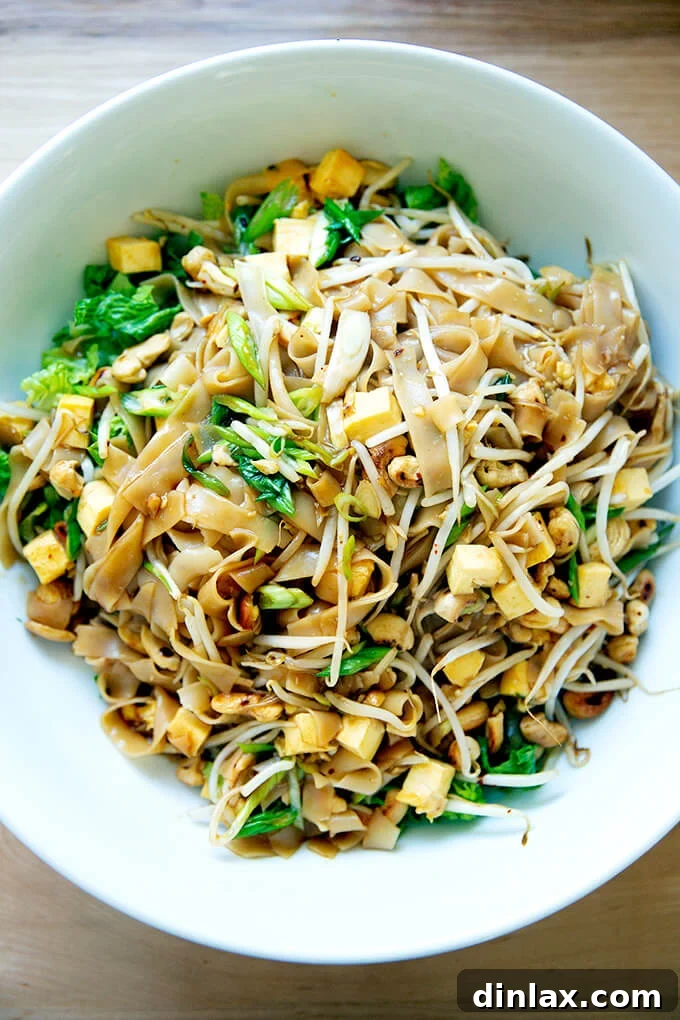
Gently toss everything together to combine the warm, saucy noodles with the cool, crisp Romaine, allowing all the textures and flavors to meld beautifully. Serve your homemade Rad Na immediately, inviting diners to customize their bowl with extra hot sauce if they desire an added kick. This dish is best enjoyed fresh from the wok, offering an incredible blend of savory, sweet, and tangy notes, contrasted by an exciting array of textures. It’s a comforting yet vibrant meal, perfect for any occasion.
Print
Continental’s Rad Na Thai Noodles (Simplified Recipe)
5 Stars 4 Stars 3 Stars 2 Stars 1 Star
4.8 from 34 reviews
Author: Alexandra Stafford
Total Time: 25 minutes
Yield: Serves 4
Description
This reimagined Rad Na recipe, inspired by Aliza Green’s Starting with Ingredients, offers a convenient and equally delicious take on the classic Thai stir-fry. It gracefully replaces the traditional oyster sauce with a balanced blend of soy sauce and water, delivering a clean, rich flavor profile without artificial additives. Brown sugar is used instead of white sugar to add a nuanced depth of sweetness. This version also champions the use of widely available dried wide rice noodles, making this beloved dish accessible for any home cook seeking authentic Thai flavors with simplified preparation. The addition of crisp Romaine lettuce is a delightful twist that adds freshness and a unique textural contrast, making every bite truly invigorating. For those mindful of sodium intake, consider opting for low-sodium soy sauce without compromising on taste.
Key Notes for Success:
- Mise en Place (Preparation is Key): Given the incredibly short cooking time of approximately one minute for this stir-fry, having all your ingredients prepped and within arm’s reach is non-negotiable. This includes thinly slicing your scallions, toasting and chopping your nuts, and preparing your egg. Thorough preparation ensures a smooth, stress-free cooking process and prevents ingredients from overcooking.
- Noodle Choice: While fresh wide rice noodles are superb, dried wide rice noodles (10 mm) are a convenient and excellent substitute. These can typically be found in Asian specialty markets or the international aisle of larger grocery stores. For those who enjoy shopping online, I’ve had great success with this particular brand. Always follow package instructions for cooking to achieve the perfect al dente texture.
- Egg Preparation Techniques: The egg adds delightful richness and protein. If you’re comfortable, you can scramble it directly into the stir-fry, pushing the noodles aside in the pan. However, for more controlled results, consider these two excellent methods:
- Joanne Chang’s Water Bath Baked Eggs: For a consistently perfect, sliceable egg, this method is ideal. It yields a firm yet tender egg slab, perfect for dicing or cubing. It’s excellent for meal prep and provides a quick protein boost for various dishes, including this stir-fry. You can easily find Joanne’s recipe online.
- Crepe-Like Omelet (Thin Ribbons): A visually appealing and texturally pleasant option is to beat two eggs and cook them in a large non-stick pan over low heat, swirling to create a very thin “egg pancake.” Once set, roll it tightly into a coil and slice it into delicate ribbons. This method, demonstrated at the end of the instructional video, ensures even distribution and a lovely presentation.
Ingredients
- 2 large eggs, lightly beaten and prepared as per notes above (crepe-style or baked)
- 3 tablespoons light soy sauce (or low-sodium if preferred)
- 3 tablespoons fish sauce, for authentic Thai umami
- 3 tablespoons packed light brown sugar, to balance flavors
- 3 tablespoons unseasoned rice vinegar, for a tangy lift
- 1 whole head Romaine lettuce, shredded or roughly chopped
- 1/2 teaspoon crushed red pepper flakes (adjust to your heat preference)
- 1 bunch (4-6 stalks) scallions, thinly sliced on the bias for garnish and flavor
- 1/2 pound fresh mung bean sprouts, for essential crunch (or finely chopped endive/Savoy cabbage)
- 1 cup roasted cashews or peanuts, roughly chopped, for nutty flavor and texture
- 8-oz dried wide rice noodles (approx. 10mm width), see notes above for sourcing
- 2 tablespoons neutral cooking oil (like canola, vegetable, or grapeseed)
- Hot sauce, for serving (optional, pass on the side)
Instructions
- Begin by placing a large pot of water on your stovetop and bring it to a vigorous rolling boil. This will be used for cooking your rice noodles. Ensure you have enough water to fully submerge the noodles.
- If you are opting for the elegant egg crepe/omelet method: Heat a large (approximately 11-inch) nonstick skillet over medium heat. Add about 1 teaspoon of neutral oil to coat the pan. Lightly beat the eggs with a pinch of salt. Pour the beaten eggs into the center of the pan, then immediately swirl the pan to spread the eggs into the thinnest possible layer, resembling a crêpe. Reduce the heat to low and cook for just 20-30 seconds, or until the edges are set and the top is mostly cooked but may still appear slightly moist. Turn off the heat. Carefully roll the egg pancake into a tight coil and transfer it to a cutting board. Thinly slice the coil into delicate ribbons. Set these egg ribbons aside. For visual guidance, refer to the video here.
- Prepare the exquisite Rad Na sauce: In a small bowl, combine the soy sauce, fish sauce, brown sugar, unseasoned rice vinegar, and 3 tablespoons of water. Whisk these ingredients together thoroughly until the brown sugar is fully dissolved, creating a harmonious blend of sweet, salty, and tangy flavors. Place this bowl conveniently near your cooktop, ready for immediate use.
- Execute your meticulous mise en place for the remaining ingredients: Slice the Romaine lettuce into approximately 1/2-inch pieces and place them into a large serving bowl. Arrange all other prepped components in separate small bowls near your cooktop: the crushed red pepper flakes, thinly sliced scallions, fresh mung bean sprouts, roughly chopped nuts (cashews or peanuts), and your prepared egg (either cubed, sliced, or in ribbons). This organization is critical for the rapid stir-fry process.
- Cook the dried rice noodles to perfection: Once the water is boiling, add the dried wide rice noodles. Boil them according to the package instructions, which typically ranges from 4 to 6 minutes. It’s crucial to taste a noodle to check for doneness; they should be al dente, tender but still firm. Immediately drain the noodles thoroughly in a colander. Do not rinse them, as the starch on the noodles helps the sauce cling better, enhancing the overall flavor and texture of your Rad Na.
- Perform the high-speed stir-fry and assemble: Heat a wok or a large, heavy-bottomed skillet over high heat until it’s very hot and slightly smoking. Add the 2 tablespoons of neutral oil, followed immediately by the crushed red pepper flakes. Exercise caution when adding the drained noodles, as any clinging water can cause oil to spatter. Use tongs to quickly and evenly coat the noodles in the hot oil and chili. Immediately pour in your prepared Rad Na sauce and continue tossing vigorously with tongs, ensuring every noodle strand is beautifully coated. Finally, add all the remaining prepped ingredients: the bean sprouts, sliced scallions, prepared egg, and chopped nuts. Toss everything together for about one minute total, allowing the ingredients to warm through and meld. Promptly pour the entire hot noodle mixture over the chopped Romaine lettuce in your large serving bowl. Gently toss everything to combine, allowing the heat from the noodles to slightly wilt the Romaine, creating a delightful contrast. Serve your Rad Na immediately, offering additional hot sauce on the side for those who prefer an extra layer of spice. Enjoy this incredible symphony of Thai flavors and textures!
- Prep Time: 20 minutes
- Cook Time: 5 minutes
- Category: Dinner, Main Course
- Method: Stovetop, Wok, Stir-Frying
- Cuisine: Thai, Asian