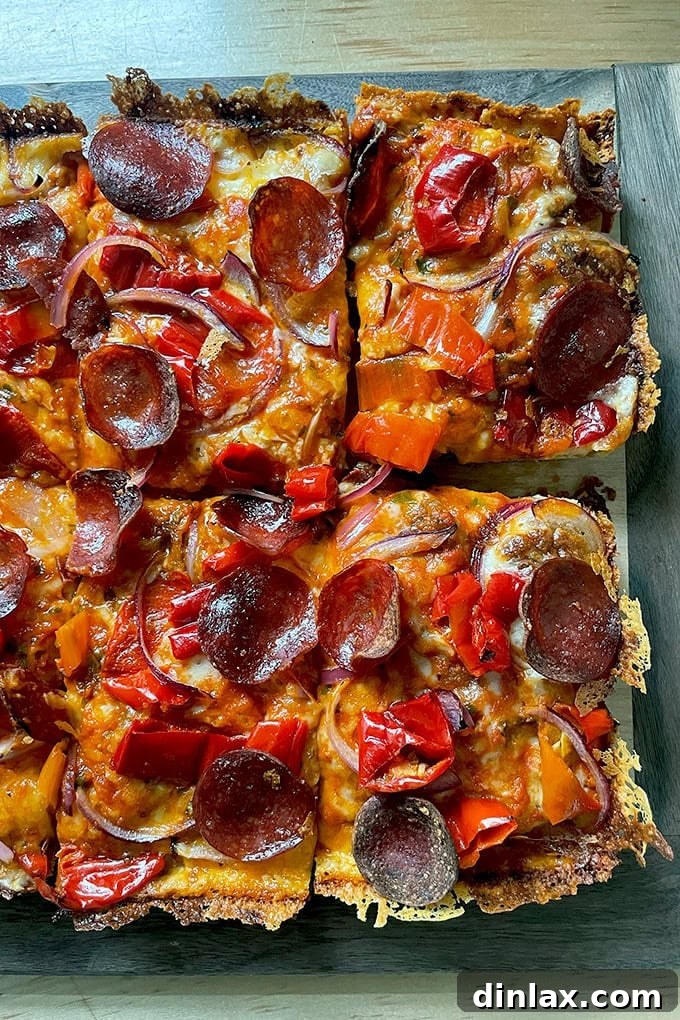
In the vibrant tapestry of pizza styles, Detroit-style pizza stands out with its distinct square shape, signature caramelized cheese crust, and impossibly light, airy dough. Often compared to a savory focaccia, this culinary marvel is not just a meal; it’s an experience, perfect for feeding a gathering or indulging in a personal feast. This comprehensive guide will unlock the secrets to crafting an authentic Detroit-style pizza at home, ensuring a crust that’s crisp on the outside and wonderfully tender within, all crowned with that irresistible cheesy frico edge.
My Journey to Detroit-Style Pizza Perfection
My personal introduction to the magical world of Detroit-style pizza came through the culinary genius of Matt and Emily Hyland, the visionary couple behind the renowned Pizza Loves Emily. While their New Haven-style pizzas hold a special place in my heart, their Emmy Squared slices, with their unique pan-pizza approach, quickly captured my imagination.
During the peak of the lockdown, with a longing for flavors beyond my immediate surroundings, I indulged in a trio of Emmy Squared pizzas delivered via GoldBelly. It was a revelation. Once the world began to open up, I made it a point to visit their Brooklyn brick-and-mortar, where I savored their delicious pan pizzas, adorned with an adventurous array of toppings, from tangy pickled jalapeños and banana peppers to fiery Calabrian chilies and smoky gouda. Each bite solidified my determination to recreate this extraordinary pizza experience in my own kitchen.
And guess what? Crafting homemade Detroit-style pizza proved to be every bit as dreamy as I had imagined. The best part is the incredible flexibility it offers: a significant portion of the preparation, from mixing the dough to the crucial parbaking step, can be completed days in advance. This foresight transforms what might seem like an intricate baking project into an accessible and enjoyable endeavor. Continue reading to discover the detailed techniques for achieving an excellent Detroit-style pizza at home, complete with an exquisitely light and airy crust and that coveted, irresistible cheese frico crust.
PS: Explore more pizza adventures with our guide on How to Make Homemade Sicilian-Style Pizza.
What Makes Detroit-Style Pizza Unique? The Essential Rules and Characteristics
Among the diverse universe of pizza styles, Detroit-style pizza (DSP) is arguably governed by some of the most distinctive rules, which contribute to its unparalleled taste and texture. Let’s delve into these foundational elements that make DSP a true original:
The Signature High-Hydration Dough: Light, Airy, and Flavorful
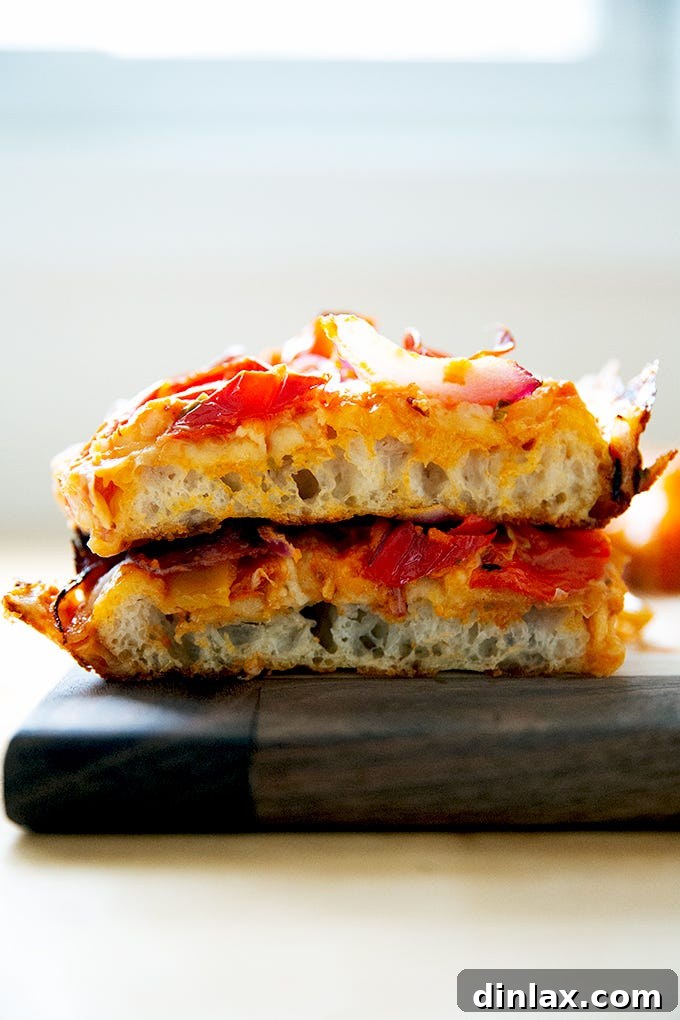
The dough for Detroit-style pizza is a cornerstone of its identity. It must be a high-hydration dough, resulting in a baked crust that is remarkably light, airy, and wonderfully porous, reminiscent of a perfectly baked focaccia. This high water content allows for a more open crumb structure and contributes to the dough’s incredible chewiness. While traditional DSP is often baked in a single go, modern adaptations sometimes introduce a parbake, a technique we’ll explore later, which further enhances the crust’s attributes.
Achieving this ideal dough texture hinges on several factors, including the type of flour used and the fermentation process. Bread flour, with its higher protein content, is often preferred for its ability to absorb more water and develop stronger gluten, leading to that desirable airy structure. The long fermentation, particularly cold proofing, is key to developing both flavor and a resilient dough structure that can withstand the unique baking process.
The Iconic Rectangular Pan: A Piece of Detroit History
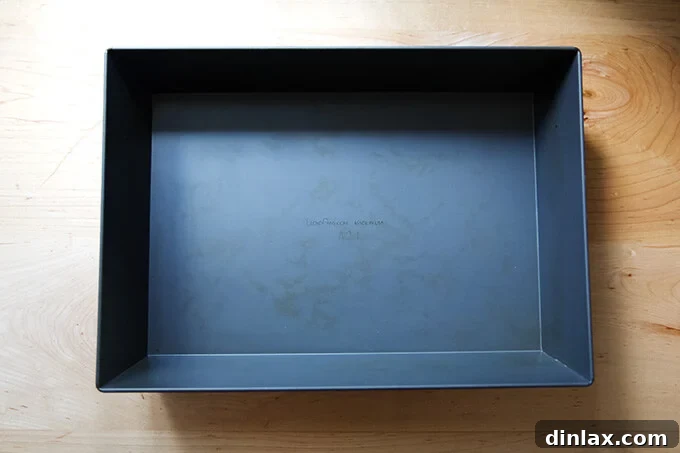
The story of Detroit-style pizza is intrinsically linked to its unique baking vessel. The “original” Detroit-style pizza, famously created by Buddy’s Pizza, is said to have originated from a resourceful idea: the owner utilized his mother’s Sicilian pizza recipe but adapted it to fit rectangular blue steel pans. These pans, typically used as “scrap” trays from the nearby automotive plants, were robust and retained heat exceptionally well, inadvertently becoming the secret to DSP’s distinctive crust. Today, specialized companies like Lloyd Pans manufacture Detroit-style pizza pans that arrive pre-seasoned, ensuring a perfect, beautifully browned crust from the very first bake. The material and design of these pans are crucial for heat distribution and the formation of the cheese frico.
The Edge-to-Edge Cheese Frico: A Crispy Masterpiece
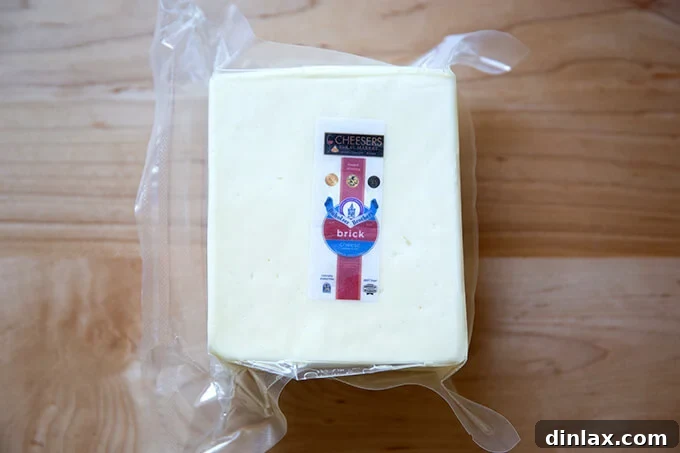
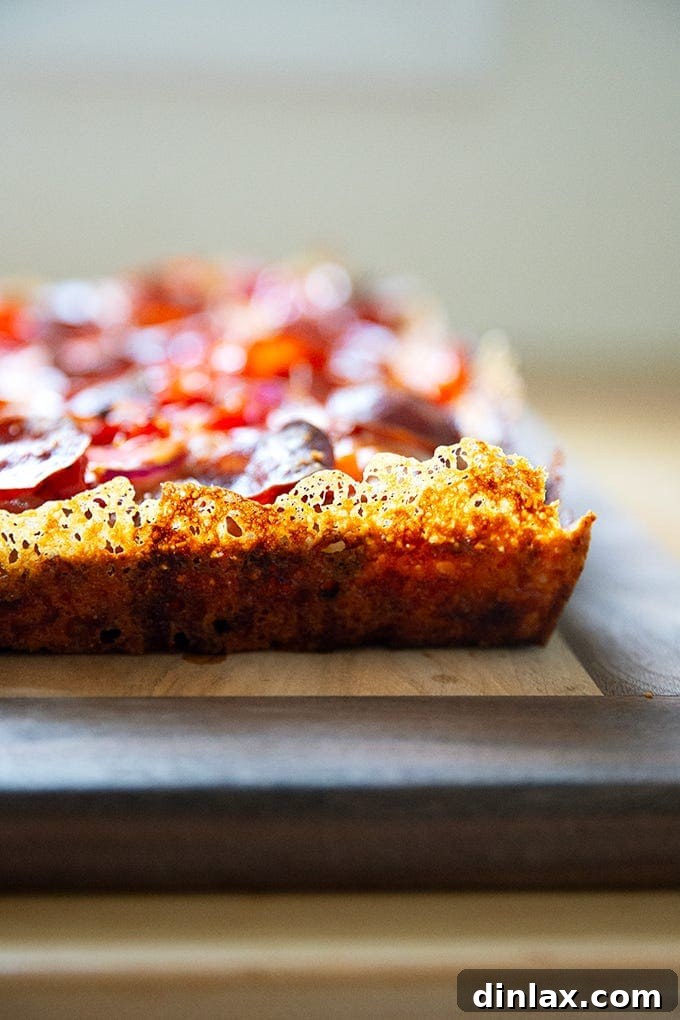
Perhaps the most visually striking and flavorful characteristic of Detroit-style pizza is its “frico” crust. The traditional cheese of choice is Wisconsin Brick Cheese, a semi-hard cheese derived from white American cheddar but with a higher fat content, which melts beautifully and crisps up exceptionally well. In DSP, the cheese is applied directly onto the dough, spread generously from edge to edge of the pan, before the sauce. This unique application allows the cheese’s fats to pool and caramelize against the hot sides of the pan, effectively “frying” the dough and creating that renowned, lacy, crispy cheese frico crust. If Wisconsin Brick Cheese is difficult to find, a blend of low-moisture, whole-milk mozzarella and cheddar or Monterey Jack can yield excellent results, especially for the perimeter. Using pre-shredded cheese for the frico is actually beneficial, as the starches prevent clumping and promote an even, dramatic crisp.
The “Racing Stripes” of Sauce: A Balanced Flavor Profile
Unlike many other pizza styles where the sauce forms the first layer, in Detroit-style pizza, a cooked tomato sauce is applied last, often in distinctive dollops or two or three “racing” stripes across the top. This method ensures that the crust remains crisp and the cheese has direct contact with the pan for frico formation. DSP is not overly saucy; the sauce serves as a bright, tangy counterpoint to the rich cheese and robust crust, rather than dominating the flavor profile. Whether you opt for a classic quick homemade tomato sauce, a vibrant fresh tomato basil sauce, or even a creamy vodka sauce, the key is balance and a thoughtful application.
Advanced Techniques for an Unforgettable Detroit-Style Pizza
While the basic components of Detroit-style pizza are straightforward, two techniques can elevate your homemade version from good to absolutely phenomenal:
The Power of Cold Proofing: Enhancing Flavor and Texture
As mentioned, the crust of a Detroit-style pizza should be exceptionally light and airy. To achieve this superior texture and depth of flavor, planning ahead for a cold proof is paramount. Cold proofing, which involves a slow fermentation in the refrigerator, significantly enhances the dough’s characteristics. I find the best results come from an initial bulk ferment at room temperature for 10 to 12 hours, followed by a transfer to the fridge for an additional 24 to 48 hours, or even up to a week. The extended fermentation time allows for more gas bubbles to form within the dough. When these gas bubbles encounter the intense heat of the oven, they expand dramatically, resulting in an incredibly light, porous, and flavorful crust. This process also develops complex flavors in the dough that simply can’t be achieved with a quick rise.
Embracing the Parbake: A Game-Changer for Perfect Crust
Breaking from the strictest traditions, parbaking your Detroit-style pizza crust is a technique that yields immense benefits and is highly recommended for home bakers. There are two compelling reasons to incorporate a parbake into your process:
- **Preventing Undercooked Bottoms and Burnt Toppings:** Many home ovens struggle to cook a thick pizza crust through completely before the toppings begin to burn. Parbaking the dough provides a head start, ensuring the base is thoroughly cooked and beautifully browned, creating a sturdy foundation for your toppings without overcooking them later.
- **Creating a Dramatic Cheese Frico Crust:** The parbake is absolutely essential for achieving that tall, lacy, and deeply caramelized cheese frico crust that is a hallmark of Detroit-style pizza. During the initial parbake, the dough will shrink ever so slightly from the sides of the pan. This subtle separation creates a perfect void for the cheese to wedge itself into. When the pizza is returned to the oven for the final bake, this perimeter cheese melts down into that gap and fries, forming an incredible, crispy cheese barrier around the entire pizza.
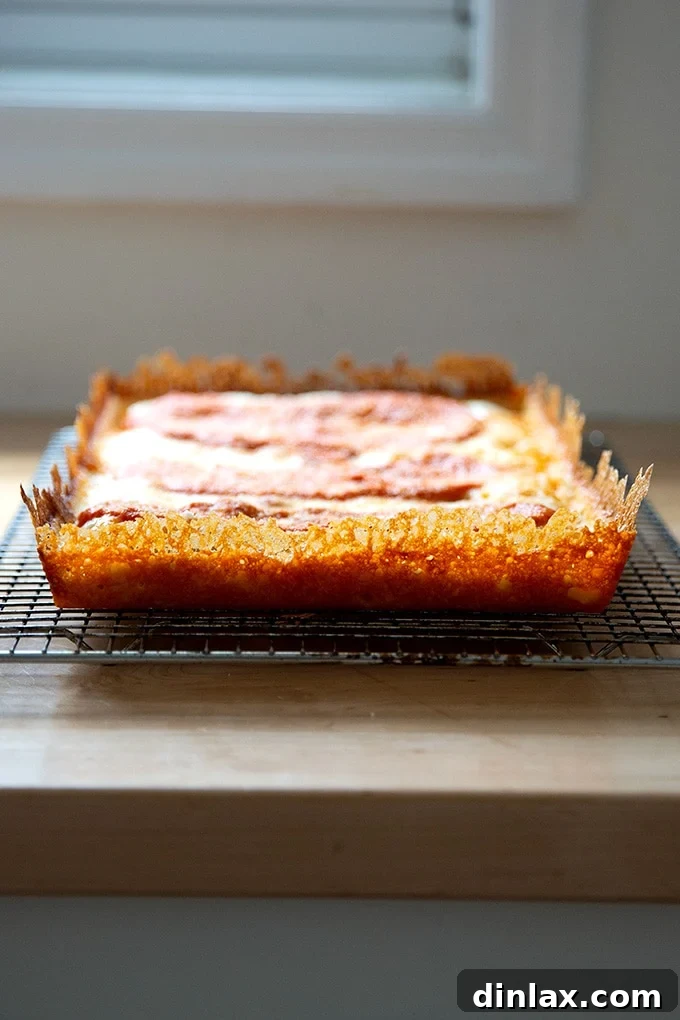
Once parbaked, the crust can be cooled and stored in an airtight bag at room temperature for 1-2 days, or even frozen for up to three months, offering incredible flexibility for future pizza nights.
Essential Tools for Your Detroit-Style Pizza Journey
Having the right tools can make your pizza-making experience significantly smoother and more successful. Here are a few recommendations:
- **Digital Scale:** For precise measurements, especially with flour and water, a digital scale is invaluable. Volume measurements can be inconsistent, impacting dough hydration.
- **Detroit-Style Pizza Pan:** A Lloyd Detroit-style pizza pan (10×14-inch is ideal) is highly recommended for its superior heat conduction and non-stick properties, which significantly contribute to the crispy bottom crust. A high-quality USA pan can also work well.
- **Baking Steel or Pizza Stone:** If you have one, baking your pizza on a Baking Steel or pizza stone placed in the oven will further encourage even better browning and crisping of the bottom crust, especially if you’re not using a specialized Lloyd pan.
- **Flexible Dough Scraper:** Extremely helpful for handling sticky, high-hydration dough, both for deflating and shaping.
- **Mezzaluna:** A curved, two-handled knife, like this one from R. Murphy knives, makes quick work of slicing your square pizza into perfect portions.
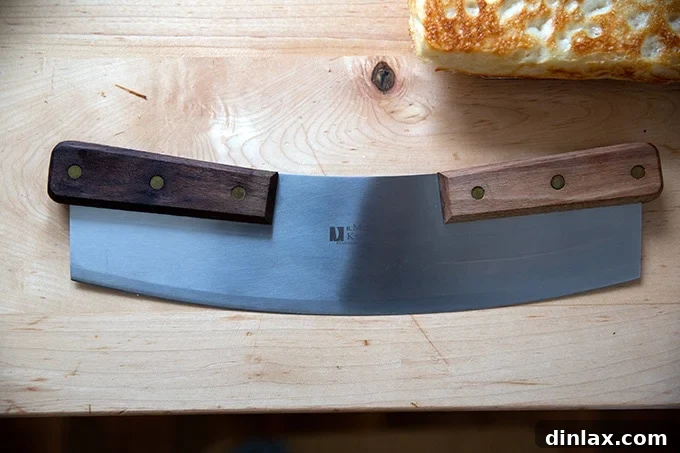
Step-by-Step Guide to Crafting Your Homemade Detroit-Style Pizza
Ready to bake? Here’s a detailed, step-by-step guide to creating your own heavenly Detroit-style pizza. This recipe focuses on a yeast-leavened dough, with notes for sourdough bakers and an emphasis on the parbaking technique for optimal results.
Preparing the Dough (Yeast-Leavened or Sourdough)
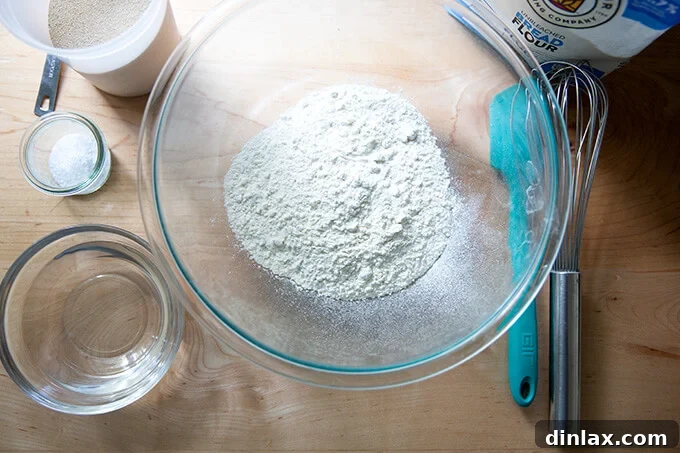
For the yeast-leavened dough, gather your ingredients: bread flour (or all-purpose, but bread flour is ideal), kosher salt, cold water, and instant yeast (SAF is a highly recommended brand).
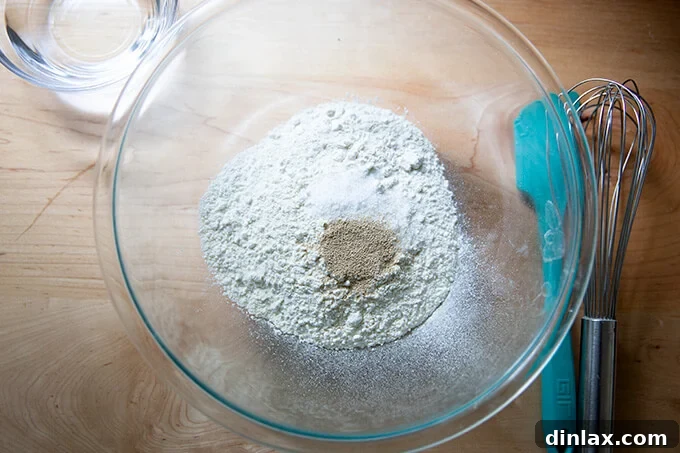
In a large bowl, whisk together the flour, salt, and instant yeast until thoroughly combined.
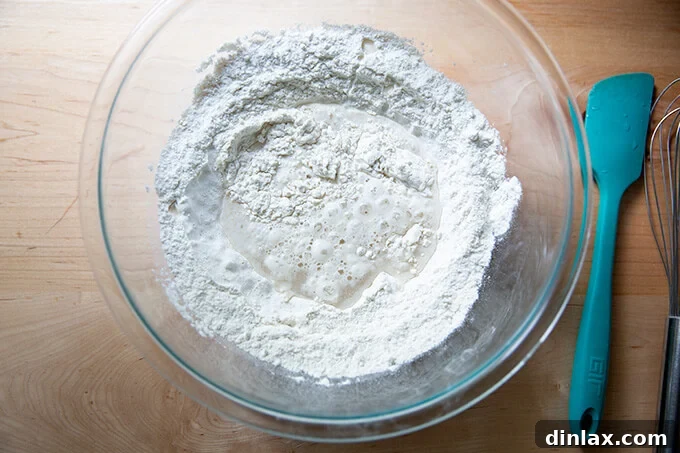
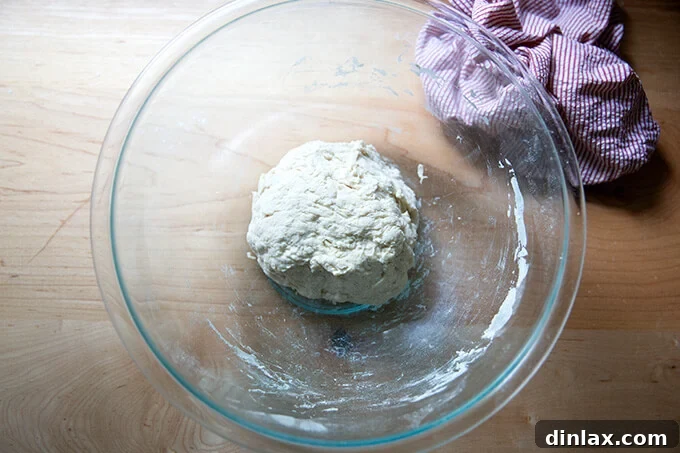
Add the cold water to the dry ingredients. Using a rubber spatula or a sturdy spoon, mix until all the water is absorbed and the ingredients form a sticky, cohesive dough ball. Cover the bowl and let the dough rest for about 30 minutes. This resting period, known as autolyse, allows the flour to fully hydrate.
After resting, perform a series of stretch and folds: with a wet hand, gently grab an edge of the dough, stretch it upwards, and fold it back towards the center. Rotate the bowl and repeat this 8 to 10 times, pulling from a different edge each time, ultimately shaping the dough into a rough ball. This action helps to develop the gluten structure. Drizzle about a teaspoon of olive oil over the dough to prevent sticking. Cover the bowl with an airtight lid or plastic wrap and allow it to bulk ferment at room temperature overnight, typically for 10 to 12 hours. This long, slow rise is critical for flavor development.
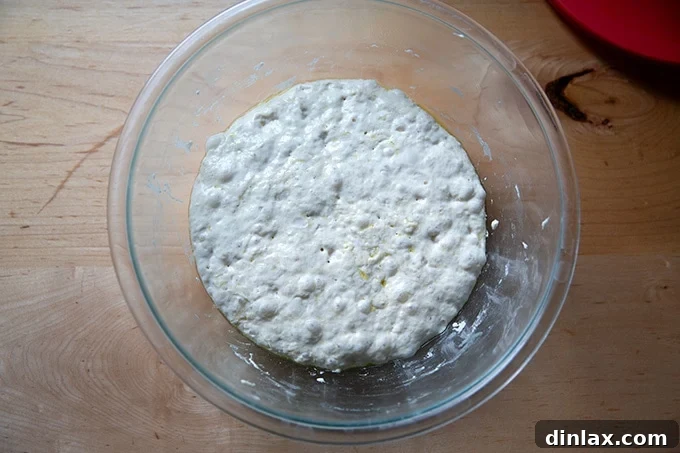
The following morning, remove the lid. You’ll notice the dough has significantly risen and is filled with gas bubbles, a sign of active fermentation.
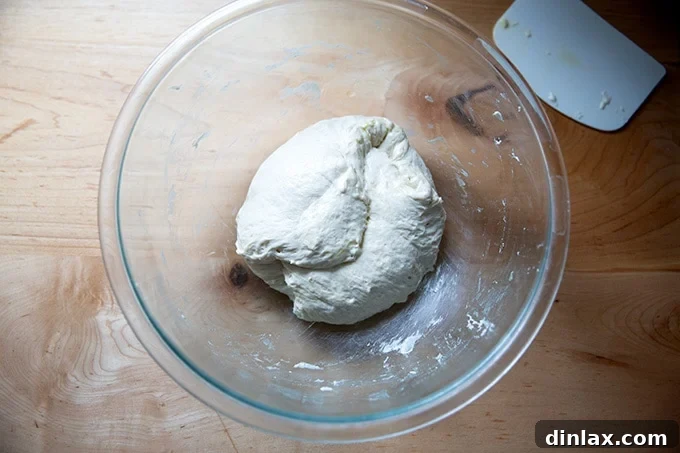
Using lightly oiled hands or a flexible dough scraper, gently deflate the dough by pulling it away from the sides of the bowl and folding it towards the center to form a rough ball. At this stage, you have the option to transfer the dough to the refrigerator, where it can continue to cold proof for up to a week. I’ve found the sweet spot for optimal flavor and texture to be 2-3 days in the fridge. Alternatively, if you’re eager to proceed, you can move directly to preparing your pan.
*(For sourdough pizza dough instructions, please refer to the detailed recipe card below, which provides specific guidance on incorporating an active sourdough starter.)*
Preparing the Pan and First Rise
Generously grease your 10×14-inch Detroit-style pan with a tablespoon of softened butter, ensuring all corners and sides are coated. Pour a teaspoon of olive oil into the center of the pan. Place your dough ball into the prepared pan and turn it to coat it completely with the oil. Let the dough rest and rise in the pan for 3 to 4 hours at room temperature. This allows the dough to relax and become more pliable.
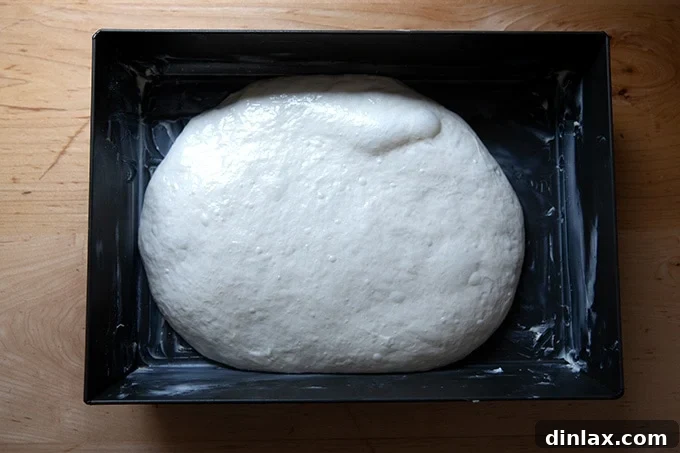
Dimpling, Stretching, and Parbaking the Crust
With lightly oiled hands, gently dimple the dough across its surface, taking care not to dimple the very perimeter where the frico crust will form. Then, carefully stretch the dough to fit all the way to the edges of the pan. This might take a few gentle pushes. Let the dough rise again for another hour.
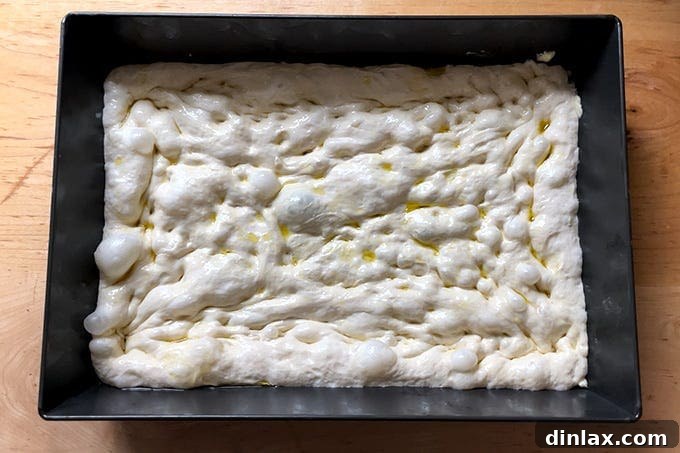
Preheat your oven to a blazing 500ºF (260ºC). Once preheated, transfer the pan with the stretched dough to the oven for an initial parbake of 8 minutes. This step is crucial for developing the crust’s structure and initiating the frico effect.
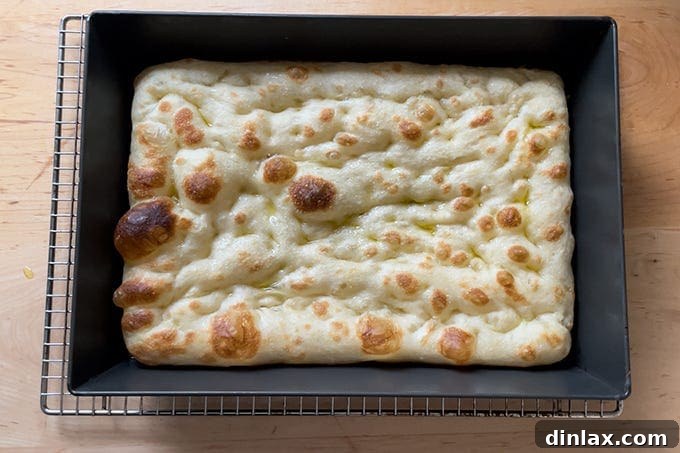
Remove the pan from the oven. Carefully transfer the parbaked crust to a cooling rack and let it cool upside down for at least 20 minutes. This prevents steam from accumulating and making the bottom soggy. Importantly, do not wash the pan – you’ll be reusing it!
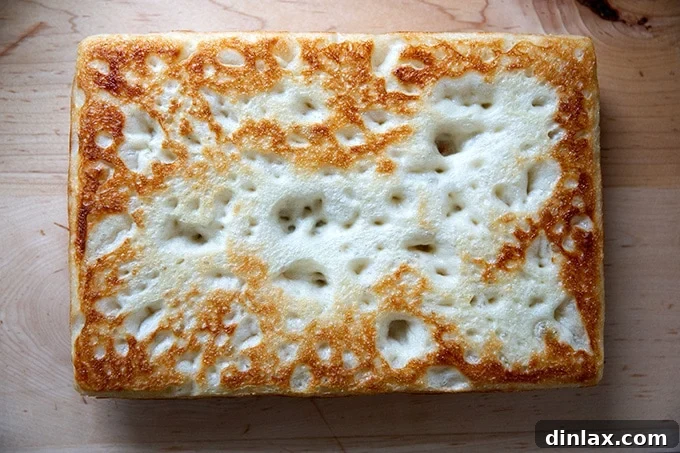
Once completely cooled, the parbaked crust can be stored in an airtight storage bag at room temperature for 1 to 2 days or frozen for up to 3 months, making it an excellent component for make-ahead meals.
Assembling Your Masterpiece
Preheat your oven to 475ºF (245ºC). If you have a Baking Steel or pizza stone, place it on a rack in the middle or lower third of the oven while it preheats to ensure a crispier bottom.
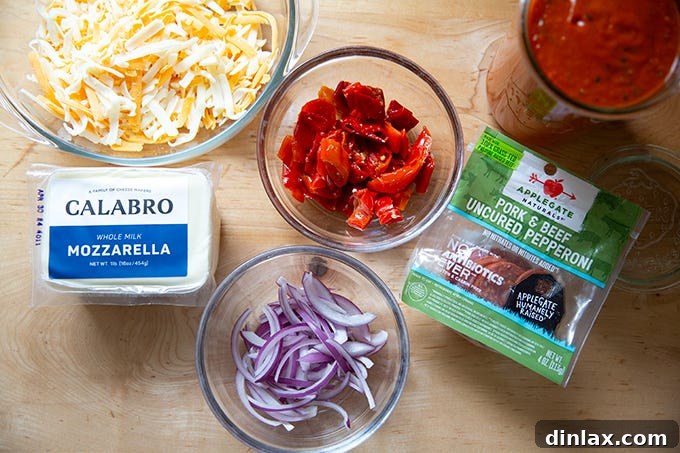
Return the parbaked crust to its pan, ensuring the bottom side is facing down. In a medium bowl, combine your chosen pre-shredded cheeses for the frico crust (typically a mix of Cheddar and low-moisture, whole-milk mozzarella). Spread this cheese mixture generously around the entire perimeter of the dough, pressing it firmly into the sides of the pan. This is where the magic frico happens!
Next, sprinkle the hand-grated low-moisture, whole-milk mozzarella (Calabro is a fantastic choice) evenly over the interior surface of the dough. Now, it’s time to add your sauce and other toppings. Spread about ½ cup of your favorite tomato sauce evenly over the cheese-covered surface. Follow with thinly sliced pepperoni and red onion. If using pickled jalapeños or other pickled peppers, scatter them evenly, adjusting the amount to your heat preference.
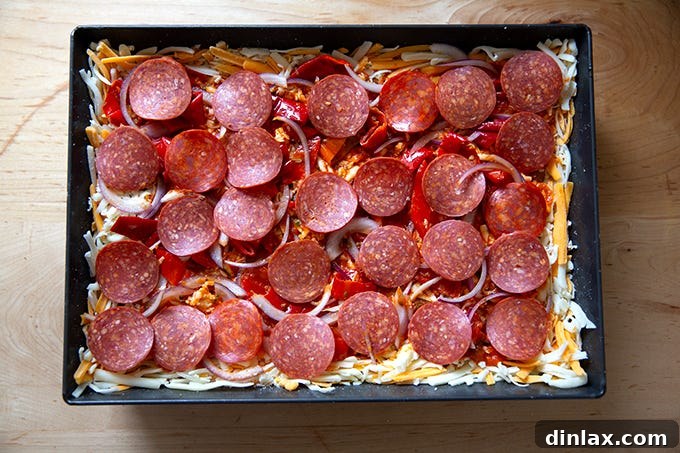
The Final Bake and Serving
Transfer the assembled pizza to your preheated oven. Bake for approximately 10 minutes, or until the edges are beautifully caramelized to your liking and the toppings are hot and bubbly. Keep a close eye on the crust to ensure it’s golden brown and crispy.
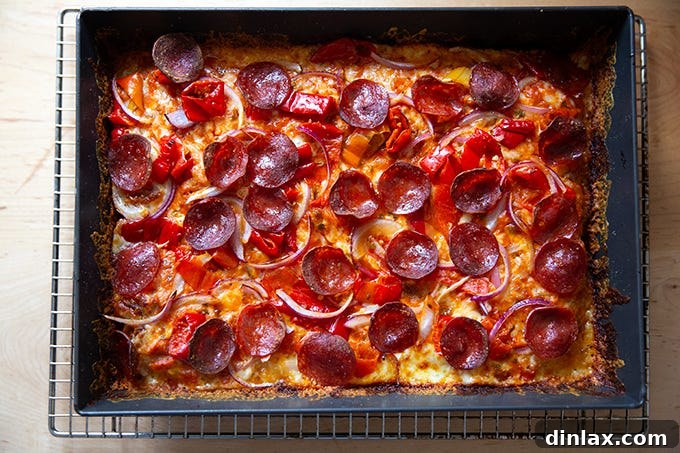
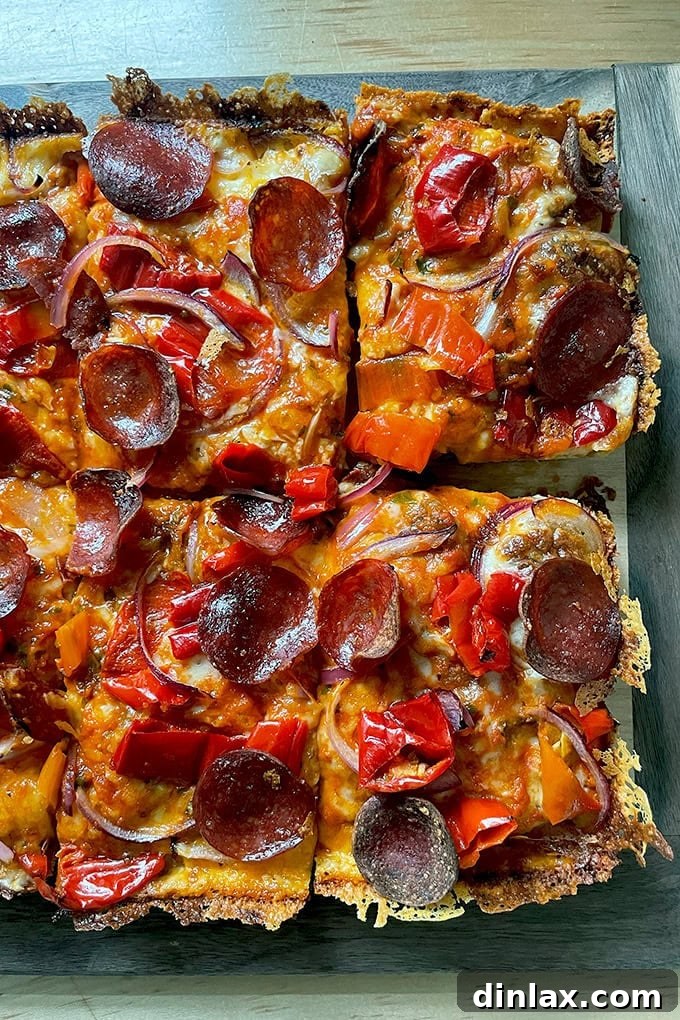
Remove the pan from the oven and let the pizza rest in the pan for 5 minutes. This brief resting period allows the cheese to set and makes it easier to remove the pizza cleanly. Carefully run a paring knife or thin spatula around the edges of the pan to release the frico crust. Then, using spatulas or by gently tilting the pan, transfer the entire pizza to a cutting board. If desired, drizzle a light touch of honey over the top for a sweet and savory contrast. Cut the pizza into 12 square pieces using a mezzaluna or a sharp chef’s knife and serve immediately. Enjoy the rich flavors and satisfying textures of your homemade Detroit-style pizza!
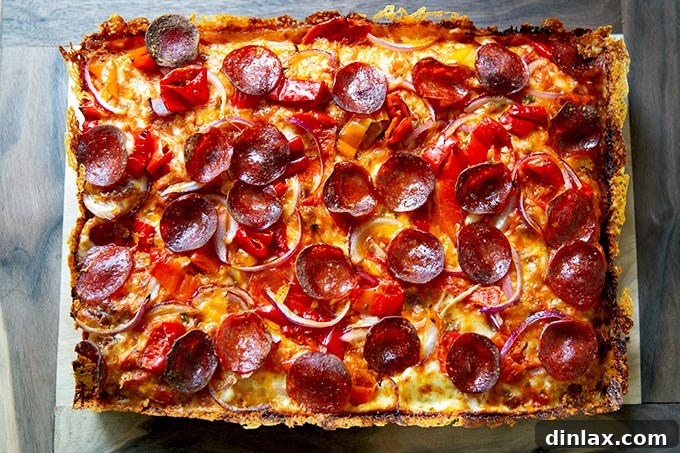
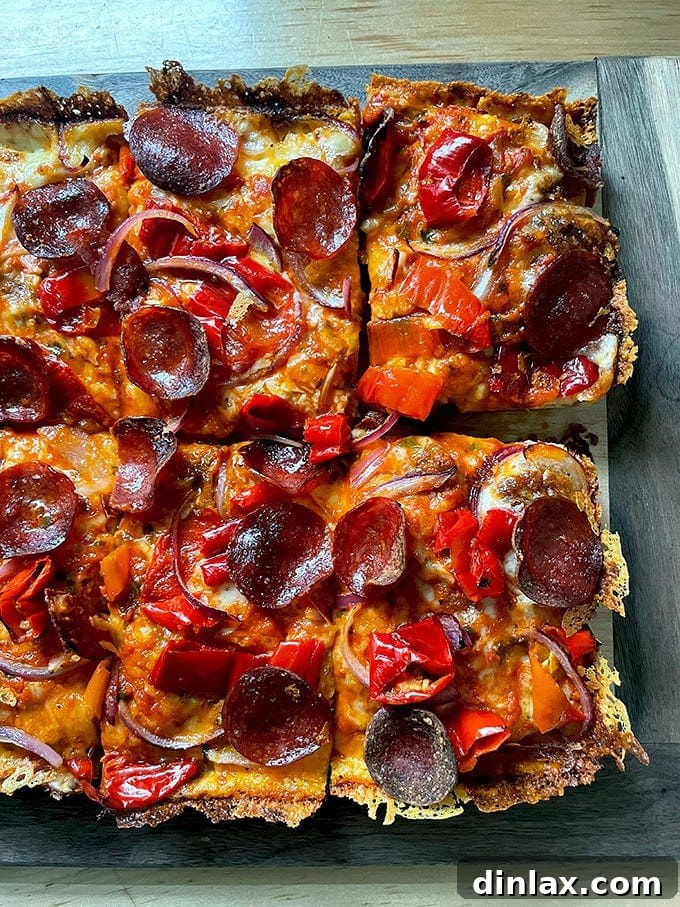
Observe the stunning frico crust:
And the beautiful crumb structure:
Homemade Detroit-Style Pizza Recipe (Printable)
Print Recipe
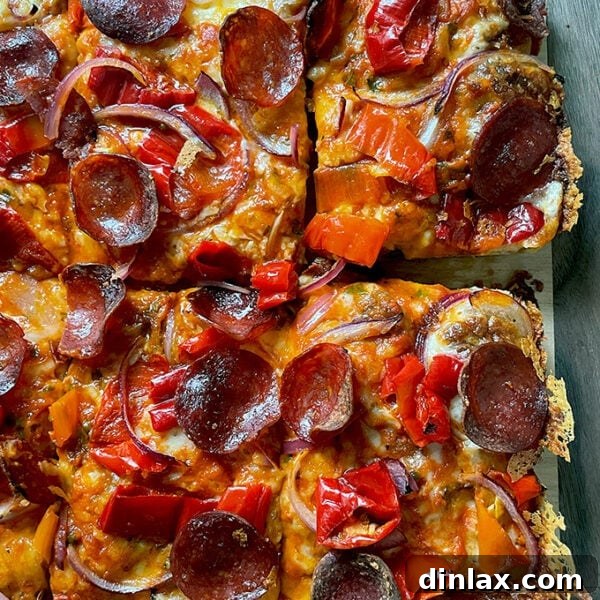
How to Make Homemade Detroit-Style Pizza
4.8 from 80 reviews
- Author: Alexandra Stafford
- Total Time: 24 hours 15 minutes
- Yield: Serves 6
Description
Detroit-style pizza, with its light and airy crust and irresistible cheese frico, is a heavenly delight perfect for any occasion. This updated recipe incorporates a parbake for superior crust development and a truly dramatic frico. For best results, use a digital scale for precise ingredient measurements.
Flour Note: Bread flour is ideal. If using all-purpose flour or baking in regions with different flour characteristics (e.g., Canada), you may need to adjust water content slightly.
Cheese Note: While Wisconsin Brick cheese is traditional for the frico, a blend of pre-shredded mozzarella and cheddar/Monterey Jack works wonderfully. Pre-shredded cheese is recommended for the frico due to its starches which aid crisping.
Sauce Note: Use your favorite cooked tomato sauce. Options include vodka sauce, quick homemade tomato sauce, or fresh tomato basil sauce.
Pan Note: A Lloyd Detroit-style pizza pan is highly recommended for optimal crispness. A Baking Steel or pizza stone can further improve bottom browning.
Timeline Note: Plan for overnight cold proofing (10-12 hours at room temp, then 24-48 hours in fridge for best results) to develop flavor and texture. Much of the prep can be done in advance.
Topping Inspiration: The featured pickled jalapeño and pepperoni pizza is inspired by “The Colony” from Matt and Emily Hyland’s restaurants.
Ingredients
For the yeast-leavened pizza dough:
- 288 grams (2.25 cups) bread flour
- 6 grams (1.5 teaspoons) kosher salt
- 2 grams (1/2 teaspoon) instant yeast, SAF is my preference
- 240 grams (about 1 cup) cold water
For the sourdough pizza dough:
- 255 grams (1.75 cups + 1 tablespoon) bread flour
- 6 grams (1.5 teaspoons) kosher salt
- 100 grams (1/2 cup) active, bubbly sourdough starter
- 185 grams (3/4 cup) water
For each pizza:
- 1 tablespoon (14 g) softened butter
- 1 teaspoon (5 g) olive oil
- 6 ounces pre-shredded Cheddar (for the cheese frico crust)
- 4 ounces pre-shredded low-moisture, whole-milk mozzarella (for the cheese frico crust)
- 6 ounces hand-grated low-moisture, whole-milk mozzarella for the interior surface (Calabro is my favorite)
- 2 ounces thinly sliced pepperoni, I love Applegate
- 1/2 cup thinly sliced red onion
- 1/4 cup pickled jalapeños or other pickled peppers (such as Mama Lil’s), or to taste, optional
- 1/2 cup tomato sauce, such as this one or this one, or your favorite jarred sauce
- light drizzle honey, optional
Instructions
To make the yeast-leavened pizza dough:
- In a large bowl, whisk together the flour, salt, and instant yeast. Add the water. Using a rubber spatula, mix until the water is absorbed and the ingredients form a sticky dough ball. Cover the bowl, let the dough rest for 30 minutes, then stretch and fold it: using a wet hand, grab an edge of the dough and stretch it up and in. Repeat this 8 to 10 times, grabbing a different edge each time, ultimately shaping the dough into a ball. Slick the dough with a teaspoon of olive oil. Cover the bowl with an airtight lid. Let rise overnight or for 10 to 12 hours at room temperature.
- Using lightly oiled hands or a flexible bowl scraper, deflate the dough by releasing it from the sides of the bowl and pulling it towards the center. Shape it into a rough ball. At this point, you can transfer the dough to the fridge for up to a week. I find the sweet spot to be 2-3 days. Alternatively, you can skip to preparing the pan.
To make the sourdough pizza dough:
- Place the water in a large bowl. Add the starter and stir with a spatula to combine. Add the salt and stir again; then add the flour. Mix again until the flour is mostly incorporated. Use your hands if necessary to briefly knead in the last bits of flour. Cover vessel with a tea towel or cloth bowl cover and let stand for 30 minutes.
- After 30 minutes have passed, reach into the vessel and pull the dough up and into the center. Turn the vessel quarter turns and continue this pulling 8 to 10 times. Let the dough rest for another 30 minutes; then repeat the stretching and folding. After these two sets of stretches and folds, you should see a difference in the texture of the dough: it will be smoother, stronger, and more elastic.
- If you have a straight-sided vessel, transfer the dough to it; then cover it with a tea towel or use a lidded vessel — I love this 4-quart Pyrex bowl + lid set, and set aside to rise at room temperature (70ºF/21ºC) for 4 to 8 hours (the time will vary depending on the time of year, the strength of your starter, and the temperature of your kitchen) or until the dough has roughly doubled in volume. (A straight-sided vessel makes monitoring the bulk fermentation especially easy because it allows you to see when your dough has truly doubled.)
- Turn the dough out onto a work surface and shape into a rough ball. I like to do this without flour, but use flour as needed — the dough will be sticky. Use the pinkie-edges of your hands to pinch the dough underneath to create a ball. Skip to preparing the pan.
Prepare the pan:
- Grease a 10×14-inch pan with the tablespoon of softened butter. Pour 1 teaspoon of olive oil into the center. Place the dough ball in the pan and turn to coat. Let rest for 3 to 4 hours. With lightly oiled hands, stretch the dough to fit the pan. Let the dough rest again for 1 hour.
Parbake the dough:
- Preheat the oven to 500ºF.
- Dimple the dough one last time with lightly oiled hands taking care not to dimple the perimeter. Transfer the pan to the oven for 8 minutes.
- Remove the pan from the oven and carefully transfer the dough to a cooling rack. Let it cool upside down on the rack for 20 minutes. Do not wash the pan.
- Once the dough is cooled, you can transfer it to an airtight storage bag for 1 to 2 days at room temperature or up to 3 months in the freezer.
Top the pizza:
- Preheat the oven to 475ºF. If you do have a Baking Steel or pizza stone, place it on a rack in the middle or lower third of the oven while it preheats.
- Return the parbaked crust to its pan (bottom side down).
- Combine the two pre-shredded cheeses for the frico crust in a medium bowl. Spread this cheese around the perimeter of the dough pressing it into the sides of the pan.
- Sprinkle the hand-grated mozzarella over the interior surface of the dough.
- Finish topping the pizza: spread the 1/2 cup of tomato sauce evenly over the top. Spread the pepperoni evenly over the surface, followed by the red onion. If you are using pickled jalapeños, scatter them evenly over the pizza, keeping in mind heat tolerance — they make the pizza very spicy.
Bake the pizza:
- Transfer pizza to the oven for 10 minutes or until the edges are caramelized to your liking. Remove the pan from the oven and let the pizza rest for 5 minutes in the pan. Carefully run a paring knife or spatula around the pan’s edges. Then, carefully remove the entire pizza from the pan, transferring it to a cutting board. If you are using the honey, drizzle it over top. Cut the pizza into 12 pieces and serve.
- Prep Time: 24 hours
- Cook Time: 15 minutes
- Category: Dinner
- Method: Oven
- Cuisine: American