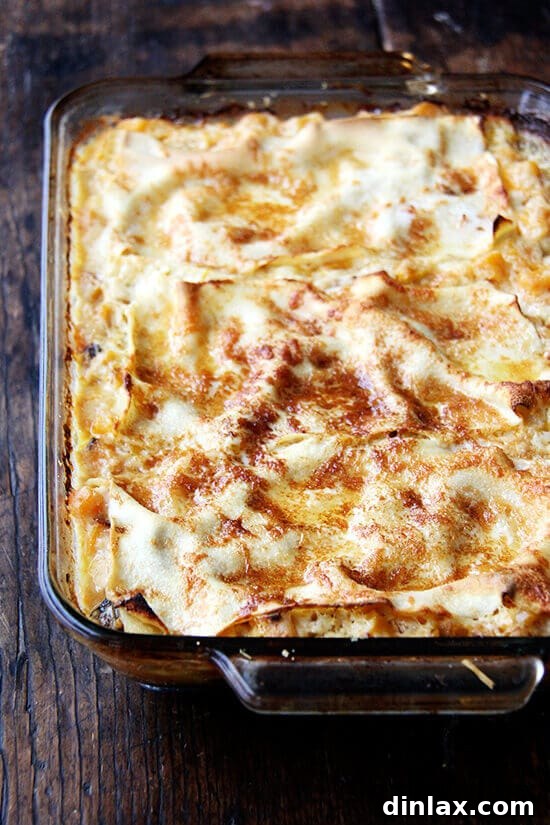
Welcome to the ultimate guide for crafting a truly unforgettable meal: Roasted Butternut Squash Lasagna. This dish isn’t just food; it’s a culinary experience, transforming a snowy Vermont Thanksgiving many years ago into a cherished tradition. It embodies comfort, elegance, and incredible flavor, all while remaining surprisingly straightforward to prepare. The secret behind its rich, creamy, and utterly delicious profile lies in two key elements: a homemade, herb-infused béchamel sauce brimming with the aromatic essence of rosemary and sage, and the convenience of no-boil lasagna noodles, which streamline the cooking process significantly.
Whether you’re hosting a grand holiday feast, seeking a comforting vegetarian entrée that even meat-lovers will adore, or simply craving a satisfying winter meal, this butternut squash lasagna stands out. It’s a crowd-pleaser that promises to steal the show, perfect for entertaining friends and family, and guaranteed to leave a lasting impression.
The Inspiration: A Vermont Thanksgiving Tradition
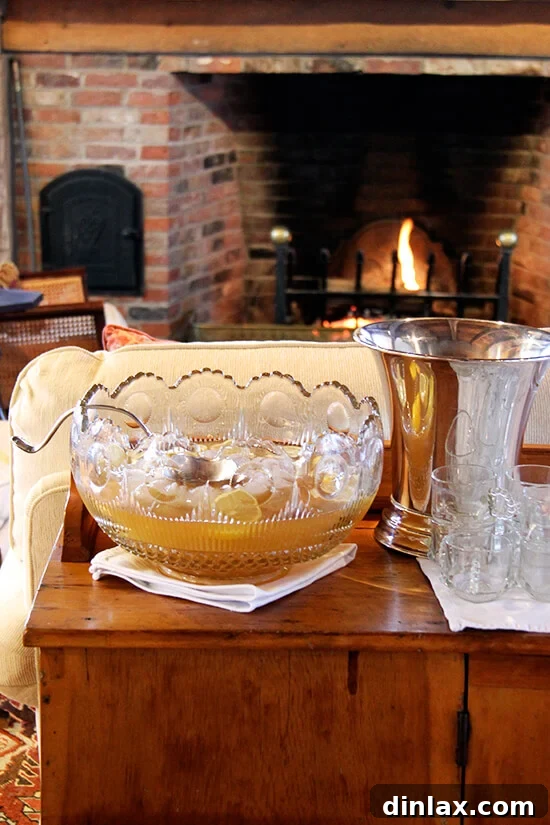
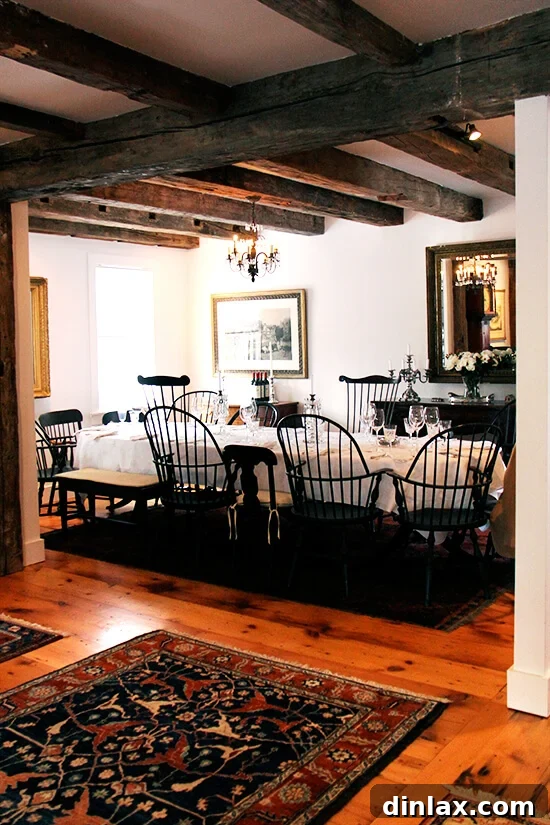
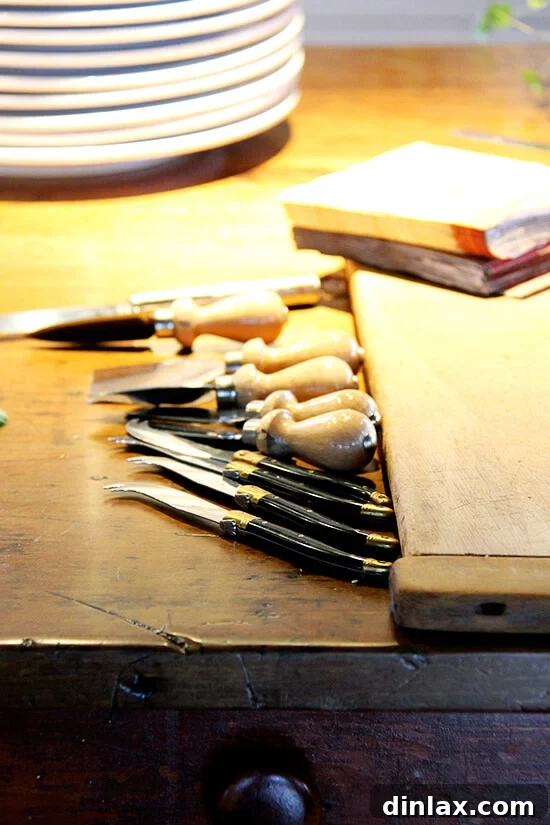
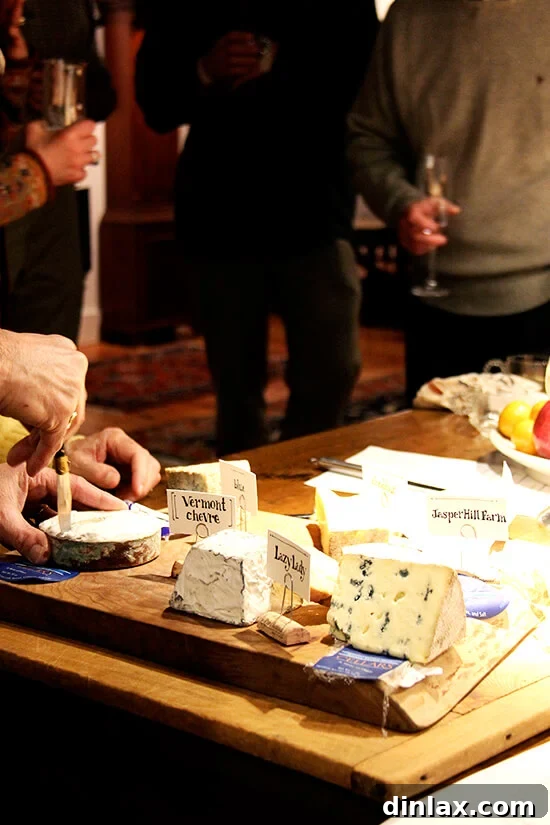
Our journey with this extraordinary butternut squash lasagna began amidst the picturesque, snow-covered landscapes of Vermont during a memorable Thanksgiving. Imagine a cozy setting: the gentle snowfall outside, the cheerful presence of dogs, and the constant warmth of a crackling fire. It was an idyllic scene, enhanced by an array of delectable Vermont-sourced treats. From the renowned Jasper Hill Farm cheeses and the succulent Dakin Farm ham (complemented by a divine ham sauce), to Uncle Wade’s fluffy waffles drenched in authentic Vermont maple syrup and refreshing Shed beer – every detail made one dream of staying forever.
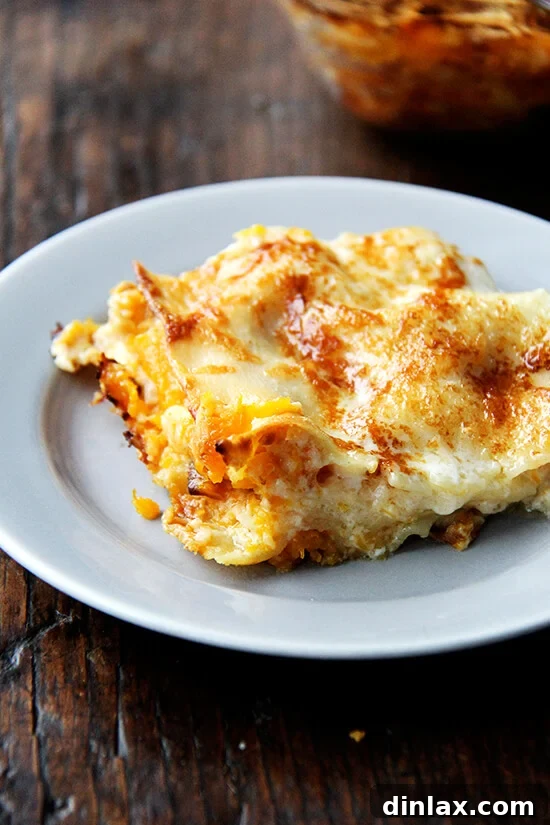
The culinary highlight of that unforgettable gathering, however, was undoubtedly this butternut squash lasagna. It was brought to the table by a vegetarian friend of my aunt and uncle, and from the moment it was unveiled from its insulated carry tote (a truly cool gadget!), I knew it was special. The friend, Kris, graciously shared the basic process, humbly describing it as an “old recipe from Gourmet” that she and her mother had perfected over the years. This simple dish managed to captivate everyone, earning rave reviews and being declared the absolute highlight of the entire Thanksgiving meal.
Typically, the thought of making lasagna can be daunting due to the multiple steps involved – the sauce, the béchamel, the cheeses, the layering. However, this particular recipe changes that perception entirely. My own attempt, inspired by that Vermont experience, came together remarkably painlessly. While the butternut squash roasted to sweet perfection, garlic and butter slowly melted on the stovetop, and milk gently simmered, infused with fragrant sprigs of fresh rosemary and sage. The use of no-boil noodles and just one stellar cheese, grated Parmigiano Reggiano, simplifies the assembly significantly. And the final, unique touch of whipped heavy cream on the top layer, though it sounds unconventional, creates an incredibly satisfying, golden-brown crust reminiscent of browned butter.
This isn’t just a recipe; it’s an invitation to create a cozy, heartwarming tradition. It’s the ideal meal to enjoy all winter long, a comforting dish to stash in your freezer for a busy weeknight, a thoughtful offering for a friend in need, or the show-stopping centerpiece for your next holiday party. Its proven ability to delight both carnivores and vegetarians makes it truly versatile and universally loved.
Looking for more ways to enjoy this versatile gourd? Explore our collection of favorite butternut squash recipes. For another delicious pasta dish, try our Favorite Roasted Eggplant Lasagna.
Frequently Asked Questions About Butternut Squash Lasagna
Before diving into the full recipe, let’s address some common questions to ensure your lasagna-making experience is smooth and successful.
What are the best no-boil lasagna noodles?
No-boil lasagna noodles are a game-changer for simplifying the lasagna process, eliminating the messy and time-consuming step of pre-boiling pasta. For years, I exclusively used Barilla no-boil noodles with great success. However, I encountered an unexpected issue last fall where the top layers of noodles remained stubbornly crisp and unsoftened, even after baking. This led me to a helpful community online facing similar challenges, suggesting a simple, yet effective, solution: a quick pre-soak.
While the idea of “pre-soaking no-boil noodles” might seem counterintuitive, it’s a minor step that makes a significant difference. Here’s my refined approach: I fill a small baking dish with about an inch of boiling water. I then soak three sheets of noodles at a time, which prevents them from sticking together. As soon as I transfer these three softened noodles to the baking dish for assembly, I immediately place three more in the hot water. The noodles only need a minute or two of soaking; this brief exposure to hot water is enough to kickstart their softening process, ensuring they absorb the béchamel beautifully during baking and result in perfectly tender layers.
Can you make this lasagna ahead of time?
Absolutely! This butternut squash lasagna is an excellent candidate for make-ahead preparation, making it perfect for entertaining or meal prepping. You have a couple of convenient options:
- Assemble and Refrigerate: You can assemble the entire lasagna up to 24 hours in advance. Cover it tightly with foil and store it in the refrigerator. When you’re ready to bake, simply follow the baking instructions, potentially adding an extra 10-15 minutes to the initial covered baking time to account for starting from cold.
- Bake and Refrigerate: For ultimate convenience, you can bake the lasagna completely ahead of time. Allow it to cool down to room temperature, then cover it well and refrigerate. To reheat, you have a few choices:
- Individual Portions: Slice the cooled lasagna into desired portions. Transfer them to a baking sheet and reheat in a preheated oven at 350ºF (175ºC) for 15-20 minutes, or until thoroughly heated and bubbly.
- Entire Pan: If reheating the whole lasagna, it’s best to let it come to room temperature for about 30 minutes before reheating. Cover the pan with foil and bake at 350ºF (175ºC) for 20 minutes. Remove the foil and continue baking for another 15-20 minutes, or until it’s hot throughout and the top is lightly re-crisped.
Can you freeze this lasagna?
Yes, this lasagna freezes beautifully, making it an ideal candidate for batch cooking and future meals. For best results, it’s recommended to freeze the lasagna after it has been fully baked. Ensure it cools completely to room temperature before transferring it to the freezer. This prevents ice crystals from forming excessively and maintains the lasagna’s texture.
To freeze, you can either:
- Individual Portions: Cut the baked and cooled lasagna into individual servings. Wrap each portion tightly in plastic wrap, then place them into an airtight freezer-safe bag or container. This method allows you to thaw and reheat only the amount you need, reducing waste and offering flexibility.
- Entire Pan: If you wish to freeze the entire pan, wrap it very well in several layers of plastic wrap, followed by a layer of aluminum foil. For extra protection against freezer burn, you might even consider tucking the entire wrapped pan into a large airtight freezer bag.
Frozen lasagna can be stored for up to 3 months. To reheat from frozen, you can either thaw it in the refrigerator overnight before following the reheating instructions above or bake it directly from frozen (covered with foil) at 350ºF (175ºC) for about 45-60 minutes, then uncover and bake for an additional 15-20 minutes until heated through and golden on top.
How to Cut Butternut Squash
For many, the most challenging part of this recipe is preparing the butternut squash itself. But with the right tools and a little technique, it becomes much easier. A good peeler and a sharp, sturdy knife make all the difference. For a visual guide, watch this quick one-minute video demonstration on how to peel and cut butternut squash safely and efficiently:
How to Make Butternut Squash Lasagna: A Step-by-Step Guide
Crafting this incredible lasagna involves a few key stages, each contributing to its rich, layered flavor and comforting texture. Let’s walk through them:
Step 1: Preparing and Roasting the Butternut Squash
You will need about 1 large or 2 smaller butternut squash, aiming for approximately 8 cups of cubed squash.
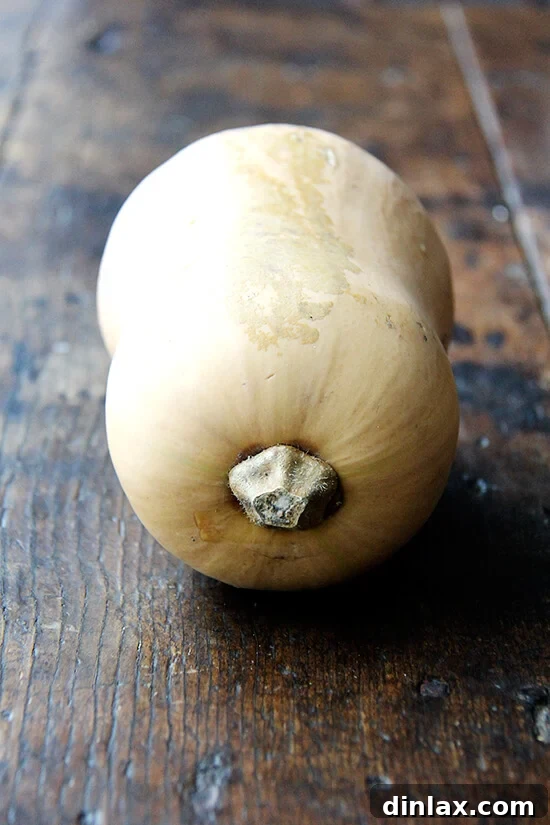
First, carefully peel the butternut squash. Then, using a sharp knife, dice it into uniform 1/2-inch cubes. Uniformity is key here for even cooking. (Refer to the video above for a detailed demonstration if needed.) You’re looking for about 8 cups of diced squash.
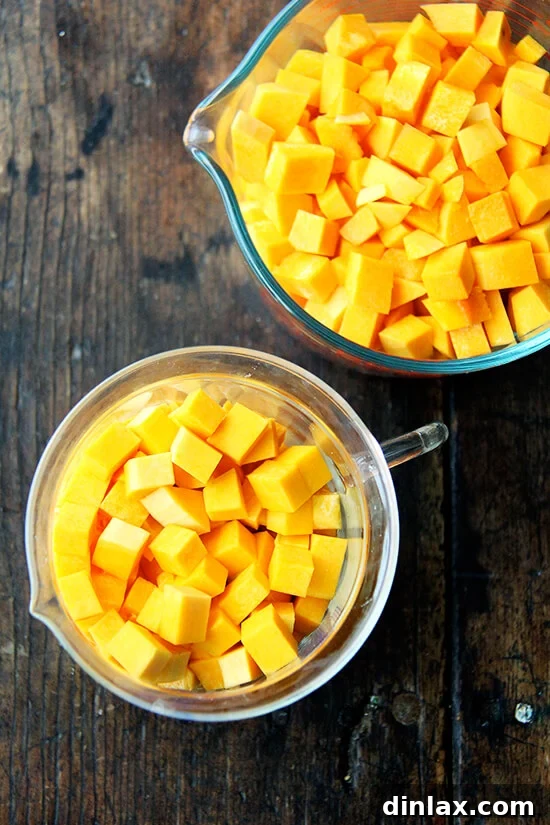
To roast the squash cubes, toss them with olive oil and a generous pinch of salt. This simple seasoning enhances their natural sweetness. Spread them in a single layer on a large rimmed baking sheet (or two if necessary to avoid overcrowding, which can steam rather than roast the squash). Roast in a preheated 450ºF (230ºC) oven for approximately 30 minutes, or until the squash is tender, slightly caramelized, and golden-brown at the edges. Roasting deepens the squash’s flavor, adding a crucial layer of sweetness and complexity to the lasagna.
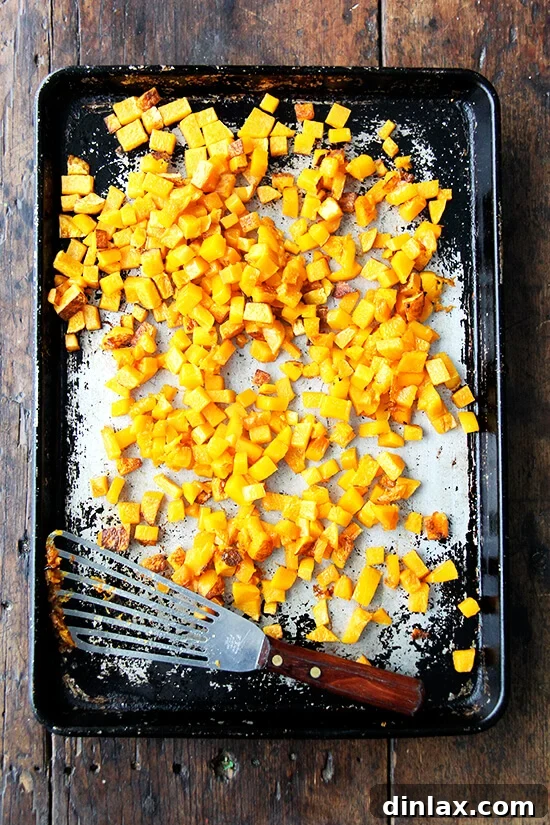
Step 2: Crafting the Herb-Infused Béchamel Sauce
While the squash roasts, begin preparing the fragrant béchamel sauce. In a saucepan, gently heat the milk with a few sprigs of fresh rosemary and sage. Allow the milk to simmer over low heat for about 10 minutes, letting the herbs slowly infuse their aromatic oils into the milk. This step is crucial for the unique flavor profile of the lasagna.
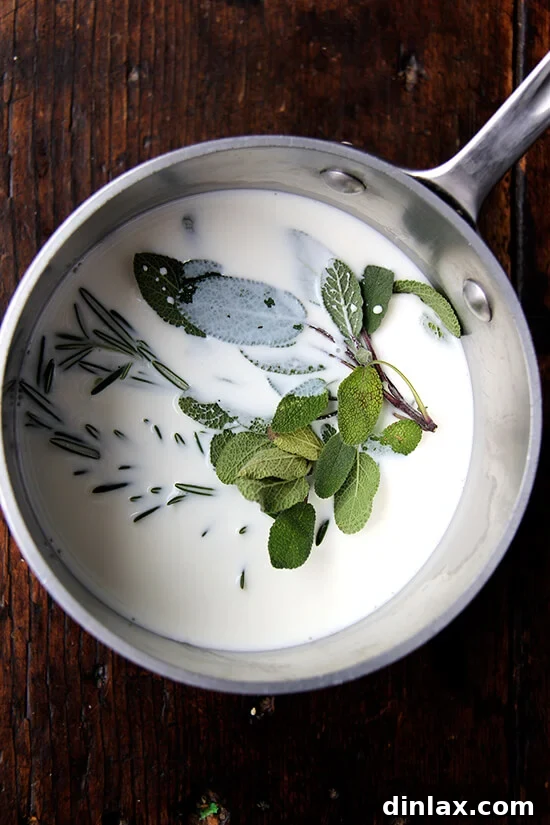
In a separate, heavy-bottomed pot, melt butter over moderate-low heat. Add minced garlic and cook until softened and fragrant, taking care not to burn it. Stir in the all-purpose flour to create a roux, cooking and stirring for about 3 minutes until it forms a pale, nutty-smelling paste.
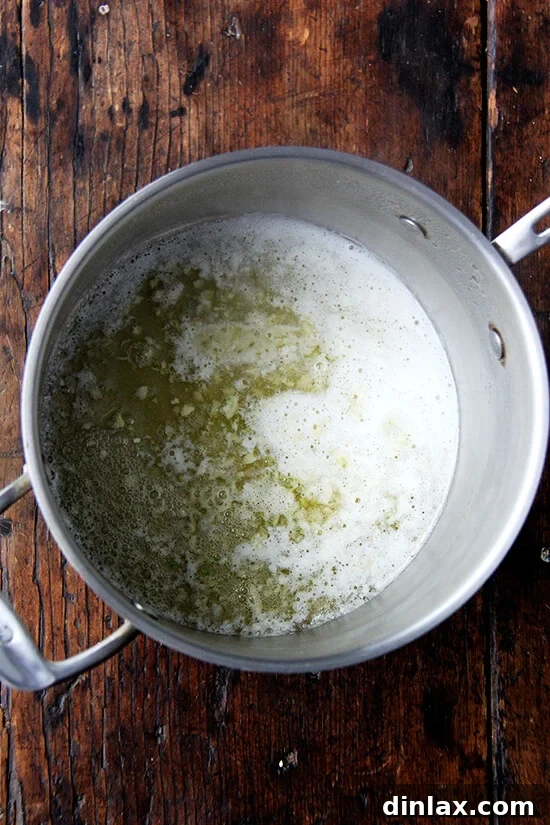
Once the roux is ready, remove the pan from the heat. Carefully strain the herb-infused milk into the butter-flour mixture in a slow, steady stream, whisking constantly to prevent lumps. Return the pan to the heat and simmer the sauce, whisking occasionally, for about 10 minutes. The béchamel will gradually thicken to a luxurious consistency that coats the back of a spoon. If you accidentally get distracted (perhaps by trying to photograph delicious ingredients!) and your milk boils over, don’t fret too much; a good fit helps, then clean up and continue! (You’ll feel better, I promise.)
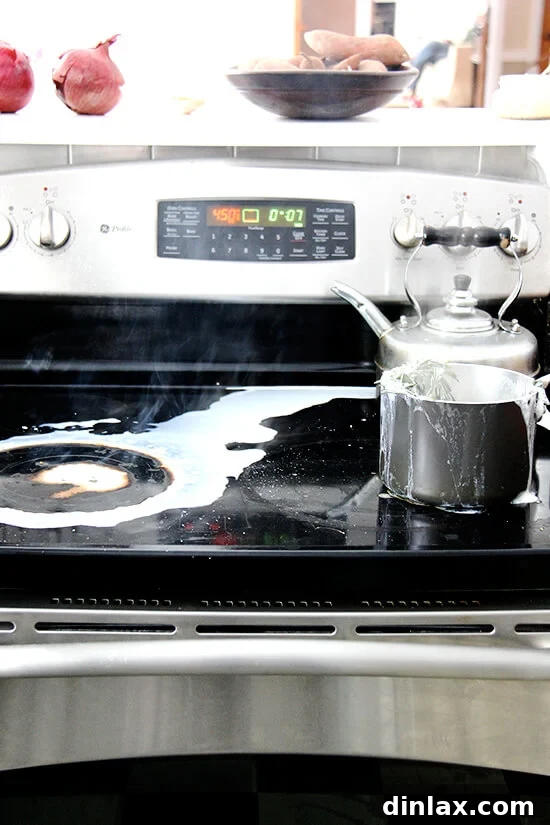
Finally, gently fold the roasted butternut squash cubes into the prepared béchamel sauce. Season with salt and pepper to taste. This rich, creamy, and herbaceous squash mixture is the heart of your lasagna. It can be made up to 3-4 days in advance and stored in the fridge, covered tightly with plastic wrap to prevent a skin from forming.
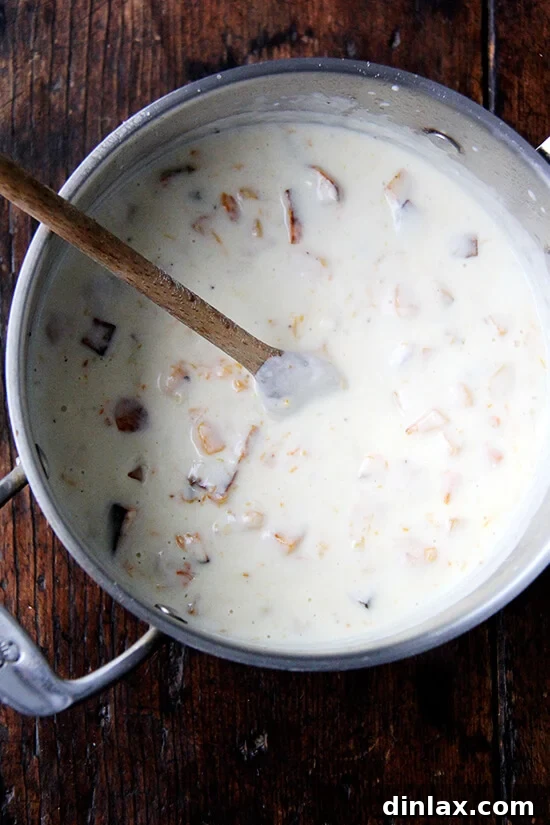
Step 3: Assembling the Lasagna Layers
It’s time for assembly! Remember our updated method for no-boil noodles: while you’re assembling, quickly soak three sheets of noodles at a time in a small baking dish filled with an inch of boiling water. This brief soak ensures they hydrate properly and soften during baking.
Reduce your oven temperature to 375°F (190°C). Lightly butter a 9×13-inch baking dish.
Begin by spreading about 1 cup of the butternut squash béchamel mixture evenly across the bottom of the prepared baking dish. This layer won’t fully cover the bottom, but it provides a moist base. Carefully place three soaked lasagna sheets over the sauce, ensuring they don’t overlap too much. Use tongs to transfer the noodles from the hot water, then immediately place another three sheets in the hot water for the next layer.
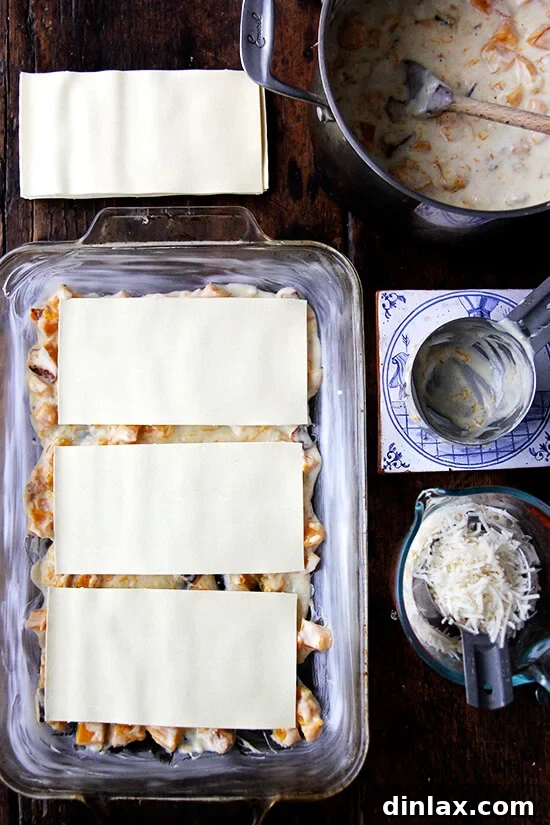
Spread half of the remaining squash béchamel (about 2 cups) over the noodles, then sprinkle with 1/2 cup of freshly grated Parmesan cheese. Top with three more soaked noodles. Spread the remaining squash béchamel mixture over these noodles and sprinkle with another 1/2 cup of Parmesan. Place the final layer of three soaked noodles on top.
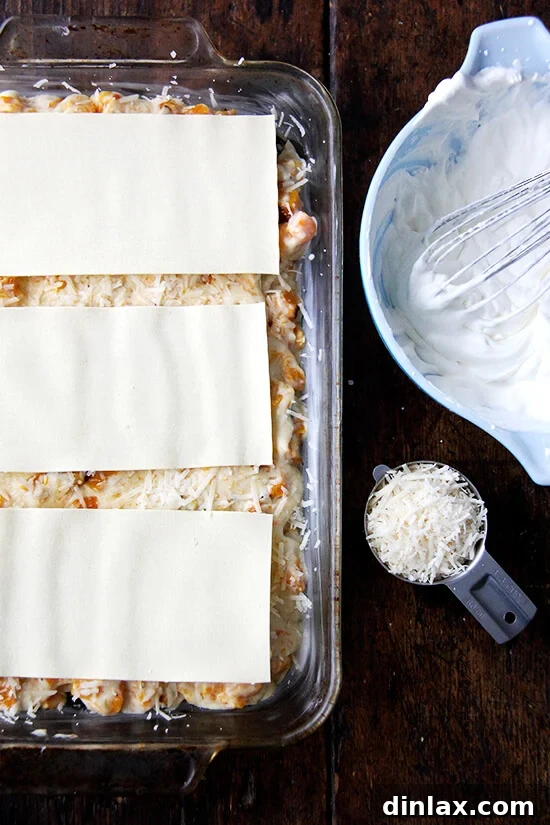
Step 4: The Unique Whipped Cream Topping and Baking
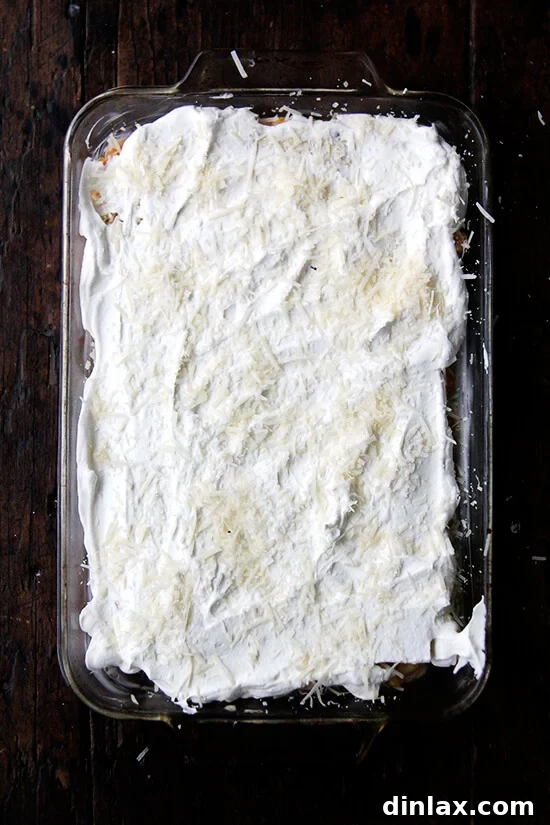
Here’s the unexpected, yet delightful, final touch: in a bowl, beat 1 cup of heavy cream with 1/2 teaspoon of salt using an electric mixer (or by hand) until it forms soft peaks. Gently spread this salted whipped cream evenly over the top layer of pasta, ensuring the noodles are completely covered. This layer, while seemingly odd, creates an incredibly savory, browned-butter-like crust as it bakes, adding another dimension of flavor and texture.
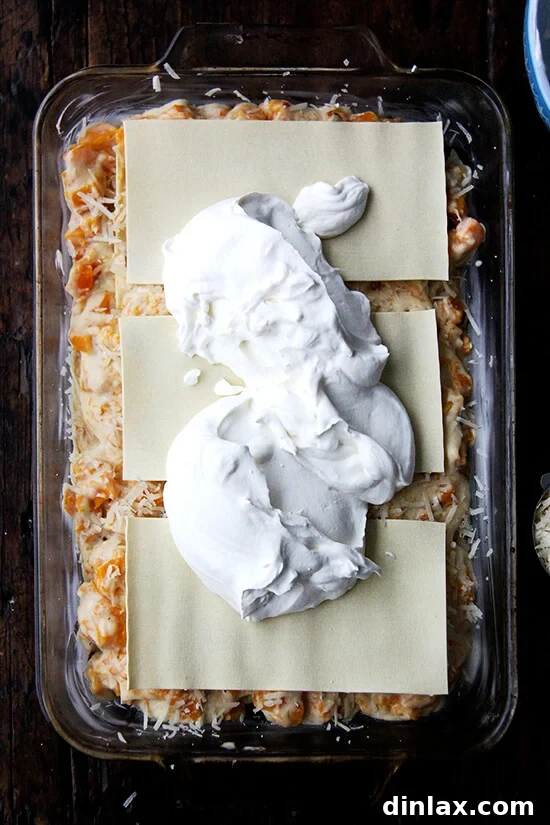
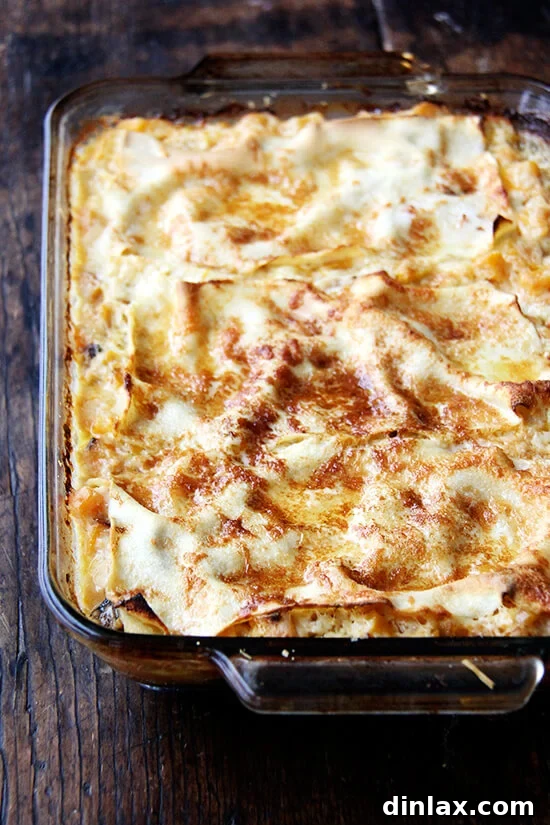
Sprinkle the remaining 1/3 cup of grated Parmesan cheese over the whipped cream. Cover the dish tightly with aluminum foil, tenting it slightly to prevent the foil from sticking to the top layer. Bake in the middle of the preheated 375°F (190°C) oven for 30 minutes. Remove the foil and continue baking for another 10 to 20 minutes, or until the top is beautifully golden brown, bubbling, and the lasagna is heated through.
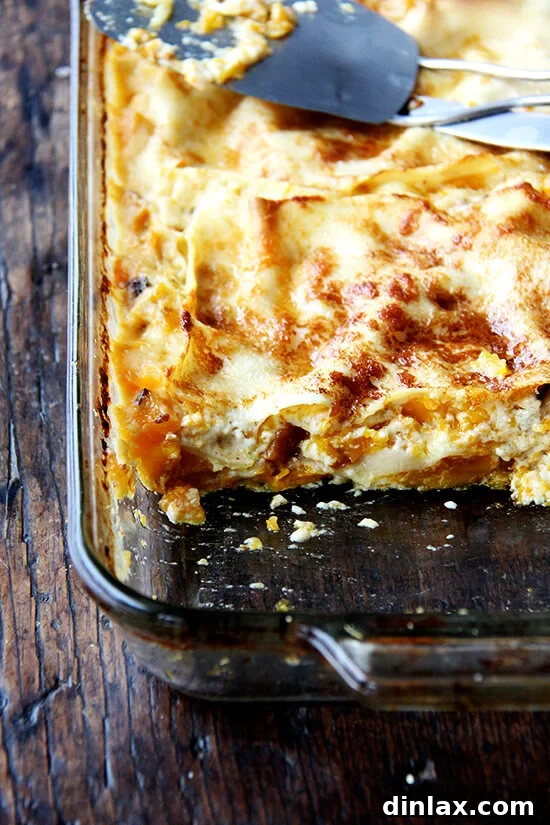
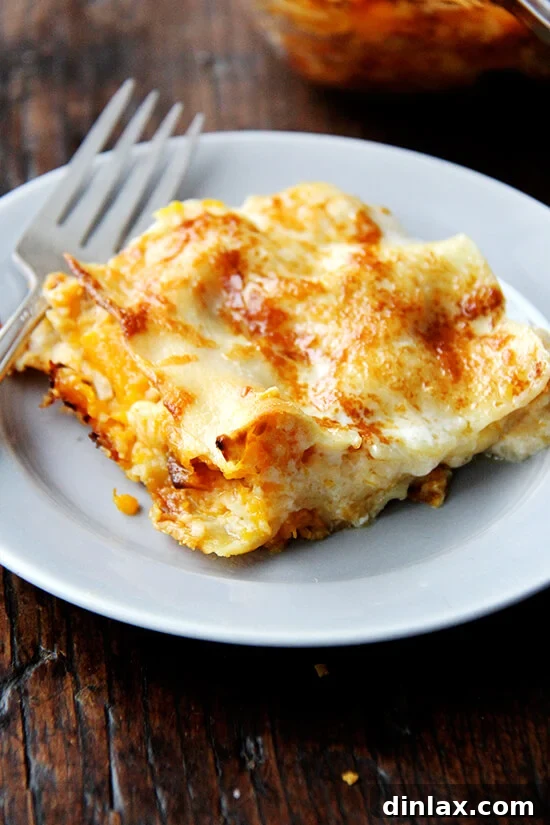
Once baked to perfection, remove the lasagna from the oven and let it stand for at least 5 minutes before slicing and serving. This resting period allows the layers to set, making for cleaner cuts and preventing the lasagna from falling apart.
The Vermont Thanksgiving Experience: A Photo Journey
Relive the charming moments that inspired this delightful recipe, from the serene snowfalls to the joyous family gatherings.
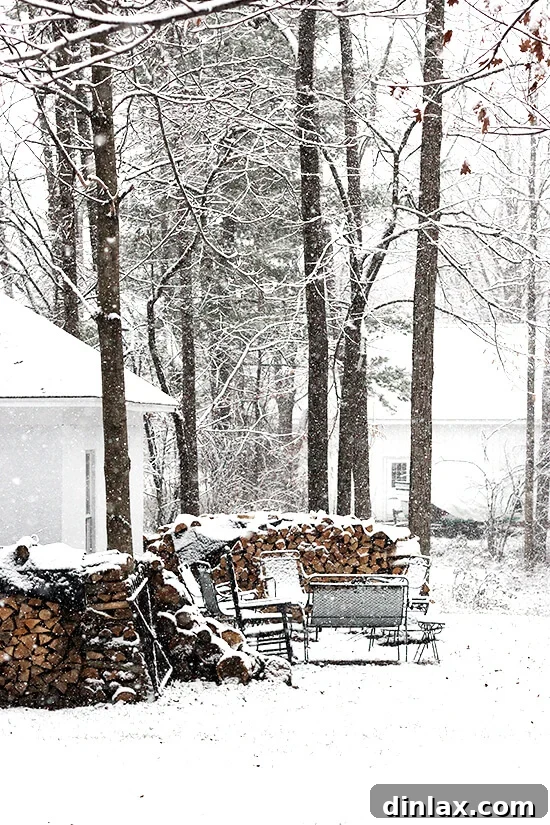
We arrived just 15 minutes before the snow began to fall, quickly transforming Middlebury, Vermont, into a magical winter wonderland:
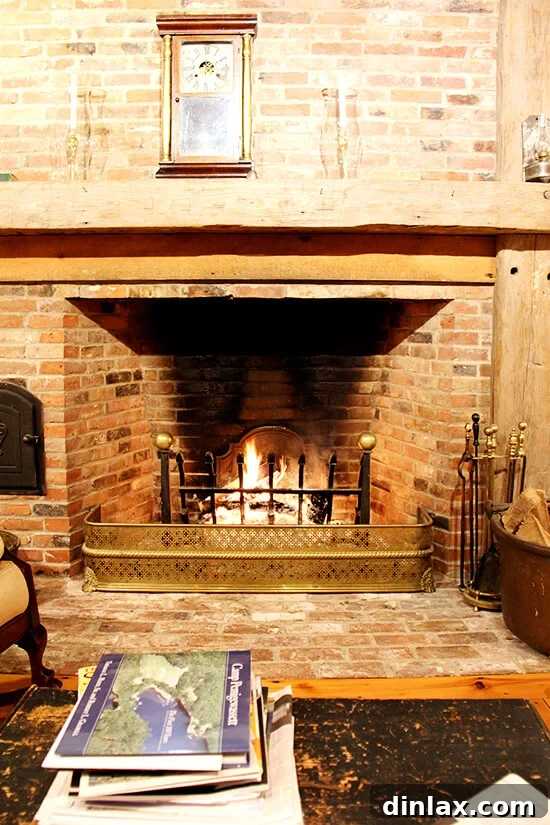
So, we gathered by the warmth of the roaring fire, enjoying the peaceful atmosphere,
lounged comfortably with the beloved pups, creating cherished memories,

engaged in creative play with Legos, fostering imagination and fun,

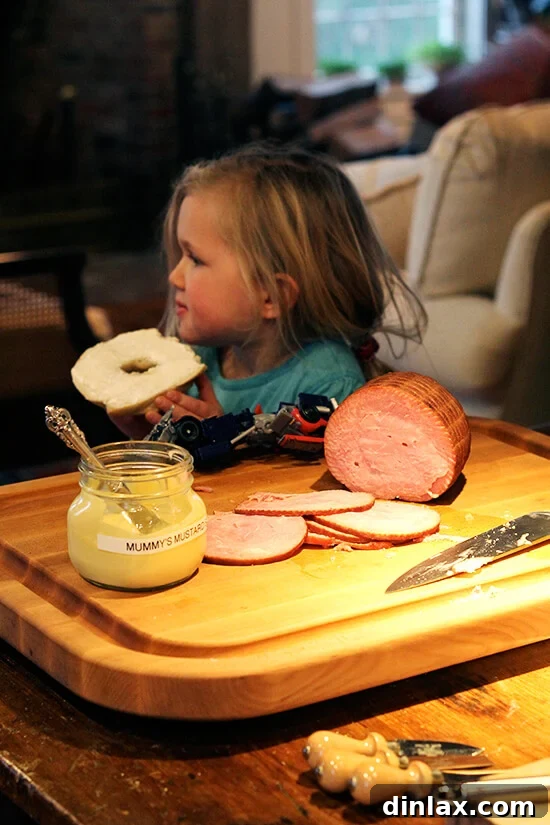
and savored a delightful lunch: fresh bagels and cream cheese, accompanied by the exquisite Dakin Farm Ham (truly exceptional) and my grandmother’s legendary mustard sauce (simply the best!):
On Thanksgiving morning, Uncle Wade started the day right by preparing a fresh batch of waffles, filling the house with a comforting aroma:

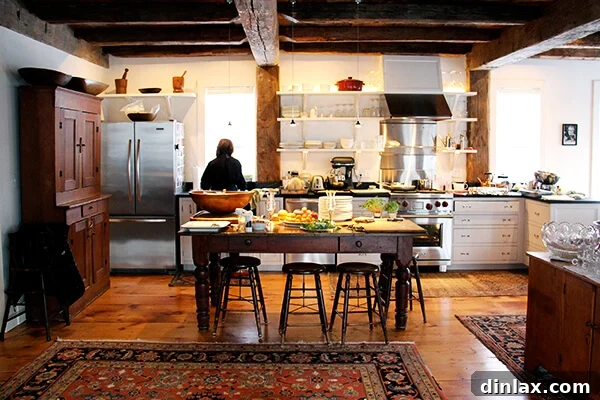
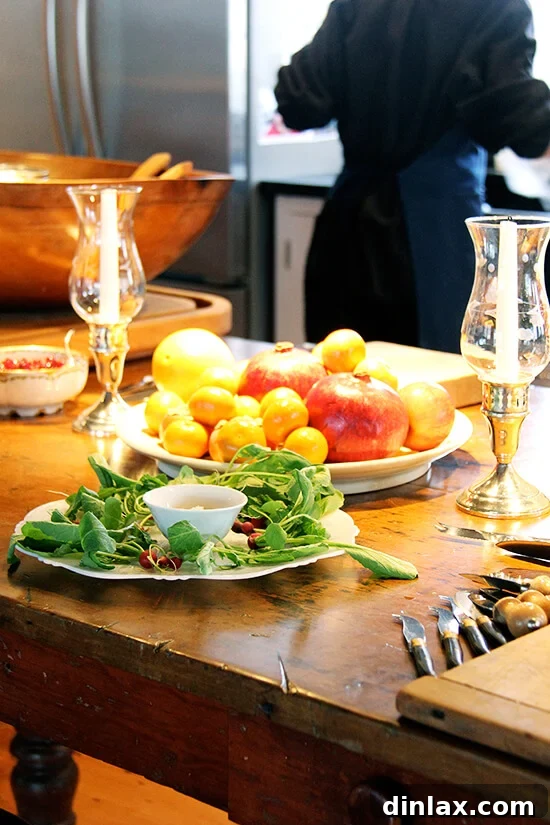
and everyone eagerly pitched in, lending a hand in preparing for the grand feast, contributing to the communal joy:

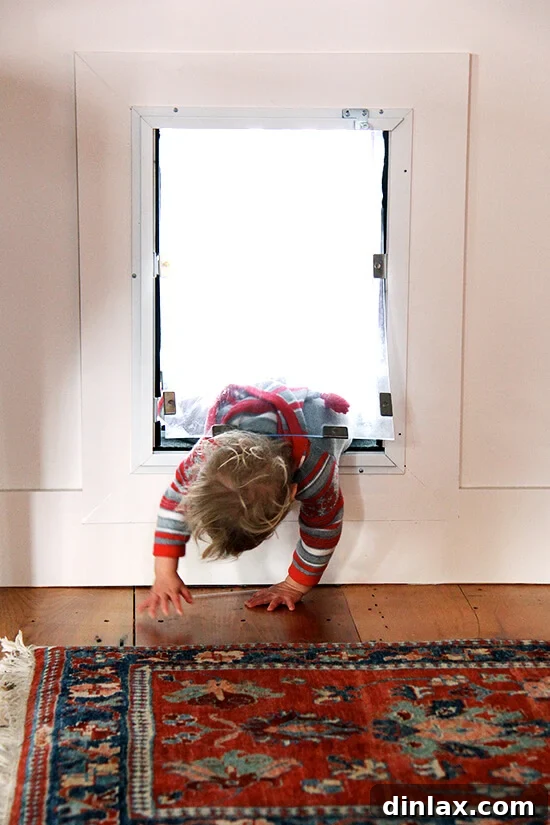
During dinner, little Wren discovered the exciting adventure of the dog door, adding a touch of humor to the evening,
and Ajax, our loyal golden retriever, took a well-deserved nap, content in the festive atmosphere.

Print Recipe
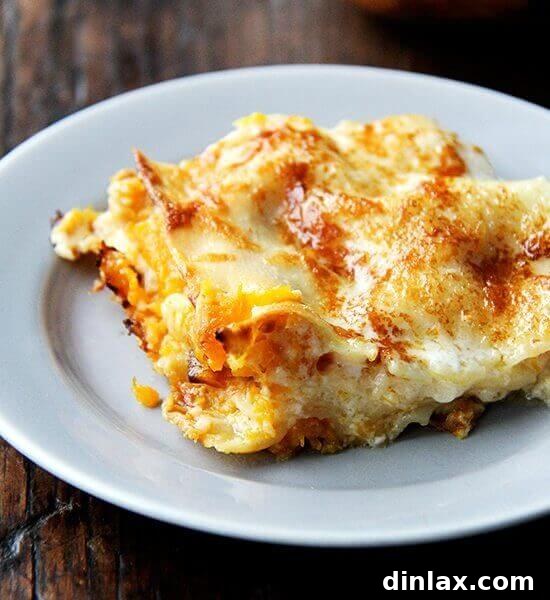
Roasted Butternut Squash Lasagna
★★★★★ 5 from 52 reviews
- Author: Alexandra Stafford
- Total Time: 1 hour 25 minutes
- Yield: 8 to 10 servings
- Diet: Vegetarian
Description
Creamy, rich, and undeniably delicious—this roasted butternut squash lasagna recipe is remarkably easy to make and incredibly satisfying. Its distinct flavor comes from a special rosemary- and sage-infused béchamel sauce, complemented by the convenience of no-boil lasagna noodles. This super flavorful lasagna is a hit with both carnivores and vegetarians, making it an ideal choice for entertaining guests.
Adapted from a classic Gourmet recipe – unfortunately, the original link no longer appears to be available on Epicurious.
Ingredients
- 3 pounds butternut squash, quartered, seeded, peeled, and cut into 1/2-inch dice (approximately 8 cups of cubed squash)
- 3 tablespoons grapeseed or olive oil
- 4 cups milk (2% or whole)
- A few sprigs of fresh rosemary and sage
- 1 tablespoon minced garlic
- 4 tablespoons unsalted butter
- 4 tablespoons all-purpose flour
- Nine 7– by 3 1/2-inch sheets dry no-boil lasagna pasta (Barilla brand recommended)
- 1 1/3 cups freshly grated Parmesan cheese
- 1 cup heavy cream
- 1/2 teaspoon salt
Instructions
- Preheat your oven to 450°F (230°C). Spread the diced butternut squash evenly onto 1 extra-large sheet pan or 2 standard-sized sheet pans. Toss the squash with 2 tablespoons of oil if using one large pan, or 1 tablespoon of oil for each smaller pan. Season generously with salt and toss to ensure an even coat. Transfer to the preheated oven and roast for about 30 minutes, flipping the squash halfway through, until it is tender and begins to develop a lovely golden-brown caramelization.
- While the squash is roasting, begin preparing your herb-infused milk. In a medium saucepan, bring 4 cups of milk to a gentle simmer with the fresh rosemary and sage sprigs. Reduce the heat to low and let the milk mixture infuse for about 10 minutes. Afterwards, carefully pour the infused milk through a sieve into a large pitcher or measuring cup to remove the herbs. Set aside.
- In a separate large, heavy saucepan, melt the 4 tablespoons of butter over moderately low heat. Add the 1 tablespoon of minced garlic and cook, stirring frequently, until the garlic has softened and become fragrant (be careful not to let it brown). Stir in the 4 tablespoons of all-purpose flour to create a roux, and continue cooking and stirring often for approximately 3 minutes, allowing the flour to cook out. Remove the pan from the heat. Gradually whisk the warm, strained milk mixture into the roux in a slow, steady stream until the sauce is completely smooth and free of lumps. Return the pan to the heat and simmer the sauce, whisking occasionally, for about 10 minutes, or until it has thickened to a consistency that coats the back of a spoon. Finally, stir in the roasted butternut squash and season the béchamel with salt and pepper to taste. This squash béchamel sauce can be prepared up to 3 days in advance and stored in the refrigerator; ensure its surface is covered with plastic wrap to prevent a skin from forming.
- Reduce your oven temperature to 375°F (190°C). Lightly butter a 9×13-inch baking dish. IMPORTANT UPDATE ON NOODLES: Due to inconsistencies in how no-boil noodles expand and soften, we recommend a brief pre-soak. If you’ve never had issues with your chosen no-boil noodles, you may omit this step. However, if you’ve experienced overly firm noodles, this quick soak will make a noticeable difference: Bring a small pot of water to a rolling boil or fill a teapot with water and bring it to a boil. Pour the boiling water into a small, shallow vessel, such as another 9-inch baking dish. When you are ready to assemble, dunk three of the dry lasagna sheets into the hot water and let them soak briefly while you start the first layer.
- To assemble, pour 1 cup of the butternut squash béchamel sauce into the prepared baking dish (it will not completely cover the bottom, which is fine). Carefully place the three soaked lasagna sheets over the sauce, ensuring they don’t touch each other significantly. Use tongs to extract the noodles from the hot water. As soon as you transfer these three noodles to the baking dish, immediately soak three more sheets for the next layer. Spread half of the remaining sauce (approximately 2 cups) over the noodles and sprinkle with 1/2 cup of freshly grated Parmesan cheese. Top with the next three soaked noodles. Then, soak the final three noodles in the hot water bath. Spread the remaining sauce mixture evenly over this layer of noodles and top with another 1/2 cup of Parmesan. Finish with the final layer of three soaked noodles.
- In a clean bowl, using an electric mixer (or by hand with a whisk), beat the 1 cup of heavy cream with the 1/2 teaspoon of salt until it holds soft peaks. Gently and evenly spread this salted whipped cream over the very top pasta layer, making sure the pasta is completely covered. Sprinkle the remaining 1/3 cup of Parmesan cheese over the whipped cream. Cover the dish tightly with aluminum foil, creating a slight tent to prevent the foil from touching the top layer of whipped cream. Bake in the middle of the oven for 30 minutes. After 30 minutes, remove the foil and continue to bake the lasagna for an additional 10 to 20 minutes, or until the top is beautifully golden brown, bubbling, and the lasagna is heated through. Let the lasagna stand for 5 minutes before carefully cutting and serving to allow the layers to set.
- Prep Time: 15 minutes
- Cook Time: 1 hour 10 minutes
- Category: Lasagna
- Method: Oven
- Cuisine: Italian, American