Exploring California’s Pioneering Sustainable Food Movement
Before making the transformative move to California, Bob Pierson, a visionary director at Farm-To-City, shared a fascinating prediction: my new home state would be light-years ahead—agriculturally speaking—of the East Coast. While the sheer abundance of farmers’ markets across California initially impressed me, it wasn’t until a recent profound experience that I truly began to grasp the depth of his insight into the state’s advanced food landscape.
A Fond Look Back: Philadelphia’s Vibrant Local Food Scene
Despite relishing in the seemingly endless supply of luscious avocados and vibrant oranges since my arrival, the past month had unexpectedly filled me with a quiet pride for my former city, Philadelphia. The City of Brotherly Love boasts a remarkable diversity of local foods, readily available to its residents and surrounding communities. While its seasonal farmers’ markets typically thrive from May through December, Philadelphians benefit from year-round access to fresh, local produce at institutions like the Fair Food Farmstand. Moreover, dedicated food enthusiasts have the option of joining convenient buying clubs during the colder winter months, ensuring a continuous supply of seasonal delights.
I recall with particular fondness living a mere ten blocks away from an incredible hub for local, sustainably sourced goods. This wasn’t just any store; it was a treasure trove offering everything from succulent grass-fed beef, lamb, and pork to creamy raw milk, artisanal raw-milk cheeses, and nitrate-free bacon. Freshly laid chickens, farm-fresh eggs, and a rotating selection of seasonal fruits and vegetables completed this gastronomic haven. The convenience and quality were unparalleled, making healthy, local eating an effortless part of daily life.
Navigating the West Coast Culinary Landscape: A Personal Quest
My early days on the West Coast, however, presented a stark contrast. I had yet to stumble upon a similar comprehensive local food source or farmstand akin to Philadelphia’s Fair Food Farmstand. While I could easily subsist on a diet of sautéed Swiss chard, robust mustard greens, and hearty kale, elegantly mixed with rice and a sprinkle of Parmesan, my culinary preferences often diverged from those of my spouse. My recent vegetarian-centric dinners, I suspected, left him yearning for more substantial fare. I distinctly remember one meatless evening when Ben, after declaring, “Mmmm, this is delicious” and clearing his plate, was found an hour later scrambling eggs and meticulously searching the refrigerator for any protein-rich morsel to add to his pan. It became clear that a more balanced approach to our meals was necessary.
Discovering the “Roots of Change”: A Journey to San Diego
Driven by this personal culinary challenge and an underlying curiosity, I ventured south to San Diego two days prior to attend a pivotal Roots of Change meeting. I’ll openly admit, a significant part of my motivation was a quest for information on sourcing local, humanely raised meats. As I entered the bustling room, I quickly spotted the esteemed Melanie Lytle, a prominent figure in the local food movement, and found an available chair at her table. It wasn’t long before the vision of California that Bob Pierson had described to me began to vividly materialize.
The Driving Force Behind California’s Food Revolution
It quickly became apparent that Californians, much like many concerned citizens across the nation, are deeply troubled by the current state of our global food system and its profound implications for the future health of our communities and the planet. Larry Yee, a County Director and insightful speaker at the event, eloquently articulated that these pressing worries are the primary catalyst igniting what he termed the “food revolution.” This revolution isn’t a singular event but a multifaceted movement born from a collective desire for change and sustainability.
Participation in this burgeoning revolution takes myriad forms, reflecting the diverse approaches individuals adopt to make a difference:
- Committing to reusable shopping bags at grocery stores, reducing plastic waste.
- Boycotting bottled water in favor of tap water, addressing environmental and economic concerns.
- Actively shopping at local farmers’ markets, supporting small-scale producers and seasonal eating.
- Joining Community Supported Agriculture (CSAs) programs and buying clubs, fostering direct farm-to-consumer relationships.
- Consciously seeking out humanely raised meats, promoting ethical animal welfare practices.
- Prioritizing the purchase of organic and locally grown foods, endorsing healthier agricultural methods and reducing carbon footprints.
Roots of Change: A Blueprint for a Sustainable Future
What truly distinguished California’s efforts, I learned, was its ambitious approach to elevating these individual actions to a systemic level. The Roots of Change initiative has meticulously crafted a comprehensive and groundbreaking plan aimed at establishing a fully sustainable food system across the entire state of California by the year 2030. This monumental undertaking is not designed to be a solitary endeavor; it explicitly demands the collaborative efforts of an extensive network of stakeholders, including food producers, distributors, businesses, non-profit organizations, governmental agencies, and foundational partners. As Larry Yee astutely observed, the ultimate objective of this ROC initiative extends beyond mere sustainable agriculture; it envisions a holistic sustainable food system that encompasses every stage from cultivation to consumption. In a state characterized by its vast population and diverse interests, Yee stressed that “enlightened leadership” is absolutely critical to navigating the complexities and ensuring the resounding success of this visionary project.
San Diego County: A Microcosm of California’s Agricultural Leadership
My day at the meeting was immensely enlightening, offering deep insights into my new home state, and particularly shedding light on the unique agricultural landscape of San Diego County. California truly stands as an agricultural powerhouse:
- It holds the distinction of being the nation’s most populous state.
- It is the nation’s largest food producer, contributing significantly to the national food supply.
- Globally, it ranks as the world’s 5th largest supplier of food and agricultural commodities, demonstrating its immense influence on global markets.
San Diego County, in particular, offers a fascinating case study of sustainable farming practices and community involvement:
- Remarkably, it boasts more organic farms than any other county in the entire country, a testament to its commitment to ecological agriculture.
- A significant 63% of its farms are small, operating on just 1 to 9 acres, highlighting a prevalence of small-scale, often family-run operations.
- An impressive 92% of the farms are family-owned, underscoring the deep roots of generational farming in the region.
- Notably, 22% of the farms are Native-American owned, reflecting a rich heritage and diverse ownership within the agricultural sector.
Many speakers at the event reiterated a powerful sentiment: California is arguably the most vital agricultural region on Earth. With its unparalleled combination of innovative, forward-thinking foundations and entrepreneurial spirit, California consistently sets global trends not only in technology but profoundly in the realm of food production and sustainability.
Voices from the Community: Addressing Critical Food System Challenges
Approximately halfway through the engaging meeting, Michael Dimock, who served as both President of Roots of Change and the event’s enthusiastic MC, opened the floor to the attendees, inviting their perspectives and questions. This segment proved to be a vibrant exchange of ideas and concerns, highlighting the multifaceted challenges and innovative solutions within the local food movement:
- Naomi Butler, a dedicated nutritionist with the County of San Diego, passionately underscored the imperative of integrating healthy, local food into our school systems. She advocated for robust garden and farm-to-school programs, emphasizing that we must begin “by changing the taste buds of our kids” to foster lifelong healthy eating habits.
- A young, private chef echoed this sentiment, stressing the crucial importance of educating children on these matters, recognizing them as “the future” custodians of our food system.
- Other participants inquired about the expansion of “points of contact” for local food, suggesting an increase in farmers’ markets, food co-operatives, and efficient distribution centers to enhance accessibility for all communities.
- One chef articulated specific concerns unique to her region, noting, “We have particular issues down here,” referring to the distinct challenges facing San Diego County. She voiced her worries regarding the welfare of the Spanish-speaking community and pondered how to effectively address the complex issues surrounding immigration within the food labor force.
- Another insightful woman highlighted a significant, nationwide reality: the looming retirement of a large number of farmers. She posed a critical question about the future of their farms, raising concerns about land succession and the continuity of agricultural production.
Profitability: The Linchpin of Small Farm Survival
While the challenges confronting the sustainable food movement are undeniably vast and complex, the underlying principle, as Eric Larson, Executive Director of the San Diego County Farm Bureau, eloquently concluded, is remarkably straightforward: profitability. For farms to thrive and remain operational, they must be financially viable. This is especially pertinent in California, where agricultural land comes at a premium, and small-scale farmers face intense competition in an increasingly globalized food market. Ensuring the economic stability of these vital farms is not just a business concern; it’s a foundational element for the health and resilience of our entire food system.
A Renewed Perspective and a Call to Action
Driving home from the meeting, I felt a mix of being slightly overwhelmed by the scale of the challenges, yet profoundly clear on a few fundamental truths. San Diego County is blessed with a multitude of small farms, many of which are dedicated to organic and sustainable farming techniques. The collective health and well-being of our community are inextricably linked to the survival and prosperity of these small farms. And critically, the enduring survival of these invaluable farms necessitates the collaborative effort and dedicated work of many hands, from farmers to consumers, policymakers to educators.
I must admit to a slight embarrassment, realizing that my initial motivation for attending the meeting was primarily driven by a personal quest to find local meat for Ben and myself. However, the discussions broadened my perspective immeasurably, revealing far more critical issues at stake—chief among them, ensuring access to nutritious, good food for schools and underserved, low-income communities. Despite the daunting nature of this task, I am immensely inspired by the passionate individuals involved in this movement and sincerely hope to play an active role in the Roots of Change initiative’s vital efforts.
Highlighting Local Goodness: Don’s Farm Arugula
As I mentioned in a previous post, the arugula I’ve been sourcing from local farmers’ markets has been nothing short of delectable, offering a particularly delightful peppery kick. This specific vibrant bunch, for instance, hails from Don’s Farm in Wildomar, CA, a treasure I discovered at the Sunday San Clemente farmers’ market – a pleasant surprise given its superior quality. As Don tallied my purchase, he seemed a tad nervous, offering an apology for a bit of lingering dirt on the leaves. He explained that he had pulled the arugula from the ground in the complete darkness of 4:00 AM that very morning. However, Don had absolutely no cause for concern; a quick, refreshing soak in cold water effortlessly removed any remaining soil. Besides, for greens this exceptionally fresh and bursting with flavor, a little bit of earthiness is a small price to pay and a testament to its direct-from-the-soil origin.
Crafting the Perfect Dressing: Alice Waters’ Simple Lemon Vinaigrette
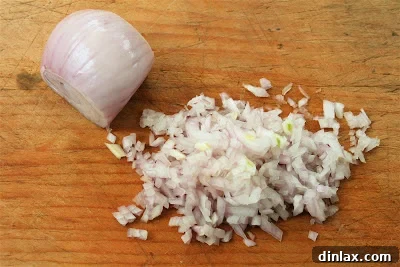
When it comes to dressing arugula, I find a simple lemon vinaigrette to be the ultimate companion, a culinary deduction likely influenced by my profound admiration for Melograno’s iconic arugula and prosciutto salad. While I don’t adhere to a rigid, precise recipe for this dressing, I faithfully follow the elegant and incredibly effective method championed by Alice Waters, meticulously described in her esteemed cookbook, Chez Panisse Vegetables. Her approach to many vinaigrettes begins with a crucial step: macerating finely chopped shallots for approximately 20 minutes in either fresh citrus juice or a good quality vinegar. This process gently mellows the shallot’s pungency while infusing the liquid with its delicate flavor. Following this, she adds a touch of salt, freshly ground pepper, a pinch of sugar to balance the acidity, and occasionally a hint of mustard (though I don’t have my book on hand to verify every detail). The dressing is then masterfully completed by slowly whisking in a stream of high-quality extra-virgin olive oil until a beautifully cohesive, if not fully emulsified, mixture is achieved. It truly could not be simpler, yet the result is consistently bright, fresh, and perfectly balanced.
Recipe: Arugula, Orange & Avocado Salad
This vibrant salad combines the peppery bite of arugula with the sweetness of oranges and the creamy texture of avocado, all brought together by a bright, simple lemon-shallot vinaigrette. It’s a perfect representation of California’s fresh, seasonal produce.
Serves 4
Ingredients:
- 1 shallot, finely diced
- 1 to 2 lemons, depending on size and juiciness
- sugar, to taste
- kosher salt and freshly ground black pepper, to taste
- extra-virgin olive oil
- 1 to 2 heads arugula, preferably fresh from a local farm
- 2 oranges, ripe and juicy
- 2 avocados, perfectly ripe
- Parmigiano Reggiano, shaved for garnish (optional, but highly recommended)
Instructions:
- Prepare the Shallot-Lemon Infusion: Place the finely diced shallots in a small, non-reactive bowl. Squeeze the fresh juice from the lemons over the shallots, ensuring to remove any seeds that may fall in. Allow this mixture to sit undisturbed for at least 20 minutes; this maceration process softens the shallot’s intensity and infuses its flavor into the lemon juice.
- Assemble Salad Components: While the shallots are macerating, begin preparing the other salad ingredients. Place the arugula in a large bowl filled with cold water and let it soak for a few minutes to crisp up and remove any residual dirt. Next, peel the oranges. For a more refined presentation, you may carefully remove individual sections from the pith, but simply slicing them is also perfectly fine. Halve the avocados, remove the pits, scoop out the creamy flesh, and then slice into elegant strips or dice into neat cubes. Set all these vibrant components aside.
- Whisk the Vinaigrette: Return to the bowl containing the shallot-lemon mixture. Add approximately a ¼ teaspoon of sugar (adjust to your preference for sweetness), a generous pinch of kosher salt, and freshly ground black pepper to taste. Slowly, in a steady stream, begin to whisk in the extra-virgin olive oil. Continue whisking until the mixture is well combined; it won’t fully emulsify like some dressings, but it should achieve a pleasant consistency. Taste the vinaigrette and adjust the seasoning as needed – if it’s too tart, add a little more sugar or a touch more oil to balance the flavors.
- Final Assembly and Serving: Drain the soaked arugula thoroughly and spin it dry using a salad spinner or gently pat it dry with clean paper towels. Place the crisp arugula in a clean, large salad bowl. Artfully arrange the prepared orange sections and avocado slices over the arugula. Drizzle the freshly made vinaigrette over the salad, adding it to your preferred taste (start with a little and add more if desired). Gently toss all the ingredients together to ensure an even coating. Divide the salad among individual plates, and for a final flourish, top each serving with a few delicate shavings of Parmigiano Reggiano. Serve immediately and enjoy the fresh, bright flavors of California!