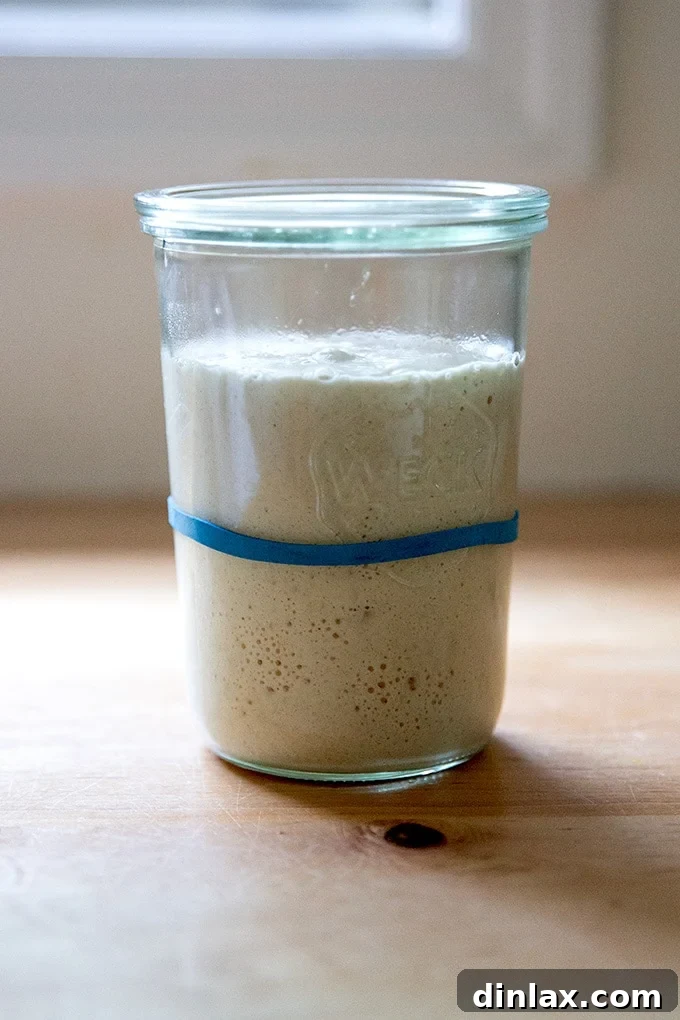
Welcome to the ultimate guide for creating your very own sourdough starter from scratch! Embark on a rewarding culinary journey that promises fresh, artisanal bread right from your kitchen. In this comprehensive guide, we’ll walk you through each simple step, ensuring that in less than a week, you’ll have a vibrant, active, and bubbly sourdough starter ready to transform your baking. Forget complex methods; we focus on clarity, efficiency, and proven techniques to get you baking sooner.
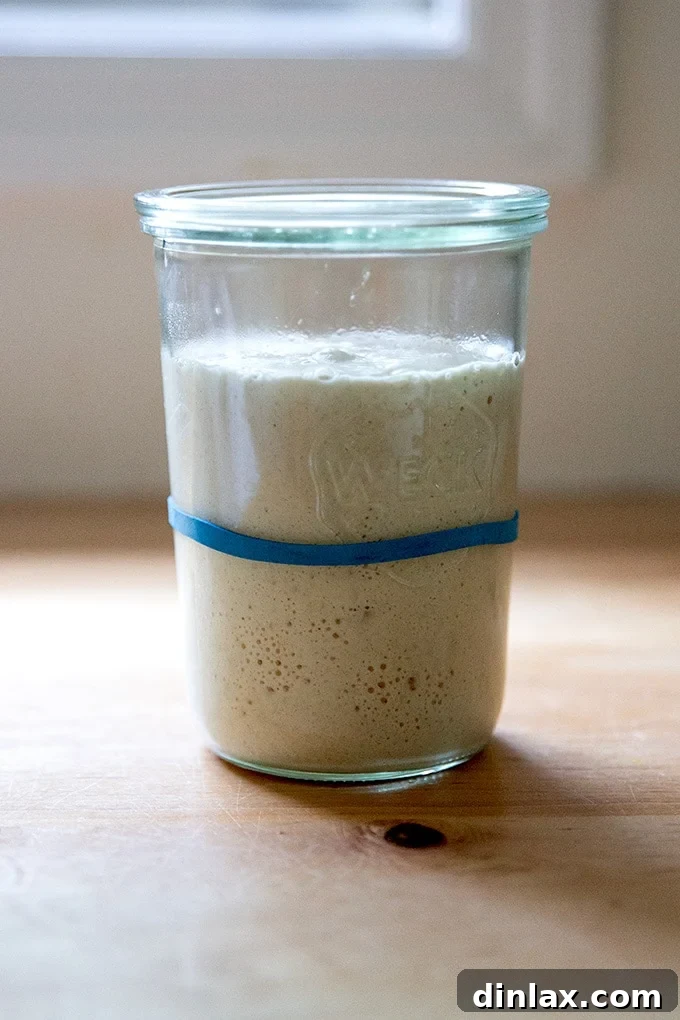
Understanding Your Sourdough Starter: A Living Wonder
At its heart, a sourdough starter is a remarkable living entity—a **fermented mixture** of just flour and water. This simple blend becomes a thriving ecosystem, bustling with beneficial **wild yeast and bacteria**. These microscopic powerhouses are not only responsible for making your sourdough bread rise but also for infusing it with that distinctive, complex, and delightful sour flavor.
But how does this happen? It’s time for a fascinating dive into the science of sourdough!
The Symbiotic Science of Sourdough
Wild yeasts and bacteria are ubiquitous; they exist everywhere around us, especially in flour, but also in the air and even on your hands. When you combine flour and water and allow this mixture to sit at room temperature, you create an ideal environment for these wild microbes to awaken and begin their work. The wild yeasts, hungry for sustenance, discover a rich food source in the flour: carbohydrates, primarily starch. They diligently convert these starches into simple sugars.
As the yeasts metabolize these sugars, they produce two key byproducts: **carbon dioxide (CO2)** and **alcohol**. The carbon dioxide gas gets trapped within the flour-water matrix, creating tiny bubbles that cause the starter to expand and ultimately make your bread rise. The alcohol, in turn, becomes a feast for the wild bacteria. These bacteria consume the alcohol and, in a beautiful exchange, produce various types of **lactic and acetic acids**. It is precisely these acids that impart sourdough bread with its characteristic tangy, nuanced flavor profile. The longer the fermentation, and the more robust your starter, the more pronounced and complex these flavors become.
This intricate dance between wild yeasts and bacteria is a perfect example of symbiosis, a mutually beneficial relationship. Together, they create a powerful leavening agent and a natural flavor enhancer, transforming humble flour and water into a culinary marvel. Understanding this process demystifies sourdough and empowers you to nurture a healthy, active starter.
Essential Equipment for Sourdough Starter Success
While the beauty of sourdough lies in its simplicity, having the right tools can make the process smoother and more enjoyable. Here’s what you’ll need:
- Digital Kitchen Scale: Precision is paramount in sourdough baking. A reliable digital scale ensures accurate measurements of flour, water, and starter, which is crucial for consistency and success.
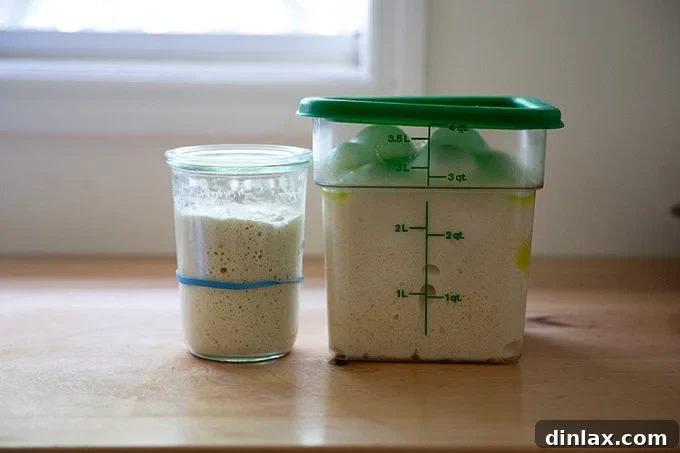
- Straight-Sided Vessel: A jar or container with straight sides (like a Cambro container or a Weck jar) is highly recommended. It allows you to easily observe and mark the rise and fall of your starter, giving you clear visual cues of its activity.
- Spatula or Spoon: For mixing your flour and water thoroughly, ensuring no dry clumps remain.
- Loose-Fitting Lid or Cloth Cover: Your starter needs to breathe while fermenting, but also needs protection from contaminants. A loose lid, cling film with a few holes, or a breathable cloth secured with a rubber band works perfectly.
- Rubber Band or Tape: Essential for marking the initial height of your freshly fed starter. This simple trick helps you track its growth accurately.
- Small Cans of Pineapple Juice: For the initial stage of your starter. Refer to the ‘Pineapple Juice Notes’ below for more details.
- Quality Flour: Your starter is only as good as its food. Invest in good quality stone-milled flour if possible, as it provides more nutrients for the microbes.
- Room Temperature Water: Unchlorinated water is best. Tap water can often be used, but if you have concerns, filtered or bottled spring water is a safe bet.
Top Tips for a Thriving Sourdough Starter
The success of your sourdough starter hinges on creating a hospitable environment for the wild yeast and bacteria. Happy microbes mean a powerful, flavorful starter. Nurturing a robust colony takes patience and attention. Here are three crucial tips to set you up for success:
Tip #1: Embrace the Power of Pineapple Juice
Kickstarting your sourdough starter with pineapple juice instead of plain water can significantly accelerate its development. The science behind this is simple yet effective: wild yeast cells flourish in a slightly acidic environment. Pineapple juice naturally has an acidic pH, which initially gives the beneficial yeast a competitive advantage over less desirable microorganisms that prefer a more neutral pH. This creates a stronger, healthier culture from the get-go, helping you establish a vigorous starter in a shorter timeframe. While initial use of pineapple juice is beneficial, you will transition to water for subsequent feedings.
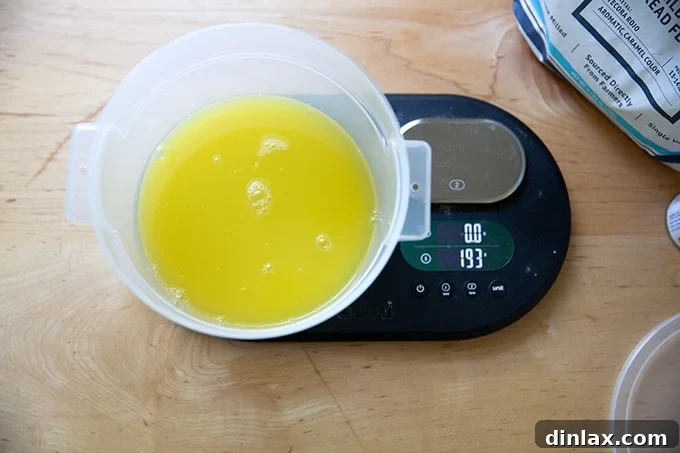
Pineapple Juice Notes: Small cans of pineapple juice are typically labeled as 6 ounces (177 ml), but when weighed, they often register around 192 grams. The key is to use an *equal amount by weight* of flour and pineapple juice for your initial mixture, regardless of the precise volume. If pineapple juice is unavailable, orange juice or even simply water (left out overnight to dissipate chlorine) can be used, though they might extend the initial activation period.
Tip #2: Cultivate a Cozy Home for Your Starter
Temperature is a critical factor in fermentation. Ideally, your sourdough starter will thrive in a warm environment, with temperatures around 80ºF (26ºC) being optimal. If you’re building your starter in cooler conditions, finding a warm spot is essential to encourage microbial activity. Here are several ideas to keep your starter cozy:
- Warm Kitchen Spot: Seek out naturally warm areas in your kitchen, such as on top of your refrigerator, near a window (but not in direct, intense sunlight which can overheat it), or in a slightly warmed, turned-off oven (see note below).
- DIY Proofing Box: Many ingenious bakers create their own “sourdough home.” This can be as simple as placing your starter in a box with a seed heating mat, then covering it with a towel to trap warmth.
- Invest in a Sourdough Home: For dedicated bakers, specialized devices like the Brod and Taylor Sourdough Home offer precise temperature control, though they require an investment and dedicated counter space.
- The “Warm Oven” Trick: Turn your oven on to its lowest setting for just 1 minute, then turn it off completely. This creates a gently warmed, insulated space. Crucially, **always attach a post-it note** to your oven to remind you the starter is inside, preventing accidental preheating which would kill your precious microbes. Avoid leaving the oven light on for extended periods, as it can sometimes generate too much heat, leading to over-fermentation or killing your starter.
Tip #3: Prioritize Good Quality Flour
The flour you choose is the primary food source for your starter’s microbial colony, so its quality directly impacts your starter’s vitality. Opt for freshly milled, stone-milled flour whenever possible. This type of flour retains more of the grain’s natural minerals and nutrients, providing a richer, more accessible food source for the yeast and bacteria to thrive. Look for local sources, health food markets, co-ops, or specialty stores like Whole Foods. If local options are limited, several reputable online suppliers offer high-quality stone-milled flours:
- Cairnspring Mills
- Anson Mills
- Community Grains
- Red Tail Grains
While stone-milled flour is ideal, unbleached all-purpose flour or whole wheat flour can also work. The key is to avoid bleached flours, as the bleaching process can inhibit microbial growth.
Step-by-Step: Building Your Sourdough Starter From Scratch
Patience and observation are your best friends in this process. Follow these daily steps, paying close attention to the visual and aromatic changes in your mixture, and you’ll soon have a robust starter.
Day 1: The Inauguration
Today marks the birth of your sourdough starter! Gathering your materials beforehand will ensure a smooth start.
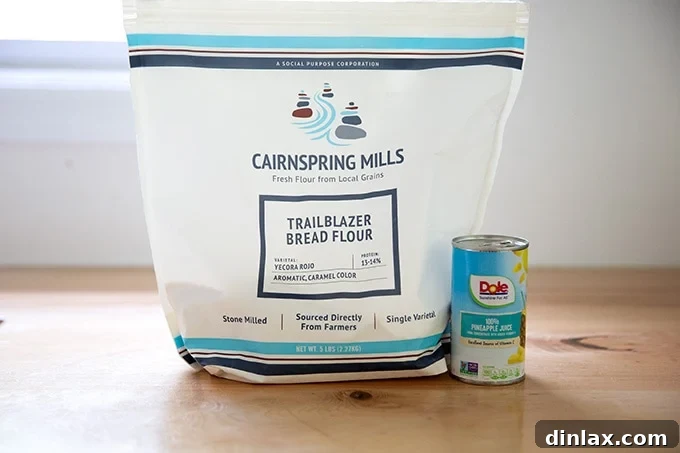
Carefully pour one small can of pineapple juice into your chosen large bowl or straight-sided vessel positioned on a tared (zeroed) kitchen scale. As mentioned in the tips, a typical small can yields around 192 grams of juice.
Now, add an equal amount of flour by weight to the vessel. Aim for approximately 192-193 grams of flour to match the juice. This 1:1 ratio by weight is crucial for the initial consistency.
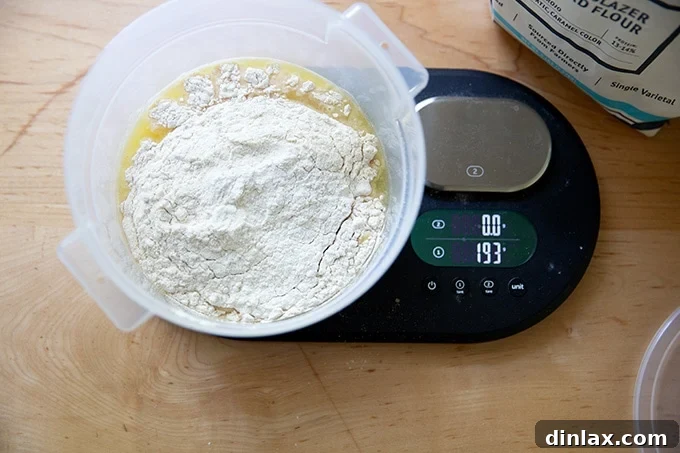
Stir the flour and juice together thoroughly until all the flour is fully absorbed and no dry clumps remain. The mixture should be a thick, paste-like consistency.
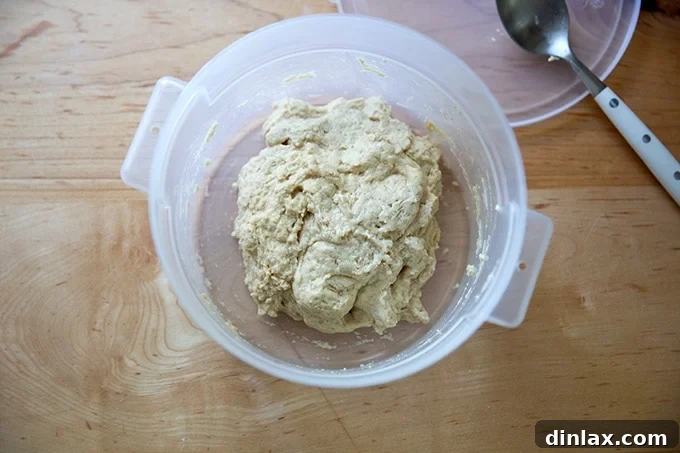
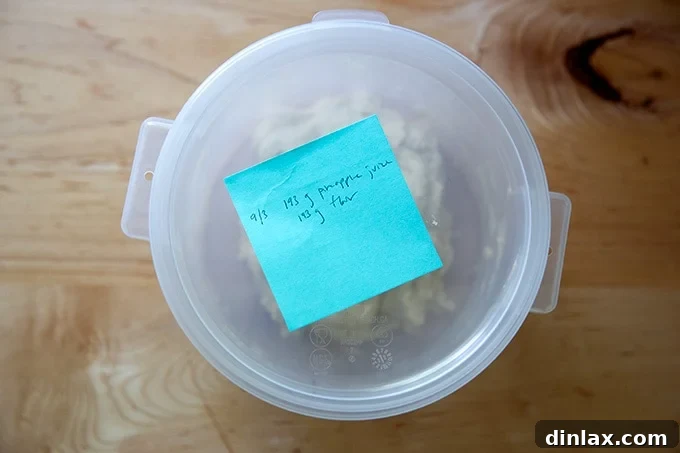
Cover your vessel loosely. It’s highly recommended to record the date, time, and measurements on a label or in a journal; you’d be surprised how easily you can lose track! Let this mixture rest at room temperature for a full 24 hours.
Day 2: First Stir and Observation
Today is a day of simple maintenance and observation.
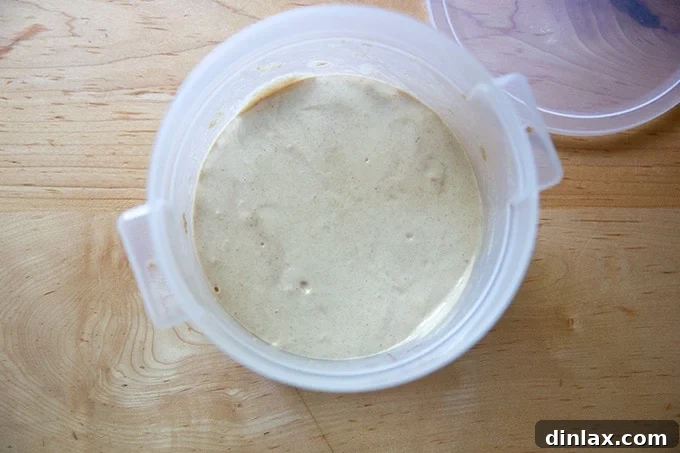
Uncover the vessel. You might not see much activity yet, but that’s perfectly normal. Give the mixture a good stir to reincorporate any liquid that may have separated and to introduce fresh oxygen, which the yeasts appreciate.
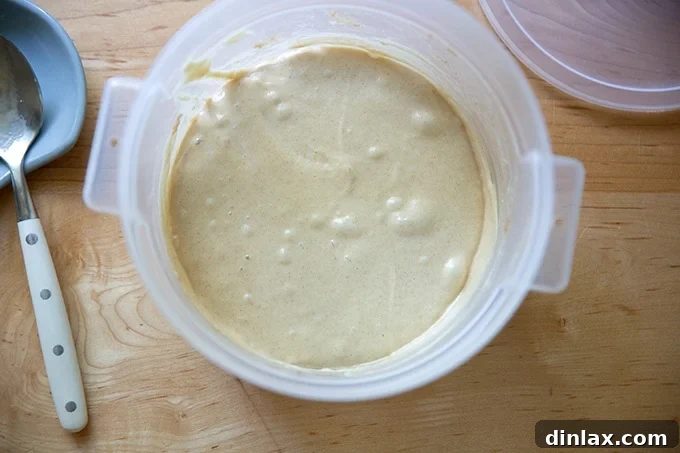
Re-cover the vessel and update your records. Let it sit for another 24 hours at room temperature. Keep an eye out for any subtle signs of life, like tiny bubbles or a faint, fruity aroma.
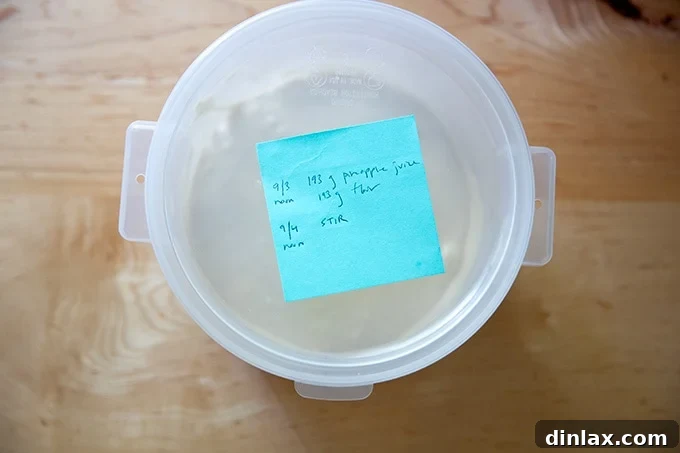
Day 3: The First Feeding
Today, your starter receives its first proper feeding, providing fresh fuel for the burgeoning microbial colony.
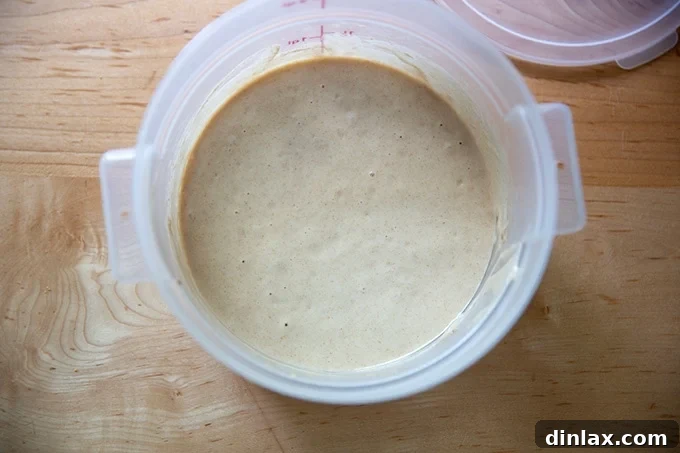
Uncover the vessel. You might begin to see some initial signs of fermentation, possibly a few small bubbles or a slightly yeasty, alcoholic smell. Prepare your feeding by measuring out 128 grams (approximately 1 cup) of flour and 128 grams (about 1/2 cup) of room temperature water.
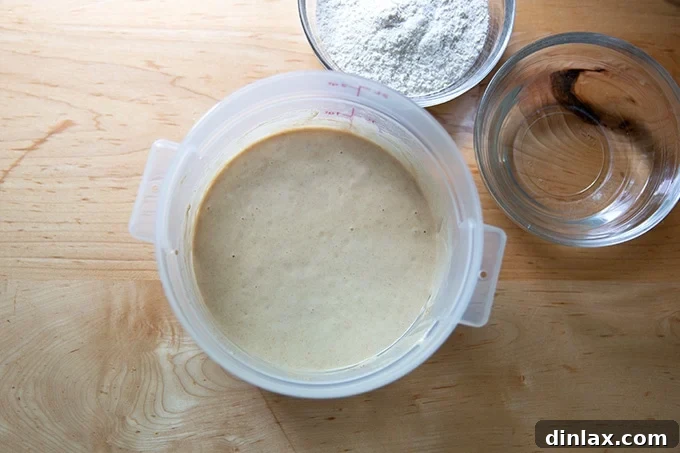
Add the measured flour and water directly to your starter mixture in the vessel.
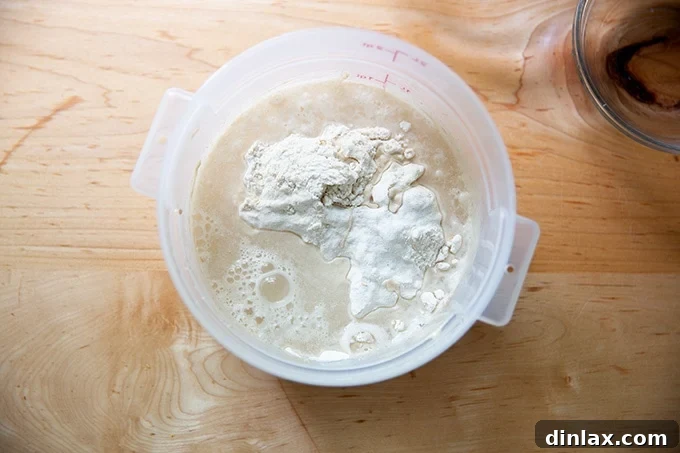
Stir everything together thoroughly until it forms a smooth, consistent batter. Ensure there are no dry pockets of flour.
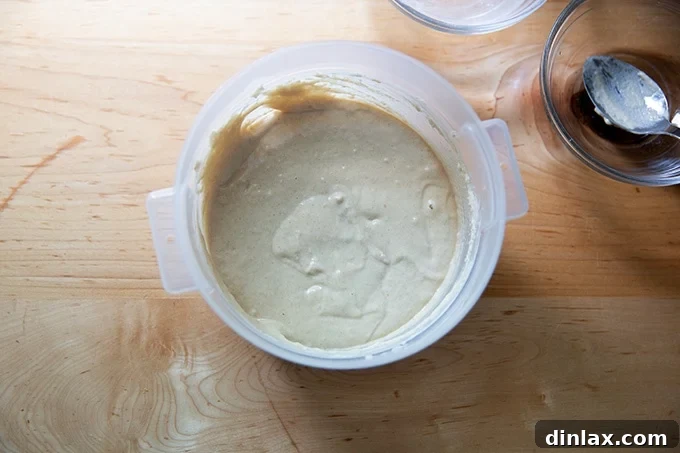
Cover the vessel and update your records. Let it sit at room temperature for another 24 hours. Consider stirring it once or twice during this period to aerate the mixture and distribute nutrients.
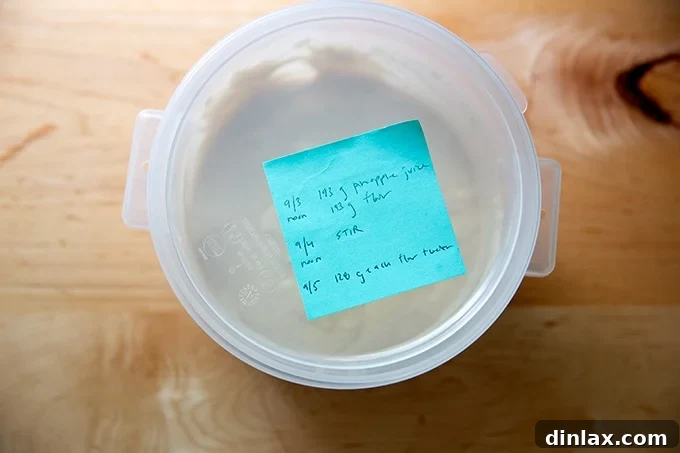
Day 4: Observing Activity and the Float Test
Today is where things often get exciting! You should definitely start seeing more significant activity.
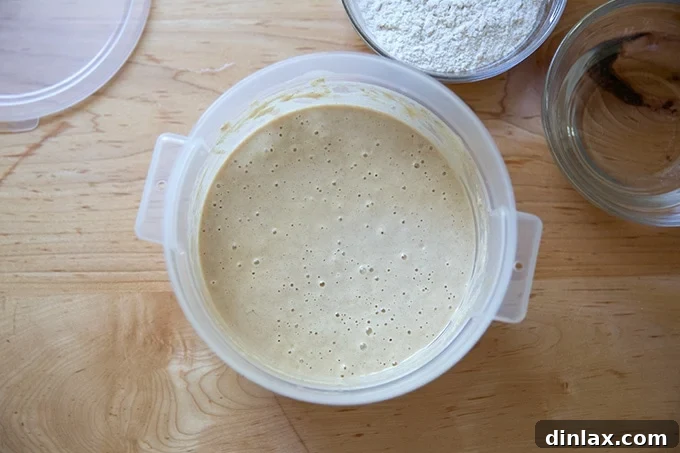
Uncover the vessel. You should observe noticeable bubbles forming on the surface and throughout the mixture. It should also have a pleasant aroma, perhaps fruity or slightly acidic, reminiscent of a mild yogurt. Prepare another feeding of 128 grams (about 1 cup) of flour and 128 grams (about 1/2 cup) of water.
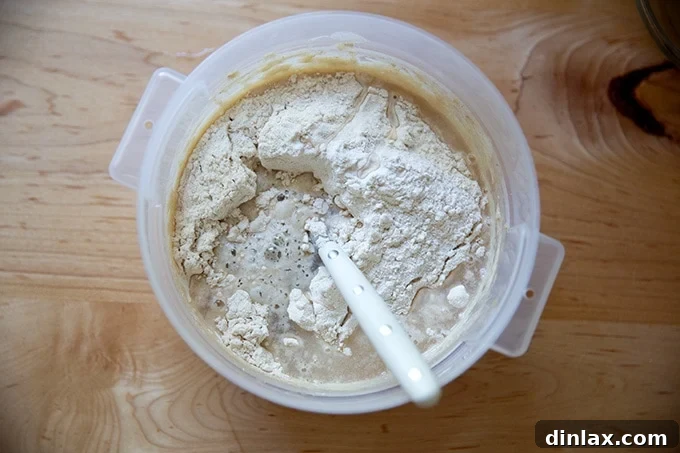
Add the flour and water to the container, and then stir thoroughly to combine everything.
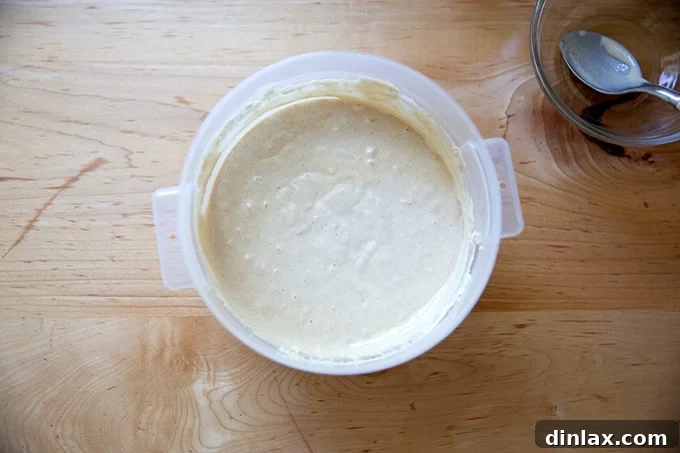
Crucially, on this day, after mixing, mark the current height of your mixture on the side of your vessel using tape or a rubber band. This will allow you to precisely track its rise. Cover the vessel and let it sit at room temperature for 24 hours, but keep a much closer watch this time.
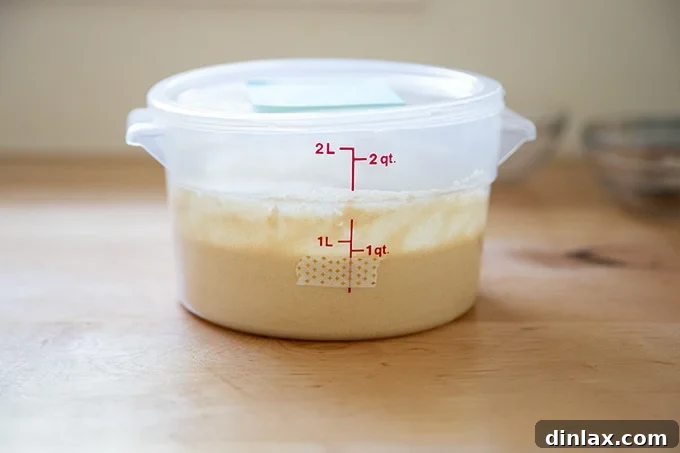
Within a few hours, you should begin to see considerable action! The starter will likely start rising noticeably above your tape mark.
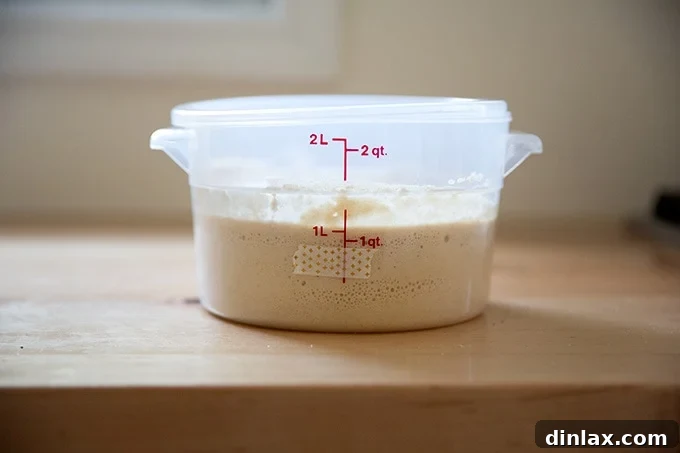
Your starter might even double in volume, a clear indicator of strong yeast activity.
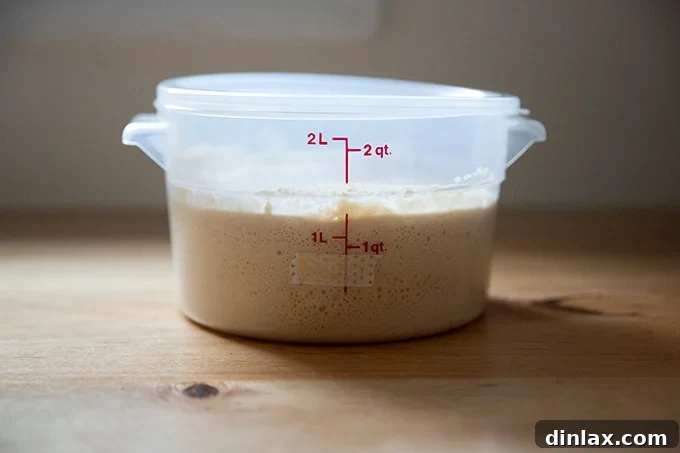
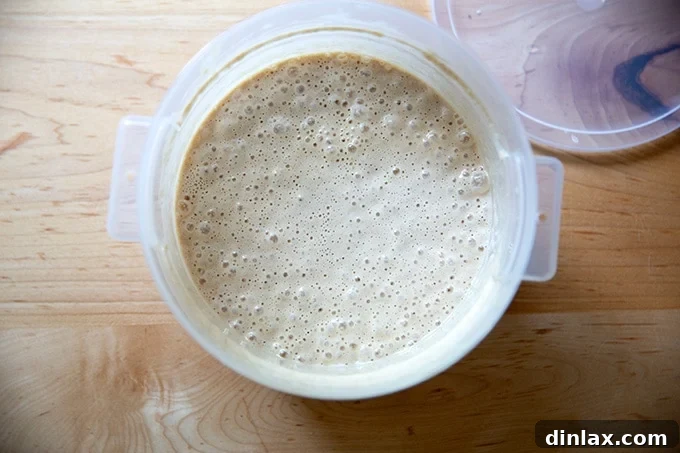
And you should see plenty of bubbles on the surface, varying in size from tiny pinpricks to larger, more active ones.
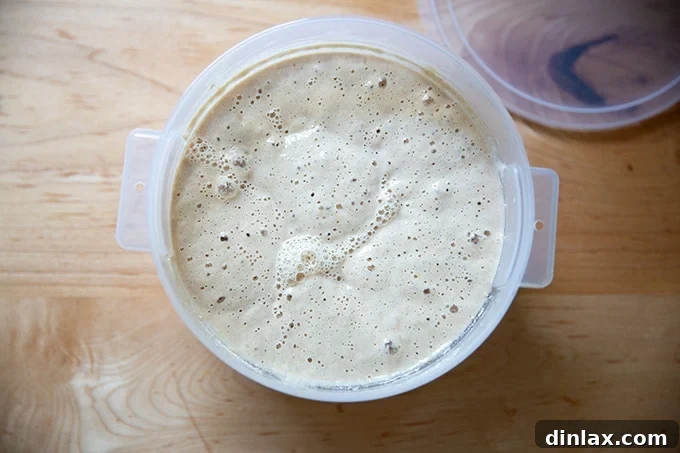
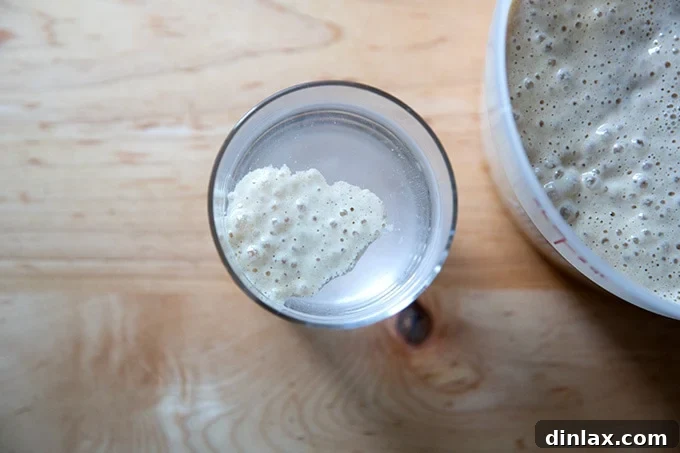
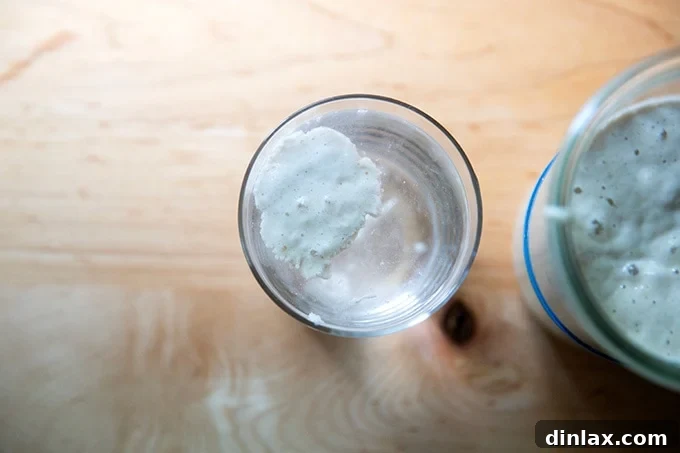
If your mixture is indeed rising and showing significant bubbling, it’s time for the float test. Let your starter rise until it has nearly doubled in volume, then take a small spoonful of it and gently drop it into a glass of water. If it floats, congratulations! You’re definitely in business, and your starter is showing great strength. Don’t worry if you don’t “catch” your starter at its absolute peak rise; it might rise and fall while you’re asleep. The key is consistent activity, and continuing with the process will strengthen it further.
Now, you’ll transfer a portion of this active starter to a new vessel. Spoon 128 grams of the active starter into a clean jar.
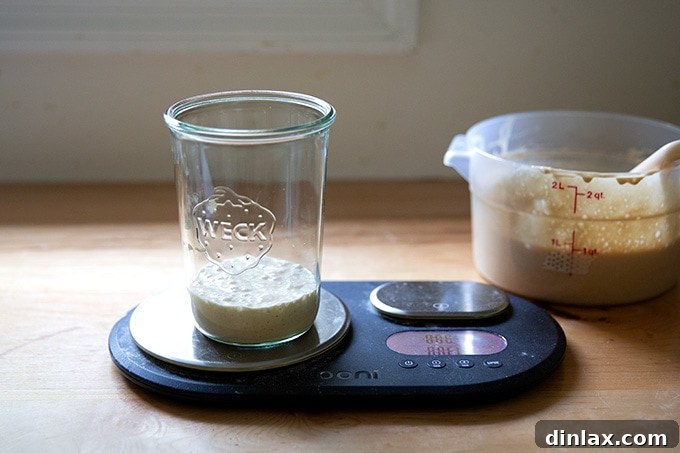
Measure out another 128 grams of fresh flour and 128 grams of water, ensuring equal parts by weight.
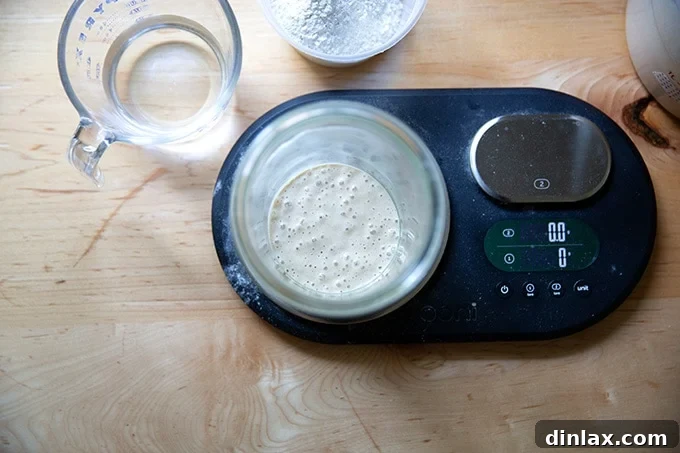
Add the measured flour and water to the starter in the new jar.
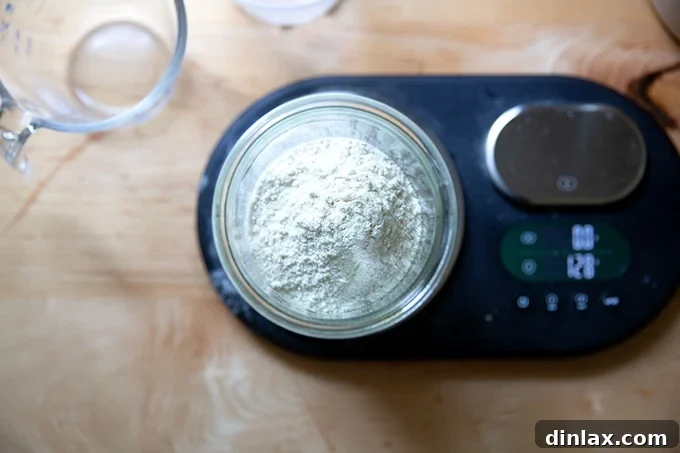
Stir everything together thoroughly until well combined and smooth.
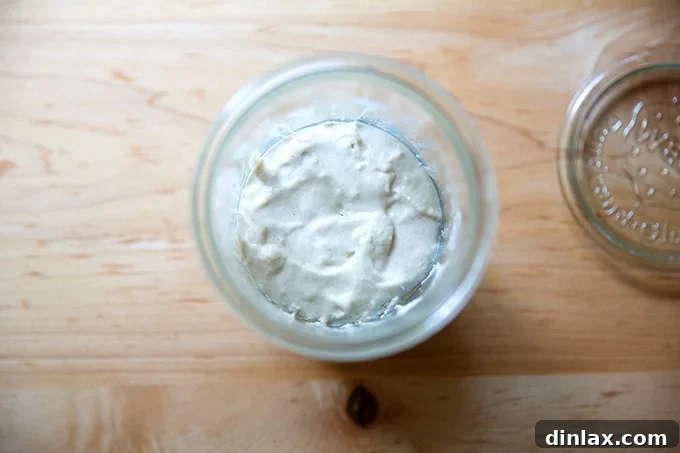
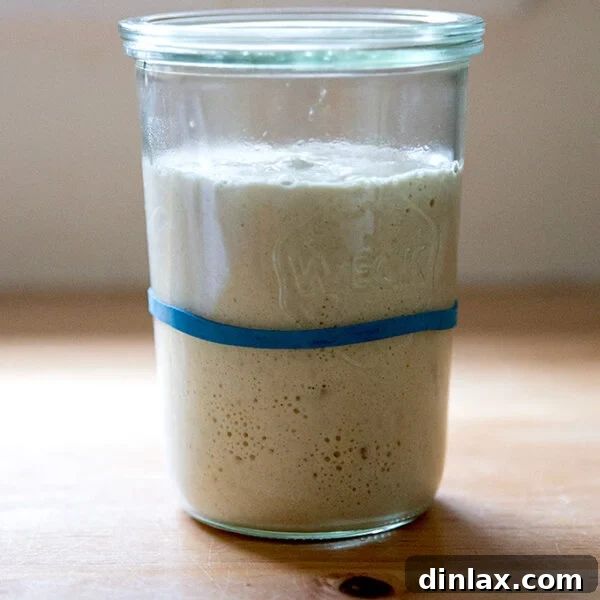
Mark the height of your newly fed starter with a rubber band. This will be your visual guide for its activity.
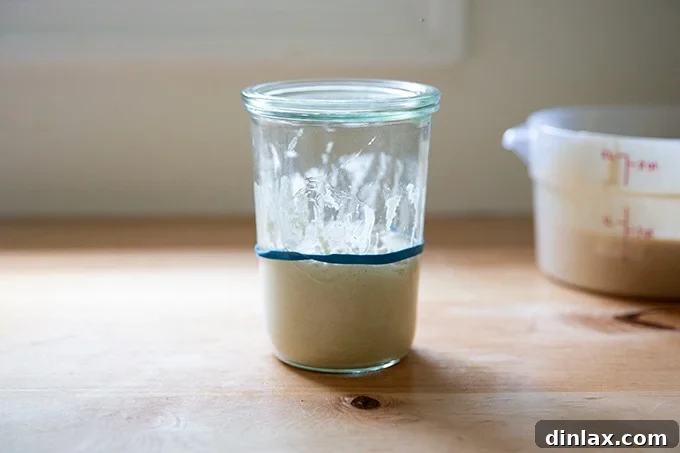
The remaining starter in your original vessel is now considered “discard.” Don’t throw it away! Transfer it to a separate container and store it in the fridge. This discard is a fantastic ingredient for numerous recipes, offering a mild tang and unique texture without the need for leavening. Popular discard recipes include sourdough tortillas, crackers, pancakes, or soda bread.
Day 5: Your Starter is Alive and Ready!
By Day 5, your new starter should be showing consistent and predictable activity. This is the day you often feel a deep sense of accomplishment!
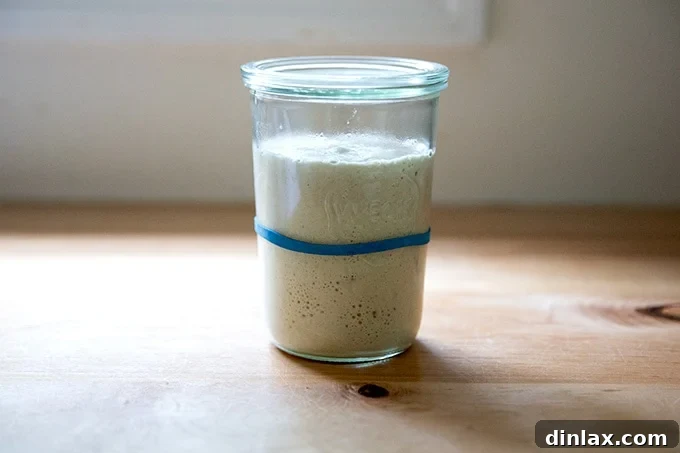
Observe your newly fed starter. It should have clearly doubled in volume, rising significantly above the rubber band you placed yesterday.
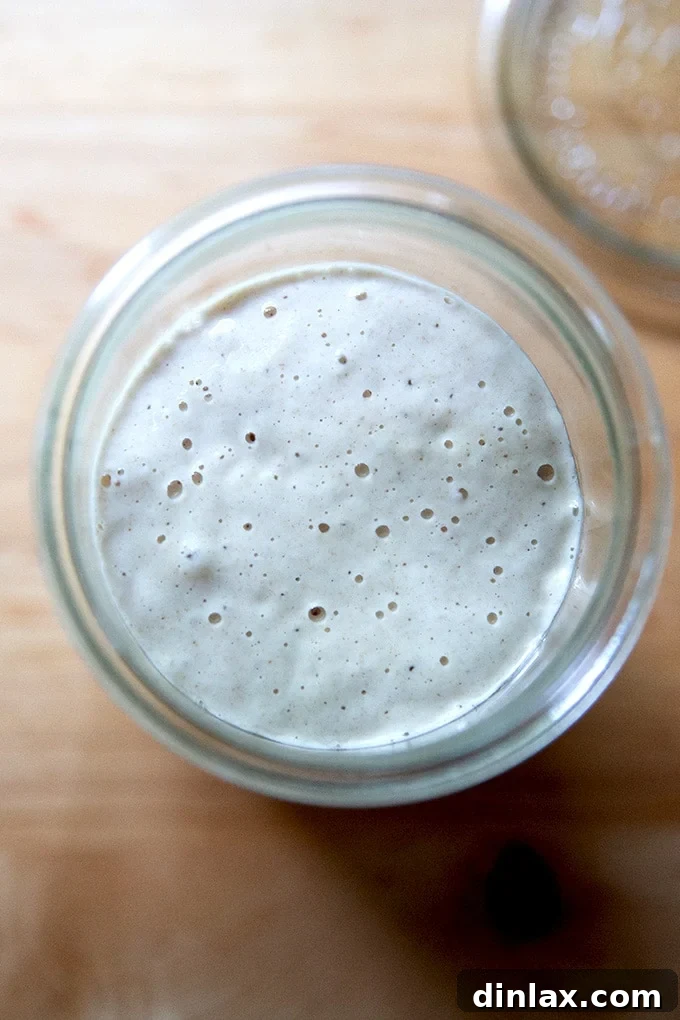
Perform the float test again. A small spoonful of your starter should happily float in water, indicating that it’s full of carbon dioxide and perfectly active.
At this stage, you have a fully functional sourdough starter! You now have a few exciting options:
- Continue Strengthening: For an even more robust starter, repeat the feeding process: spoon 128 grams of starter into a new vessel, add 128 grams each of flour and water, and let it double. Transfer the remaining starter to your discard bucket. Each feeding makes your starter stronger and more predictable.
- Refrigerate for a Break: If you need to pause your sourdough journey, simply transfer your active starter to the fridge. It will go dormant. When you’re ready to bake again, take it out, let it warm up, and feed it a couple of times until it’s active and bubbly again.
- Start Baking! The most exciting option! Your starter is ready to be incorporated into your favorite sourdough bread recipes.
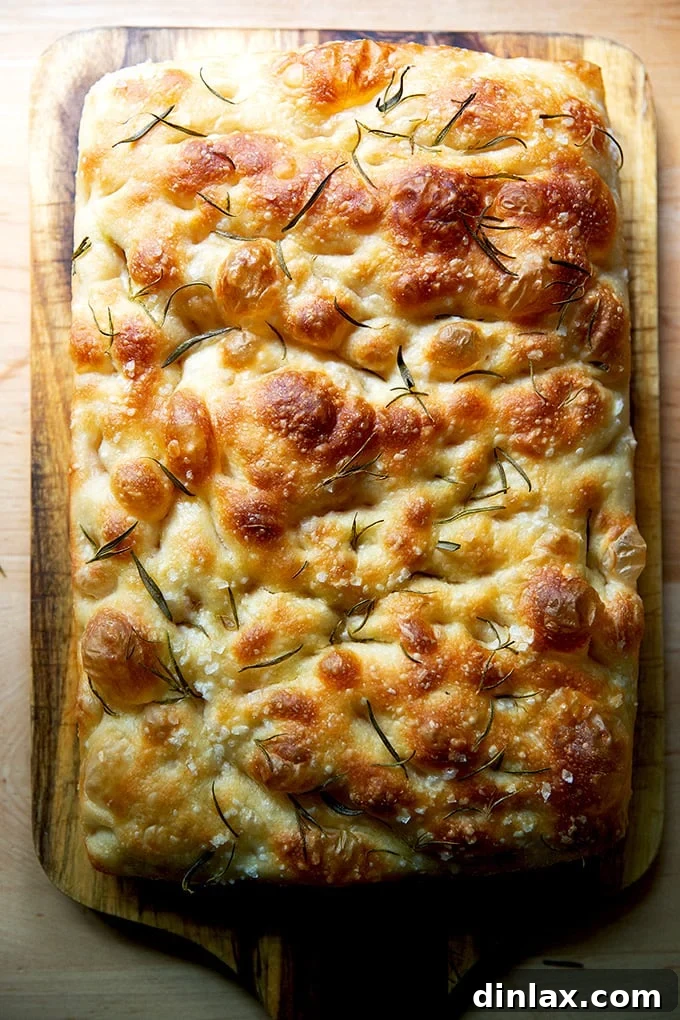
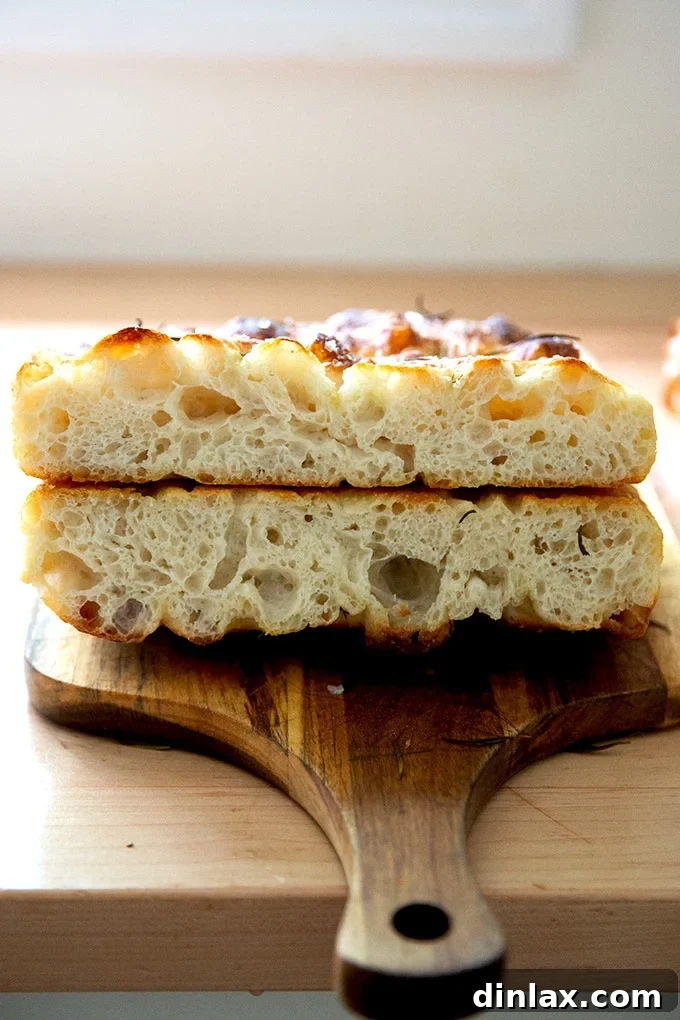
We highly recommend starting with something forgiving and incredibly delicious, such as…
… a simple sourdough focaccia. It’s one of the easiest and most rewarding sourdough breads to make, perfect for beginners to experience the joy of baking with their new starter.
Maintaining Your Sourdough Starter: Beyond the First Five Days
Once you have a strong, active starter, the journey truly begins! Regular feeding and proper storage are key to keeping your starter healthy and ready for baking. For detailed guidance on how to activate, feed, and store your mature sourdough starter, be sure to consult this essential resource: How to Feed, Maintain, and Store a Sourdough Starter.
Troubleshooting Common Sourdough Starter Issues
Don’t be disheartened if your starter doesn’t behave exactly as expected. Building a sourdough starter is a natural process, and sometimes it needs a little encouragement. Here are some common issues and how to address them:
- No Activity/Few Bubbles: If your starter is sluggish, ensure it’s warm enough (refer to Tip #2). Consistently warmer temperatures will stimulate yeast activity. Also, make sure you’re using unbleached flour and unchlorinated water. Sometimes, simply giving it an extra day or two, along with regular stirrings, can kickstart it.
- “Hooch” Formation: If you see a dark liquid (often brown or gray) on top of your starter, it’s called “hooch.” This indicates your starter is hungry and needs to be fed. Pour it off, stir your starter, and feed it as usual. Hooch is a sign that the yeast has consumed all its food and is producing alcohol.
- Unpleasant Odor: A new starter can sometimes smell like nail polish remover or stinky cheese in its early days. This is often normal as different microbial populations compete. Consistent feeding and maintaining a warm environment will eventually lead to a more pleasant, yeasty, or fruity aroma. If the smell is truly foul or putrid, or if mold appears, it’s best to discard and start fresh.
- Mold Growth: Any sign of fuzzy, colored mold (green, black, pink) means your starter has been contaminated and should be discarded immediately. Sterilize your container thoroughly before starting a new batch. Mold is rare in a healthy, active starter but can occur if initial conditions aren’t ideal.
By following these guidelines and being patient, you’ll soon master the art of sourdough and enjoy the incredible flavors and textures of homemade sourdough bread. Happy baking!
Print
How to Build a Sourdough Starter from Scratch
5 Stars 4 Stars 3 Stars 2 Stars 1 Star
4.9 from 36 reviews
Author: Alexandra Stafford
Total Time: 5 days
Yield: 3 cups 1x
Description
This post outlines how to build a sourdough starter from scratch simply and quickly. In less than a week, with minimal effort, you will have a bubbly, active starter on your hands to use in all your favorite sourdough recipes.
Notes:
- Adapted from Peter Reinhart’s method, outlined in Perfect Pan Pizza.
- For guidance on how to feed, maintain, and store your already strong starter, see our detailed post: How to Feed, Maintain, and Store a Sourdough Starter.
- For detailed tips on success (including pineapple juice alternatives, flour choice, and maintaining warmth), please refer to the main article above.
- Sourdough Discard Uses: The remaining starter at the end of Day 4 and subsequent feedings becomes discard. Don’t waste it! It can be used in numerous delicious recipes. Here are a few favorites:
- Simple Sourdough Discard Waffles
- Simple Sourdough Discard Crackers
- Sourdough Tortillas
- Favorite Pancakes
- Irish Soda Bread
Ingredients
- 1 small can (approx. 192 grams) pineapple juice (see main article for alternatives)
- Stone-milled flour or unbleached all-purpose flour (see main article for recommendations)
- Room temperature water (see main article for water considerations)
Instructions
- Day 1: Combine 192g pineapple juice and 192g flour in a straight-sided vessel. Stir until smooth. Cover loosely, record, and let sit at room temperature for 24 hours.
- Day 2: Uncover, stir the mixture, re-cover, and let sit at room temperature for another 24 hours.
- Day 3: Uncover. Add 128g flour and 128g water. Stir to combine. Cover, record, and let sit at room temperature for 24 hours, stirring once or twice.
- Day 4: Uncover. You should see bubbles and smell a pleasant, fruity aroma. Add 128g flour and 128g water. Stir to combine. Cover. Mark the mixture’s height with tape. Let sit at room temperature for 24 hours, observing for significant rise and bubbles. Perform a float test if it doubles in volume (a spoonful should float in water).
- Day 5: Observe consistent activity (rise, fall, bubbles). Transfer 128g of starter to a new jar. Add 128g flour and 128g water. Stir, cover, and mark height with a rubber band. This is your active starter. Transfer the remaining original mixture to the fridge as discard. Your new starter is ready when it doubles in volume and floats. You can repeat feeding to strengthen it, refrigerate for storage, or begin baking!
- For ongoing maintenance, refer to our detailed post: How to Feed, Store, and Maintain a Sourdough Starter.
- Category: Bread
- Method: Stir
- Cuisine: American