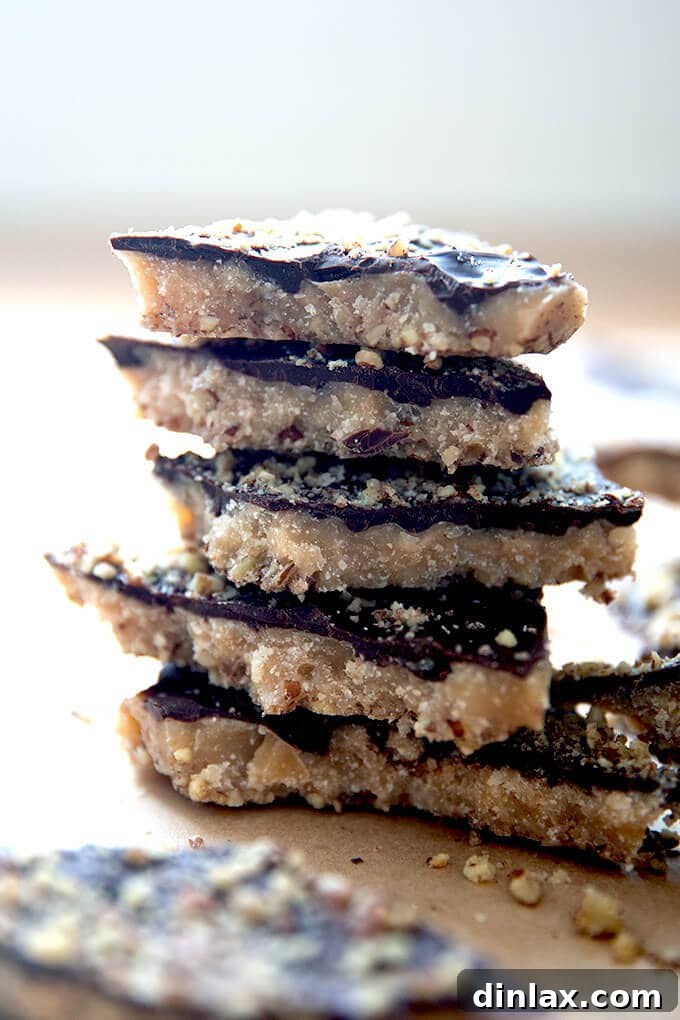
Indulge in the irresistible allure of homemade toffee with this award-winning recipe for classic milk or dark chocolate toffee. Perfect for satisfying even the most discerning sweet tooth, this exquisite confection boasts a unique, sandy texture that melts luxuriously in your mouth, delivering a buttery, sweet, and salty symphony of flavors. Whether you’re seeking the ideal edible gift for the holidays or simply craving a delightful treat, our comprehensive guide, complete with step-by-step instructions and video guidance, will help you master this exceptional dessert.
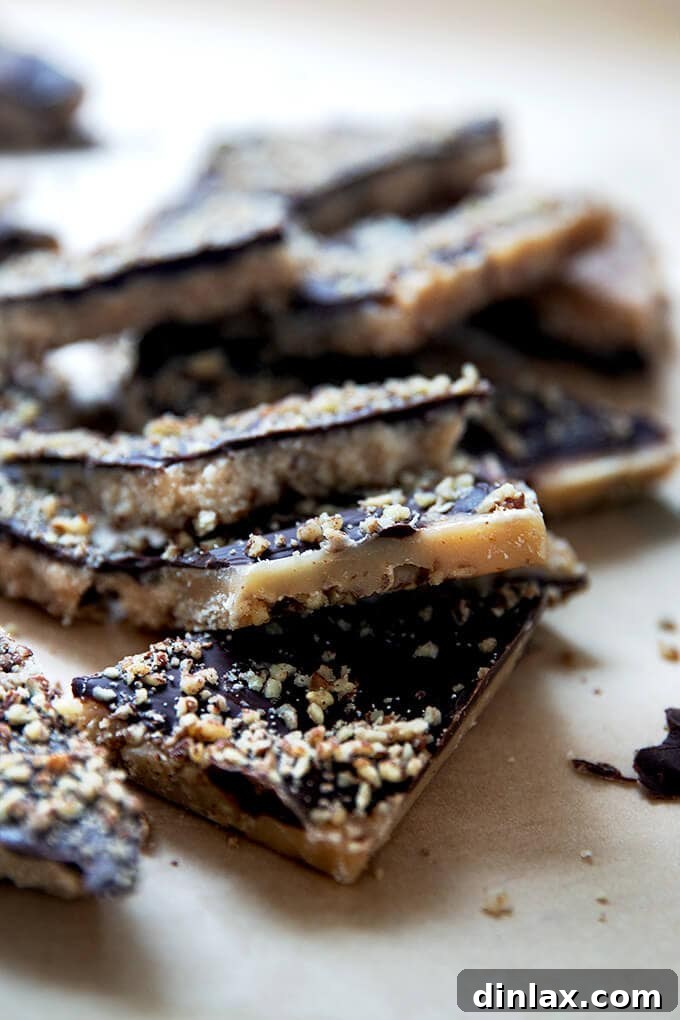
Discovering the Award-Winning Daley Toffee Recipe
This remarkable toffee recipe isn’t just delicious; it’s a champion! Originally submitted by my dear friend Laura Daley, it proudly claimed victory in The Philadelphia Bulletin’s 2007 “Annual Edible Gift Recipe Contest.” Its unique blend of buttery richness, deep chocolate notes, and the perfect balance of sweet and salty makes it an unforgettable festive treat. Adding this delectable toffee to your holiday desserts repertoire will surely impress friends and family, making it a standout addition to any celebration.
What truly sets this toffee apart is its melt-in-your-mouth texture, which is a delightful departure from the traditional crisp, hard toffee. Achieving this specific consistency hinges on one crucial technique: precisely cooking the sugar mixture. While many recipes guide you to the hard-ball stage, for this particular toffee, our experience shows that pushing it just a touch further yields the best results.
Mastering the Hard-Ball Stage and Beyond for Perfect Toffee
Understanding sugar stages is fundamental to toffee making, and the “hard-ball stage” is a key benchmark. This refers to the point when sugar syrup, heated to 250º – 266ºF (121 – 130ºC), forms a firm, pliable ball when dropped into cold water. However, for this specific recipe, we’re aiming for something slightly different – a texture that’s less brittle and more exquisitely tender. This is achieved by cooking the sugar mixture a bit longer than the standard hard-ball stage, typically reaching temperatures around 285ºF-290ºF (140-143ºC). This slight elevation in temperature is what contributes to the toffee’s signature sandy, melt-in-your-mouth quality rather than a rock-hard snap.
Traditional Methods vs. Modern Precision
While a candy thermometer is the most reliable tool for precise temperature control, Laura, the recipe’s creator, perfected a traditional method. She would drop a small spoonful of the cooked syrup into a glass of cold water. If the syrup forms a ball that holds its shape when pressed between your fingers, you’ve reached the hard-ball stage. This method is a testament to experienced candy makers who can gauge sugar stages by feel. If you’re comfortable with this technique, congratulations – it’s a skill that takes practice!
For those who prefer accuracy and ease, or who are still building confidence with hot sugar, a digital thermometer like a Thermapen is an invaluable asset. Its speed and accuracy make assessing the sugar-butter mixture’s doneness incredibly straightforward. In my own experience, I’ve found that cooking the mixture to precisely 285ºF-290ºF consistently delivers the desired outcome, ensuring a perfect batch every time. This precision helps in achieving that coveted “beyond hard-ball” consistency, which is crucial for this recipe’s unique texture.
Understanding the Desired Toffee Texture
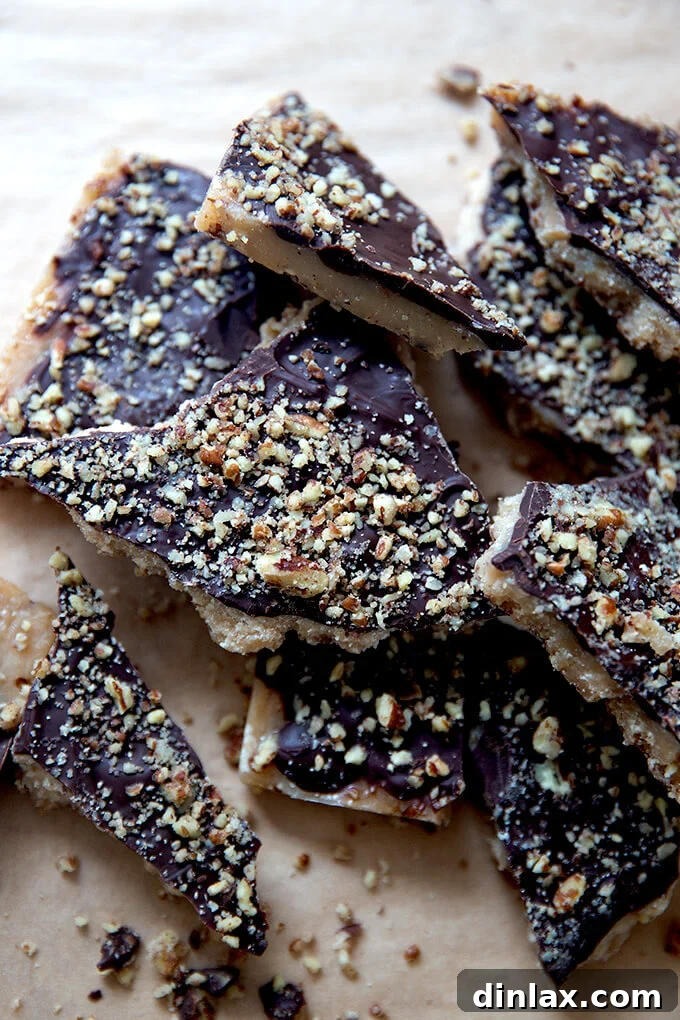
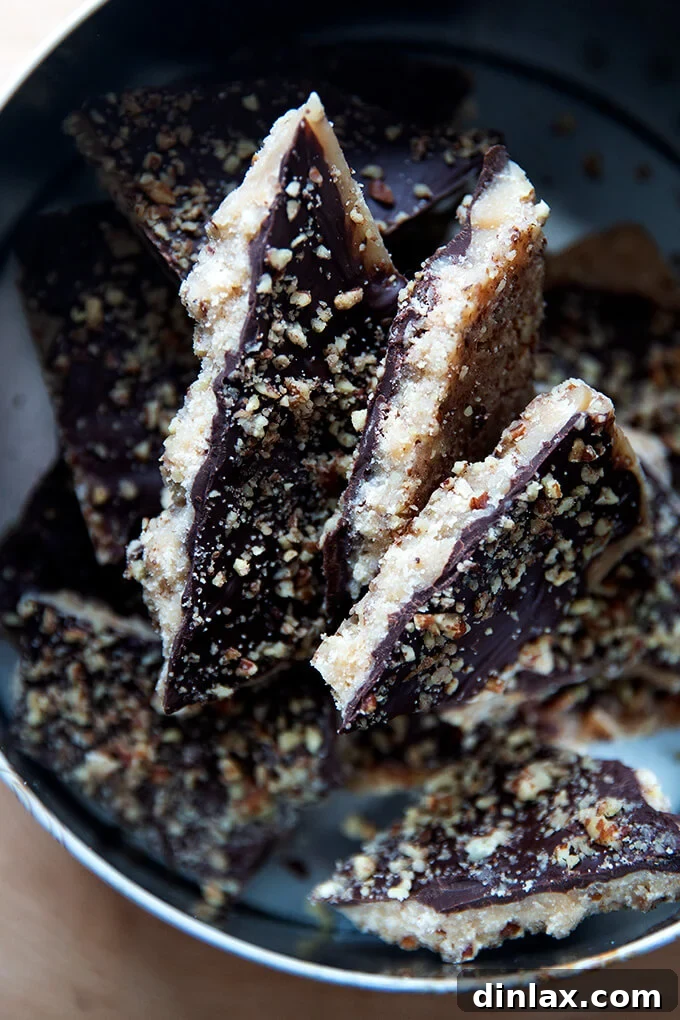
It’s important to clarify the distinct texture of this toffee. Unlike many traditional toffees that are designed to be crisp and snap sharply, our Daley Toffee offers an almost sandy, crumbly consistency. It truly melts on your tongue rather than sticking to your teeth, creating a wonderfully delicate mouthfeel. When you break it, it doesn’t snap; it crumbles elegantly, which is part of its charm. This is a deliberate and delightful characteristic.
If your preference leans towards a more classic, crisp, and snappy caramel texture, you would typically need to cook your butter-sugar mixture to a higher temperature, usually beyond 300ºF (149ºC), which corresponds to the hard-crack stage. However, for this particular recipe, embracing the slightly lower temperature and the resulting sandy, buttery texture is key to experiencing its award-winning qualities.
The Critical Step: Chilling Your Toffee to Perfection
Beyond achieving the correct sugar stage, there’s one other critical step that ensures your homemade toffee turns out beautifully: proper chilling. Once you’ve assembled the layers of buttery toffee and rich chocolate, it’s essential to transfer the pan to the refrigerator for at least two hours. This extended chilling period is not just a suggestion; it’s a vital part of the process.
During chilling, the butter-sugar layer firms up and solidifies completely. This molecular transformation is essential, as it allows the toffee to set properly, preventing it from being too soft or sticky. A thoroughly chilled toffee layer will break cleanly into elegant shards, creating the perfect presentation and ensuring that signature melt-in-your-mouth quality. Rushing this step can lead to a messy, unmanageable batch, so patience is truly a virtue here. Once it’s solid, you can proceed to break it into those irresistible pieces and prepare it for enjoyment or gifting.
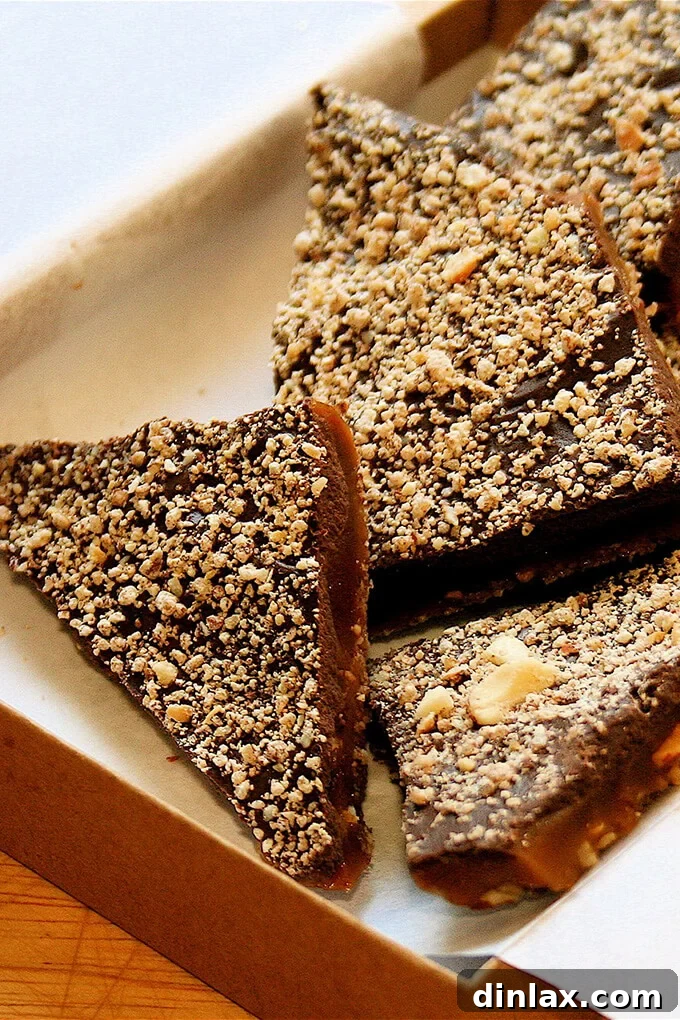
The Art of Gifting Homemade Toffee
As Laura wisely noted in her original recipe, this toffee makes an exceptional gift, especially during the festive holiday season. There’s something inherently special about receiving a homemade treat, and this buttery, chocolate-covered toffee is no exception. It’s a thoughtful and delicious gesture that truly speaks from the heart.
Over the years, I’ve discovered the joy of preparing edible gifts, and packaging plays a crucial role in the overall presentation. Several years ago, I invested in a case of 100 brown stationery boxes with clear lids from Uline. While this large case admittedly occupies a significant portion of our basement storage, every holiday season, I find myself immensely grateful to have these versatile boxes readily available. They transform a simple confection into a professional-looking gift.
These boxes have been my go-to for packaging various homemade delights, from crispy biscotti to rich chocolate truffles. Now, the award-winning Daley Toffee joins this esteemed list. For an elegant and inviting presentation, consider these simple yet effective tips:
- Line the bottom of the box with a sheet of parchment paper. This provides a clean base and prevents the toffee from sticking.
- Arrange the toffee shards neatly within the box, showcasing their beautiful irregular shapes.
- Wrap the box with a festive ribbon, choosing colors that match the occasion.
- Attach a simple, handwritten tag with a personalized message. This adds a heartfelt touch that store-bought gifts can’t replicate.
Presenting your homemade toffee in this manner elevates it from a mere treat to a truly memorable and cherished gift, perfect for neighbors, teachers, colleagues, or anyone deserving of a sweet indulgence.
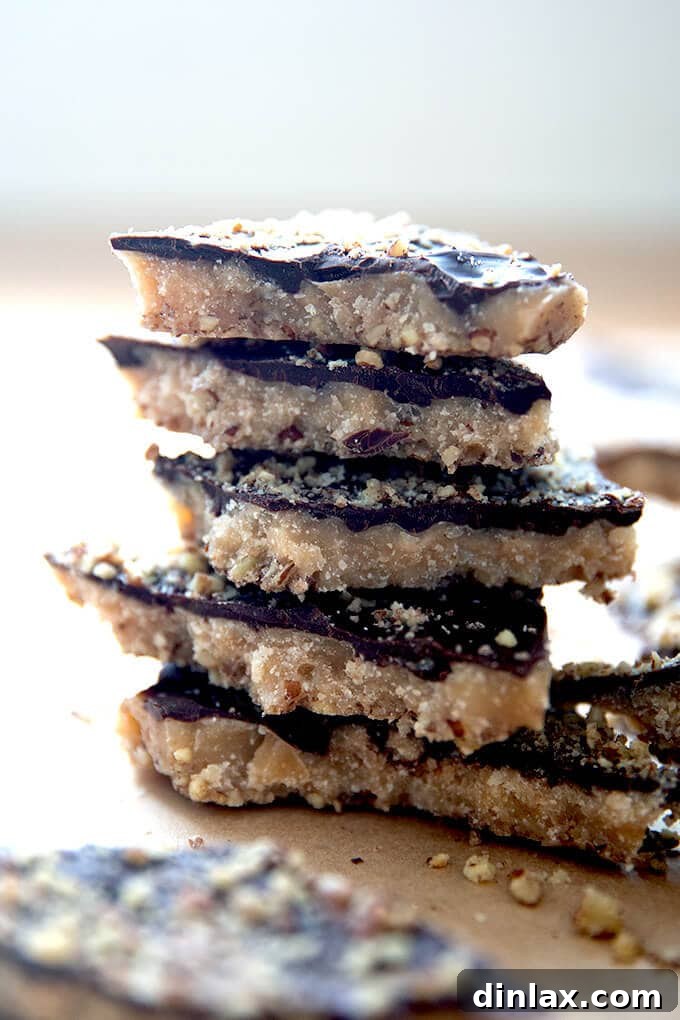
How to Make Homemade Chocolate Toffee: A Detailed Step-by-Step Guide
Creating this melt-in-your-mouth toffee is a rewarding experience. Follow these detailed steps to ensure a perfect batch every time.
Step 1: Preparing Your Pan
Begin by generously buttering a 9×9-inch baking pan. This crucial step prevents the toffee from sticking and ensures easy removal later. After buttering, sprinkle about 1/3 cup of finely ground pecans evenly across the bottom of the pan. The pecans not only add a delightful nutty flavor but also provide a subtle textural contrast to the smooth toffee and chocolate. For consistent results, I highly recommend using a quality pan, such as this USA Pan, known for its even heat distribution and non-stick properties.
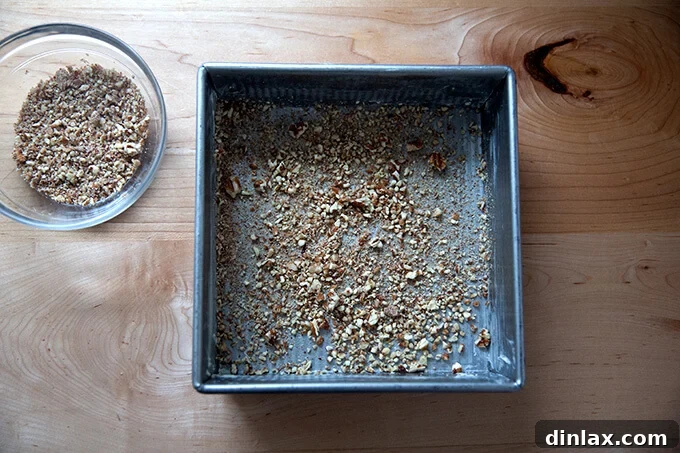
Step 2: Simmering the Toffee Base
In a heavy-bottomed saucepan, combine 1 cup of salted butter, 1 cup of granulated sugar, 3 tablespoons of water, and 1 teaspoon of vanilla extract. Place the saucepan over medium heat and bring the mixture to a gentle simmer, stirring occasionally to ensure the sugar dissolves evenly. As the mixture heats, the butter will melt, and the sugar will fully incorporate, creating a smooth syrup. The key here is not to rush the process, allowing the ingredients to meld together.
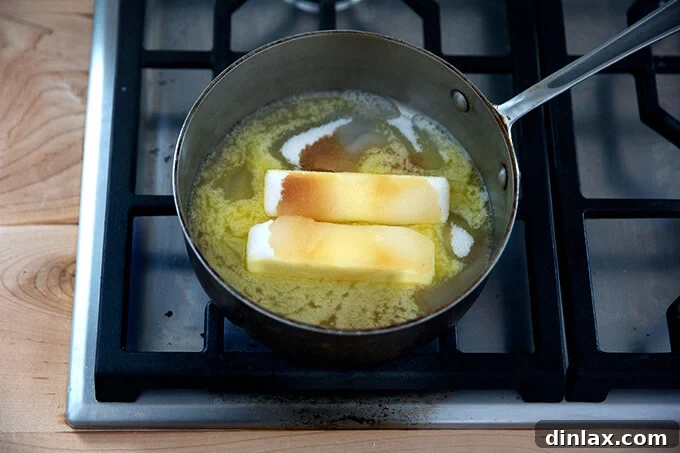
Step 3: Achieving the Perfect Toffee Temperature and Color
This is where precision truly matters. Keep your Thermapen or candy thermometer close at hand. You’ll want to continue cooking the mixture, stirring as needed, until it reaches a temperature of 285ºF – 290ºF (140-143ºC). Visually, the mixture should transform into a rich, caramel color, indicating it has achieved the ideal consistency for our unique toffee. For additional visual guidance on the color and consistency, refer to the video tutorial. Once the desired temperature and color are reached, immediately remove the saucepan from the heat to prevent overcooking. Carefully pour the hot toffee mixture evenly over the prepared pan of ground pecans, ensuring it forms a smooth, consistent layer.
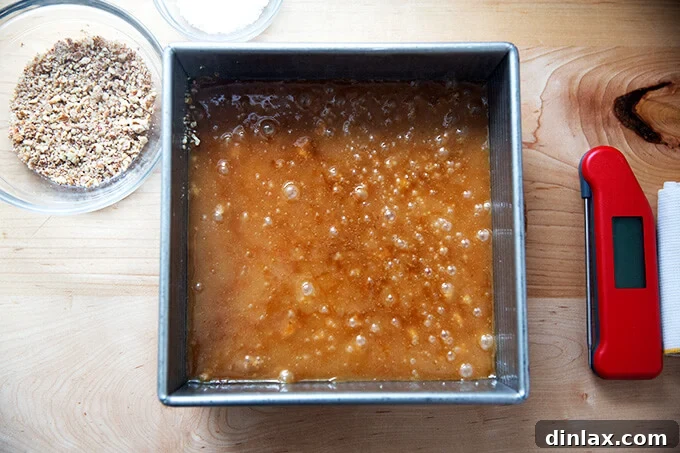
Step 4: Layering with Chocolate and Toppings
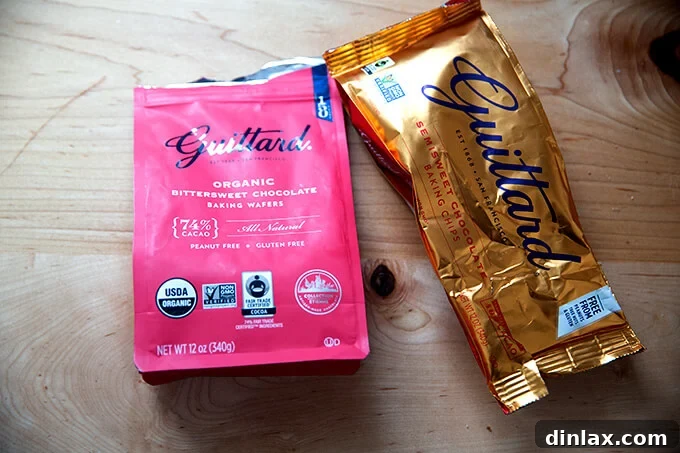
Allow the poured toffee to stand undisturbed for about 2 minutes. This brief resting period allows the surface to cool slightly. Next, sprinkle 3/4 cup of your preferred premium chocolate chips over the warm toffee layer. You have the choice of milk chocolate for a sweeter profile or dark chocolate for a richer, more intense flavor – both work wonderfully in this recipe. Let the chocolate chips sit for another 2 minutes. The residual heat from the toffee will begin to melt the chocolate, making it easy to spread. Using the back of a spoon or an offset spatula, gently spread the softened chocolate into an even, glossy layer across the entire surface of the toffee.
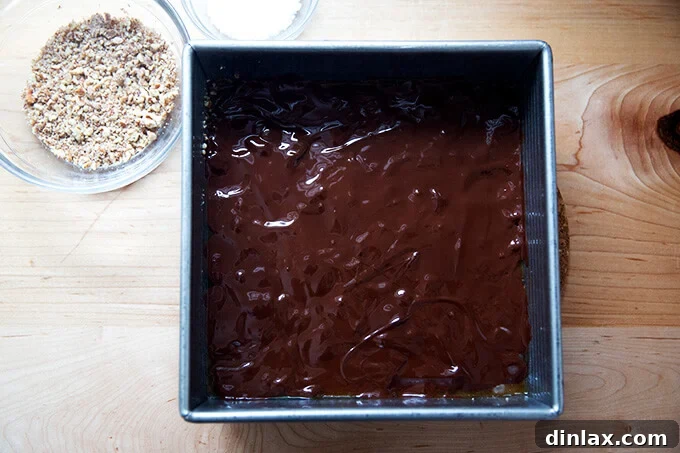
The beauty of this recipe lies in its adaptability to your taste, especially when it comes to chocolate. Whether you adore the creamy sweetness of milk chocolate or the deep, complex notes of dark chocolate, both options create a phenomenal counterpoint to the buttery toffee base. Feel free to use high-quality chocolate chips or finely chopped chocolate bars for the best melting and flavor experience.
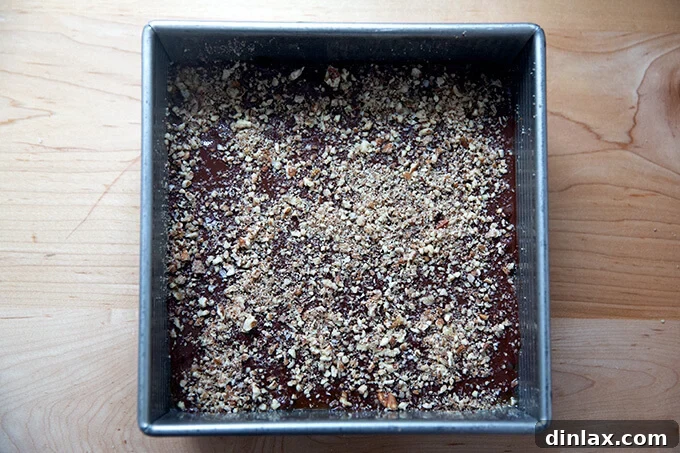
To finish, sprinkle more ground pecans over the chocolate layer. If you appreciate the delightful contrast of sweet and salty, a delicate pinch of flaky sea salt sprinkled over the top will enhance the flavors beautifully. This addition elevates the toffee, creating a more complex and satisfying taste experience. The combination of the smooth chocolate, crunchy pecans, and a hint of salt makes each bite truly extraordinary.
Step 5: Chilling and Breaking the Toffee
Once your toffee is fully assembled with its chocolate and pecan topping, the final critical step is chilling. Transfer the pan to the refrigerator and allow it to chill for a minimum of 2 hours. This extended cooling period is essential for the toffee to set completely and for the chocolate to firm up. A properly chilled toffee will be solid and easy to handle. After chilling, remove the toffee from the pan (it should lift out easily thanks to the buttering and parchment lining). Place the solid slab onto a sheet of parchment paper on a cutting board. Using a sturdy knife or by hand, break the toffee into irregular, beautiful shards. This creates visually appealing pieces perfect for serving or gifting.
Troubleshooting Tips for Homemade Toffee
Even with the best instructions, candy making can sometimes present challenges. Here are a few common issues and how to address them:
- Grainy Toffee: This often happens if the sugar isn’t fully dissolved before the mixture comes to a boil, or if sugar crystals adhere to the sides of the pan. To prevent this, ensure all sugar crystals are dissolved by stirring before boiling. You can also occasionally brush down the sides of the pan with a wet pastry brush.
- Soft or Sticky Toffee: If your toffee is too soft or sticky, it likely didn’t reach a high enough temperature. It needs to hit that 285ºF-290ºF mark for the correct consistency. There’s unfortunately no way to “re-cook” it once it’s cooled, so precision with the thermometer is key.
- Burned Sugar: Sugar can burn quickly if the heat is too high or if it’s left unattended. Use medium heat and monitor it closely. If it starts to smell burnt or looks too dark before reaching temperature, it’s best to discard it and start over, as a burnt taste cannot be salvaged.
Storage and Shelf Life
Once your delectable toffee has been broken into shards, store it in an airtight container at room temperature. Properly stored, this toffee will maintain its quality and delightful texture for up to two weeks. For longer storage, you can also keep it in the refrigerator. Just be sure to bring it back to room temperature for a few minutes before serving to allow the flavors to fully develop.
Print
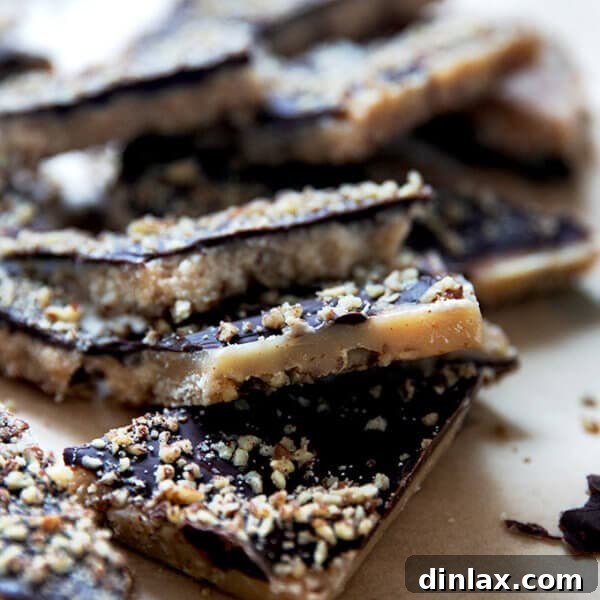
Classic Milk (or Dark) Chocolate Toffee
5 Stars 4 Stars 3 Stars 2 Stars 1 Star
5 from 6 reviews
Author: Alexandra Stafford
Total Time: 20 minutes
Yield: 1 8×8-inch pan 1x
Description
This award-winning toffee recipe, submitted by my friend Laura Daley, took home first prize in The Philadelphia Bulletin’s holiday baking contest in 2007. It’s renowned for its unique sandy, melt-in-your-mouth texture.
Laura’s notes: This recipe makes an exceptional holiday gift for anyone with a sweet tooth! For optimal freshness, it keeps wonderfully for up to 2 weeks when stored in an airtight container.
Chocolate Choice: I’ve experimented with both semi-sweet (approximately 46% cacao) and dark chocolate (around 74% cacao), and I find both yield fantastic results. Naturally, using semi-sweet chocolate will produce a slightly sweeter finished toffee, while dark chocolate will lend a richer, more intense cocoa flavor. Choose according to your preference!
Pan Size Variation: If you prefer a thinner toffee, you can easily adapt this recipe to a 9×13-inch pan. In this case, I recommend increasing the amount of ground nuts to 1 cup to ensure adequate coverage and flavor balance.
Ingredients
- Butter, for greasing the pan
- 2/3 cup (72 g) ground pecans (or your preferred nut like walnuts or almonds)
- 1 cup (226 g) salted butter
- 1 cup (218 g) granulated sugar
- 3 tablespoons (40 g) water
- 1 teaspoon pure vanilla extract
- 3/4 cup (140 g) premium milk chocolate or dark chocolate chips (refer to notes above for choice)
- Flaky sea salt, optional, for sprinkling
Instructions
- Prepare the Pan: Generously grease a 9×9-inch baking pan with butter. Sprinkle 1/3 cup of the ground nuts evenly across the bottom of the prepared pan.
- Cook the Toffee Base: In a heavy-bottomed saucepan, combine the salted butter, granulated sugar, water, and vanilla extract. Cook this mixture over medium heat, stirring occasionally to ensure even cooking and to prevent sticking. Continue cooking until the mixture turns a rich golden brown color and reaches a precise temperature of 285º – 290ºF (140 – 143ºC). This temperature is crucial for the toffee’s signature texture, which is slightly beyond the standard hard-ball stage. You can accurately test for this stage using a reliable candy thermometer or, for ultimate precision, a Thermapen. Alternatively, as a traditional method, drop a small spoonful of the cooked sugar into a glass of cold water; if it forms a firm, pliable ball, it’s ready.
- Pour the Toffee: Immediately and carefully pour the hot, cooked butter/sugar mixture evenly over the layer of nuts in your prepared pan. Work quickly but carefully as the mixture is very hot.
- Add Chocolate and Toppings: Let the hot toffee stand undisturbed for 2 minutes to cool slightly. Then, evenly sprinkle the chocolate chips (milk or dark, as per your preference) over the surface of the toffee. Allow the chocolate chips to sit for another 2 minutes, letting the residual heat melt them. Using the back of a spoon or an offset spatula, gently spread the softened chocolate into a smooth, even layer. Finally, sprinkle the remaining ground nuts over the chocolate. If desired, add a delicate pinch of flaky sea salt for an enhanced flavor profile. Crucial Chilling Step: Transfer the entire pan to the refrigerator and chill for at least 2 hours. This chilling period is essential for the toffee to fully set and firm up.
- Break and Store: Once the toffee has completely cooled and solidified in the refrigerator, carefully turn it out onto a clean surface or a sheet of parchment paper. Break the solid slab into desired pieces or irregular shards. Store your finished homemade toffee in an airtight container at room temperature for up to two weeks, or in the refrigerator for longer freshness.
- Prep Time: 5 minutes
- Cook Time: 15 minutes
- Category: Candy, Dessert, Holiday
- Method: Stovetop Cooking, Chilling
- Cuisine: American