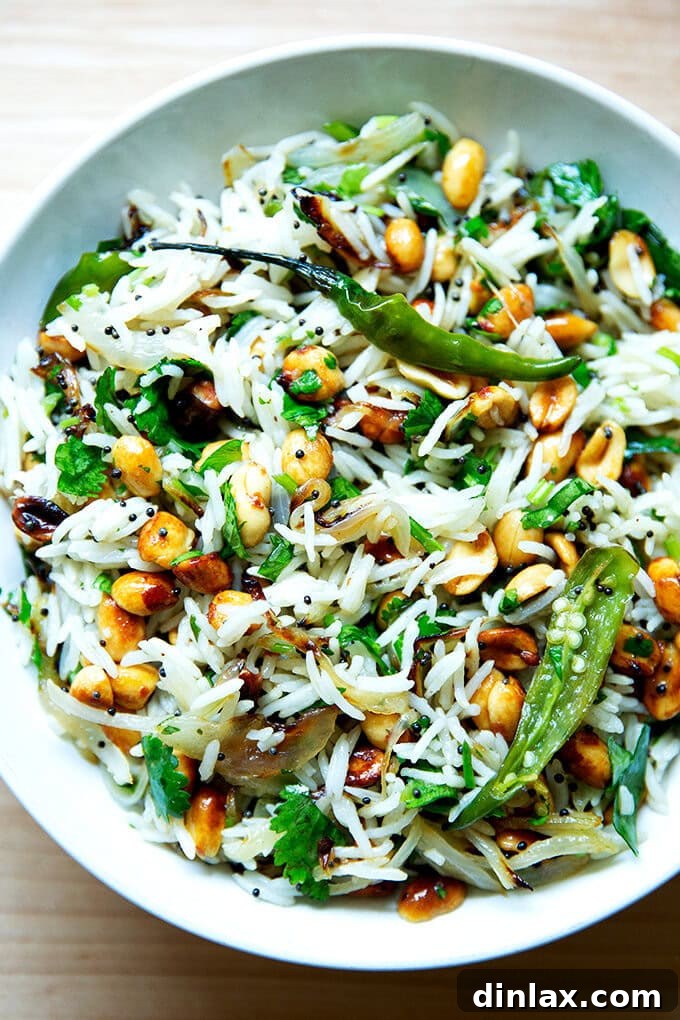
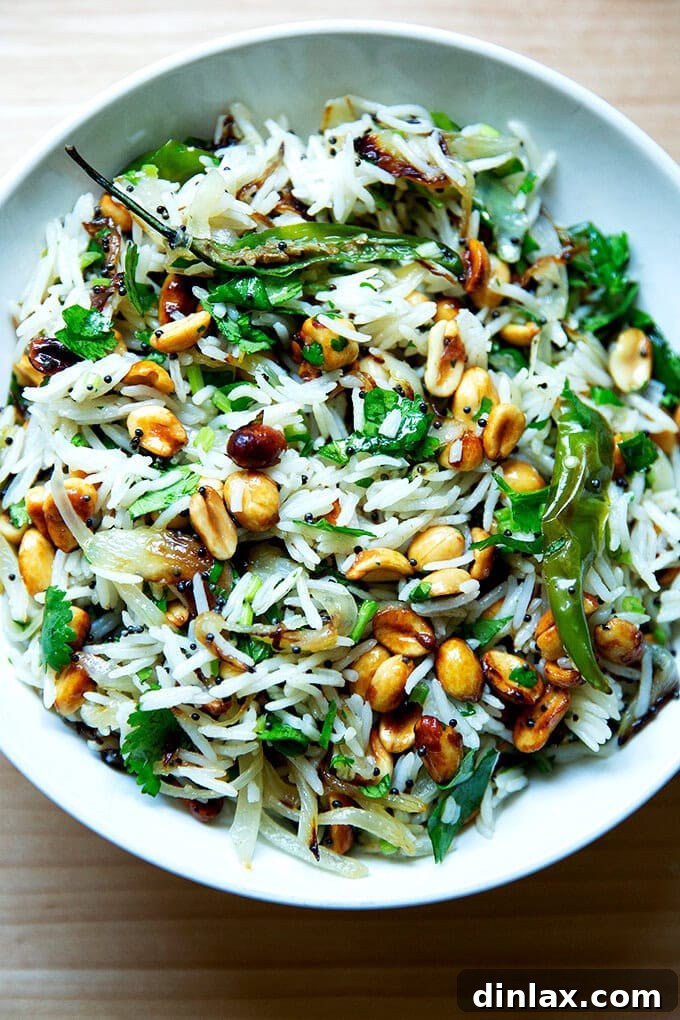
For years, my go-to solution for leftover rice was a familiar routine: a splash of soy sauce, a drizzle of sesame oil, and a generous sprinkle of scallions. It was a comforting classic, yet little did I know, an entire world of flavor waited to revolutionize my approach to humble day-old grains. Then came the revelation: Indian Fried Rice. A dish so captivating, so utterly delicious, it makes you wonder where it has been all your life.
Let’s clarify upfront: this isn’t “fried rice” in the traditional sense, where every grain is aggressively tossed and browned in a scorching wok. And that, my friends, is precisely its charm and genius. There’s no stress about achieving the perfect “wok hei,” no meticulous timing for browning. Instead, this recipe offers a refreshingly simpler, yet incredibly flavorful, method for transforming leftover rice into an unforgettable meal. It’s an approach that celebrates the ease of cooking without compromising on taste or texture.
Here, the magic happens through a vibrant dressing of aromatic spices, fresh herbs, a hint of acidity, and rich, golden ghee. We’re talking about a symphony of textures and tastes, featuring crunchy peanuts, sweet caramelized onions, and a kick from fresh chilies. While the technique diverges from classic stir-frying, the essence of fried rice—the delightful use of day-old rice and a harmonious blend of ingredients—is perfectly captured, making it both evocative and wonderfully straightforward.
The “Un-Fried” Secret to Indian Fried Rice: Effortless Flavor
What truly sets this Indian-inspired rice dish apart is its brilliant simplicity. Unlike conventional fried rice recipes that demand high heat and constant agitation to achieve a dry, separated texture, this method focuses on infusing flavor into already cooked rice through an ingenious tempering process. This “un-fried” approach eliminates the common anxieties associated with making fried rice, such as ensuring your rice is dry enough or achieving that elusive perfect crispness. Instead, it invites a more relaxed, enjoyable cooking experience that consistently delivers outstanding results.
The key lies in building layers of flavor that coat and permeate the rice, rather than frying the rice itself. This technique not only makes the dish incredibly accessible for home cooks but also allows the individual ingredients to shine. The subtle sweetness of caramelized onions, the earthy crunch of peanuts, and the vibrant zest of fresh lime juice each contribute to a balanced and addictive profile that will leave you craving more. It’s a testament to the idea that sometimes, less direct cooking leads to more profound flavors.
Crafting Culinary Bliss: A Simple Four-Step Guide
Transforming your leftover basmati rice into this Indian-ish masterpiece is astonishingly simple, broken down into four essential steps that maximize flavor with minimal effort. This process is all about layering aromatic elements and fresh ingredients to create a harmonious and deeply satisfying dish.
- Prepare the Rice Foundation: Begin by gently dressing your leftover basmati rice with a generous squeeze of fresh lime juice and a sprinkle of salt. This step is crucial for two reasons: the lime juice not only adds a bright, tangy note that awakens the rice but also helps to separate the grains, preventing them from clumping together. The salt, of course, enhances the overall flavor profile from the very beginning.
- Infuse the Ghee (or Oil) with Aromatics and Crunch: In a skillet, heat a measure of rich ghee (or olive oil, for a lighter touch). Once shimmering, introduce black mustard seeds and fresh curry leaves. As the mustard seeds begin to pop and dance—a tell-tale sign of their readiness—the curry leaves will release their unique, warm aroma, crisping beautifully in the infused fat. Shortly after, roasted peanuts are added, allowing them to warm through and absorb the delicious flavors of the spiced ghee, adding an irresistible nutty crunch.
- Caramelize Onions and Sauté Chilies: In the same pan, add a bit more ghee or oil and gently sauté thinly sliced onions with halved fresh chilies. The goal here is to slowly caramelize the onions until they turn golden brown and acquire a sweet, deep flavor. The chilies, meanwhile, will soften and release their heat, infusing the oil with their characteristic warmth. This step creates a wonderfully savory and slightly sweet base that complements the spiced rice.
- Combine and Garnish: Finally, bring all the elements together. Add the caramelized onions and chilies to the bowl of dressed rice. A generous handful of fresh cilantro is then folded in, providing a burst of freshness and color. A thorough toss ensures all components are evenly distributed, creating a mosaic of flavors and textures. The final, essential step is to taste and adjust with more lime juice and salt, ensuring the balance is exactly to your liking. Don’t be shy with these adjustments; they can elevate the dish from good to truly exceptional.
This complete combination is utterly irresistible. The interplay of sweet, sour, spicy, and nutty notes creates a dynamic experience with every bite. The final adjustment of lime and salt to taste is truly essential—I personally find that a liberal hand with both makes all the difference, perfectly balancing the richness of the ghee and the warmth of the spices.
The visual appeal of this dish is undeniable; it’s strikingly pretty, vibrant with color and texture. It inspires visions of inviting friends over for a casual Indian-ish feast, perhaps alongside these delightful
curried chickpeas with cauliflower and coconut milk or a robust
cumin- and coriander-spiced sheet pan chicken shawarma.
Indian-ish: A Culinary Awakening Through Priya Krishna’s Cookbook
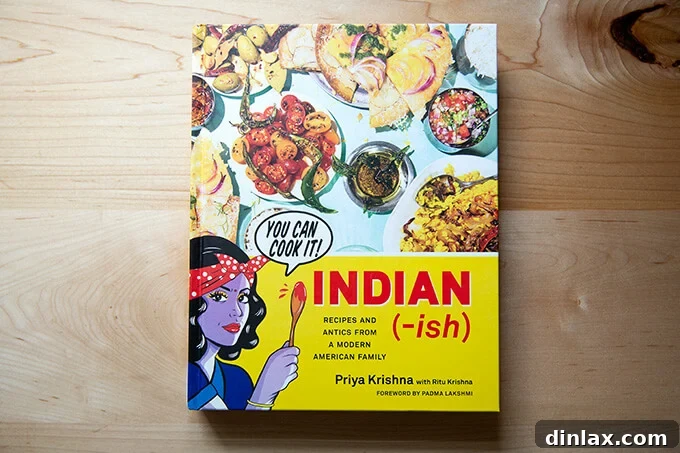
This incredible recipe, which has quickly become a household favorite, originates from Priya Krishna’s remarkable cookbook, Indian-ish. For me, this book has been a game-changer, teaching me more about the nuances and joys of Indian cooking than any other resource I’ve encountered. While I own other Indian cookbooks, none have felt as genuinely welcoming or as intuitively designed for the home cook.
Indian-ish is much more than just a collection of recipes. It’s a heartfelt tribute to Priya’s mother, a talented software programmer and an exceptional home cook, whose culinary wisdom and pragmatic approach to cooking form the backbone of the book. It’s also an invaluable primer in Indian (or “Indian-ish”) cooking, presented with a cheerful and lighthearted tone that makes the learning process a sheer delight. As you turn its pages, you can’t help but smile; as you cook from it, you feel empowered to experiment, to leave out a spice or substitute an ingredient without fear. As Priya reassuringly states in the FAQs, it will be, “fiiiiine.” This philosophy alone dismantles the intimidation factor often associated with unfamiliar cuisines, encouraging a playful and confident approach to the kitchen.
Throughout Indian-ish, Priya includes incredibly helpful guides that expertly demystify the array of frequently used Indian spices and lentils, breaking down their flavors, uses, and cultural significance. The book also features clear charts that simplify essential cooking techniques, such as preparing dal and, notably, chhonk. Also known as tadka or tempering, chhonk is described by Priya as “the greatest Indian cooking technique ever,” and once you understand it, it’s hard to disagree. It involves infusing ghee or oil with whole spices, which are then poured over a finished dish, adding an explosion of aromatic flavor and a delightful textural contrast. This particular fried rice recipe benefits from a “double chhonk”: first with the mustard seeds and curry leaves, and then again with the caramelized onions and chilies, maximizing its aromatic depth and complexity.
Having cooked only a handful of dishes from Indian-ish so far, I already feel a significantly enhanced grasp on how to approach a cuisine I’ve always adored but found a bit too daunting to tackle regularly at home. The book’s clear instructions, encouraging tone, and focus on accessible yet authentic flavors have truly opened up a new culinary world. I am incredibly excited to continue my Indian-ish experiments and will be sure to share all my discoveries, whether they are `chhonk-ified` masterpieces or other delightful creations from this essential cookbook.
A Visual Journey: How to Make This Irresistible Indian Fried Rice
Let’s walk through the creation of this delightful Indian Fried Rice, step by step, ensuring you achieve perfect results every time.
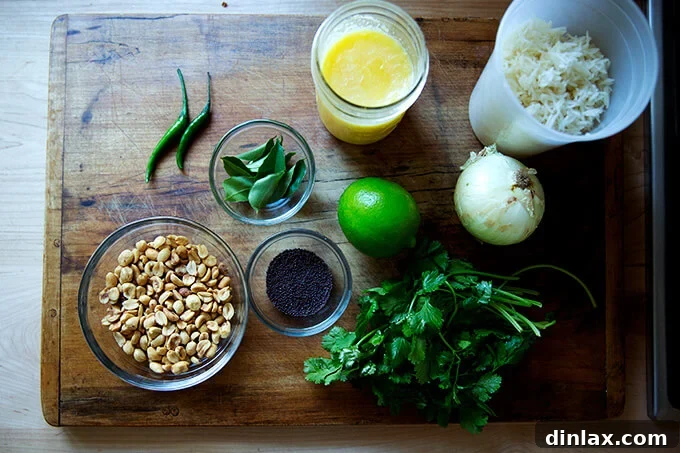
First, gather all your ingredients. Having everything prepped and ready ensures a smooth and enjoyable cooking process, often referred to as “mise en place.”
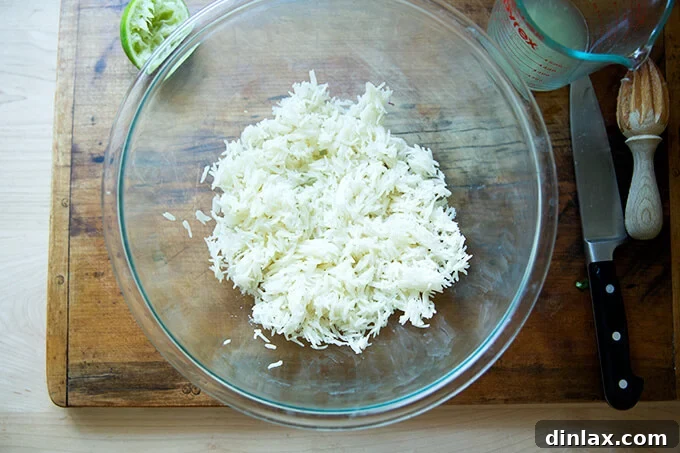
Take your day-old basmati rice—the drier, the better for individual grains—and gently combine it with fresh lime juice and a good pinch of salt. This sets the foundational flavor and texture.
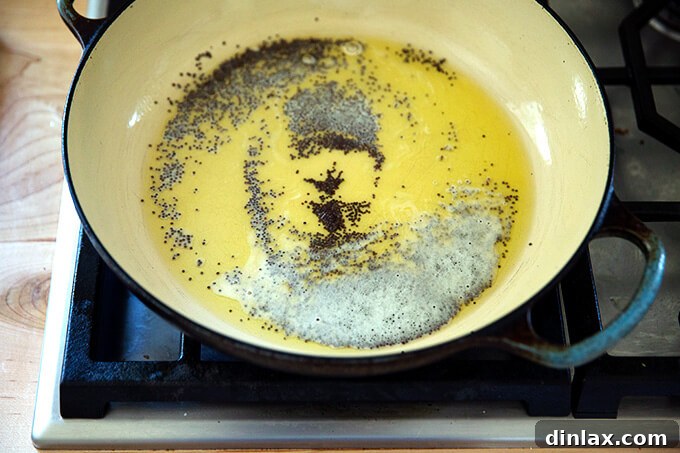
In a medium skillet, warm ghee (or a suitable olive oil alternative) over medium heat. Once it starts to shimmer, add the black mustard seeds. Watch closely; they’ll quickly begin to pop and dance, releasing their pungent aroma.
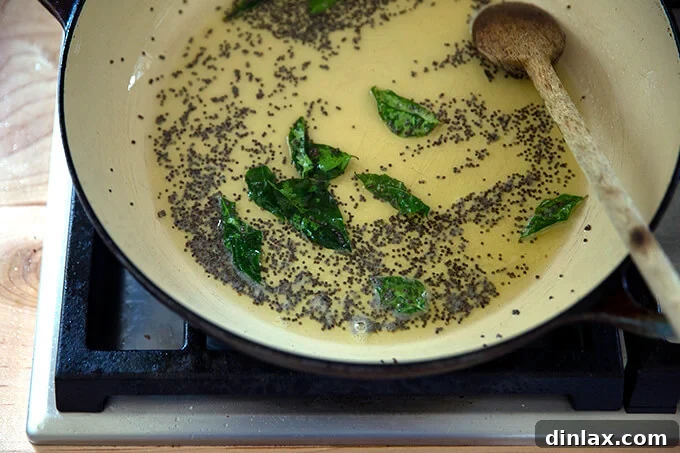
Immediately after the mustard seeds pop, remove the pan from the heat and add the fresh curry leaves. They will crisp up beautifully in the residual heat and infused oil, releasing their distinct, irreplaceable fragrance.
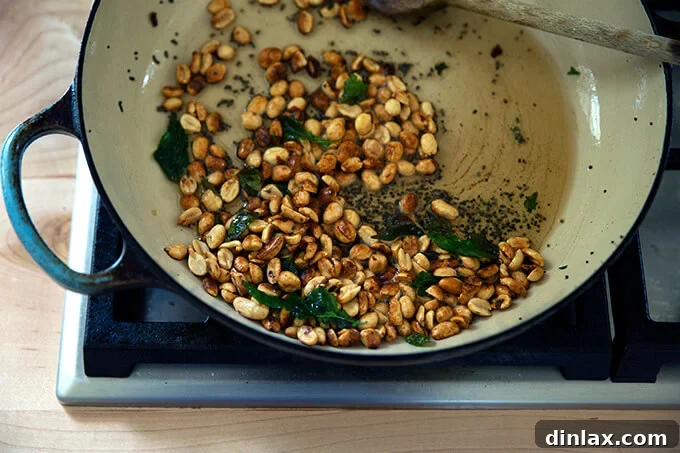
Return the pan to medium-low heat and toss in the roasted peanuts. Cook them for a few minutes, stirring occasionally, until they achieve a medium brown hue and become wonderfully fragrant, absorbing the spiced ghee.
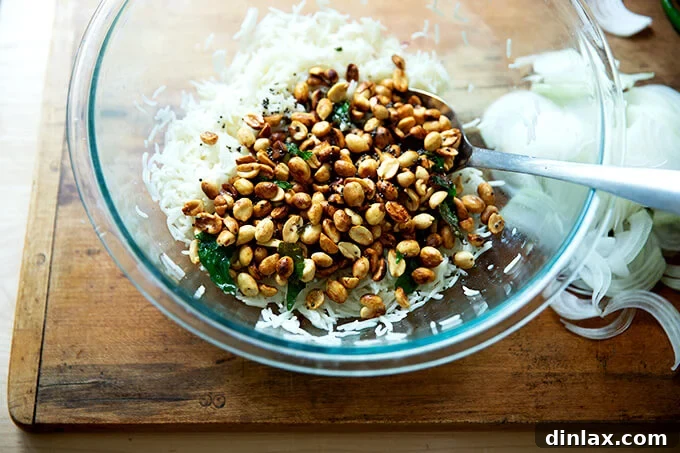
Pour this aromatic peanut-spice-oil mixture directly over your dressed basmati rice. Gently toss everything together, ensuring the rice grains are evenly coated with the fragrant infusion.
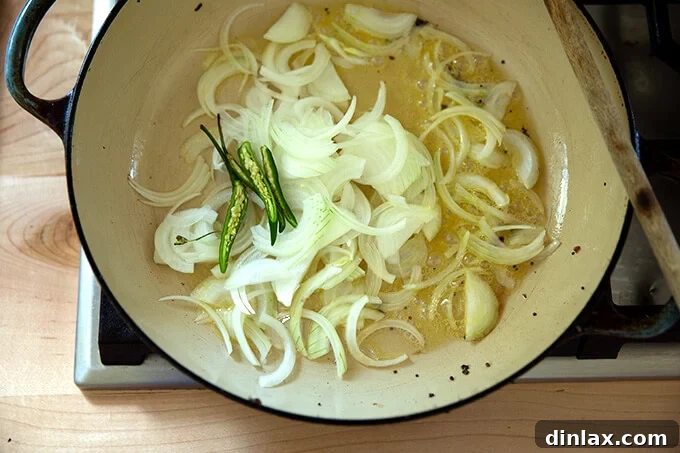
Return the same pan to the stovetop and add the remaining ghee or oil. Once hot, add the thinly sliced yellow onion and halved hot chilies. Season with a pinch of salt to draw out moisture and aid caramelization.
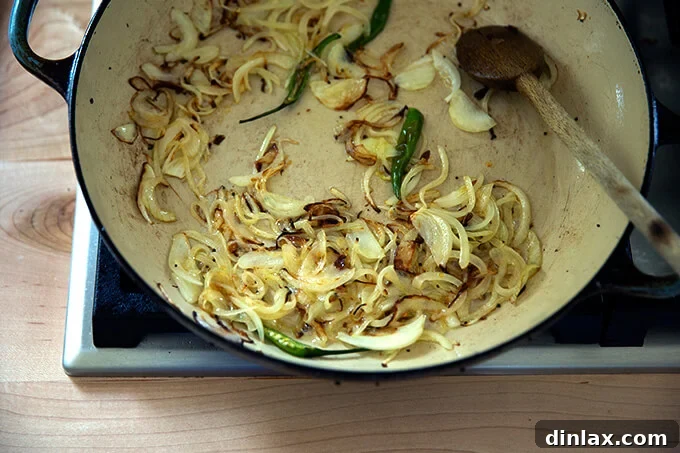
Continue to cook, stirring occasionally, until the onions become beautifully caramelized—soft, sweet, and golden brown. This usually takes about 5 to 7 minutes.
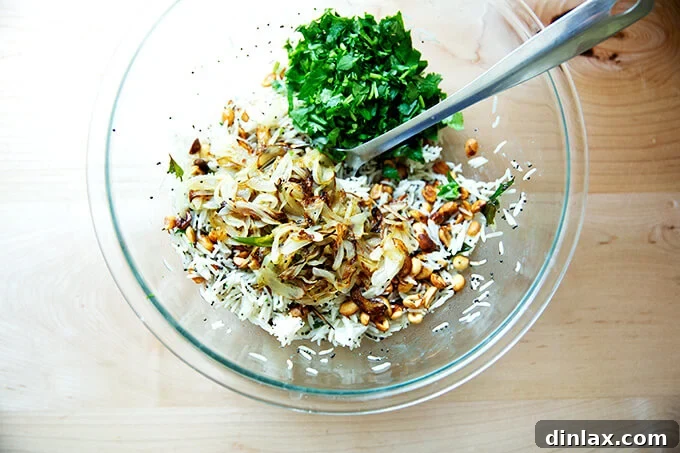
Add the caramelized onions and chilies to the bowl of rice. Top with a generous amount of freshly chopped cilantro, which adds a burst of herbaceous flavor and vibrant color.
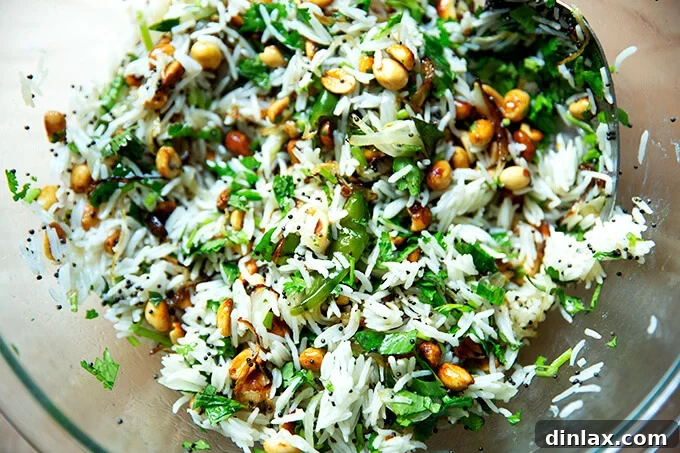
Give everything a good toss to combine all the incredible flavors and textures. Now, taste and adjust! This is where you personalize the dish. Add more fresh lime juice for zing and extra salt to enhance all the spices. Don’t be shy; a little extra can make all the difference.
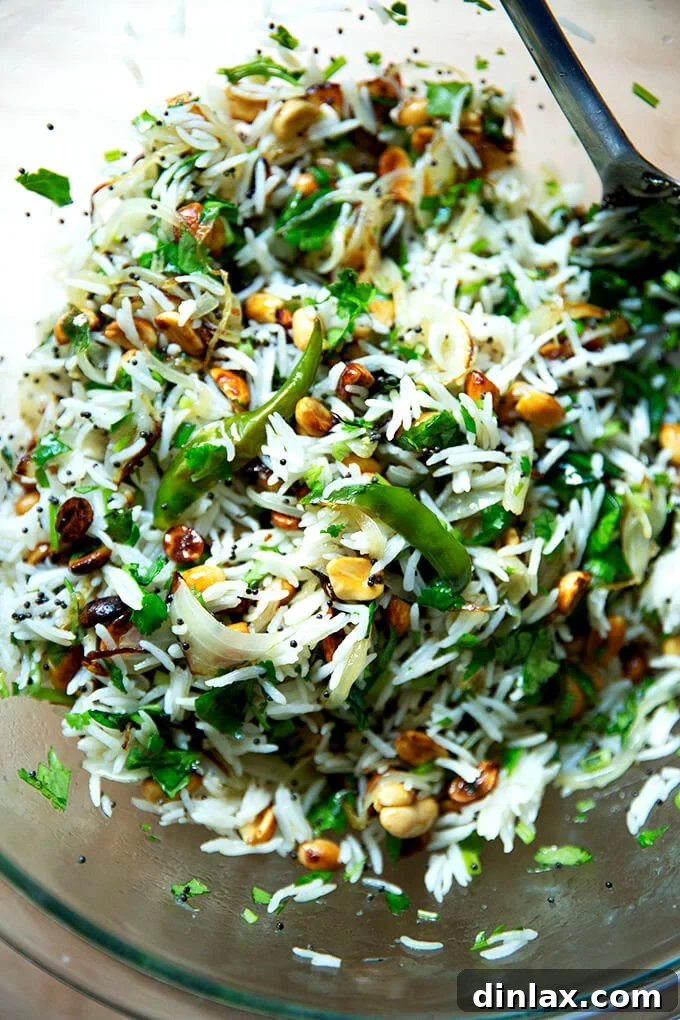
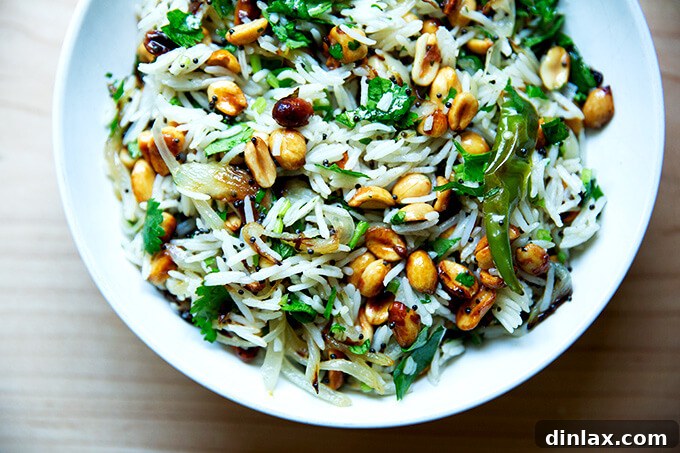
Serve this Indian Fried Rice hot, perhaps topped with a perfectly fried egg for a complete meal, or enjoy it as a vibrant and satisfying side dish.
This experience is brought to you by Priya Krishna’s fantastic book: Indian-ish.
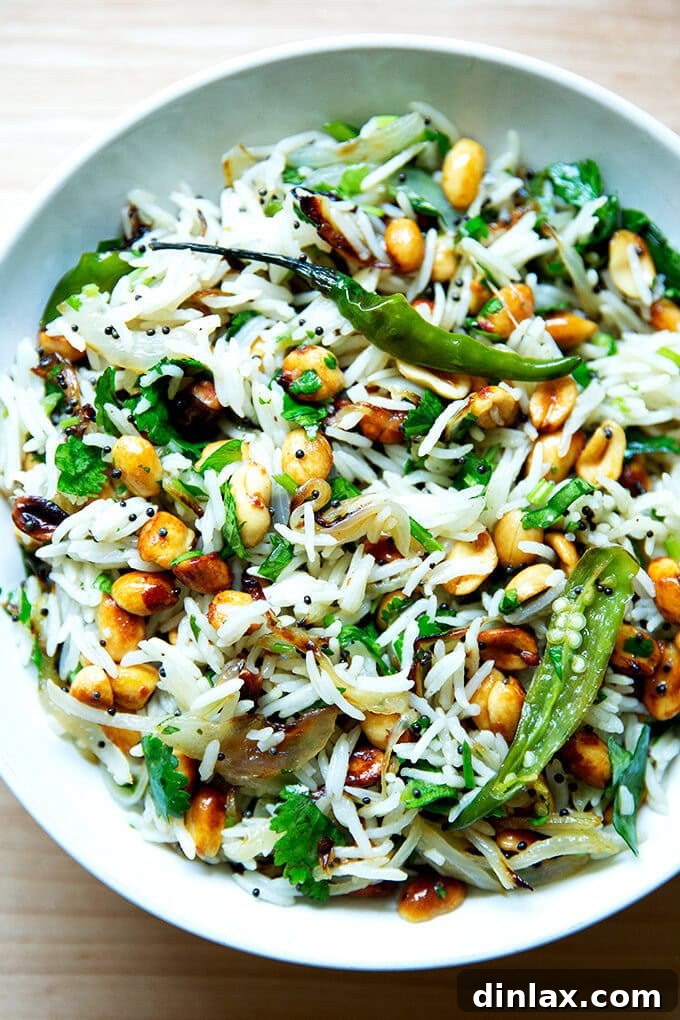
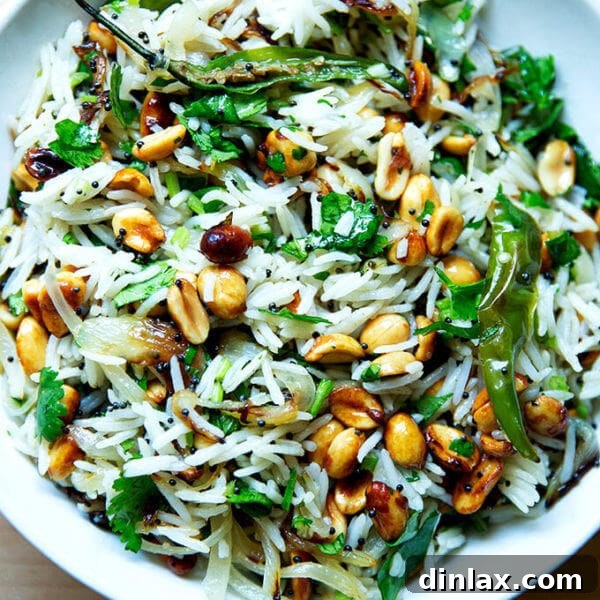
Indian Fried Rice with Peanuts, Chilies, & Cilantro
5 from 4 reviews
- Author: Alexandra Stafford
- Total Time: 30 minutes
- Yield: serves 4
Description
From Priya Krishna’s Indian-ish
Notes:
- The original recipe calls for 8 tablespoons of ghee total, but I think it’s equally delicious with 4 tablespoons. If you’re not afraid, use 8!
- Ghee: Inspired by the book, I made a batch of ghee. Unsalted butter or olive oil are fine substitutes.
- Curry leaves may require some hunting to track down. I bought mine at the Karam Asian Grocery & Halal Meat in Schenectady. If you don’t feel like searching for them, simply omit.
- Peanuts: I’ve been using Planters roasted and salted … it hasn’t been making the dish too salty.
Ingredients
- 3 cups cooked basmati rice or 1 cup dried basmati rice, rinsed
- kosher salt
- 2 tablespoons fresh lime juice plus more to taste
- 4 to 8 tablespoons ghee or olive oil, divided
- 1 tablespoon black mustard seeds
- 10 fresh curry leaves
- 1 cup roasted unsalted peanuts
- 2 small hot chilies, halved lengthwise
- 1 medium yellow onion, sliced thinly
- 2 tablespoons chopped fresh cilantro or more to taste
Instructions
- If you need to cook the rice, here how: Instant Pot Method: Place the rice, 1 cup water, and 3/4 teaspoon kosher salt into the Instant Pot. Set the IP to: manual, high heat, 6 minutes, natural release 10 minutes (or more). Fluff with fork. Stovetop Method: Place the rice, 1.5 cups water, and 3/4 teaspoon kosher salt into a medium pot. Bring to a simmer. Cover. Reduce heat to low. Cook 15 minutes. Remove pan from heat. Let stand 10 minutes (or longer) before fluffing with a fork.
- If you have leftover basmati rice on hand, bravo—start here: In a large bowl combine the cooked rice, 1 teaspoon kosher salt, and lime juice. Set aside.
- In a medium skillet over medium heat, warm 2 to 4 tablespoons of ghee or oil (depending on your preferences, see notes above). Once the ghee or oil begins to shimmer, add the mustard seed. As soon as they begin to pop and dance around in the oil, which will happen very quickly, remove the pan from the heat. Add the curry leaves, making sure they get fully coated in the oil. The leaves will immediately begin to crisp up.
- Return the pan to medium-low heat and add the peanuts. Cook, stirring occasionally, until the peanuts turn a medium shade of brown and become fragrant, 3 to 5 minutes. Pour the peanut-spice-oil mixture over the rice and toss gently to incorporate.
- In the same pan over medium heat, warm the remaining 2 to 4 tablespoons ghee or oil. Once it begins to shimmer, add the chilies and onions. Season with a pinch of salt. Cook, stirring occasionally until the onion begins to caramelize, 5 to 7 minutes. Stir this mixture into the rice. Add the cilantro and toss to combine. Taste. Add more salt and lime to taste — go big with both; you won’t be disappointed.
- Prep Time: 15 minutes
- Cook Time: 15 minutes
- Category: Side Dish
- Method: Stovetop
- Cuisine: Indian