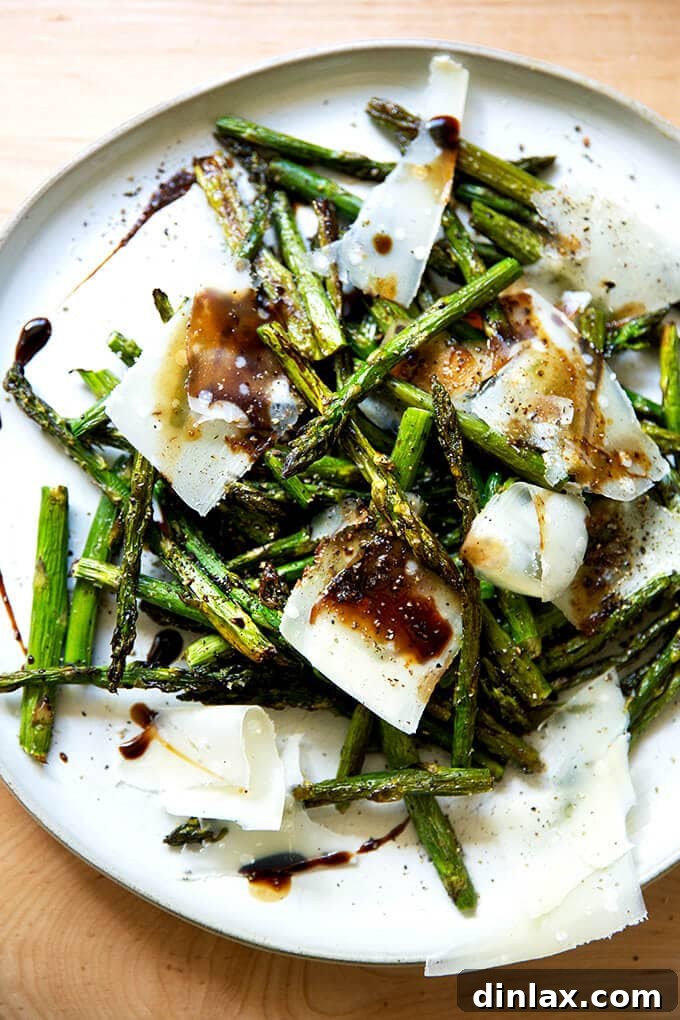
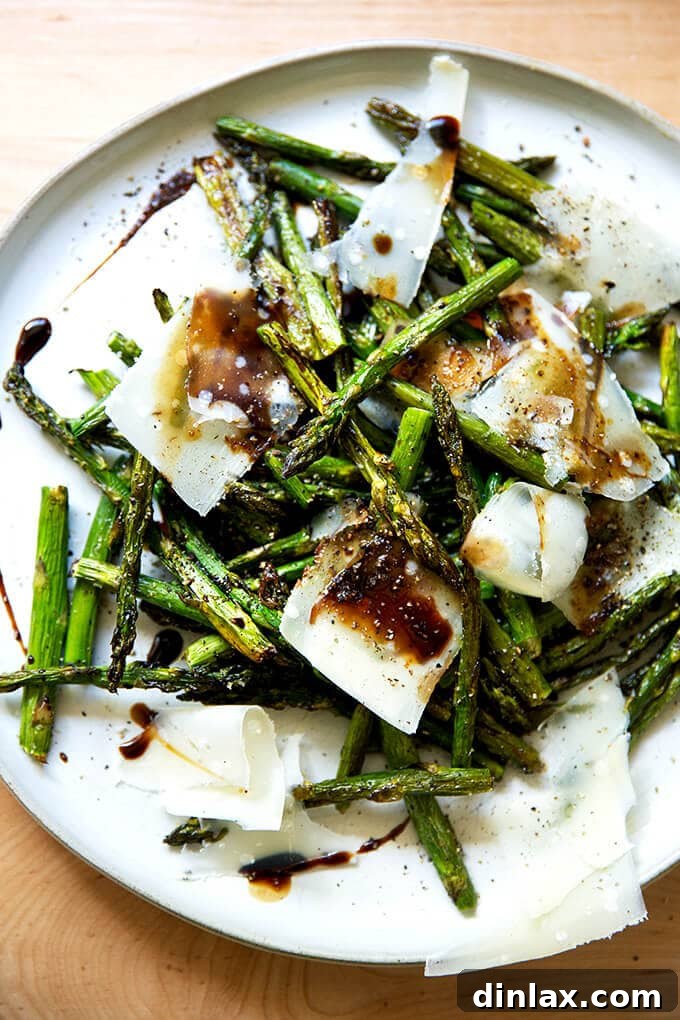
Simple Roasted Asparagus with Balsamic & Parmesan: An Easy and Elegant Side Dish
As spring unfurls its bounty, few vegetables announce the season’s arrival quite like fresh asparagus. Its vibrant green spears are a culinary delight, offering a crisp texture and subtly earthy flavor that instantly brightens any meal. While there are countless ways to prepare this seasonal gem, sometimes the simplest methods yield the most extraordinary results. This recipe for Simple Roasted Asparagus with Balsamic and Parmesan is a testament to that principle, transforming humble ingredients into an effortlessly elegant side dish that’s bursting with flavor.
My journey to this particular recipe began last week, while preparing for a discussion about asparagus with the renowned gardener Margaret Roach. I found myself immersed in my collection of seasonally organized cookbooks, particularly the inspiring Canal House Cooks Every Day by Melissa Hamilton and Christopher Hirsheimer. These culinary mavens have long shaped my approach to cooking, and their influence is especially pronounced when it comes to asparagus. Their insights, like the careful consideration of peeling the bottom ends of fatter spears for even cooking – a step I confess I often skip due to sheer laziness, though it does promise superior texture – always linger in my mind. I also fondly recall their exquisite shaved asparagus and arugula salad, a dish that introduced me to the delicious potential of raw asparagus.
It was during this recent deep dive into the Canal House cookbook that I stumbled upon a hidden gem – a recipe I had previously overlooked. Tucked away on a page, without an ingredient list or accompanying photograph, it was described in just eight concise sentences, occupying a mere inch and a half of space. Intrigued by its brevity and the simplicity it promised, I made it immediately. The result was nothing short of revelatory. This recipe, with its minimal effort and maximum flavor, instantly earned its place as a springtime staple in my kitchen. It’s the kind of dish that elevates weeknight dinners while still being simple enough for entertaining. The combination of tender, slightly charred asparagus, savory Parmesan, and sweet, tangy balsamic creates a harmony of flavors that is truly addictive.
The Irresistible Allure of Asparagus: Selection, Storage, and Benefits
Asparagus isn’t just delicious; it’s also a powerhouse of nutrition, packed with vitamins K, C, A, folate, and dietary fiber. Incorporating this vibrant vegetable into your diet is a fantastic way to enjoy seasonal eating and support overall health. To ensure you’re starting with the best possible foundation for this recipe, selecting fresh, high-quality asparagus is paramount. Look for spears that are firm to the touch, with tightly closed, compact tips. Avoid any that appear limp, withered, or have splayed tops, as these are indicators of age.
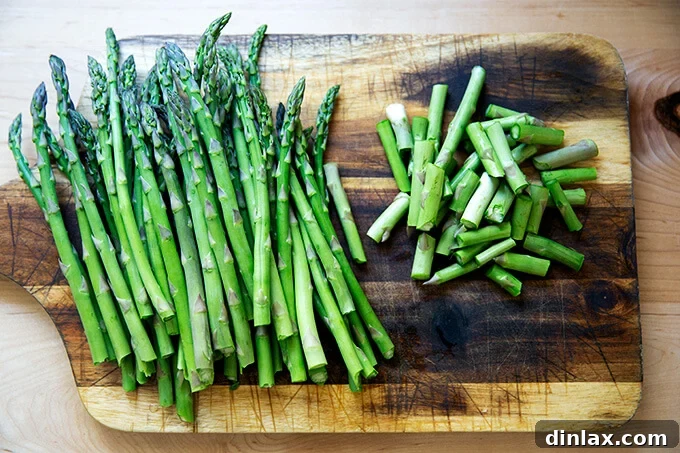
When it comes to preparation, the age-old debate of snapping versus peeling the ends often arises. The “snap test” involves bending a spear until it naturally breaks, indicating where the tough, woody end separates from the tender stalk. While effective, this can sometimes lead to excessive waste. Alternatively, you can simply trim off the bottom inch or two with a knife, or, if you’re feeling adventurous and have very thick spears, you can follow the Canal House suggestion to peel the lower half with a vegetable peeler. For this simple roasted recipe, I often just snap off the bottom ends for convenience.
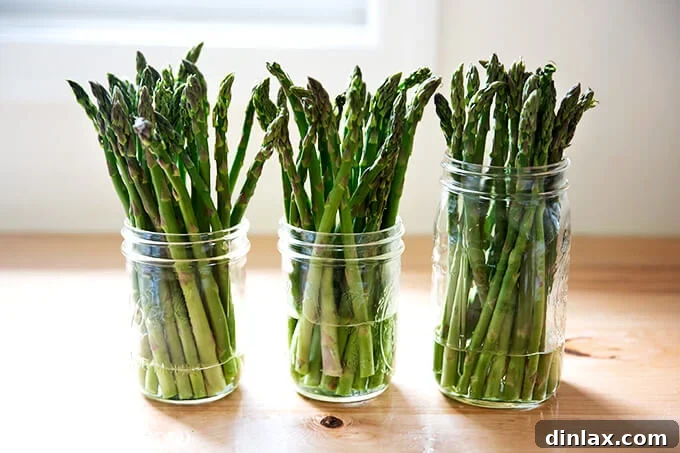
For storage, a trick I learned and now swear by is to treat asparagus much like a bouquet of flowers. After receiving homegrown asparagus delivered in cups of water, I began storing my market-bought spears upright in glass jars with a small amount of water at room temperature. This method dramatically extends their freshness and crispness, keeping them beautifully for days.
The Simple Art of Roasting Asparagus to Perfection
Roasting is arguably the best method for preparing asparagus, as it brings out its natural sweetness, creates a tender interior, and develops a delightful slight char on the tips. This caramelization adds depth and complexity that other cooking methods often miss. The beauty of this recipe lies in its straightforward approach, requiring minimal fuss for maximum flavor.
Ingredients You’ll Need:
- Approximately 1 pound (about 450g) of fresh asparagus spears
- 2 tablespoons high-quality olive oil
- Flaky sea salt (such as Maldon) to taste
- Freshly cracked black pepper to taste
- Parmigiano Reggiano cheese, for shaving
- 1 tablespoon syrupy aged balsamic vinegar (or homemade reduction, see notes below)
Step-by-Step Instructions:
- Preheat your oven to 425ºF (220ºC). If your oven has a convection roast setting, feel free to use it for an even crispier result. This recipe serves 2-4 and takes approximately 30 minutes total (5 minutes prep, 25 minutes cook time).
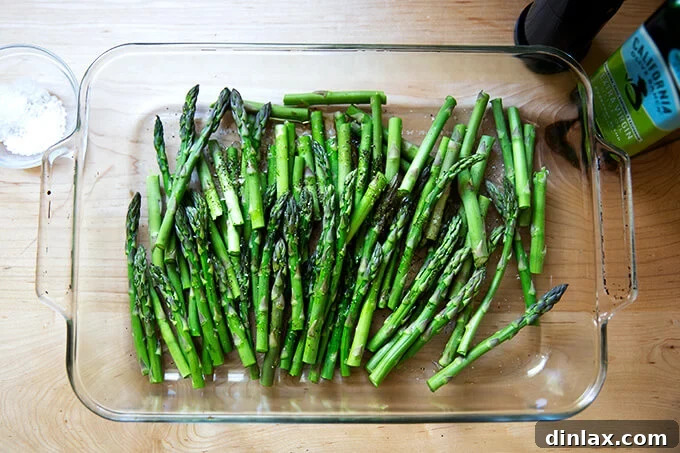
- Prepare the asparagus: Wash the spears thoroughly. Snap off the tough, woody bottom ends from each spear. Discard or compost these ends. For a more manageable size and consistent cooking, cut the asparagus spears in half crosswise.
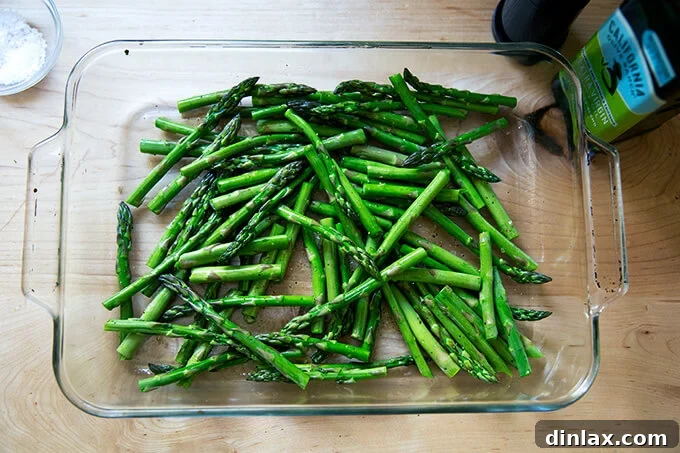
- Transfer the prepared asparagus to a 9×13-inch baking dish, a large sheet pan, or any similar oven-safe vessel. Drizzle generously with two tablespoons of high-quality olive oil.
- Season the asparagus liberally with flaky sea salt and freshly cracked black pepper. Use your hands to toss the spears gently, ensuring each one is nicely coated with oil and seasoning. This step is crucial for even cooking and flavor distribution.
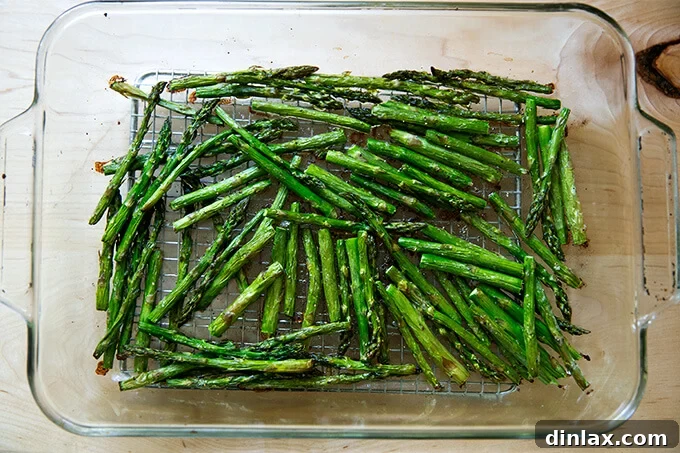
- Place the baking dish or sheet pan into the preheated oven. Roast for approximately 20-25 minutes. The precise cooking time will depend on the thickness of your asparagus spears and your oven. Keep an eye on them towards the end of the cooking time.
- The asparagus is perfectly roasted when it’s tender-crisp and the tips are just beginning to char, developing a lovely caramelized flavor.
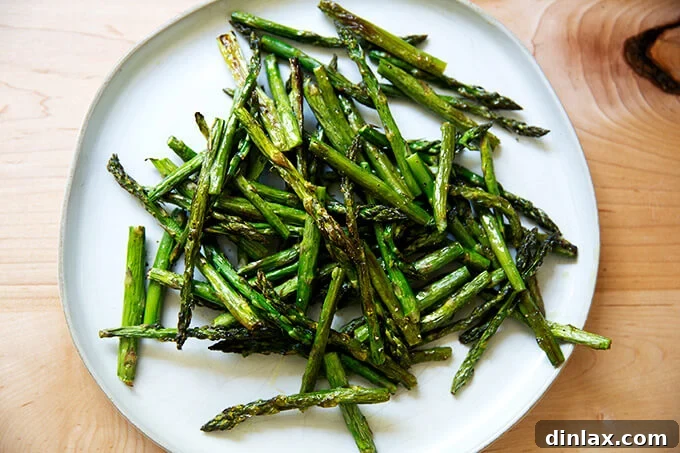
- Once roasted, carefully remove the pan from the oven. Transfer the hot asparagus immediately to a warm serving platter.
- Taste a spear to check the seasoning. If needed, sprinkle with a little more salt. Using a vegetable peeler (my personal favorite is this kind), generously shave fresh Parmigiano Reggiano cheese over the entire dish, according to your preference.
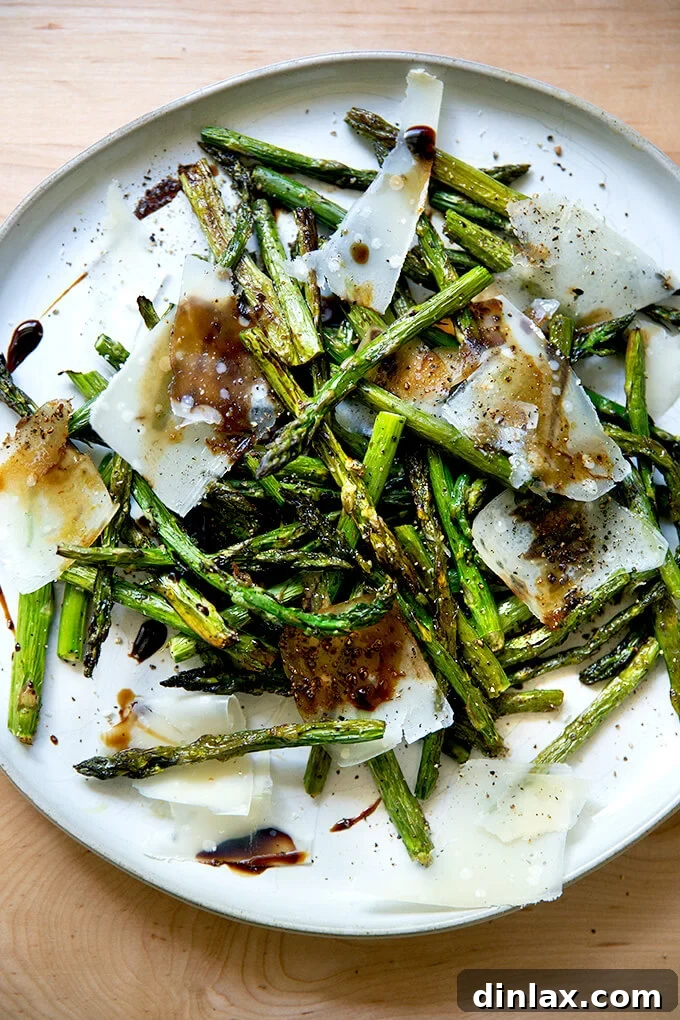
- Finish by drizzling the syrupy aged balsamic vinegar over the asparagus and Parmesan. The contrast of the rich, sweet balsamic with the savory cheese and earthy asparagus is divine. Season with an extra grind of fresh black pepper if desired.
- Serve immediately and prepare to devour this simple, yet incredibly satisfying, side dish!
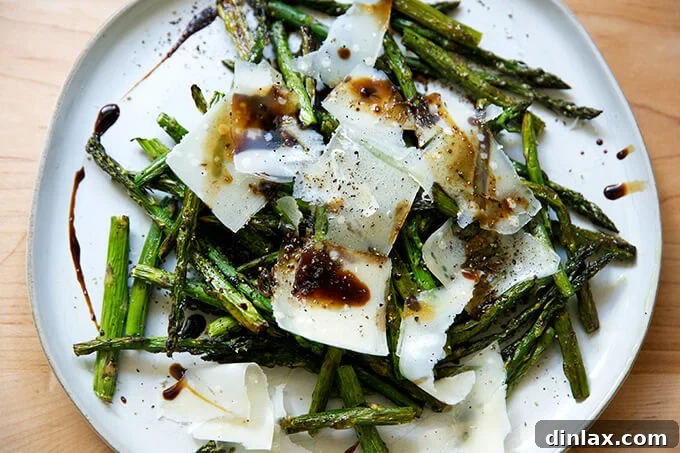
This dish is a testament to how simple ingredients, when treated with care, can create something truly special. The interplay of textures and flavors – the crisp-tender asparagus, the salty tang of Parmesan, and the sweet-sour depth of balsamic – makes every bite a delight.
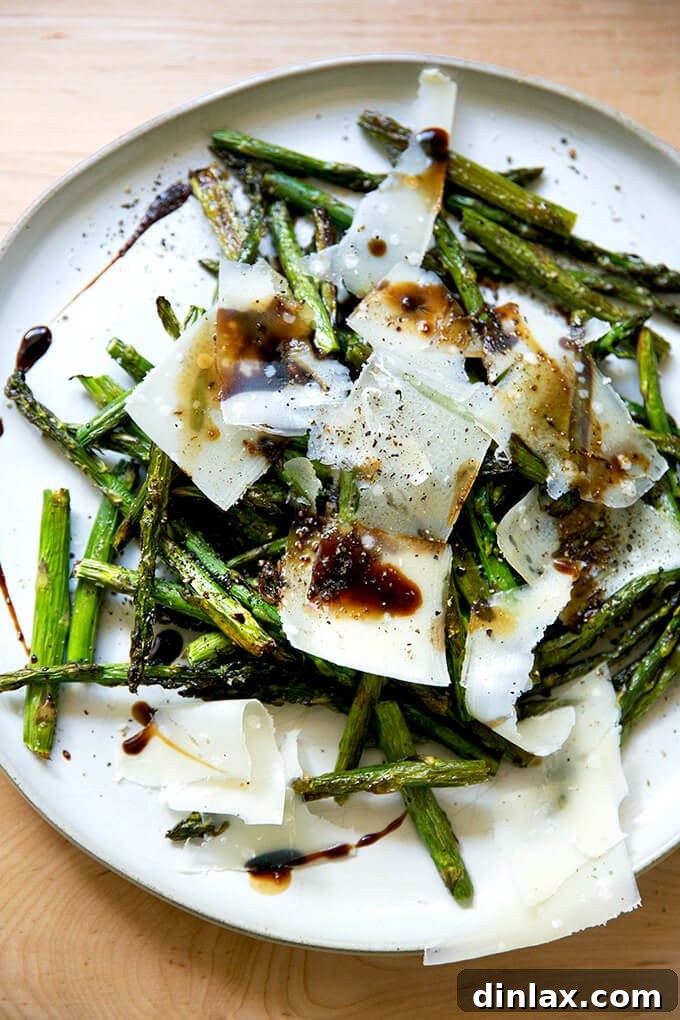
The Balsamic Difference: Aged vs. Homemade Reduction
A critical component of this recipe’s success is the balsamic element. While any balsamic vinegar can be used, opting for an aged, syrupy balsamic truly elevates the dish. Authentic Aceto Balsamico Tradizionale di Modena DOP is a complex, intensely flavored vinegar produced through a lengthy aging process, often for decades, resulting in a thick, naturally sweet, and tangy syrup. Understandably, these traditional balsamics can be quite pricey.
However, there are excellent, more accessible options. Last summer, a friend introduced me to Testa’s Pantry Balsamico di Modena IGP Oro, which I’ve found to be a fantastic value. At around $16.99 for a 250ml bottle, it offers a syrupy consistency and delicious flavor profile that rivals much more expensive varieties, such as an 8.5 oz (250 ml) bottle of Villa Manadori which typically retails for $49.95. While I haven’t done a direct side-by-side comparison, I have no doubt that Testa’s Pantry balsamic holds its own beautifully, providing that luxurious finish without breaking the bank.
If purchasing an aged balsamic is not in your budget, or if you simply prefer a DIY approach, you can easily create your own syrupy balsamic reduction at home. This method transforms standard balsamic vinegar into a thicker, sweeter glaze, perfect for drizzling. It’s a trick I often use, notably for Ina Garten’s Roasted Brussels Sprouts.
How to Make Balsamic Reduction:
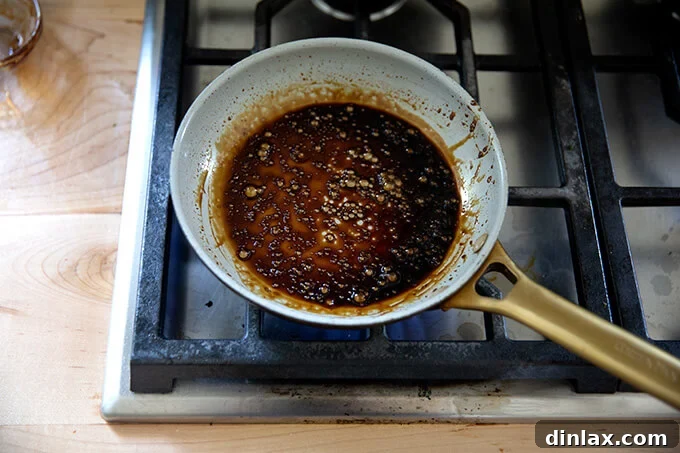
To make your own balsamic glaze, simply pour about 1/4 cup of good quality, standard balsamic vinegar into a small saucepan. Place it over medium-low heat and bring it to a gentle simmer. Allow it to simmer, stirring occasionally, until the vinegar has reduced by a little more than half its original volume and takes on a syrupy consistency. This process usually takes about 5-10 minutes, depending on the heat and the width of your saucepan.
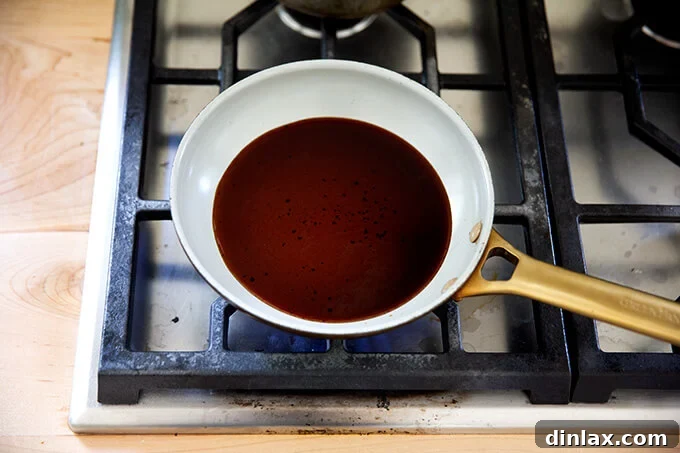
Crucial Tip: Keep a close watch on the vinegar, as it can go from perfectly syrupy to overly sticky and caramel-like very quickly. As soon as it reaches your desired consistency, immediately transfer the reduced balsamic to a small bowl or a separate container. It will continue to thicken significantly as it cools. If it becomes too thick, you can gently reheat it with a tiny bit of water or more balsamic to loosen it up.
The Role of Parmigiano Reggiano
No discussion of this dish would be complete without highlighting the importance of Parmigiano Reggiano. This “King of Cheeses,” with its protected designation of origin, offers a salty, nutty, and subtly fruity flavor that is far superior to generic Parmesan. Freshly shaved Parmigiano Reggiano melts slightly on the warm asparagus, creating an umami-rich counterpoint to the sweetness of the balsamic and the earthy notes of the asparagus. Always opt for a block of true Parmigiano Reggiano and shave it fresh with a vegetable peeler for the best texture and flavor.
Serving Suggestions and Variations
This simple roasted asparagus dish is incredibly versatile. It makes an ideal side for almost any main course:
- Grilled Meats: Perfect with grilled chicken, steak, lamb chops, or pork tenderloin.
- Seafood: Complements pan-seared salmon, baked cod, or grilled shrimp beautifully.
- Pasta Dishes: A wonderful addition to light pasta dishes or as an appetizer before a richer meal.
- Brunch: Serve alongside scrambled eggs, quiche, or frittatas for an elevated breakfast or brunch.
- Vegetarian Meals: Pairs well with lentil burgers, quinoa salads, or roasted root vegetables.
For those looking to experiment, here are a few delightful variations:
- Citrus Burst: Add a squeeze of fresh lemon juice or a sprinkle of lemon zest after roasting for a brighter flavor.
- A Touch of Heat: A pinch of red pepper flakes tossed with the asparagus before roasting can add a subtle kick.
- Nutty Crunch: Sprinkle with toasted pine nuts, slivered almonds, or chopped walnuts for added texture and richness.
- Fresh Herbs: A scattering of fresh chopped parsley, chives, or basil at the end can add an aromatic finish.
Conclusion: A Springtime Staple You’ll Adore
This Simple Roasted Asparagus with Balsamic and Parmesan recipe is more than just a dish; it’s a celebration of spring’s freshest flavors, presented in the most approachable way. Its elegant simplicity makes it a go-to for both busy weeknights and special occasions. Whether you’re a seasoned chef or a novice in the kitchen, you’ll find joy in preparing and savoring this irresistible side. Embrace the season, gather your ingredients, and prepare to fall in love with this remarkably easy and profoundly delicious asparagus dish.