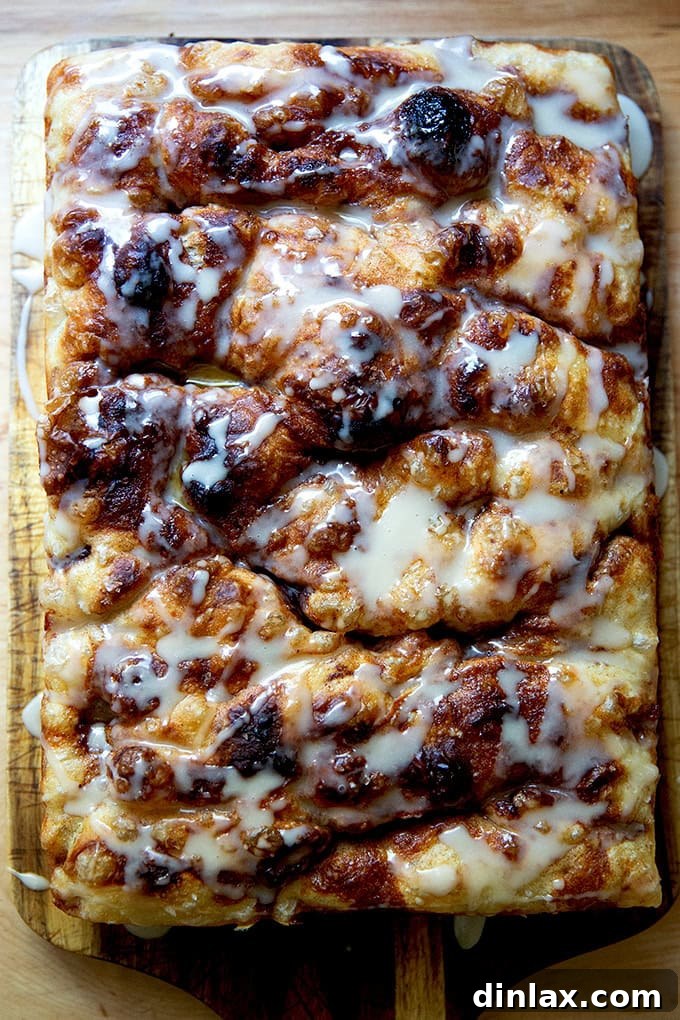
Cinnamon-Sugar Focaccia: The Ultimate No-Knead, No-Fuss Sweet Treat
Imagine the airy, tender crumb of authentic Italian focaccia embracing the warm, spiced embrace of a classic cinnamon roll. This culinary dream becomes a delightful reality with our Cinnamon-Sugar Focaccia recipe – a truly exceptional fusion that promises all the indulgence with none of the fuss. Forget complex kneading, tedious rolling, and the intricate shaping of traditional cinnamon rolls. Here, a simple, four-ingredient focaccia dough is transformed into a golden, bubbly masterpiece, generously folded and dimpled with a rich cinnamon-brown sugar-butter mixture. The result? A perfectly golden, aromatic, and irresistibly sweet bread that’s guaranteed to become a new favorite.
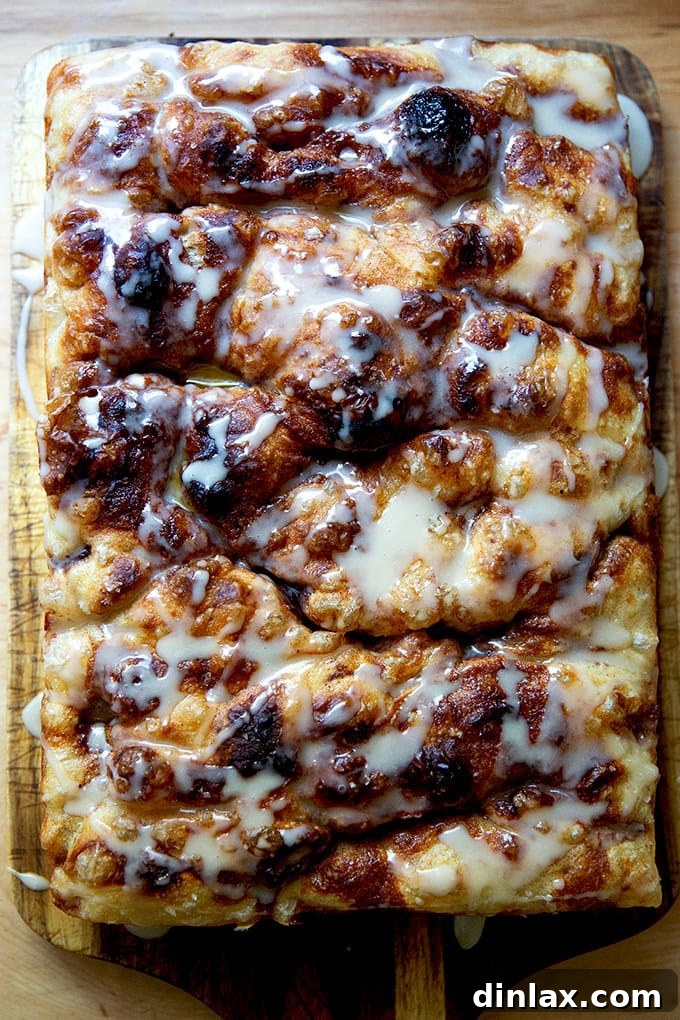
Why This Cinnamon-Sugar Focaccia Is A Game-Changer
For many home bakers, the allure of fresh cinnamon rolls is often overshadowed by the elaborate process they demand. From preparing a rich, yeast-leavened dough that requires meticulous kneading and multiple proofs, to rolling it out perfectly, spreading the filling evenly, coiling it tightly, slicing into individual rolls, and finally, baking and glazing – it can feel like a marathon baking session. While the end result is undeniably rewarding, sometimes life calls for a simpler path to sweet satisfaction.
This Cinnamon-Sugar Focaccia offers just that. It streamlines the entire experience, delivering the comforting flavors of cinnamon rolls in a surprisingly effortless format. The foundation is a remarkable no-knead focaccia dough, requiring only four basic ingredients and minimal hands-on time to stir together. What’s more, this versatile dough is incredibly forgiving, happy to reside in your refrigerator for several days, patiently awaiting its transformation.
The true genius lies in its simplified assembly. There’s no need to flour your work surface, roll out sticky dough, or fuss with intricate coiling and slicing. Instead, the entire process of incorporating the luscious cinnamon-sugar filling and shaping the dough takes place directly within the confines of your 9×13-inch baking pan. You’ll gently fold and dimple the dough, ensuring every bite is infused with that irresistible sweet spice blend. This method not only saves time and reduces mess but also creates a unique, rustic texture that perfectly complements the rich flavors.
Whether you’re hosting a leisurely fall or winter brunch, need a crowd-pleasing dessert, or simply crave a sweet treat without the extensive effort, this recipe is your answer. It offers a sophisticated yet approachable indulgence, ideal for feeding a gathering when energy levels might be low but the desire for something truly special is high. Below, you’ll find a detailed, step-by-step guide to bringing this exceptional creation to life.
Crafting Cinnamon-Sugar Focaccia: A Detailed Step-by-Step Guide
Let’s embark on the journey of creating this delightful sweet focaccia. The process is broken down into manageable steps, ensuring a smooth and enjoyable baking experience.
Phase 1: The Focaccia Dough Foundation
First, gather your essential ingredients for the focaccia dough. Precision here lays the groundwork for perfect texture and flavor.
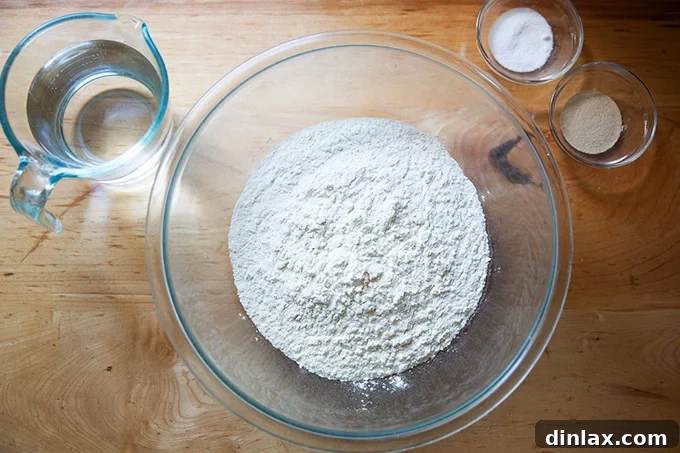
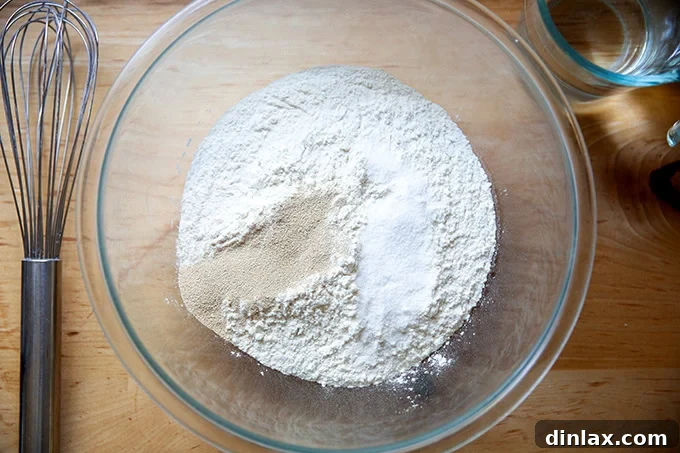
Begin by combining your dry ingredients. In a generously sized bowl, whisk together the flour, salt, and instant yeast. This ensures even distribution before liquids are introduced, which is crucial for consistent dough development.
Next, introduce the water to your dry mixture. The hydration is key to the focaccia’s signature airy texture. Add the water slowly, incorporating it as you go.
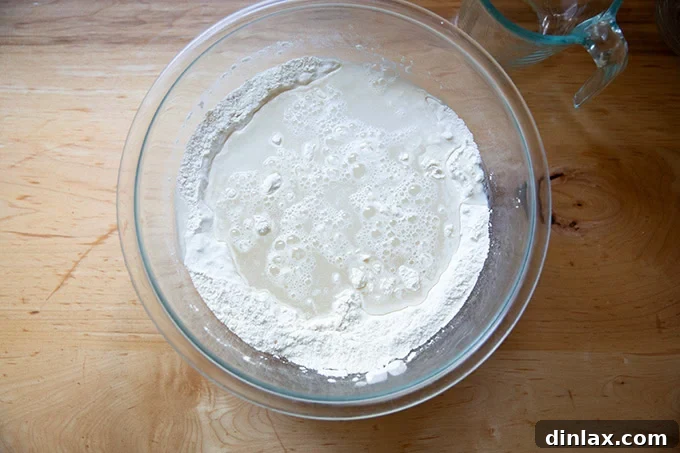
Using a sturdy spatula, stir the ingredients until the liquid is fully absorbed and a sticky, shaggy dough ball forms. Resist the urge to overmix; a rough consistency is exactly what you’re looking for at this stage.
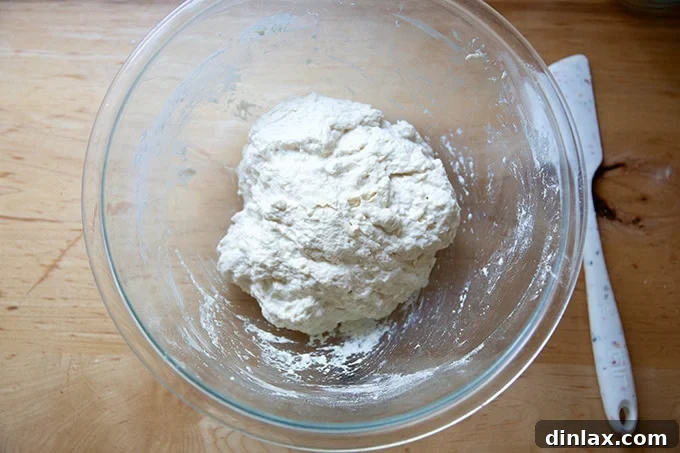
Cover the bowl and allow the dough to rest for 30 minutes. This initial rest, known as autolyse, allows the flour to fully hydrate and gluten to begin developing naturally. Following this, perform a series of stretch and folds. This technique, demonstrated in the video guidance below, helps build dough strength without traditional kneading. Gently stretch a portion of the dough from the edge, pull it upwards, and fold it back towards the center. Repeat this motion 8-10 times, rotating the bowl as you go. You’ll notice the dough becoming smoother and more elastic with each fold.
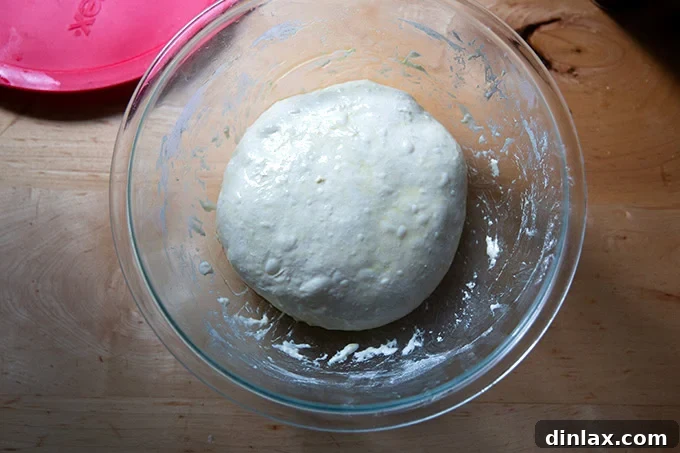
Once stretched and folded, slick the surface of the dough with a thin layer of olive oil. This prevents a skin from forming and keeps the dough pliable. Cover the bowl tightly and transfer it to the refrigerator for at least 12 hours, or up to 3 days. This cold fermentation is crucial; it allows the yeast to work slowly, developing complex flavors and a superior bubbly texture characteristic of great focaccia.
Phase 2: Pan Preparation and First Rise
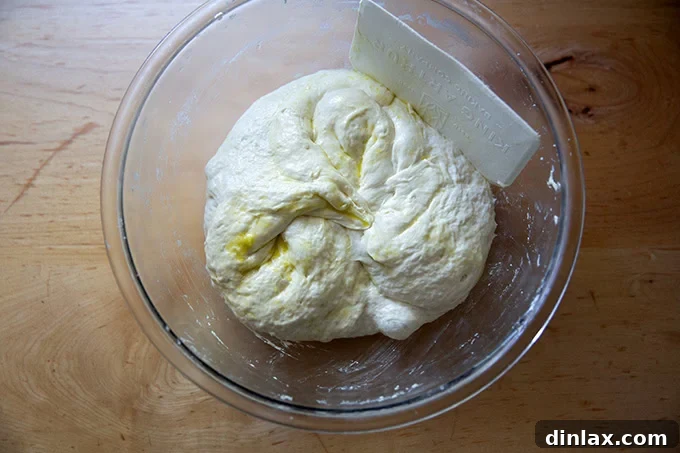
After its extended stay in the fridge, remove the dough and take a moment to admire its transformation. It should look beautifully aerated, full of tiny bubbles, and significantly more voluminous.
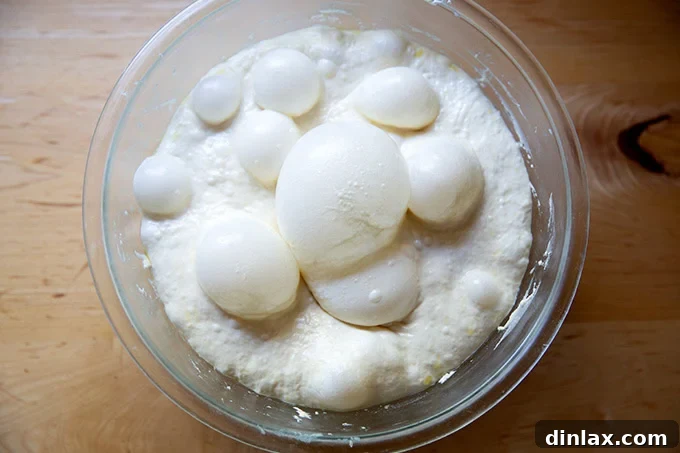
Gently deflate the dough using a flexible bench scraper or a lightly oiled hand. This step helps redistribute the gases and prepares the dough for its final shaping.
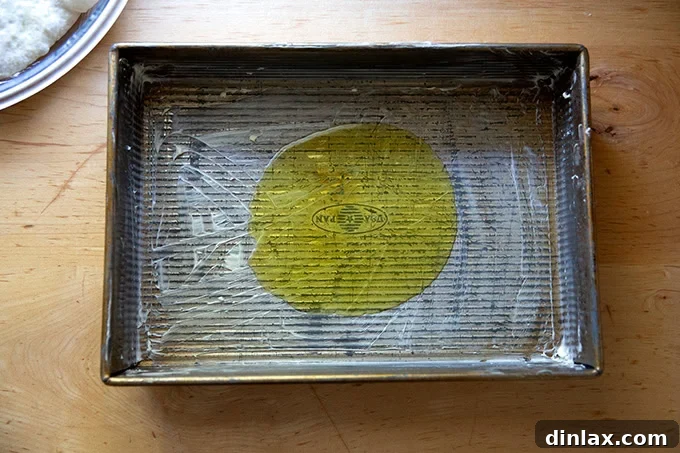
Prepare your baking pan. Generously grease a 9×13-inch pan with softened butter, ensuring all corners and sides are coated. This layer of butter not only prevents sticking but also contributes to a deliciously crispy crust. Pour 2 tablespoons of olive oil into the center of the pan, adding richness and flavor to the base of the focaccia.
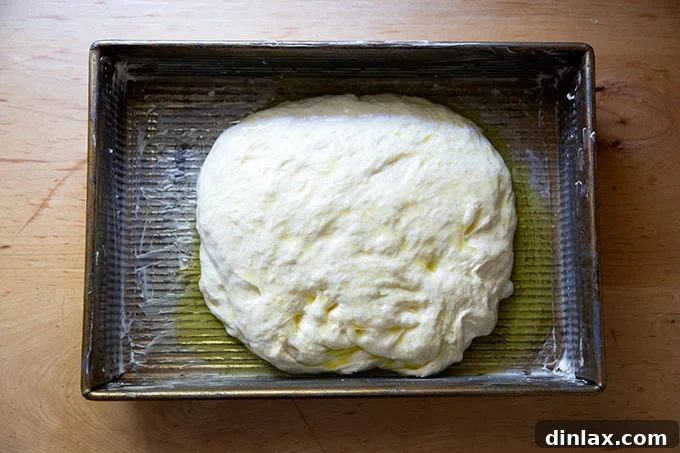
Carefully turn the dough into the prepared pan. Gently rotate and turn the dough in the olive oil to ensure it’s completely coated. This oil layer is crucial for achieving that characteristic golden, slightly fried focaccia bottom. Now, leave the dough untouched for approximately 1.5 hours. During this period, covered, it will relax and begin its final rise at room temperature, becoming puffy and ready for stretching.
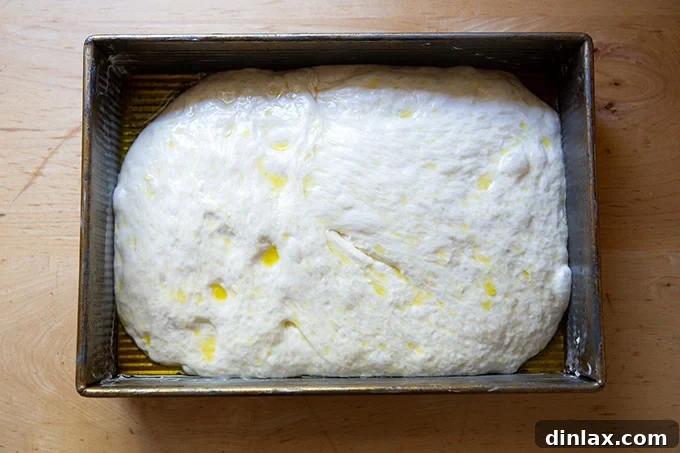
After the rest, gently stretch the dough to fit the pan, pushing it to the edges. Don’t force it; if it resists, let it rest for another 10-15 minutes before trying again. This ensures an even thickness for baking.
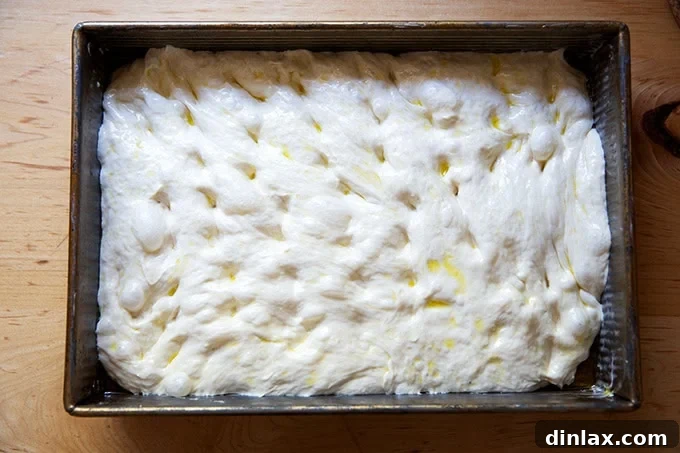
Phase 3: The Cinnamon-Sugar Magic
Now, prepare the first layer of the irresistible cinnamon-sugar filling. In a small saucepan, combine a portion of the butter, brown sugar, and cinnamon over low heat. The gentle heat helps melt the butter and dissolve the sugar, creating a smooth, pourable mixture.
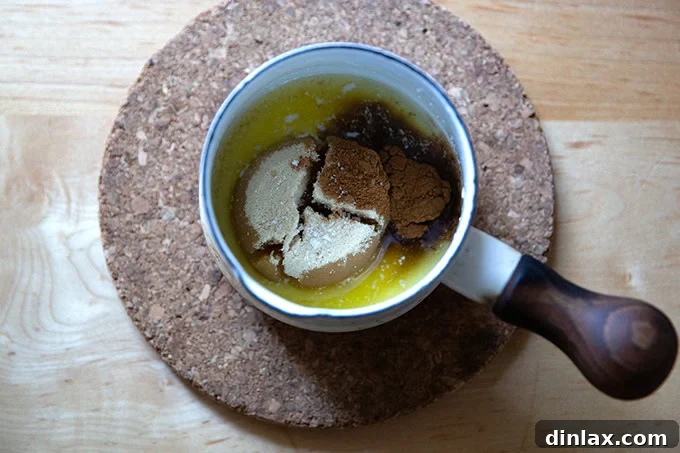
Whisk continuously until the mixture is smooth and fully combined. Remove it from the heat and allow it to cool slightly to prevent it from overheating the dough.
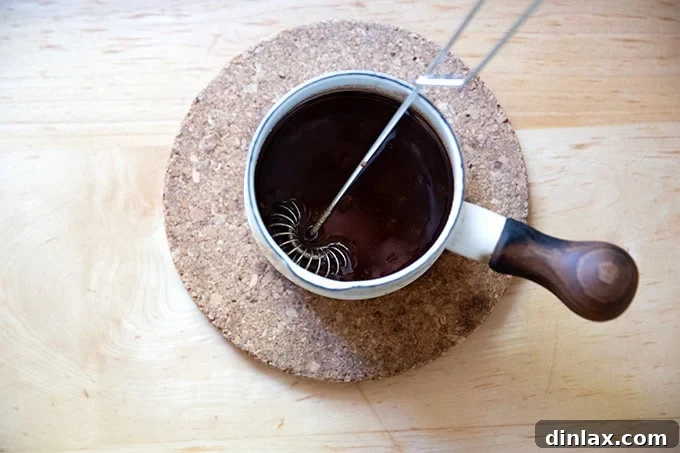
Pour this fragrant mixture evenly over the stretched focaccia dough in the pan. Use your hands or a spatula to ensure the entire surface is covered.
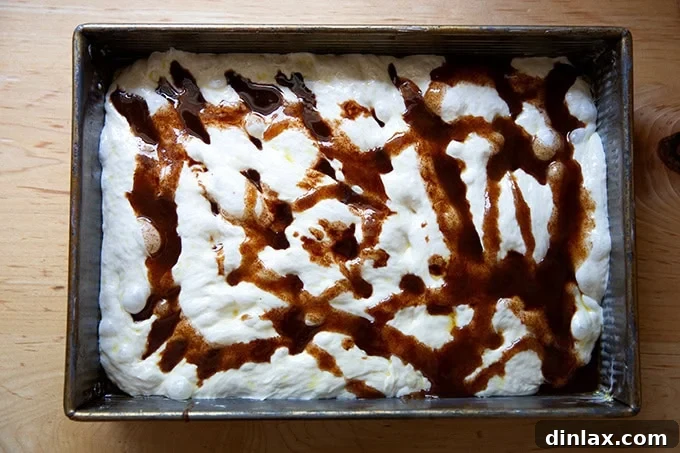
Now for the ingenious “envelope fold.” This technique creates layers of cinnamon-sugar within the focaccia, mimicking the swirl of a cinnamon roll without any difficult handling. Fold one short end of the dough over two-thirds of the way towards the opposite short end. Then, fold the remaining short end back over the first fold, creating a neat envelope shape. Turn the folded dough so the open ends of the envelope face the short ends of the pan. This video demonstrates the technique beautifully:
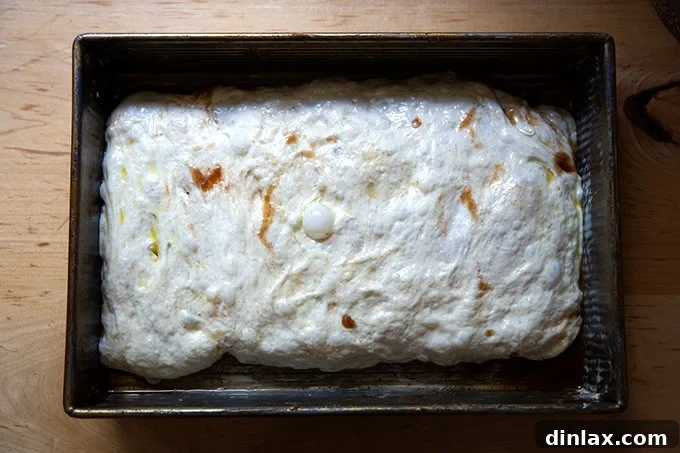
Cover the pan and let the dough rest for another 1.5 hours at room temperature for its second proof. Alternatively, for ultimate convenience and flavor development, you can return the covered pan to the fridge for up to 24 hours. (More on this “make ahead” option below.)
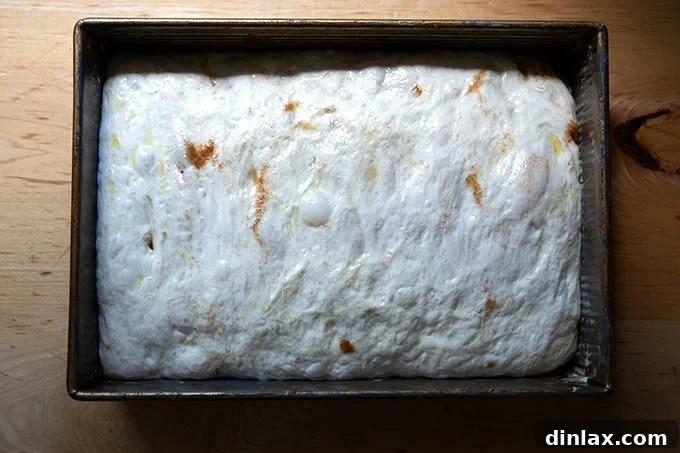
Phase 4: Final Touches, Baking, and Glazing
Once the dough has completed its second proof, prepare a second batch of the cinnamon-sugar-butter mixture using the remaining ingredients, following the same melting and whisking process as before. Pour this fresh, warm mixture over the proofed dough. Now, using lightly oiled hands, gently dimple the dough all over. As you dimple, the warm cinnamon-sugar mixture will seep into the craters, creating pockets of flavor and a wonderfully varied texture. This iconic focaccia dimpling is key to its unique appeal.
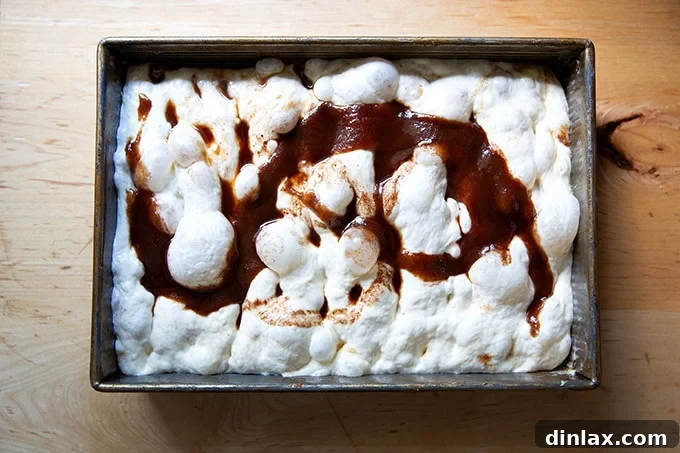
Lightly sprinkle the dimpled dough with flaky sea salt. This touch of salt beautifully balances the sweetness and enhances all the flavors. Preheat your oven to 425°F (220°C). Transfer the pan to the preheated oven.
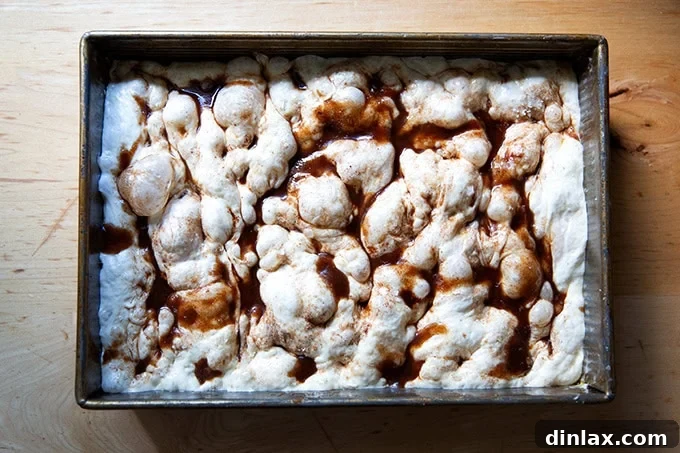
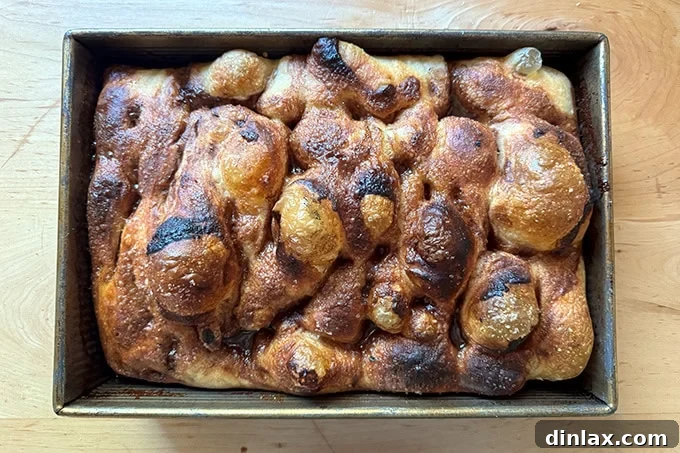
Bake for approximately 25-30 minutes, or until the focaccia is evenly golden brown and bubbly. The aromas filling your kitchen will be incredible!
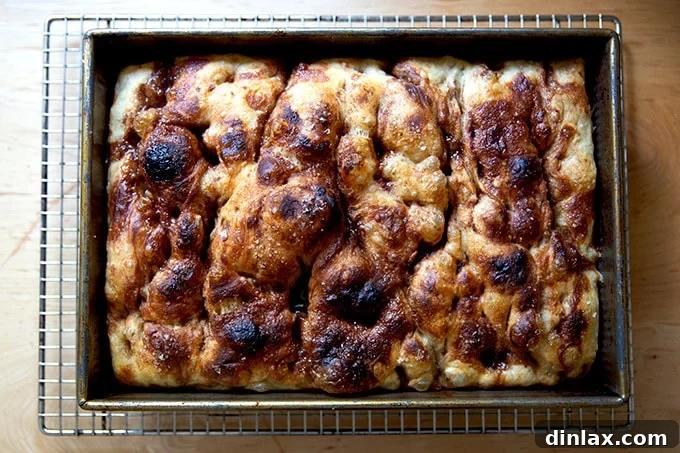
Once baked, remove the pan from the oven and let the focaccia cool in the pan for a few minutes. Then, carefully run a spatula around the edges to loosen it, and transfer the warm focaccia to a wire cooling rack to cool further. This step prevents the bottom from becoming soggy.
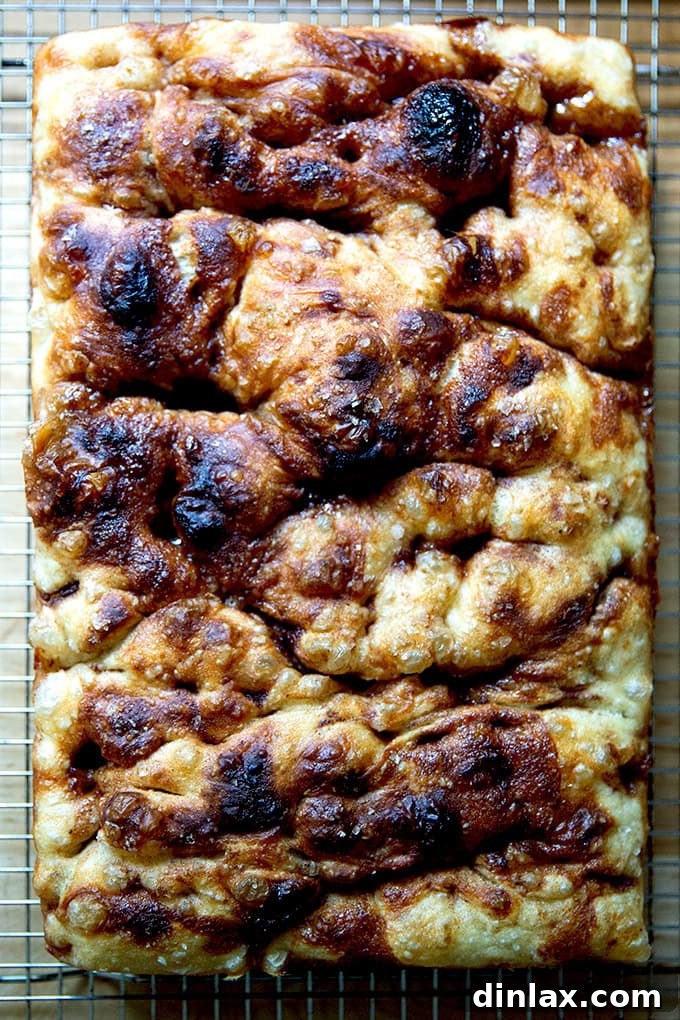
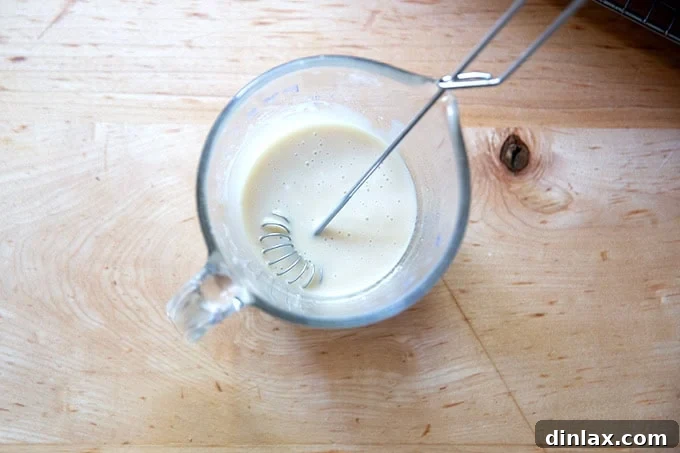
While the focaccia cools briefly, whip up a simple glaze. In a small bowl or liquid measuring cup, whisk together confectioners’ sugar, milk (or heavy cream), and a splash of vanilla extract until smooth. This glaze adds a final touch of sweetness and a beautiful sheen.
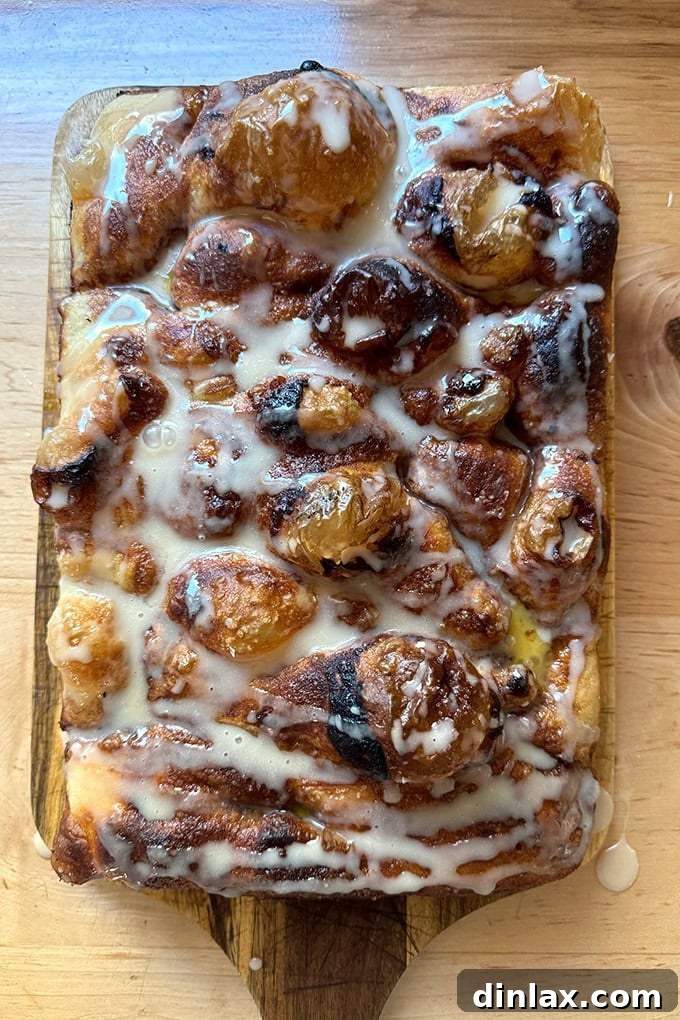
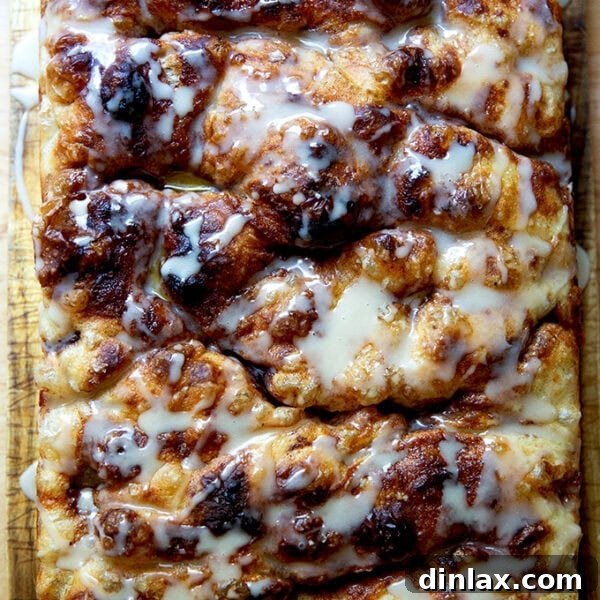
Transfer the slightly cooled focaccia to a beautiful serving board. Generously drizzle the sweet glaze over the top, letting it cascade into the dimples and cracks. The visual appeal is as enticing as the aroma.
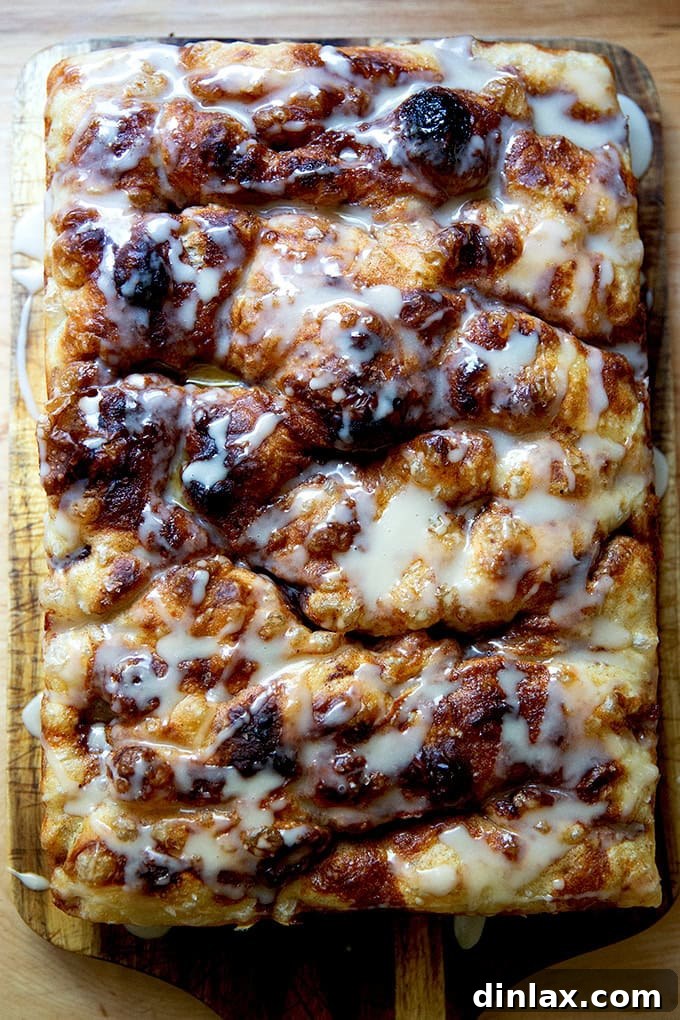
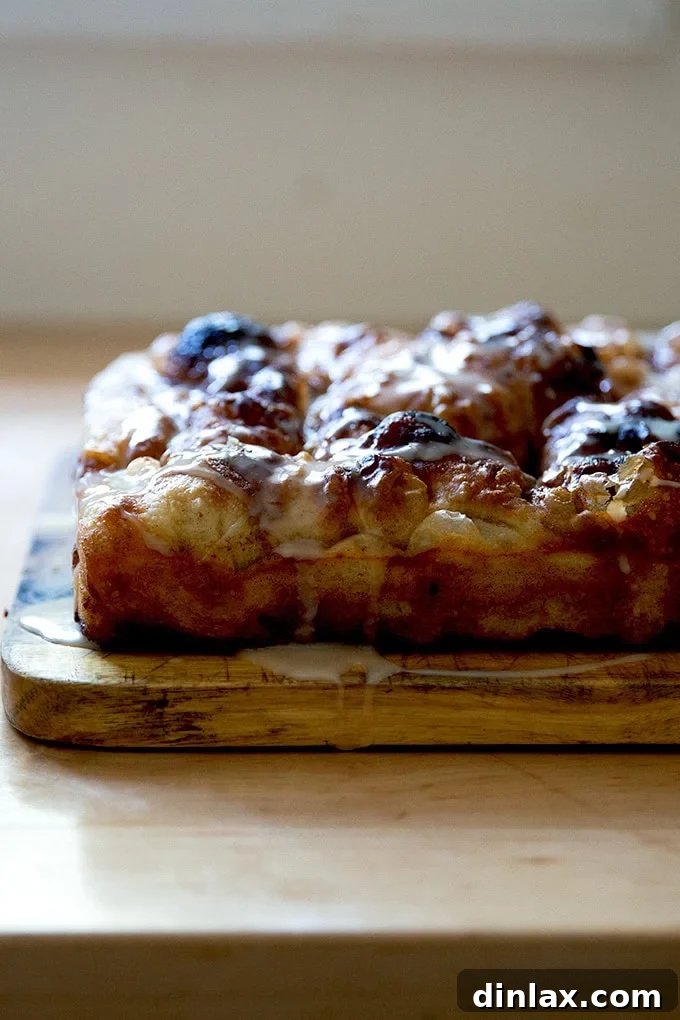
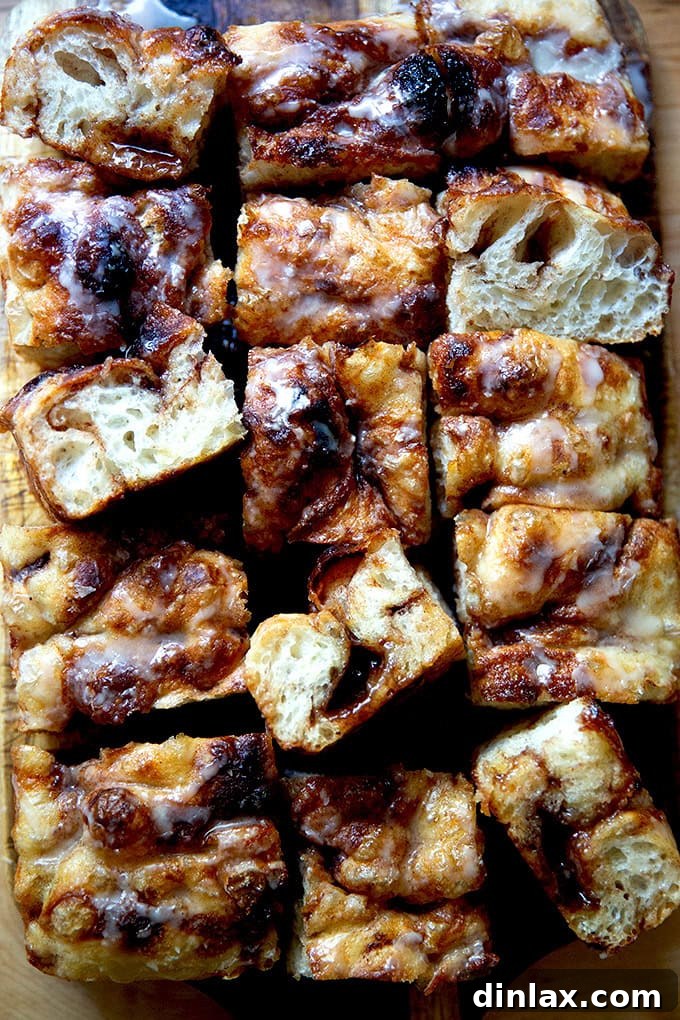
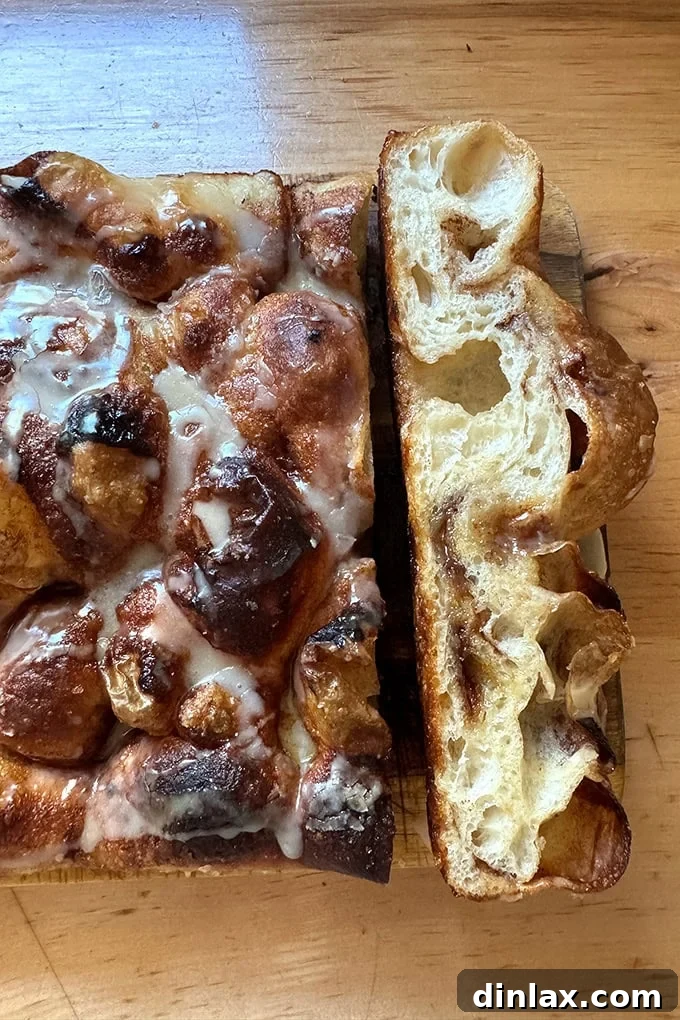
Using a serrated knife, cut the focaccia into squares or rectangles. Serve warm, and watch it disappear! The soft interior with pockets of caramelized cinnamon-sugar and the crisp exterior make for an unforgettable bite.
Make-Ahead Mastery: Plan for Effortless Brunch
One of the most appealing aspects of this Cinnamon-Sugar Focaccia is its adaptability for make-ahead preparation. If you want to significantly reduce your workload on the morning you plan to serve this delightful treat, simply follow the recipe through step 8. After covering the pan with the folded dough, instead of letting it rest at room temperature, you’ll return it to the refrigerator.
For optimal storage, cover the pan tightly with plastic wrap or, even better, place the entire pan inside a 2-gallon zip-top bag. These large bags are incredibly useful for accommodating a 9×13-inch pan and creating a sealed, humid environment that prevents the dough from drying out during its cold proof.
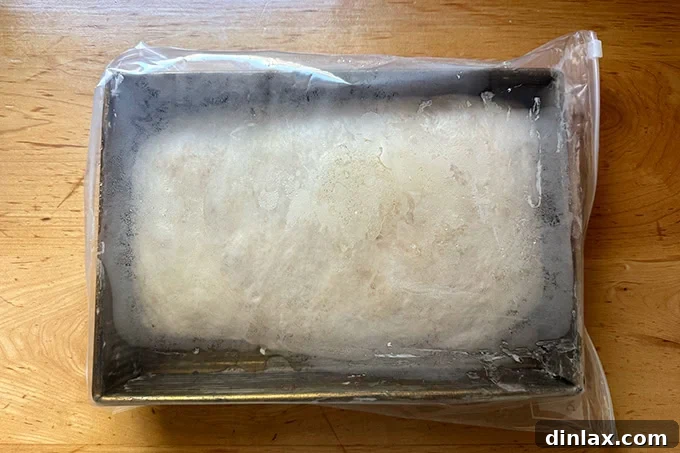
When you’re ready to bake, remove the pan from the refrigerator approximately one hour before you plan to put it in the oven. Allow it to proof at room temperature, still covered. This gentle warm-up helps the dough reactivate and achieve its final glorious rise.
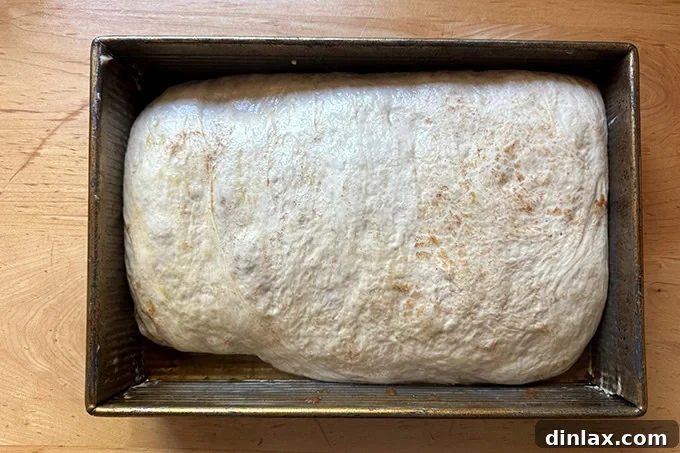
Once it has proofed for an hour, proceed with the recipe as directed, adding the final layer of brown sugar-cinnamon-butter mixture and dimpling the dough. Don’t be alarmed if, as you dimple, you feel the initial layer of cinnamon-sugar-butter mixture that was folded into the dough. It might feel slightly solidified due to the cold, but rest assured, it will melt beautifully in the oven, creating those wonderful pockets of flavor.
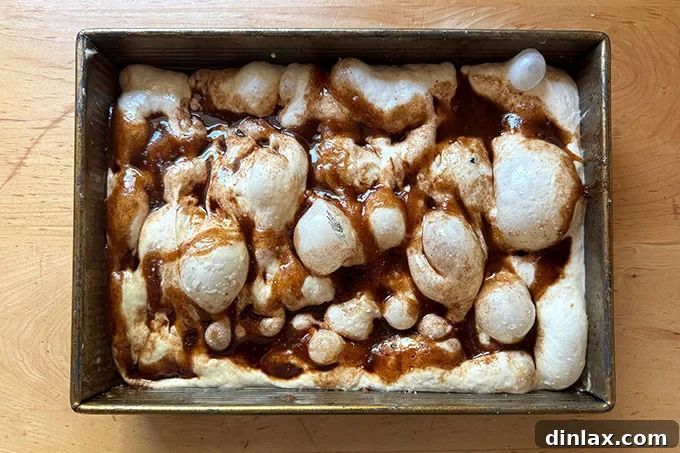
Bake as directed in the recipe, watching for that perfect golden hue.
Then, glaze it generously, as instructed, and prepare to delight your guests with a freshly baked, impressive, and utterly delicious breakfast or dessert.
Cut into individual pieces and enjoy the warm, spicy, and sweet deliciousness that tastes like you spent hours in the kitchen, even if you planned it days ahead!
Expert Tips for a Perfect Cinnamon-Sugar Focaccia
Achieving a truly outstanding cinnamon-sugar focaccia is simple with a few insider tips:
- Precision with a Digital Scale: For consistent and best results, especially with bread recipes, always measure your flour and water using a digital scale. This eliminates variability that can occur with volume measurements, particularly for flour which can compact differently.
- Choosing Your Flour: If you live in a humid climate, or simply desire a chewier texture, bread flour is an excellent choice. Its higher protein content yields a stronger gluten structure. For those in regions like Canada or the UK, where flour hydration might differ, consider starting with slightly less water and adding more as needed until your dough reaches the desired sticky, shaggy consistency shown in the video guidance. All-purpose flour also works beautifully for a softer crumb.
- Salt Matters: Salt is not just for seasoning; it plays a vital role in controlling yeast activity and enhancing flavor. A general guideline for bread dough is to use salt at 2% to 3% of the flour’s weight. For this recipe, that translates to 10 to 15 grams. If you prefer a less salty profile, aim for 10 grams. For a bolder flavor, use 12 to 15 grams, especially with flaky sea salt. We recommend Diamond Crystal kosher salt for its consistent granularity.
- Yeast Selection and Storage: SAF instant yeast is highly recommended for its reliability and direct use. Buying in bulk and storing it in a quart storage container in the fridge or freezer extends its shelf life significantly. If using active-dry yeast, simply activate it first by sprinkling it over lukewarm water and letting it stand for about 15 minutes, or until it becomes foamy, before proceeding with the recipe.
- The Perfect Pan: A good quality 9×13-inch baking pan makes a difference. The USA pan is a fantastic option, known for its even heat distribution and non-stick properties. While some non-stick pans can handle just olive oil, glass or lighter aluminum pans often benefit from the extra insurance of softened butter to prevent sticking and promote a beautiful golden crust.
- Sourdough Adaptation: For sourdough enthusiasts, this recipe is easily adaptable. Simply prepare this sourdough focaccia dough through step 5, then pick up this recipe from step 5, allowing the sourdough focaccia dough to proof for 1.5 hours in the pan before continuing.
Timing Your Bake: Flexible Schedules for Any Occasion
The beauty of this Cinnamon-Sugar Focaccia recipe lies in its remarkable flexibility, allowing you to tailor the preparation around your schedule:
-
The Ideal Plan: Overnight Fermentation for Superior Flavor:
For the most flavorful and bubbly focaccia, planning ahead is highly recommended. Allow the freshly mixed dough to spend at least 12 hours, and ideally 1-3 days, in the refrigerator for a slow, cold fermentation. This extended chill time develops depth of flavor and creates that signature airy, open crumb structure.
Once you remove the cold-fermented dough from the fridge, you have two excellent paths:
-
Option A: Extended Make-Ahead (Up to 24 Hours Extra):
Follow the recipe through step 8. After you’ve applied the first layer of cinnamon-sugar and performed the envelope fold, instead of the second room-temperature proof, return the covered pan to the refrigerator for another day. This method is perfect for breaking up the work even further. Here’s a rough timeline:
- Day 1 (Wednesday or Thursday): Mix the dough, perform stretch and folds, and tuck it into the fridge for its initial cold rise.
- Day 2 (Friday): At your convenience, remove the dough, let it proof in the pan for 1.5 hours, apply the first cinnamon-sugar layer, fold it, and return the pan (covered) to the fridge.
- Day 3 (Saturday): One hour before you plan to bake and serve, remove the pan from the fridge to allow it to warm up and proof. Then proceed with the remaining steps: dimpling, applying the final cinnamon-sugar layer, baking, and glazing.
-
Option B: Day-Of Baking (4 Hours from Fridge to Oven):
If you prefer to bake on the same day you pull the dough from the fridge, allow it to rest for the full 1.5 hours in the pan after the initial shaping, then proceed with the recipe as written. With this approach, the focaccia will be ready to bake approximately 4 hours after you take the dough out of the refrigerator. For example, if you’re aiming for a 10 or 11 AM brunch, you’d want to remove the dough around 6 or 7 AM.
-
Option A: Extended Make-Ahead (Up to 24 Hours Extra):
-
The “Short on Time” Method (Same-Day Baking):
If spontaneity calls and you need to make this start-to-finish in one day, it’s entirely possible. Begin by using lukewarm water (around 95-105°F or 35-40°C) when mixing the dough. Instead of refrigerating, allow the mixed dough to rise at room temperature until it has roughly doubled in size, which typically takes about 1.5 to 2 hours. Once doubled, proceed with the recipe from step 4 (preparing the pan) and follow all subsequent steps as written, including the 1.5-hour rests. While the flavor depth won’t be as complex as with cold fermentation, it will still yield a delicious and satisfying sweet focaccia.
Conclusion: Your New Favorite Sweet Bread Awaits
This Cinnamon-Sugar Focaccia is more than just a recipe; it’s an invitation to experience the best of two beloved worlds with unparalleled ease. The marriage of a light, airy focaccia with the comforting spices of a cinnamon roll creates a truly extraordinary sweet bread that is perfect for any occasion – from a cozy family breakfast to an elegant holiday brunch. Its no-fuss approach and make-ahead potential make it a baker’s dream, proving that incredible flavor doesn’t have to come with endless effort.
So, gather your ingredients, follow these simple steps, and prepare to impress yourself and everyone lucky enough to share a slice. The golden crust, the tender crumb, the sweet, gooey pockets of cinnamon-sugar, and a delicate glaze will undoubtedly make this cinnamon roll alternative a cherished addition to your baking repertoire. Happy baking!
Print
Cinnamon-Sugar Focaccia (No-Knead, No-Fuss)
5 Stars 4 Stars 3 Stars 2 Stars 1 Star
5 from 45 reviews
Author: Alexandra Stafford
Total Time: 5 hours
Yield: 12 to 18 pieces 1x
Description
Experience the best of both worlds with this incredible fusion: soft, airy focaccia meets the sweet, spicy goodness of a cinnamon roll. This no-knead, no-fuss recipe streamlines the process, transforming a simple focaccia dough into a golden, bubbly sweet treat, generously dimpled and folded with a rich cinnamon-brown sugar-butter mixture. Perfect for an effortless brunch or a crowd-pleasing dessert, it delivers all the flavor with none of the usual cinnamon roll complexities. Inspired by the delicious creativity of @_lacebakes and built upon our beloved overnight focaccia recipe.
Ingredients
For the dough:
- 4 cups (512 g) bread or all-purpose flour
- 2 to 3 teaspoons (10 to 15 grams) kosher salt
- 2 teaspoons (8 g) instant yeast
- 2 cups (455 g) cold or room temperature water
- olive oil
- Softened butter, for the pan
For the cinnamon-sugar mixture:
- ½ cup (113 grams) butter, salted or unsalted butter, divided
- ½ cup (100 grams) brown sugar, divided
- 4 teaspoons cinnamon, divided
- flaky sea salt, such as Maldon
For the glaze:
- 1 cup (113 grams) confectioners’ sugar
- 2 tablespoons (28 grams) milk or heavy cream
- 1 teaspoon vanilla extract
Instructions
- Make the dough: In a large bowl, whisk together the flour, salt, and instant yeast. Add the water. Using a rubber spatula, mix until the liquid is absorbed and the ingredients form a sticky, shaggy dough ball. Cover the bowl and let it rest for 30 minutes.
- Stretch and fold the dough: Fill a small bowl with water. Using a wet hand, stretch and fold the dough by grabbing an edge and pulling it up and towards the center. Repeat this stretching and folding process, 8 to 10 times, moving your hand around the edge of the dough with every set. As you stretch and fold, you should feel the dough transform from being sticky and shaggy to smoother and more cohesive. Find video guidance in the post above.
- Let it rise: Rub the surface of the dough lightly with olive oil. Cover the bowl with a lid or plastic wrap and place in the refrigerator immediately for at least 12 hours or for as long as three days. (See the “Timing Your Bake” section in the post for same-day options.)
- Prepare the pan: Grease a 9×13-inch pan with softened butter, ensuring full coverage to prevent sticking and aid in browning. Pour 2 tablespoons of olive oil into the center of the pan.
- Deflate and rest: Using a flexible bench scraper or a lightly oiled hand, gently deflate the dough by releasing it from the sides of the bowl and pulling it toward the center, forming a rough ball. Turn the dough out into the olive oil in the prepared pan. Turn the dough several times in the oil to ensure it is completely coated. Let the dough rest, covered (with a cutting board or sheet pan), for 1.5 hours at room temperature.
- Prepare the first filling: In a small skillet, melt 4 tablespoons of the butter over low heat. Whisk in 4 tablespoons of the brown sugar, 2 teaspoons of the cinnamon, and a pinch of flaky sea salt until smooth. Remove from heat and let cool briefly.
- Stretch and layer: Using lightly oiled hands, gently dimple the dough and stretch it to fit the pan, pushing gently to the edges. Pour the slightly cooled brown sugar filling as evenly as possible over the top of the dough, and use your hands to distribute it over the surface. Reserve the skillet.
- Fold the dough: Starting with a short end, fold the dough “envelope-style” (e.g., fold the right edge over two-thirds to the left, then fold the left edge over the first fold). Then turn the bundle of dough so that the open ends face the short ends of the pan. Video guidance here. Cover the pan and let the dough rest for another 1.5 hours at room temperature. (Make-Ahead Option: At this point, you can place the entire covered pan into a 2-gallon zip-top bag or cover tightly with plastic wrap and return it to the fridge for another day. If doing so, remove it one hour before you plan on baking, allowing it to warm and proof, then proceed with the recipe.)
- Preheat the oven to 425ºF (220°C).
- Prepare the final filling: In the same small skillet, melt the remaining 4 tablespoons of butter over low heat. Whisk in the remaining 4 tablespoons of brown sugar, remaining 2 teaspoons of cinnamon, and a pinch of flaky sea salt until smooth. Remove from heat and let cool briefly.
- Dimple and season: Uncover the pan. Pour the final filling over the surface of the dough, rubbing with your hands to distribute it evenly. Using lightly oiled hands, gently dimple the dough, creating beautiful craters and bubbles. Sprinkle lightly with additional flaky sea salt.
- Bake the focaccia: Transfer the pan to the preheated oven and bake for 25 to 30 minutes, or until the focaccia is uniformly golden brown and bubbly. Remove from the oven, let it cool in the pan briefly (2 to 3 minutes), then run a spatula around the edges and transfer the focaccia to a cooling rack to cool for 5 minutes.
- Make the glaze: In a small bowl or liquid measuring cup, whisk together the confectioners’ sugar, milk or heavy cream, and vanilla extract until smooth.
- Finish and serve: Transfer the warm focaccia to a serving board. Drizzle the glaze generously over the top. Using a serrated knife, cut the focaccia into 12 to 18 pieces and serve immediately.
- Prep Time: 30 minutes
- Cook Time: 25 minutes
- Category: Bread
- Method: Oven
- Cuisine: American