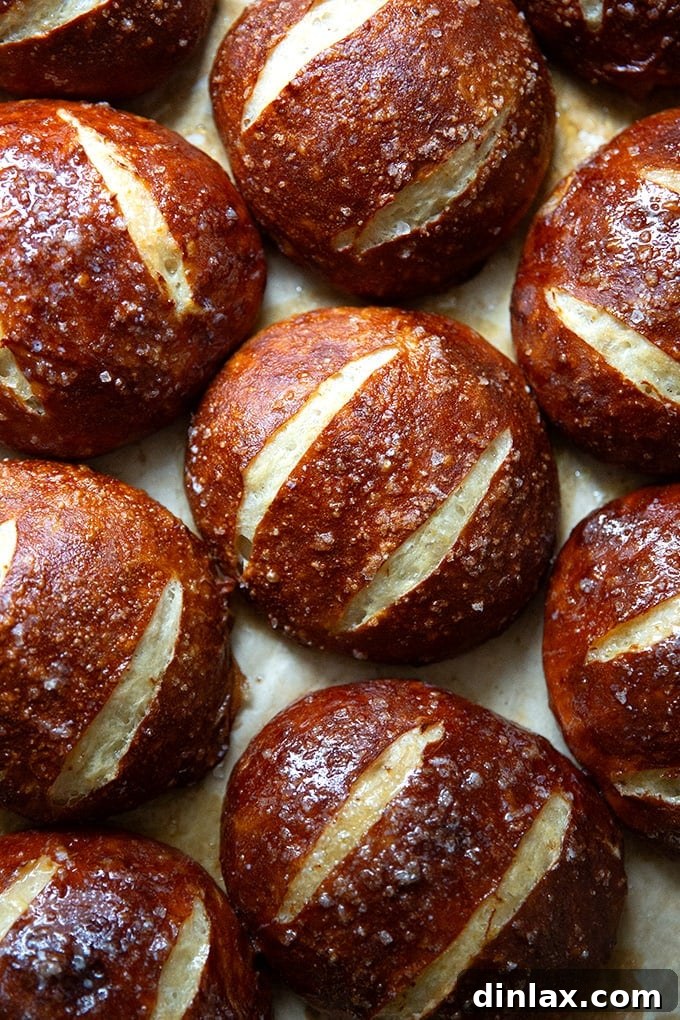
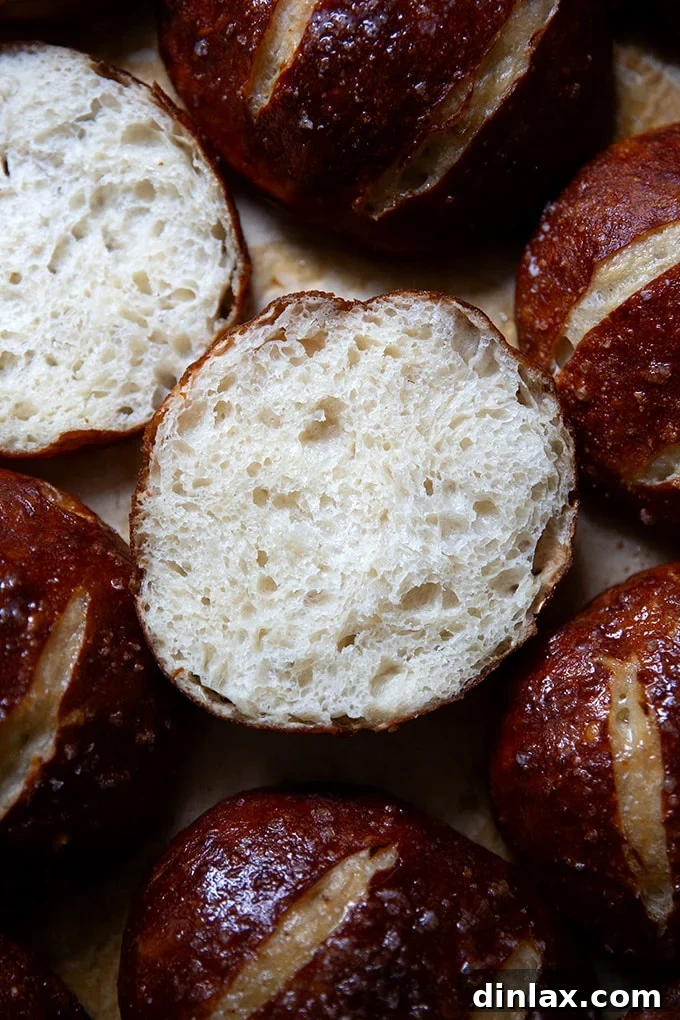
Experience the unparalleled joy of homemade bread with these incredibly simple No-Knead Soft Pretzel Rolls. Boasting a wonderfully soft interior and a distinctly chewy, golden-brown pretzel crust, these rolls are destined to become your go-to for all sandwich creations. From classic egg and cheese breakfasts to gourmet turkey and brie lunches, or vibrant roasted vegetable and mozzarella dinners, their versatile flavor profile elevates any filling. The beauty of this recipe lies in its minimal effort – a quick mix, and then time does the rest, transforming simple ingredients into bakery-quality rolls. Prepare to fall in love with their irresistible charm and delicious taste!
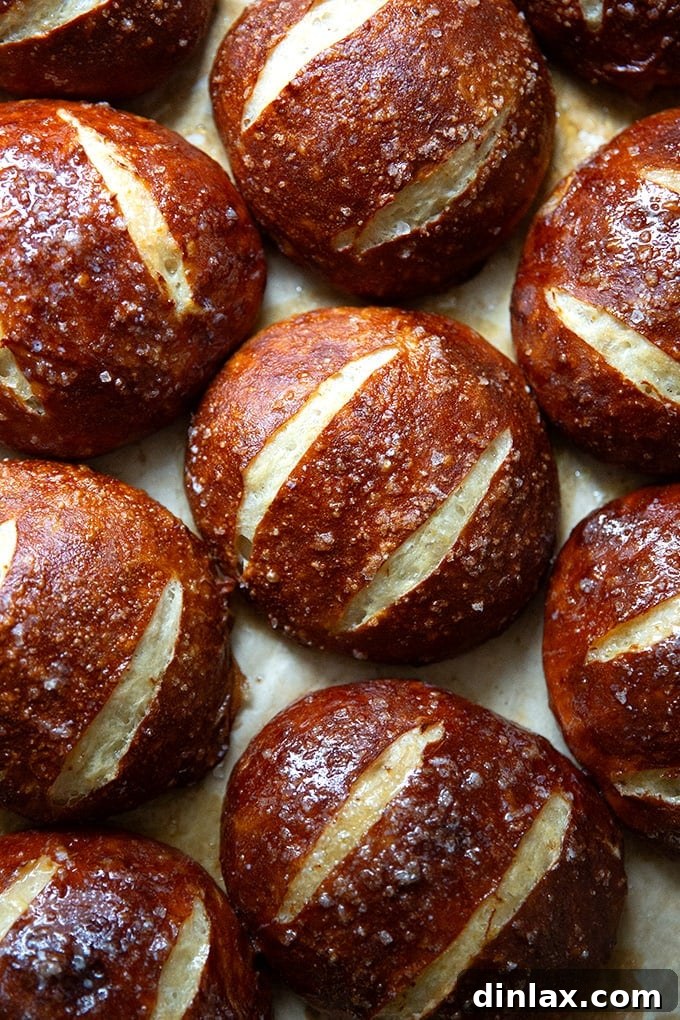
My journey to creating the ultimate homemade pretzel rolls began when I discovered my children’s sheer delight in them. Armed with my tried-and-true favorite soft pretzel recipe as a foundation, I embarked on a series of experiments. The goal was clear: to craft a roll that combined a sturdy yet tender crumb with a thin, crispy, and profoundly pretzel-flavored crust. After several iterations, I finally perfected what I was looking for – a roll that not only met but exceeded my expectations, delivering that classic pretzel taste in a perfectly shaped bun.
Adapting the original soft pretzel recipe for rolls required a few key modifications. I increased the water content to achieve a softer, more pliable dough, and strategically reduced the yeast for a longer, slower fermentation. This extended rise is the secret to developing deep, complex flavors and the characteristic airy texture of these no-knead pretzel rolls. My preferred schedule involves mixing the dough in the evening, allowing it to perform its slow magic overnight. Then, in the morning, I shape the rolls, give them ample time for a final proof, and finally boil and bake them, often just in time for a delectable lunchtime treat. However, the beauty of this dough lies in its flexibility, allowing you to easily adjust the timeline to fit your personal schedule. Consult the detailed recipe box below for guidance on how to make these incredible rolls work for you.
Truly, friends, these homemade pretzel rolls are utterly irresistible. While my children often prefer to enjoy them plain, savoring their unique flavor and chew on their own, I find them absolutely divine as the base for a variety of sandwiches. Imagine them filled with fresh pesto, ripe tomatoes, and creamy mozzarella during the peak of summer, or piled high with leftover turkey and ham around the festive holidays. And for a year-round delight, nothing beats a breakfast sandwich starring fried or scrambled eggs paired with crispy bacon, all nestled within these delightful pretzel buns. The possibilities are endless, and the satisfaction guaranteed. Follow the comprehensive step-by-step instructions below to create your own batch of these pretzel roll masterpieces.
Crafting Your Own No-Knead Soft Pretzel Rolls: A Step-by-Step Guide
Embarking on your pretzel roll baking adventure starts with gathering your essential ingredients. Precision is key for the best results, especially with baking, so having everything ready before you begin will make the process smooth and enjoyable.
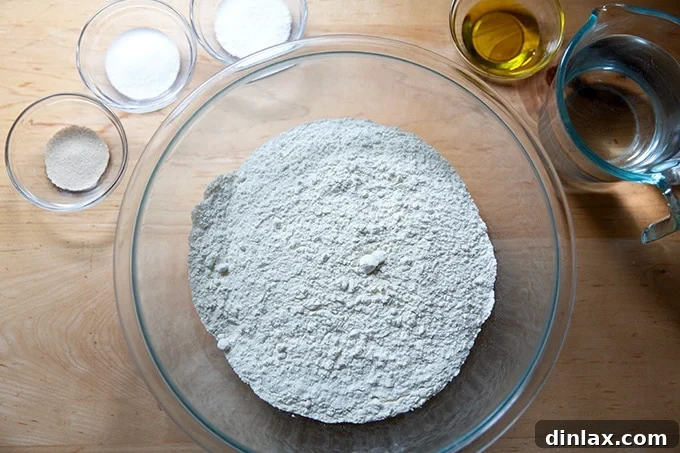
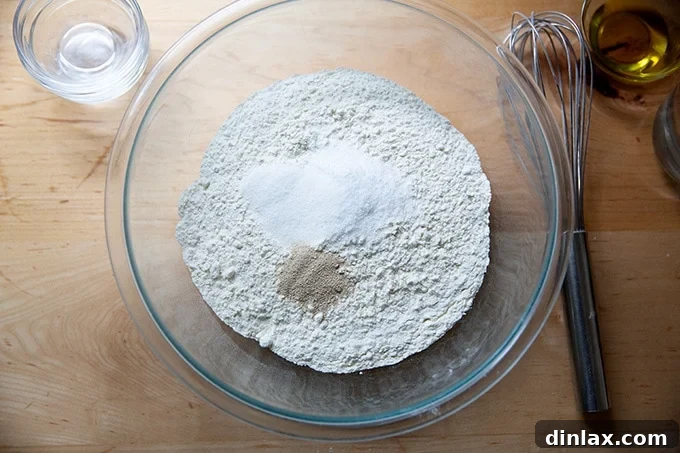
Begin by combining the dry ingredients. In a generously sized mixing bowl, whisk together the flour, salt, sugar, and instant yeast. Ensure these components are thoroughly blended, as this even distribution is crucial for the dough’s structure and flavor development. This initial step is simple but forms the foundation of your delicious pretzel rolls.
Next, introduce the liquid elements. Pour in the cold water and the olive oil (or your chosen neutral oil) into the bowl with the dry mixture. The cold water, combined with the reduced yeast, is instrumental in achieving that slow, flavorful rise that characterizes no-knead bread, contributing significantly to the rolls’ ultimate texture and taste.
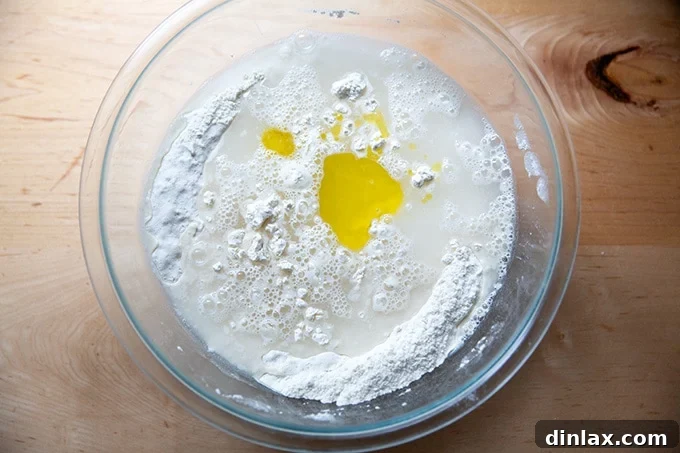
Using a sturdy rubber spatula or a wooden spoon, mix the ingredients together until a “shaggy” dough begins to form. This means the mixture will look rough, uneven, and somewhat sticky, with no dry pockets of flour remaining. Don’t worry if it doesn’t look perfectly smooth yet; this is exactly the desired consistency for the initial stage of this no-knead process.
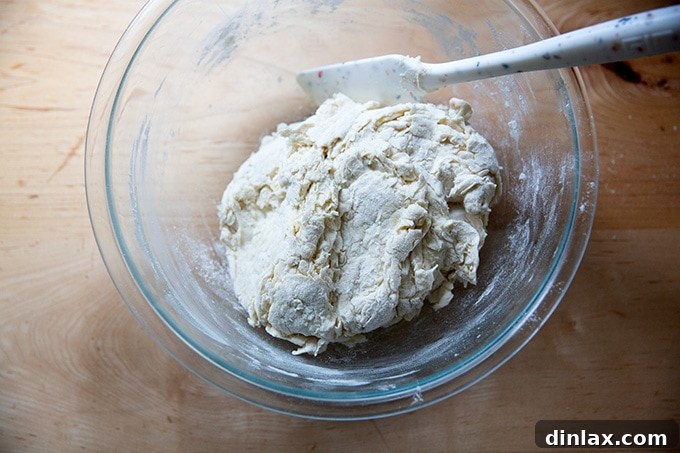
Now, it’s time for a very brief hand-kneading session. With clean hands, gently knead the dough within the bowl for just a minute or two, until it comes together into a cohesive, albeit sticky, ball. This minimal kneading helps activate the gluten just enough without requiring the strenuous effort of traditional bread making. Embrace the stickiness; it’s a sign of a well-hydrated dough.
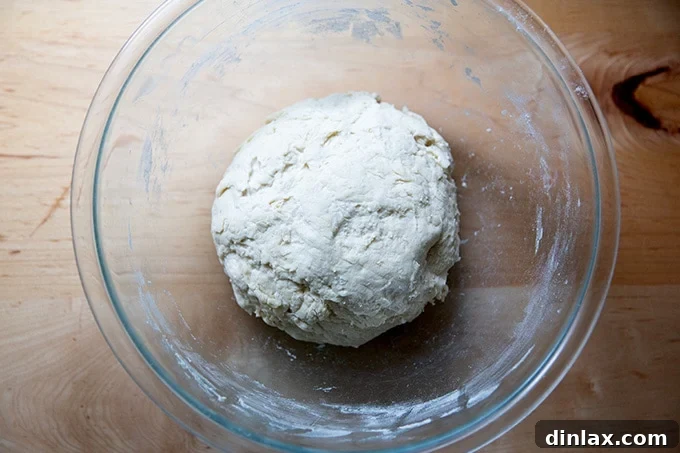
Once your dough ball is formed, cover the bowl tightly. An airtight lid is ideal, but plastic wrap sealed securely around the rim will also work perfectly. This creates a humid environment crucial for the dough’s long fermentation, preventing it from drying out as it slowly develops its flavor and structure.
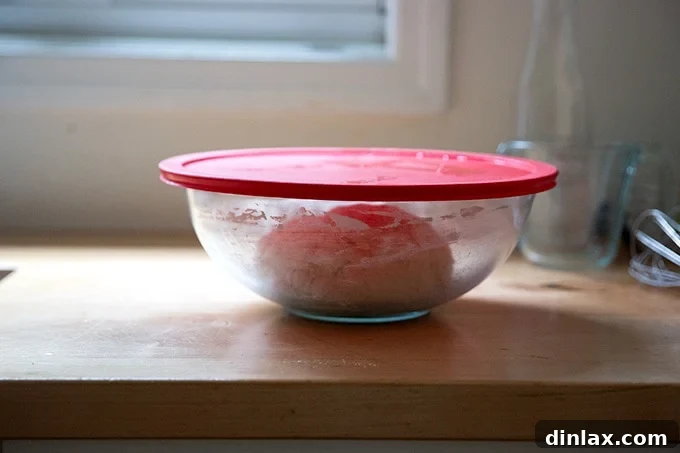
Allow the covered dough to rise at room temperature for an extended period, typically 8 to 10 hours. This slow, cool fermentation is the cornerstone of no-knead baking, as it allows the yeast to work gradually, producing a dough with exceptional flavor and a light, open crumb structure. The dough should visibly double in volume, becoming bubbly and springy to the touch.
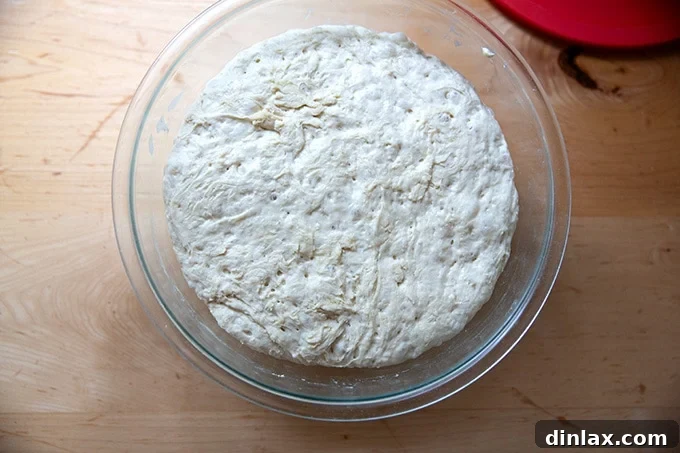
Once the dough has completed its first rise, gently turn it out onto a lightly floured work surface. Be mindful not to deflate it too much; handle it with care to preserve the airy structure that has developed during the long fermentation. A light dusting of flour prevents sticking without toughening the dough.
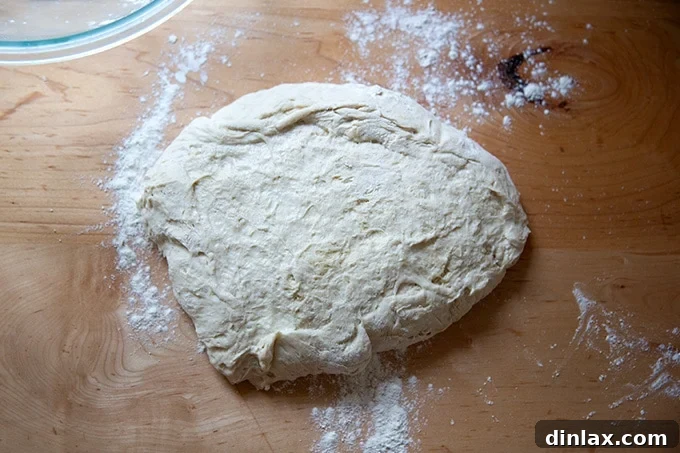
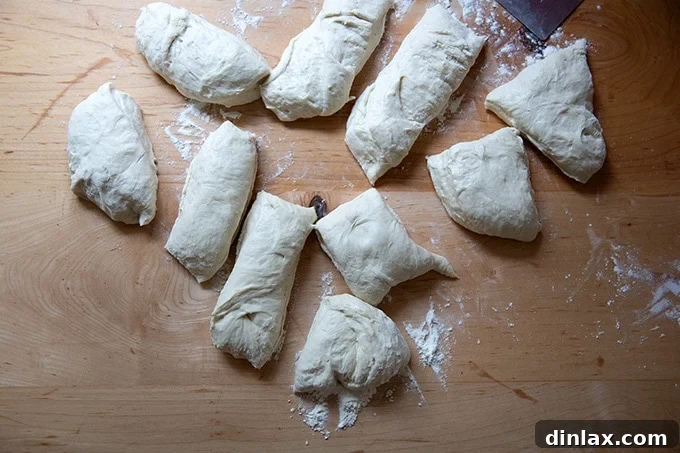
Using a bench scraper or a sharp knife, divide the dough into 10 equal portions. For perfectly uniform pretzel rolls, consider using a kitchen scale to weigh the total dough and then divide that weight by 10. Each portion should be approximately 112 grams, ensuring consistent size and baking time for all your rolls.
Now, shape each portion into a tight ball. This is done by gently pulling the edges of the dough towards the center to create a rough sphere, then flipping it over. Cup your hands around the dough ball and drag it towards you across the work surface. This motion creates surface tension, resulting in a smooth, taut ball. Repeat this process for all 10 portions.
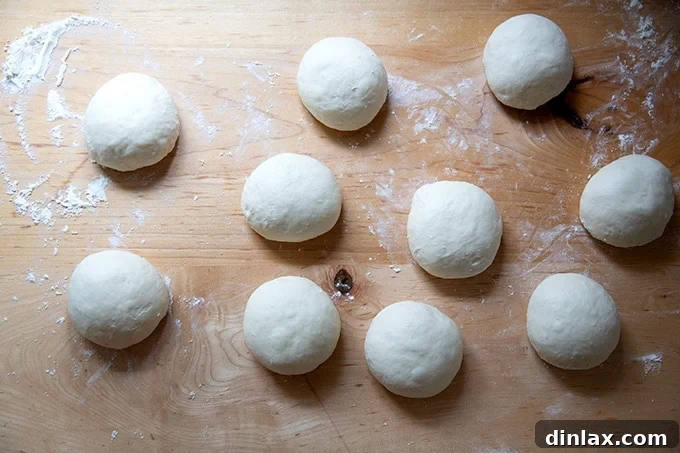
Transfer the shaped dough balls to a roomy, lightly floured vessel for their second proofing. I highly recommend DoughMate lidded containers if you have the space, as they provide an excellent environment. Alternatively, two 9×13-inch baking pans, lightly floured and covered tightly with plastic wrap, will work perfectly to prevent the dough from drying out as it proofs.
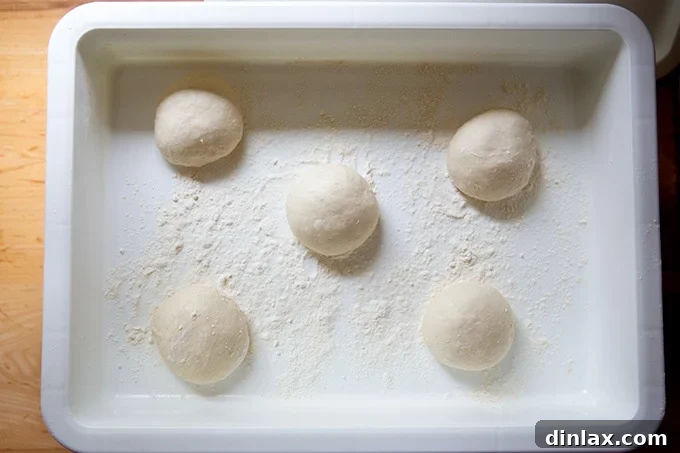
The DoughMate containers are fantastic for maintaining the perfect proofing environment, but as mentioned, any large, lidded container or plastic-wrapped baking sheet will suffice. The key is to keep the dough balls from drying out, which could hinder their final rise and texture. Ensure they have enough space to expand without touching each other.
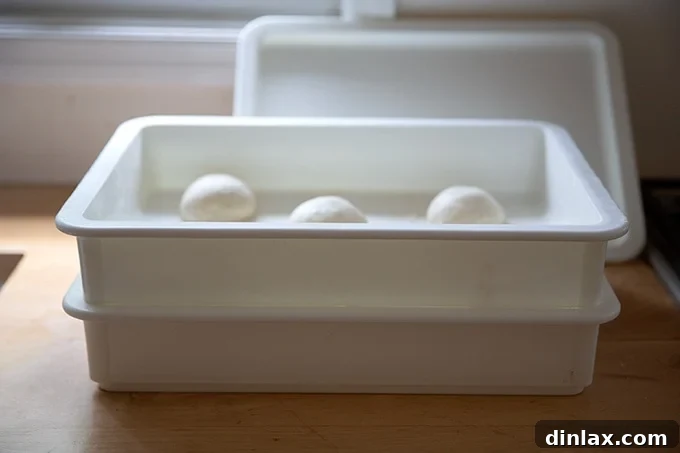
After four to five hours, or when the dough balls have noticeably doubled in volume and feel incredibly light and airy to the touch, they are ready for the next crucial step. This second proof further develops their texture, making them soft and fluffy inside, while preparing them for their signature pretzel exterior.
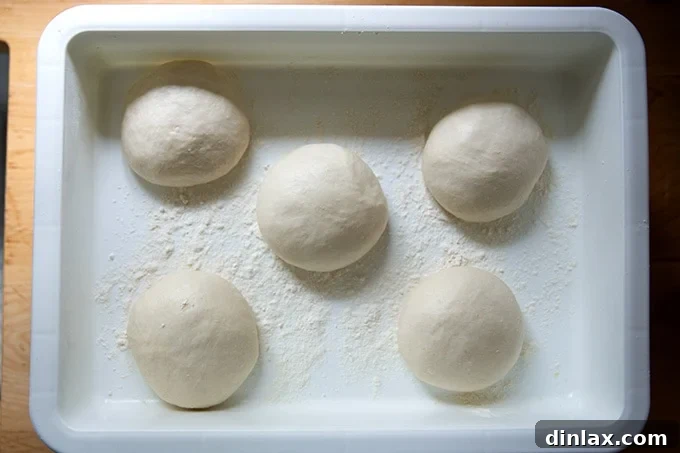
It’s game time! Preheat your oven to a steady 400ºF (200ºC) to ensure it’s piping hot when the rolls are ready. Line a sturdy baking sheet with parchment paper to prevent sticking and aid in easy cleanup. Simultaneously, fill a large pot with 8 cups of water and bring it to a rolling boil on your stovetop. This setup prepares you for the critical baking soda bath.
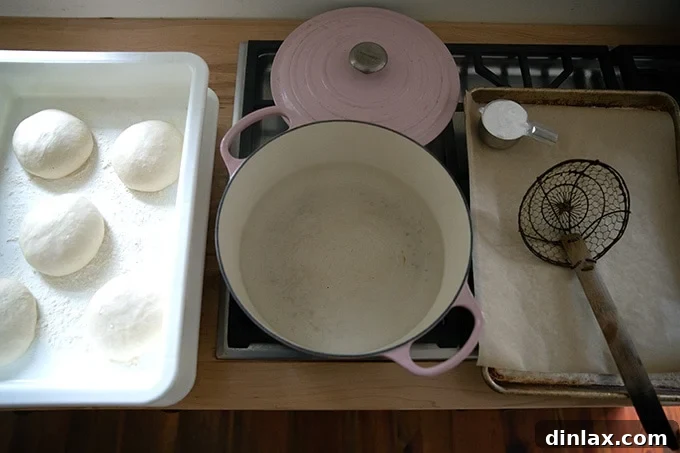
Once the water is boiling, reduce the heat to low and carefully add 1/2 cup of baking soda. Stir gently until it fully dissolves. The water will likely foam up quite a bit, so use a larger pot than you think you need to prevent overflow. This baking soda solution is what gives pretzel rolls their distinctive dark, chewy crust and authentic flavor. Adjust the heat to maintain a bare simmer, not a vigorous boil, for the subsequent dipping step.
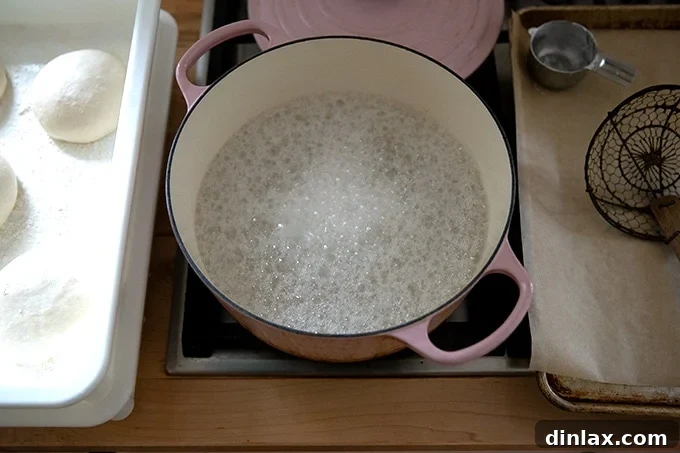
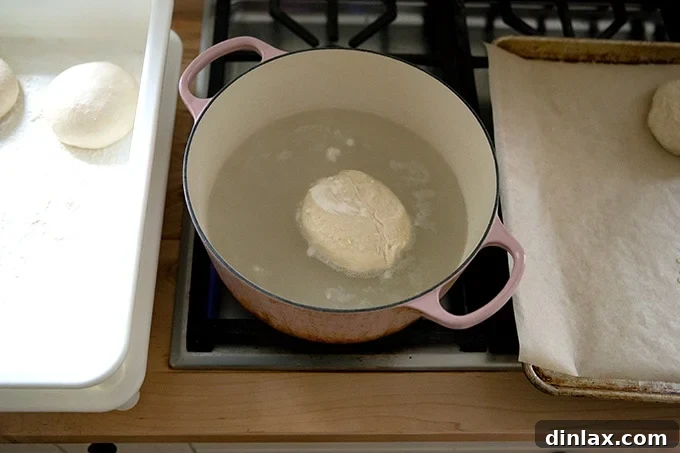
Working quickly and carefully with one dough ball at a time, gently lower it into the simmering baking soda bath. Use a spider strainer or a large slotted spoon to immediately flip it once or twice, ensuring it’s submerged briefly on all sides, then transfer it directly to your prepared sheet pan. The total time in the bath should be no more than 30 seconds per roll. This quick dunk is crucial for that authentic pretzel crust.
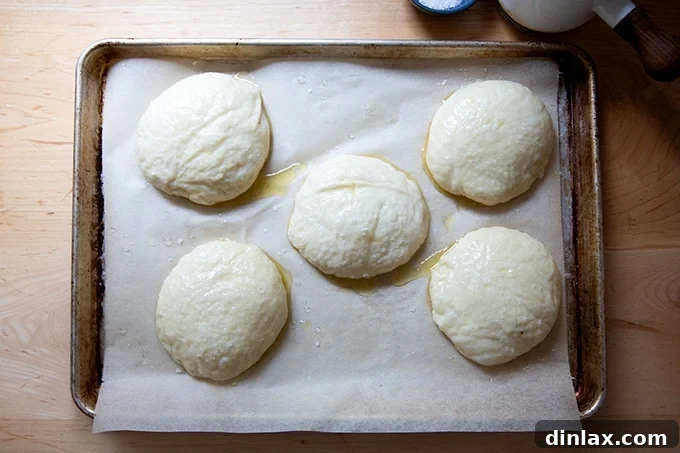
After you’ve dipped five dough balls and placed them on the sheet pan, brush each one generously with melted butter. This not only adds incredible flavor but also contributes to the beautiful golden-brown color. Immediately after buttering, sprinkle them liberally with flaky sea salt. The coarse salt adheres perfectly to the buttery surface, providing that classic pretzel crunch and taste.
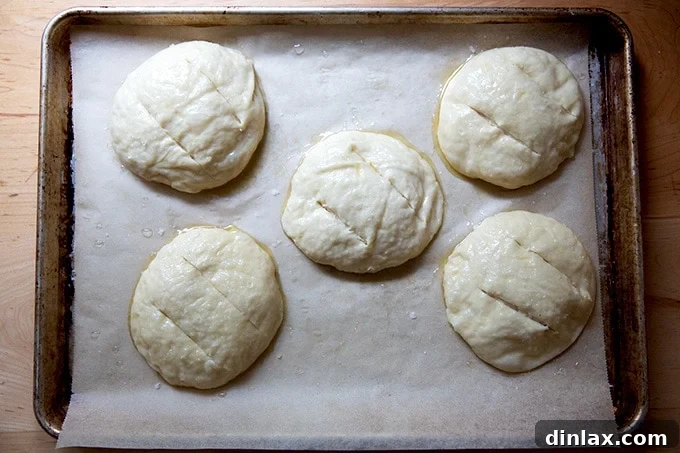
Using a very sharp blade, such as a razor blade or a sharp paring knife, make two quick, clean slashes across the top of each dough ball. These slashes aren’t just for aesthetics; they allow the steam to escape during baking, promoting an even rise and preventing the rolls from bursting irregularly. Don’t worry if the dough deflates slightly at this stage; it will spring back beautifully in the oven.
Transfer the sheet pan to your preheated 400ºF (200ºC) oven and bake for 22 to 25 minutes. Keep an eye on them; the goal is a deep, rich golden-brown color, which indicates that the crust is perfectly caramelized and crisp. The aroma filling your kitchen will be absolutely intoxicating!
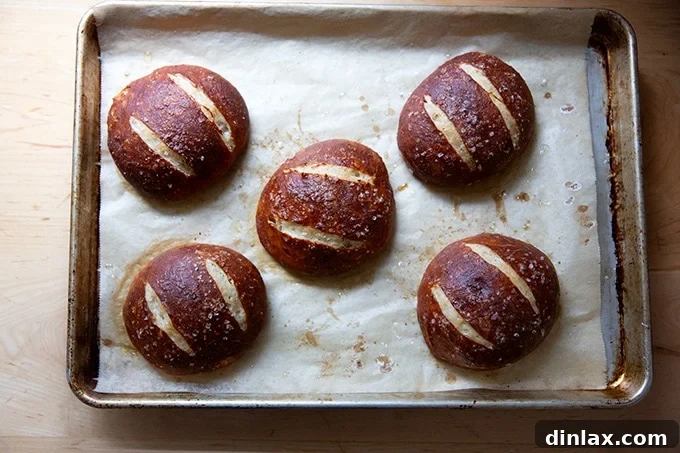
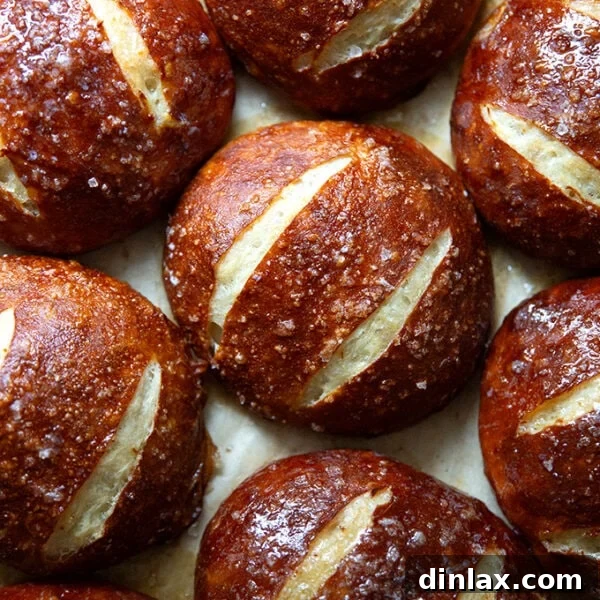
As soon as you pull the beautifully baked pretzel rolls from the oven, immediately brush them with more melted butter. This final touch adds an extra layer of richness, enhances the shine of the crust, and ensures that irresistible, buttery finish. The butter will soak into the hot crust, making them even more delectable.
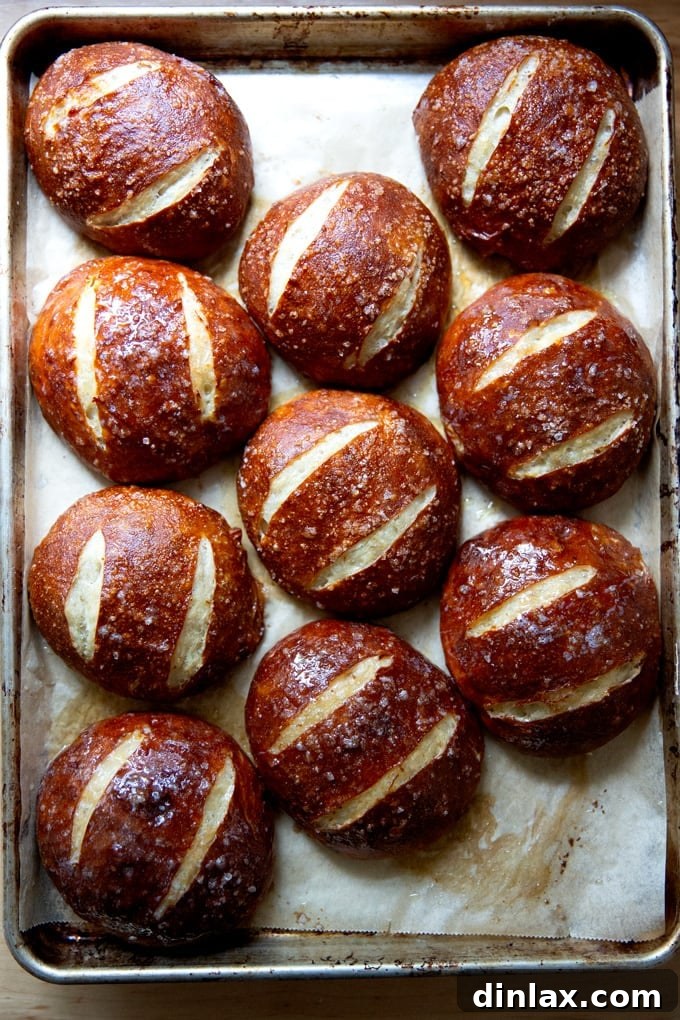
Allow the pretzel rolls to cool briefly on the sheet pan before attempting to cut into them. A short cooling period allows the internal structure to set, preventing a gummy texture. If you plan to use them for sandwiches, let them cool completely for easier slicing and assembly, ensuring the perfect base for your fillings.
Print
No-Knead Soft Pretzel Rolls
5 Stars 4 Stars 3 Stars 2 Stars 1 Star
4.7 from 18 reviews
Author: Alexandra Stafford
Total Time: 18 hours 25 minutes
Yield: 10 1x
Diet: Vegetarian
Description
Discover the ease and deliciousness of these No-Knead Soft Pretzel Rolls. With a pillowy interior and a perfectly chewy, pretzel-infused crust, they are the ideal canvas for any sandwich. From hearty breakfast creations to elegant lunch options and satisfying dinner pairings, these rolls elevate every meal. The hands-off dough preparation means you spend less time mixing and more time enjoying the magic of baking. Simple, satisfying, and utterly delightful!
This recipe for soft pretzel rolls is expertly adapted from our popular recipe for buttery soft pretzels, ensuring that classic pretzel flavor and texture in a convenient roll format.
Important Notes for Perfect Pretzel Rolls:
- For the most accurate and consistent results in your baking, please use a digital kitchen scale to measure all your ingredients, especially flour and yeast. Volume measurements can be inconsistent, leading to varied outcomes.
- Planning Ahead is Essential: This recipe utilizes a slow fermentation process to build maximum flavor and texture. It typically requires an initial overnight rise (or an all-day rise of 8-10 hours), followed by a 4- to 5-hour proof for the shaped rolls, a brief boil in the baking soda solution, and a final 22- to 25-minute bake.
- Seeking a Faster Method? While the long rise is highly recommended for flavor, if you’re short on time, you can try this alternative (though not tested by us for this exact recipe, it often works for similar no-knead doughs): Increase the instant yeast to 2 teaspoons and use lukewarm water instead of cold. Allow the dough to rise initially for 2 to 3 hours, then proceed to shape the rolls and let them proof at room temperature for at least an hour before boiling and baking.
- Flexible Timing Tips: Life happens, and schedules change! If you need to pause your baking process after the first rise, simply deflate the dough gently and place the covered bowl in the refrigerator. Similarly, shaped rolls can be refrigerated after their initial proof. The key is to ensure the shaped rolls are allowed to proof sufficiently at room temperature before boiling—they should be noticeably light and airy to the touch, which might take longer if they’ve been chilled.
- Yeast Type Matters: If your recipe calls for active-dry yeast instead of instant yeast, begin by sprinkling it over the cold water in your bowl. Allow it to sit for about 15 minutes until it becomes foamy and activated before proceeding with the rest of the recipe instructions.
- Adjusting Salt Quantities: The recipe specifies Diamond Crystal kosher salt, which is coarser than many other salts. If you are using Morton Kosher salt or fine sea salt, you will need to use half the amount by volume, roughly 2 teaspoons. For precise measurement, use 13 grams by weight for any type of salt.
- Recommended Equipment: To successfully execute this recipe, you’ll benefit from a few key tools: a spider or a large slotted spoon for safely transferring dough from the boiling water, a quality pastry brush for applying melted butter, and a sharp razor blade or an extremely sharp knife for making precise slashes on the dough.
Ingredients
For the Dough:
- 640 grams (about 5 cups) all-purpose flour
- 2 grams (about 1/2 teaspoon) instant yeast, see notes above if using active-dry
- 13 grams (about 4 teaspoons) Diamond Crystal kosher salt, see notes above for other types
- 12 grams (about 1 tablespoon) granulated sugar
- 450 grams (about 2 cups) cold water
- 14 grams (about 1 tablespoon) olive oil or any neutral-flavored oil
For Finishing:
- 115 grams (about 1/2 cup) baking soda
- 8 cups water
- flaky sea salt, for generous sprinkling
- 6 tablespoons unsalted butter, melted
Instructions
- In a spacious mixing bowl, thoroughly whisk together the all-purpose flour, instant yeast (or active-dry if prepared as per notes), Diamond Crystal kosher salt, and granulated sugar until well combined. Add the cold water and the olive oil to the dry ingredients. Using a sturdy rubber spatula or a wooden spoon, stir vigorously until a rough, shaggy dough forms, ensuring no dry pockets of flour remain. Then, briefly use your hands to gently knead the dough within the bowl for about one minute, just until it comes together into a cohesive, albeit wet and sticky, ball. Avoid over-kneading.
- Cover the bowl tightly with an airtight lid or plastic wrap. Place the covered bowl in a cozy spot at room temperature and allow the dough to undergo its first rise. This slow fermentation will take approximately 8 to 10 hours, or possibly longer depending on your kitchen’s temperature. The dough is ready when it has visibly doubled in volume and appears bubbly and very soft.
- Once risen, gently turn the dough out onto a lightly floured work surface. Use a bench scraper, or a sharp knife, to divide the dough into 10 equal portions. For precision and uniformity, we highly recommend weighing your total dough and then dividing that weight by 10; each portion should be roughly 112 grams. Dust your tools and hands with flour as needed to prevent sticking.
- To form each portion into a smooth, tight ball: first, gather the edges of one dough portion and pull them towards its center to create a rustic ball. Flip the ball over so the seam is underneath. Cup your hands around the dough ball and gently drag it towards you across the work surface. This motion creates tension on the surface, sealing the seams and forming a perfectly taut, round ball. Repeat this technique for all 10 portions.
- Carefully transfer the newly balled portions to a roomy, lightly floured container for their second proof. Our preferred method is using two DoughMate containers, which offer an excellent environment. Alternatively, two 9×13-inch baking pans, or similar large vessels, will work. Cover the pans tightly with an airtight lid or plastic wrap to prevent the dough balls from drying out during proofing. Allow them to proof for 4 to 5 hours, or until they have doubled in volume and feel remarkably light to the touch.
- Approximately 30 minutes before the end of the proofing time, preheat your oven to 400ºF (200ºC). Line two large baking sheets with parchment paper, preparing them for the rolls post-boiling.
- In a large, deep pot, bring the 8 cups of water to a gentle simmer over medium-high heat. Once simmering, reduce the heat to low and carefully add the 1/2 cup of baking soda, stirring gently until it is completely dissolved. The water will become cloudy and may foam slightly; ensure it maintains a bare simmer, not a rolling boil, as you proceed.
- Working diligently with one dough ball at a time, use a bench scraper or a large, flat spatula to carefully lift it from its proofing container. Gently lower the dough ball into the simmering baking soda solution, top-side down. Using a spider strainer or a large slotted spoon, immediately flip the roll to submerge the other side, then flip it again so the top-side is down once more. This entire process should be swift, taking no more than 30 seconds per roll. Remove the ball with the spider, ensuring it’s still top-side down, and then gently flip it onto the prepared sheet pan, top-side up. Arrange the dipped rolls evenly spaced on the pan. Repeat until 5 dough balls have been dipped and transferred to one sheet pan.
- Immediately after dipping and arranging the first five rolls, brush each one generously with the melted butter. Then, liberally sprinkle flaky sea salt over the top of each roll. Using a very sharp razor blade or knife, make two distinct slashes on the top of each dough ball. Don’t be alarmed if the dough deflates slightly; this is normal and they will spring back. Transfer this pan to the preheated oven and bake for 22 to 25 minutes, or until the rolls achieve a deep, rich golden-brown hue and sound hollow when tapped.
- Once the rolls are removed from the oven, immediately brush the hot rolls once more with any remaining melted butter. This step adds a final layer of flavor and a beautiful sheen.
- Repeat the dipping, buttering, salting, slashing, and baking process with the remaining five dough balls on the second prepared sheet pan.
- Allow the pretzel rolls to cool briefly on the sheet pan before serving warm. If you intend to use them for sandwiches, ensure they cool completely before slicing to maintain their structure and prevent a gummy texture.
- Prep Time: 18 hours
- Cook Time: 25 minutes
- Category: Bread
- Method: Oven
- Cuisine: American