Skip to Recipe
Elevate Your Dishes: The Irresistible Charm of Homemade Mustard Croutons
In the world of French cuisine, even the simplest ingredients are elevated to an art form, often revealing unexpected depths of flavor. My early culinary experiences working at a sunny California café introduced me to such a revelation through a patron named Fernand. Every Sunday, he would arrive for the same ritual: an omelet, a freshly baked baguette, and a generous side of Dijon mustard. His method was precise—each slice of bread first received a slathering of mustard, followed by delicate spoonfuls of creamy egg. This unconventional bread-and-mustard pairing, accompanying every bite of omelet, initially struck me as peculiar.
My preconceived notions of savory spreads were limited to butter, cheese, or perhaps some jam. Mustard, in this context, felt like an outlier. However, a profound shift in my perspective occurred while delving into The Zuni Cafe Cookbook. Judy Rogers’ description of Madeleine Troisgros’ omelet, and more specifically, the exquisite croutons interwoven within it, sparked a moment of clarity. Could Fernand, and indeed the French, truly be onto something culinary profound with their affection for mustard?
The Culinary Heritage: From French Kitchens to Zuni Cafe
To truly appreciate these remarkable croutons, a brief journey into their gastronomic lineage is essential. Madeleine Troisgros, sister to the legendary Jean and Pierre Troisgros who helmed the esteemed Les Frères Troisgros restaurant in Roanne, France, was a pivotal figure in culinary history. It was in Roanne that Judy Rogers, during her formative teenage years, spent a year immersing herself in the vibrant world of French cooking. She observed, tasted, and meticulously recorded every nuance she could absorb.
Beyond the formal kitchens of Les Frères Troisgros, Rogers frequently escaped to Madeleine’s home kitchen. There, she discovered a more intimate, comforting style of French cooking. These gatherings often featured simple yet profoundly satisfying dinners—scrambled eggs infused with nutty hard cheeses and croutons, or rich combinations of lightly browned potatoes and crispy bacon. It was within these cherished moments that the humble crouton, imbued with Madeleine’s unique touch, became a source of culinary inspiration for Rogers.
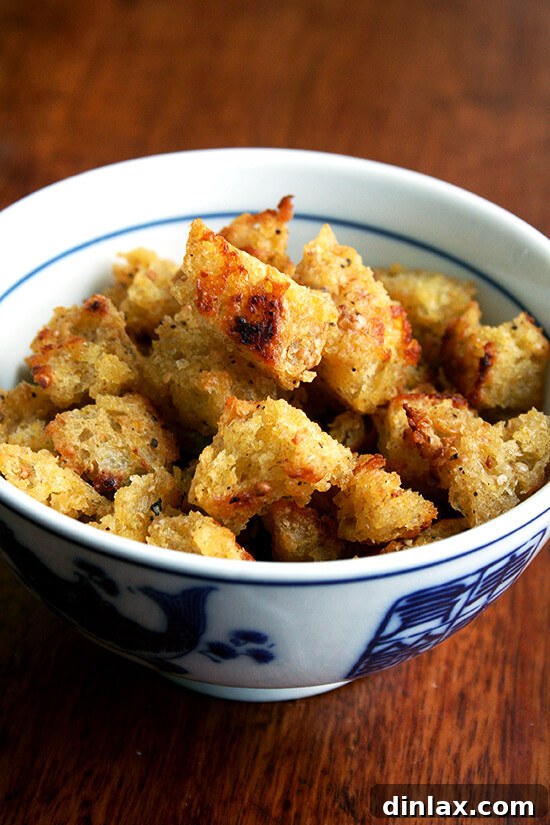
Given the generous application of Dijon mustard and the vibrant pop of mustard seeds that characterize Madeleine’s croutons, I am convinced that Fernand, my discerning Sunday patron from Burgundy, would have embraced them wholeheartedly. To discover these golden, chewy, and thoroughly mustard-infused nuggets nestled within an omelet would undoubtedly have transported him to pure gastronomic bliss. While these aren’t as intensely flavored as a pure mustard bruschetta, my initial skepticism about French eating habits was clearly misplaced. The French, with their deep understanding of flavor and texture, consistently demonstrate how seemingly simple ingredients can achieve extraordinary results.
Beyond the Snack: The Versatility of Mustard Croutons
So, how best to savor these delectable morsels? Perhaps it’s easier to start with how *not* to eat them, as I regrettably did this afternoon: popcorn-style, bowl in lap, mindlessly popping them one after another while gazing out the window. While undeniably therapeutic and a guilty pleasure in the absence of my children, this method hardly does justice to their culinary potential. They are, quite simply, too good to be relegated to mere snacking.
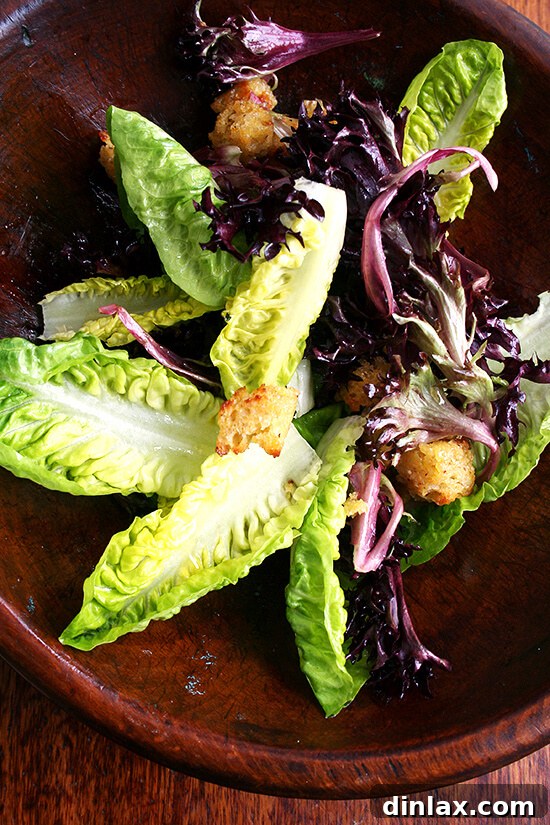
An obvious and highly recommended application is in a fresh, vibrant salad. I always ensure to save a few for this very purpose, as they add an unparalleled layer of texture and piquant flavor. However, I firmly believe their true calling, their most glorious home, lies at the heart of an omelet, prepared in the quintessential Madeleine style. Imagine them surrounded by the melting embrace of a rich Gruyère-type cheese, transforming a simple omelet into a sophisticated and satisfying meal. The French, it turns out, were profoundly onto something with this harmonious combination of bread, mustard, and egg. This culinary revelation is certainly worthy of contemplation, perhaps over this evening’s dinner, or as a delightful weekend project.
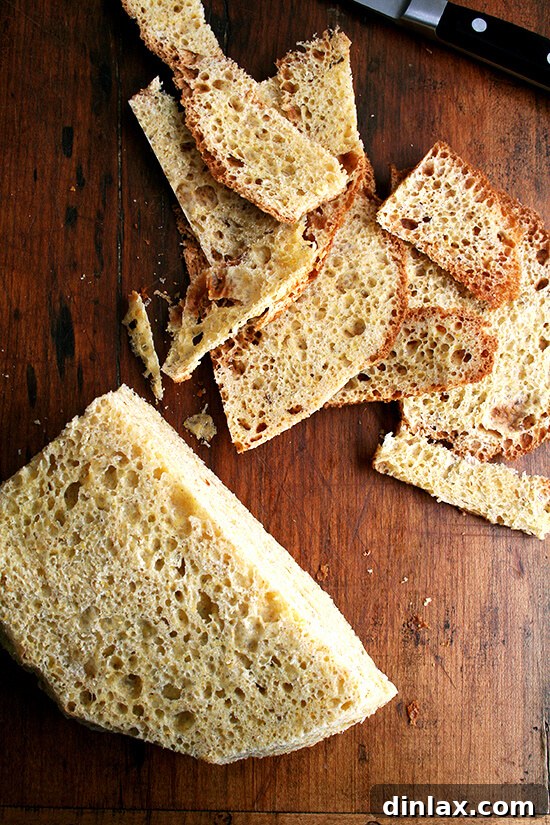
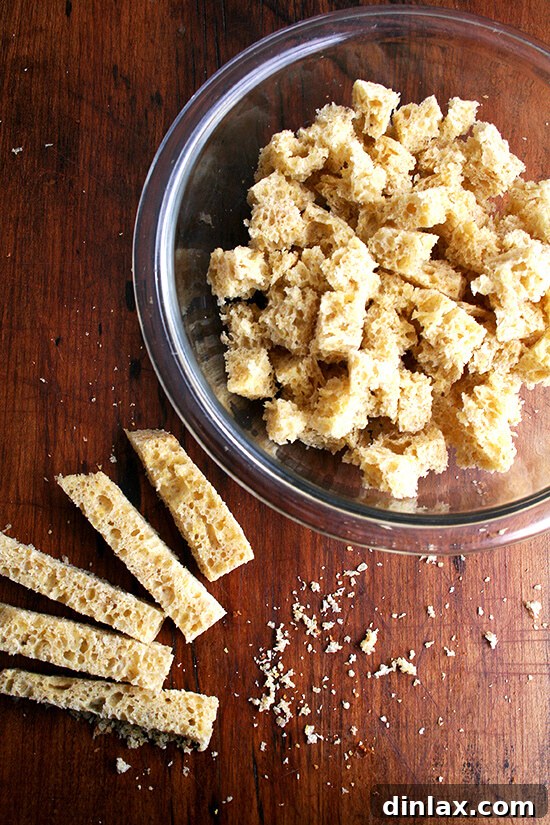
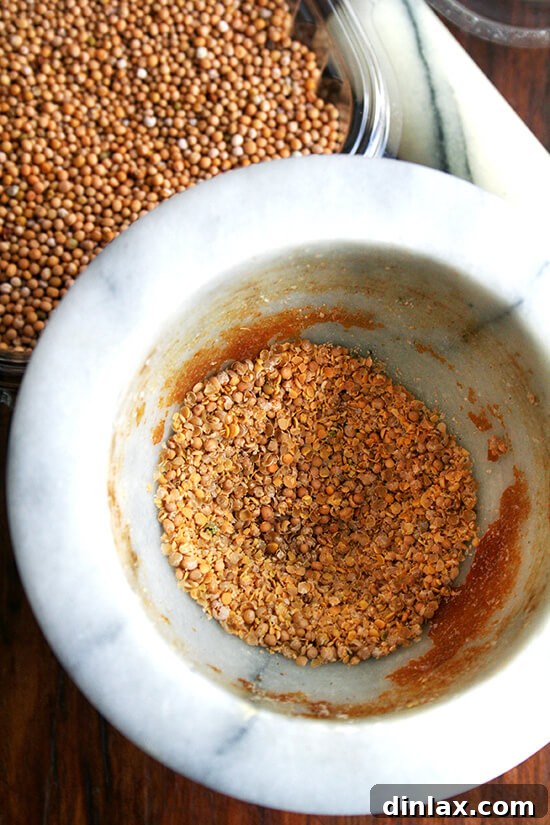
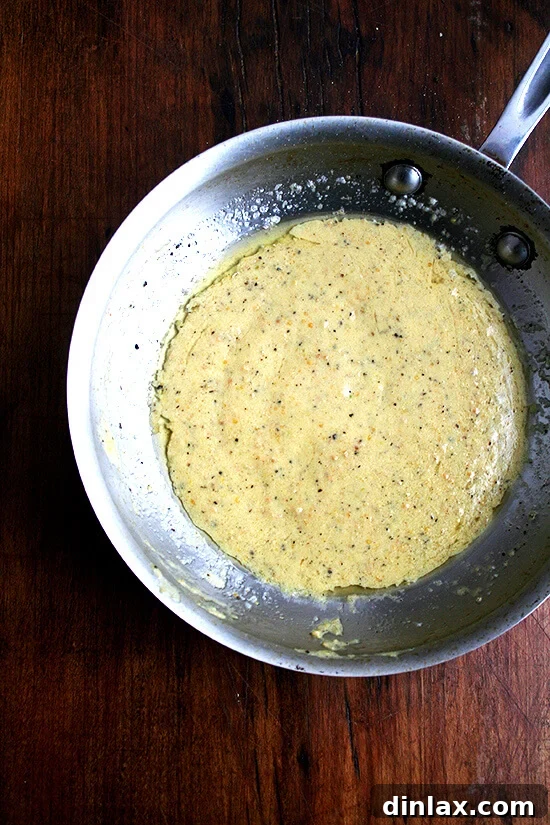
The magic truly begins with the dressing. Whole mustard seeds, lightly crushed in a mortar to release their aromatic oils and a subtle textural bite, form the backbone of this vibrant mixture.
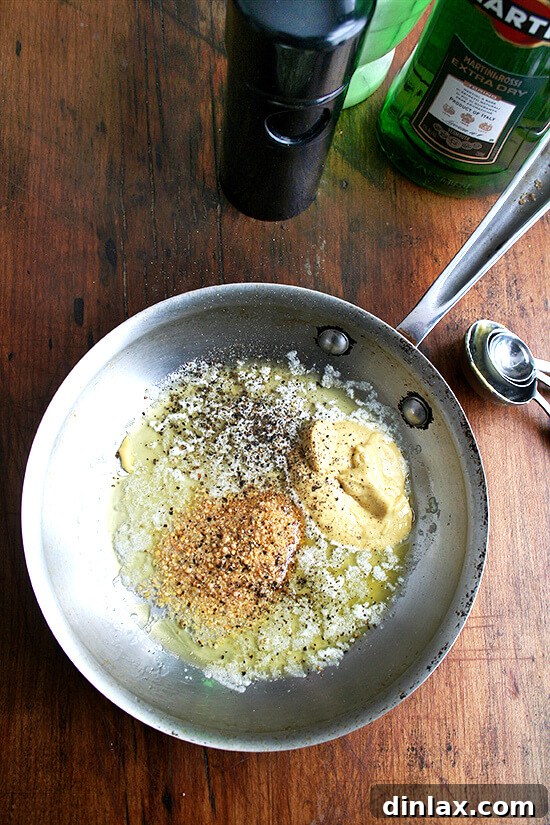
This fragrant base is then skillfully combined with rich melted butter, sharp Dijon mustard for its distinctive tang, a splash of dry white wine or vermouth to add depth and acidity, and a generous amount of freshly ground black pepper. Each ingredient plays a crucial role in creating a dressing that truly transforms humble bread into something extraordinary.
Mustard Croutons
5 from 1 review
- Author: Alexandra Stafford at alexandracooks.com
- Total Time: 30 minutes
Description
These unique mustard croutons, inspired by Madeleine Troisgros and documented in The Zuni Cafe Cookbook, offer a golden, chewy, and deeply savory addition to omelets, salads, and more. A staple in French-inspired cooking, they transform simple bread into an irresistible delicacy.
Source: The Zuni Cafe Cookbook
Ingredients
- Stale, chewy, peasant-style bread, with most of the crust removed (see note below)
- 2 tablespoons unsalted butter, melted
- 1 tablespoon good quality Dijon mustard
- 1.5 tablespoon dry white wine or dry white vermouth (vermouth offers a lovely aromatic complexity)
- 1 teaspoon whole mustard seeds, lightly crushed in a mortar to release their flavor
- Freshly ground black pepper, generously applied
- Kosher salt to taste (adjust based on the saltiness of your bread and mustard)
* The original recipe suggests 2.5 oz of bread, but for a more substantial batch of these highly addictive croutons, you will likely need a little more. My experience indicates that 2.5 cups of crustless cubed bread can weigh closer to 7 oz, varying with bread density. I often use closer to 3 cups of cubed bread to ensure a generous yield.
Instructions
- Preheat your oven to 400°F (200°C). This high heat is crucial for achieving the perfect golden exterior and slightly chewy interior.
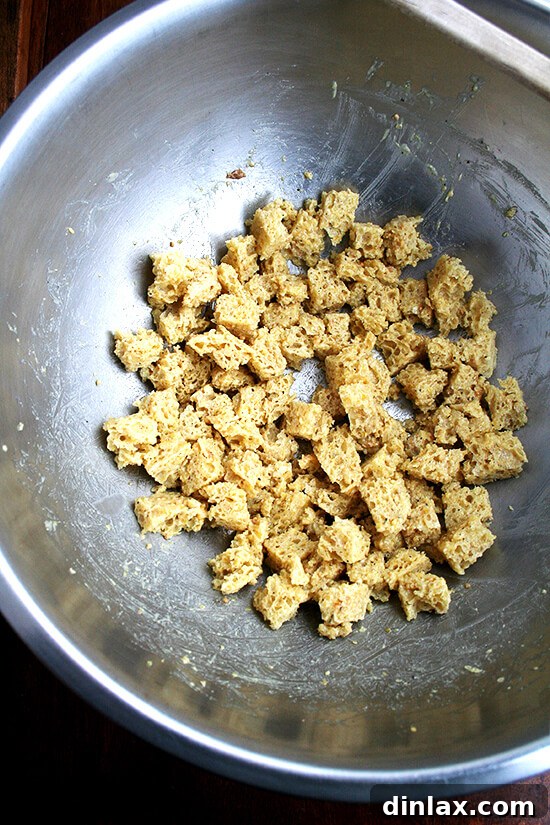
- Prepare your bread: Tear the peasant-style bread into small, rustic wads, aiming for pieces approximately 3/4 inch and smaller. The tearing motion, rather than cutting, creates uneven surfaces that better absorb the dressing and result in varied textures. For an added crispy element, tear a few of these wads into smaller crumbs. You should end up with approximately 2 to 3 cups of torn bread.
- Create the flavorful dressing: In a small saucepan or skillet, gently melt the unsalted butter. Once melted, remove the pan from the heat to prevent the mustard from scorching. Whisk in the Dijon mustard, dry white wine or vermouth, the lightly crushed mustard seeds, and a generous amount of freshly ground black pepper. The resulting mixture should have the consistency of a thick vinaigrette, ensuring it coats the bread effectively.
- Dress the bread: Add the torn bread pieces to the saucepan (if it’s large enough) or transfer them to a large mixing bowl. Toss the bread thoroughly to ensure every piece is evenly coated with the rich mustard dressing. For maximum flavor absorption, gently rub the bits of bread against the sides of the pan or bowl, and then lightly massage them. This ensures the dressing penetrates even the insides of the wads, leading to a deeply infused crouton. Taste a piece for salt and adjust if necessary, though the Dijon mustard often provides sufficient seasoning.
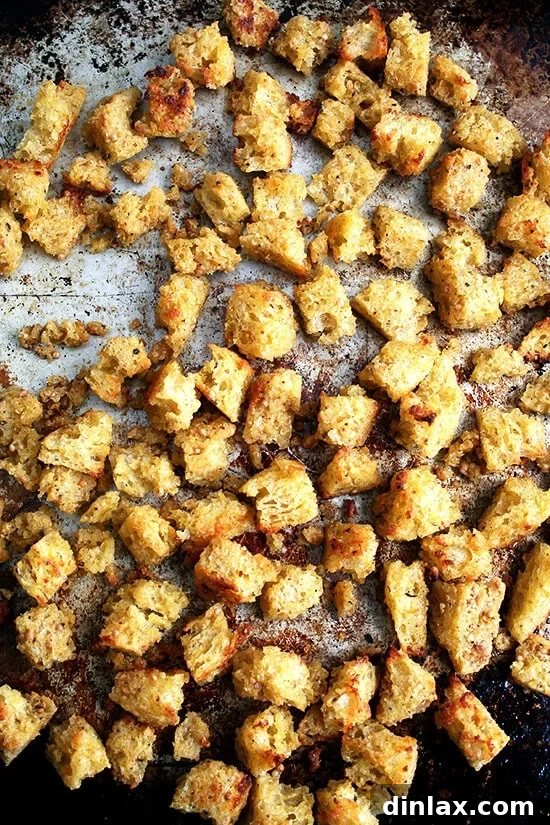
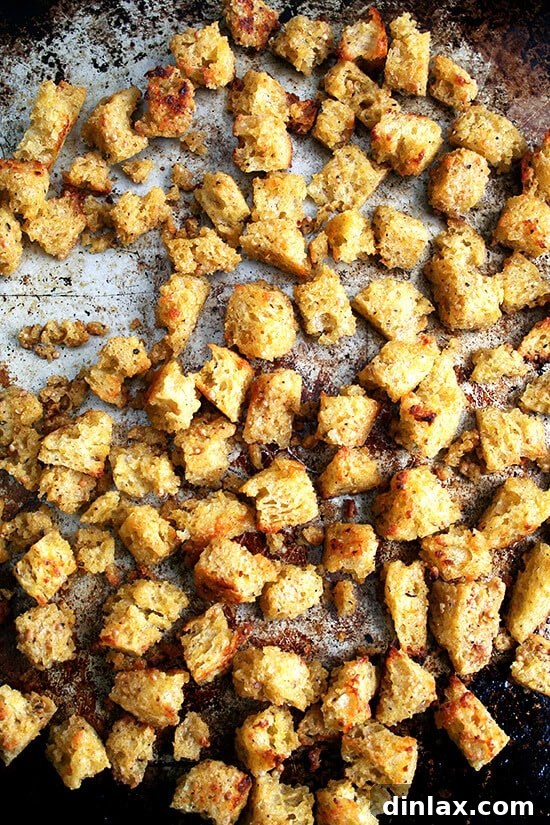
- Toast to perfection: Spread the dressed bread pieces out in a single layer on a sheet pan. Toast in the preheated oven for 5 to 10 minutes, or potentially longer, depending on your oven and desired crispness. The goal is an unevenly golden exterior with a slightly chewy middle. The smaller crumbs will become wonderfully crisp throughout. Once toasted, these croutons are ready to be tossed into a vibrant salad or, for the true Madeleine experience, kept in a warm spot and added to a freshly made omelet.
- Prep Time: 15 minutes
- Cook Time: 15 minutes
Tips for Perfect Mustard Croutons and Creative Variations
Crafting the perfect batch of mustard croutons is a delightful culinary endeavor, and a few simple tips can elevate your results:
- Bread Selection is Key: While the recipe calls for “stale, chewy, peasant-style bread,” don’t hesitate to experiment with other artisanal loaves like sourdough or pain de campagne. The slight chewiness is paramount to achieving the signature texture, contrasting beautifully with the crisp exterior. Avoid overly soft or dense sandwich breads.
- The Art of Tearing: Resist the urge to cut your bread into perfect cubes. Tearing creates irregular, jagged edges that offer more surface area for the dressing to cling to, leading to a richer flavor and varied textures in the finished crouton.
- Mustard Matters: Invest in a high-quality Dijon mustard. Its distinct pungent, tangy, and slightly spicy notes are fundamental to the croutons’ flavor profile. While the recipe specifies Dijon, a touch of whole grain mustard could add another layer of texture and a milder mustard flavor.
- Embrace the Wine/Vermouth: The dry white wine or vermouth isn’t just for moisture; it adds a subtle acidity and aromatic complexity that brightens the overall flavor. If you prefer to avoid alcohol, a good quality white wine vinegar diluted slightly with water could serve as a substitute, though the flavor profile will differ.
- Don’t Skimp on Pepper: Freshly ground black pepper provides a crucial counterpoint to the mustard’s tang and the butter’s richness. Feel free to be generous with it.
- Flavor Variations: To customize your croutons, consider adding a pinch of garlic powder or finely minced fresh garlic to the dressing for an extra savory kick. Dried herbs like thyme, oregano, or a touch of herbes de Provence would also be excellent additions, adding an aromatic depth.
- Storage: Store cooled croutons in an airtight container at room temperature for up to 3-5 days to maintain their crispness and flavor. If they lose some crispness, a quick toast in a warm oven can revive them.
Beyond the Omelet: Expanding Your Culinary Horizons
While the Madeleine-style omelet is a magnificent canvas for these mustard croutons, their versatility extends far beyond:
- Soup Topping: They are an exceptional accompaniment to creamy tomato soup, French onion soup, or any vegetable purée, adding texture and a burst of flavor.
- Salad Enhancer: Transform any simple green salad into a gourmet experience. They pair particularly well with bitter greens, crisp lettuces, and light vinaigrettes.
- Breakfast Bowls: Sprinkle them over avocado toast, scrambled eggs, or even savory oatmeal for an unexpected crunch.
- Snack Attack: While I cautioned against the “popcorn style” consumption, it’s hard to resist them as a standalone savory snack. They make a sophisticated alternative to chips or crackers.
- Cheese Board Companion: Serve them alongside a selection of cheeses and charcuterie for an elegant appetizer that offers texture and a piquant flavor contrast.
These mustard croutons are more than just a recipe; they are an invitation to explore the subtle yet profound impact simple, thoughtfully combined ingredients can have. They embody the essence of French culinary philosophy—taking something humble, like stale bread, and transforming it into an unforgettable element of a meal. Whether you rediscover them in an omelet, scatter them over a fresh salad, or enjoy them as a satisfying snack, these irresistible croutons are guaranteed to elevate your cooking and delight your palate. Give them a try, and you might just find yourself agreeing that Fernand, and Madeleine, were truly onto something special.