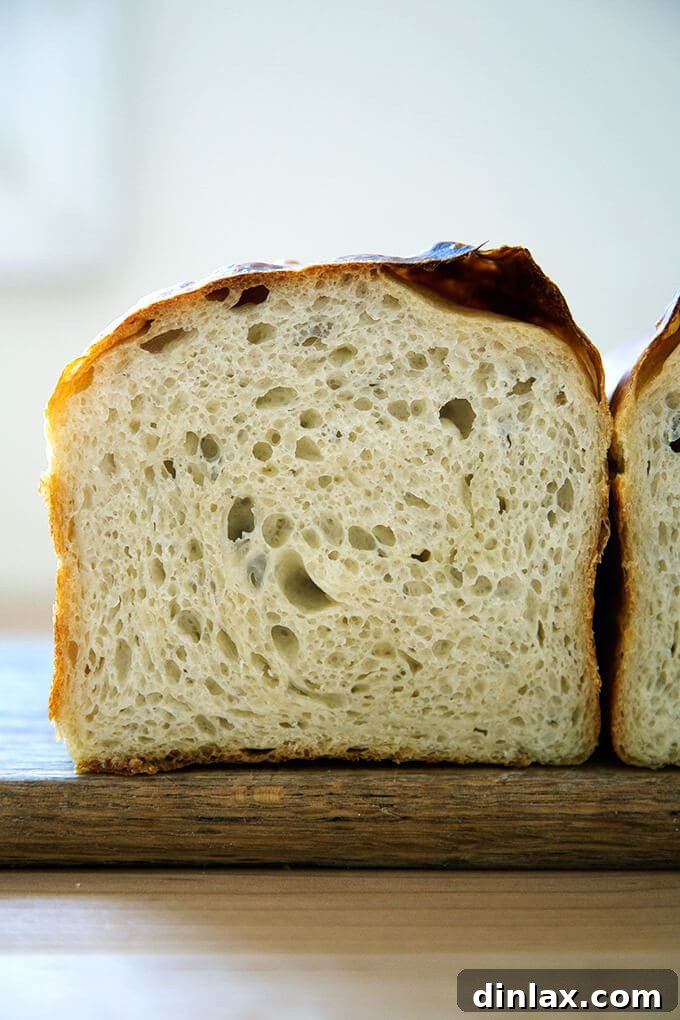
Welcome to the world of truly effortless sourdough baking! This incredible 4-ingredient sourdough sandwich bread recipe revolutionizes the way you think about homemade loaves. Forget complicated shaping techniques, intricate scoring patterns, or the need for a preheated heavy Dutch oven. This guide is designed for simplicity, allowing you to achieve a soft, flavorful, and utterly delicious sourdough loaf with minimal fuss. All you need are your basic kitchen tools: a mixing bowl, a trusty spatula, and a buttered loaf pan. Get ready to bake a staple that will quickly become your family’s favorite!
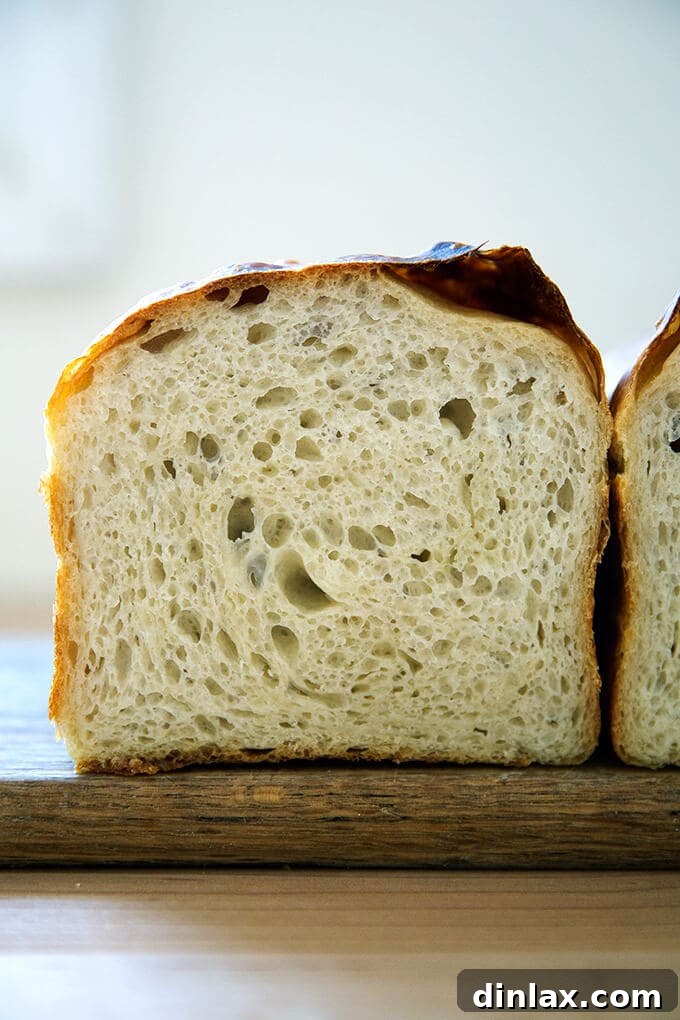
Effortless Homemade Sourdough Sandwich Bread: Your Ultimate Guide
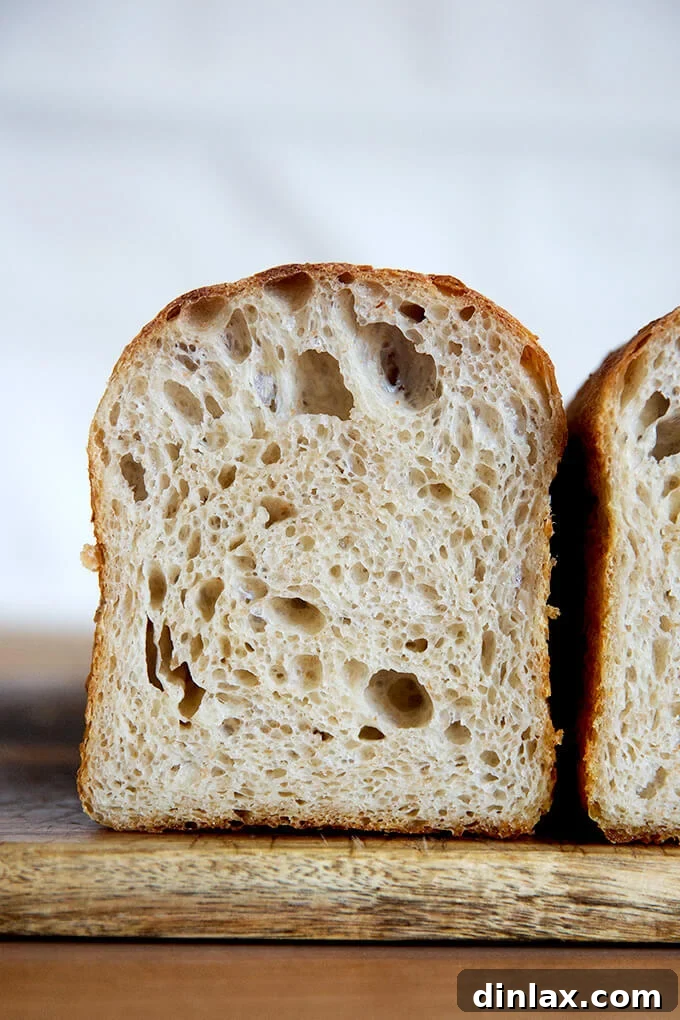
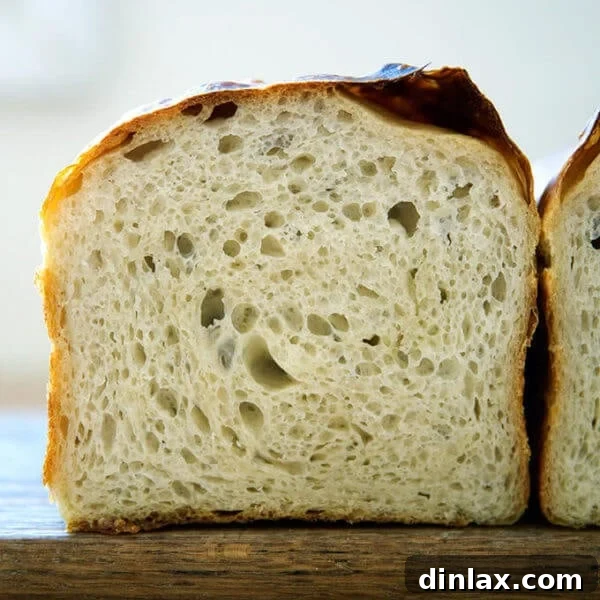
As its name boldly proclaims, this sourdough sandwich bread recipe truly redefines “easy.” It’s a straightforward blend of just four core ingredients: flour, water, salt, and your active sourdough starter. At its heart, this recipe is a brilliant adaptation of my mother’s cherished peasant bread recipe, ingeniously transformed by omitting sugar and commercial yeast, and introducing the vibrant power of a sourdough starter. Much like my popular sourdough focaccia, this dough boasts a high hydration level. This characteristic is key to yielding a wonderfully soft, moist crumb that is absolutely perfect for crafting exquisite sandwiches, fresh from the oven, and equally outstanding when transformed into crispy, golden toast.
In the vast and sometimes intimidating world of sourdough bread baking, the spotlight often shines on dramatic, crusty boules, intricate open-crumbed ciabatta rolls, and the delightful airiness of pillowy focaccia. While these artisanal creations are undoubtedly glorious, I passionately argue that a simple, humble sandwich loaf deserves just as much, if not more, acclaim. Its unparalleled ease in assembly, combined with its incredible everyday utility, makes it a true unsung hero of the sourdough kitchen. This recipe offers all the distinct flavor and health benefits of sourdough without any of the traditional complexities often associated with it, making it accessible to every home baker.
Below, you’ll find comprehensive step-by-step instructions, complemented by helpful video guidance, to ensure your sourdough baking journey is a resounding success. This recipe empowers you to create delicious, wholesome bread for your family, proving that baking with sourdough doesn’t have to be a daunting task. Embrace the simplicity and savor the extraordinary results!
Why This Sourdough Sandwich Bread Recipe Is a Game-Changer
Many aspiring sourdough bakers are intimidated by the perceived complexity of traditional sourdough methods. This recipe aims to strip away those barriers, focusing on a streamlined process that prioritizes ease without compromising on flavor or texture. Here’s what makes this recipe stand out:
- No Complicated Shaping: Forget intricate folding techniques or striving for that perfect boule tension. This dough is designed to be simply transferred to a loaf pan.
- No Scoring Required: The characteristic slashes on artisan loaves are beautiful but not necessary here. Your loaf will rise beautifully in the pan.
- No Dutch Oven Needed: While Dutch ovens are excellent for creating a steamy environment, this recipe achieves fantastic results in a standard loaf pan, simplifying your equipment needs.
- Just 4 Core Ingredients: With only active sourdough starter, water, salt, and bread flour, you’re working with a minimal and pure ingredient list.
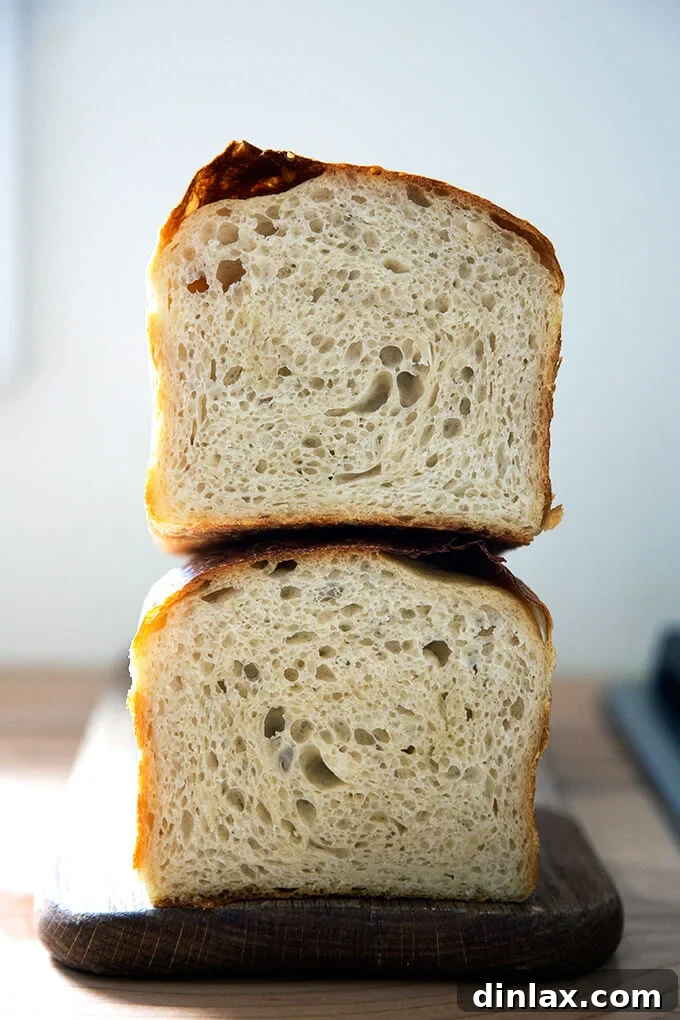
- Soft, Versatile Crumb: The high hydration ensures a tender, airy crumb that’s ideal for slicing thin for sandwiches or toasting until golden.
This approach makes daily sourdough baking achievable and enjoyable, transforming what might seem like a gourmet endeavor into an accessible kitchen routine. It’s perfect for meal prep, school lunches, or simply enjoying fresh, homemade bread any day of the week.
Understanding Your Sourdough Starter for Best Results
Your sourdough starter is the living heart of this recipe, and its health directly impacts your bread’s success. A vibrant, active starter provides the lift, flavor, and texture you desire. For optimal results, ensure your starter is “active” – meaning it has been fed 4-12 hours prior, has doubled (or nearly doubled) in size, and is bubbly and vigorous.
If you’re new to the world of sourdough or need to refresh your knowledge, these resources are invaluable:
- How to Build a Sourdough Starter from Scratch: A step-by-step guide to cultivating your own starter from flour and water.
- How to Activate, Feed, and Maintain a Sourdough Starter: Learn the best practices for keeping your starter happy and healthy, ensuring it’s always ready for baking.
A well-maintained starter is not just an ingredient; it’s a partner in your baking adventure, promising consistent, delicious results every time.
How to Make Sourdough Sandwich Bread: A Detailed Step-by-Step Guide
Embark on your journey to baking the perfect loaf. Precision in measurement is crucial for sourdough, so using a digital scale is highly recommended for accuracy.
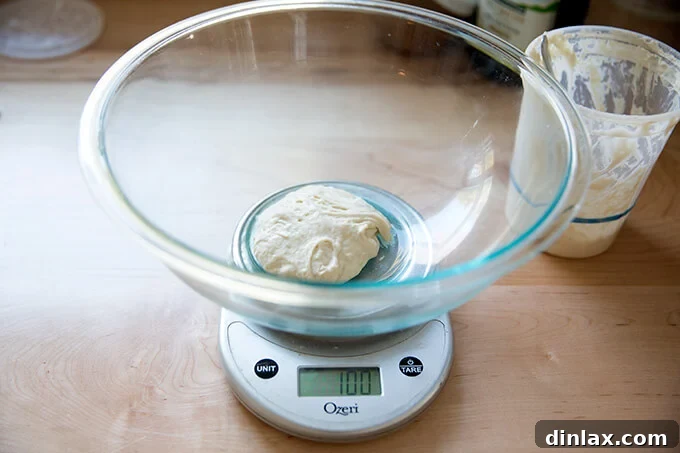
Gathering Your Ingredients and Essential Notes:
Before you begin, let’s review the ingredients and some crucial tips for success:
- 100 grams active sourdough starter (about 1/2 cup). Ensure it’s fed and bubbly.
- 10 grams kosher salt (about 2.5 teaspoons). Essential for flavor and dough structure.
- 430 grams water (room temperature, or less, see notes below).
- 512 grams bread flour (4 cups), such as King Arthur Flour, for strong gluten development.
- A few tablespoons extra-virgin olive oil for coating.
- Room temperature butter for greasing your loaf pan.
Important Notes for Sourdough Success:
- Choosing Your Loaf Pan: You’ll need either a 10 x 5-inch loaf pan or a 9×5-inch loaf pan. The size can slightly impact the height and density of your loaf. Ensure it’s adequately buttered or greased.
- Planning Ahead for Fermentation: This recipe involves two critical rises. The first, or bulk fermentation, can take anywhere from 6 to 18 hours (or even less in very warm, humid conditions) until the dough significantly increases in volume. The second rise, or proofing in the loaf pan, takes about 4 to 6 hours until it crowns the rim of the baking vessel. Sourdough requires patience, but the hands-on time is minimal.
- Troubleshooting Sticky Dough: Sourdough dough can sometimes feel quite sticky, especially for beginners. If you encounter this, it’s often due to hydration levels or gluten development. For comprehensive tips and fixes, please refer to this detailed post: Why is my sourdough so sticky? Plus, fixes to 4 common sourdough mistakes and FAQs.
- Water Quality Matters: Chlorine in tap water can negatively impact your sourdough starter and the dough’s fermentation. To mitigate this, I recommend filling a large pitcher with tap water and letting it sit at room temperature for at least 24 hours. This allows most of the chlorine to evaporate. While I’ve occasionally used water straight from the tap without noticeable issues, consistently using dechlorinated water is a best practice.
- Adjusting Water Quantity: The amount of water needed can vary significantly based on your environment’s humidity and the type of flour you use. If you live in a particularly humid climate, or if you’re not using a strong bread flour, you might need to reduce the water slightly, perhaps starting with 400g or 420g. Achieving the right dough consistency is paramount for sourdough success, so trust your intuition and the feel of the dough.
- Starter Hydration: This recipe assumes a 100% hydration starter, meaning it’s fed with equal parts flour and water by weight. If your starter’s hydration differs, minor adjustments might be necessary. For more guidance on how to activate, feed, and maintain a healthy and active starter, consult the linked post.
The Baking Process: From Mixing Bowl to Golden Loaf
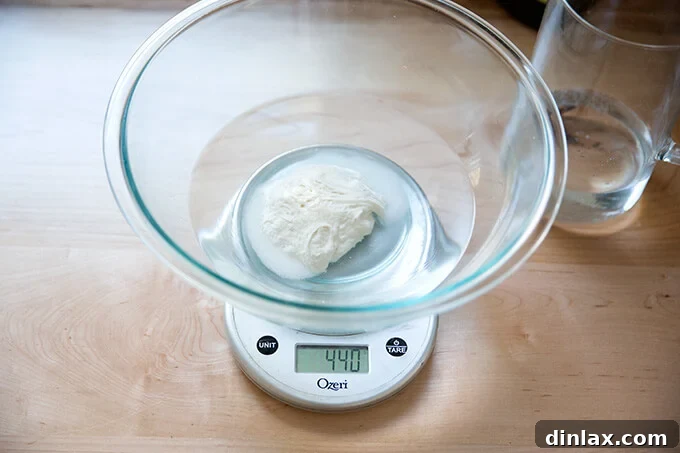
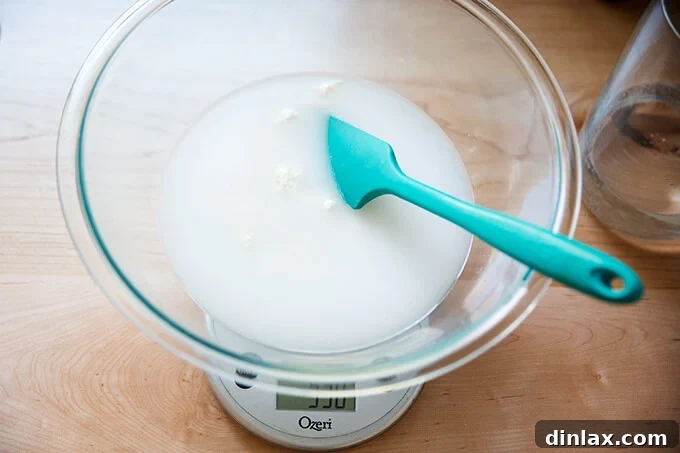
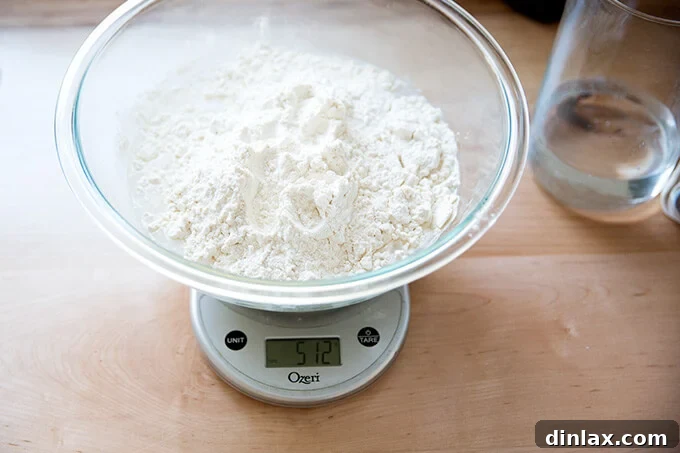
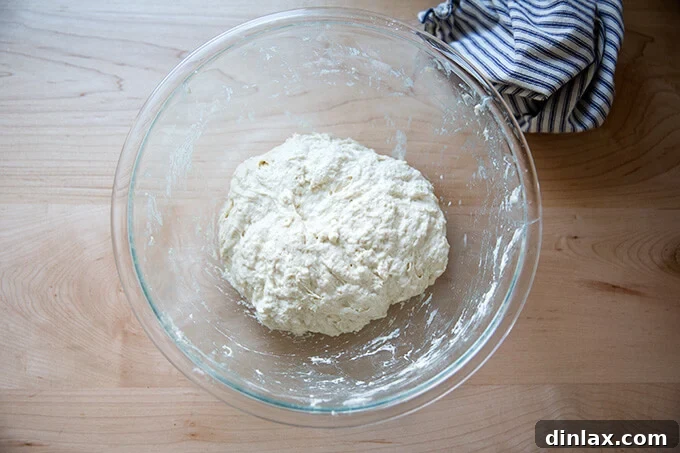
- Mix the Dough: The Foundation of Your Loaf.
Begin by placing your active sourdough starter, salt, and water in a large mixing bowl. Stir these ingredients together with a sturdy spatula until they are loosely combined. Don’t worry about achieving a perfectly uniform mixture at this stage. Next, add all the bread flour. Continue mixing thoroughly until the flour is completely incorporated and no dry pockets remain. The dough will be sticky and shaggy. If you own a straight-sided vessel, transferring the dough to it after mixing is highly recommended. This clever container makes monitoring the dough’s rise incredibly easy, allowing you to clearly see its volume increase over time.

- Gentle Stretches and Folds: Developing Gluten with Ease.
After your dough has rested for 30 minutes, it’s time for the first set of stretches and folds. This gentle technique helps to develop gluten structure without the need for strenuous kneading. Simply moisten your hand slightly, reach into the bowl, and grab a section of the dough. Gently pull it upwards and fold it towards the center of the bowl. Rotate the bowl a quarter turn and repeat this pulling and folding motion 8 to 10 times. This process, known as ‘coil folds’ or ‘stretch and folds,’ is remarkably effective. For visual guidance, refer to the video at 1:13. Ideally, repeat this folding step every 30 minutes for the first two hours (for a total of 4 sets). However, even performing just one set of folds will significantly improve your dough’s structure. Cover the dough and let it rest for the next stage.
- The Bulk Fermentation: The Crucial First Rise.
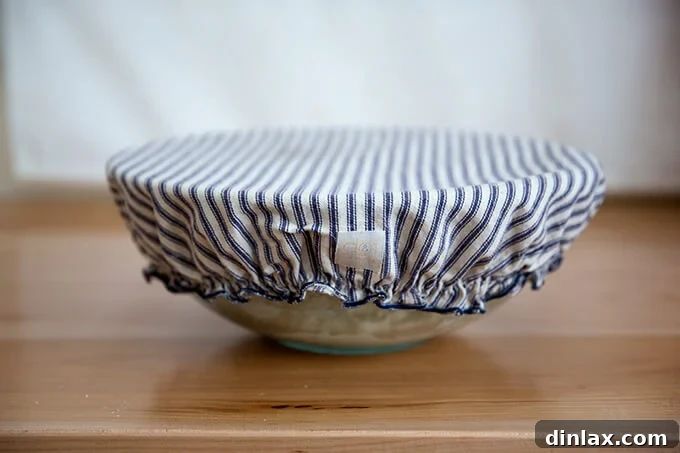
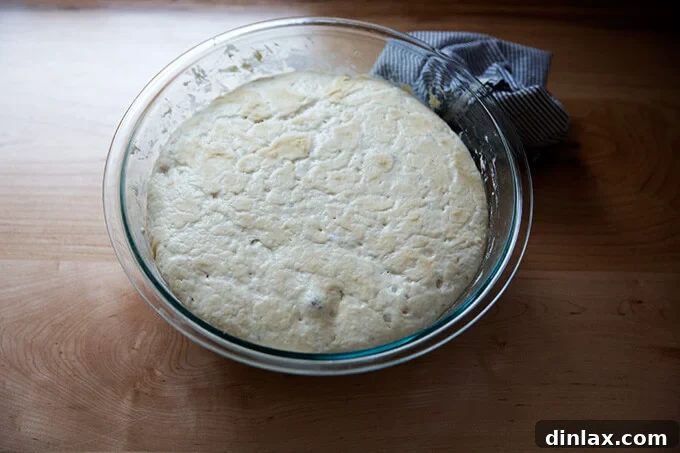
After your last set of folds, drizzle the surface of the dough with a little olive oil and gently rub it to coat. This prevents a skin from forming. Cover your bowl with a tea towel, a dedicated cloth bowl cover, or preferably, a lidded vessel, and set it aside to rise at room temperature (ideally around 70ºF/21ºC). This is the bulk fermentation, a critical stage where the sourdough starter works its magic, developing flavor and volume. The duration of this rise can vary significantly, ranging from 4 to 18 hours. Factors like ambient temperature (it will be faster in warmer, more humid conditions) and your starter’s activity play a big role. The dough is ready when it has nearly doubled in volume (or, as an updated visual cue I often use, has increased in volume by 50%). It is best to rely on these visual cues rather than strict timing. Avoid using an oven with just the light on for bulk fermentation, as it often creates an environment that is too warm, leading to over-fermentation. A straight-sided vessel will make monitoring this process exceptionally straightforward.
- Preparing the Loaf Pan: Setting the Stage for Perfect Shape.
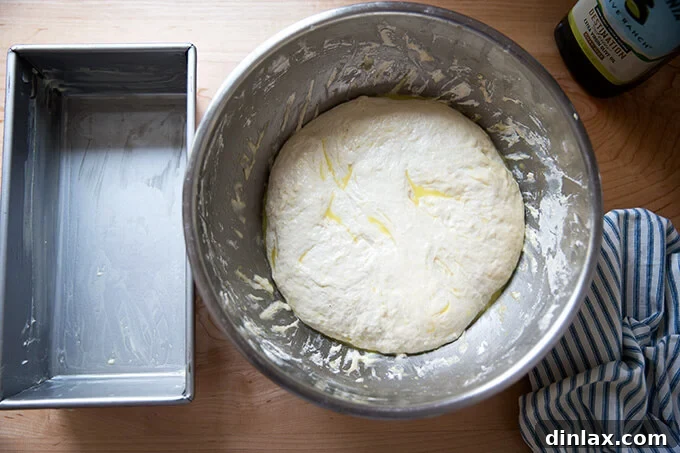
Once your dough has completed its bulk fermentation and reached the desired volume, it’s time to prepare your baking vessel. Generously grease your 9×5-inch loaf pan or 10 x 5-inch loaf pan with room temperature butter or a good quality nonstick spray. This step is crucial to prevent sticking and ensure your beautiful loaf releases easily after baking.
- Shaping and Final Proof: The Second Rise in the Pan.
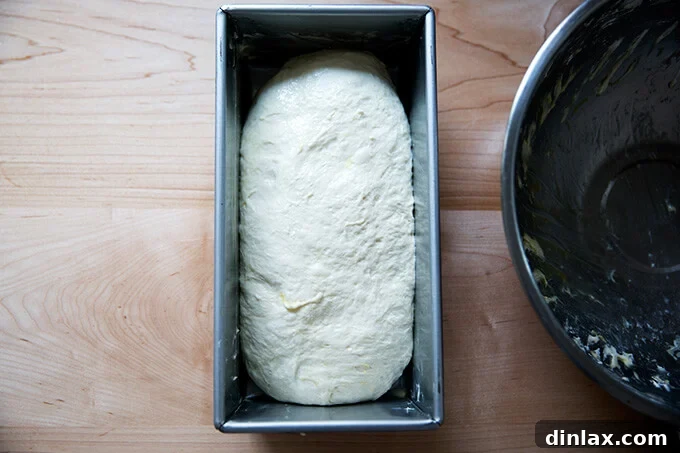
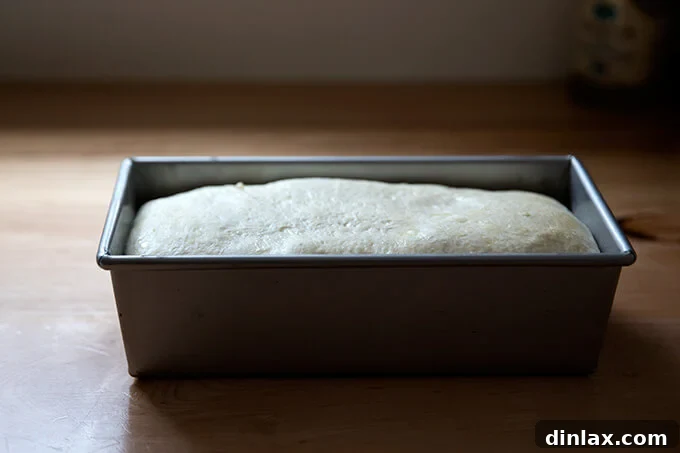
Gently drizzle the top of your fermented dough with a few tablespoons of olive oil. Rub your hands with a little oil as well to prevent sticking. Using your oiled hand, carefully release the dough from the sides of the mixing vessel, taking care not to completely deflate all the precious air bubbles that have developed. For a clear demonstration, refer to the video guidance here. Turn the dough out onto a lightly oiled or floured work surface. Swiftly and gently shape the dough into a rough rectangle. A common method is to fold the dough envelope-style (folding one side over the middle, then the other side over that, and then the top and bottom). Then, use a bench scraper to help coax and shape the dough into an oblong form that will fit your loaf pan. Carefully transfer the dough, seam-side down, into your prepared loaf pan and gently stretch it to fill the pan evenly. At this point, you have an option for convenience: you can transfer the pan to the refrigerator for a cold proof overnight (rub the dough with oil, cover tightly with plastic wrap or tuck the entire pan into a 2-gallon ziplock bag). This slows down fermentation, allowing you to bake the next day on your schedule and can also enhance flavor development. If proofing at room temperature, leave the pan undisturbed for 5 to 6 hours, or until the dough gracefully crowns the rim of the pan. This second rise may take less time in warmer conditions. Patience is key here; for optimal height and a beautiful rise, ensure the dough is visibly near or just above the rim before placing it in the oven.
- Bake to Golden Perfection: The Grand Finale.
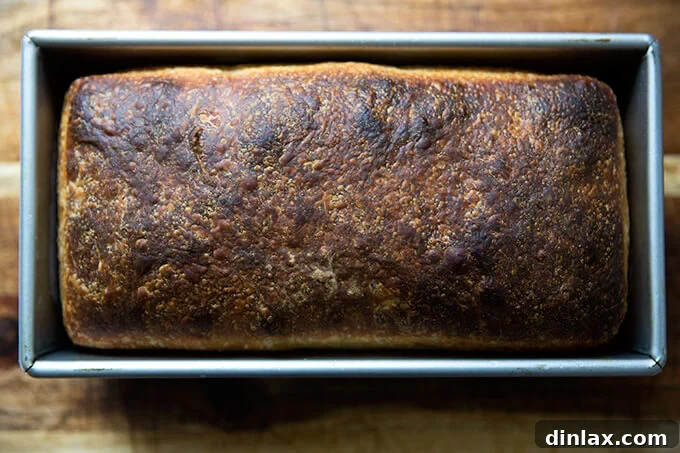
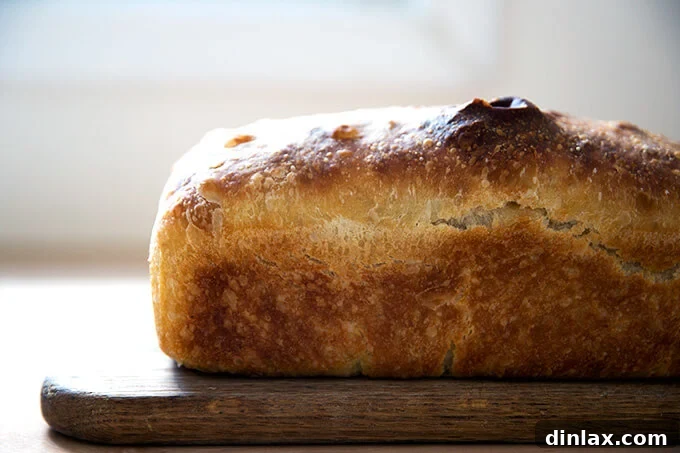
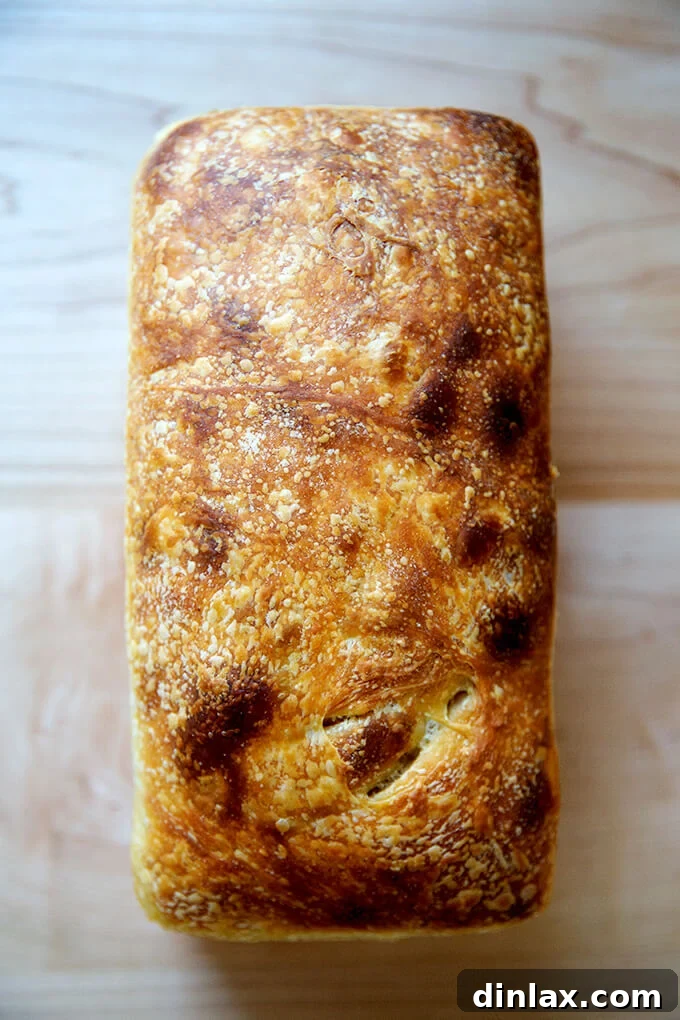
Preheat your oven to 425ºF (220ºC). Once hot, carefully transfer the loaf pan to the oven. Bake for approximately 20 minutes at this higher temperature to achieve a good initial oven spring and crust development. Then, reduce the oven temperature to 375ºF (190ºC) and continue baking for another 20 to 25 minutes, or until the crust is beautifully golden brown all around. For absolute certainty of doneness, an instant-read thermometer inserted into the center of the loaf should register between 206ºF and 210ºF (97ºC and 99ºC). Once baked, remove the pan from the oven and immediately turn the bread out onto a wire cooling rack. Allow the loaf to cool for at least 30 minutes before attempting to slice it. This cooling period is vital; it allows the internal structure of the bread to set and prevents a gummy texture.
Patience during cooling is rewarded with a perfect crumb structure. Once sufficiently cooled, slice and enjoy your magnificent homemade sourdough!
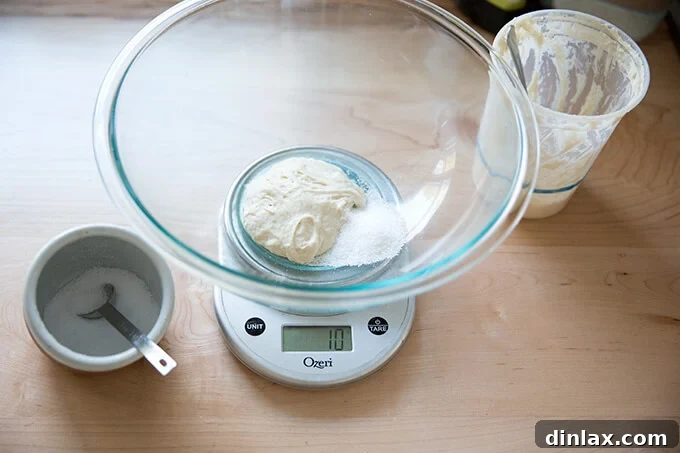
Beyond the Basics: Enjoying and Storing Your Sourdough Sandwich Bread
Once your loaf has cooled, the possibilities are endless! This versatile sourdough sandwich bread truly shines in many applications.
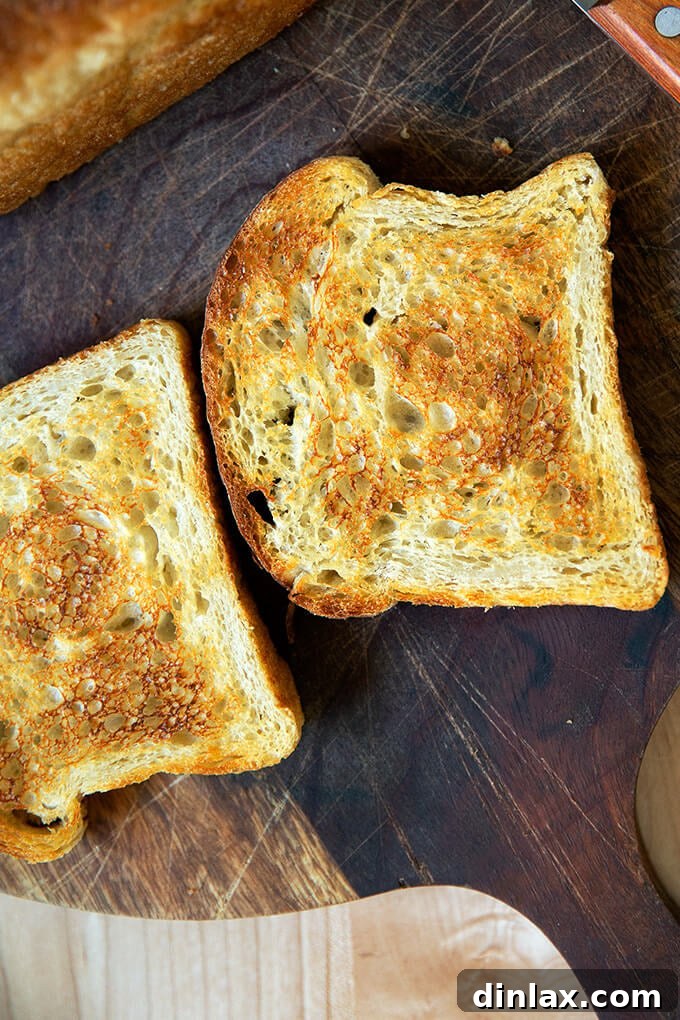
- For the Perfect Toast: Its soft crumb and subtle tang make it an excellent choice for morning toast. Slather it with butter, jam, or your favorite avocado spread. The texture becomes delightfully crisp on the outside while remaining tender within.
- Epic Sandwiches: From classic deli meats and cheeses to gourmet vegetarian fillings, this bread holds up beautifully without being too dense. Its slight tang complements a wide range of flavors.
- Tartines and Open-Faced Delights: A simple slice topped with ricotta and honey, or a savory spread, transforms into an elegant snack or light meal.

Storing Your Homemade Sourdough:
To keep your delicious sourdough sandwich bread fresh, store it at room temperature in an airtight container or a bread bag. Avoid refrigerating, as this tends to dry out sourdough quickly. For longer storage, slices or even half-loaves freeze exceptionally well. Simply wrap them tightly in plastic wrap, then in foil, and they’ll retain their quality for weeks. Thaw at room temperature or pop directly into a toaster for a quick refresh.
For those who prefer a more uniform, rectangular slice, a tall-sided Pullman loaf pan is a fantastic option. It produces a perfectly square loaf, ideal for uniform sandwich slices.
Easy Sourdough Sandwich Bread
4.9 from 412 reviews
- Author: Alexandra Stafford
- Total Time: 24 hours 40 minutes
- Yield: 1 loaf 1x
Description
This easy sourdough sandwich bread requires no complicated shaping, no scoring, and no preheated heavy Dutch oven. Grab your mixing bowl, pull out a spatula, and butter your loaf pan. This one is simple and delicious! The perfect introduction to hassle-free homemade sourdough.
Notes:
Pan: You’ll need either a 10 x 5-inch loaf pan or a 9×5-inch loaf pan. Ensure it’s well-greased with butter for easy release.
Plan Ahead for Fermentation: This dough requires two rises. The initial bulk fermentation will take 6 to 18 hours (potentially less in warmer, more humid environments) until the dough roughly doubles in volume (or increases by 50%). The second rise, in the loaf pan, takes about 4 to 6 hours until the dough crowns the rim of the pan. Patience is key for optimal results!
Troubleshooting Sticky Dough: If your dough feels excessively sticky, it’s a common issue related to hydration or gluten development. For solutions and detailed explanations, please refer to this guide: Why is my sourdough so sticky? Plus, fixes to 4 common sourdough mistakes.
Getting Started with Sourdough: If you’re a complete beginner, I highly recommend starting with this post: Simple Sourdough Focaccia: A Beginner’s Guide. It offers essential tips on procuring and managing a starter. For those eager to make your own starter from scratch, it’s a rewarding process that can be completed in about a week.
Water Quality and Quantity: Chlorine in tap water can hinder sourdough activity. Letting water sit at room temperature for 24 hours helps remove chlorine. While I haven’t always noticed a difference using tap water, it’s a good practice. Also, humidity and flour type affect water absorption; in humid climates or with softer flours, you may need to reduce water to 400g or 420g. Adjusting water content correctly is crucial for dough consistency.
Sourdough Starter Hydration: This recipe is formulated for a 100% hydration starter (equal parts flour and water by weight). If your starter has a different hydration level, minor adjustments might be necessary. Learn more about how to activate, feed, and maintain your sourdough starter here.
Ingredients
- 100 grams (about 1/2 cup) active sourdough starter (fed and bubbly)
- 10 grams (about 2.5 teaspoons) kosher salt
- 430 grams water (room temperature, see notes for adjustments)
- 512 grams (4 cups) bread flour (high protein, like King Arthur Flour)
- a few tablespoons extra-virgin olive oil, for coating dough
- room temperature butter, for generously greasing loaf pan
Instructions
- Mix the Dough: In a large bowl, combine the active sourdough starter, kosher salt, and room temperature water. Stir with a spatula until the salt is mostly dissolved and the starter is dispersed. Add the bread flour and mix thoroughly until all the flour is incorporated and forms a shaggy, sticky dough ball. For easier monitoring of the rise, consider transferring the dough to a straight-sided container.
- Perform Stretches and Folds: Let the dough rest for 30 minutes after mixing. Then, gently perform a series of stretches and folds. Moisten your hand, grab a portion of the dough, stretch it upwards, and fold it over itself towards the center. Rotate the bowl and repeat this 8-10 times. This process builds gluten strength. For visual guidance, watch the video (skip to 1:13). Repeat this stretch and fold routine three more times, with 30-minute intervals between each set, for a total of four sets during the first two hours.
- Bulk Fermentation (First Rise): After the last set of folds, lightly drizzle the dough surface with olive oil and rub to coat. Cover the bowl with a tea towel, a cloth bowl cover, or a lidded container. Allow the dough to undergo its bulk fermentation at room temperature (around 70ºF/21ºC) for 4 to 18 hours. The precise time depends on your room temperature and starter activity. The dough is ready when it has visibly increased in volume by about 50% to 100% (nearly doubled). Avoid overly warm environments like an oven with just the light on, as this can lead to over-fermentation. Visual cues are more reliable than strict timing for this stage.
- Prepare the Loaf Pan: While the dough is in its final stages of bulk fermentation, generously grease a 9×5-inch loaf pan or a 10 x 5-inch loaf pan with room temperature butter or nonstick spray. This prevents sticking.
- Shape and Proof (Second Rise): Drizzle a few tablespoons of olive oil over the fermented dough. Lightly oil your hands. Gently use your hands to loosen the dough from the sides of the bowl, trying not to deflate it completely. Turn the dough out onto a lightly oiled work surface. Quickly and gently shape the dough into a rough rectangle, folding it envelope-style if desired, then use a bench scraper to refine its oblong shape. Transfer the dough, seam-side down, into the prepared loaf pan and gently stretch it to fit. For scheduling flexibility, you can now place the covered pan in the refrigerator for an overnight cold proof. Otherwise, let the dough rise at room temperature for another 5 to 6 hours, or until it visibly crowns the rim of the pan. This final proof is crucial for achieving good oven spring and height.
- Bake the Loaf: Preheat your oven to 425ºF (220ºC). Once heated, transfer the loaf pan to the oven and bake for approximately 20 minutes. Then, reduce the oven temperature to 375ºF (190ºC) and continue baking for an additional 20 to 25 minutes, or until the bread is a deep golden brown and sounds hollow when tapped. For precise doneness, use an instant-read thermometer; the internal temperature should be between 206-210ºF (97-99ºC). Remove the bread from the oven, immediately turn it out onto a wire cooling rack, and allow it to cool for at least 30 minutes before slicing.
- Prep Time: 24 hours
- Cook Time: 45 minutes
- Category: Bread
- Method: Sourdough/Natural Leavening
- Cuisine: American