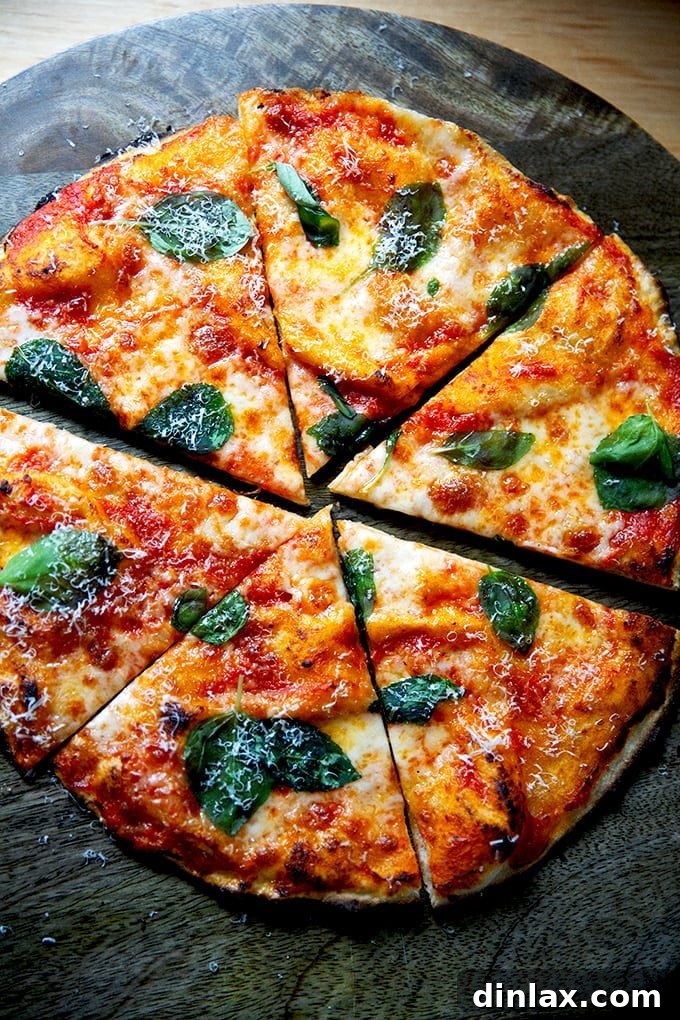
Craving that perfect, crispy pizza crust but adhering to a gluten-free diet? Look no further! This surprisingly simple recipe for a thin and crispy gluten-free pizza crust is a true game-changer. It delivers a delightful snap and a satisfying chew, so authentic in taste and texture, you’ll forget it’s gluten-free. For anyone who has struggled to find a gluten-free pizza that doesn’t feel like a compromise, this recipe promises to redefine your pizza night experience.
The Gluten-Free Baking Challenge: Beyond Muffins and Cakes
For years, the question “Can I make this with gluten-free flour?” has been a constant refrain in the baking community. When it comes to items like muffins, cakes, or quick breads, the answer often leans towards a confident “yes.” Many gluten-free flour blends perform exceptionally well in these applications, yielding delicious results with minimal adjustments. The structure of such baked goods relies less on the elasticity of gluten and more on leavening agents like baking soda or powder, along with fats and eggs.
However, the landscape shifts dramatically when we venture into yeast-leavened products like traditional breads and pizzas. Gluten, a protein composite found in wheat, plays a crucial role in these recipes. It forms an elastic network when hydrated and kneaded, trapping the gases produced by yeast, which gives dough its characteristic rise, chewiness, and structure. Without gluten, achieving that familiar elasticity, stretch, and satisfying chew becomes a significant culinary hurdle.
Gluten-free yeast doughs typically require additional assistance to compensate for the absence of gluten. This often comes in the form of extra eggs for binding, various stabilizers to create structure, and thickeners like xanthan gum to mimic gluten’s elasticity. Moreover, one of the trickiest aspects of gluten-free baking is the vastly different water absorption rates among various gluten-free flours and blends. Using the same amount of liquid across different brands can lead to wildly inconsistent results – from a soupy, unmanageable mess to a dense, unyielding block of dough. This variability is precisely why many gluten-free bread and pizza recipes are often formulated for specific flour brands to ensure predictable success.
Discovering the Secret to Superior Gluten-Free Pizza: King Arthur Gluten-Free Pizza Flour
Through extensive testing and a quest for the perfect gluten-free pizza, a remarkable solution emerged: King Arthur Gluten-Free Pizza Flour. While my upcoming cookbook, Pizza Night, will feature a dedicated gluten-free pizza crust recipe tailored to a specific blend, this particular flour from King Arthur has proven to be an outstanding, widely accessible alternative that delivers consistently exceptional results.
The beauty of King Arthur’s blend lies in its thoughtful composition, designed to overcome the inherent challenges of gluten-free dough. This recipe, a slight adaptation of the one found on the back of their flour bag, specifically focuses on creating a thin and remarkably crispy crust. By adjusting the salt content slightly and opting for a thinly rolled, parbaked approach rather than a traditional Neapolitan puffy rim, we unlock a pizza crust that is astonishingly similar to its gluten-containing counterpart in both texture and flavor.
This King Arthur Gluten-Free Pizza Flour is a true kitchen hero for those with gluten sensitivities or celiac disease. It’s readily available in many supermarkets, making it a convenient choice. The dough comes together quickly and rises efficiently, simplifying the process. Plus, the shaped dough rounds can be conveniently stored in the refrigerator for up to a week, allowing for spontaneous pizza nights any day of the week. Prepare to be delighted by the texture, the rich flavor, and the undeniable likeness of this gluten-free pizza to the traditional favorite.
Expert Tips for Achieving the Ultimate Thin and Crispy Gluten-Free Pizza Crust
Creating the perfect gluten-free pizza crust requires attention to detail, especially when working with unique flour blends. Follow these essential tips to ensure a successful and delicious outcome every time:
- Choose the Right Flour: This recipe is meticulously developed to work exclusively with King Arthur Gluten-Free Pizza Flour. Its specific blend of gluten-free wheat starch, tapioca starch, and rice flour is key to achieving the desired texture and elasticity. Substituting other gluten-free flours will likely alter the dough’s consistency and may require significant adjustments to the hydration levels, potentially leading to disappointing results. You can find this flour in most well-stocked grocery stores or order it online for convenience.
- Precision is Paramount: Use a Digital Scale: When baking, especially with gluten-free flours, accuracy is critical. Measuring ingredients by volume (cups and spoons) can lead to inconsistencies due to varying densities of flours. Investing in a digital kitchen scale ensures precise measurements of all ingredients, particularly the flour and water. This eliminates guesswork and significantly increases your chances of success, making troubleshooting far more effective if an issue arises. Remember, baking is a science, and exact measurements are the foundation of any great recipe.
- Embrace the Unique Dough Texture: Watch the Video: Unlike traditional wheat doughs, this gluten-free pizza dough will have an unfamiliar texture. Upon initial mixing, it will be exceptionally wet, resembling a thick batter rather than a conventional dough. Don’t be alarmed by this; it’s by design! The dough is incredibly high in hydration—specifically, 121% hydration. This means there is more water by weight (284 grams) than flour (233 grams). This high hydration is crucial for a tender crumb and to achieve that desirable thin and crispy finish. Watching the accompanying video is highly recommended to familiarize yourself with the expected consistency at each stage of the process, ensuring you’re on the right track.
- Salt Considerations: If you are using Morton Kosher salt or fine sea salt, which are denser than Diamond Crystal kosher salt, reduce the amount by half when measuring by volume, or use the same weight if you’re using a scale. This prevents over-salting and ensures balanced flavor.
- Achieving Lukewarm Water: The temperature of your water is vital for activating the yeast properly. To create lukewarm water (around 105-115°F or 40-46°C), combine 1/4 cup (56g) of boiling water with 1 cup (228g) of room-temperature or cold tap water. This ensures optimal yeast activity without “killing” the yeast with excessively hot water or slowing it down with cold water.
Gluten-Free Pizza Crust: A Detailed Step-by-Step Guide
Embark on your journey to the perfect gluten-free pizza with these visual and descriptive steps:
Gathering Your Ingredients and Precise Measurement
Before you begin, gather all your ingredients. Having everything pre-measured and ready is a hallmark of efficient baking. For superior results, always use a digital scale to measure your ingredients. This precision is especially crucial in gluten-free baking, where slight variations can impact the final texture significantly.
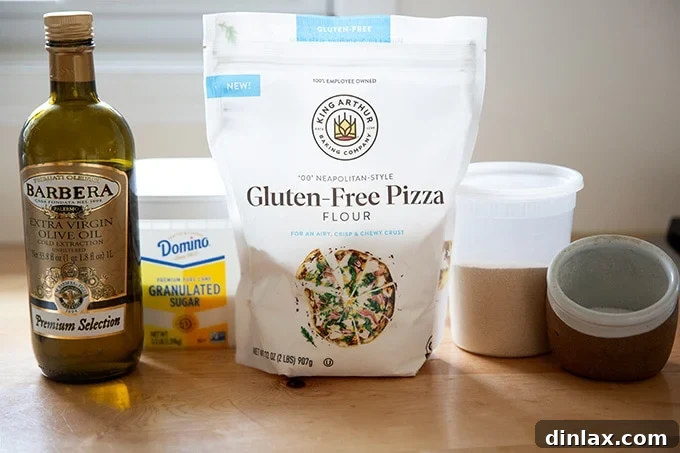
Carefully measure out each component using your scale. This step ensures that the flour-to-water ratio is perfectly balanced, which is vital for the unique characteristics of this high-hydration gluten-free dough.
Mixing the Dough: A Unique Consistency
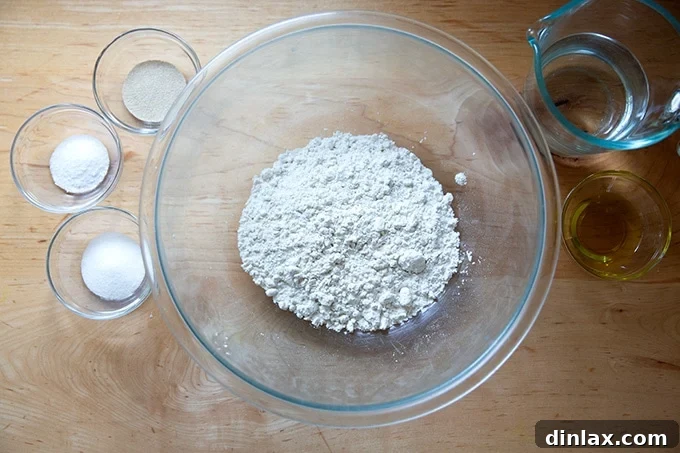
Begin by combining all the dry ingredients – the King Arthur Gluten-Free Pizza Flour, granulated sugar, instant yeast, and Diamond Crystal kosher salt – in a large mixing bowl. Whisk them together thoroughly to ensure even distribution, which is key for consistent leavening and flavor.
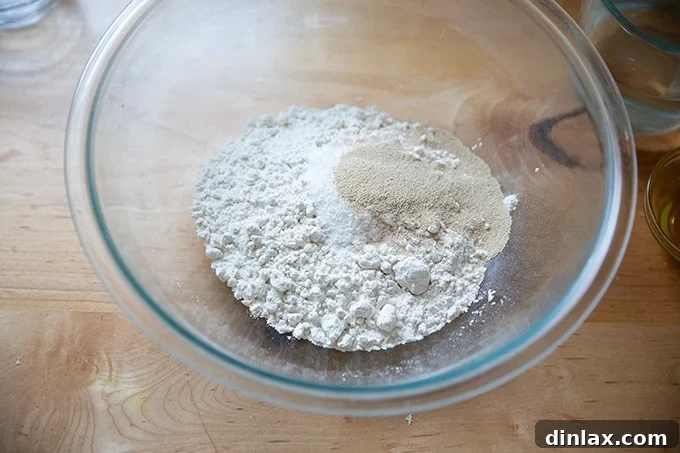
Ensure the dry ingredients are fully incorporated before adding the liquids.
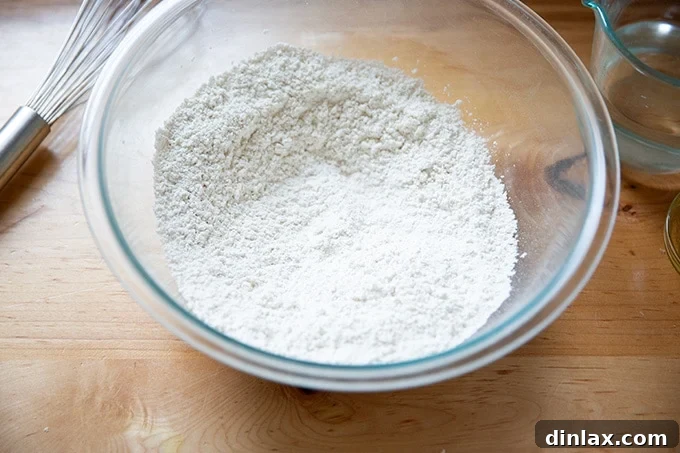
Next, pour in the lukewarm water and the extra-virgin olive oil. Using a sturdy spatula, stir these ingredients together vigorously. At this stage, resist the urge to add more flour. The mixture will be very wet, more akin to a thick, smooth batter than a traditional dough. This high hydration is essential for the delicate, crispy texture of the final crust.
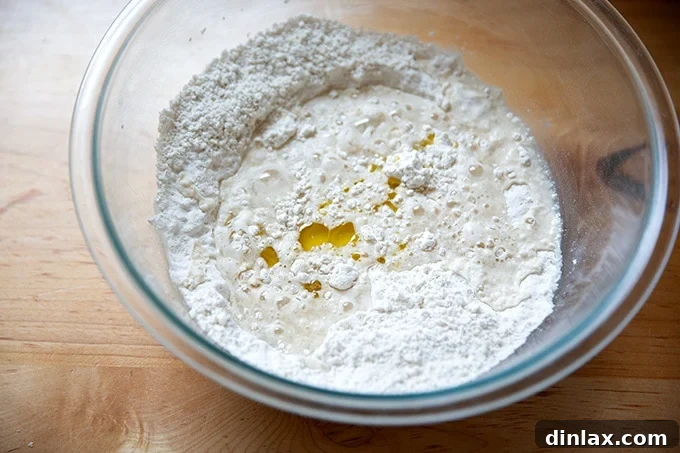
Continue stirring until all ingredients are well combined and you have a uniform, very wet mass. The dough will feel smooth but highly viscous. This unique consistency is exactly what you’re looking for.
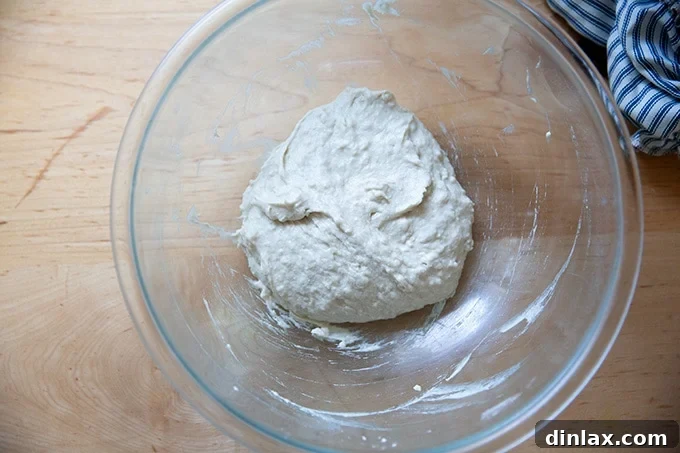
Rising the Dough: Patience is a Virtue
Once mixed, cover the bowl with a tight-fitting lid or a clean cloth bowl cover. Place the bowl in a warm spot in your kitchen, allowing the dough to rise undisturbed. This process will take approximately 2 to 3 hours. The warmth helps the yeast activate and work its magic.
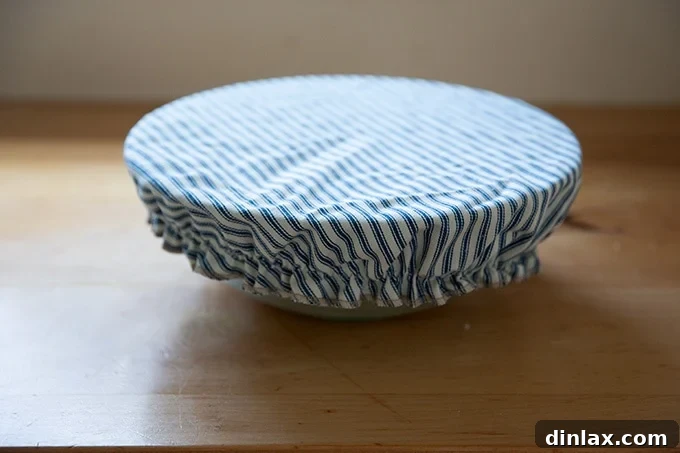
The dough is ready when it has visibly doubled in volume and appears bubbly and light. Its texture will also have thickened considerably from its initial batter-like state.
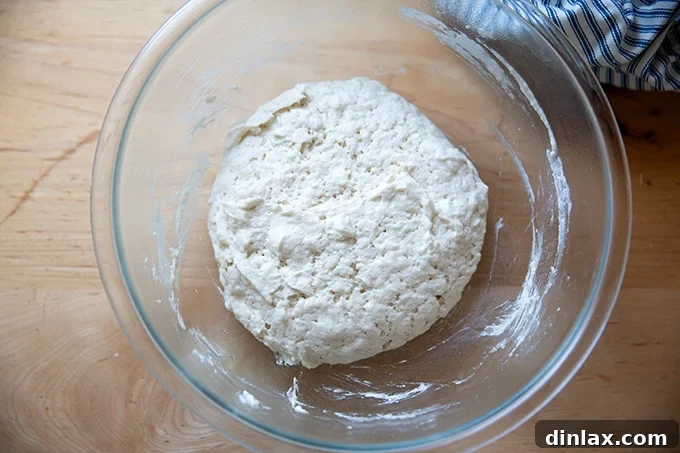
Dividing and Shaping: Gentle Handling
Lightly flour your work surface with rice flour or another gluten-free flour. This specific flour is recommended due to its low protein content, which prevents sticking without toughening the dough. Gently turn the risen dough out onto the prepared surface.
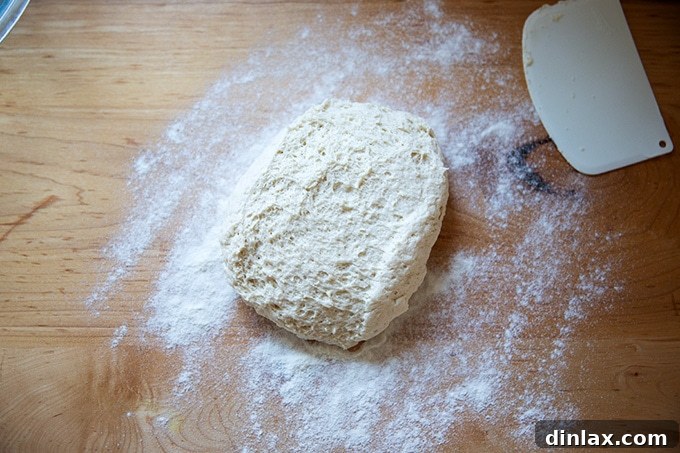
Using a bench scraper or a knife, divide the dough into two equal portions. If you’re meticulous, each portion will weigh approximately 271 grams. These will yield two 12-inch pizza rounds.
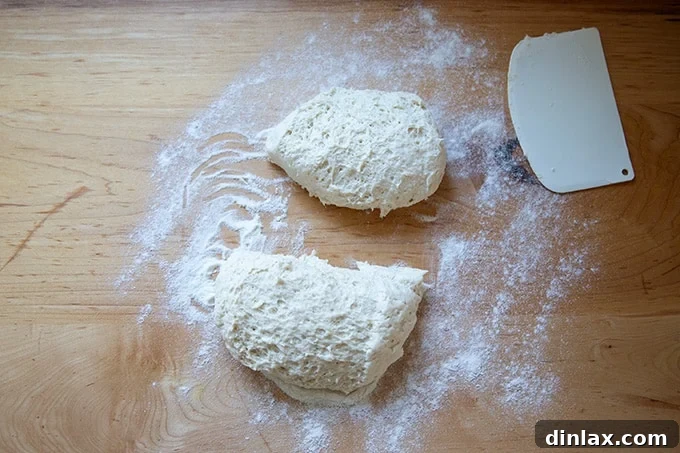
Gently ball up each portion, dusting with additional rice flour as needed. The dough will still be quite sticky, so handle it delicately. At this point, you can transfer the dough balls to an airtight container and refrigerate for up to a week, or proceed directly to making your pizza.
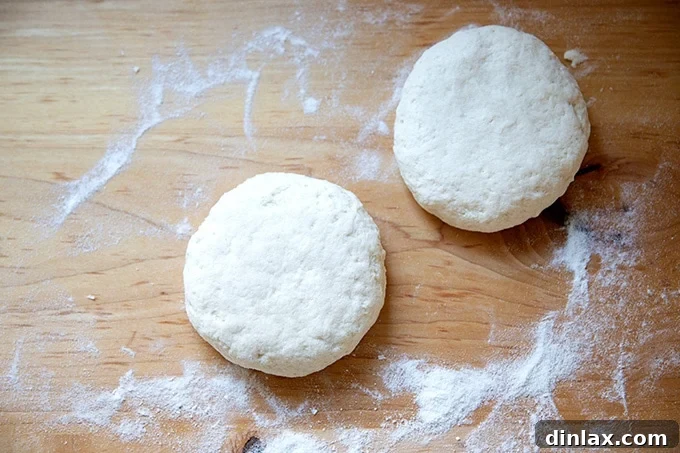
With a rolling pin, gently roll out one portion of dough. Aim for an even thickness, working carefully to prevent tears.
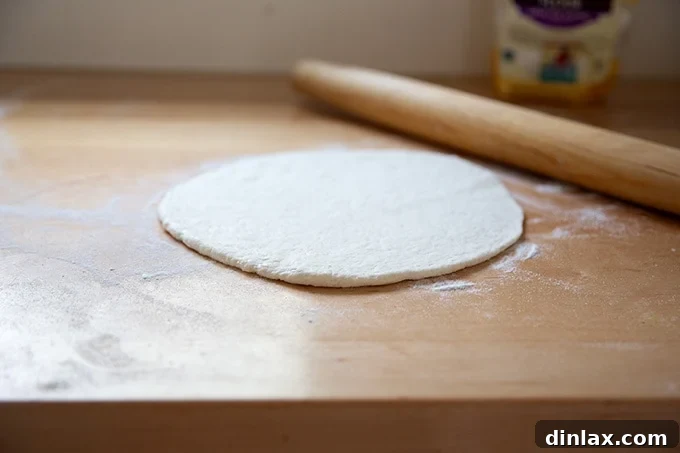
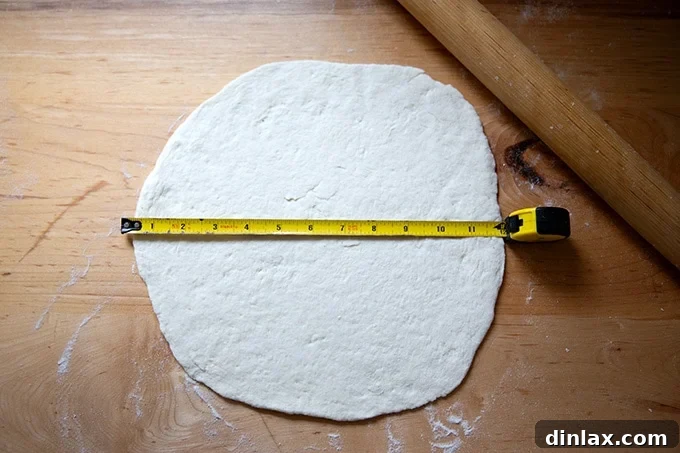
Continue rolling until you achieve a round that is roughly 12 inches in diameter. As the dough gets thinner, it will become more fragile, so exercise extra care. Don’t worry about small holes or tears; they can be easily patched later.
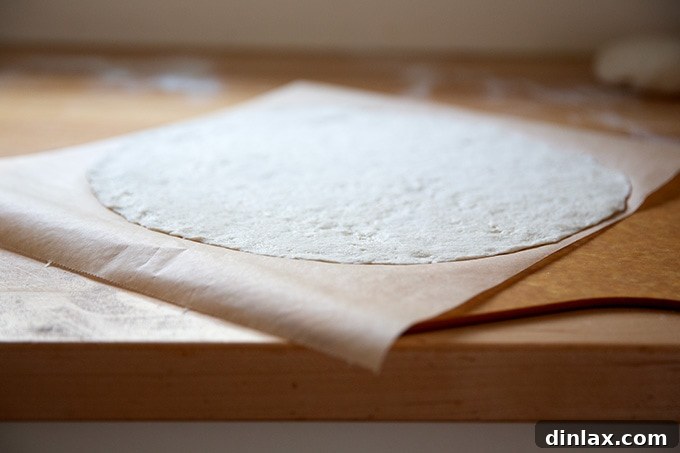
Carefully transfer the rolled dough onto a parchment-lined pizza peel. A thin layer of olive oil on the parchment paper can help prevent sticking. Once on the peel, gently pinch the outer edges of the dough to create a very thin rim. This helps achieve that desirable crispy edge.
Parbaking and Topping: Building the Perfect Pizza
Slide the dough, still on its parchment paper, onto a preheated Baking Steel or pizza stone in a very hot oven. Parbake for just 2 minutes. This initial quick bake helps set the crust and prevents it from becoming soggy once toppings are added, contributing significantly to the desired crispiness. The high heat of the Baking Steel ensures rapid and even cooking.
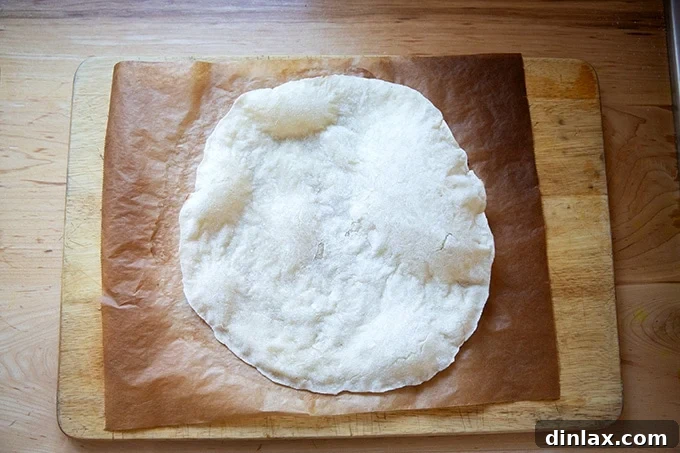
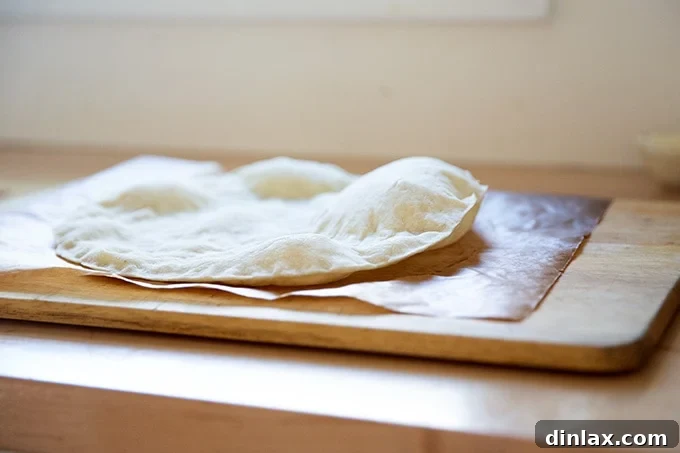
Upon removal from the oven, you might notice the crust puffing up in certain areas. Gently deflate these puffed spots with the back of a spoon or a fork. This ensures an even surface for your toppings and a consistently thin crust.
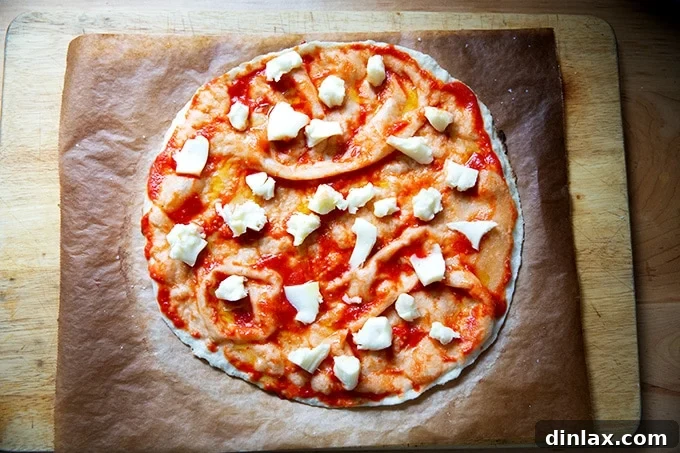
Now, it’s time to build your masterpiece! Spread your desired amount of no-cook tomato sauce evenly over the parbaked crust, extending almost to the edges. Distribute pieces of low-moisture whole milk mozzarella, ensuring a good balance of cheese in every bite. Finish with a delicate drizzle of extra-virgin olive oil and a pinch of flaky sea salt to enhance the flavors.
Return the topped pizza to the oven, again on the preheated Baking Steel or pizza stone. Bake for another 4-5 minutes, or until the cheese is bubbling, golden, and the crust edges are beautifully blistered to your preference. Keep a close eye on it, as high heat cooks quickly.
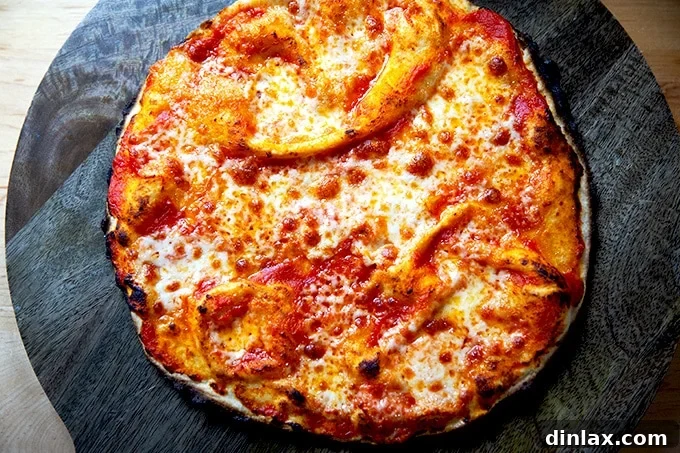
Once baked to perfection, transfer the pizza to a cutting board. Shower generously with fresh basil leaves for a burst of aromatic freshness. For an extra layer of savory depth, shave some Parmigiano Reggiano over the top. Allow it to cool for a minute or two before slicing.
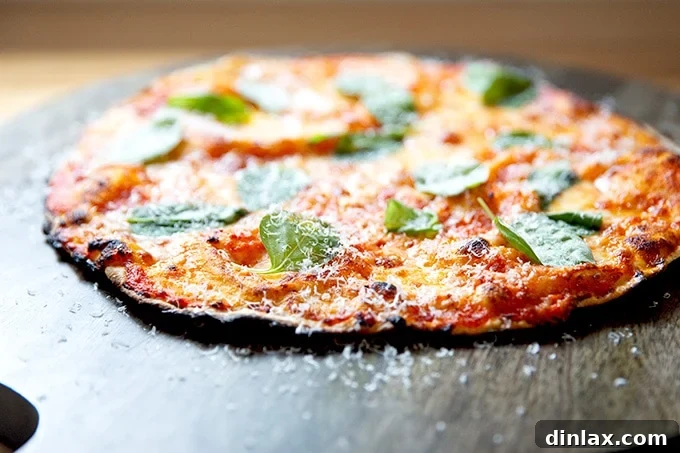
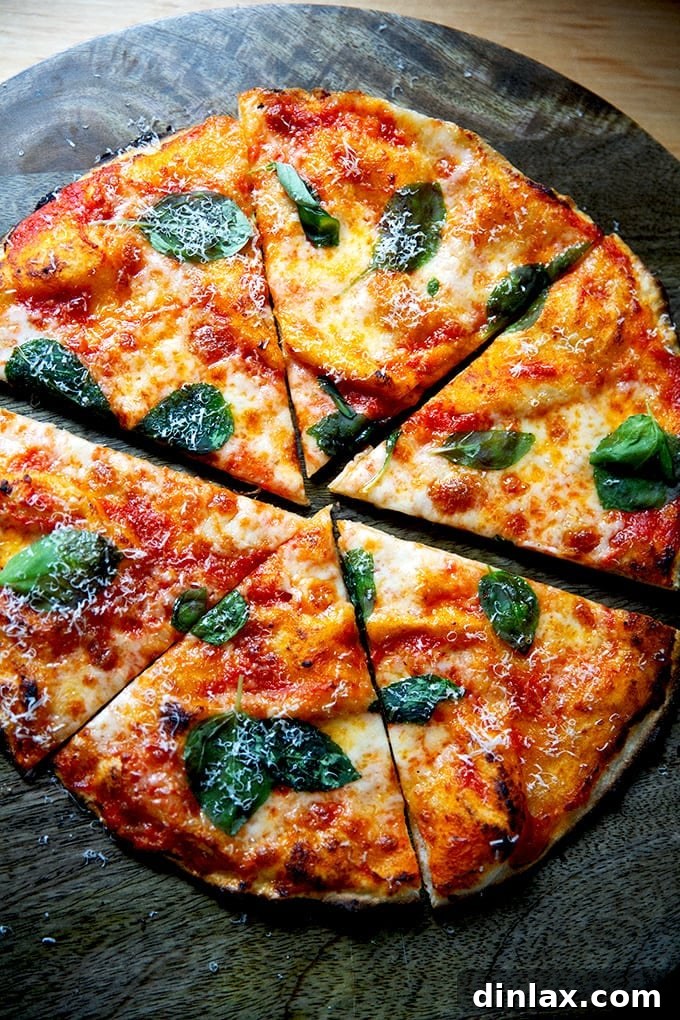
Admire your culinary creation – a truly delicious and satisfying gluten-free pizza that doesn’t compromise on taste or texture.
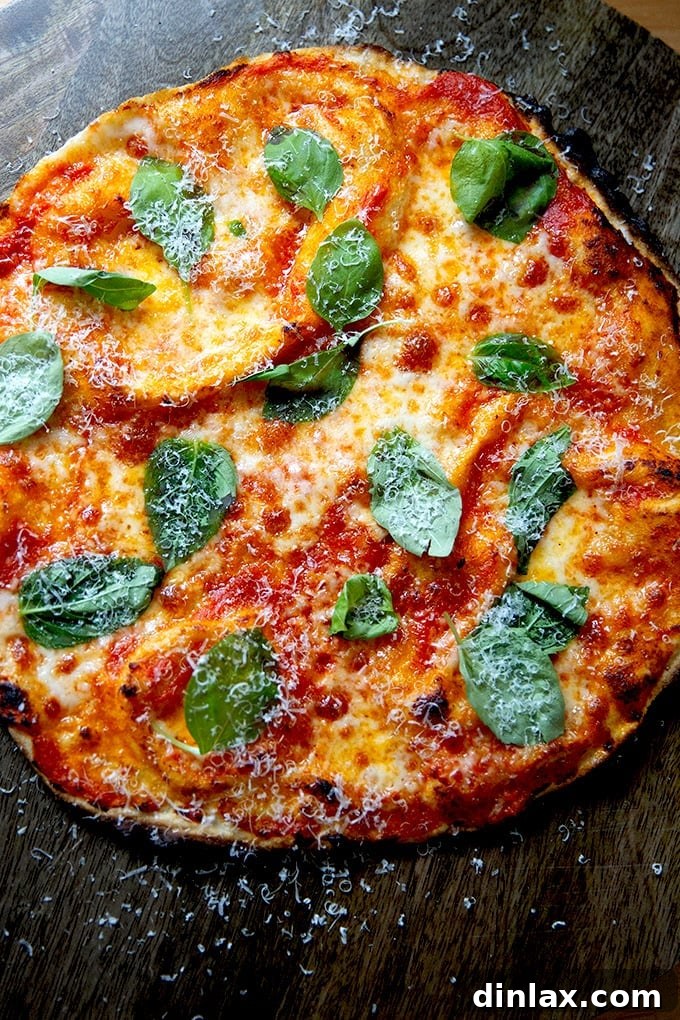
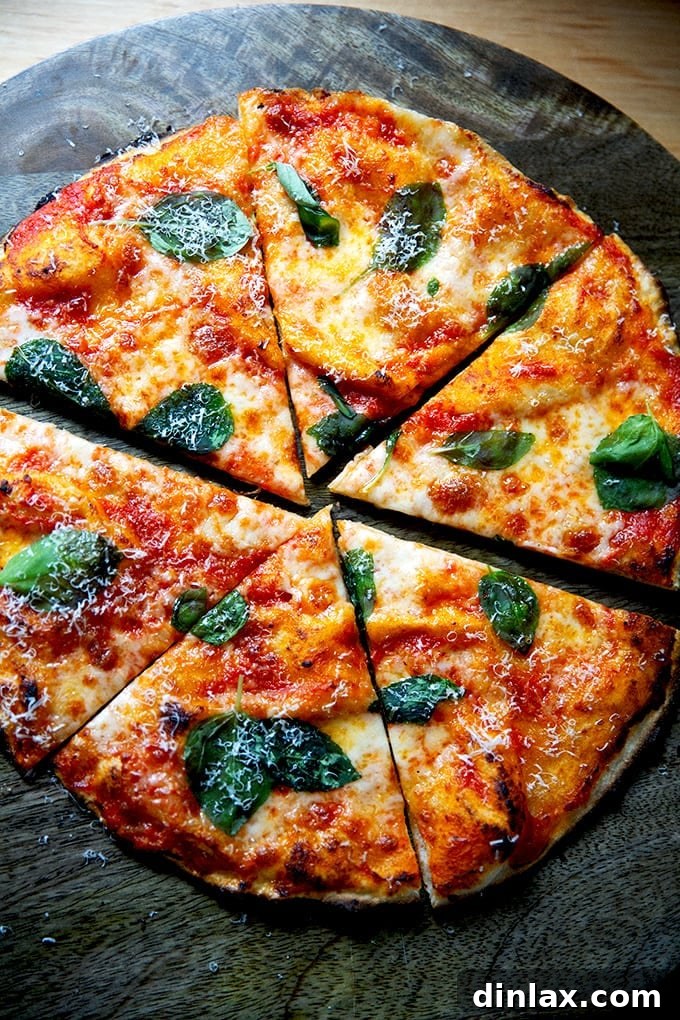
Slice and serve immediately, enjoying every crispy, flavorful bite.
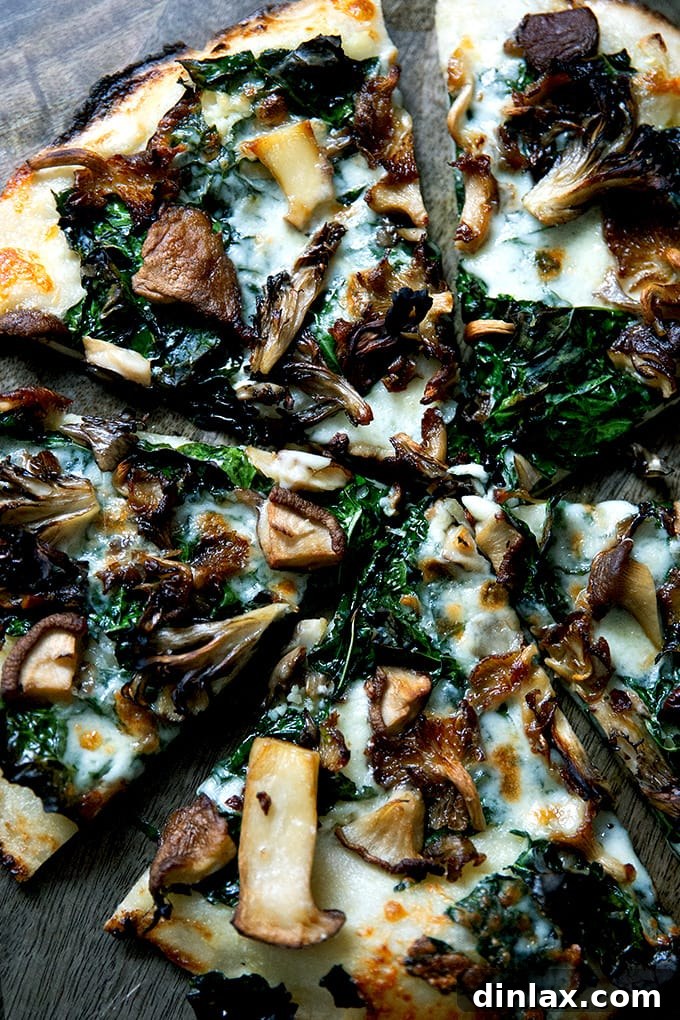
For those seeking more adventurous toppings, consider a roasted wild mushroom, kale, and crème fraîche gluten-free pizza. The full recipe for this delectable variation can be found in my pizza newsletter, Pizza Every Friday. It’s another testament to the versatility and deliciousness of this gluten-free crust.
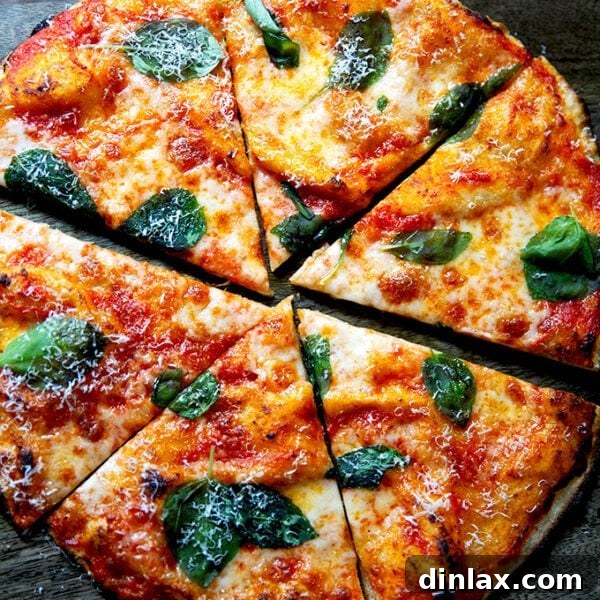
Thin and Crispy Gluten-Free Pizza Crust
4.9 from 8 reviews
- Author: Alexandra Stafford
- Total Time: 3 hours 7 minutes
- Yield: two 12-inch pizza rounds 1x
- Diet: Gluten Free
Description
Adapted from the recipe on the back of the King Arthur Flour Gluten-Free Pizza Flour bag. This recipe focuses on creating an exceptionally thin and crispy gluten-free pizza crust that delivers on taste and texture, closely mimicking traditional pizza.
If you’re looking for an inspiring mushroom- and kale-topped gluten-free pizza, find that recipe here for more topping creativity.
Important Notes for Success:
- This recipe is specifically formulated to work with KAF gluten-free pizza flour. Due to the unique properties of gluten-free flour blends, this recipe may not yield the same results with other varieties without significant adjustments to the liquid quantities. This flour is widely available online and in many grocery stores.
- Note on Ingredients: KAF’s gluten-free pizza flour contains gluten-free wheat starch. The National Celiac Association states that gluten-free wheat starch is safe for those on a gluten-free diet, as the gluten protein is processed out to trace levels. However, individuals with a wheat allergy should avoid products containing wheat starch.
- Invest in a Digital Scale: Accurate measurement by weight is crucial for gluten-free baking. Using a kitchen scale will ensure consistency and help troubleshoot if needed, unlike volume-based measurements which can be imprecise.
- Salt Adjustment: If using Morton Kosher salt or fine sea salt instead of Diamond Crystal kosher salt, use half the volume or the same weight for a balanced flavor.
- Lukewarm Water Preparation: To achieve the ideal lukewarm water temperature (approx. 105-115°F or 40-46°C) for yeast activation, combine 1/4 cup (56g) boiling water with 1 cup (228g) room-temperature or cold tap water.
Recommended Equipment:
- Baking Steel: Highly recommended for achieving a truly crispy crust due to its superior heat retention and transfer compared to a standard pizza stone.
- Pizza Peel: Essential for safely transferring your pizza to and from the hot oven.
- Rolling pin: For evenly shaping your dough.
- Parchment paper: Crucial for easy handling and preventing sticking.
No-Cook Tomato Sauce (Quick & Flavorful):
This simple, vibrant sauce is a perfect accompaniment to your gluten-free pizza. It’s featured in my upcoming cookbook, Pizza Night, available for preorder now!
Yields approximately 1 quart
- 1 garlic clove
- 28-oz can peeled San Marzano tomatoes (e.g., La Valle or Bianco Di Napoli)
- 1 to 1.5 teaspoons Diamond Crystal kosher salt (or half as much Morton or sea salt)
- 3 tablespoons extra-virgin olive oil
Instructions: Place the garlic clove in a food processor and purée until completely smooth. Add the canned tomatoes, 1 teaspoon of salt, and the olive oil, then purée again until the sauce is smooth and uniform. Taste the sauce; if desired, add the remaining 0.5 teaspoon of salt and purée briefly once more. Transfer the finished sauce to an airtight storage jar and keep refrigerated for up to one week. This sauce is robust and fresh, perfect for quick pizza assembly.
Ingredients
For the Gluten-Free Pizza Dough:
- 2 1/3 cups (233g) King Arthur Gluten-Free Pizza Flour (refer to notes above for important details)
- 1 tablespoon (13–15 g) granulated sugar
- 2 teaspoons (7–8 g) instant yeast
- 1.5 teaspoons (6 g) Diamond Crystal kosher salt (see notes above for variations)
- 1 1/4 cups (284 g) lukewarm water (see notes above for preparation)
- 1 tablespoon (13 g) extra-virgin olive oil
- Additional rice flour or gluten-free flour for dusting work surfaces
For a Classic Margherita Pizza Topping:
- Extra-virgin olive oil for drizzling
- 3 tablespoons of no-cook tomato sauce (recipe in the notes section above)
- 3 ounces low-moisture whole milk mozzarella, gently pulled into small pieces (approximately 3/4 cup)
- Flaky sea salt, to taste
- Fresh basil leaves, for garnish
- Parmigiano Reggiano, freshly shaved, to taste (optional)
Instructions
Part 1: Preparing the Gluten-Free Dough
- Combine Dry & Wet Ingredients: In a generously sized bowl, whisk together the measured gluten-free pizza flour, granulated sugar, instant yeast, and kosher salt until thoroughly combined. Create a well in the center, then pour in the lukewarm water, followed by the extra-virgin olive oil. Using a sturdy spatula, stir vigorously and completely. The mixture will quickly come together into a very wet, smooth, batter-like consistency. Do not be alarmed by its wetness; this is crucial for the final texture. As it rises, the dough will naturally thicken.
- First Rise: Cover the bowl securely with a lid or a clean, damp cloth. Place the covered bowl in a warm area of your kitchen (ideally around 70-75°F or 21-24°C) to facilitate rising. Allow the dough to rise for approximately 2 to 3 hours, or until its volume has roughly doubled and the surface appears bubbly.
- Divide and Shape Dough Portions: Lightly dust your clean work surface with rice flour or another preferred gluten-free flour. Carefully turn the risen dough out onto this floured surface. Using a bench scraper or knife, divide the dough into two equal portions (each weighing roughly 271 grams for precision). Gently cup and roll each portion into a ball, dusting with additional rice flour as necessary to manage the stickiness. The dough will still be quite soft and pliable. At this point, you have the option to transfer the dough portions to an airtight container and refrigerate for up to one week for future use, or proceed directly to making your pizza.
Part 2: Crafting and Baking Your Pizza
- Preheat Oven and Baking Surface: Position a Baking Steel (highly recommended for optimal crispiness) or a pizza stone on the top third rack of your oven. Preheat your oven to its highest possible setting, typically 500-550°F (260-290°C). If your oven has a convection roast setting, use it for even better results. Allow the Baking Steel or stone to preheat for at least one hour to ensure it’s intensely hot, which is vital for a super-crispy crust.
- Roll Out the Dough: On a lightly floured work surface (again, using rice flour or gluten-free flour), take one dough portion. Gently roll it out using a rolling pin into an 11- to 12-inch round. Work carefully as the dough will become fragile as it gets thinner. Don’t worry if small holes or tears appear; they can be easily pressed back together on the parchment paper.
- Prepare Peel and Transfer Dough: Place a sheet of parchment paper onto your pizza peel. Drizzle about 1 teaspoon of olive oil onto the center of the parchment and spread it lightly with your hand. Carefully transfer the rolled dough onto the oiled parchment on the peel. If the dough isn’t quite 12 inches, gently stretch and spread it with your hands to reach the desired diameter. If any tears occurred during transfer, simply press the dough back together. Finally, firmly pinch the outer edge of the dough with your fingers all around to create a very thin, distinct crust perimeter.
- First Bake (Parbake): With a swift, confident motion, shimmy the dough (parchment paper and all) from the peel onto the preheated Baking Steel or pizza stone in the oven. Bake for precisely 2 minutes. This brief parbake sets the crust and prevents it from becoming gummy under the toppings. After 2 minutes, remove the dough (still on its parchment) from the oven and transfer it to a cutting board or other stable work surface.
- Top and Final Bake: If any areas of the parbaked crust have puffed up, gently deflate them with the back of a spoon. Spread your desired tomato sauce evenly over the crust, extending close to the edges. Distribute the mozzarella cheese evenly over the sauce. Drizzle lightly with extra-virgin olive oil and sprinkle with a pinch of flaky sea salt. Now, carefully shimmy the topped, parbaked pizza (parchment and all) back onto the hot Baking Steel. Cook for an additional 4 to 5 minutes, or until the cheese is melted and bubbling, and the crust is golden-brown and blistered to your liking.
- Finish and Serve: Once baked, transfer the finished pizza to a clean cutting board. Generously scatter fresh basil leaves over the hot pizza for vibrant flavor and aroma. If you wish, shave some Parmigiano Reggiano over the top for an extra savory dimension. Allow the pizza to cool for a minute or two before slicing and serving immediately. Enjoy your perfectly thin and crispy gluten-free pizza!
- Prep Time: 3 hours
- Cook Time: 7 minutes
- Category: Pizza
- Method: Oven
- Cuisine: American, Italian