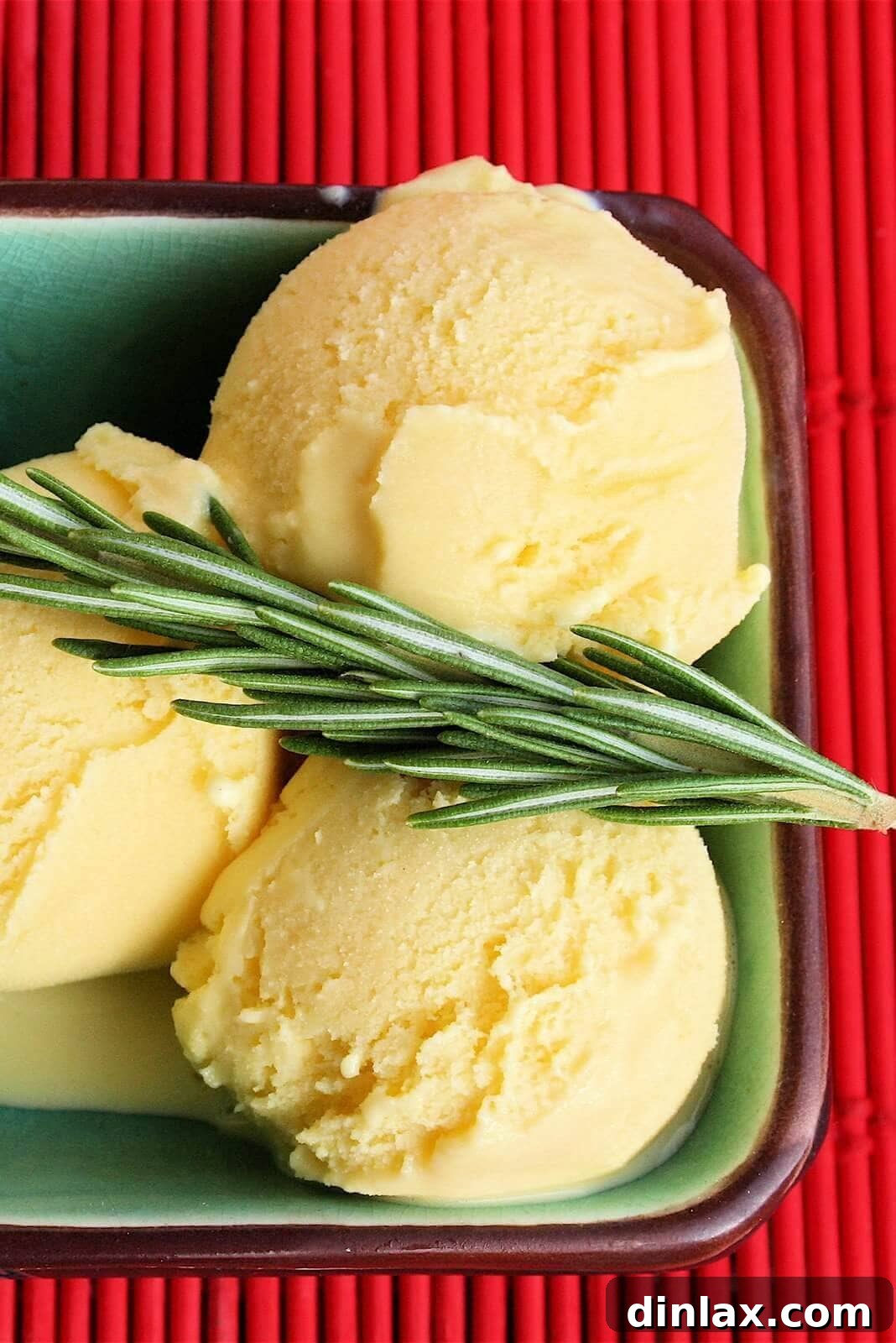
Crafting Homemade Rosemary-Goat’s Milk Gelato: A Culinary Adventure Beyond Ice Cream
There’s a special kind of magic in recreating a beloved culinary experience right in your own kitchen. For me, that magic recently took the form of a creamy, intensely flavored dessert: rosemary-goat’s milk gelato. This wasn’t just about satisfying a craving; it was an exploration into unique ingredients, traditional techniques, and the delightful nuances that set artisanal desserts apart. Join me on a journey from a playful kitchen experiment to a detailed guide on crafting this surprisingly elegant treat.
The Unsuspecting Palate: My Husband’s Goat’s Milk Cereal Experiment
Sometimes, the best culinary adventures begin with a playful challenge. The other night, my husband, Ben, was wandering the kitchen post-dinner, clearly still on the hunt for something satisfying. “How about a bowl of cereal?” I offered, a mischievous glint in my eye. He agreed, oblivious to the subtle twist I had in store.
I carefully prepared his bowl: a wholesome mix of Kashi Heart To Heart and Barbara’s Shredded Oats, topped with freshly sliced banana. But instead of our usual dairy, I reached for the carton of goat’s milk. Handing him the bowl, I retreated to the couch, barely containing my anticipation. “Do you notice anything different?” I asked, my voice betraying my amusement.
Ben took a thoughtful bite, then another. His brow furrowed slightly. “Yeah,” he finally said. “What am I actually eating?”
“Goat’s milk,” I confessed, holding my breath. “Do you like it?”
He paused, then delivered his verdict with a characteristic blend of honesty and good humor: “I prefer cow’s milk. In my cereal, that is.” Such a good sport! While perhaps not a convert for breakfast, his reaction perfectly illustrates the distinctive character of goat’s milk—a flavor profile that, when paired correctly, can truly elevate a dish.
The Inspiration: Chasing the Elusive Capogiro Gelato Flavor
The reason I had goat’s milk on hand wasn’t for cereal, but for a much more ambitious project: to recreate the sublime rosemary-goat’s milk gelato from Capogiro Gelato. Capogiro, a renowned gelato shop, is famous for its innovative and intensely flavored creations, and their rosemary-goat’s milk variety had captivated my taste buds. Unfortunately, with no Capogiro nearby, the only solution was to embark on a homemade gelato quest.
Armed with a quart of goat’s milk from Henry’s Market, I delved into my culinary library. My go-to recipe for vanilla gelato in Mario Batali’s Molto Italiano cookbook served as the perfect foundation. The goal was to adapt this classic recipe to incorporate the delicate yet aromatic essence of rosemary and the unique creaminess of goat’s milk. The initial attempt involved steeping the rosemary for about 30 minutes, tempering the egg yolks carefully, chilling the mixture, and finally churning it in my ice cream maker.
The result was undeniably fascinating. The texture was beautifully smooth, a testament to proper gelato technique. The flavor, however, was what I would politely call “unique.” The rosemary, it turned out, was a little too assertive, overpowering the subtle tang of the goat’s milk. It was a learning experience, leading me to refine the recipe with a much shorter steeping time, which I’m excited to share with you below.
Mastering the Art of Gelato: More Than Just Ice Cream
My journey into homemade gelato also rekindled an old question: what exactly is the difference between gelato and ice cream? This is a query I’ve posed many times without ever quite remembering the full answer, but now, armed with experience and Batali’s wisdom, the distinctions are clear and crucial to understanding why gelato offers such a superior flavor experience.
The Gelato Advantage: Understanding the Nuances
- Churning Speed and Air Content: One of the most significant differences lies in the churning process. Gelato is churned at a much slower speed than traditional ice cream. This slower churn incorporates significantly less air into the mixture—typically 25-30% air for gelato compared to 50% or even more for ice cream. The result is a denser, more intense, and incredibly smooth product that melts exquisitely on the tongue.
- Fat Content: According to Mario Batali’s cookbook and general culinary consensus, gelato is traditionally lower in fat than ice cream. While ice cream often relies heavily on cream for its richness, gelato emphasizes milk. This lower fat content allows the primary flavors of the ingredients—like the rosemary and goat’s milk in my recipe—to truly shine through, unmasked by a heavy coating of fat.
- Serving Temperature: Gelato is typically served at a slightly warmer temperature than ice cream. This seemingly small detail has a profound impact on the tasting experience. When served warmer, the flavors are more vibrant and immediate, as the palate isn’t numbed by extreme cold. This allows for a more complex and nuanced appreciation of each ingredient.
- Flavor Intensity: Due to its lower fat, lower air content, and warmer serving temperature, gelato boasts a more concentrated and intense flavor profile. Each spoonful delivers a powerful burst of taste, making it a truly memorable dessert experience.
It’s these meticulous details that give Capogiro’s gelatos—and hopefully, my homemade version—their characteristic pure white color (when not using eggs, or using specific processes to keep it white) and incredible depth of flavor. Whether they use eggs or not in their rosemary flavor is a detail I still forget, but the principles of gelato making remain consistent.
The Journey to Our Kitchen: Sourcing Pristine Ingredients
Great gelato, like any exquisite dish, begins with exceptional ingredients. The rosemary I used for this particular batch came from the legendary Vegetable Shop at the Chino Family Farm in Rancho Santa Fe. I had heard so much about this stand from friends living in Del Mar, and during a recent weekend, I finally had the pleasure of visiting.
The Chino Farm is a true gem, renowned for its incredibly fresh, vibrant, and often unique produce. I left with an armload of culinary treasures: two bunches of crisp mizuna, two vibrant bunches of Swiss chard, two bulbs of pungent green garlic, and a pint of the most exquisite strawberries I’ve ever tasted. These strawberries, pictured above and below, lasted a mere five minutes in my apartment before they were devoured! The man at the stand simply called them “French” strawberries, and their intense sweetness and almost grape-like flavor were truly unforgettable. Sourcing such high-quality ingredients, especially the aromatic rosemary, is paramount to achieving the nuanced flavors that define a truly exceptional homemade gelato.
Why Goat’s Milk? Exploring Its Unique Benefits and Flavor
Choosing goat’s milk for this gelato was not just about replicating Capogiro’s recipe; it was a deliberate choice to explore its distinct characteristics. Goat’s milk offers a fascinating alternative to cow’s milk, bringing its own set of benefits and a unique flavor profile to the culinary table.
Goat’s Milk: A Dairy Alternative with Distinctive Qualities
- Digestibility: For many individuals who struggle with cow’s milk, goat’s milk can be a more easily digestible alternative. Its fat globules are smaller and its protein structure differs from cow’s milk, making it gentler on the digestive system.
- Nutritional Profile: Goat’s milk is packed with essential nutrients, including calcium, potassium, phosphorus, and vitamin A. It offers a rich nutritional profile that supports overall health and well-being.
- Unique Flavor Profile: Perhaps the most exciting aspect for a chef or home cook is its flavor. Goat’s milk has a distinctive, slightly tangy, and subtly sweet taste that is often described as “earthy” or “goaty.” When balanced correctly, this unique flavor adds depth and complexity to desserts, making them stand out from the ordinary. In the context of our gelato, the tang of the goat’s milk provides a wonderful counterpoint to the herbaceous notes of rosemary, creating a harmonious and sophisticated blend.
Incorporating goat’s milk into a dessert like gelato transforms it from a simple sweet treat into a more adventurous and memorable culinary experience, one that is both flavorful and potentially more accessible for those with sensitivities to traditional dairy.
Crafting the Rosemary-Goat’s Milk Gelato: A Step-by-Step Culinary Guide
After the initial experiment, I honed the recipe to achieve the perfect balance of rosemary and goat’s milk. The key, I found, was a much shorter steeping time for the rosemary to ensure its aromatic presence enhanced, rather than overwhelmed, the delicate gelato base. This refined recipe yields a beautifully textured and exquisitely flavored homemade gelato, ready to impress even the most discerning palates.
Rosemary-Goat’s Milk Gelato Recipe
Adapted From Mario Batali’s recipe for vanilla gelato in Molto Italiano (Harper Collins, 2005)
Yield = 1½ pints
Ingredients:
- 2 cups goat’s milk (full-fat for best results)
- ½ cup granulated sugar
- One small sprig fresh rosemary (about 2-3 inches long)
- Pinch of kosher salt
- 7 large egg yolks
Instructions:
- Infuse the Milk: In a medium-sized, heavy-bottomed saucepan, combine the goat’s milk, ¼ cup of the sugar, the fresh rosemary sprig, and a generous pinch of kosher salt. Heat the mixture over medium-low heat, stirring occasionally, until it just barely comes to a boil. Ensure all the sugar has completely dissolved. Immediately remove the saucepan from the heat, take out the rosemary sprig, and discard it. Allowing it to steep for only a short time during heating provides a subtle, not overpowering, rosemary essence.
- Temper the Egg Yolks: While the milk is heating, in a separate heatproof bowl, whisk the 7 egg yolks with the remaining ¼ cup of sugar until the mixture becomes pale yellow and slightly thick. This process incorporates air and begins to dissolve the sugar, preparing the yolks for tempering.
- Combine and Thicken: Gradually ladle about half of the warm milk mixture into the whisked egg yolks, whisking constantly and vigorously to prevent the eggs from scrambling. This step, known as tempering, slowly raises the temperature of the yolks without cooking them. Once combined, pour the egg-milk mixture back into the saucepan with the remaining milk.
- Cook the Base: Return the saucepan to medium heat and cook, whisking constantly with a heatproof spatula or whisk. It’s crucial to DO NOT BOIL the mixture, as this will curdle the eggs. Continue cooking until the mixture begins to thicken enough to coat the back of a spoon, leaving a clear path when you draw your finger across it. This typically takes about 5-8 minutes. As soon as it reaches this consistency, remove the pan from the heat immediately and strain the mixture through a fine-mesh sieve into a shallow, clean vessel (like a baking dish or wide bowl). Straining ensures a silky-smooth base free of any small egg bits.
- Chill Thoroughly: Place the strained gelato base in the refrigerator. Allow it to chill completely, ideally for at least 4-6 hours, or even overnight. A thoroughly cold base is essential for achieving the best texture during churning.
- Churn and Serve: Once the base is thoroughly chilled, pour it into your ice cream maker and churn according to the manufacturer’s instructions. This usually takes about 20-30 minutes, until the gelato reaches a soft-serve consistency. For immediate enjoyment, serve directly from the machine for a softer texture. For a firmer consistency, transfer the gelato to an airtight container and freeze for another 2-4 hours. When ready to serve, let it sit at room temperature for 5-10 minutes to soften slightly, enhancing its creamy texture and flavor release.
Beyond the Scoop: Tips for Perfecting Your Homemade Gelato
Making gelato at home is a rewarding experience, and a few key tips can elevate your results from good to truly exceptional:
- Quality Ingredients are King: As emphasized by the Chino Farm visit, starting with the freshest, highest-quality ingredients makes an immense difference. Fresh rosemary, quality goat’s milk, and fresh eggs will directly translate into superior flavor.
- Thorough Chilling is Non-Negotiable: Do not rush the chilling step. A very cold base churns more efficiently and results in a smoother, denser gelato texture with smaller ice crystals.
- Don’t Overchurn: While gelato should be dense, overchurning can incorporate too much air, making it more like ice cream. Stop churning when it reaches the consistency of soft-serve ice cream.
- Proper Storage: Store homemade gelato in a shallow, airtight container pressed with parchment paper directly against the surface to prevent ice crystals from forming. This maintains its creamy texture.
- Serving Temperature Matters: Remember, gelato is best served slightly warmer than ice cream. Remove it from the freezer 5-10 minutes before serving to allow it to soften and its complex flavors to fully bloom.
Conclusion: Embrace Your Inner Gelatiere!
The journey of crafting this rosemary-goat’s milk gelato was a delightful reminder that sometimes the most memorable culinary experiences are found not in distant shops, but in our own kitchens. It was a testament to the power of fresh, quality ingredients, the subtle art of flavor balance, and the rewarding challenge of mastering a new technique. While my husband still prefers cow’s milk for his cereal, this unique gelato has certainly become a new favorite for special occasions. I encourage you to embrace your inner gelatiere and experiment with unique flavor combinations. The world of homemade gelato is rich with possibilities!
And for those eagerly awaiting more culinary creations, stay tuned! Next week, I have five more muffin recipes to share with you. I’m seriously up to my eyeballs in muffins, and I can’t wait to share the delicious results!