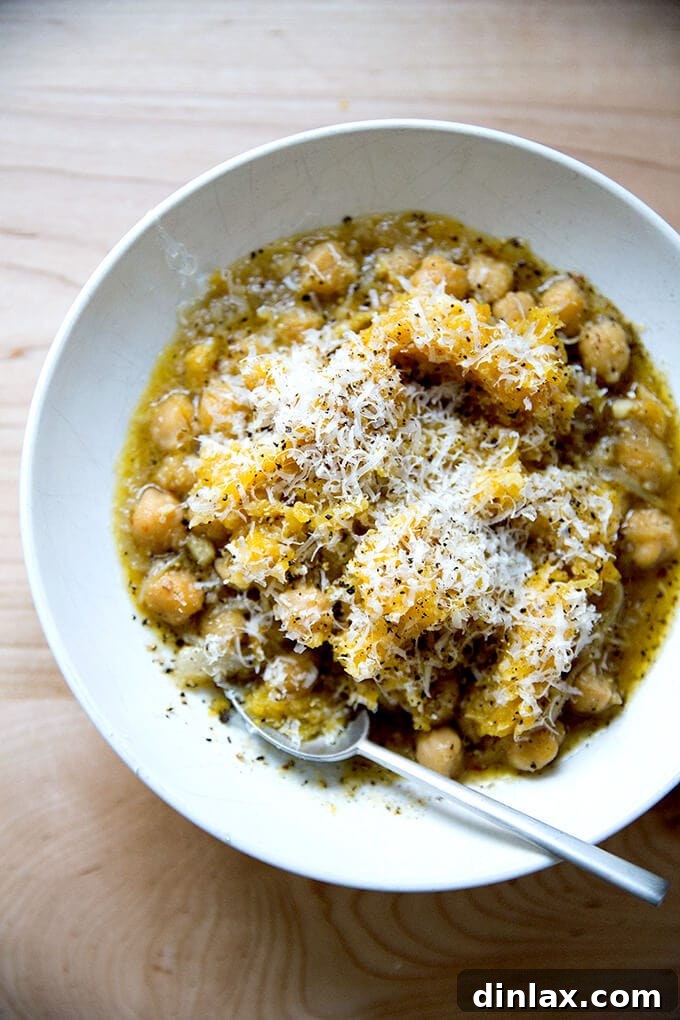
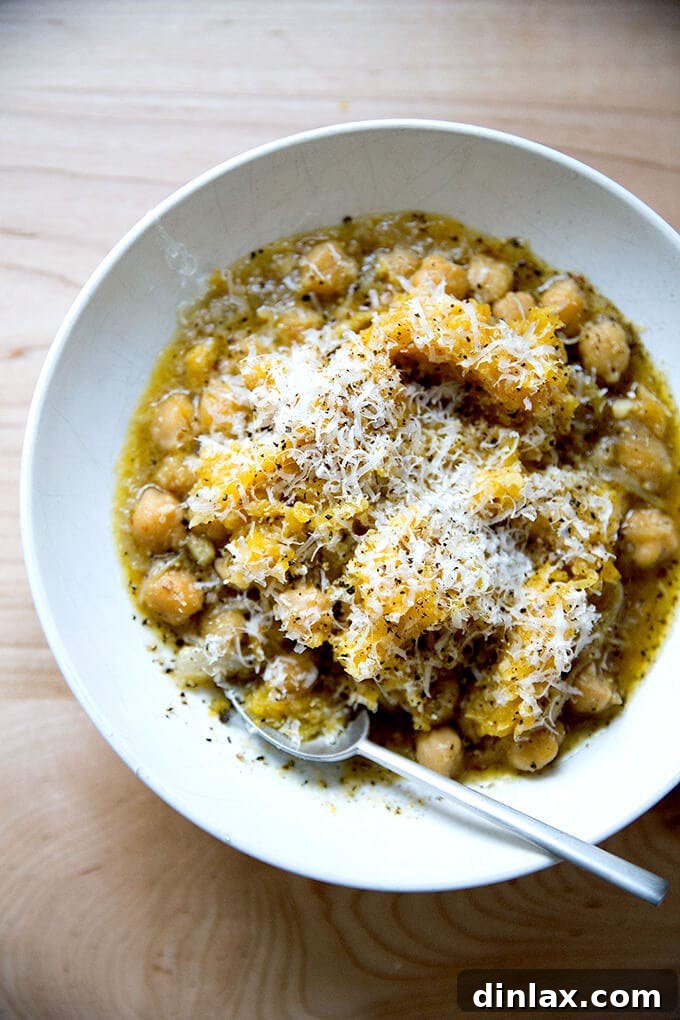
In this simple yet sophisticated recipe, baked spaghetti squash takes center stage, its naturally formed, tender strands brilliantly replacing traditional pasta in the beloved Italian classic, Cacio e Pepe. Dressed simply with rich olive oil, sharp Pecorino Romano cheese, a generous grind of black pepper, and a touch of salt, the inherently sweet notes of the spaghetti squash beautifully complement the intense, savory flavors of this minimalist seasoning. This dish offers a delightful, gluten-free, and low-carb alternative without sacrificing an ounce of flavor or satisfaction, making it a perfect meal for health-conscious food lovers and anyone seeking a comforting, wholesome dish.
Discovering a Healthier Cacio e Pepe Twist
The culinary journey to this exquisite Cacio e Pepe spaghetti squash recipe began last fall, when I first stumbled upon it while browsing Skinny Taste’s acclaimed cookbook, One and Done. The idea of transforming a humble winter squash into a pasta-like dish, especially one inspired by such a classic, immediately captivated me. However, like many, the sheer challenge of safely and efficiently opening a spaghetti squash often kept me from enjoying its versatility more frequently.
That hesitation dissolved a few weeks ago after watching an America’s Test Kitchen video offering invaluable guidance on tackling tough winter squashes. Although my first attempt at their recommended method – using a rubber mallet to gently tap a knife through the squash – wasn’t as flawlessly executed as the professionals, it successfully got the job done. Soon, the sweet aroma of roasting squash filled my kitchen, signaling the start of a delicious culinary adventure.
The Simple Elegance of Cacio e Pepe with Spaghetti Squash
This recipe is a testament to minimalist cooking, drawing inspiration from the Roman classic, Cacio e Pepe. Traditionally, this dish involves nothing more than pasta, Pecorino Romano cheese, copious black pepper, and a touch of pasta cooking water. When applied to spaghetti squash, these few ingredients work wonders. The naturally warm and sweet profile of the squash proves to be an ideal canvas for the salty, sharp kick of Pecorino and the aromatic warmth of freshly cracked black pepper. It’s a harmonious blend that creates a surprisingly rich and satisfying dish, proving that healthy eating doesn’t mean sacrificing flavor.
Why Choose Spaghetti Squash? Beyond Just Low-Carb
Spaghetti squash is an incredible vegetable that deserves a prime spot in your kitchen. Beyond being a fantastic low-carb and gluten-free alternative to pasta, it’s packed with nutrients. This versatile winter squash is an excellent source of vitamins A and C, potassium, and dietary fiber, contributing to good digestion and overall health. Its mild, slightly sweet flavor makes it incredibly adaptable, pairing well with a wide range of seasonings and sauces. When baked, its flesh magically separates into tender, noodle-like strands, providing a satisfying texture that perfectly mimics traditional spaghetti. Embracing spaghetti squash means embracing a healthier, more creative approach to classic comfort foods.
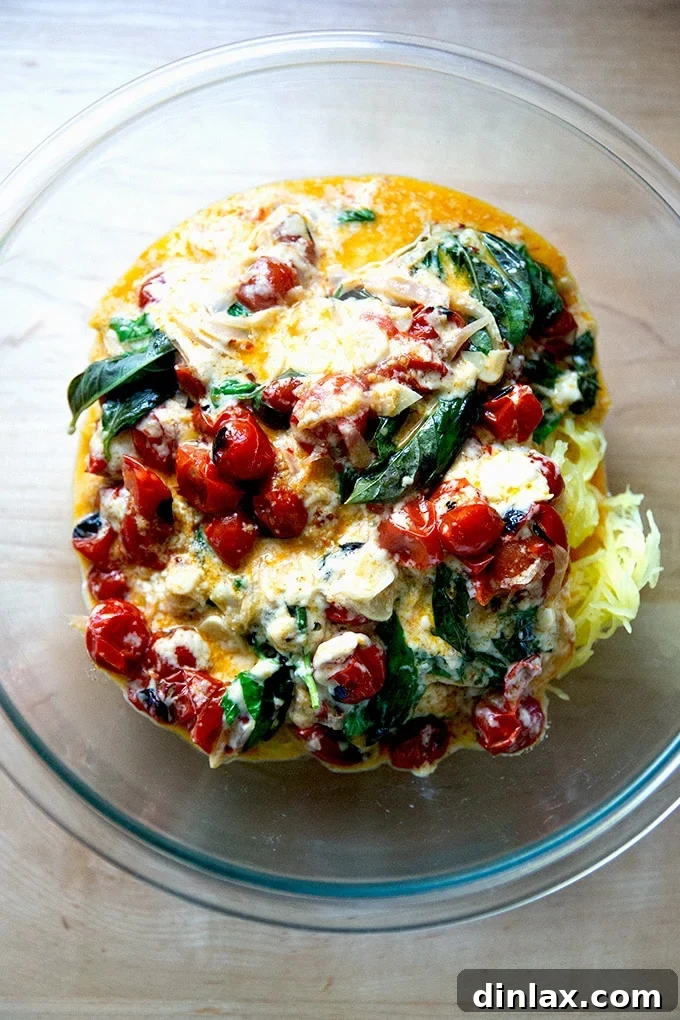
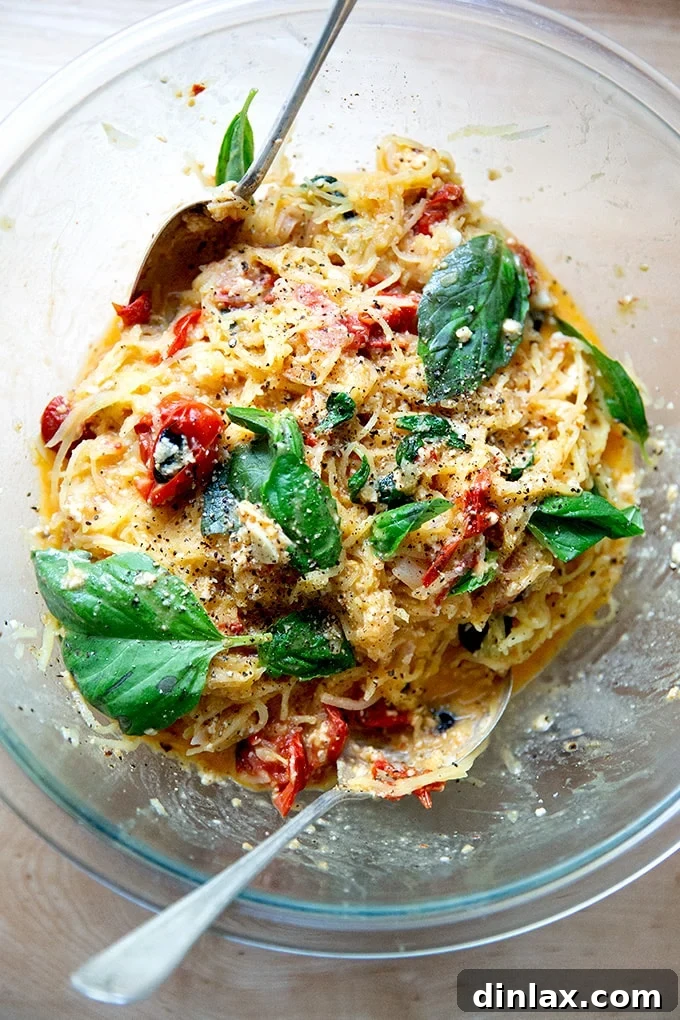
PS: Another delightful pairing for this baked spaghetti squash is with Baked Feta with Cherry Tomatoes – an outstanding combination! (photo below)
PPS: For more comforting squash dishes, explore our Roasted Butternut Squash Lasagna recipe.

Mastering the Cut: The Right Way to Prepare Spaghetti Squash
Cutting a spaghetti squash can seem daunting due to its hard exterior, but with the right technique, it becomes much easier and safer. Moreover, the way you cut it can significantly impact the length and texture of its “noodles.”
- Pro Tip from Our Readers: Cut Crosswise, Not Lengthwise! Counterintuitively, cutting spaghetti squash crosswise (into rings or shorter sections) rather than lengthwise produces much longer, more spaghetti-like strands. This method is not only easier to execute but also yields a more authentic “pasta” experience. It’s a game-changer for anyone looking to maximize the noodle length!
3 Easy and Safe Ways to Cut Spaghetti Squash
Here are detailed methods to help you confidently prepare your spaghetti squash:
- The Knife & Mallet Method: For Tough Squashes
This technique is perfect for particularly stubborn squashes and offers enhanced safety. First, secure your cutting board: wet a cloth napkin or towel and place it beneath the cutting board to prevent slipping. Position the spaghetti squash firmly on the secured board. Using a sharp chef’s knife, carefully make an initial incision into the squash’s flesh until the blade is firmly embedded. Do not try to force the knife all the way through immediately. Instead, take a rubber mallet and gently tap straight down on the top of the knife’s handle. With each gentle tap, the knife will gradually move through the dense flesh, allowing the spaghetti squash to split open safely and with less effort.
- The Microwave Pre-Softening Method: Quick & Convenient
If you prefer a quicker approach, the microwave can be your best friend. Start by using a sharp paring knife to make several shallow cuts or punctures all around and into the flesh of the spaghetti squash. This helps release steam and prevent pressure buildup. Place the squash in the microwave and cook on high for approximately 1 minute. Carefully remove the squash (it might be hot) and let it cool briefly. You should now find the skin significantly softer and easier to cut. Use a sharp chef’s knife to cut the squash in half. If the skin is still too tough, return it to the microwave for another minute. (Note: While you can cook spaghetti squash entirely in the microwave, doing so means you’ll need to scoop out the seeds after cooking, and the resulting flavor will be more steamed rather than the rich, nutty taste achieved through roasting.)
- The Instant Pot Method: Hands-Free Softening
The Instant Pot offers another excellent hands-free way to soften spaghetti squash for easy cutting. There’s no need to poke any holes in the squash. Simply pour 1 cup of water into the Instant Pot’s inner pot, then place the whole spaghetti squash on a trivet inside. Cook it at high pressure for 5 minutes, followed by a quick release of pressure. Carefully remove the spaghetti squash and allow it to cool briefly. The skin should now be soft enough to easily cut in half with a sharp chef’s knife. If it remains too tough, return it to the Instant Pot for an additional five minutes under high pressure. (Note: You can cook the spaghetti squash entirely in the Instant Pot for about 30 minutes at high pressure, but similar to the microwave method, you’ll remove seeds after cooking, and the flavor will be more steamed, lacking the caramelization of roasting.)
How to Bake Spaghetti Squash: A Step-by-Step Guide for Perfect Strands
Once you’ve mastered the art of safely halving your spaghetti squash, the baking process is straightforward and yields those wonderful, pasta-like strands.
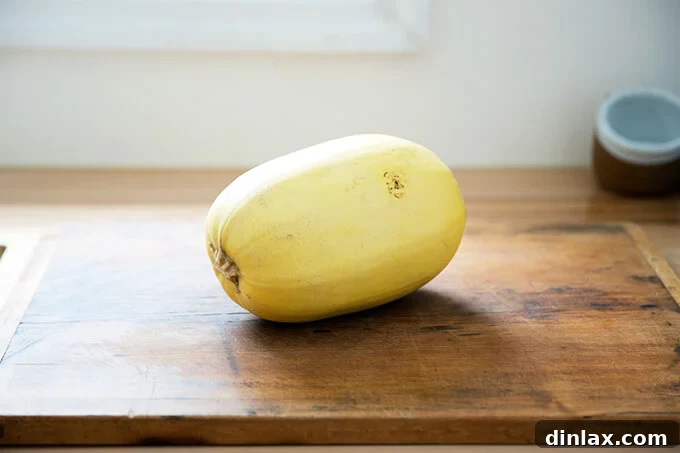
First, halve your spaghetti squash using one of the methods described above. Remember our critical update: for longer, more satisfying strands, always cut your squash crosswise, not lengthwise. This might feel counterintuitive, but it truly makes a difference in the texture and length of your spaghetti-like noodles.
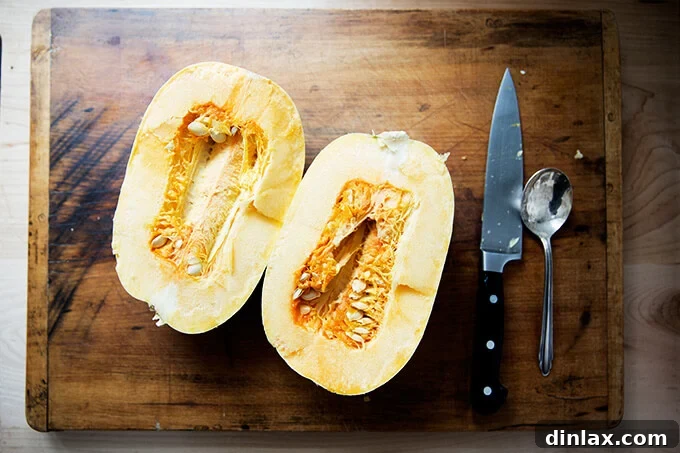
Once halved, use a spoon to scrape out all the seeds and stringy yellow strands from both halves of the squash. Discard these, leaving a clean cavity. This ensures a clean base for your “noodles.”

Now, it’s time to season. Lightly season the cut flesh of both spaghetti squash halves with a generous pinch of kosher salt and freshly cracked black pepper. This initial seasoning helps to enhance the squash’s natural sweetness and savory notes during roasting.
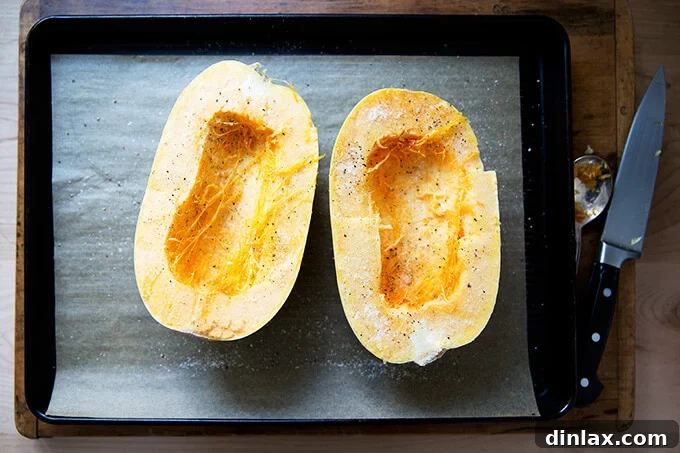
Preheat your oven to 350ºF (175ºC). Line a baking sheet with parchment paper or foil for easy cleanup. Place the seasoned spaghetti squash halves cut-side down on the prepared baking sheet. This method allows the squash to steam gently within its skin while the cut surface caramelizes slightly, enhancing its flavor.
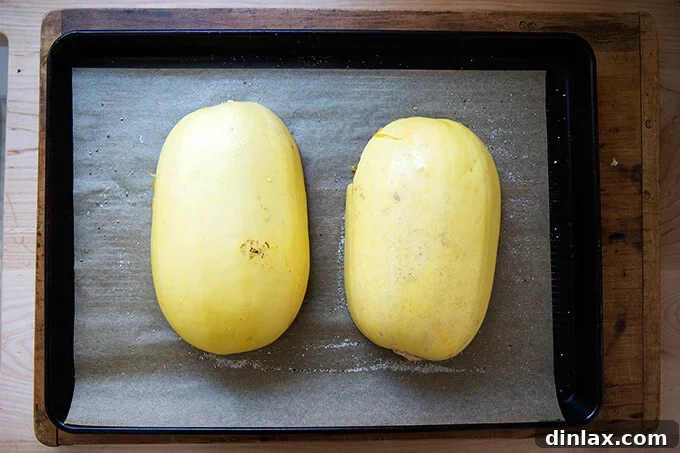
Roast for approximately 45 minutes. You’ll notice that the squash will not be completely “knife tender” at this point, but this shorter cooking time is intentional. It yields firmer, more al dente-like strands, which we find preferable for replicating the texture of pasta. If you prefer a softer squash, you can extend the cooking time to 55-60 minutes, but for the best Cacio e Pepe experience, stick to the 45-minute mark.
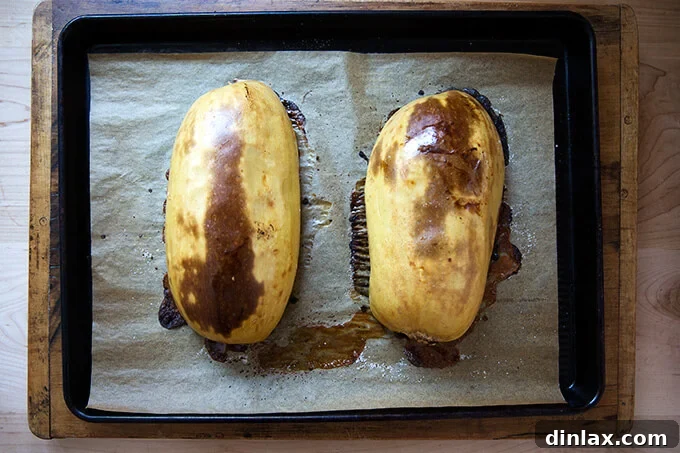
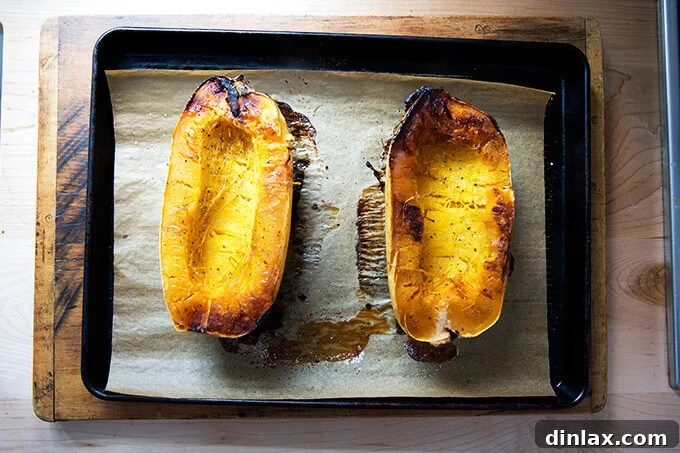
Once roasted, remove the pan from the oven and let the squash cool for about 10 minutes. This makes it easier to handle and allows the internal temperature to stabilize. Look closely, and you’ll already see the beautiful circular pattern of the strands beginning to form, thanks to our crosswise cut!
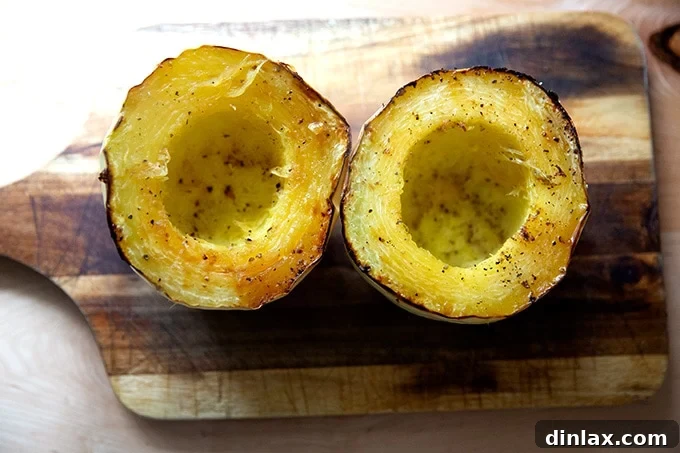
Using a fork, gently pull the squash flesh from the sides and scrape it into a large bowl. You’ll see it effortlessly separate into those coveted spaghetti-like strands. Enjoy the magic!
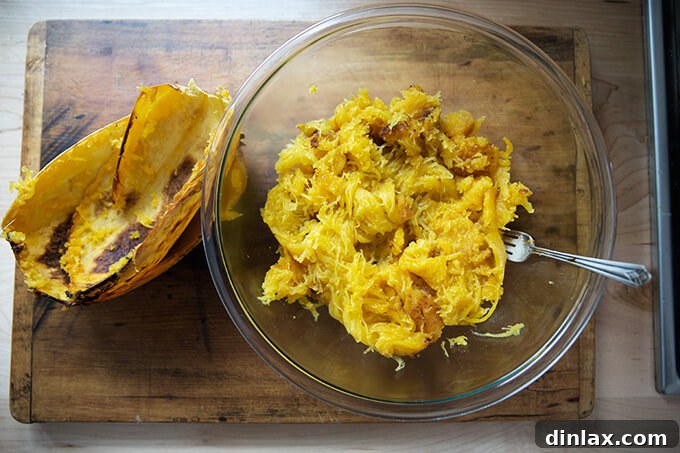
To create your Cacio e Pepe, add 1 to 2 tablespoons of good quality extra virgin olive oil, 1/2 cup of finely grated Pecorino Romano cheese, and another 1/2 teaspoon of freshly cracked black pepper to the squash strands. Toss everything thoroughly until the squash is evenly coated and the cheese starts to melt and cling to the strands, forming a luscious sauce.
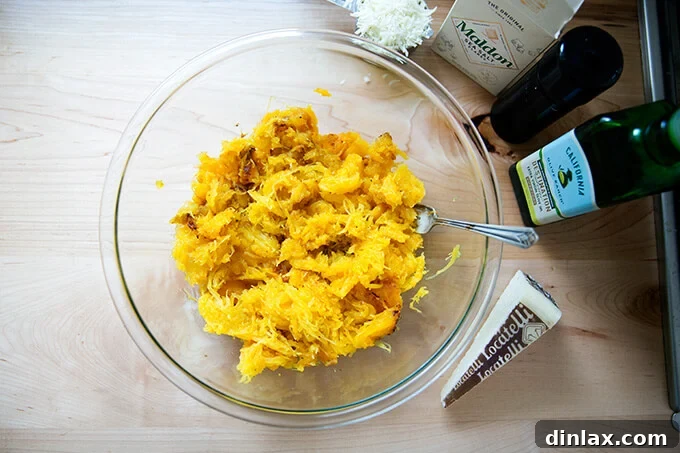
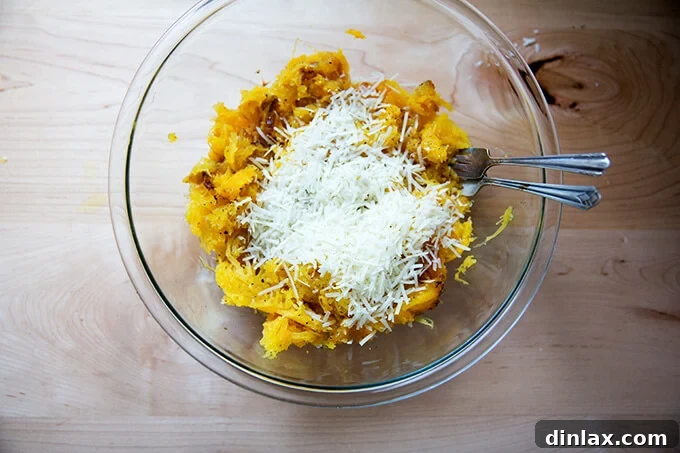
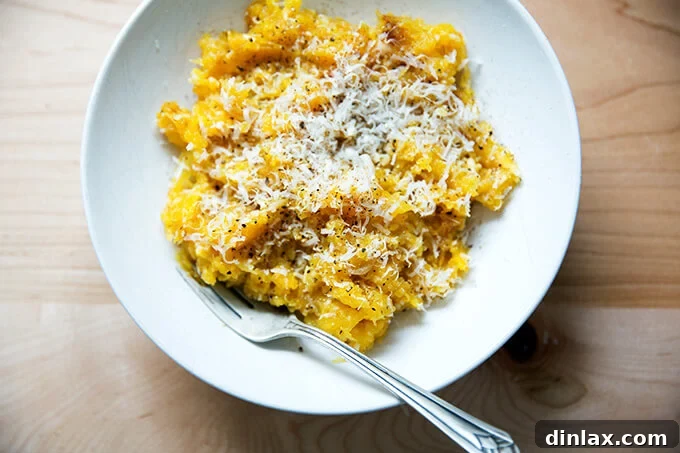
Serve this Cacio e Pepe spaghetti squash as a delightful side dish, perhaps alongside roasted chicken or fish, for a light yet flavorful meal.
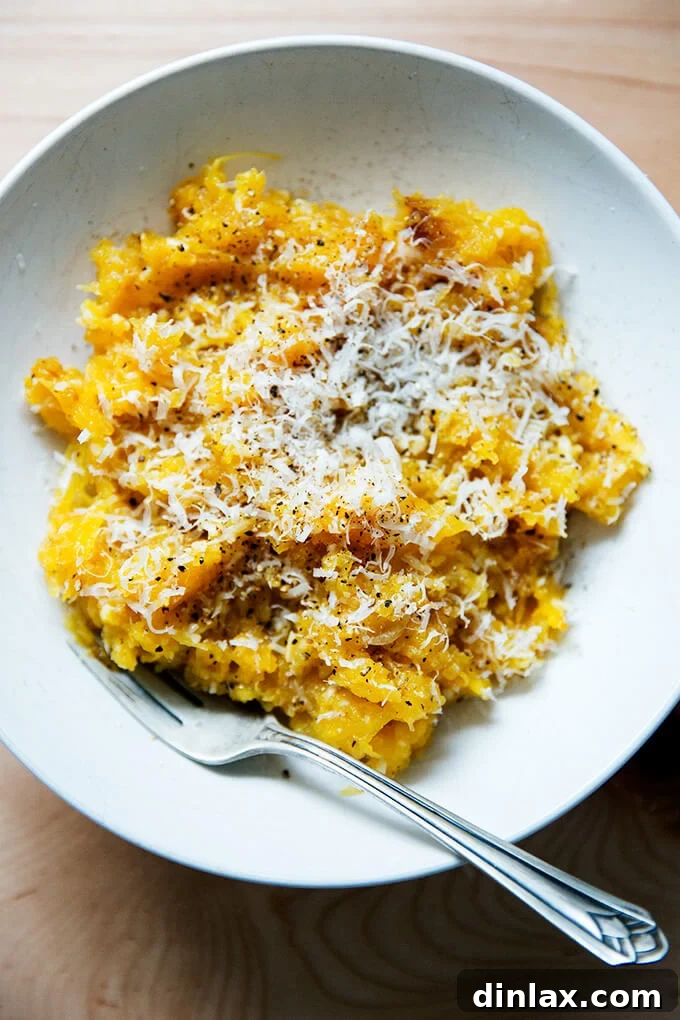
Transforming Your Dish: Add Garlicky, Stewy Chickpeas for a Complete Meal
While delicious on its own, you can easily elevate the Cacio e Pepe spaghetti squash into a hearty, satisfying meal by pairing it with savory, garlicky chickpeas. If you’ve prepared your chickpeas from scratch ahead of time (which yields the best flavor and texture, along with their invaluable cooking liquid), the entire dish can be ready in approximately an hour.
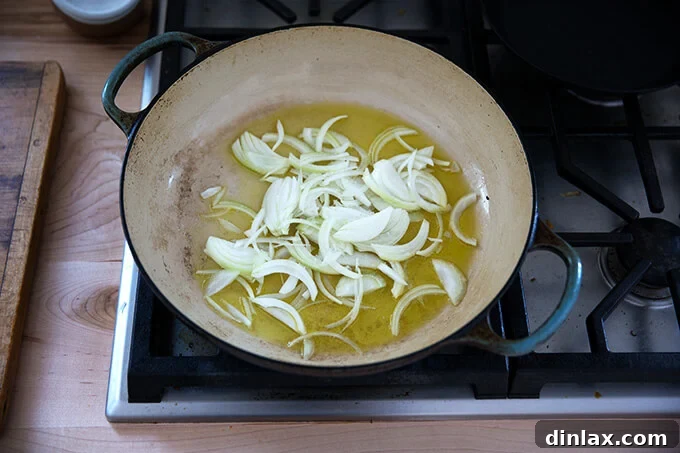
To prepare the chickpeas, begin by sautéing a thinly sliced onion in 3 tablespoons of olive oil in a large pan over medium heat. Add a pinch of salt and cook, stirring occasionally, until the onions become beautifully caramelized and tender, which usually takes about 7 to 10 minutes. This step adds a depth of sweetness and flavor to the base of your chickpea stew.
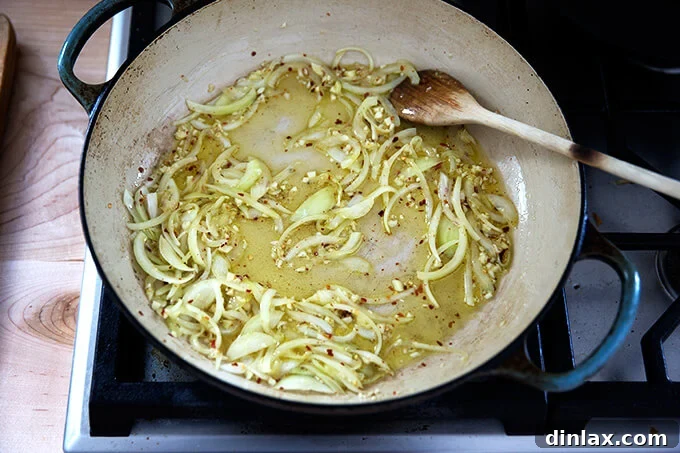
Next, add 4 cloves of thinly sliced or minced garlic and a pinch of crushed red pepper flakes (adjust to your preferred level of spice). Cook for just one minute more, allowing the garlic to become fragrant without browning. This infuses the oil with an irresistible aromatic base.
Now, add 2 cups of your cooked chickpeas, along with their flavorful cooking liquid, to the pan. Bring the mixture to a gentle simmer and let it cook for 10 to 15 minutes. This simmering time allows the chickpeas to absorb the rich flavors of the onions, garlic, and chili, and for some of the chickpeas to soften and break down slightly, creating a wonderfully stewy consistency. Taste and adjust seasoning with additional salt and pepper as needed. Add more cooking liquid if you prefer a looser, more brothy stew.
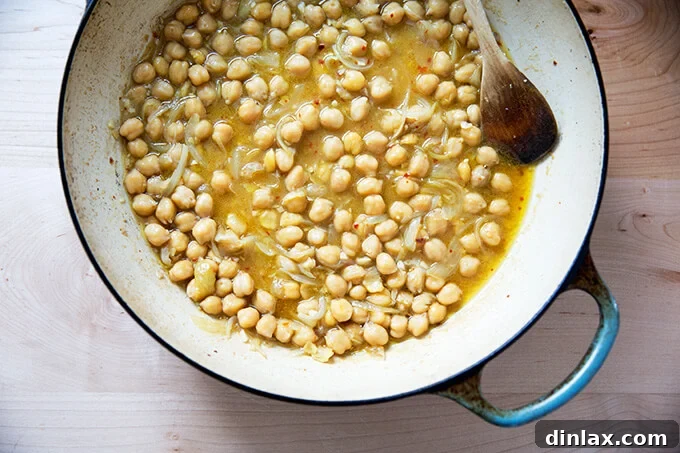
Transfer the fragrant chickpea stew to a serving bowl.
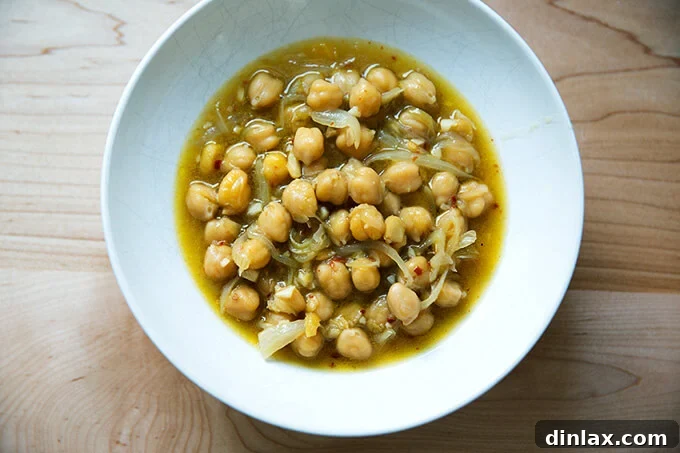
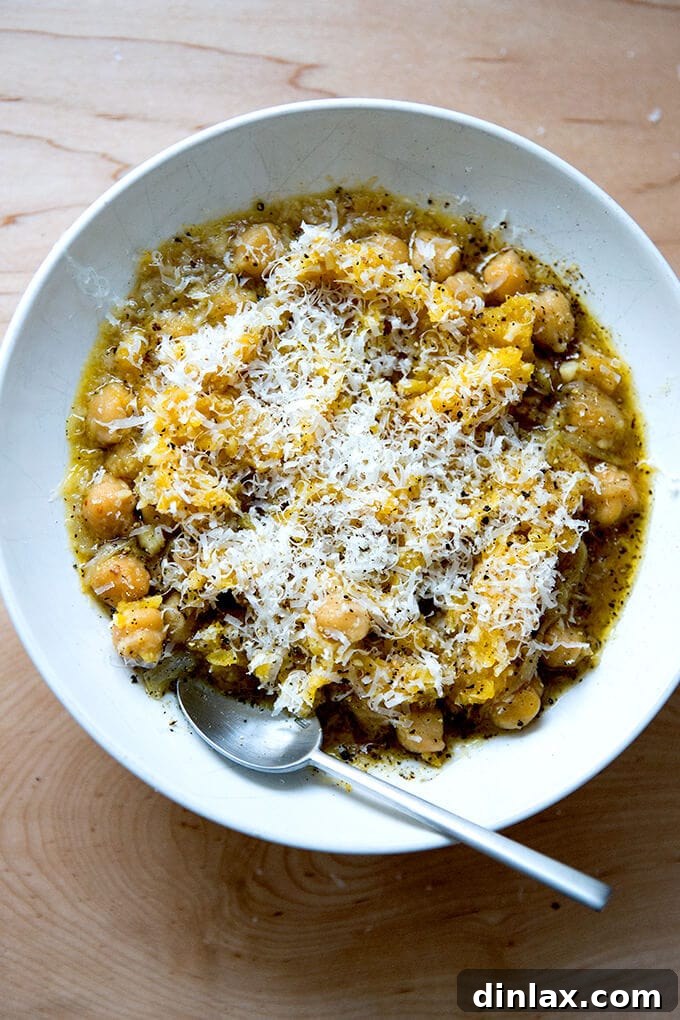
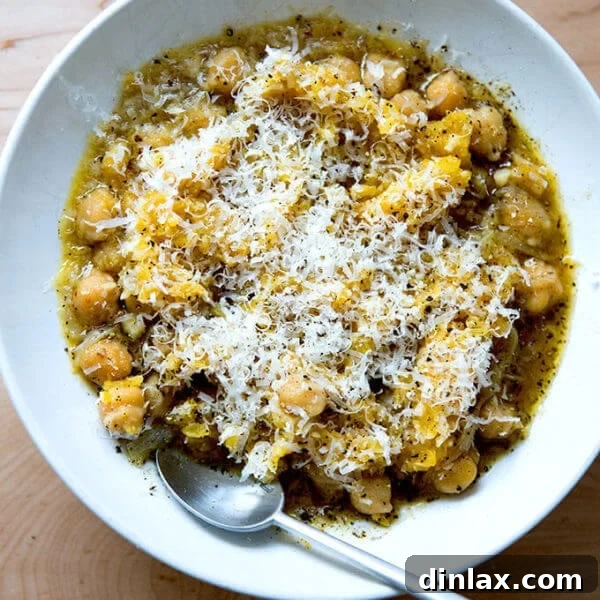
Generously spoon the Cacio e Pepe spaghetti squash over the top of the chickpeas. The contrasting textures and complementary flavors create an incredibly satisfying and wholesome dish. For an extra touch of indulgence and flavor, grate more Pecorino cheese over the top before serving. Delicious!
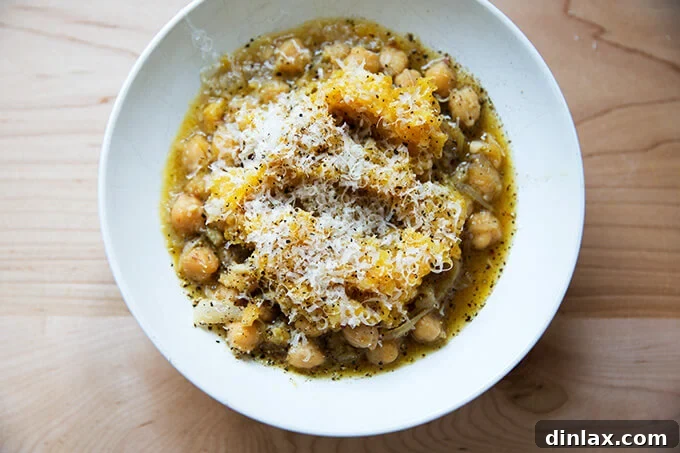
Versatile Serving Suggestions for Your Spaghetti Squash
Beyond the savory chickpeas, this Cacio e Pepe spaghetti squash offers endless possibilities for delicious pairings. Another outstanding way to enjoy it is tossed with our Baked Feta with Cherry Tomatoes. The tangy, creamy feta and burst of sweet cherry tomatoes create a vibrant and fresh contrast to the rich squash, making for a truly memorable dish.
Baked Spaghetti Squash with Garlicky Chickpeas
5 Stars 4 Stars 3 Stars 2 Stars 1 Star
5 from 16 reviews
Author: Alexandra Stafford
Total Time: 1 hour, 10 minutes
Yield: 2 1x
Description
This fantastic spaghetti squash recipe, inspired by Skinny Taste’s One and Done Cookbook, offers a healthy and flavorful twist on Cacio e Pepe. While it makes an excellent side, pairing it with savory chickpeas simmered in their own liquid with sautéed onions and garlic transforms it into a wholesome and complete meal.
*Important Update for Better Strands*: For optimal results, cut your spaghetti squash crosswise instead of lengthwise. This counterintuitive method is not only easier but also produces significantly longer, more noodle-like strands, enhancing the “pasta” experience. Be sure to check out the newly added video for a visual guide on this cutting technique!
Cutting Tip: Microwave Assist: To simplify cutting a tough spaghetti squash, use your microwave. Make several small cuts into the squash with a sharp paring knife, then microwave on high for 1 minute. Let it cool briefly before cutting it in half with a chef’s knife. If it’s still too firm, microwave for another minute. This pre-softens the skin, making it much easier and safer to slice.
Cutting Tip: Instant Pot Power: The Instant Pot also works wonders for softening squash. Place 1 cup of water in the Instant Pot, set the whole squash on a trivet, and cook at high pressure for 5 minutes (no need to poke holes!). A quick release of pressure will leave the skin soft enough for easy halving. If needed, return to the Instant Pot for another five minutes.
Roasting Update (October 17, 2021): I’ve found that roasting spaghetti squash at 350ºF (175ºC) for 45 minutes (instead of 400ºF for 55-60 minutes) yields firmer, more al dente strands, which I personally prefer for a pasta substitute. If you’ve loved this recipe in the past, feel free to stick to your preferred method, but I encourage you to try this shorter cook time for a different texture. The squash won’t be completely fork-tender upon removal but will shred beautifully into distinct strands. This versatile squash is also incredible tossed with this baked feta and cherry tomatoes for another delicious variation.
Ingredients
For the Cacio e Pepe Spaghetti Squash:
- 1 medium spaghetti squash, (approximately 2 3/4 to 3 pounds)
- kosher salt, for seasoning the squash
- freshly cracked black pepper, to taste
- 1 to 2 tablespoons extra virgin olive oil
- 1/2 cup finely grated Pecorino Romano cheese, plus more for serving
For the Garlicky, Stewy Chickpeas (Optional, for a complete meal):
- 3 tablespoons extra virgin olive oil
- 1 to 2 medium onions, thinly sliced (yielding about 1-2 cups)
- 4 cloves garlic, thinly sliced or minced
- A generous pinch of crushed red pepper flakes, or to taste
- 2 cups cooked chickpeas in their cooking liquid (highly recommended for best flavor)
- Flaky sea salt, for finishing
- Additional freshly cracked black pepper, for finishing
Instructions
-
Preheat your oven to 350ºF (175ºC). Line a baking sheet with parchment paper or foil for easy cleanup.
-
Halve the spaghetti squash crosswise. Use a sturdy spoon to scrape out all the seeds and stringy yellow strands, then discard them. (Refer to the detailed notes and video above for various methods on how to safely and effectively cut open a spaghetti squash, especially the crosswise technique for longer strands.)
-
Lightly season the cut flesh of both squash halves with a pinch of kosher salt and freshly cracked black pepper. Place the seasoned squash halves cut-side down on the prepared baking sheet.
-
Bake for 45 minutes. At this point, the squash will not be completely knife or fork tender, but this shorter cooking period is preferred for yielding firmer, more “al dente” strands, which mimics pasta beautifully. If you’ve previously made this recipe and prefer a softer squash, continue cooking for 55-60 minutes, but we recommend trying the 45-minute bake for a delightful texture.
-
Remove the baking sheet from the oven and let the squash cool for about 10 minutes. This makes it easier to handle. Using a fork, gently pull the squash flesh from the sides of the skin and scrape it into a large bowl; it will naturally separate into spaghetti-like strands.
-
To the spaghetti squash strands, add 1 to 2 tablespoons of extra virgin olive oil, 1/2 cup of finely grated Pecorino Romano cheese, and 1/2 teaspoon of freshly cracked black pepper. Toss everything well until the squash is evenly coated and the cheese begins to melt and cling to the strands, forming a rich Cacio e Pepe sauce. Serve immediately as a side dish, or continue to the next step to prepare the chickpeas for a complete meal.
-
To make the Garlicky, Stewy Chickpeas: Heat the remaining 3 tablespoons of olive oil in a large pan or braiser over medium heat. Add the thinly sliced onions and a pinch of salt. Cook, stirring occasionally, until the onions soften and begin to caramelize to a golden brown, about 7 to 10 minutes. Add the thinly sliced or minced garlic and the crushed red pepper flakes (to taste). Cook for another minute until fragrant, being careful not to burn the garlic. Stir in the 2 cups of cooked chickpeas along with their cooking liquid and bring the mixture to a gentle simmer. Simmer for 10-15 minutes, or until some of the chickpeas start to break down and the sauce thickens slightly, becoming wonderfully stewy. Taste and adjust seasoning with additional salt and pepper as needed. Add more chickpea cooking liquid if you prefer a more brothy consistency.
- To Serve as a Complete Meal: Spoon a generous portion of the garlicky, stewy chickpeas into a bowl. Top with a spoonful of the Cacio e Pepe spaghetti squash. For an extra flourish, use a microplane to shave more Pecorino Romano cheese over the top. Serve immediately, passing additional salt and pepper on the side for guests to season to their liking.
- Prep Time: 10 minutes
- Cook Time: 1 hour
- Category: Dinner, Vegetarian, Healthy
- Method: Oven/Roast, Sauté
- Cuisine: Italian, Mediterranean