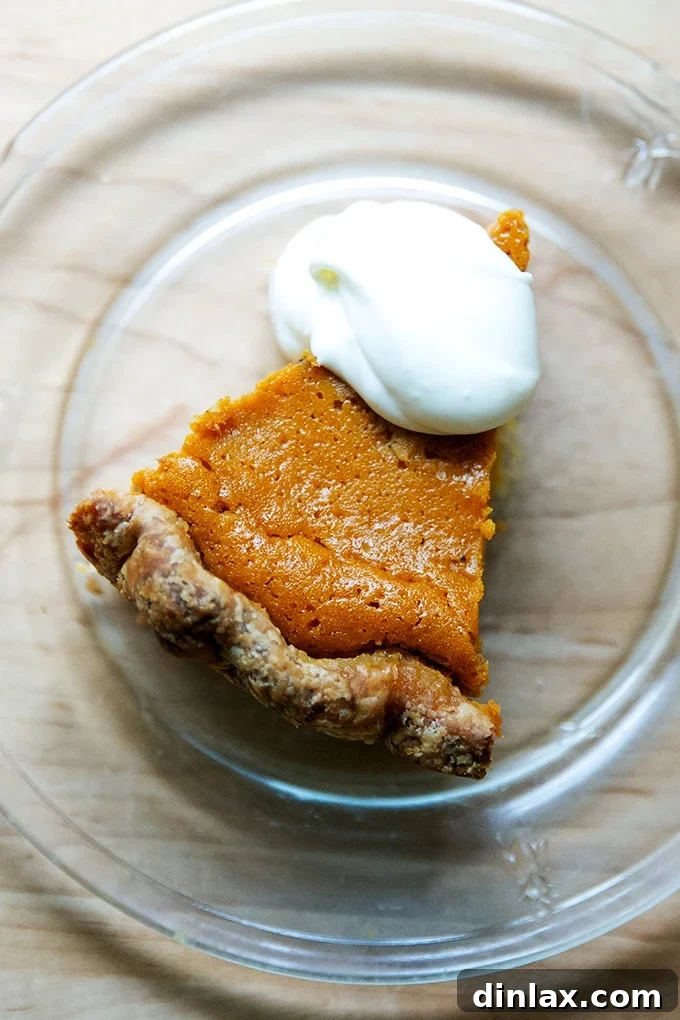
Forget everything you thought you knew about the ultimate fall dessert. The best “pumpkin” pie doesn’t come from a can; it begins with the humble, yet undeniably superior, butternut squash. Prepared from scratch with homemade roasted and puréed butternut squash, this pie transforms a seasonal favorite into an extraordinary culinary experience. I promise you, this roasted butternut squash pie will not only meet but exceed all your expectations, earning its place as the finest you’ll ever create.
As Kristin Kimball eloquently puts it in her acclaimed book, The Dirty Life: “Pumpkin shmumpkin, winter squash has more flavor and better texture.” This sentiment resonates deeply with anyone who has truly experienced the rich, nuanced taste of winter squash. For nearly a decade, my kitchen has been graced with this exceptional butternut squash pie, and its homemade goodness has consistently garnered rave reviews from everyone who tastes it.
Perhaps you’re hesitant to deviate from your cherished pumpkin pie tradition? It’s a classic for a reason, but sometimes the best discoveries lie just beyond our comfort zones. Consider this compelling argument: butternut squash is renowned for creating the silkiest soups and the creamiest pasta sauces. These very qualities—its natural sweetness, velvety texture, and inherent richness—make it the absolute ideal candidate for a deeply flavorful, custardy “pumpkin” pie. Once you experience the unparalleled depth it brings, you’ll wonder why you ever settled for anything else.
The thought of roasting a butternut squash might seem like an extra step, but don’t let this minor task deter you from achieving pie perfection. In truth, it requires minimal effort for maximum reward. How many times do you roast squash throughout the colder months? It’s a simple process you could do in your sleep! The deep, caramelized flavors developed during roasting are crucial, adding a complexity that canned purée simply cannot replicate. Embrace this easy step, and you’ll unlock a world of superior taste.
Trust me on this: if you decide to forgo the canned pumpkin this year and choose the fresh, vibrant taste of roasted butternut squash, you will not be disappointed. Instead, you’ll discover a new holiday tradition that will impress even the most ardent pumpkin pie loyalists. This pie isn’t just a dessert; it’s a testament to the beauty of simple, quality ingredients elevated to their highest potential.
Why Butternut Squash is the Ultimate Choice for Your “Pumpkin” Pie
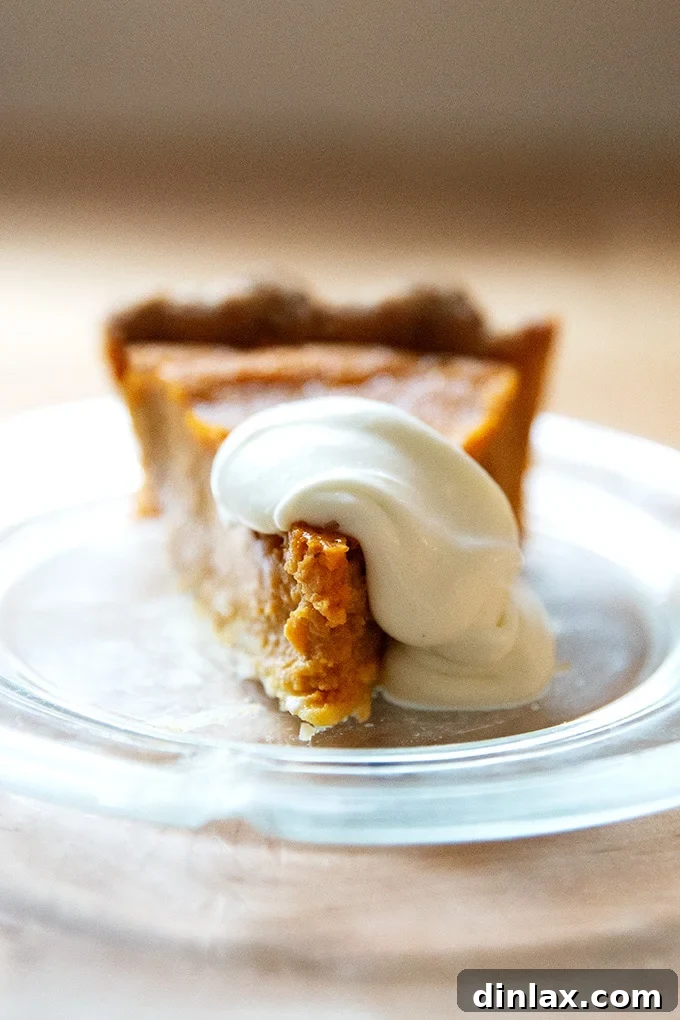
While pumpkin pie holds a special place in our hearts, butternut squash offers a truly superior foundation for this beloved dessert. The distinction lies primarily in its inherent flavor profile and exceptional texture. Butternut squash is naturally sweeter and boasts a richer, nuttier flavor compared to the often bland and watery taste of many pie pumpkins or their canned puréed counterparts. When roasted, the squash caramelizes beautifully, intensifying its sweetness and developing deep, complex notes that translate into a more flavorful and satisfying pie filling.
Beyond flavor, the texture is a game-changer. Butternut squash purées into an incredibly smooth, almost velvety consistency, which results in a pie that is luxuriously custardy and melts in your mouth. Unlike some pumpkin pies that can feel dense or slightly grainy, a butternut squash pie achieves that perfect, delicate wobble and silky mouthfeel that is the hallmark of a truly great custard pie. By starting with fresh, roasted squash, you gain complete control over the quality and consistency of your pie, ensuring a homemade taste that simply can’t be matched by a can.
Mastering the Art of Roasted Butternut Squash Pie: A Step-by-Step Guide
Creating this spectacular butternut squash pie is simpler than you might imagine, and the payoff in flavor and texture is immense. Let’s walk through each step to ensure your pie is nothing short of perfection.
Step 1: Roasting the Butternut Squash to Perfection
The journey to the perfect pie begins with perfectly roasted butternut squash. This step is crucial for developing the deep, sweet, and nutty flavors that set this pie apart.
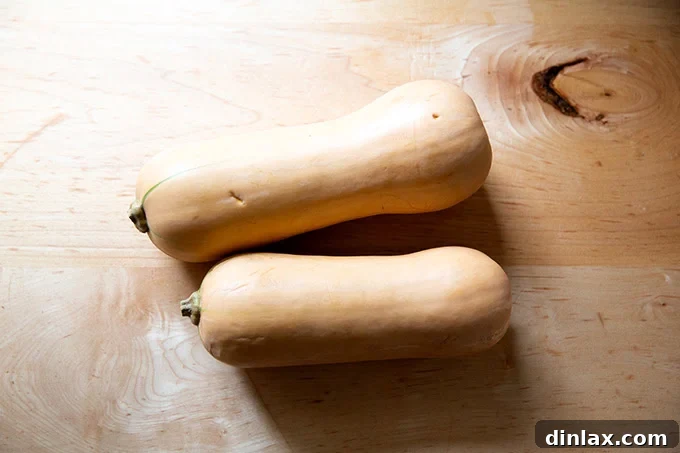
First, preheat your oven to 400ºF (200ºC). Take one to two medium-sized butternut squash and carefully halve them lengthwise. Use a spoon to scoop out all the seeds and fibrous strands from the center. Lightly rub the cut surfaces of the squash with a touch of olive oil, which helps with caramelization and prevents sticking. Place the squash halves cut-side down on a parchment-lined baking sheet. This ensures easy cleanup and prevents the squash from sticking to the pan.

Roast the squash in the preheated oven until the flesh is incredibly tender when pierced with a knife or fork. This typically takes between 45 to 60 minutes, depending on the size and thickness of your squash. A darker, caramelized edge around the cut surface indicates that delicious flavor development is happening.

Step 2: Creating the Silky Butternut Squash Purée
Once roasted, allow the squash to cool briefly until it’s comfortable enough to handle. Then, scoop the soft, cooked flesh directly into the bowl of a food processor. This is where the magic happens, transforming the roasted squash into the smooth, luxurious base for your pie.
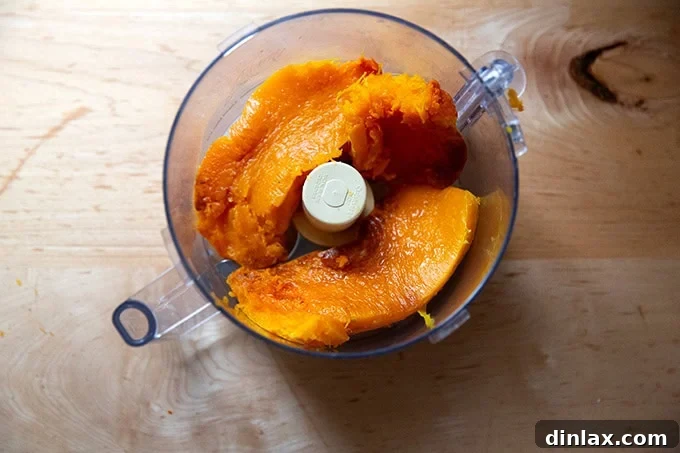
Process the squash until it is perfectly smooth and creamy, with absolutely no lumps. This might take a few minutes, so be patient and scrape down the sides of the bowl as needed to ensure everything is evenly puréed. The goal is a velvety, consistent purée that will give your pie its signature texture.
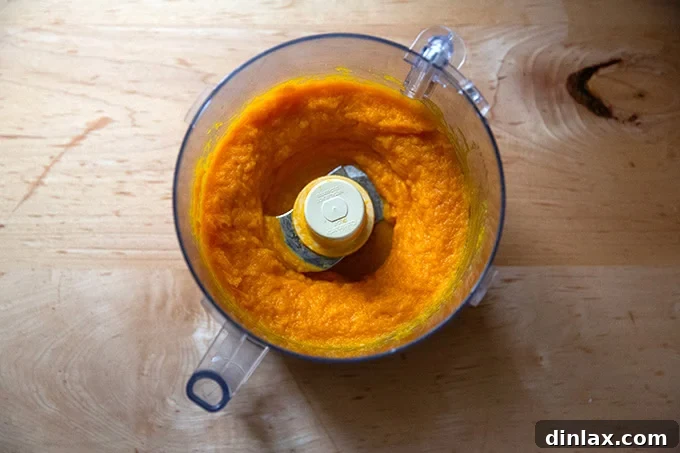
Step 3: Assembling the Velvety Pie Filling
Now that your purée is ready, it’s time to create the rich, aromatic filling. In a large mixing bowl, combine the wet ingredients and spices:
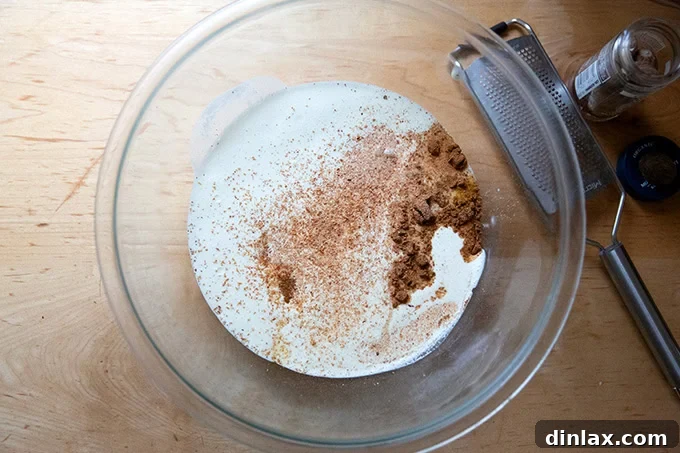
Whisk together the eggs, heavy cream, granulated sugar, salt, cinnamon, ginger, and nutmeg until the mixture is completely smooth and well combined. This ensures all the flavors are evenly distributed and prevents any spice clumps in the final pie.
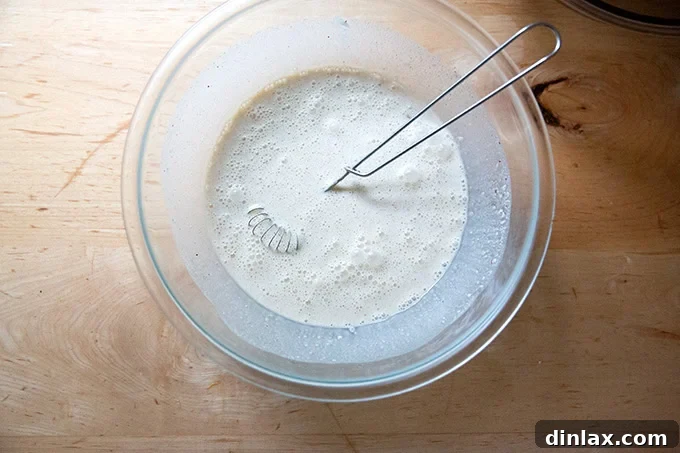
Next, gently fold in 2 cups of your freshly made butternut squash purée. Ensure you measure precisely to maintain the perfect custard consistency.
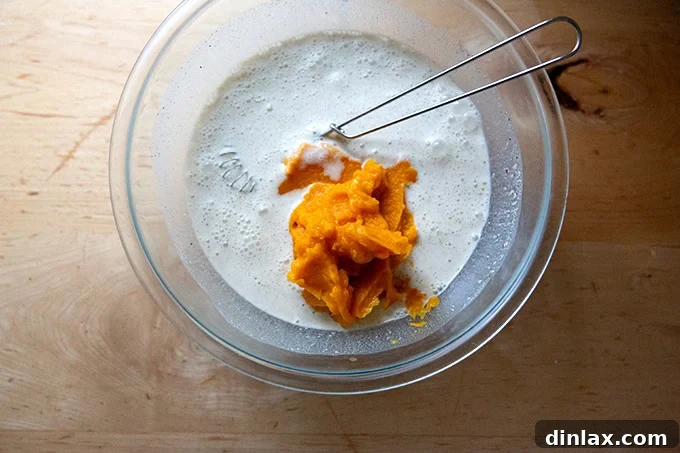
Whisk the entire mixture again until it is beautifully smooth and uniform in color. This ensures the squash purée is fully incorporated into the custard base, creating a homogeneous filling that will bake up perfectly.

Step 4: The Flaky Foundation – Your Parbaked Pie Crust
For this pie, a crucial step is using a parbaked pie crust. Parbaking (or blind baking) prevents a soggy bottom crust, ensuring that every bite of your pie is a delight. If you need a refresher on how to achieve a foolproof flaky pie dough and parbake it correctly, the linked recipe post provides a detailed guide.
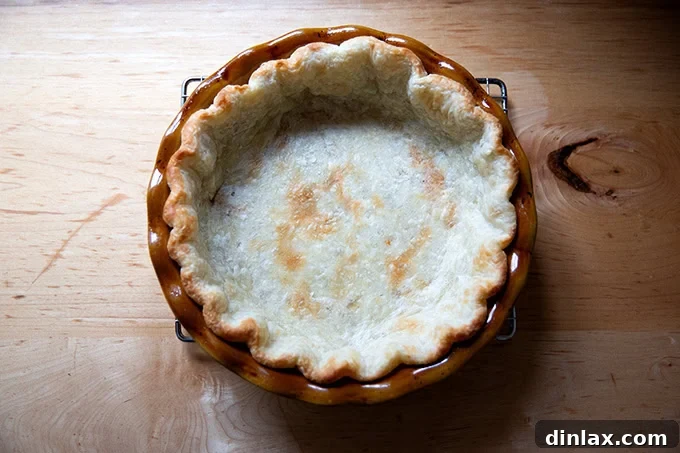
Carefully place your parbaked pie crust on a parchment-lined baking sheet. This makes it easier to transfer in and out of the oven and catches any potential spills. Then, pour the creamy butternut squash filling directly into the prepared pie shell.
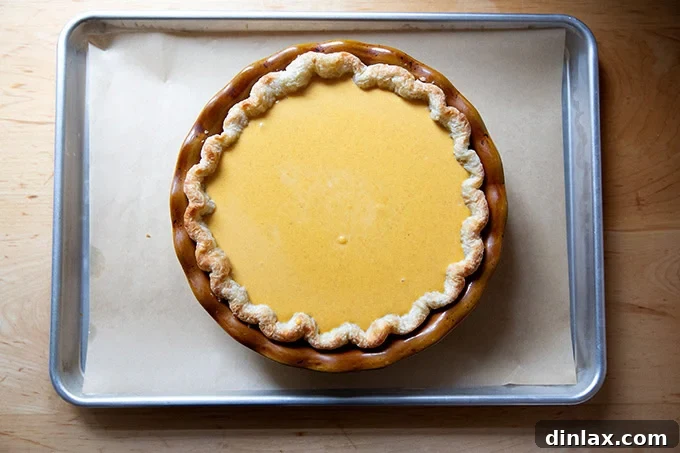
Step 5: Baking to Golden Perfection
With your oven temperature lowered to 350ºF (175ºC), place the pie into the oven. Bake for approximately 55 to 65 minutes. You’ll know it’s done when the edges of the filling appear set, but the very center still has a slight, delicate jiggle. For precise bakers, the internal temperature should reach 175ºF (80ºC) on an instant-read thermometer.
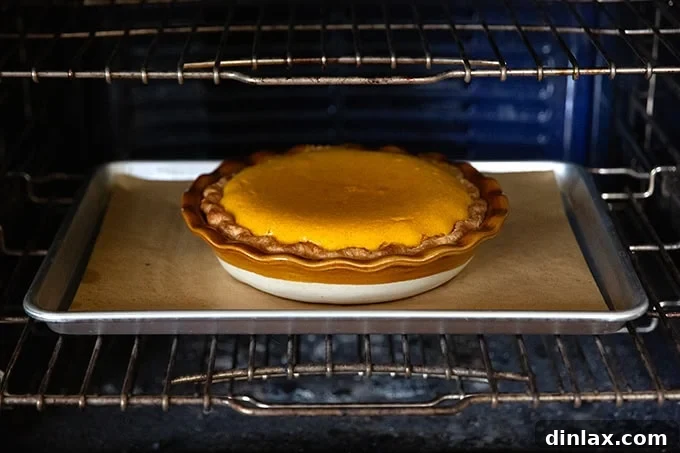
Step 6: Cooling and Embracing Imperfections (or Decorating!)
Once baked, it’s critical to let the pie cool completely. As for the notorious cracking that sometimes occurs in custard pies, it’s a common phenomenon. Research points to overcooking and cooling too quickly as primary culprits. While striving not to over-bake and allowing for slow cooling (e.g., turning off the oven and cracking the door) can help, sometimes cracks are simply unavoidable with the delicate nature of custard. But fear not, a cracked top does not diminish the pie’s incredible flavor!
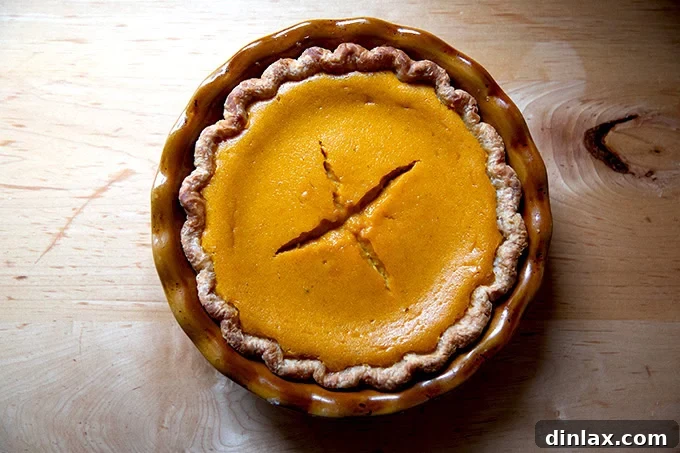
My simple solution for cracks (or simply for adding extra charm) is to decorate with pie crust cookies. These delightful little cutouts made from leftover pie dough add a festive and rustic touch, making your pie visually stunning regardless of any surface imperfections.
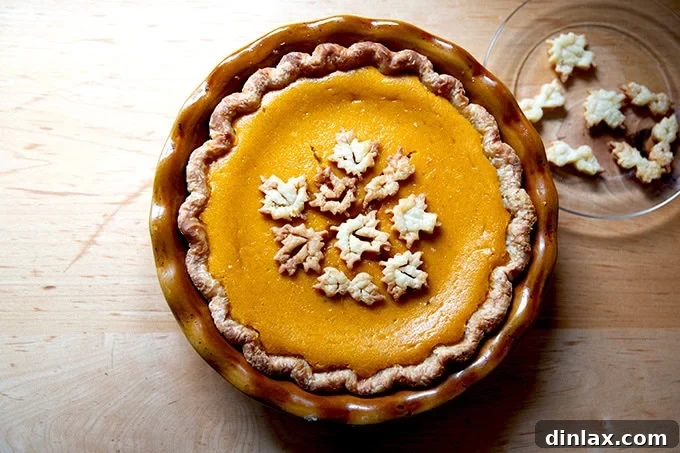
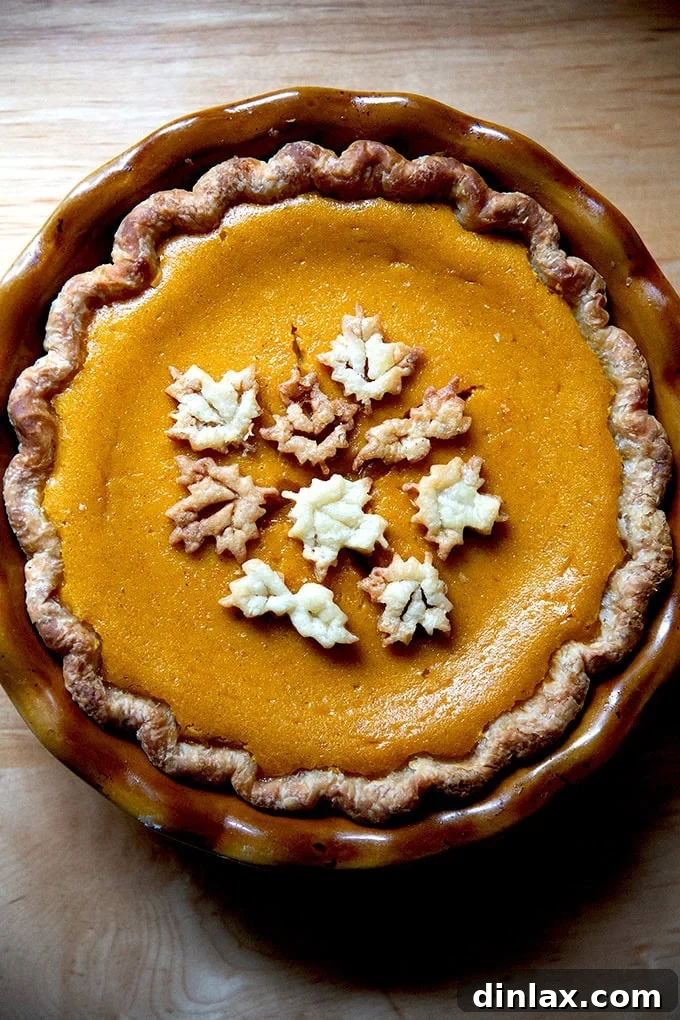
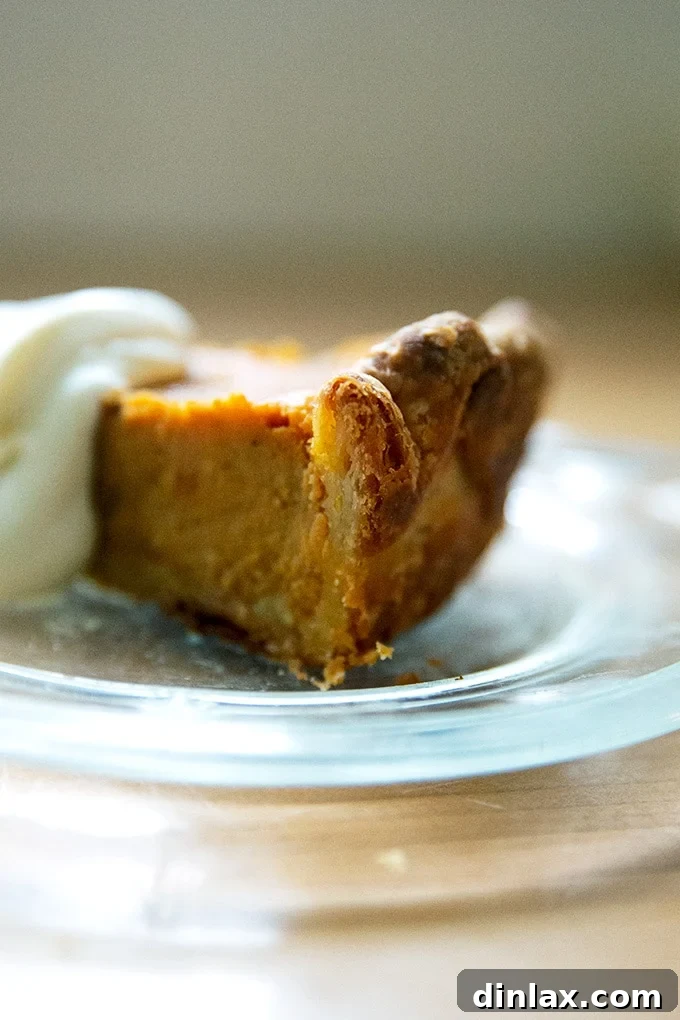
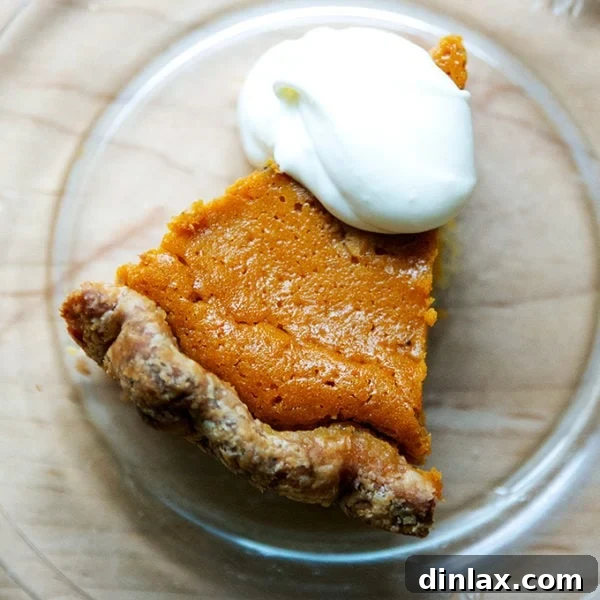
Once fully cooled, slice and serve this exquisite pie. It’s perfect on its own, but a dollop of salted whipped cream takes it to another level.
Serving Suggestions and Flavor Variations
This roasted butternut squash pie is a showstopper on its own, but a few thoughtful additions can elevate it even further. A cloud of freshly whipped cream, especially one subtly sweetened with confectioners’ sugar and a pinch of flaky sea salt (like Maldon), creates a delightful contrast to the rich, spiced filling. The slight saltiness beautifully enhances the squash’s natural sweetness.
For an extra touch of festivity and charm, don’t forget those delightful pie crust cookies. They’re not just a clever way to use up leftover dough; they add a wonderful textural element and make for a truly artisanal presentation. You can also experiment with other toppings like a drizzle of caramel sauce, a sprinkle of toasted pecans or walnuts, or even a dusting of extra cinnamon or freshly grated nutmeg.
Feel free to adjust the spice blend to your preference. If you love a bolder spice profile, consider adding a pinch more ginger or a tiny dash of allspice. The beauty of this homemade pie is its versatility, allowing you to tailor it to your taste.
Roasted Butternut Squash Pie Recipe
Description
Pumpkin shpumpkin! A roasted butternut squash purée makes the silkiest, smoothest, tastiest pie you can imagine, a true upgrade from traditional pumpkin.
Notes:
- For a more visual guide to making the pie dough, rolling it out, and crimping the edges, watch the video here.
- A sturdy pie plate, similar to this Emile Henry one, is recommended for even baking.
- If you absolutely cannot roast a butternut squash (though I strongly encourage you to try for superior flavor!), you can substitute 2 cups of squash purée with one 15-oz can of pumpkin purée.
- One medium butternut squash, weighing approximately 2 lb 10oz (about 1.2 kg), typically yields around 3 cups of purée.
- On Cracking: It’s common for custard pies to develop cracks upon cooling. This is often attributed to overcooking or rapid cooling. To minimize cracking, avoid over-baking (aim for an internal temperature of 175ºF) and allow the pie to cool slowly, perhaps in the oven with the door ajar after it’s turned off. If cracks still appear, they can easily be hidden and embraced with pie crust cookies for decoration.
Ingredients
For the pie crust:
- Homemade Pie Dough (one parbaked 9-inch shell)
For the pie filling:
- 1 medium butternut squash, about 2.5 lbs (1.1 kg) or enough to yield 2 cups of purée
- 1 1/2 cups heavy cream
- 3 large eggs, lightly beaten
- 3/4 cup granulated sugar
- 1 teaspoon ground cinnamon
- 1/2 teaspoon ground ginger
- 1/2 teaspoon fine sea salt
- 1/2 teaspoon freshly ground or powdered nutmeg
- 1/8 teaspoon ground cloves (optional, can be omitted)
For the salted whipped cream (optional):
- 1 cup cold heavy cream
- 2-3 tablespoons confectioners’ sugar, to taste
- A generous pinch of flaky sea salt, such as Maldon
Instructions
- Preheat your oven to 400ºF (200ºC).
- Halve the butternut squash lengthwise and scoop out the seeds and stringy bits. Lightly rub the cut surfaces of the squash with a small amount of olive oil. Place the squash halves cut-side down on a parchment-lined baking sheet. Bake until the flesh is very soft and easily pierced with a fork, approximately 45-60 minutes, depending on the size of your squash.
- Reduce the oven temperature to 350ºF (175ºC).
- Once the roasted squash is cool enough to handle, scoop the tender flesh into a food processor. Purée until completely smooth. Measure out 2 cups of the purée for the pie filling. In a large bowl, whisk together the beaten eggs, heavy cream, sugar, salt, cinnamon, ginger, and nutmeg until well combined. Whisk in the 2 cups of butternut squash purée until the mixture is uniform and smooth.
- Place the parbaked pie shell on a parchment-lined baking sheet. Carefully pour the butternut squash filling into the pie shell. Bake at 350ºF (175ºC) for 55 to 65 minutes, or until the edges of the pie filling are set and the center still has a slight, gentle jiggle. The internal temperature should register 175ºF (80ºC) on an instant-read thermometer. Let the pie cool completely on a wire rack before slicing and serving. This slow cooling is important for the custard to fully set.
- To prepare the salted whipped cream (optional): In the cold bowl of a stand mixer fitted with the whisk attachment (or using a hand mixer and a cold bowl), whip the heavy cream on medium-high speed until soft peaks begin to form. Gradually add 2-3 tablespoons of confectioners’ sugar, or to your desired sweetness. Add a generous pinch of flaky sea salt and continue to beat until the peaks become firmer, but still soft. Taste and adjust sweetness or saltiness as desired. The whipped cream should be slightly sweet with a noticeable but not overpowering salty note. Serve alongside cooled pie slices.
- Prep Time: 25 minutes
- Cook Time: 1 hour 45 minutes
- Total Time: 2 hours 10 minutes
- Yield: Serves 10
- Category: Dessert
- Method: Bake
- Cuisine: American
Did you make this recipe?
Share your creation! Tag @alexandracooks on Instagram and use the hashtag #alexandracooks to show us your delicious butternut squash pie!