Skip to Butternut Squash Ravioli Recipe

Mastering Homemade Butternut Squash Ravioli with Sage Brown Butter Sauce
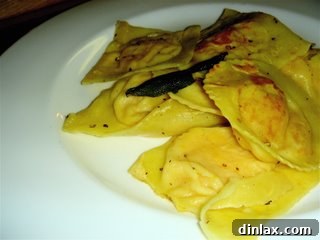
Embarking on the journey of making homemade pasta can feel daunting, especially when it comes to intricately shaped dishes like ravioli. A few weeks ago, I found myself captivated by the idea of creating butternut squash ravioli, complete with a fragrant sage brown butter sauce. This classic Italian dish, with its sweet and savory profile, promised a culinary adventure. Initially, the process felt overwhelming. My first attempts at shaping the pasta dough yielded irregular, somewhat soggy, and frankly, quite unappealing ravioli. It was a moment where I questioned my ambition, wondering why I had committed to such a meticulous task.
However, with each successive attempt, the technique began to crystallize. The initial frustration slowly gave way to a rhythm, and I eventually developed a relatively efficient system for shaping these delicate parcels. The satisfaction of seeing uniform, beautifully filled ravioli emerge from my efforts was immense. Most of the batch was then carefully frozen, allowing my husband and me to savor this classic autumnal combination of savory sage and sweet squash not just once, but multiple times. If you too can push past the initial learning curve and the minor shaping struggles, you’ll discover that your hard work will be richly rewarded with several truly delicious and elegant dinners, perfect for any special occasion or a comforting weeknight treat. The unique flavor combination and the personal touch of homemade pasta make this dish an unforgettable experience.
Butternut Squash Ravioli with Sage Brown Butter Sauce
This classic recipe for homemade butternut squash ravioli with sage brown butter sauce isn’t necessarily easy, but it is undeniably delicious and incredibly rewarding. Prepare to impress with this gourmet pasta dish.
Butternut Squash Ravioli Recipe Details
Rated 5 out of 5 stars (No reviews yet)
- Author: Alexandra Stafford at alexandracooks.com
- Total Time: 1 hour 40 minutes
- Yield: 4 servings
Ingredients for Butternut Squash Ravioli
- 1 large butternut squash (about 1 lb), for a rich, sweet filling
- Kosher salt and freshly ground black pepper, to taste, for seasoning the squash and filling
- 1/2 tsp olive oil, for the baking sheet to prevent sticking
- 1 1/4 cups freshly grated Parmigiano Reggiano cheese, for nutty depth in the filling and sauce
- 2 large eggs, lightly beaten, to bind the filling ingredients
- 1 recipe homemade pasta dough (see recipe below), the foundation of our ravioli
For the Sage Brown Butter Sauce:
- 2 tablespoons unsalted butter, to create a rich, nutty base
- 2 tablespoons extra-virgin olive oil, to complement the butter and prevent burning
- 8 fresh sage leaves, for their distinctive aromatic flavor and crispy texture
Instructions for Butternut Squash Ravioli
- Prepare the Squash: Preheat your oven to 375°F (190°C). Carefully cut the butternut squash in half lengthwise. Using a spoon, scoop out and discard the seeds and fibrous strands from both halves. Lightly season the cut sides of the squash with kosher salt and freshly ground black pepper. Place the squash halves, cut-side down, on a lightly oiled baking sheet. Bake for approximately 1 hour, or until the flesh is incredibly tender when pierced easily with a knife. This ensures a smooth, creamy purée.
- Make the Butternut Squash Filling: Remove the baked squash from the oven and allow it to cool slightly, making it easier and safer to handle. Scoop the soft, cooked flesh from the skin. For the smoothest possible texture, pass the purée through the fine disk of a food mill. If a food mill isn’t available, you can alternatively purée it in a food processor until completely smooth, ensuring no lumps remain. Measure the purée; you should have approximately 2 cups (a little more or less is perfectly acceptable and won’t significantly impact the recipe). Transfer the purée to a large mixing bowl. Stir in one cup of the freshly grated Parmigiano Reggiano cheese. Season generously with additional salt and pepper to taste. It’s crucial to adjust the seasoning at this stage, as the pasta dough itself will not be salted, so the filling must carry the primary flavor. Continue tasting and adjusting until the mixture is perfectly balanced and flavorful to your preference. Finally, stir in the lightly beaten eggs until fully incorporated, binding all the ingredients together. This delicious filling can be prepared 1 to 2 days in advance and stored in an airtight container in the refrigerator, saving time on your ravioli-making day.
- Cook the Ravioli and Prepare the Sauce: Bring a large pot of generously salted water to a rolling boil. In a separate large non-stick sauté pan, combine the unsalted butter and extra-virgin olive oil. Heat over medium-high heat until the butter begins to melt, foam, and turn a beautiful golden brown, indicating it’s developing a nutty aroma, and the mixture is almost smoking. Add the fresh sage leaves to the hot butter and oil. Let them sizzle gently until they become wonderfully crisp and fragrant, which usually takes about 1-2 minutes. Using a slotted spoon, carefully remove the crispy sage leaves and transfer them to a paper towel-lined plate to drain excess oil. Set them aside; these will be used for garnish and an added burst of flavor.
- Finish and Serve: Once the pasta water is boiling, carefully add the prepared ravioli to the pot. Cook until they are tender and float to the surface, typically about 2-3 minutes for fresh ravioli. If you are cooking frozen ravioli, they will also take approximately 3 minutes to cook through directly from the freezer, no need to thaw. Before draining the ravioli, remember to reserve about 1/4 cup of the pasta cooking water. This starchy water is essential for creating a silky sauce that clings beautifully to the pasta. Drain the cooked ravioli gently but do not rinse them under cold water, as this removes the beneficial starch that helps the sauce adhere. Reheat the butter and oil mixture in the sauté pan until hot again. Add the drained ravioli to the pan (be cautious, as it may splatter slightly). Immediately add the reserved pasta cooking water, the remaining 1/4 cup of Parmigiano Reggiano cheese, and the crispy sage leaves. Toss gently to coat the ravioli evenly with the rich, aromatic sauce. The starchy water will emulsify with the butter and cheese to create a luxurious coating. Serve immediately, perhaps with an extra sprinkle of Parmigiano and a few grinds of black pepper for a final flourish.
- Prep Time: 15 minutes
- Cook Time: 1 hour 25 minutes
The Art of Homemade Pasta Dough
The secret to truly exceptional ravioli lies in the quality of its casing: the pasta dough. Making pasta from scratch might seem intimidating at first, but with a little practice, it’s a deeply satisfying process that yields a superior texture and flavor unmatched by store-bought alternatives. The fresh, tender bite of homemade pasta elevates any dish, transforming a simple meal into an artisanal experience. This recipe is designed to be straightforward, guiding you to a pliable, silky dough that’s a joy to work with, whether you’re a seasoned pasta maker or a curious beginner.
Homemade Pasta Dough Recipe Details
Rated 5 out of 5 stars (No reviews yet)
- Author: Alexandra Stafford at alexandracooks.com
- Total Time: 1 hour 10 minutes
Ingredients for Homemade Pasta Dough
- 3 1/2 cups all-purpose flour, plus extra for kneading and dusting surfaces
- 5 large eggs, lightly beaten, for richness and binding
Instructions for Homemade Pasta Dough
- Combine Flour and Eggs: Begin by mounding the 3 1/2 cups of all-purpose flour in the center of a medium-sized mixing bowl. Use your hand to create a large, deep well (an indentation) in the very center of the flour mound, making sure the walls are sturdy. Pour the lightly beaten eggs into this well. Using a fork, gently beat the eggs in the center, gradually incorporating the surrounding flour, starting from the inner rim of the well. As the eggs absorb the flour, the mixture will thicken. While some experienced pasta makers prefer to do this directly on a large wooden board (the traditional “well method”), I’ve personally found that a bowl helps contain any “run-away” eggs during the initial mixing, making the process much less messy and frustrating for beginners.
- Knead the Dough: Once the eggs are almost completely incorporated into the flour, the mixture will be shaggy and crumbly. At this point, set the fork aside and begin kneading the dough directly in the bowl to bring it together into a cohesive mass. Once it forms a rough ball, transfer the dough to a large, lightly floured wooden board or clean countertop. Continue to knead the dough vigorously for a full 10 minutes. This extensive kneading is essential for developing the gluten, which gives pasta its characteristic chewiness and elasticity. As you knead, dust the board with additional flour as necessary to prevent sticking, but be careful not to add too much, which can make the dough tough and dry. The goal is for the dough to become elastic, smooth, and slightly sticky to the touch, almost like a baby’s bottom.
- Rest the Dough: After kneading, shape the dough into a ball and wrap it tightly in plastic wrap. Allow it to rest at room temperature for a minimum of 30 minutes before proceeding with rolling. This resting period is crucial as it allows the gluten to relax, making the dough much easier to roll thinly and preventing it from snapping back, resulting in a more tender pasta. You can also refrigerate the dough for up to 24 hours, letting it come to room temperature for about 30 minutes before rolling.
- Prepare for Rolling: When you’re ready to make ravioli, unwrap the rested pasta dough. Divide the dough into 4 equal pieces. It’s important to work with one section at a time to prevent the dough from drying out. Keep the remaining dough tightly covered with plastic wrap while you focus on one piece.
- Initial Rolling: Lightly flour the first section of dough you are working with and roughly shape it into a rectangle, about 1/2 inch thick. This initial flattening helps prepare the dough for the pasta machine. Pass this piece of dough through the widest setting on your pasta machine.
- Folding and Repeating for Smoothness: Take the rolled dough and fold it into thirds, similar to how you would fold a letter. This technique helps to align the gluten strands, making the dough stronger and smoother. Then, feed the short end of this folded dough back through the widest setting of the pasta machine. Repeat this folding and rolling step two more times, adding a light dusting of flour if the dough begins to feel sticky or if it’s struggling to pass through the rollers smoothly. This process is key to achieving a uniform and elastic pasta sheet.
- Thinning the Dough: Now, without folding the dough, repeatedly pass it through the machine rollers, progressively reducing the space between the rollers after each pass. Continue this until the dough has passed through the thinnest setting on your machine. The ideal thickness for ravioli is thin enough to be somewhat translucent but still strong enough to hold the filling without tearing. This will result in a beautifully thin, almost translucent sheet of pasta, perfect for delicate ravioli. If the dough becomes too long or difficult to manage during this process, simply cut it in half and feed each piece through separately until both have reached the thinnest setting.
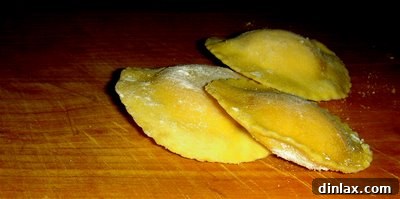
- Shaping the Ravioli: Once your pasta sheet is rolled to the desired thinness, it should be just under 6 inches wide. Carefully cut it in half lengthwise, creating two long, thin sheets. On one of these long halves, place tablespoon-sized dollops of the prepared butternut squash filling. Space them evenly, leaving about 1 1/2 inches between each mound of filling. Gently lay the remaining half of the pasta dough sheet atop the squash-dotted sheet, carefully aligning the edges. This step often requires practice, and it’s completely normal if your first few attempts aren’t perfect; pasta making is an art that improves with repetition. With your fingers, gently press around each mound of filling to remove any air pockets and to create a seal. Then, with a sharp knife or a fluted pasta wheel, cut halfway between each mound of filling to create individual ravioli. Lightly pinch the edges of each ravioli to firmly seal the two dough sheets together, using a tiny bit of water on your fingertips if the dough doesn’t seal easily. Transfer the shaped ravioli to a baking sheet generously dusted with flour or semolina to prevent sticking. Cover them with plastic wrap while you continue to shape the remaining sections of dough and filling, ensuring they remain moist and pliable.
Chef’s Notes and Tips for Pasta Dough and Ravioli
This recipe for pasta dough and ravioli yields a substantial amount, making it perfect for feeding a crowd or for meal prepping. I highly recommend shaping all of the dough, even if you don’t plan to cook all the ravioli immediately. You might find yourself with extra filling, which can be frozen in an airtight container for future use in other dishes like lasagna or savory tarts. For the shaped ravioli themselves, it is crucial not to store them in the refrigerator, as they tend to absorb moisture and become a soggy, sticky mess. Instead, your best options are to either cook them immediately after shaping or freeze them. To freeze, arrange the ravioli in a single layer on a floured baking sheet and freeze until solid (about 1-2 hours). Once frozen, transfer them to an airtight container or freezer bag. Frozen ravioli cook beautifully straight from the freezer, adding just a minute or so to the cooking time, making them a fantastic convenience for a quick, homemade meal!
- Prep Time: 40 minutes
Homemade butternut squash ravioli with a sage brown butter sauce is more than just a meal; it’s an experience. It’s an opportunity to connect with the culinary arts, to embrace a challenge, and to ultimately create something truly special and delicious for yourself and your loved ones. While the process demands patience and a bit of perseverance, the rich, sweet filling enveloped in tender, fresh pasta, perfectly complemented by the aromatic, nutty brown butter and crispy sage, is a reward that far outweighs the effort. Don’t be discouraged by the initial attempts; every chef, professional or home cook, starts somewhere. Embrace the journey of making pasta from scratch, enjoy the process, and you’ll soon be enjoying elegant, restaurant-quality pasta dishes right from your own kitchen. This dish is a testament to the fact that some of the best culinary delights come from a little extra love and effort. Happy cooking!