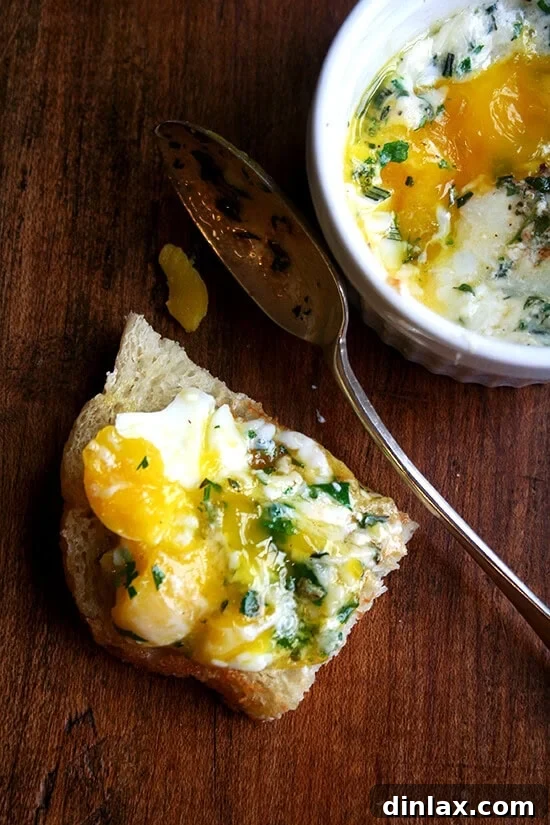
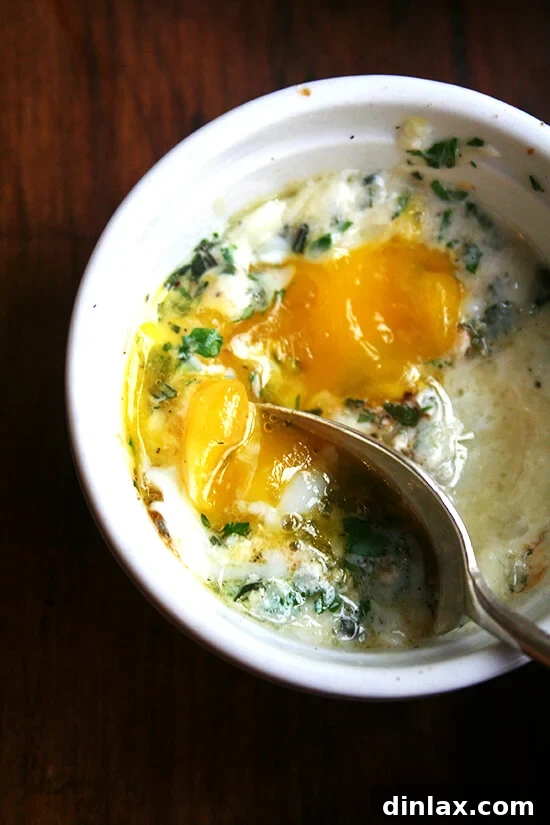
Classic Herb and Gruyère-Topped Baked (Shirred) Eggs: A Timeless Family Favorite
There’s something inherently magical about certain foods, transcending their simple ingredients to become symbols of comfort, tradition, and cherished memories. For my family, that magic is undeniably found in a dish of baked eggs, affectionately known as “shirred” eggs. Historically, these perfectly soft-cooked eggs, crowned with a vibrant medley of herbs, melted Gruyère, and a hint of Tabasco, were reserved for one sacred occasion: Christmas morning.
The scent of fresh herbs mingling with warming cheese, the gentle clink of spoons against ramekins, the anticipation of breaking into a perfectly runny yolk – these sensations were intrinsically linked to festive lights, carol harmonies from my sister, and the casual strumming of my brother’s guitar. Preparing these eggs recently, far from my mother’s Connecticut kitchen and outside the festive December haze, felt wonderfully odd. It instantly transported me back to those nostalgic mornings, stirring a comforting warmth that defied geography and time. My partner, Ben, and I savored them in a peaceful silence, a delightful, albeit unprecedented, Christmas morning dress rehearsal. And in that moment, it became abundantly clear: a dish this delightful should never be confined to a single day of the year.
What Are Baked (Shirred) Eggs?
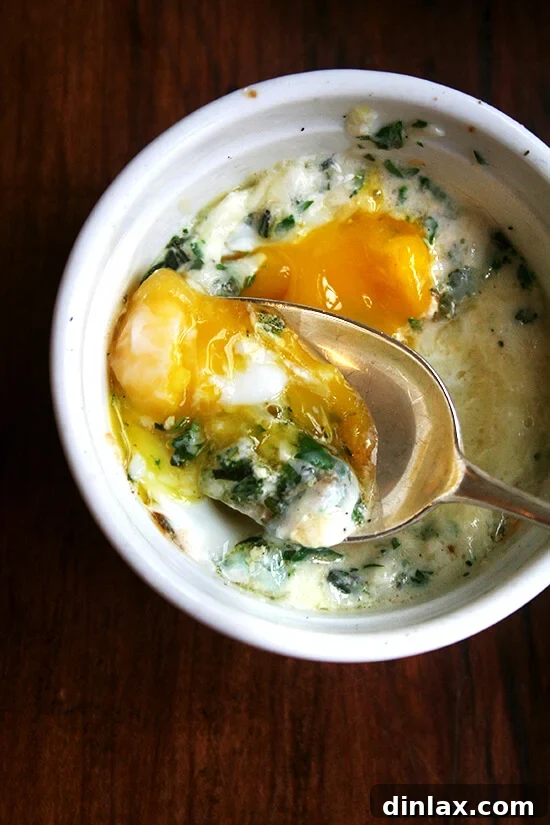
Baked eggs, or “shirred eggs,” refer to eggs that are baked in a flat-bottomed dish, typically a ramekin, often with cream, cheese, herbs, or other seasonings. The term “shirred” comes from the dish they are traditionally cooked in – a shirrer. Unlike scrambled or fried eggs, shirred eggs offer a more elegant and hands-off approach to egg preparation. The gentle baking process in a water bath ensures a tender, set white and a wonderfully runny, rich yolk, creating a luxurious texture that feels gourmet yet requires minimal effort.
This particular recipe, a beloved family staple since it first graced the pages of *The New York Times Magazine* in 1985, stands as a testament to the enduring appeal of simplicity and quality ingredients. My mother has been perfecting these for decades, and the recipe remains as relevant and delicious today as it was then.
Why These Baked Eggs Are a Must-Try
Beyond their nostalgic charm, these herb and Gruyère-topped baked eggs offer a myriad of reasons to earn a permanent spot in your culinary repertoire:
- Effortless Elegance: They look impressive with their golden crust and vibrant herbs, yet they are incredibly simple to assemble. Perfect for impressing brunch guests without breaking a sweat.
- Perfect for Any Occasion: While they shine as a special breakfast or brunch item, their satisfying nature also makes them ideal for a light lunch or even a sophisticated, quick weeknight dinner.
- Crowd-Friendly: Easily scalable, you can prepare a single ramekin or a dozen, making them perfect for intimate meals or larger gatherings. The individual portions mean no fuss with serving.
- Rich and Balanced Flavors: The combination of fragrant herbs (parsley, sage, rosemary, and thyme) creates a complex aromatic profile that beautifully complements the nutty, melted Gruyère. A few dashes of Tabasco introduce a subtle, exciting kick that brightens the entire dish, preventing it from feeling too heavy.
- Wholesome and Satisfying: Far from indulgent, these eggs provide a good source of protein and healthy fats, making for a truly nourishing start to your day or a comforting meal anytime.
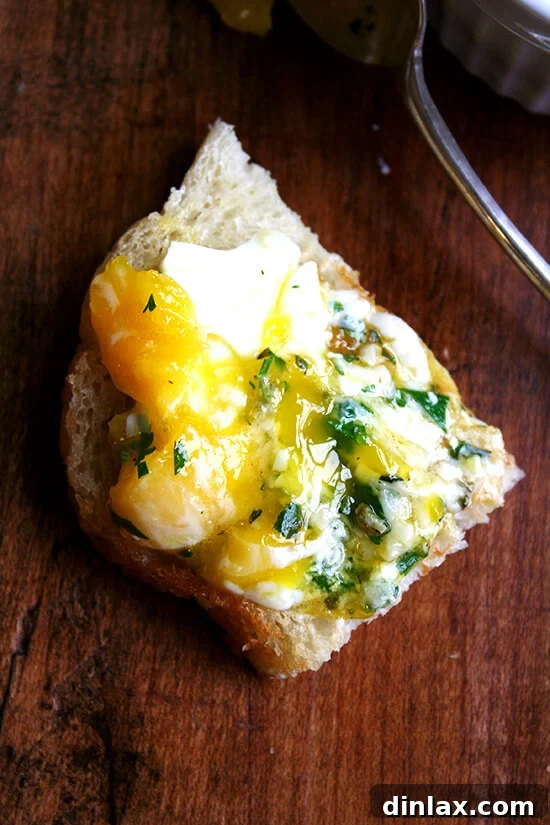
The Perfect Baked Eggs: A Step-by-Step Recipe Guide
This recipe comes directly from *The New York Times Magazine*, October 27th, 1985, and has been a trusted guide for our family ever since. It’s a testament to good, honest cooking that stands the test of time.
Herb and Gruyère-Topped Baked (Shirred) Eggs
Average rating: 5 from 1 review
- Author: Alexandra Stafford
- Total Time: 25 minutes
- Yield: 8 servings
Description
Source: The New York Times Magazine, October 27th, 1985 (This recipe truly has been a family favorite since 1985!)
Notes:
- Use the quantities of herbs as a guide — I never measure anymore; trust your instincts for flavor!
- Prepare for some trial and error: achieving your desired egg doneness may take a little practice. Factors like the thickness of your ramekins, the exact temperature of your oven (every oven is different!), the height of the water in your water bath, and even the number of ramekins in the baking dish can influence cooking time. I recommend starting to check for doneness after 9 minutes by gently pressing the top of an egg with your finger. Remember, the eggs will continue to cook slightly after being removed from the oven, so aim for just under your ideal doneness.
Ingredients
- 3 tablespoons finely chopped parsley, loosely packed
- 1 teaspoon finely chopped thyme, loosely packed
- 1 teaspoon finely chopped rosemary, loosely packed
- 1 teaspoon finely chopped sage, loosely packed
- 1 tablespoon softened unsalted butter
- Salt and freshly ground black pepper, to taste
- 1/2 cup heavy cream (or half-and-half for a lighter option)
- Tabasco sauce, to taste
- 8 large eggs
- 8 tablespoons grated Gruyère or Swiss cheese (approximately 1 tablespoon per egg)
Instructions
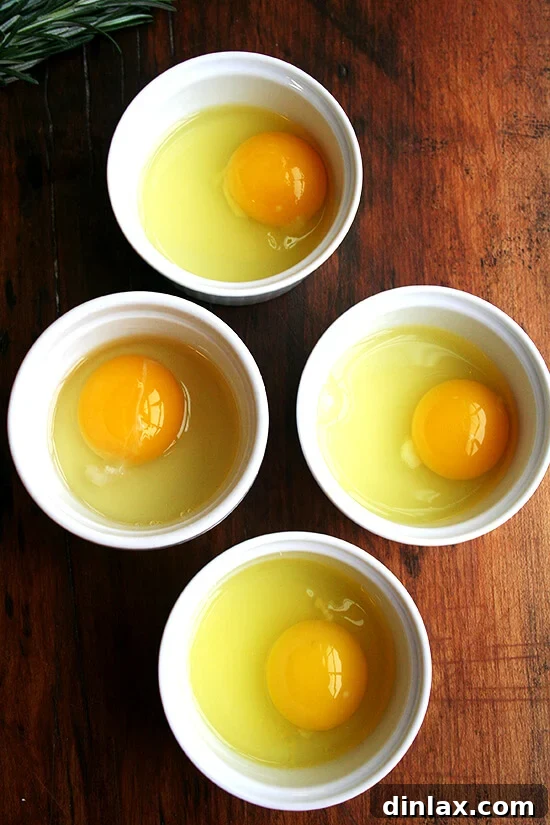
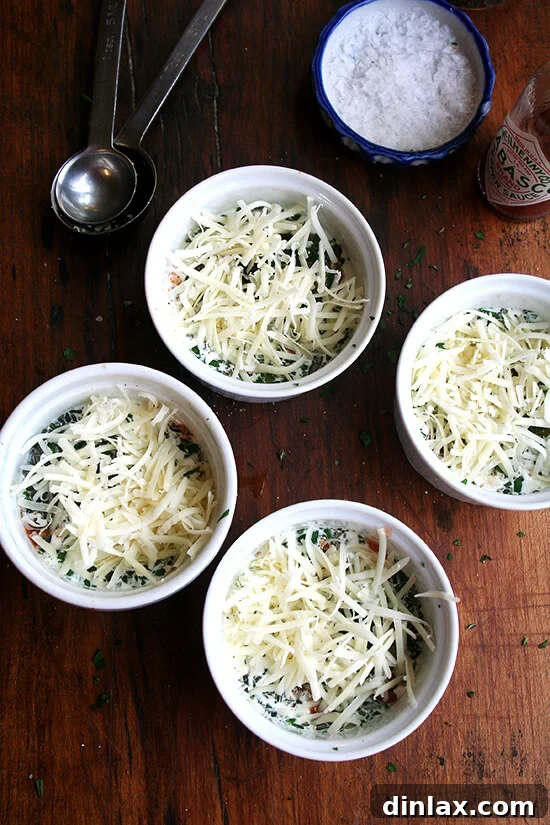
- Prepare Your Oven and Ramekins: Preheat your oven to 400ºF (200ºC). Fill a kettle or teapot with water and bring it to a rolling boil. In a small bowl, combine your finely chopped parsley, thyme, rosemary, and sage. Generously butter eight 4-oz ramekins. This buttering step not only prevents sticking but also adds a lovely richness to the edges of the cooked eggs. Carefully crack one egg into each prepared ramekin, ensuring the yolk remains intact.
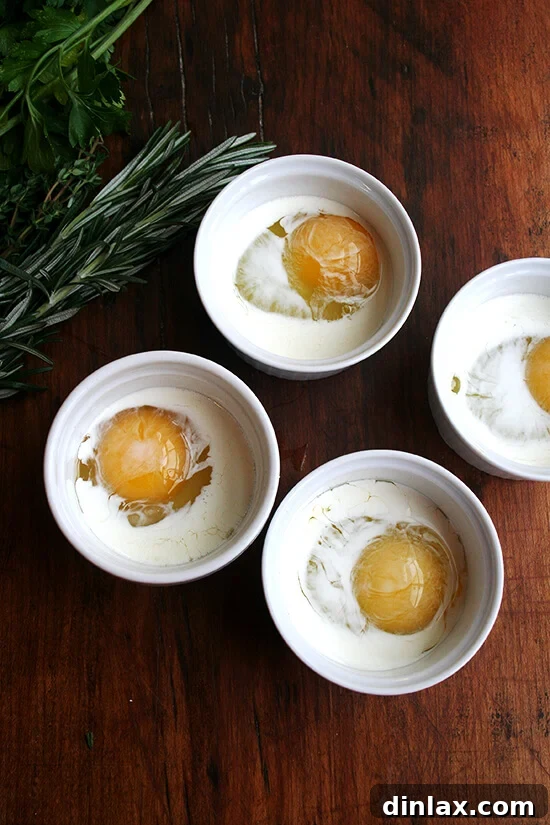
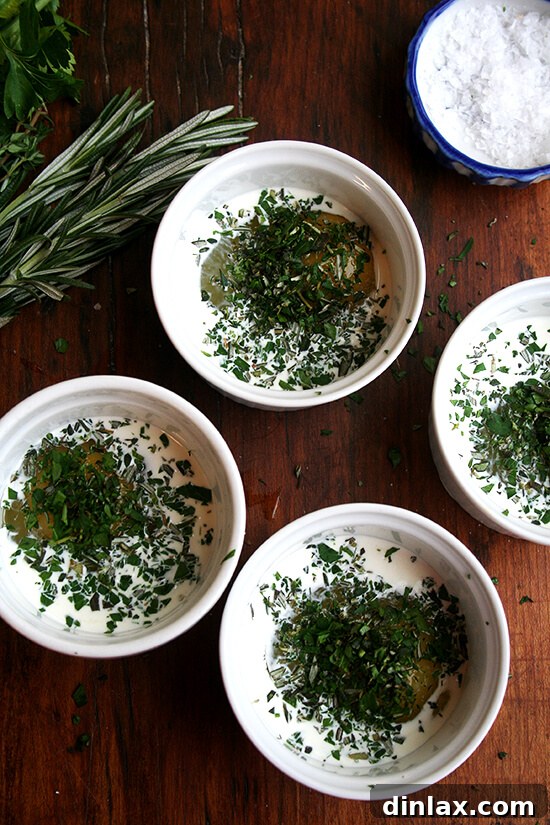
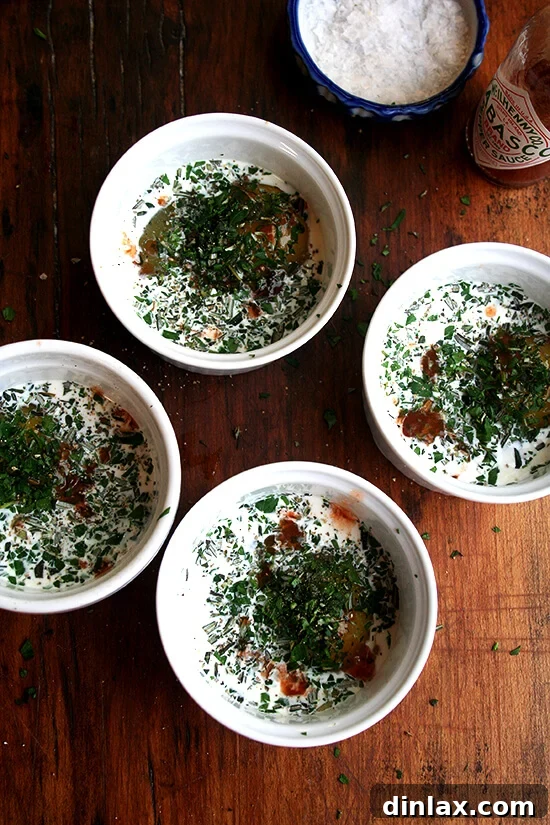
- Season and Top Each Egg: Season each egg generously with salt and freshly ground pepper according to your preference. Next, pour approximately 2 teaspoons of heavy cream over each egg. Follow this with about 1 teaspoon of your combined fresh herbs. Finally, add a few dashes of Tabasco for that signature zing, and sprinkle about one tablespoon of grated Gruyère or Swiss cheese over the top of each egg. The cheese will melt into a golden crust, while the herbs infuse the eggs with their aromatic essence.
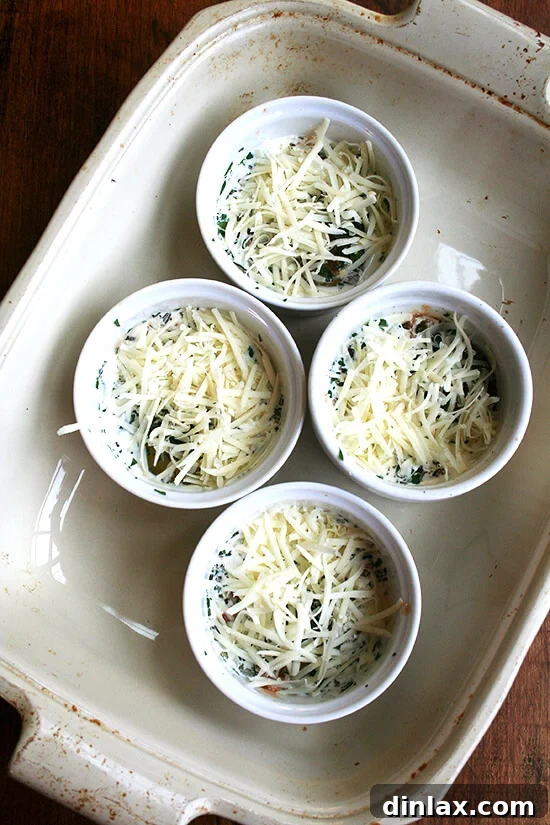
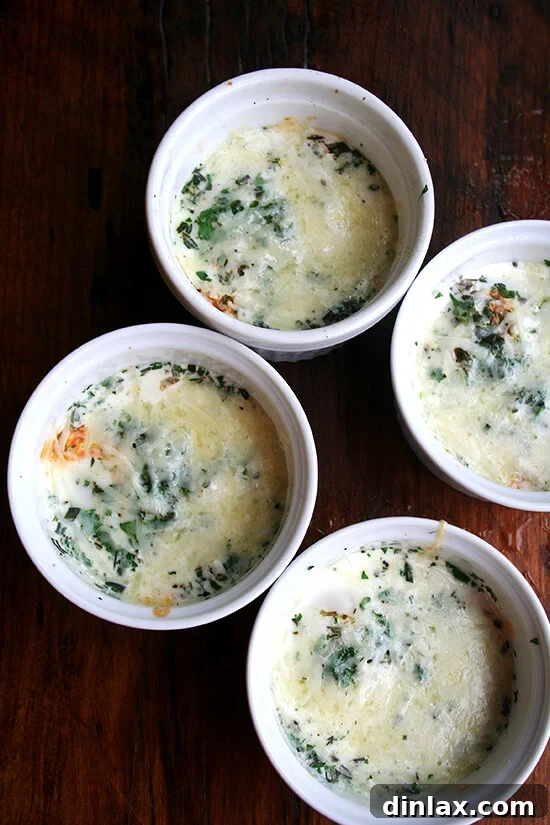
- Bake in a Water Bath: Carefully arrange your filled ramekins in a larger baking dish, ensuring there is enough space between them so they don’t touch. This allows for even heat distribution. Pour the freshly boiled water into the baking dish, letting it reach approximately one-third of the way up the sides of the ramekins. This water bath (or *bain-marie*) creates a gentle, even cooking environment, preventing the eggs from overcooking too quickly and ensuring a creamy, consistent texture. Bake for 9 to 14 minutes. Cooking time can vary depending on your oven and ramekin specifics, as detailed in the notes above. For medium-cooked eggs with a beautifully runny yolk, aim for the shorter end of the spectrum and check frequently. The whites should be set, but the yolks should still be liquid gold.
Print Recipe
Recipe Details
- Prep Time: 10 minutes
- Cook Time: 15 minutes
- Category: Eggs, Breakfast
- Method: Baked, Oven
- Cuisine: American
Serving Suggestions for Your Baked Eggs
Once your baked eggs emerge from the oven, bubbling and fragrant, they are best served immediately. The runny yolks are a perfect sauce for a variety of accompaniments. Our family tradition calls for serving them with toasted bread, ideal for dipping and soaking up every last bit of creamy goodness. Some excellent bread choices include:
- My Mother’s Peasant Bread: A rustic, easy-to-make loaf that’s crusty on the outside and wonderfully soft within.
- Easy Sourdough Bread: For those who appreciate a tangy crumb and chewy crust.
- Simple buttered toast: Sometimes, the simplest choices are the best.
To complete your breakfast or brunch spread, consider adding a side of crispy bacon or savory sausage, a fresh fruit salad for a burst of sweetness, and a steaming cup of coffee or tea. These eggs are hearty enough to stand alone but play beautifully with classic breakfast fare.
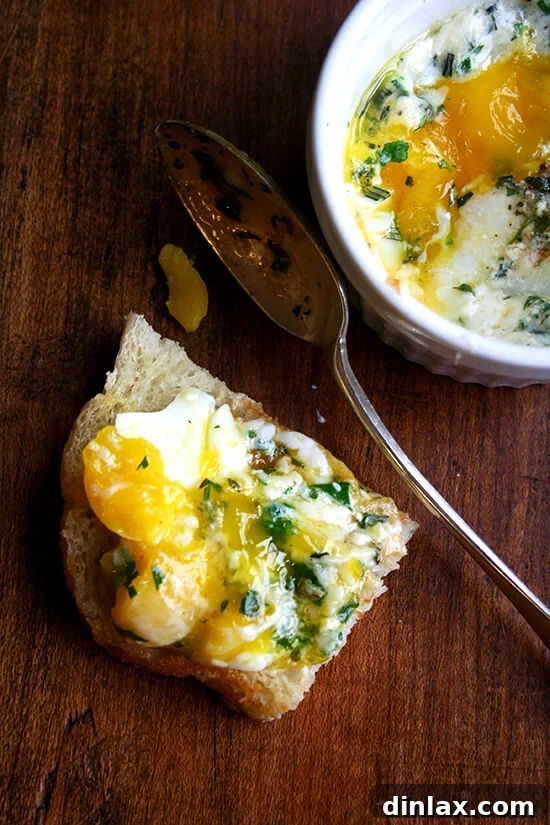
Beyond Christmas Morning: Embrace Year-Round Enjoyment
The delightful combination of fragrant herbs—parsley, sage, rosemary, and thyme—with the richness of Gruyère, the perfectly soft-cooked eggs, and the bright kick of Tabasco creates a dish that is undeniably festive. However, it’s a flavor profile far too exquisite and versatile to be enjoyed only once a year. There’s no good reason to limit this simple pleasure to a single morning, no matter how special that morning might be.
In fact, expanding this tradition to other holidays, lazy weekend brunches, or even a quick and satisfying weekday meal adds a touch of everyday luxury. It reminds us that truly great food isn’t just for grand celebrations; it’s for creating small, joyful moments, anytime you crave them. After all, it’s not truly the holidays until all of the usual suspects—be it family, friends, or a beloved plate of baked eggs—are present.
Other Egg-cellent Recipes to Explore
If you’ve fallen in love with the simplicity and versatility of eggs, here are a few more recipes to add to your repertoire. From perfectly soft-boiled to creamy egg salads, there’s an egg recipe for every mood and occasion:
- Instant Pot Soft-Boiled Eggs
- Instant Pot Hard-Boiled Eggs
- Oil and Vinegar Toasts + Soft-Boiled Eggs
- Perfect Poached Eggs
- Avocado-Egg Salad on Toasted Sourdough
Embrace the joy of cooking with eggs and discover new ways to make these humble ingredients shine. Happy cooking!
Did you make this recipe?
Tag @alexandracooks on Instagram and hashtag it #alexandracooks