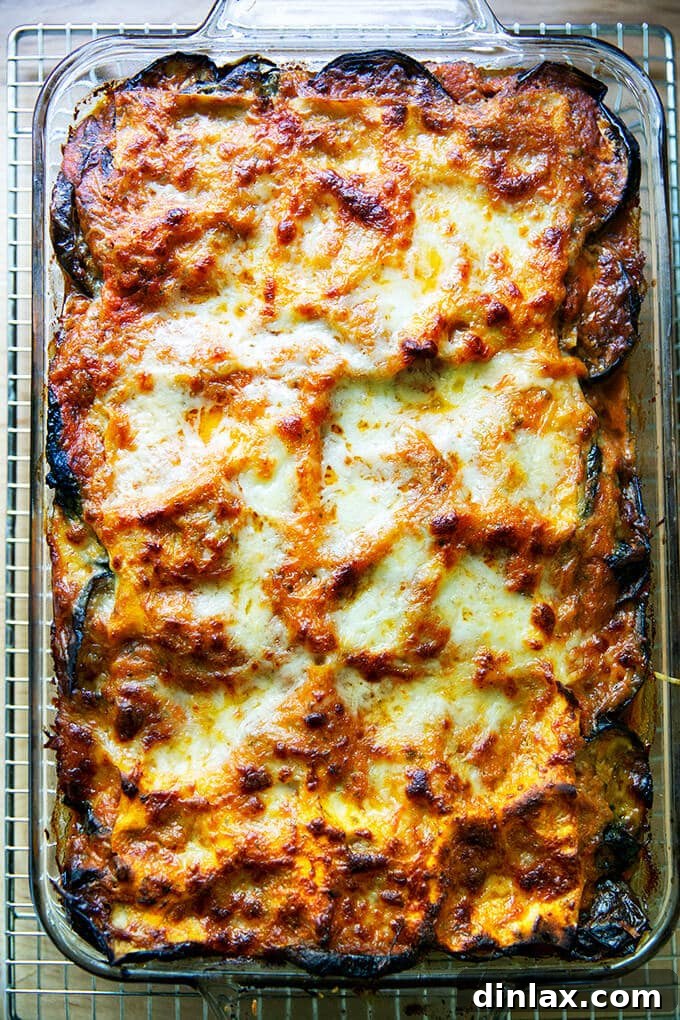
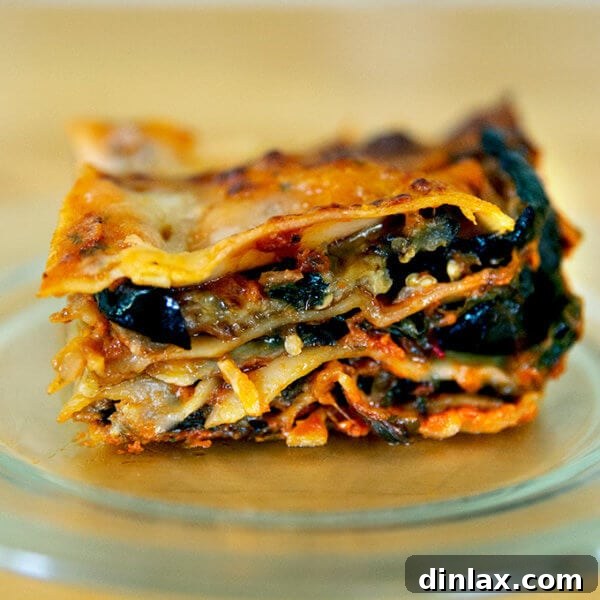
Discover the ultimate summer dish: a delectable Roasted Eggplant Lasagna that promises rich flavors with surprising ease. This delightful recipe combines tender, no-boil noodles with succulent roasted eggplant rounds, vibrant sautéed Swiss chard, and a harmonious blend of Parmesan and mozzarella cheeses. It’s a culinary masterpiece that captures the essence of fresh, seasonal ingredients, making it a beloved choice for family dinners and entertaining alike.
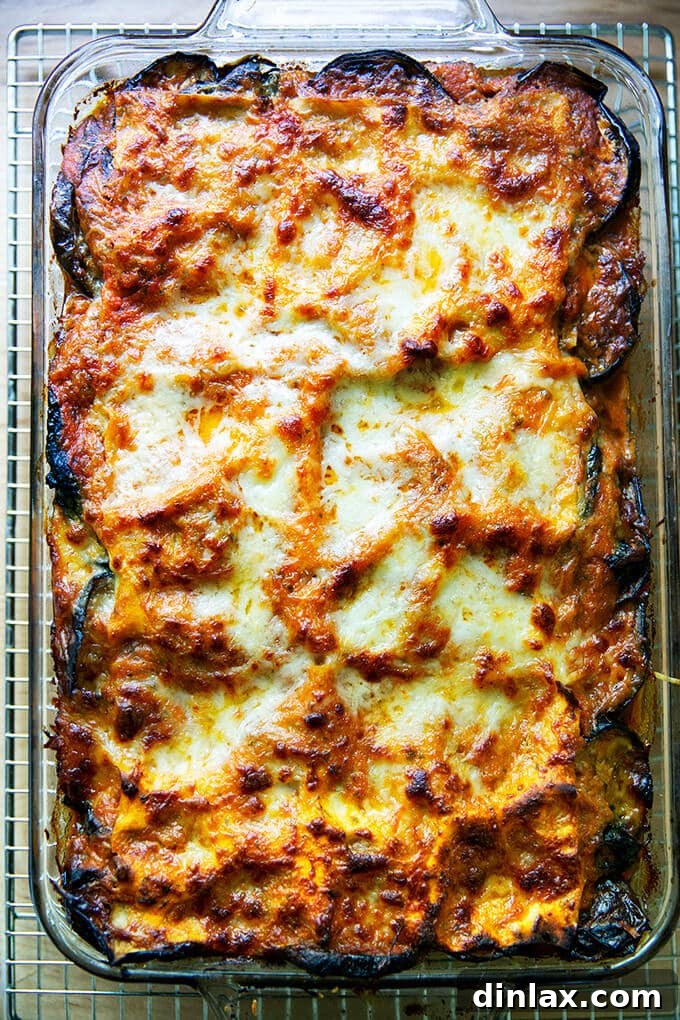
As the garden yields its bounty, especially abundant eggplants, finding innovative ways to use them becomes a delightful challenge. Today, we’re sharing a treasured recipe that transforms a heap of fresh eggplant into a comforting and utterly satisfying lasagna. This isn’t just any lasagna; it’s a testament to simple elegance, designed to be both incredibly flavorful and wonderfully unfussy.
What sets this roasted eggplant lasagna apart from traditional versions? For starters, it streamlines the preparation process significantly. There’s no need for a heavy béchamel sauce, nor the classic ricotta and egg mixture, which many find can sometimes lead to a slightly grainy texture. Instead, we embrace the natural richness of the ingredients. The inclusion of no-boil noodles is a game-changer, eliminating the messy and time-consuming step of pre-cooking pasta. Furthermore, a common dilemma with eggplant is its moisture content; typically, salting is required to draw it out, but our method bypasses this by roasting the eggplant. Roasting not only removes excess water but also imparts a depth of smoky, caramelized flavor that elevates the entire dish.
At its core, this lasagna is a beautifully orchestrated layering of rich, homemade tomato sauce, robust no-boil noodles, tender roasted eggplant rounds, and optionally, vibrant sautéed Swiss chard, all bound together with a generous mix of grated Parmesan and melted mozzarella. While we’ve chosen to omit the ricotta-egg layer, a personal preference, this recipe is incredibly adaptable. Feel free to incorporate ricotta if it’s a staple in your lasagna, or consider it an invitation to explore other creamy additions like a light cottage cheese or even a plant-based alternative. This flexibility ensures the dish can be perfectly tailored to your dietary preferences and taste buds.
Think of this recipe less as a strict rulebook and more as an inspiring guide. The beauty of this lasagna lies in its versatility. You can effortlessly integrate a variety of cooked vegetables to make it truly your own. Imagine layers of sweet roasted red peppers, earthy sautéed mushrooms, creamy roasted butternut squash, iron-rich sautéed beet greens, or delicate roasted cauliflower. The key, regardless of your choice, is to use cooked vegetables. This crucial step prevents the lasagna from becoming watery, ensuring every slice is firm, flavorful, and perfectly structured. Whether roasted, sautéed, or even grilled, perfectly prepared vegetables are the secret to a lasagna that consistently impresses.
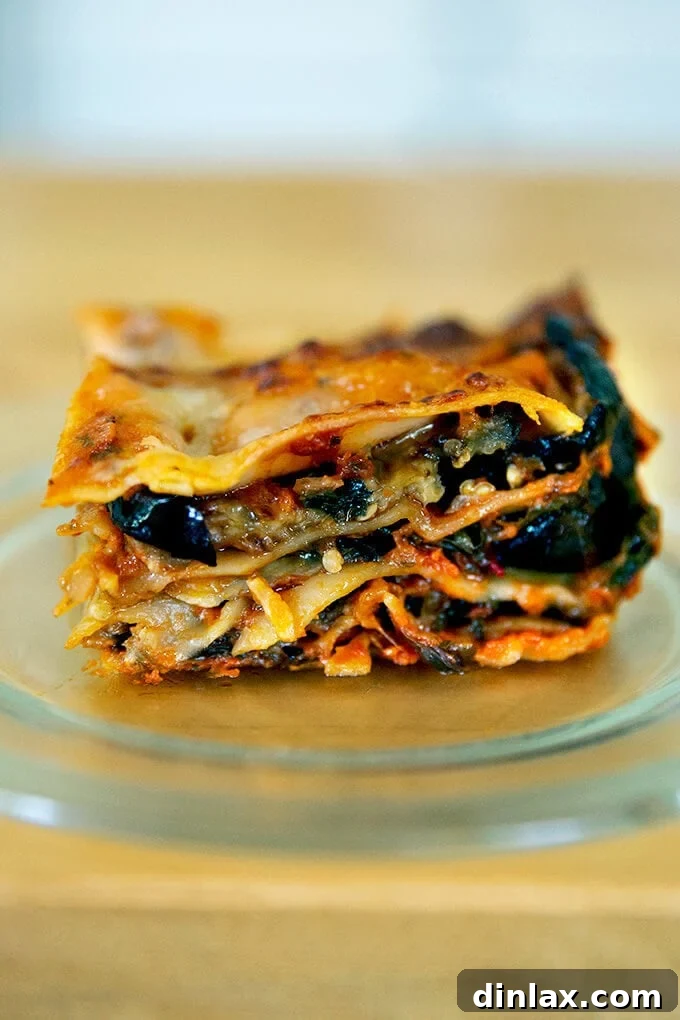
Mastering the Layers: A Guide to Perfect Eggplant Lasagna Assembly
Achieving a perfectly balanced lasagna is all about strategic layering. This method ensures every bite is a symphony of flavors and textures, with just the right amount of sauce to hydrate the noodles and bind the ingredients. Here’s the layering process meticulously outlined for your culinary success:
- Begin with 1/2 cup of rich tomato sauce (we highly recommend trying this quick homemade version or this fresh basil variant for superior flavor).
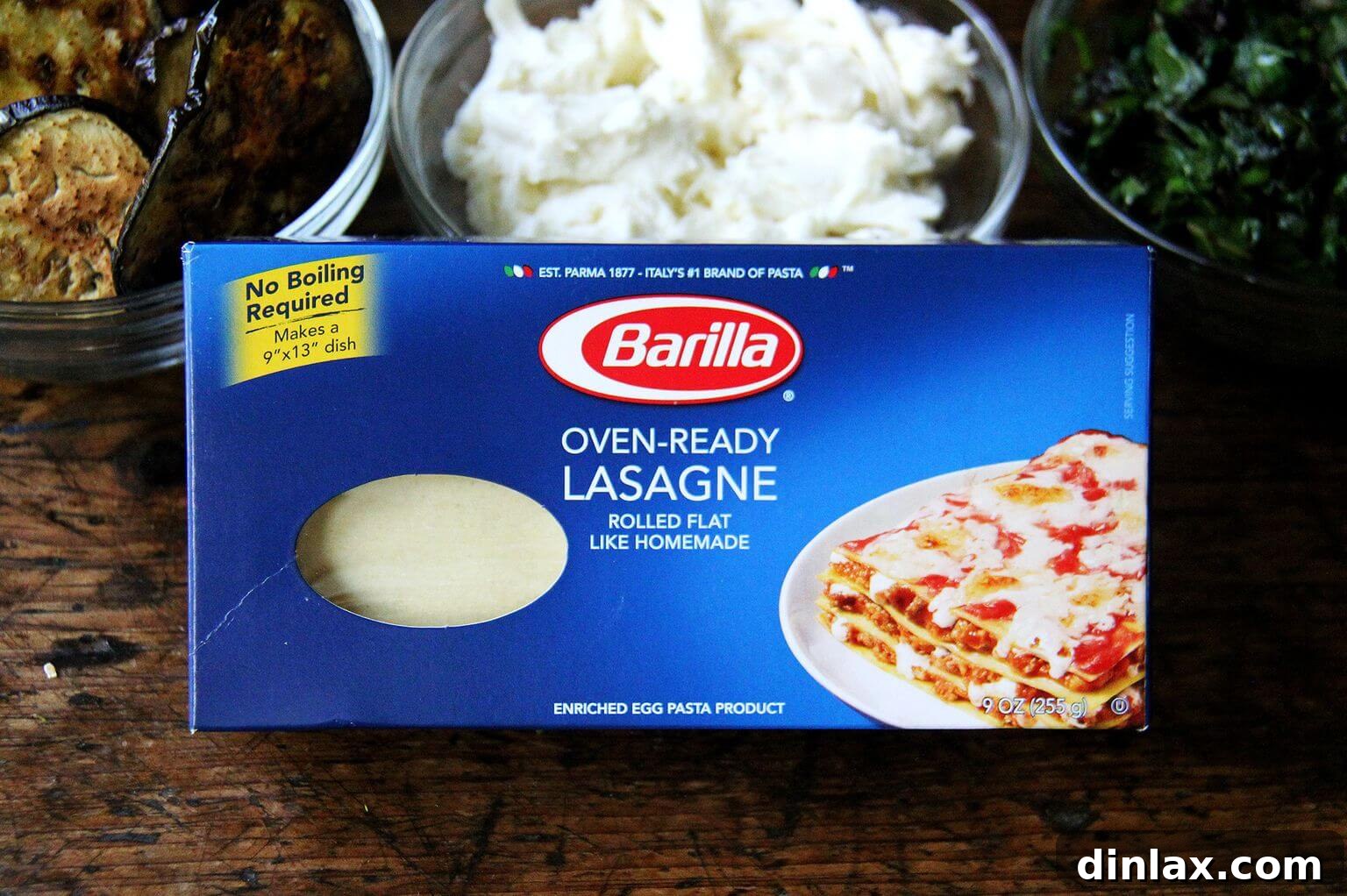
- Carefully place 3 sheets of no-boil noodles. The Barilla brand is a personal favorite for its consistent quality.
- Add another 1/2 cup of tomato sauce, spreading it evenly over the noodles.
- Distribute a generous layer of your cooked vegetables (roasted eggplant and sautéed Swiss chard in this recipe) over the sauce.
- Sprinkle with about 1/2 cup of your grated cheese blend (Parmesan and mozzarella).
- Repeat these layers until your pan is full, typically yielding four noodle layers.
The overarching principle here is to ensure approximately 1/2 cup of delicious tomato sauce consistently surrounds each layer of no-boil noodles. This critical step provides the moisture needed for the noodles to soften and cook perfectly during baking, resulting in a tender, well-integrated lasagna. While the assembly is straightforward, especially with the convenience of no-boil noodles, the overall timing depends on your ingredient preparation. If you have a batch of homemade sauce and pre-cooked vegetables (roasted, sautéed, or steamed) ready to go, assembling this lasagna becomes incredibly fast – truly a weeknight miracle! However, if you’re starting from scratch, preparing the sauce, roasting the eggplant, sautéing the chard, and grating the cheeses will naturally take a bit more time. For a fully homemade experience, consider dedicating a weekend afternoon to its creation; the rich, rewarding flavors are undoubtedly worth the effort.
Prep Ahead & Freeze: Enjoying Your Eggplant Lasagna Anytime
This roasted eggplant lasagna isn’t just a delicious meal; it’s also a fantastic make-ahead option, perfect for busy weeknights or future gatherings. Freezing your lasagna allows you to lock in its fresh flavors and enjoy a wholesome, homemade meal with minimal effort later on. Here’s how to properly freeze and reheat your lasagna to perfection:
To Freeze Baked Lasagna: After your lasagna has baked to golden perfection, remove it from the oven and allow it to cool completely at room temperature. This prevents condensation from forming and ice crystals from damaging the texture. Once cooled, wrap the entire pan tightly in several layers of plastic wrap, ensuring no air can get in. If you’re using a disposable aluminum pan, you can also cover it with its foil lid, reinforcing with plastic wrap for extra protection. Transfer the tightly wrapped lasagna to the freezer, where it can be stored for up to 3 months without compromising quality. This makes it an ideal choice for meal prepping and ensures you always have a comforting dish on hand.
To Thaw: When you’re ready to enjoy your frozen lasagna, planning ahead is key. Transfer the frozen pan from the freezer to the refrigerator approximately 24 hours before you intend to bake it. This slow thawing process ensures even defrosting and helps maintain the lasagna’s structural integrity and flavor. Avoid thawing at room temperature, as this can lead to uneven thawing and potential food safety issues.
To Bake (from thawed): Preheat your oven to 350ºF (175ºC). Place the covered pan (re-cover with foil if the original wrap was removed) into the preheated oven and bake for 30 minutes. This initial covered baking period allows the lasagna to heat through evenly without drying out the top. After 30 minutes, remove the foil and continue baking for another 5-10 minutes, or until the cheese on top is bubbly, golden brown, and the lasagna is heated all the way through. If you desire a slightly crispier, more caramelized top, you can briefly increase the oven temperature to 400ºF (200ºC) during the last few minutes, keeping a close eye on it to prevent burning.
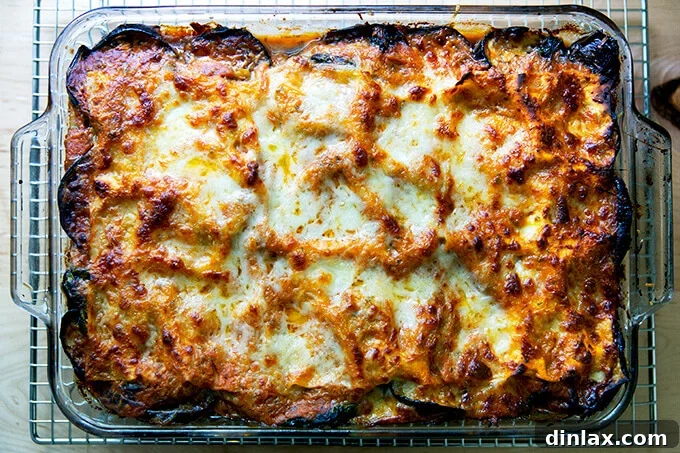
Step-by-Step Guide to Crafting the Perfect Roasted Eggplant Lasagna
Creating this delicious roasted eggplant lasagna is a straightforward process when broken down into manageable steps. The key to its incredible flavor lies in the preparation of each component. Here’s a detailed guide to help you build your masterpiece:
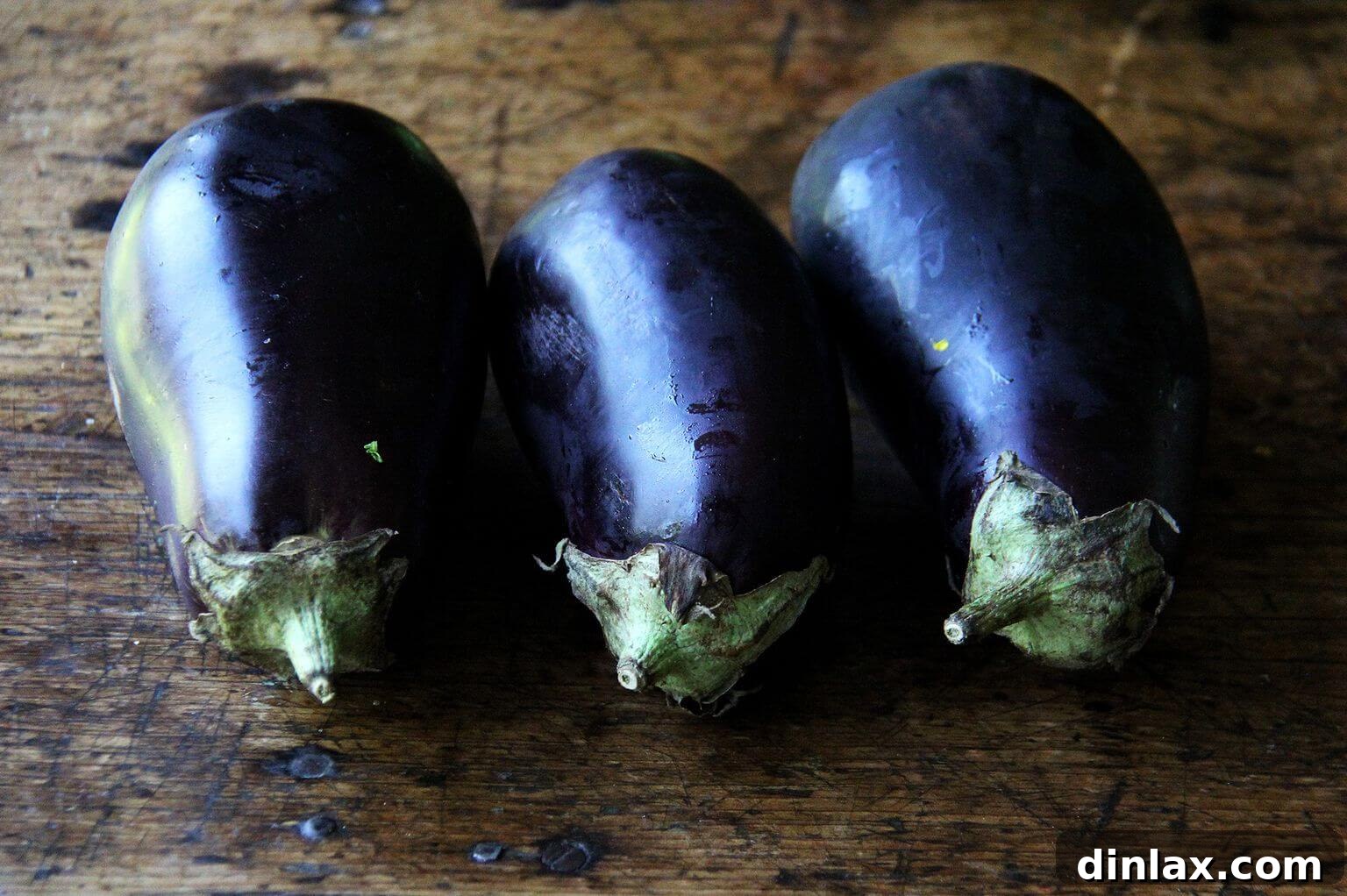
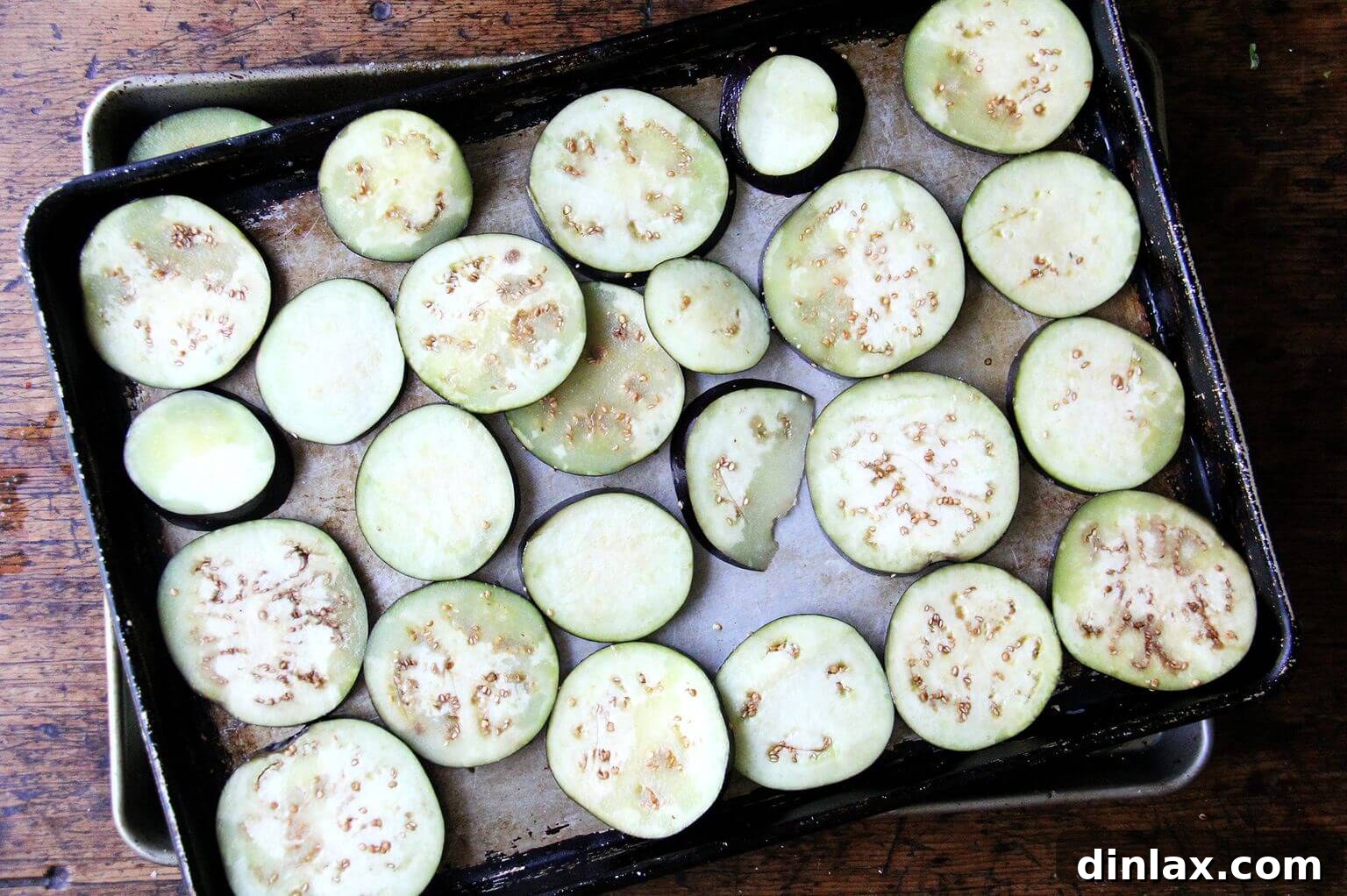
Step 1: Prepare the Eggplant. You’ll need about 2 to 3 pounds of eggplant, ideally firm and glossy with a vibrant purple hue. Begin by washing the eggplants thoroughly. Using a sharp knife, slice them into uniform 1/4-inch thick rounds. Aim for consistency in thickness to ensure even cooking. Arrange the eggplant slices in single layers on one or two large baking sheets. Drizzle generously with olive oil (or grapeseed oil, as suggested in the original recipe), ensuring each slice is lightly coated. Season liberally with kosher salt. Roast the eggplant in a preheated oven at 450°F (230°C) for approximately 20-25 minutes, or until the undersides are beautifully golden brown and the eggplant has softened. You may need to rotate the pans halfway through to ensure even browning. Roasting at this higher temperature effectively draws out moisture, eliminates bitterness, and caramelizes the eggplant, developing a rich, savory flavor that’s superior to traditional salting methods.
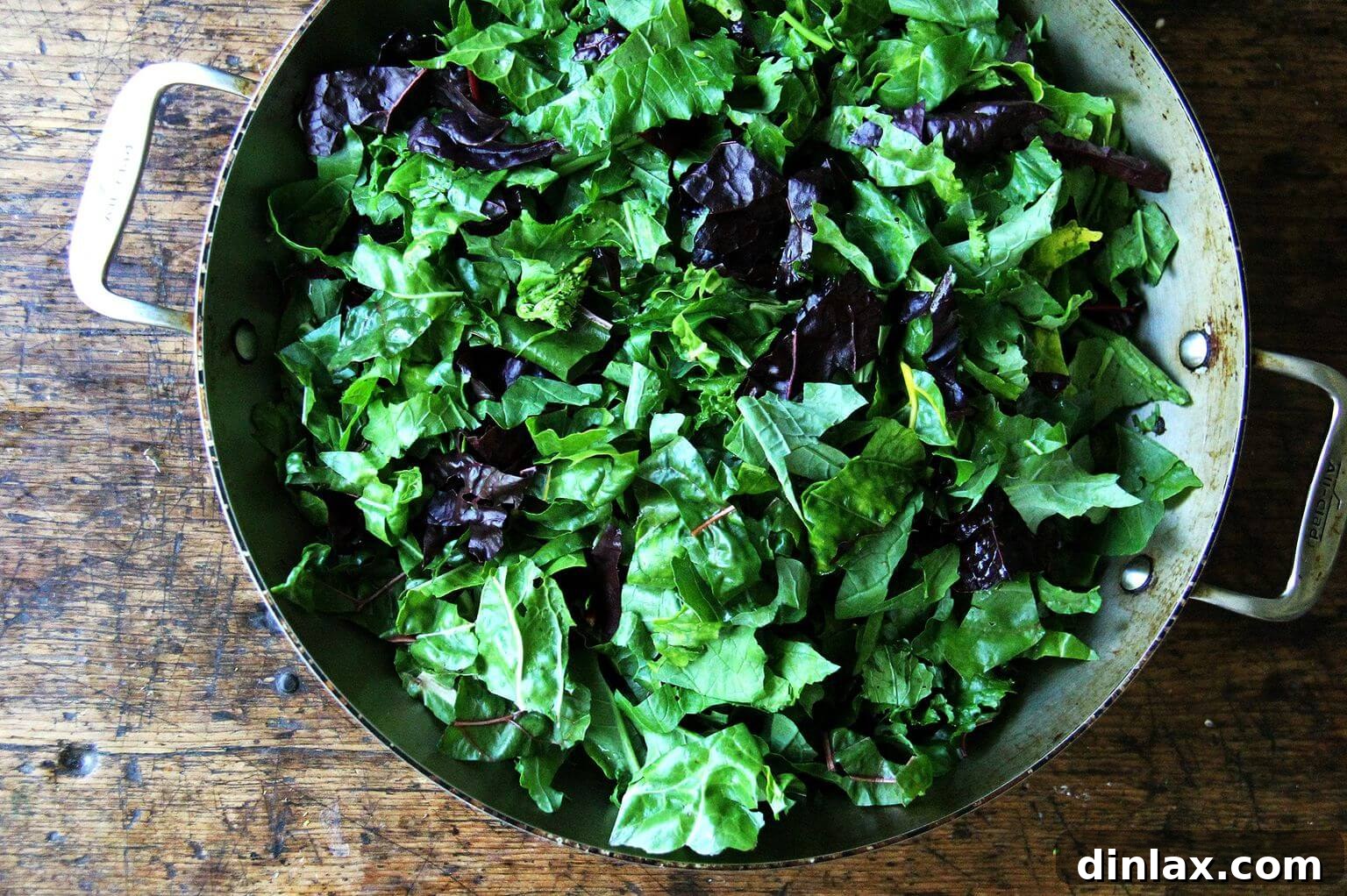
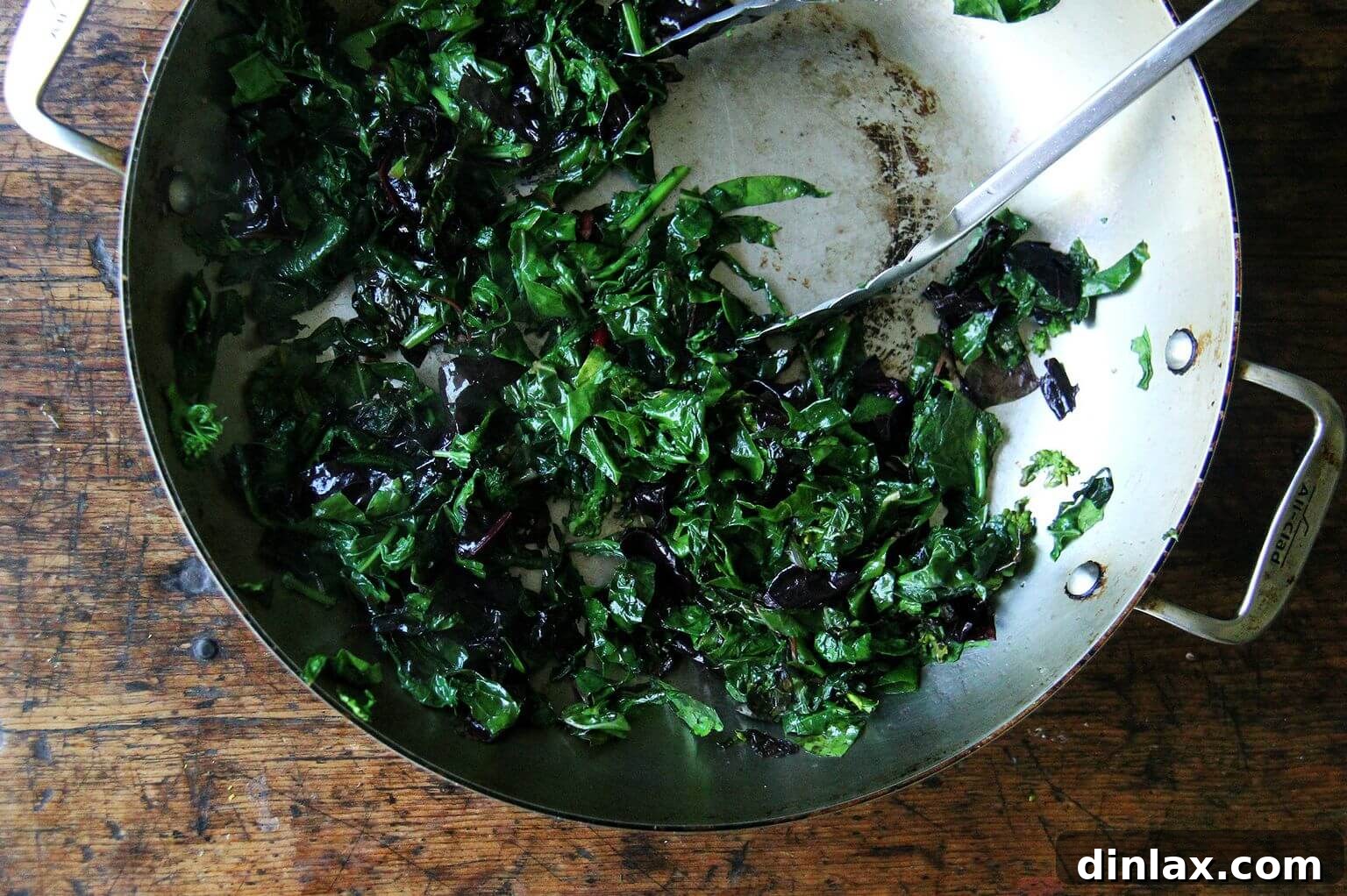
Step 2: Sauté the Swiss Chard (Optional, but Recommended!). While the eggplant roasts, prepare your greens. If using Swiss chard (or kale, spinach, or mustard greens), remove the tough stems and finely chop the leaves. Heat a large sauté pan over medium-high heat with a tablespoon or two of olive oil. Add the chopped greens and sauté, tossing frequently with tongs, until they have significantly wilted and shrunk down, which typically takes only 1 to 3 minutes. Season with a pinch of salt to enhance their flavor. Once cooked, transfer the sautéed greens to a plate to cool slightly. This step adds a wonderful layer of nutrition, color, and a subtle earthy bitterness that beautifully complements the richness of the eggplant and cheese.
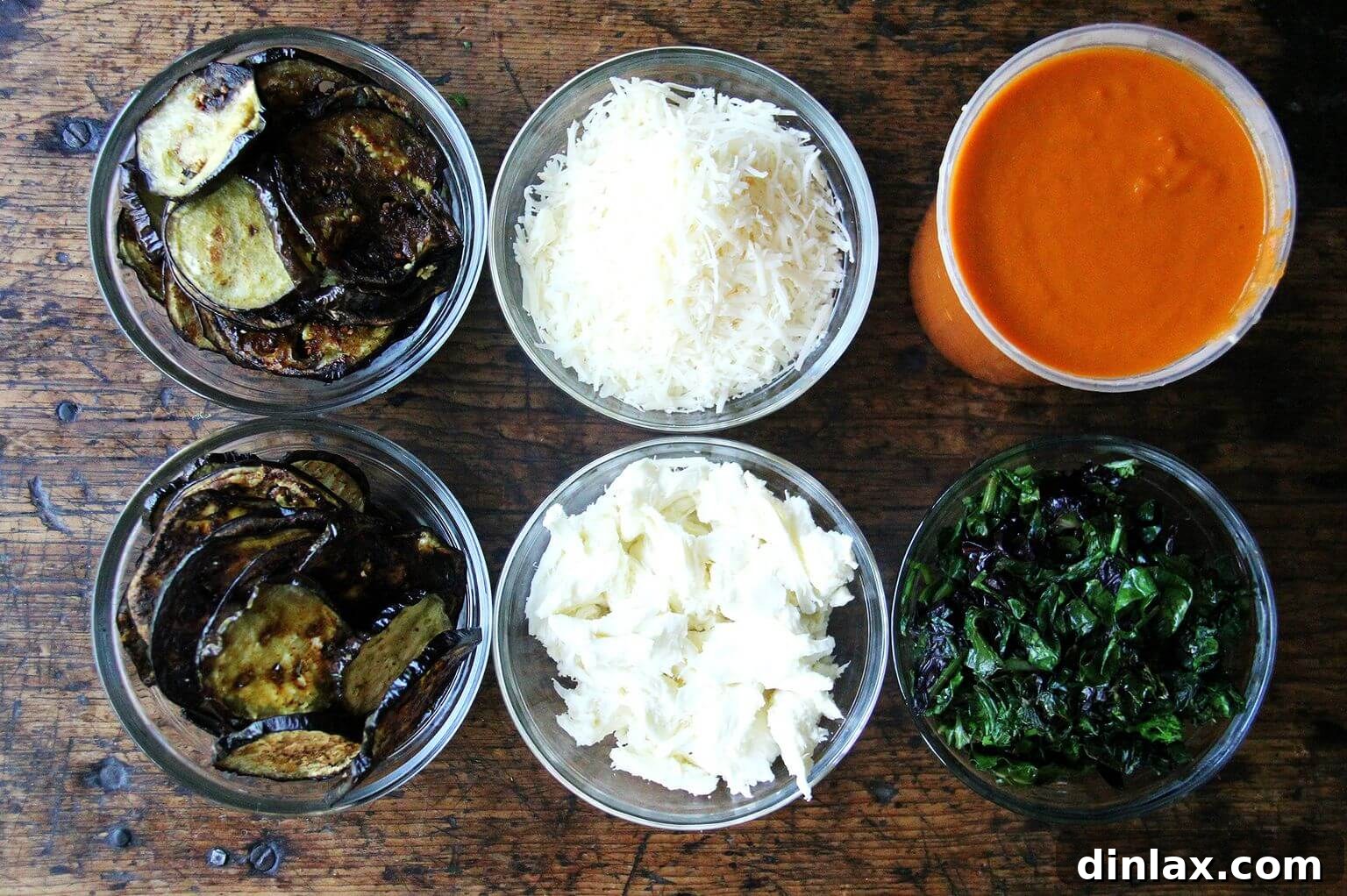
Step 3: Gather Your Components. Before assembly, ensure all your ingredients are ready and within reach. This includes your tender roasted eggplant rounds, the vibrant sautéed Swiss chard, a generous bowl of freshly grated Parmesan cheese, shredded or pulled fresh mozzarella, your favorite homemade or high-quality store-bought tomato sauce, and the convenient no-boil lasagna noodles. Having everything prepped makes the layering process smooth and efficient.
Step 4: Begin the Layering Process.
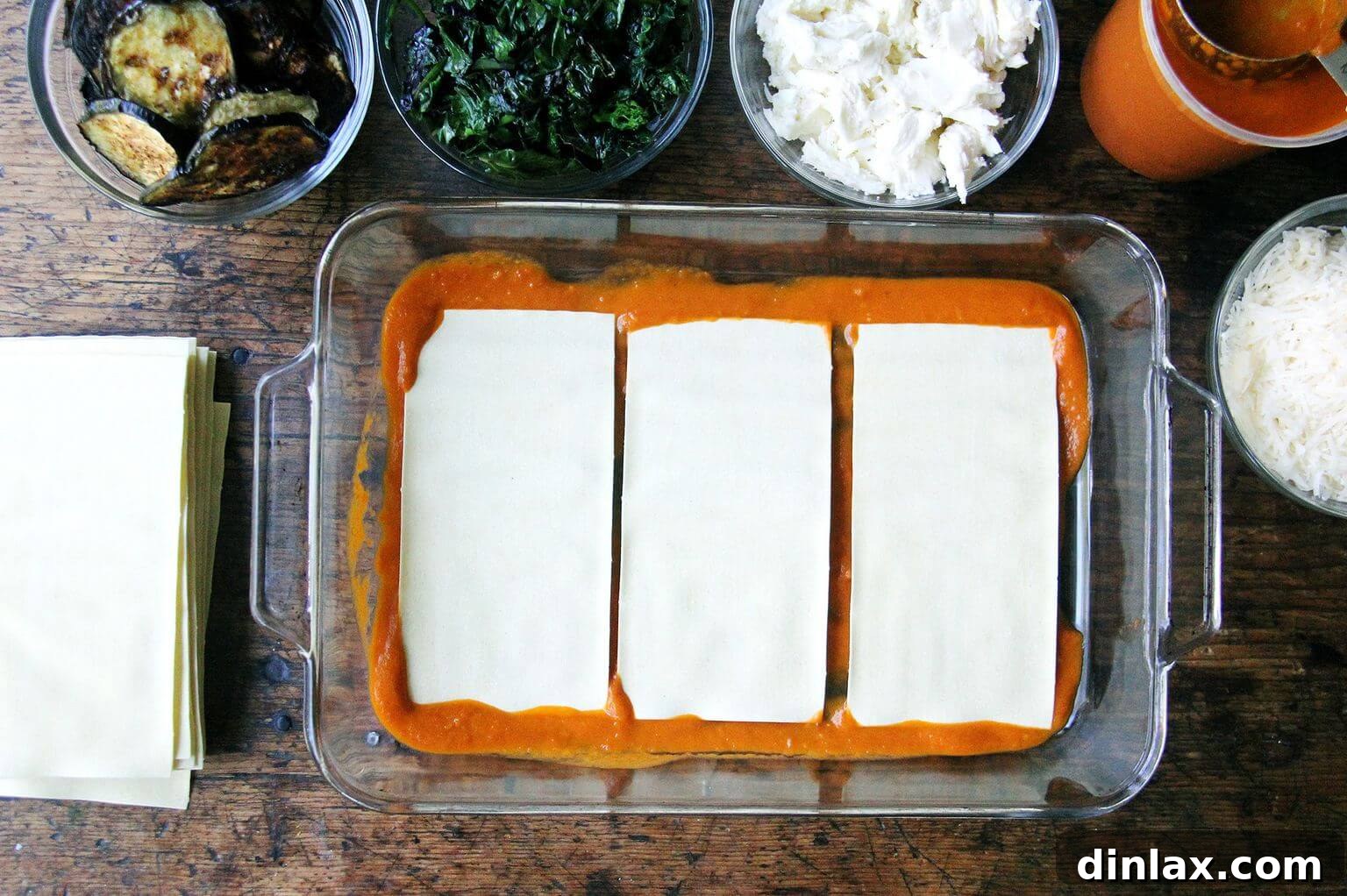
Preheat your oven to 350°F (175°C). In a 9×13-inch baking pan, spread a thin, even layer of about 1/2 cup of tomato sauce across the bottom. This prevents the first layer of noodles from sticking and provides initial moisture. Carefully arrange 3 sheets of no-boil noodles over the sauce, ensuring they cover as much of the pan as possible. Don’t worry if there are small gaps; they will soften and meld together during baking.
Next, spread another 1/2 cup of tomato sauce evenly over the noodles. This consistent application of sauce on both sides of the noodles is crucial for them to cook to the perfect al dente texture. Now, arrange a generous layer of your roasted eggplant rounds over the sauce, followed by a thin, even layer of the sautéed Swiss chard (or other chosen vegetables).
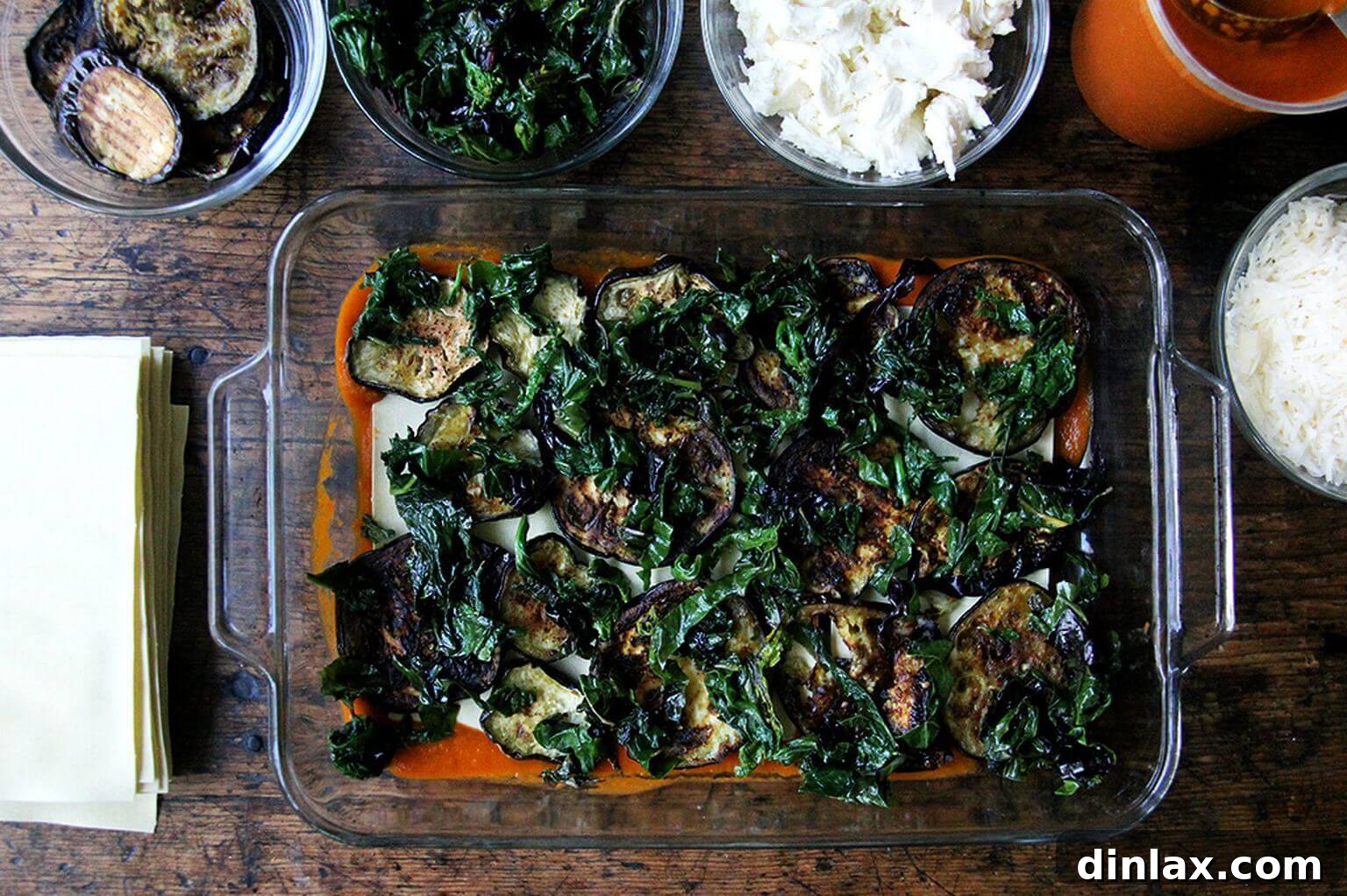
Finish this vegetable layer with about 1/4 cup of grated Parmesan and 1/4 cup of mozzarella cheese. The Parmesan adds a sharp, salty depth, while the mozzarella provides that quintessential gooey, melty texture. Repeat this layering sequence – noodles, sauce, vegetables, and cheese – until you have used four layers of noodles. The goal is to maximize the delicious fillings while maintaining a balanced structure.
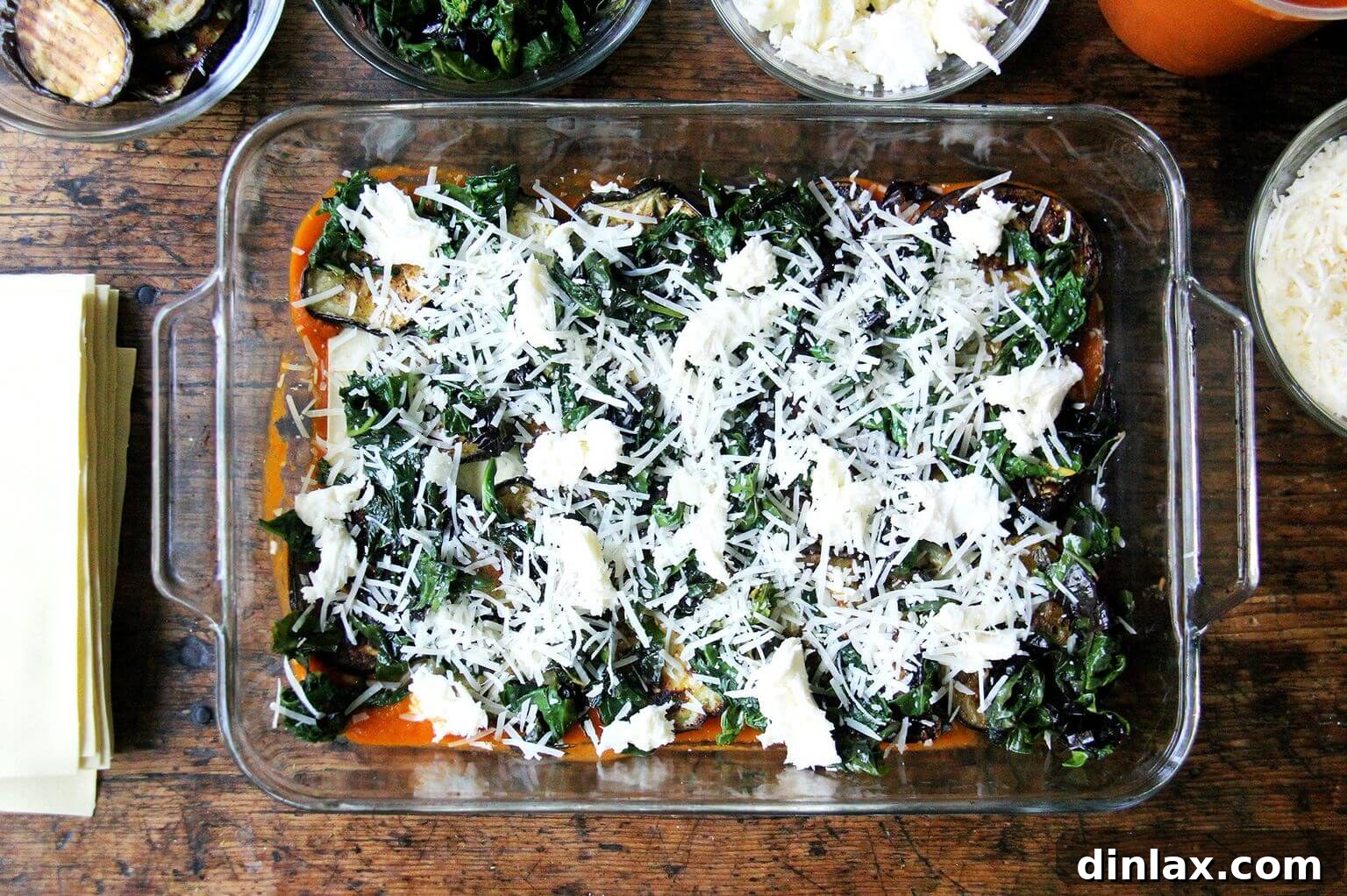
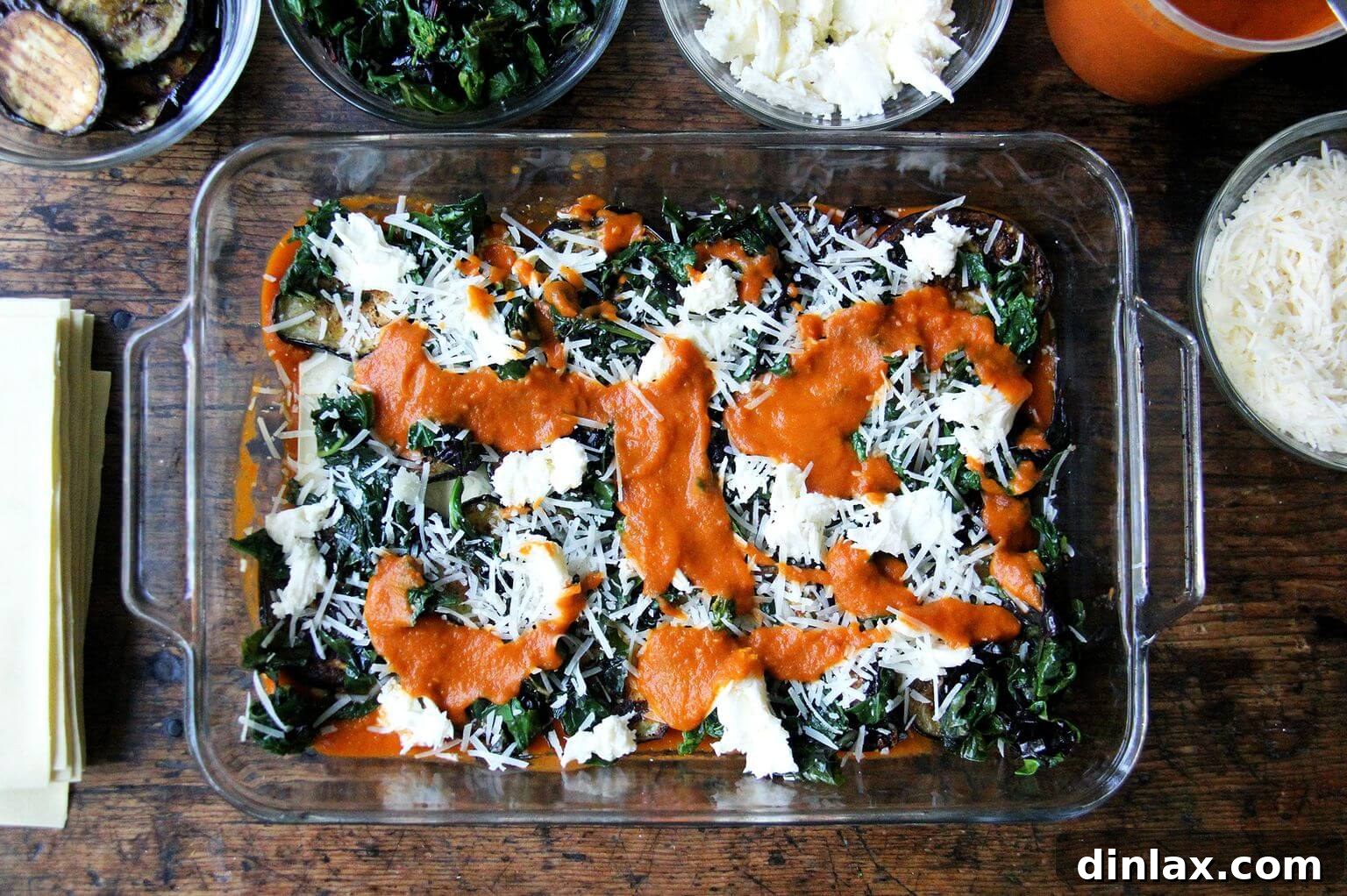
Step 5: The Grand Finale Layer. Once your fourth and final layer of noodles is in place, spread a generous amount of the remaining tomato sauce over the top, ensuring full coverage. This top layer of sauce acts as a protective blanket, preventing the noodles from drying out and ensuring they cook perfectly. Finally, blanket the entire lasagna with the remaining Parmesan and mozzarella cheeses. This creates a beautiful, golden-brown crust as it bakes, adding incredible flavor and texture.
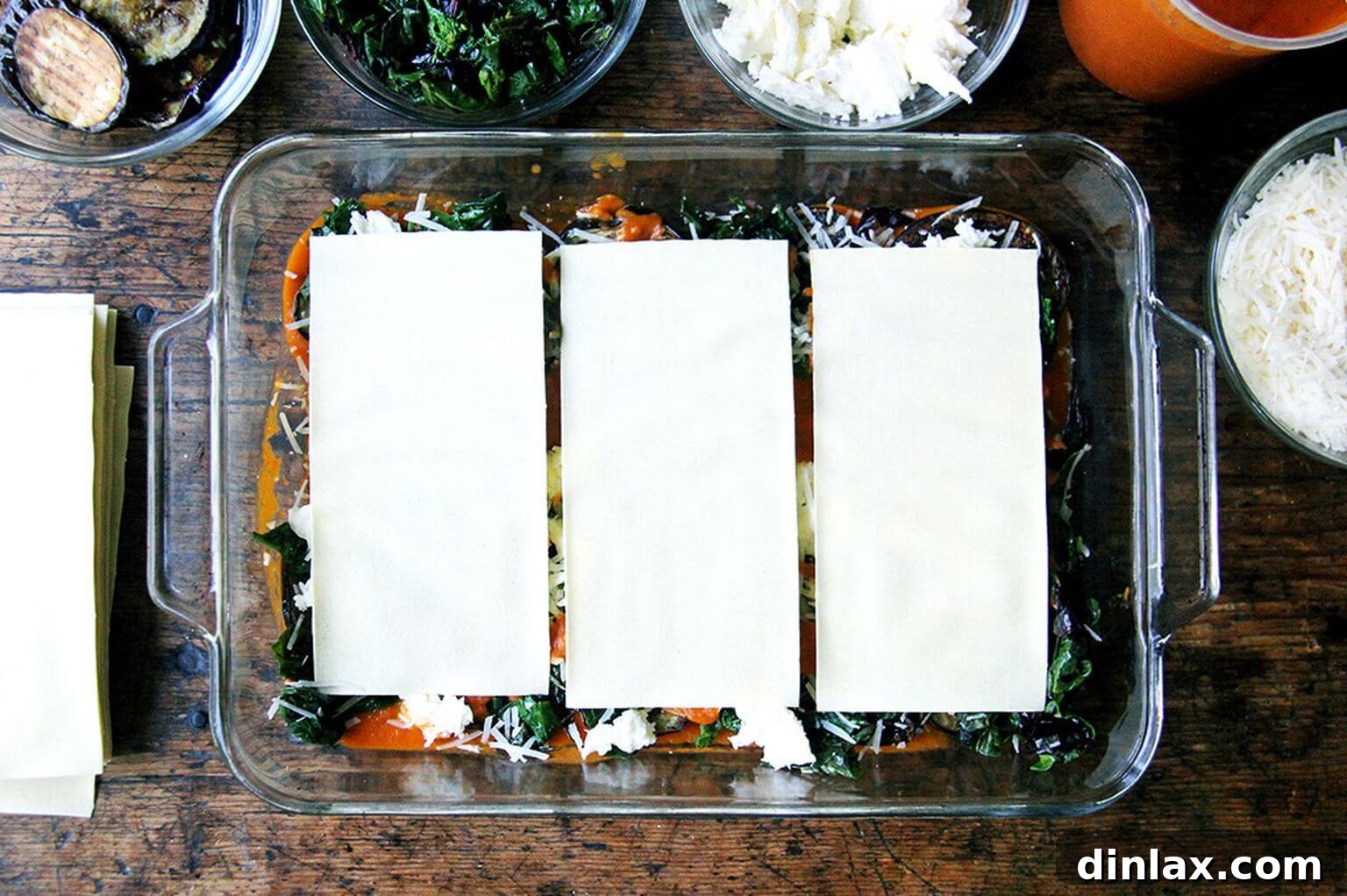
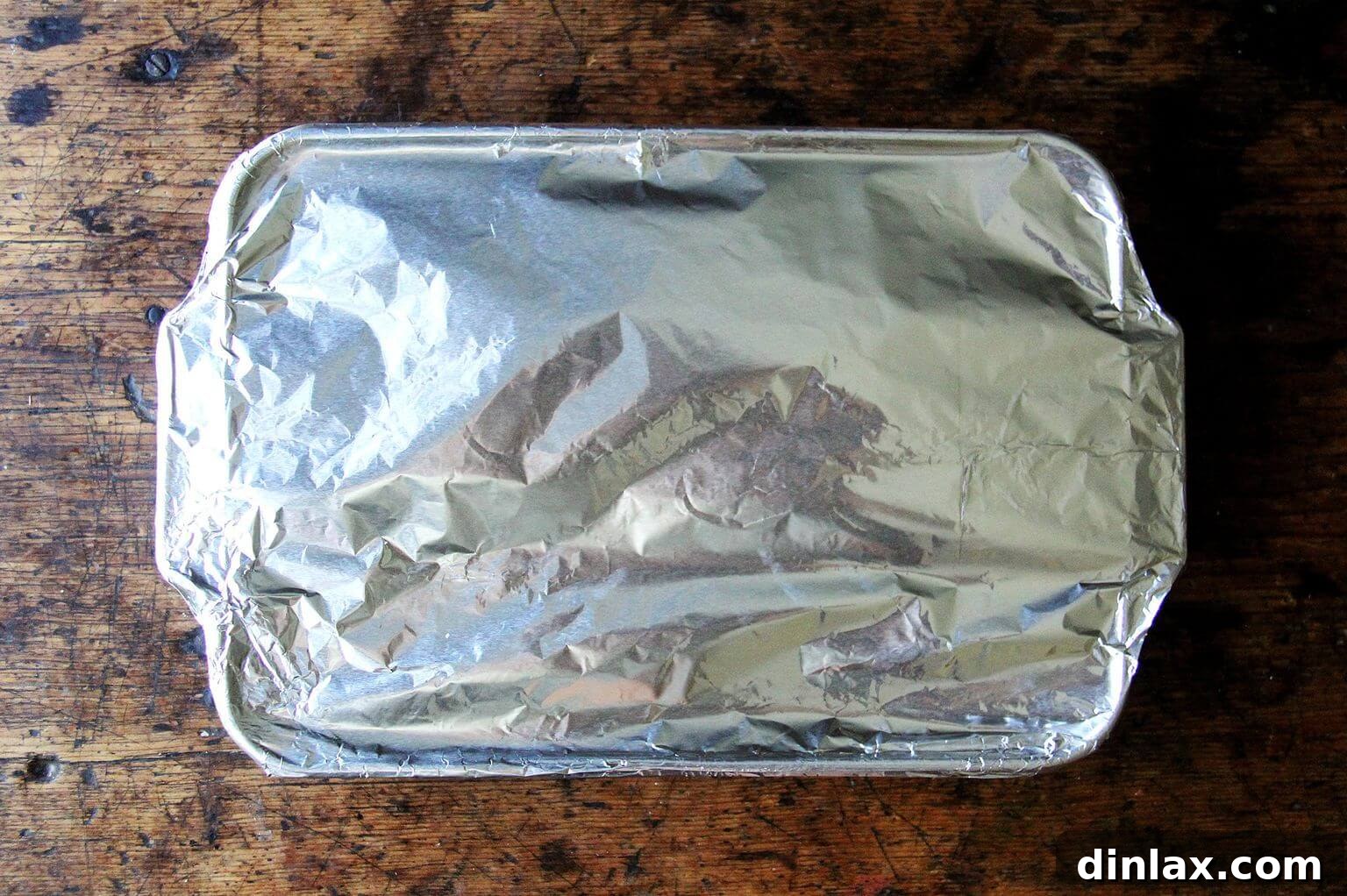
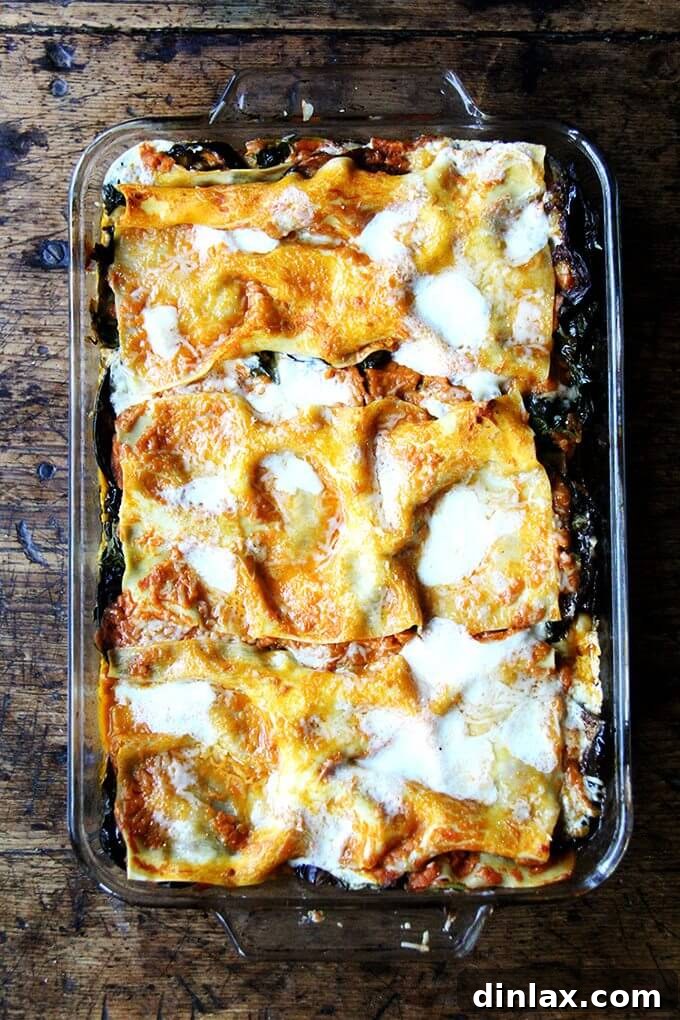
Step 6: Bake to Perfection (or Refrigerate/Freeze). Cover the pan tightly with aluminum foil. At this stage, you have a few options: you can refrigerate the assembled lasagna for up to 24 hours, making it an excellent make-ahead meal for entertaining or busy schedules. Alternatively, you can bake it immediately. Place the foil-covered lasagna in your preheated 350°F (175°C) oven and bake for 40 minutes. The foil helps steam the noodles and cook the layers evenly. After 40 minutes, remove the foil and continue baking for another 5 to 10 minutes, or until the cheese is melted, bubbly, and lightly golden brown. For an extra crispy, beautifully caramelized top, consider increasing the oven temperature to 400°F (200°C) for the last 5-10 minutes of uncovered baking.
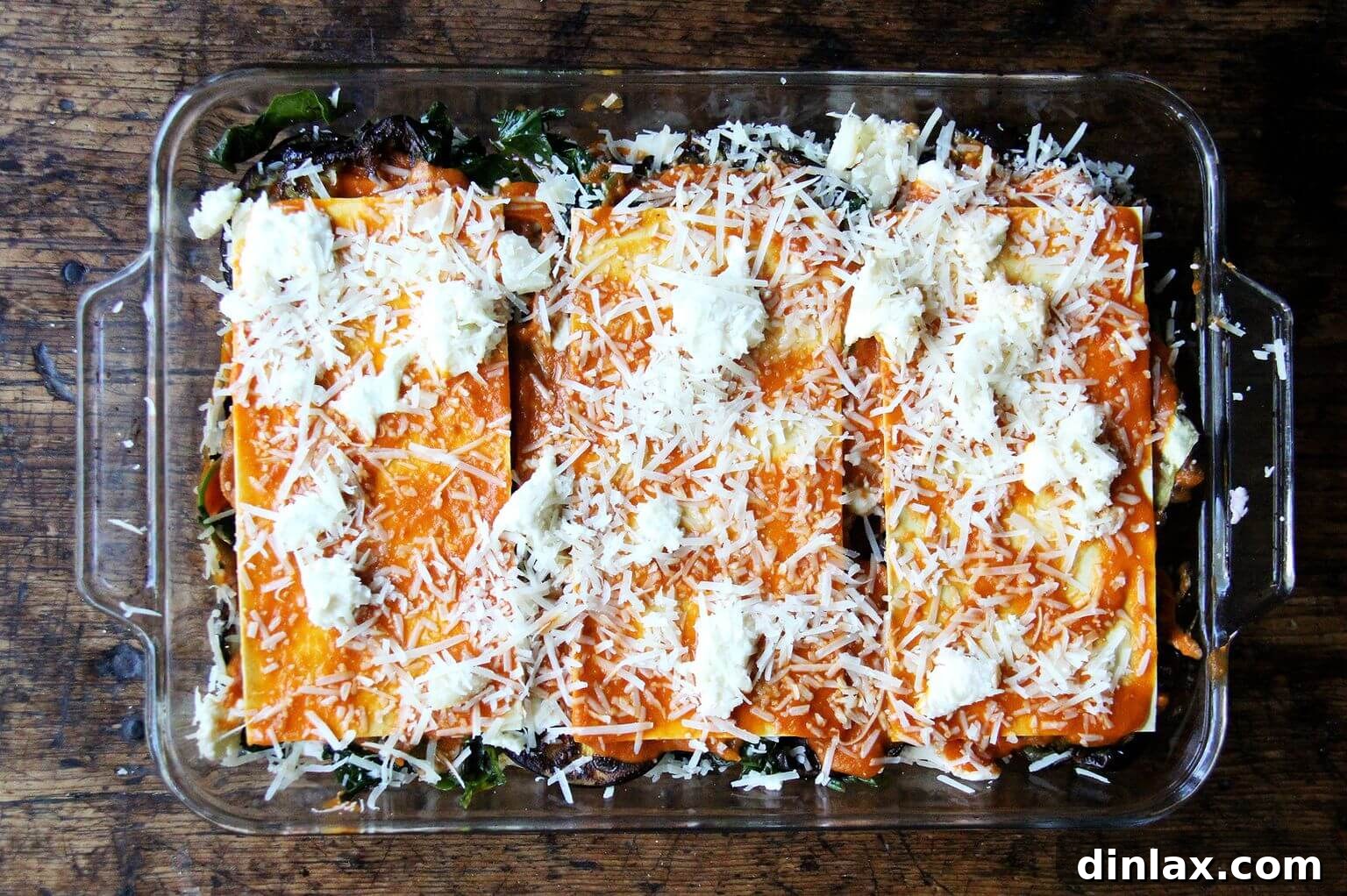
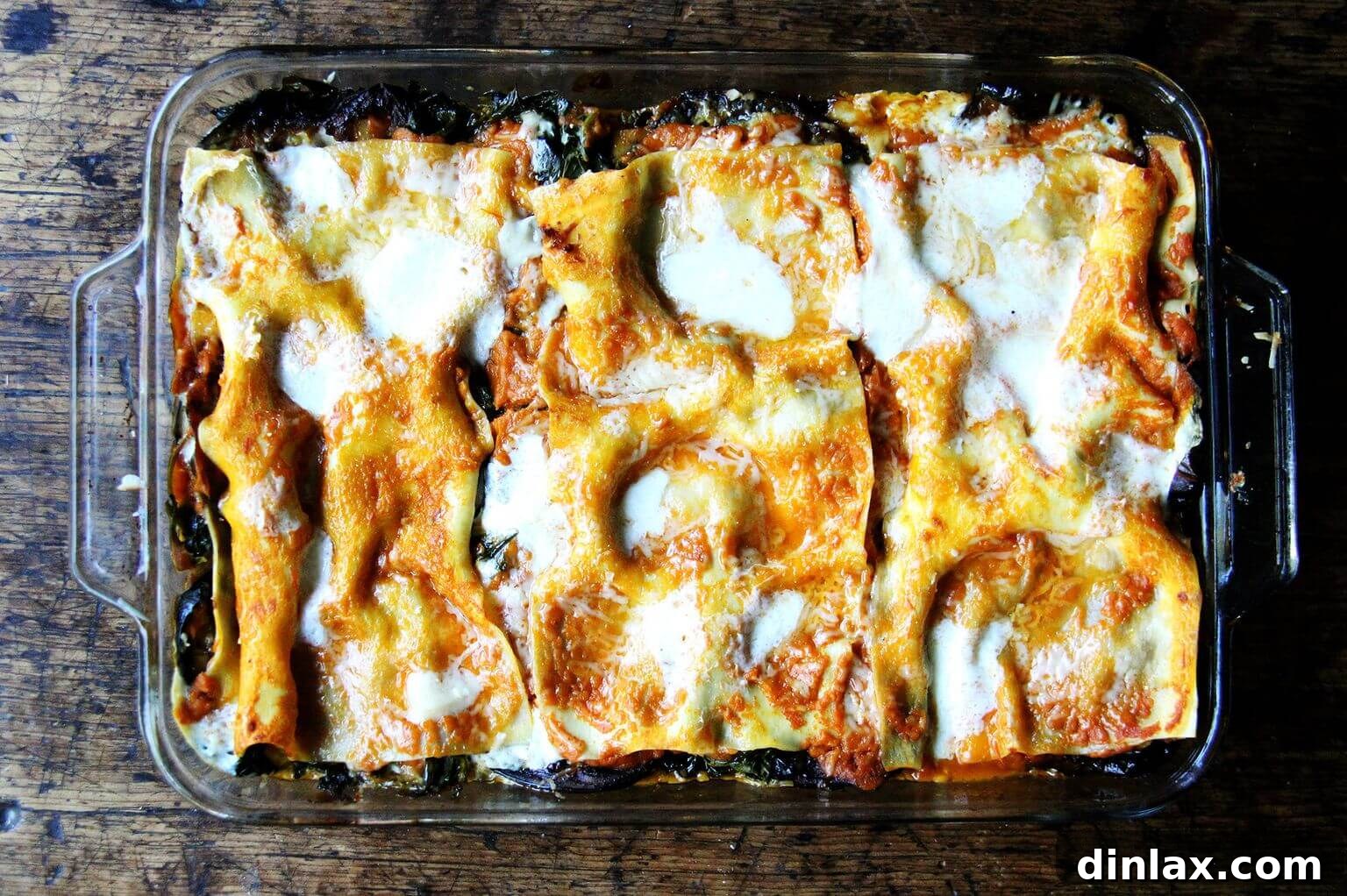
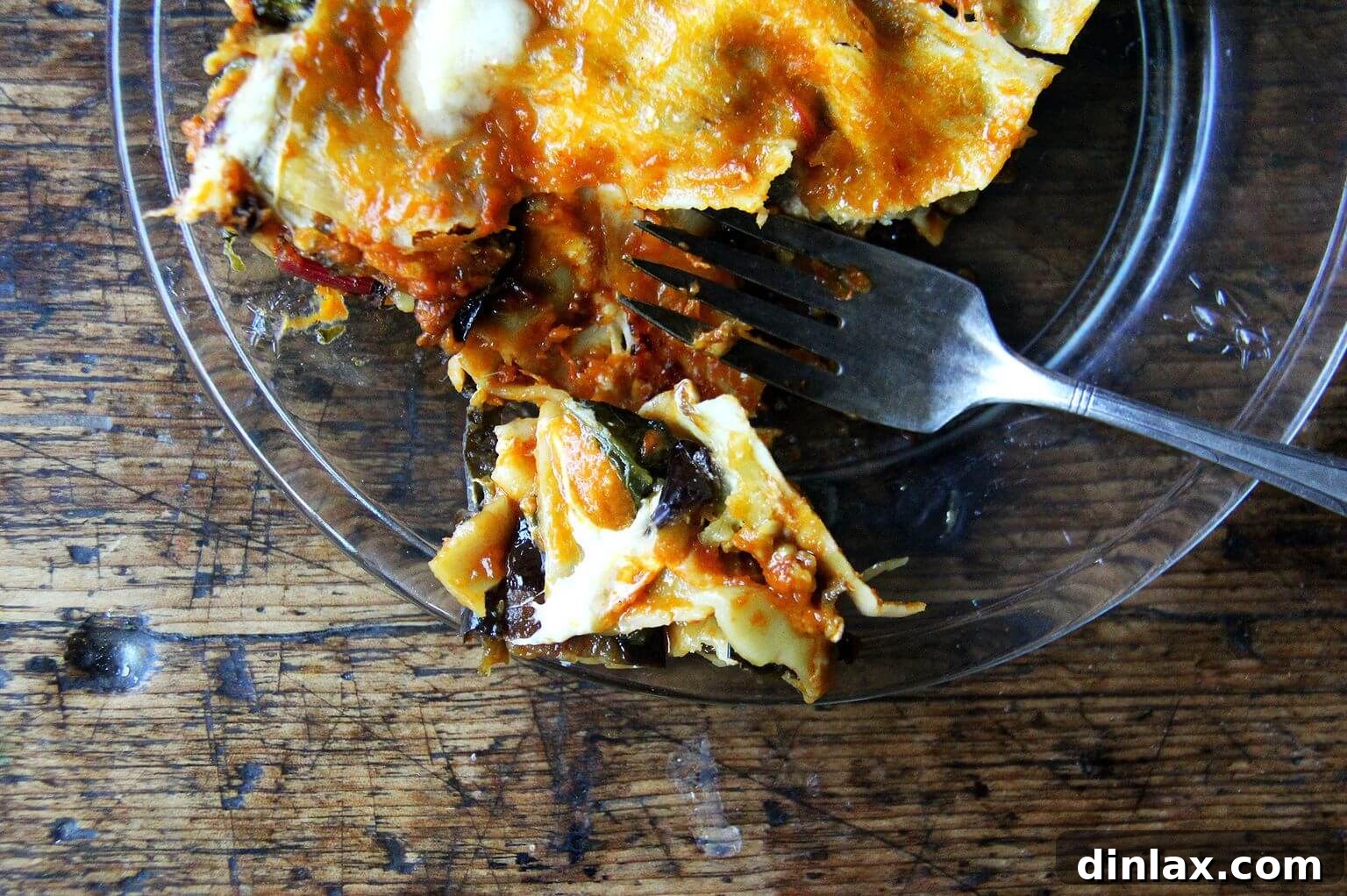
Step 7: Rest and Serve. Once baked, remove the lasagna from the oven and let it stand for at least 5-10 minutes before slicing and serving. This resting period is crucial as it allows the layers to set, preventing the lasagna from falling apart when cut. It also ensures all the juices redistribute, resulting in neater, more delicious slices. Serve warm and enjoy the comforting, rich flavors of your homemade roasted eggplant lasagna!
Print Recipe
Favorite Roasted Eggplant Lasagna
★★★★★
5 from 6 reviews
- Author: Alexandra Stafford
- Total Time: 1 hour 20 minutes
- Yield: Serves 8 to 10
- Diet: Vegetarian
Description
With layers of no-boil noodles, roasted eggplant rounds, sautéed Swiss chard, and a mix of parmesan and mozzarella, this eggplant lasagna is a favorite.
Use this recipe as a guide. I have made countless variations of this same formula: tomato sauce + mozzarella + parm + cooked vegetables + no-boil noodles.
You really can add any cooked vegetables you like: roasted red peppers, sautéed mushrooms, roasted butternut squash, sautéed beet greens, roasted cauliflower, etc.
I like the Barilla no-boil noodles. The box is 9 oz, but I don’t use all 15 sheets — you need 12 here. Save the remaining 3 sheets in a ziplock bag.
I’ve never loved the ricotta-egg layer of lasagna, so I’ve omitted it here.
Ingredients
- 2 to 3 small-ish eggplant (about 2 to 3 pounds)
- Grapeseed oil (or olive oil)
- Kosher salt
- 10 to 12 ounces greens, such as Swiss chard, kale, or mustard greens, leaves removed from stems and finely chopped (you should have about 8 oz. greens post trimming)
- 1 quart tomato sauce, such as this one or this one
- 1 box no-boil noodles (about 9 oz, you’ll need 12 sheets, see notes above)
- 4 ounces Parmigiano Reggiano, grated (about 1 cup)
- 8 ounces fresh mozzarella (not stored in brine), pulled into small pieces or low-moisture, whole milk mozzarella, grated
Instructions
- Preheat the oven to 450° F (230°C; convection roast if possible). Slice the eggplant into 1/4-inch thick rounds. Spread into single layers on two baking sheets. Drizzle 3 to 4 tablespoons grapeseed oil over top. Toss to coat. Spread back into a single layer and season generously with kosher salt. Roast the eggplant for 20 minutes or so, rotating the pans halfway—the eggplant is done when the undersides are golden brown and release easily from the pan with a metal spatula. This may take longer than 20 minutes and may require more than one rotation of the pans. Be sure to check the eggplant slices periodically—for instance, the slices on the perimeter of my sheetpan always brown/finish cooking first. Transfer eggplant to a plate. Turn the heat down to 350° F (175°C) for assembly and baking.
- Meanwhile, place a large sauté pan over medium-high heat. Add 2 tablespoons grapeseed oil. When the oil shimmers, add the greens, and sauté turning the greens with tongs to help them cook evenly. Season with a good pinch of salt. When the greens have shrunk way down, they’re done—this will happen in 1 to 3 minutes. Turn off the heat and transfer the greens to a plate to cool.
- Set up an assembly line with your tomato sauce, no-boil noodles, plate of eggplant and greens, grated parmesan, pulled-apart mozzarella. Spread a 1/2 cup of tomato sauce over the bottom of a 9×13-inch pan. Top with 3 no-boil noodles. Spread another 1/2 cup of sauce over top. Layer eggplant in a single layer over top. Spread a thin layer of greens over top. Spread about 1/4 cup of parmesan over top, then 1/4 cup mozzarella. Repeat this layering until you have four layers of noodles, then top the final layer of noodles with another 1/2 cup tomato sauce (or more) and the remaining cheese. (The idea is to always have about 1/2 cup tomato sauce on either side of the noodles, but you can’t go wrong here.)
- Cover pan with foil and refrigerate until ready to bake or transfer to oven and bake 40 minutes covered. Remove foil, and bake for 5 to 10 minutes if desired to lightly brown the top. If you like a darker, more caramelized top, increase the oven temperature to 400ºF (200°C) for the last 5-10 minutes.
- Let stand 5 minutes before cutting and serving.
- To Reheat: Transfer slices (or the entire leftover pan … whatever amount you wish) to a small sheet pan, cover with foil, and heat for 15 minutes at 350 F (175°C). Uncover and cook for 5 minutes more.
- Prep Time: 20 minutes
- Cook Time: 60 minutes
- Category: Dinner
- Method: Oven
- Cuisine: American, Italian