Master Easy Bread Baking: Your Ultimate Guide to No-Knead Peasant Bread
Conquer Your Bread Baking Fears: Say Goodbye to Yeast Dread and Kneading Worries
Are you one of the many home cooks who shy away from baking bread? Does the mere mention of “yeast” fill you with apprehension? Do you envision endless hours of strenuous kneading, only to end up with a dense, disappointing loaf? It’s time to put those fears to rest. Forget everything you thought you knew about bread making, because we’re about to embark on a journey that will transform your kitchen into a fragrant bakery, effortlessly. If you possess the simple skills of whisking and stirring, then you are perfectly equipped to bake truly exceptional bread. It’s not just simple; it’s revolutionary. Prepare to discover the joy of homemade bread, a culinary delight accessible to everyone.
Many aspiring bakers are intimidated by yeast, viewing it as a temperamental ingredient that demands precise conditions and expert handling. The idea of “proofing” yeast, waiting for it to bloom, and worrying if it’s still alive can deter even the most enthusiastic cooks. Then there’s the kneading – the rhythmic pushing and pulling of dough, often perceived as a laborious and time-consuming task. But what if we told you that none of these perceived obstacles need to hold you back? This guide introduces you to a method that bypasses these traditional hurdles, offering a streamlined, no-fuss approach to baking that yields phenomenal results every single time.
Essential Tools for Your Effortless Bread Making Journey
Before you dive into the delightful world of no-knead bread, let’s talk about the few simple pieces of equipment that will make your experience even smoother and more successful. Think of these as your indispensable companions on the path to becoming a confident bread baker.
The Digital Scale: Your Secret Weapon for Consistent Results
The single most impactful investment you can make to simplify bread baking and ensure consistent, delicious results is a high-quality digital scale. While traditional recipes often call for cup measurements, the truth is that flour can be scooped and packed differently by everyone, leading to significant variations in dough consistency. A cup of flour for one baker might weigh differently than a cup of flour for another, creating unpredictable outcomes.
This is where the precision of a digital scale shines. When a recipe calls for 512 grams of flour, it means exactly 512 grams – no more, no less, regardless of how you scoop it. This eliminates guesswork and ensures that your dough has the perfect hydration ratio every time, leading to a consistently textured and flavorful loaf. Once you start baking by weight, you’ll wonder how you ever managed without it. This simple tool removes the primary variable that causes dough to be too stiff or too loose, allowing you to achieve bakery-quality bread with remarkable ease. A reliable and reasonably priced option, like this digital scale, will quickly become one of the most used gadgets in your kitchen. Beyond bread, a digital scale proves invaluable for countless other culinary tasks, ensuring accuracy in everything from preparing homemade granola and muesli to baking perfect brownies or portioning dough for chocolate chip cookies. It’s also incredibly useful for accurately portioning hamburger patties and buns, or even weighing packages for shipping at home. Its versatility makes it an indispensable asset for any home chef seeking precision and efficiency.
Instant Yeast: A True Game Changer for Simplicity
Another revolutionary ingredient that simplifies your bread-making endeavors is instant yeast. Unlike active dry yeast, which typically requires a preliminary step of “proofing” or “blooming” in warm water to activate it, instant yeast can be stirred directly into your dry ingredients. This eliminates an entire step from the process, saving you time and removing one more potential point of anxiety. With instant yeast, there’s no need to wonder if your yeast is active enough – just mix it in and let it do its magic. For reliable and consistent results, SAF brand instant yeast is highly recommended by experienced bakers for its consistent quality.
Other Must-Have Kitchen Essentials for Your Bread Baking Adventure
- Two 1-Quart Oven-Safe Pyrex Bowls: These are specifically recommended for the Peasant Bread recipe, as they help achieve the signature round shape and crispy crust. Their heat retention and non-reactive nature make them ideal for baking.
- Quality Flour: While the specific brand can vary, using a good quality all-purpose or bread flour is key. Historically, King Arthur Flour has been a staple in many kitchens, including my mother’s and my own, known for its consistent performance. However, feel free to experiment with bread flour for a chewier texture, or explore locally milled and stone-milled flours if you prefer, embracing the diverse flavors they can offer. The most important thing is to choose a flour you trust and enjoy working with.
- Basic Mixing Tools: With a reliable whisk, a sturdy spatula (this one is a personal favorite for its flexibility and durability), and a spacious 4-quart mixing bowl on hand, you’ll have everything necessary to mix your dough with ease. Remember the mantra: If you can whisk and stir, you can make bread!
Unveiling the Master Recipe: My Mother’s Peasant Bread
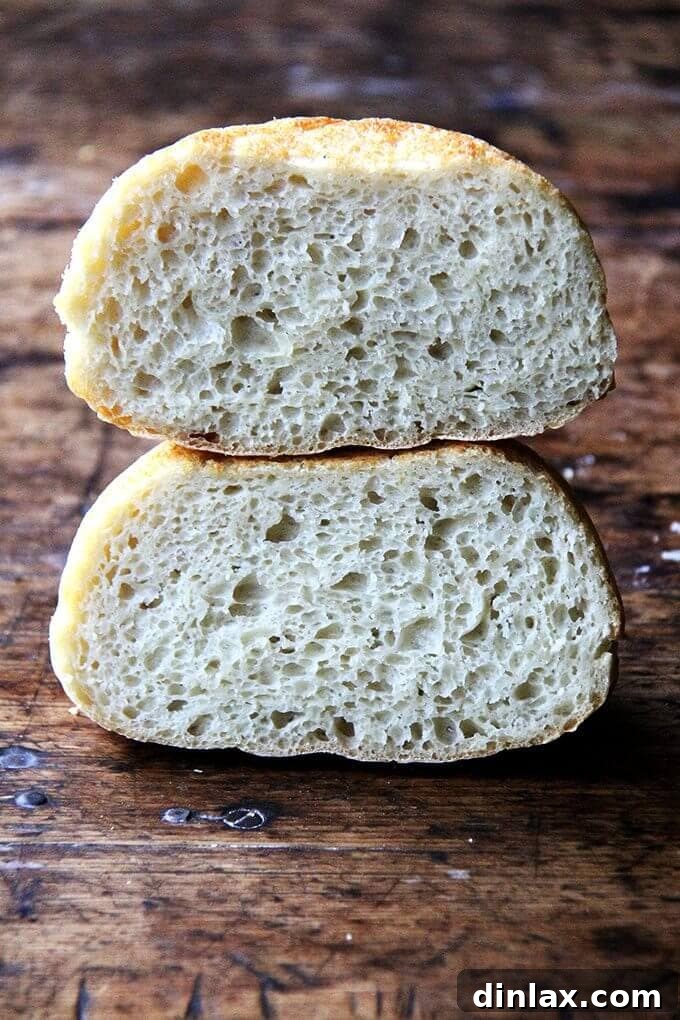
At the heart of this simple bread-baking philosophy lies one extraordinary recipe: My Mother’s Peasant Bread. This isn’t just a recipe; it’s a phenomenon. Over the years, thousands of individuals have discovered their inner baker through this method, crediting it with transforming their fear of yeast into unwavering confidence. It’s a no-knead, no-mess, and virtually foolproof approach that consistently delivers two beautiful, crusty, and tender loaves. This recipe is more than just a culinary guide; it’s a gateway to regular homemade bread on your family’s table, any day of the week, with minimal effort.
The beauty of this peasant bread lies in its simplicity and the minimal handling it requires. By allowing time and yeast to do the work, you achieve a beautifully developed flavor and texture without the need for traditional kneading. This long, slow fermentation process contributes to a superior crumb structure and a depth of flavor that rivals artisan loaves. It’s truly the best and easiest bread you will ever bake. You can find the complete, detailed recipe here: My Mother’s Peasant Bread: The Best, Easiest Bread You Will Ever Bake.
Step-by-Step Visual Guide: Baking Perfect Peasant Bread
To further demystify the process and guide you with confidence, here’s a photo step-by-step breakdown of how to prepare My Mother’s Peasant Bread. Each image corresponds to a simple action, proving just how accessible homemade bread can be.
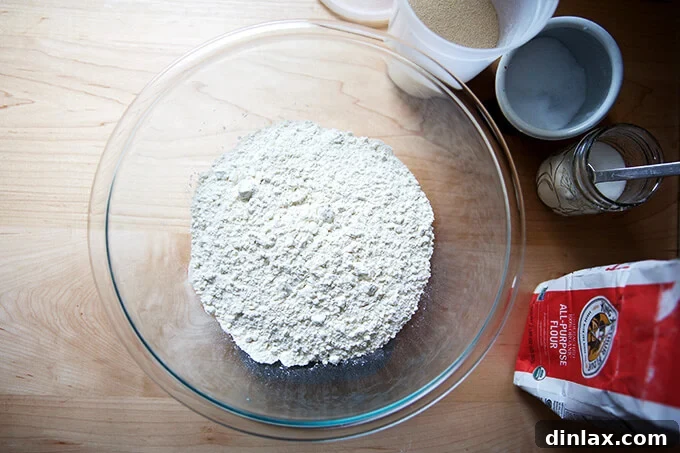
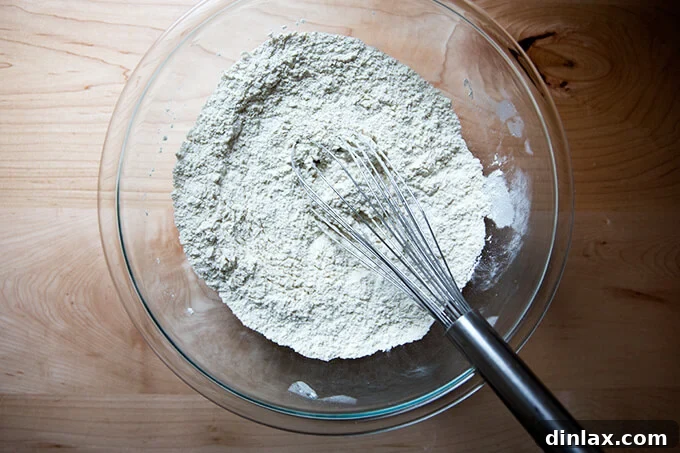
First, gather your dry ingredients: flour, salt, a touch of sugar, and your instant yeast. Whisk them together thoroughly in your large mixing bowl. This ensures even distribution of the yeast and seasoning throughout the flour.
Next, pour in the water. The specific temperature isn’t critical with instant yeast, but lukewarm water (around 105-115°F or 40-46°C) can help activate the yeast more quickly. Simply add it to your dry mixture.
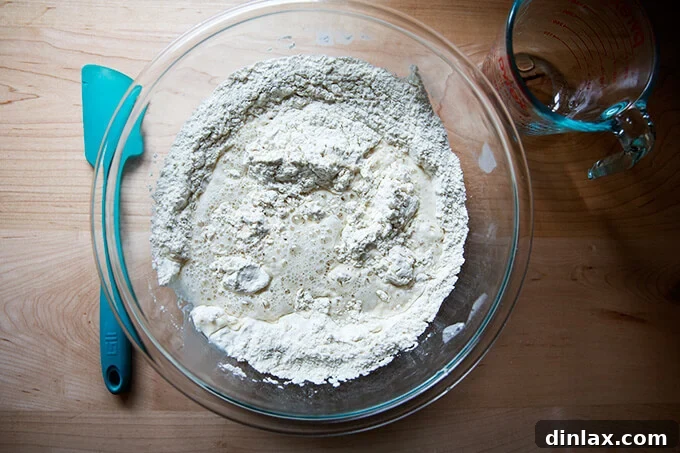
Using your spatula or a sturdy spoon, stir until all the flour is incorporated and a sticky dough ball forms. Don’t worry about lumps or a perfect consistency; just ensure there are no dry pockets of flour left.
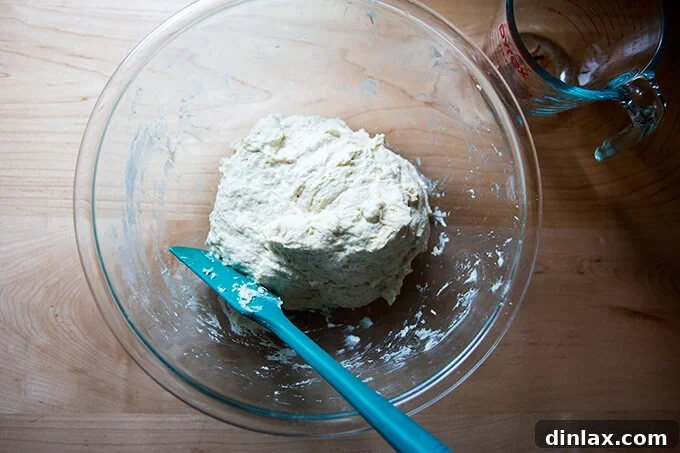
Cover the bowl and let the dough rise in a warm spot in your kitchen. This could be on top of your refrigerator, near a sunny window, or in a slightly warm oven (turned off). The warmth aids the yeast in its fermentation process.
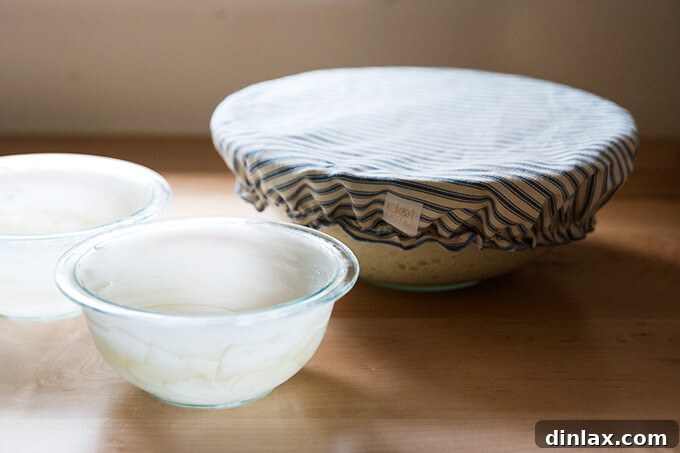
Allow the dough to rise until it has visibly doubled in bulk. This typically takes 1.5 to 2 hours, depending on your kitchen’s temperature. While it’s rising, butter two 1-quart oven-safe Pyrex bowls thoroughly. This prevents sticking and contributes to a beautiful crust.
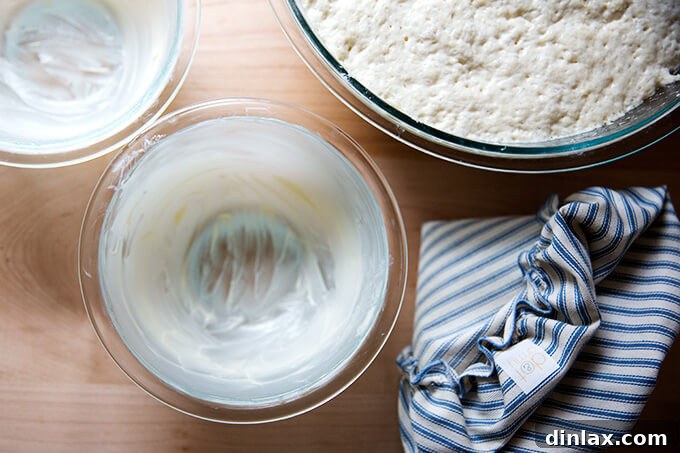
Once risen, gently deflate the dough using two forks. This releases the accumulated gases without requiring heavy kneading, preserving the tender structure of the dough.
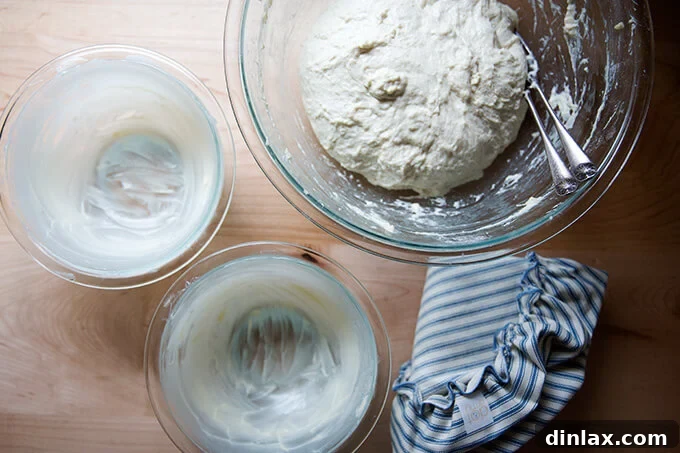
Using the same forks, separate the dough into two equal portions. This ensures you get two evenly sized loaves from your batch.
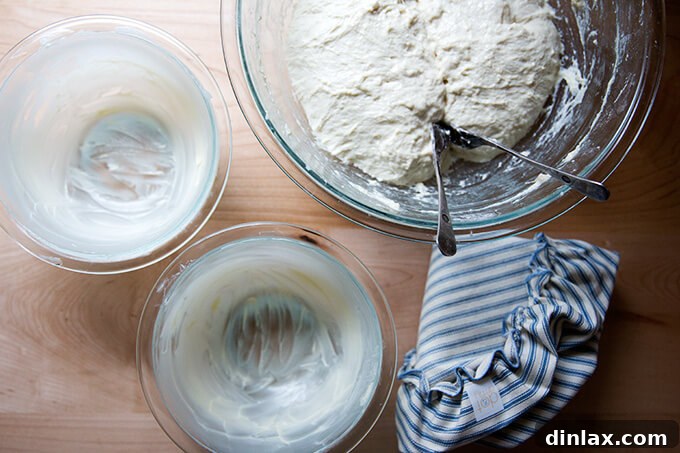
Carefully transfer each portion of dough into the prepared buttered bowls. The dough will be sticky, so the forks help with the transfer.
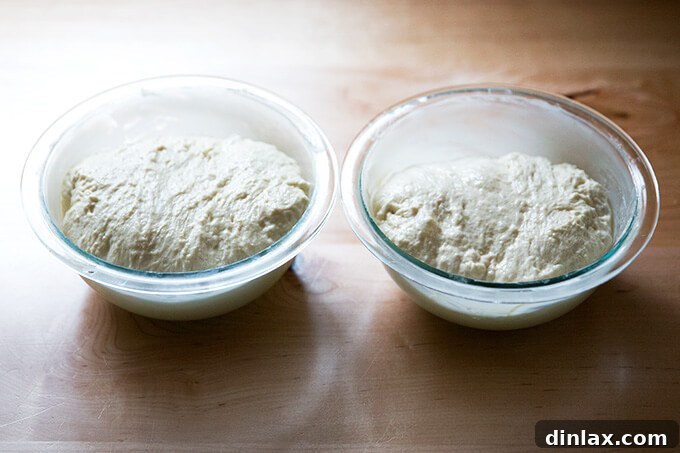
Let the dough rise again in the bowls until it “crowns” or slightly extends over the rims. This second rise is crucial for a light and airy texture. Preheat your oven during this time.
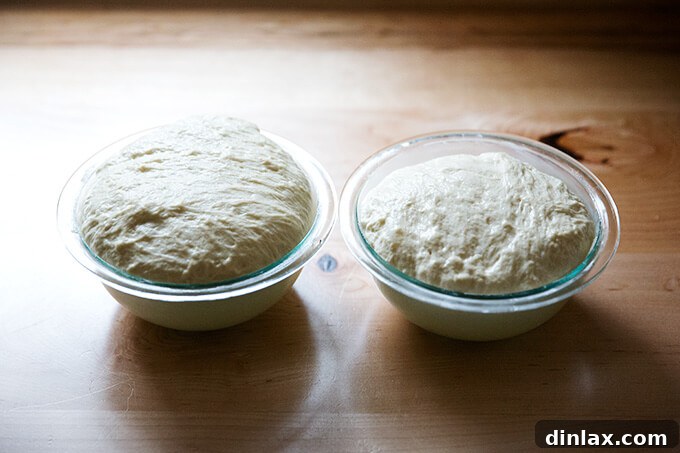
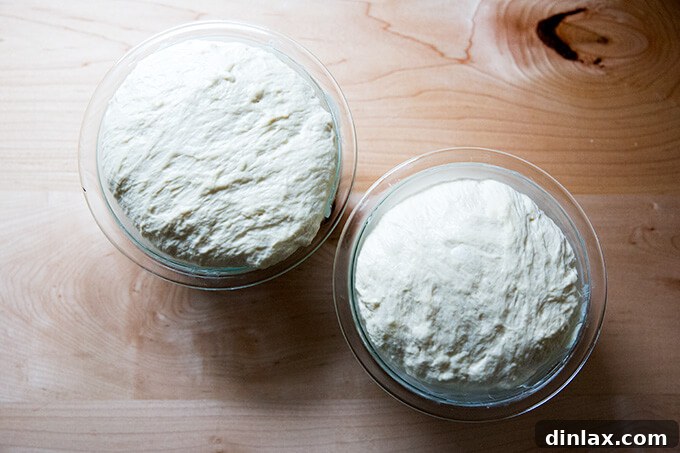
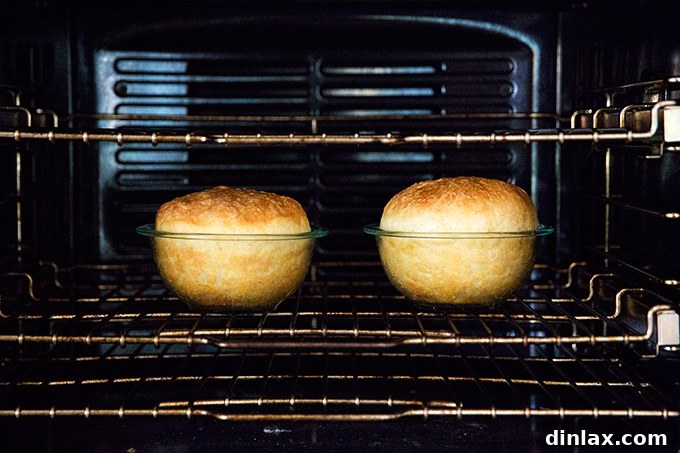
Transfer the bowls to the preheated oven and bake until the loaves are beautifully golden brown and sound hollow when tapped on the bottom.
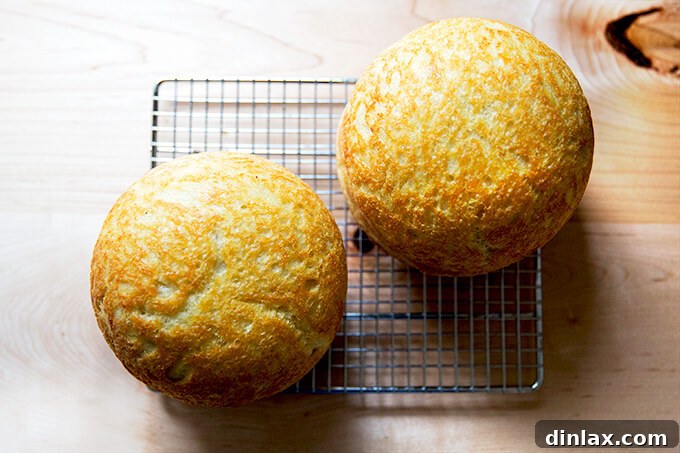
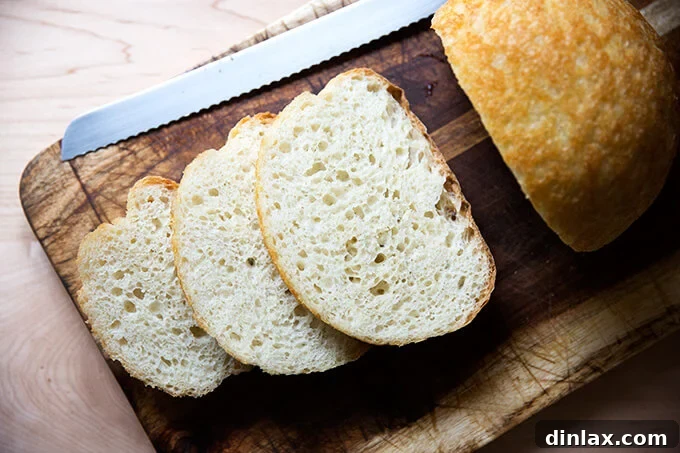
Once baked, carefully turn the hot loaves out onto cooling racks. It’s essential to let them cool for at least 15 minutes before attempting to slice, allowing the internal structure to set and preventing a gummy texture.
Ready to bake? Get the full, printable recipe with precise measurements and timings here: My Mother’s Peasant Bread: The Best, Easiest Bread You Will Ever Bake
Explore the Versatility: Five Favorite Peasant Bread Variations
One of the most remarkable aspects of My Mother’s Peasant Bread recipe is its incredible adaptability. Once you’ve mastered the basic loaf, you’ll find that this foundational dough is a blank canvas for endless creativity. Whether you crave savory additions, different textures, or entirely new forms, the peasant bread recipe can be effortlessly transformed. Here are five beloved variations to inspire your next baking adventure, showcasing just how versatile this simple dough can be:
- Overnight Refrigerator Focaccia: Achieve a perfectly airy and flavorful focaccia with minimal effort, thanks to a slow, cold fermentation.
- Everything Bagel Seasoning Peasant Bread: Elevate your everyday loaf with the irresistible crunch and savory flavor of everything bagel seasoning.
- Gluten-Free Peasant Bread: A fantastic option for those with dietary restrictions, proving that delicious, easy-to-make bread is possible for everyone.
- Quinoa-Flax Toasting Bread: Incorporate wholesome grains like quinoa and flax for a nutrient-rich and delightfully textured toasting bread.
- No-Knead Thyme Dinner Rolls: Transform the peasant bread dough into soft, aromatic dinner rolls, perfect for any meal or gathering.
These variations are just the beginning. Imagine adding fresh herbs like rosemary or garlic, incorporating different cheeses, or even sweet spices for a breakfast loaf. The possibilities are truly endless once you understand the core mechanics of this simple dough. Feel free to experiment and make this peasant bread truly your own!
Beyond the Loaf: Discover “Bread Toast Crumbs” Cookbook
Having experienced the triumph of baking your first no-knead peasant bread, you’ll quickly realize that this success is just the beginning. The simplicity and adaptability of the master peasant bread recipe unlock a world of culinary possibilities. It’s this very philosophy that inspired the creation of the cookbook, Bread Toast Crumbs. This book is not merely a collection of recipes; it’s a comprehensive guide to maximizing the potential of a single, foundational dough. If you’re still harboring any lingering bread-making fears, watch the captivating 1-minute video below, and feel your apprehensions melt away as you witness the ease and beauty of this approach.
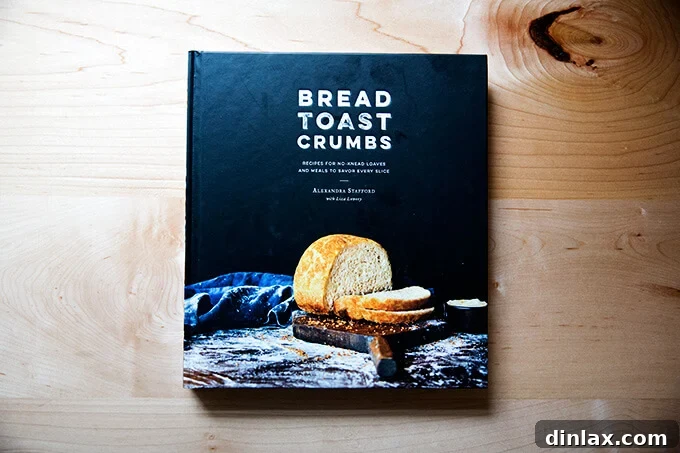
The first chapter of Bread Toast Crumbs dives deep into the heart of the peasant bread, offering an astounding 40 variations of this simple recipe. Imagine transforming your basic dough into aromatic herb bread, hearty whole-grain loaves, savory cheese breads, or even delightful pizza crusts, pissaladière, classic focaccia, soft sandwich bread, fun monkey bread, rich brioche, or a comforting cinnamon-swirl bread. Each variation is designed to be as straightforward as the original, allowing you to explore new flavors and textures with complete confidence. This versatility ensures that your baking never becomes monotonous and that you can always find a new way to enjoy your homemade bread.
But the true genius of Bread Toast Crumbs extends far beyond just baking new loaves. Once you experience how easy and rewarding bread baking can be, you’ll find yourself baking all the time. This means you’ll inevitably have extra slices, crusts, heels, and crumbs – too precious to waste! The second and third chapters of the book are dedicated to ingenious recipes that give these “leftovers” a delicious new purpose. From savory bread puddings and crispy croutons to creative stratas and delightful desserts, these chapters empower you to reduce food waste and discover exciting new dishes. Explore photos, watch more videos, and find additional recipes inspired by Bread Toast Crumbs on the Cookbook News & Notes page.
Bread Toast Crumbs: A New Generation’s Bread Baking Bible
An IACP Nominee for the prestigious Julia Child First Book Award in 2017, Bread Toast Crumbs has garnered significant praise from culinary luminaries like Dorie Greenspan, Jim Lahey, and David Lebovitz. They laud it as the definitive bread-baking book for a new generation of home cooks. This isn’t just a guide for baking bread; it’s a lifestyle book that ensures every last crumb finds a delicious purpose. Embrace the full circle of bread making, from the simplest dough to inventive meals crafted from every part of the loaf.