Reimagine Your Space: Easy DIY Farm Crate Bookshelf & Flower Pedestal
Every home has those overlooked treasures – items collecting dust in the basement or garage, waiting for a second life. For me, it was a trio of sturdy old farm crates. My initial vision was clear: bring much-needed order to Ella’s vibrant play area and finally put these rustic beauties to good use. The plan involved attaching wheels for mobility and fitting them with custom linen storage baskets, a perfect blend of practicality and charm. While the search for those elusive 10x16x13-inch baskets continues, leaving Ella’s play zone a delightful whirlwind for now, the journey to repurpose has taken a beautiful turn.
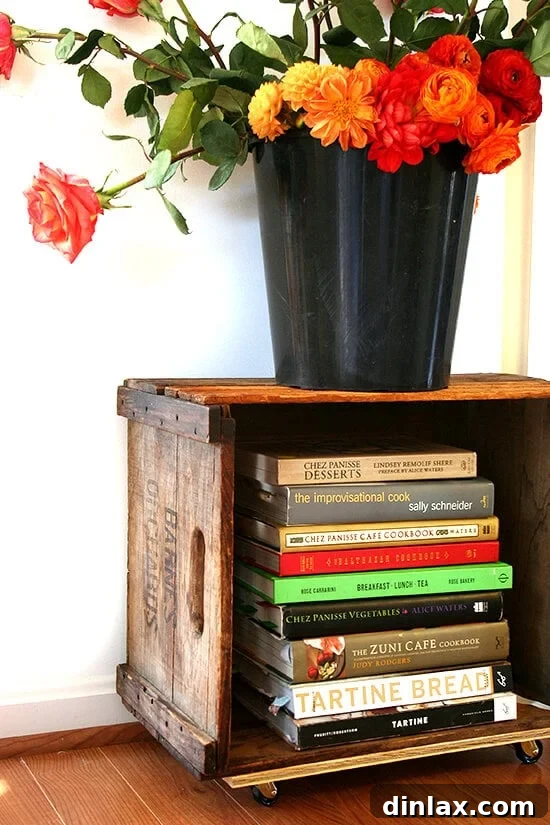
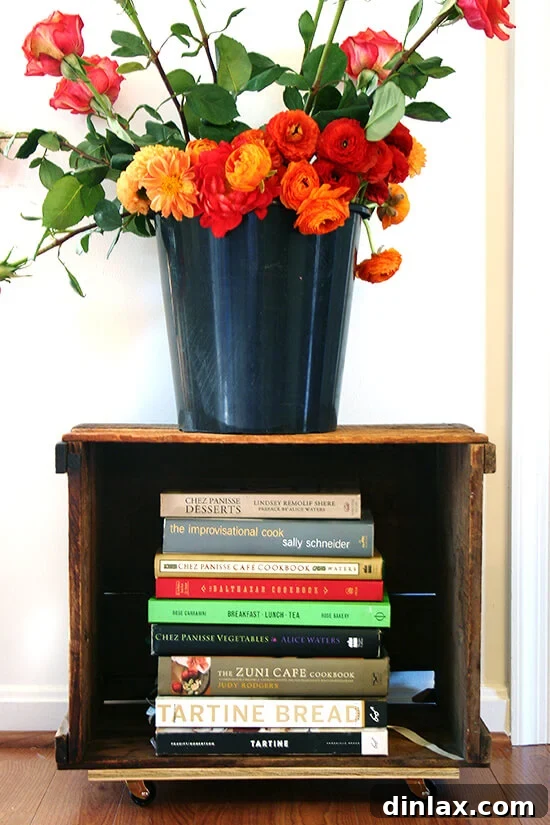
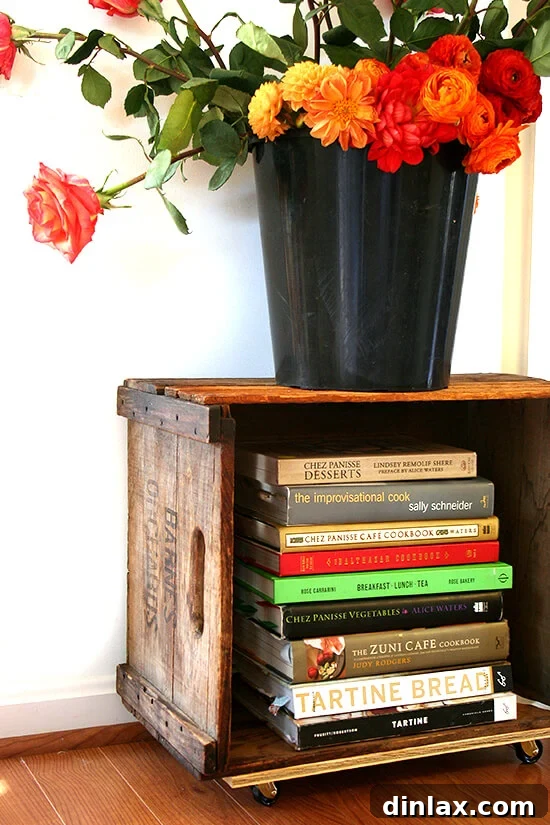
Sometimes, the best projects evolve. In a wonderful compromise, my kitchen now boasts a brighter, more inviting atmosphere, thanks to one of these upcycled crates, elegantly styled with a fresh bucket of ranunculus and a treasured stack of my favorite cookbooks. It’s a testament to how simple transformations can bring immense joy and character to a space.
The Unexpected Beauty of Ranunculus: A Floral Revelation
Speaking of beauty, let’s talk about ranunculus. Was I truly the last person on Earth to discover these exquisite flowers? Their delicate, layered petals and vibrant colors are simply captivating! I owe this delightful discovery to my incredibly talented aunt, who brought over a stunning arrangement. She’s not just a gifted artist and florist, but also an avid beekeeper and a stand-up paddleboard enthusiast – a true inspiration. Walking into my kitchen now, greeted by their cheerful presence, is an absolute treat. I’m already planning to get more to adorn my Thanksgiving table, adding a touch of natural elegance to the festive spread. Incidentally, if you have an interest in encaustic painting or art in general, I highly recommend visiting my aunt’s website to explore her incredible work: georgianassikas.com.
Happy Thanksgiving Week to all! May your homes be filled with warmth, beauty, and creative projects.
Crafting Your Own Rustic Charm: The Farm Crate Bookshelf/Flower Pedestal
Upcycling old farm crates is a fantastic way to add character, functionality, and a touch of farmhouse rustic charm to any room. This versatile DIY project can serve as a mobile bookshelf, a stylish flower pedestal, or even a unique side table. It’s an accessible project that doesn’t require advanced carpentry skills, making it perfect for beginners and seasoned DIY enthusiasts alike. Let’s gather our tools and transform those dusty crates into delightful home decor.
What You’ll Need: Materials for Each Crate
Before you begin, ensure you have all the necessary components. Choosing the right materials will guarantee a sturdy and long-lasting finished product.
- 1 Piece of Wood for the Base: Aim for a thickness of about 1/2-inch (1.25 cm). This piece will form the new bottom of your crate, providing a solid surface for the wheels. Measure the interior dimensions of one side of your crate and ensure your wood piece is slightly smaller (about 1/4 inch on all sides) to fit snugly without obstructing the crate’s original structure. For convenience, I purchased a large sheet of plywood and had the friendly staff at Lowe’s cut it precisely to my specifications, saving me time and effort.
- 4 Caster Wheels: Opt for swivel casters if you want full mobility in all directions, or fixed casters for movement in a straight line. Consider the weight your crate will hold and choose wheels with appropriate weight ratings. Look for wheels with a brake mechanism if you want to secure your crate in place.
- Screws for Wheels: Select wood screws that are slightly shorter than the thickness of your chosen wood base. For a 1/2-inch thick piece of wood, 1/4-inch screws typically work well. This prevents the screws from protruding through the top of the wood and potentially damaging your crate or its contents.
- Liquid Nails (or Strong Wood Adhesive): A high-strength construction adhesive is crucial for securely bonding the wooden base to the crate. Brands like Liquid Nails offer excellent adhesion to wood and provide a strong, permanent bond.
- Electric Drill: Essential for pre-drilling pilot holes and driving screws quickly and efficiently.
- Measuring Tape and Pencil: For accurate measurements and markings.
- Safety Glasses: Always wear eye protection when using power tools.
- Clamps (Optional but Recommended): To hold the wooden base firmly in place while the adhesive dries.
Step-by-Step Guide: Assembling Your Rolling Crate
This project is surprisingly simple, yet yields a wonderfully effective and aesthetically pleasing result. While there are many ways to approach it, here’s a detailed breakdown of my successful method:
1. Prepare Your Crate and Wood Base
First, give your old farm crates a good clean. Remove any dust, cobwebs, or debris. If the wood is rough, a light sanding can smooth out splinters and prepare it for any optional finishes like stain or paint. Measure one of the longer or shorter sides of your crate – this will be the new bottom that faces the floor. Carefully measure and cut your 1/2-inch thick wood piece to fit inside this opening, ensuring it’s slightly smaller than the interior dimensions so it doesn’t get stuck. If you had your wood cut at a hardware store, double-check the fit.
2. Attach Wheels to the Wood Base
Lay your cut piece of wood flat. Position the four caster wheels near each corner, about an inch or two in from the edges. Using your pencil, mark the screw holes for each wheel. Before screwing, it’s vital to use your electric drill to create pilot holes. Pilot holes prevent the wood from splitting, especially when working with thinner wood or reclaimed pieces. Select a drill bit that is slightly smaller in diameter than your screws. Once the pilot holes are drilled, align the wheels again and use your electric drill to securely screw them into the wooden base. Ensure all screws are tight and the wheels are firmly attached.
3. Secure the Wheeled Base to the Crate
Now comes the crucial step of attaching the wheeled base to your farm crate. Turn your crate upside down. Apply a generous, continuous bead of Liquid Nails (or your chosen strong wood adhesive) around the perimeter of the interior bottom edge of the crate. You can also add some zigzag lines across the center for extra adhesion. Carefully align your wood piece (with the wheels already attached) into this opening, pressing it firmly against the applied adhesive. I opted for liquid nails instead of screwing the wood directly into the crate’s bottom because I was concerned the crate’s older, perhaps more brittle wood might split under the pressure of direct screws. This adhesive method provides a strong bond without the risk of splitting.
If you have clamps, use them to apply gentle pressure, holding the wood base and crate together while the adhesive cures. If not, you can place some heavy books or objects on the wood base to ensure good contact. Refer to the adhesive manufacturer’s instructions for the recommended drying and curing times – typically, it’s best to let it set for at least 24 hours before putting any weight on it.
And that’s truly it! Once the adhesive has fully cured, your DIY rolling farm crate is ready for action.
Customization and Styling Your Upcycled Crate
The beauty of this project lies in its simplicity and versatility. Your newly mobile crate can be customized to fit any aesthetic:
- For Ella’s Play Area (Revisited): While my basket search continues, for a toy storage solution, consider sewing simple fabric liners for the crates or finding canvas bins that fit. The wheels make it easy to move toys from one area to another for cleanup.
- As a Bookshelf: Stack two or three finished crates on top of each other (securing them with L-brackets if you want a permanent stack) to create a charming, rustic bookshelf.
- As a Flower Pedestal: As demonstrated in my kitchen, a single wheeled crate makes an exquisite pedestal for plants or flower arrangements, allowing you to easily move your greenery for light or repositioning.
- Beyond the Basics:
- Paint or Stain: Give your crate a fresh coat of paint to match your decor, or stain it for a richer, deeper wood tone. Distressing techniques can enhance its vintage appeal.
- Stenciling: Add personalized stencils, numbers, or phrases to your crate for a unique touch.
- Tabletop: Add a custom-cut piece of glass or a painted wooden top to transform it into a unique side table or coffee table.
The Joy of Sustainable Living and DIY Projects
This simple farm crate project isn’t just about creating functional items; it’s about embracing sustainability, creativity, and the satisfaction of making something beautiful with your own hands. Upcycling breathes new life into forgotten objects, reduces waste, and allows you to infuse your home with unique pieces that tell a story. It’s a rewarding process that proves you don’t need rocket science to make a significant impact on your home’s organization and aesthetic appeal.
So, take a look around your home. What hidden treasures are waiting to be reimagined? With a little creativity and a few basic tools, you too can transform the ordinary into the extraordinary, adding personal flair and functionality to every corner of your living space.