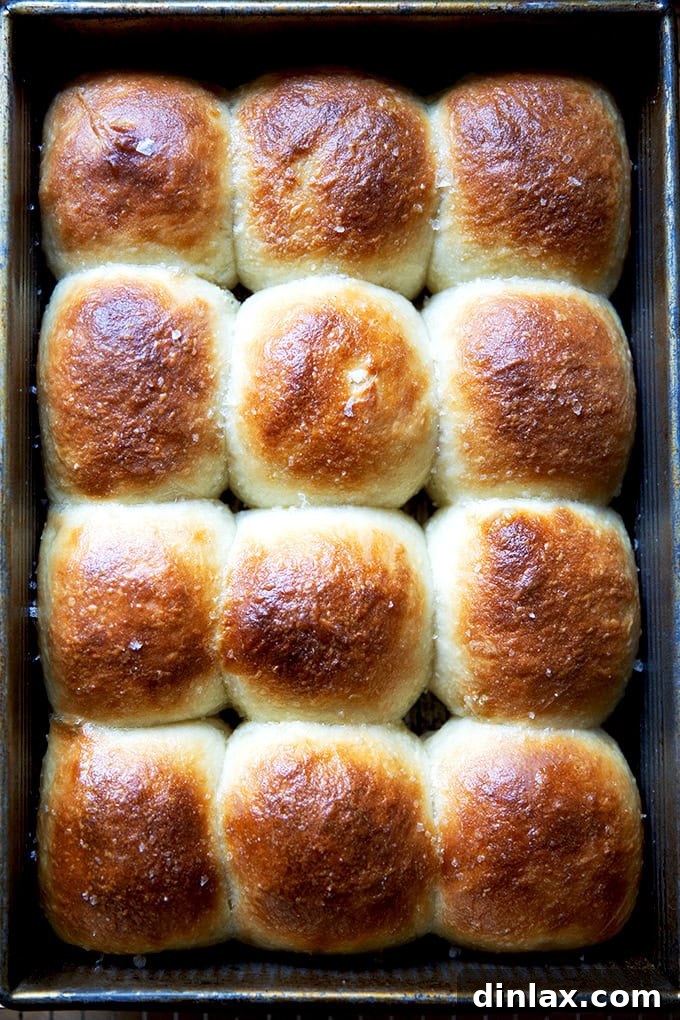
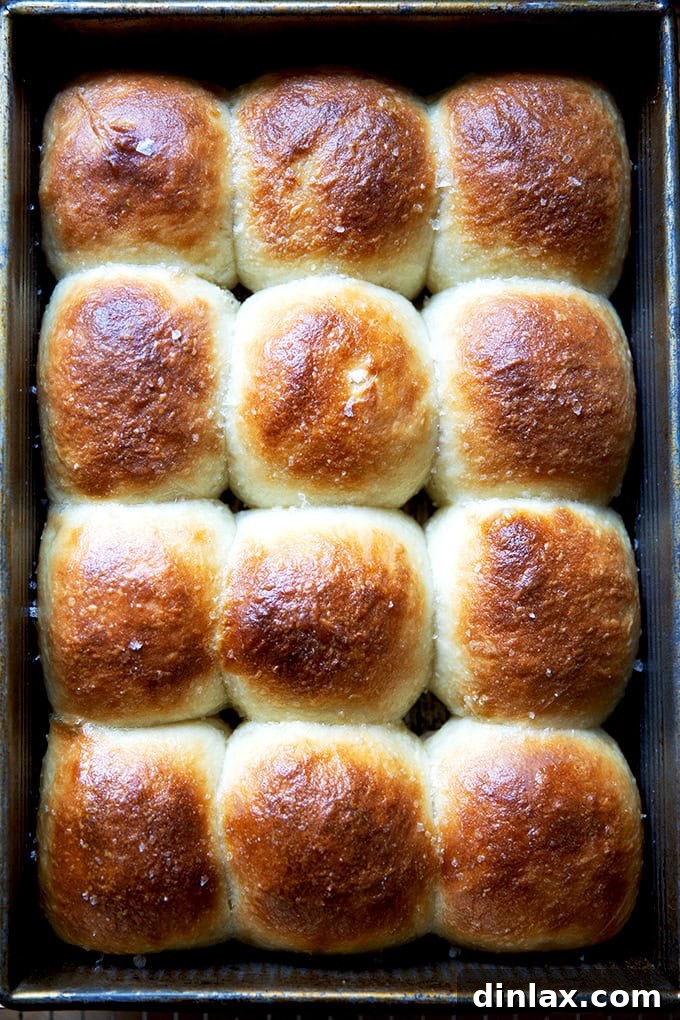
Soft, tender, and subtly sweet, these no-knead buttermilk pull-apart rolls offer a delightful experience reminiscent of classic Parker House rolls. Incredibly easy to prepare, they are a guaranteed crowd-pleaser for any meal or special gathering.
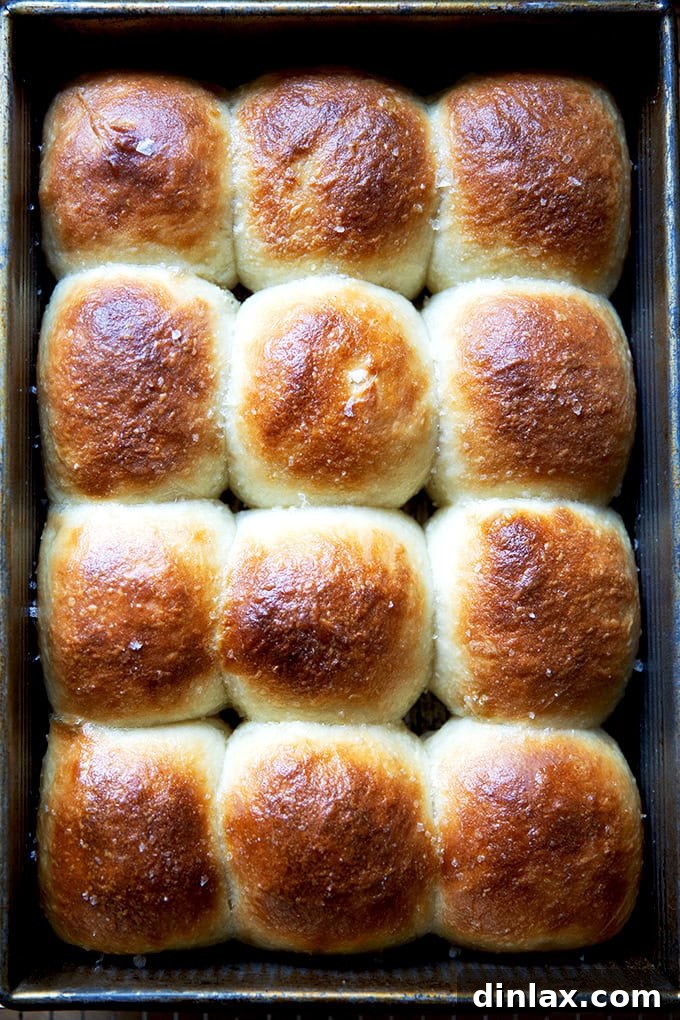
Mastering the Art of No-Knead Buttermilk Pull-Apart Rolls: Effortless Elegance for Your Table
There’s an undeniable magic to homemade bread. The aroma filling your kitchen, the soft texture, and the rich flavor elevate any meal from ordinary to extraordinary. Yet, many home bakers shy away from bread-making, fearing it’s too complicated or time-consuming. This is where the beauty of no-knead recipes shines, and these buttermilk pull-apart rolls are a prime example of how simple, satisfying, and utterly delicious homemade bread can be.
The secret to these rolls’ incredible texture and deep flavor lies in their no-knead method and the option for an overnight rise. Imagine waking up, pulling a pan of perfectly shaped dough from the refrigerator, letting it come to room temperature, and then baking it to golden perfection. It’s a game-changer for busy schedules, especially when preparing for holidays or dinner parties.
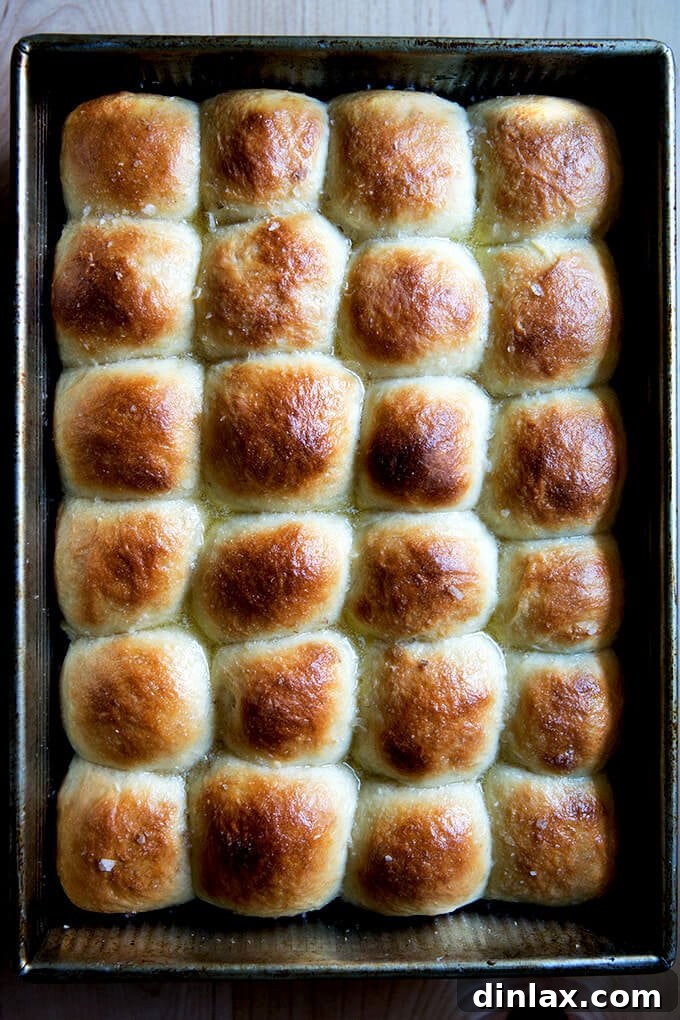
While any beloved bread recipe can be adapted for an overnight cold rise, if you’re looking for a tried-and-true option, our buttermilk pull-apart rolls are an absolute must-try. This recipe, adapted from my cookbook Bread Toast Crumbs, makes baking simple and yields consistently spectacular results. We’ve optimized it to fit all 12 to 24 rolls in a single 9×13-inch baking pan, creating a beautiful, cohesive mass that is incredibly fun to pull apart and share.
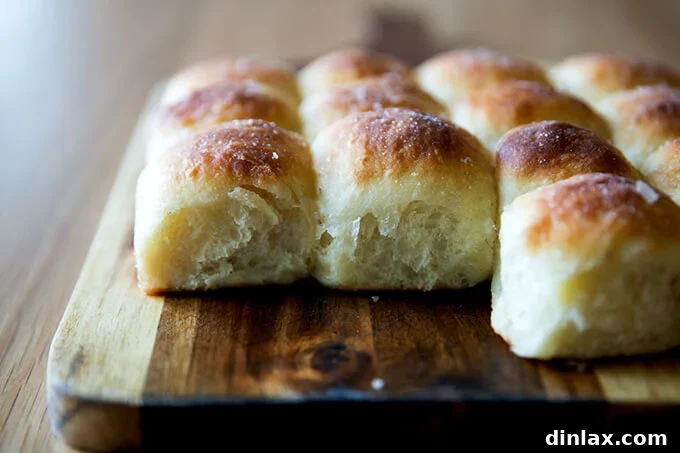
The joy of seeing these rolls, nestled closely together, ready to be torn into individual portions, is immense. My children adore the interactive experience of pulling them apart, a testament to their enticing softness. Their slightly sweet, tender, and squishy texture, coupled with a hint of tang from the buttermilk, perfectly mimics the beloved Parker House rolls. These qualities make them an ideal festive bread for Thanksgiving, Christmas, Easter, or any holiday gathering. And the best part? They are incredibly easy to make, offering both video and photo guidance below to ensure your success.
If you’re often tasked with bringing bread to holiday gatherings or hosting dinner parties, preparing the dough a day in advance is your ultimate shortcut to stress-free entertaining. It allows you to spread out your kitchen tasks and ensures you have fresh, warm, homemade rolls on demand.
Let’s reiterate a fundamental truth for every aspiring baker: Homemade Bread: Yes. You. Can. 🍞🍞🍞 Everyone who tastes these will rave about them, and you’ll know just how effortless it was to create such a masterpiece. We hope all your culinary preparations are going smoothly, and we’re always happy to answer any questions you might have about baking, or anything else!
PS: For another fantastic no-knead option, check out our No-Knead Thyme Dinner Rolls.
Why No-Knead Bread is a Baking Revelation
The concept of “no-knead” bread might seem counterintuitive to traditional baking wisdom, but it’s a revolutionary technique that simplifies the process without compromising on quality. Instead of intensive kneading to develop gluten, this method relies on a longer fermentation period. As the dough rests, enzymes naturally break down the complex carbohydrates, and the yeast slowly works its magic, creating a robust gluten structure and a deep, nuanced flavor profile. This means less effort for you and more time to focus on other aspects of your meal preparation, making it perfect for both novice and experienced bakers.
The Buttermilk Advantage: Texture and Flavor Elevated
Buttermilk isn’t just for pancakes! In bread baking, it plays a crucial role in enhancing both texture and flavor. Its acidity tenderizes the gluten in the dough, resulting in an exceptionally soft and delicate crumb. Furthermore, buttermilk imparts a subtle tang that beautifully complements the slight sweetness of these rolls, adding a layer of complexity that sets them apart from ordinary dinner rolls. The slight curdling you’ll observe when combining hot water with buttermilk is completely normal and contributes to its unique properties.
How to Make Buttermilk Pull-Apart Rolls: A Step-by-Step Visual Guide
Embark on your journey to baking perfection with these straightforward steps. Precision is key in baking, so for the best results, we highly recommend using a kitchen scale for measuring your ingredients.
1. Combine the Dry Ingredients
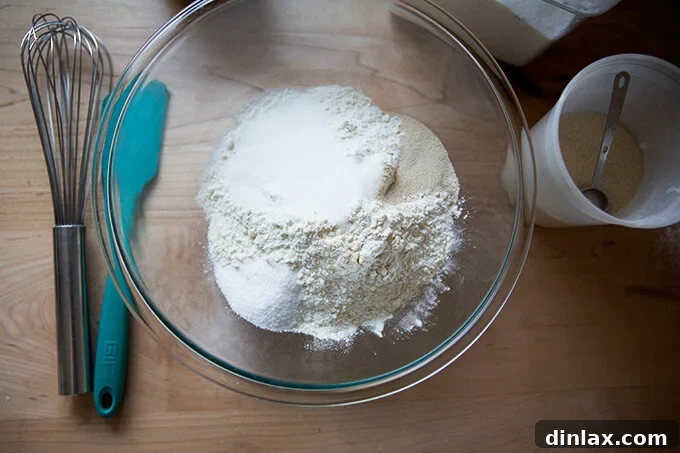
In a large mixing bowl, whisk together your dry ingredients: all-purpose or bread flour, instant yeast, kosher salt, and sugar. Using a scale ensures accuracy, especially with flour and salt measurements which can vary significantly by volume. Metric measurements are provided in the recipe card below for your convenience.
2. Prepare the Buttermilk Mixture
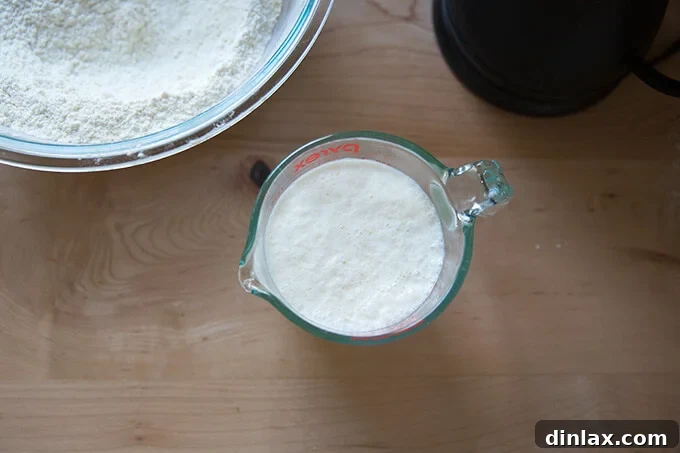
In a separate liquid measuring cup, pour a scant cup of boiling water over a scant cup of buttermilk. Stir gently and let this mixture stand for about 10 minutes. Don’t be alarmed if the buttermilk appears slightly curdled; this is a natural reaction to the heat and acidity and will not negatively impact your rolls.
3. Combine Wet and Dry Ingredients
Add the buttermilk-water mixture along with 4 tablespoons of melted butter to the bowl containing your dry ingredients. Stir everything together thoroughly until a cohesive, sticky dough ball forms. Resist the urge to add more flour at this stage, as a sticky dough is characteristic of this recipe and contributes to its light texture.
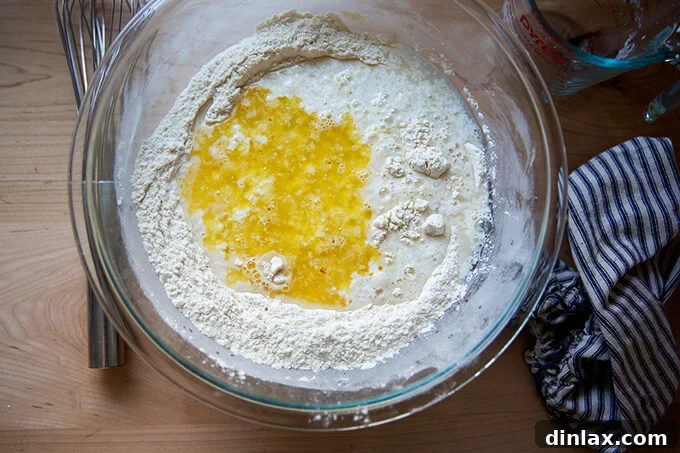
4. Form the Dough Ball
Once combined, you’ll have a wonderfully sticky dough ball. This is exactly what you want for tender, light rolls.
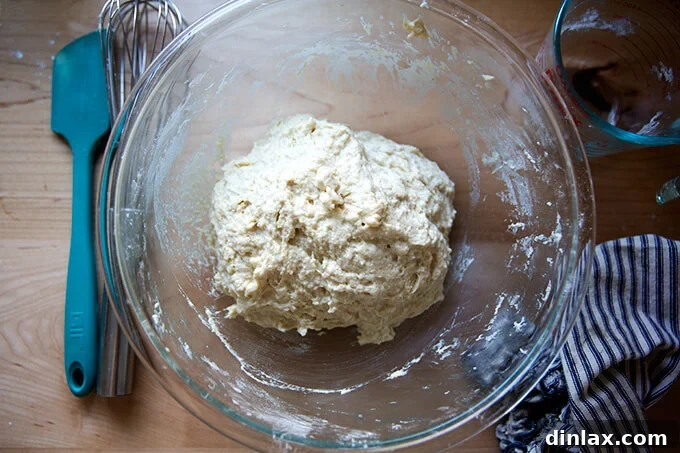
5. First Rise
Cover the bowl with a clean tea towel or a lid – we highly recommend a 4-quart Pyrex bowl + lid set for convenience. Allow the dough to rise in a warm spot for approximately 2 hours, or until it has visibly doubled in bulk. To create an ideal warm environment, you can preheat your oven for just 1 minute, then turn it off and place the covered bowl inside. This gentle warmth provides the perfect conditions for yeast activation.
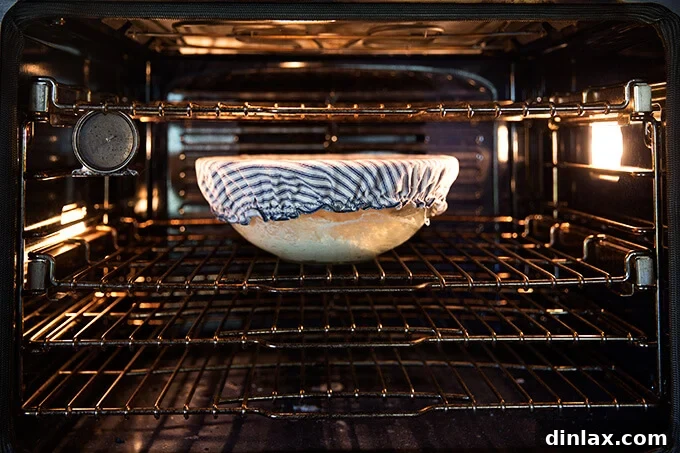
6. Observe the Risen Dough
After 2 hours, your dough will have transformed, becoming airy and significantly larger. It should look something like this:
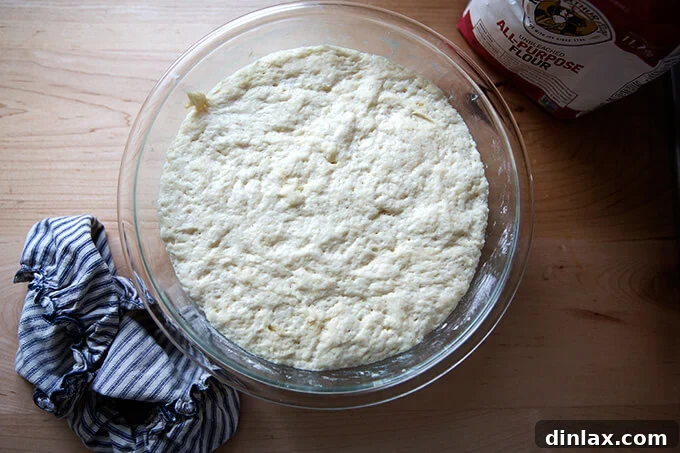
7. Shape the Rolls
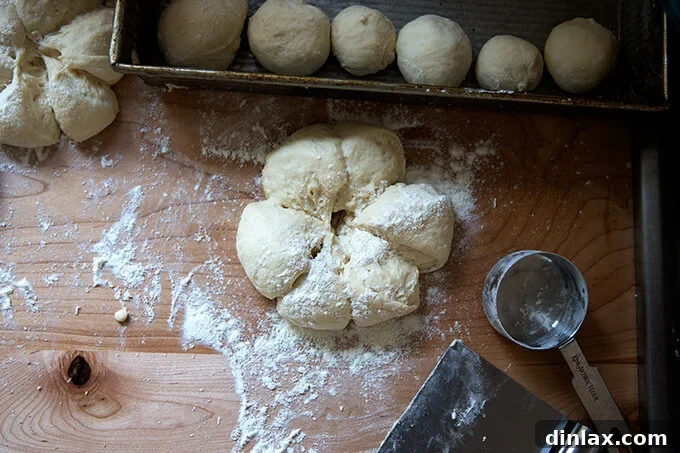
Lightly flour your work surface. Gently turn the risen dough out onto the floured surface. The dough will still be sticky, so don’t hesitate to use a little more flour on your hands and work surface as needed. Form the dough into a rough ball. Using a bench scraper, divide the dough into 12 larger pieces (approximately 90 grams each) or 24 smaller pieces (about 45 grams each). I often prefer the larger rolls for easier shaping and their versatility in making leftover sandwiches. For a visual guide on shaping, refer to this video guidance. Shape each piece into a round and arrange them snugly in a buttered 9×13-inch baking pan. The 9×13-inch USA pan is an excellent choice for consistent baking.
8. Overnight Rise (or Second Rise)
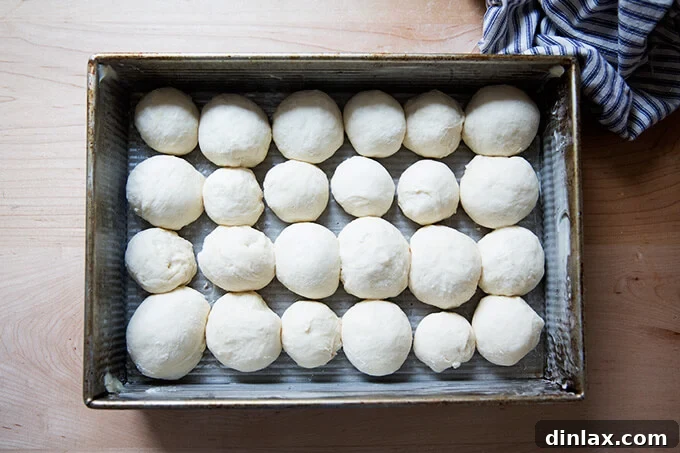
For an overnight rise, cover the pan tightly – I find that tucking the entire pan into a 2-gallon zip-top bag works perfectly – and refrigerate it. The cold environment slows down the yeast activity, allowing for a longer fermentation that deepens the flavor. If you plan to bake the same day, let the shaped rolls rise, uncovered, for 25-35 minutes in a warm spot, until visibly puffed.
9. Bake to Golden Perfection
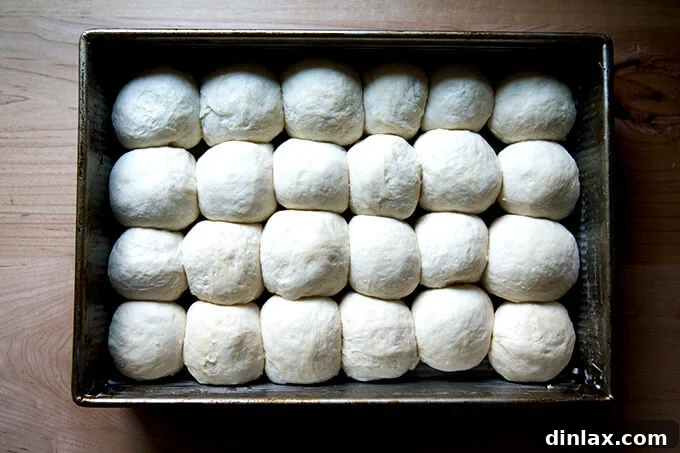
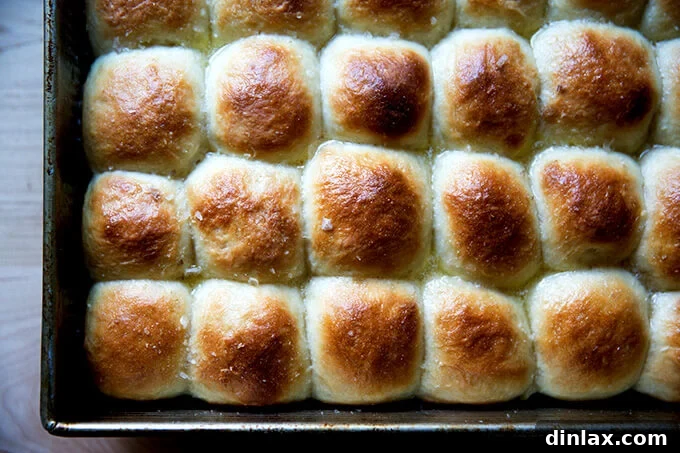
The following morning (or after the second rise), remove the pan from the refrigerator and let it come to room temperature for at least 1 hour. Preheat your oven to 400ºF (200ºC). Bake the rolls for 20 to 25 minutes, or until they are beautifully golden brown on top and cooked through. The exact time may vary slightly depending on your oven.
10. The Finishing Touch: Butter and Sea Salt
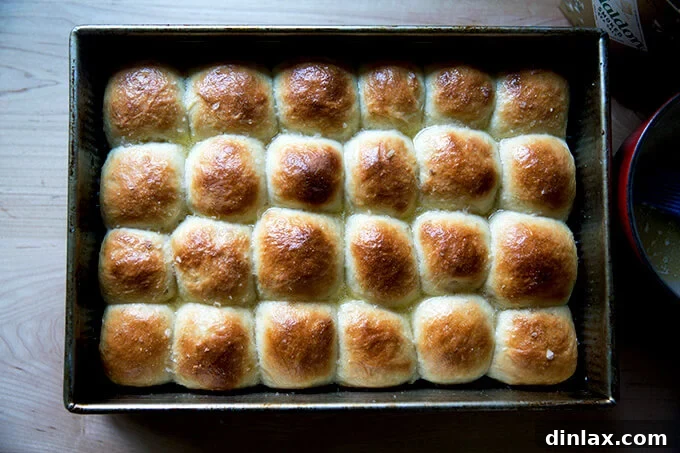
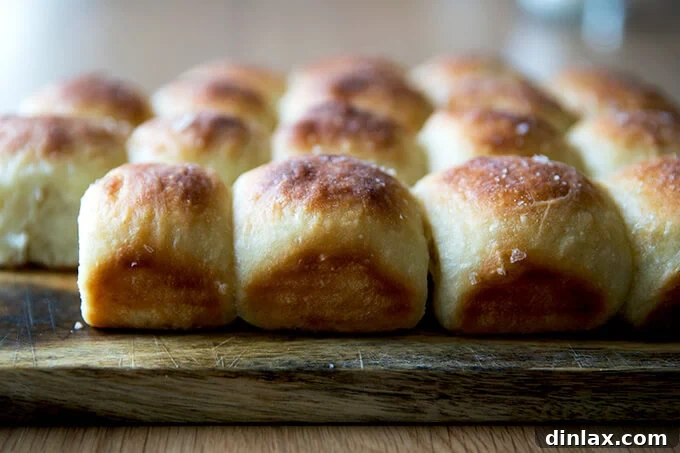
As soon as the rolls come out of the oven, brush their warm surfaces generously with the remaining 2 tablespoons of melted butter. This not only adds a rich, glossy finish but also enhances their flavor and softness. Immediately sprinkle with flaky sea salt to taste, which provides a delightful textural contrast and a burst of savory goodness against the rolls’ subtle sweetness.
11. Serve and Enjoy
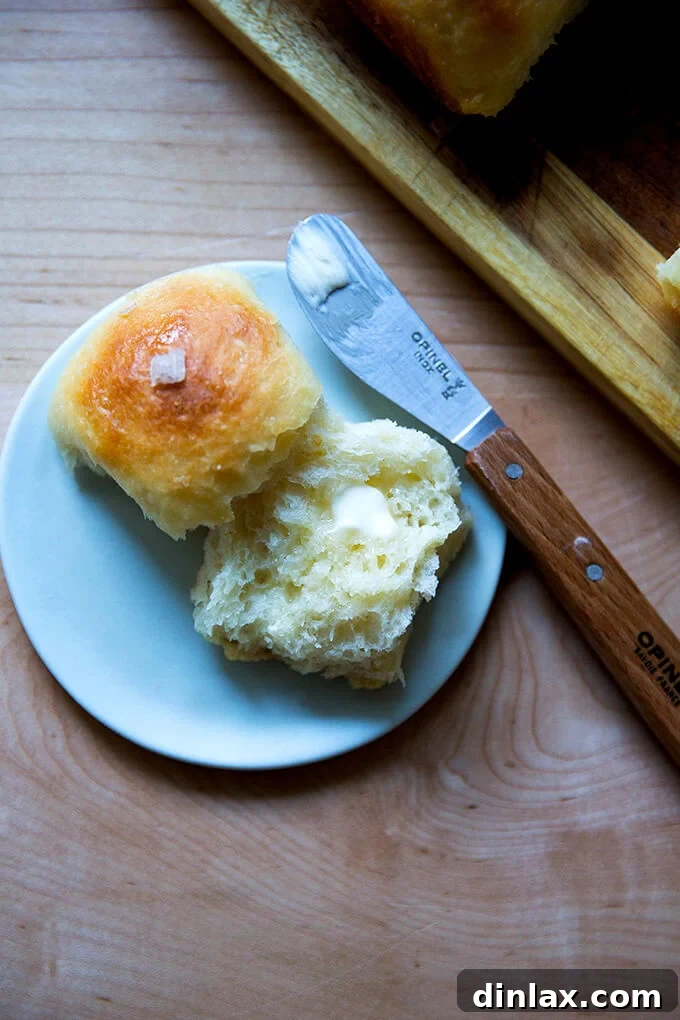
Allow the rolls to cool in the pan for about 5 minutes, then carefully invert them onto a cooling rack and then onto a serving platter. Serve them immediately while they are still warm, perhaps with extra softened butter on the side for those who can’t get enough of that rich, creamy goodness. These rolls are truly best enjoyed fresh from the oven!
No-Knead Buttermilk Pull-Apart Rolls Recipe
Soft, tender, and subtly sweet, these no-knead buttermilk pull-apart rolls offer a delightful experience reminiscent of classic Parker House rolls. Incredibly easy to prepare, they are a guaranteed crowd-pleaser for any meal or special gathering.
Recipe Details
- Author: Alexandra Stafford
- Total Time: 3 hours 25 minutes (excluding overnight chill)
- Yield: 12 to 24 rolls
Print Recipe
Description
This recipe is adapted from Bread Toast Crumbs. This updated version (as of 11/15/2024) increases the flour to 550 grams and adjusts the salt accordingly, making the dough slightly easier to handle without compromising its superb flavor and texture.
Important Notes:
- Scale for Accuracy: For the most consistent and best results, always use a digital kitchen scale for measuring ingredients.
- Salt Guidance: We now recommend 15 grams of kosher salt (about 5 teaspoons of Diamond Crystal kosher salt or 2.5 teaspoons of Morton). If you prefer less salt, use 12 grams (4 teaspoons Diamond Crystal or 2 grams Morton). Remember, the general rule of thumb for bread dough is 2% to 3% of the flour’s weight in salt, so 12-15 grams is appropriate for this recipe.
- Creating a Warm Environment for Rising: To achieve an ideal warm spot for your dough to rise, preheat your oven for just 1 minute, then turn it off. Place the covered bowl of dough inside.
- Alternative Baking Pans: If a 9×13-inch pan isn’t available, you can use two 8-inch or 9-inch round or square pans. The 9×13-inch USA pan is highly recommended for its even heat distribution.
- Adjusting Water for Humidity: In humid climates, consider reducing the boiling water by 2 to 4 tablespoons (15 to 30 grams) from the start. This dough is intentionally wet and sticky, but less initial water can make shaping slightly easier. You can always use extra flour during shaping.
- Advance Preparation (Important): While the overnight refrigeration is a fantastic time-saver, it’s crucial not to extend it too long. My experiments show that keeping the shaped rolls in the fridge for more than 18-24 hours can lead to a sour, unpleasant flavor. For best results, bake within this timeframe. If you absolutely need to prepare them further in advance, consider par-baking: bake for 20 minutes until not fully browned, cool completely, wrap the pan, and refrigerate. Reheat at 400ºF for 5-10 minutes just before serving, then brush with butter and sprinkle with salt.
Ingredients
- 4.25 cups (550 g) all-purpose or bread flour, plus more for shaping
- 4 to 5 teaspoons kosher salt (12 to 15 g), see notes above
- 2 tablespoons (25 g) sugar
- 2 teaspoons (8 g) instant yeast
- 1 scant cup (235 g) boiling water, or less, see notes above
- 1 scant cup (235 g) buttermilk
- 6 tablespoons melted butter, divided
- Flaky sea salt, for finishing
Instructions
- In a large bowl, whisk together the flour, salt, sugar, and instant yeast until well combined.
- In a 2-cup liquid measuring cup (or similar vessel), pour the boiling water over the buttermilk. Stir gently and let stand for 10 minutes. The buttermilk may appear curdled, which is normal.
- Pour the buttermilk mixture and 4 tablespoons of the melted butter into the bowl with the flour mixture. Stir with a sturdy spoon until a sticky ball of dough forms. Cover the bowl with a tea towel or a lid (a 4-quart Pyrex bowl + lid set works wonderfully). Set aside in a warm place (see notes above for guidance) to rise for 2 hours, or until the dough has doubled in bulk.
- Lightly grease a 9×13-inch baking dish. Flour a clean work surface and lightly sprinkle flour over the dough and around its edges in the bowl. The dough will be very sticky; use flour as needed to manage it. Gently coax the dough out of the bowl onto the floured work surface and shape it into a rough ball (refer to video guidance here if needed). Use a bench scraper to divide the dough into 24 equal portions (each about 45 grams, if weighing) or 12 larger portions (each about 90 grams).
- Using as much flour as necessary on your hands and work surface, shape each dough piece roughly into a circle. It’s okay if they aren’t perfectly round. Arrange the dough balls in the prepared pan, spacing them evenly apart.
- At this point, you have two options: you can cover the pan tightly (e.g., with a 2-gallon zip-top bag or plastic wrap) and refrigerate it overnight (for 12-18 hours). Alternatively, if baking the same day, heat your oven to 400ºF (200ºC). Let the dough rise, uncovered, for 25 to 35 minutes, or until the dough pieces have puffed up and almost filled the pan. (Note: If you refrigerated overnight, make sure to remove the pan from the fridge at least 1 hour prior to baking to allow the dough to come to room temperature.)
- Transfer the pan to the preheated oven and bake for 20-25 minutes, or until the rolls are beautifully golden brown on top. Remove the pan from the oven and immediately brush the surfaces of the hot rolls with the remaining 2 tablespoons of melted butter. Sprinkle flaky sea salt generously over the top to taste. Let the rolls cool in the pan for 5 minutes, then turn the pan out onto a cooling rack and invert them onto a serving plate or platter.
- Serve warm with additional softened butter on the side, and enjoy the fruits of your effortless labor!
Additional Recipe Information
- Prep Time: 3 hours
- Cook Time: 25 minutes
- Category: Bread
- Method: Oven
- Cuisine: American