Sometimes, the most unexpected detours lead to the most delightful discoveries. My culinary journey for this incredible Rosemary Semolina Bread began, surprisingly, in the wine section of Wegmans. Last Saturday, a sample table caught my eye, and I made a beeline for it. A kind gentleman offered me a taste of a Grenache paired with a slice of chocolate bread. At 10 in the morning, the idea of wine and chocolate bread felt incredibly indulgent and frankly, quite brilliant. While the Grenache was lovely, and the chocolate bread (a rather cake-like quick bread) was a bit bland, the concept itself sparked an idea. Could a less sweet, yeast-risen chocolate bread, perhaps topped with a soft, honey-infused chèvre, serve as a sophisticated Valentine’s Day appetizer?
This tantalizing thought immediately transported me back to the legendary chocolate and cherry bread from Metropolitan Bakery. For years, I’ve undertaken a semi-annual quest, scouring the internet for a homemade recreation of that elusive loaf. To my dismay, the recipe remains a closely guarded secret, conspicuously absent from cookbooks and online forums alike. A true culinary enigma, and for good reason, I imagine.
Undeterred, I embarked on my own experimental journey, combining elements from several chocolate bread recipes. The dough came together beautifully, promising an aromatic masterpiece as it baked. The kitchen filled with heavenly scents, building anticipation. However, the resulting loaf, though edible and deceptively addictive – I found myself eating slice after slice, perhaps willing each bite to taste better – ultimately fell short. It lacked the depth and distinction I sought. It was good, yes, but not extraordinary. It was clear that chocolate bread would not be gracing my Valentine’s Day table this year.
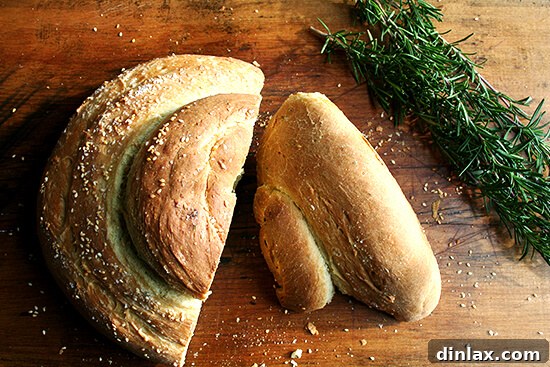
Alas, sometimes the most exciting ideas simply don’t translate into culinary triumphs. Perhaps the notion of forcing chocolate into a savory bread was inherently flawed. It was time to return to culinary fundamentals, to embrace the natural synergy of classic flavors. This realization marked a pivotal moment, shifting my focus to a combination I knew would deliver unparalleled satisfaction: rosemary, sea salt, and olive oil, united with the unique magic of semolina flour. I am thrilled to share with you a bread recipe that, with the utmost confidence, I can promise will not disappoint. This is a bread so utterly delectable that I devour slice after slice, not out of doubt, but from an irresistible urge to savor every last crumb.
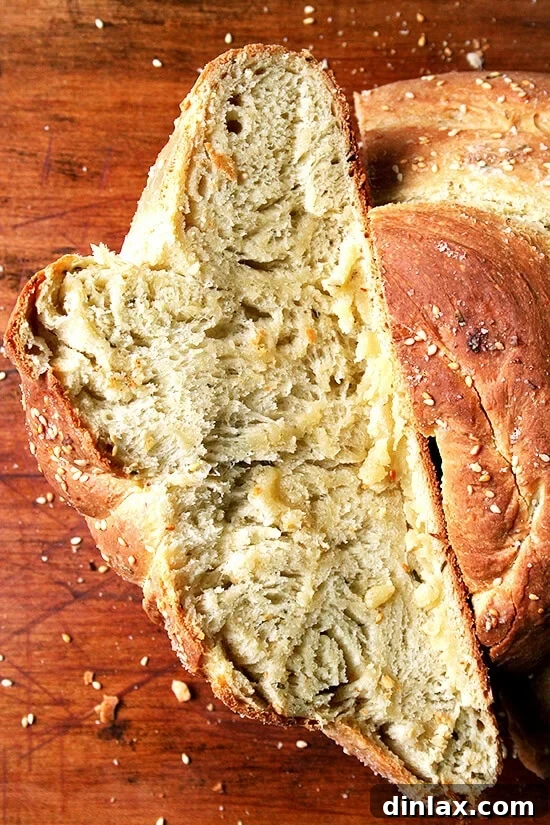
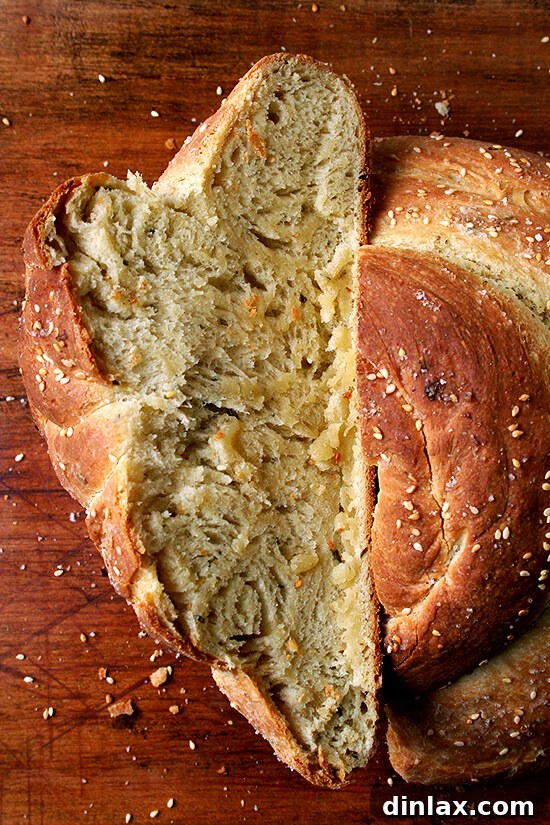
What makes this bread truly exceptional? The liberal use of high-quality olive oil ensures an exquisitely moist crumb, setting it apart from many other homemade loaves. However, the true revelation, an ingredient I am only just beginning to fully appreciate in bread baking, is semolina flour. Semolina, often associated with pasta, imparts a distinct texture and flavor profile to bread that is simply unparalleled. Leslie Mackie, the esteemed owner of Seattle’s Macrina Bakery—the very inspiration behind this creation—articulates its charm perfectly: “Semolina flour gives the bread a hearty texture but also a kind of creamy, almost corn-like flavor.” This description perfectly captures the bread’s rich, nuanced character. Complementing this, a generous scattering of sea salt and sesame seeds creates a wonderfully crusty, savory exterior, making each bite an irresistible experience. While it may not possess the romantic mystique of chocolate bread, this savory masterpiece is undeniably more delicious and guaranteed to make a memorable appearance at any romantic dinner or festive gathering. Happy (almost) Valentine’s Day, everyone!
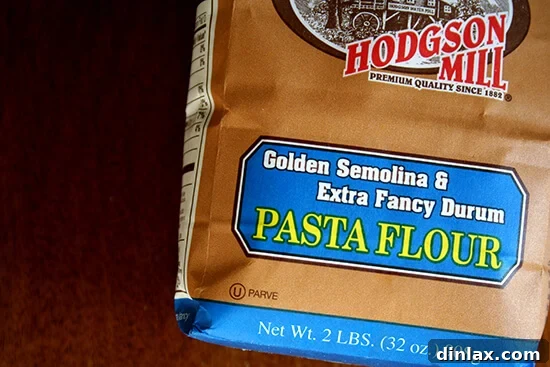
*A note on semolina flour: it is sometimes labeled as “pasta flour” and can be found in specialty food stores, Italian markets, or well-stocked supermarkets.
The Journey to Perfect Homemade Bread: Embracing Semolina and Savory Flavors
My Chocolate Bread Experiment: A Learning Curve
The allure of a chocolate-infused savory bread was strong. My initial vision was clear: a yeast-risen loaf, not overly sweet, that could stand as an elegant accompaniment to wine and cheese. My quest for a recipe led me down many rabbit holes, but the legendary Metropolitan Bakery’s chocolate cherry bread remained an unyielding mystery. Undeterred by the lack of a precise blueprint, I embarked on a creative fusion of several recipes. The process was exciting; watching the dough come alive, the promise of rich chocolate permeating every crumb. As it baked, the kitchen was enveloped in the most enchanting aroma – a mix of sweet and yeasty notes that promised culinary success. The final product, a dark, enticing loaf, looked promising. However, upon tasting, a subtle disappointment set in. While certainly edible, and in fact, I found myself consuming slice after slice, hoping each next one would reveal the hidden depth I craved, it never quite reached that extraordinary level. It was good, but it lacked the distinctive character to elevate it from a mere novelty to a truly exceptional bread. It served as a valuable reminder that sometimes, simplicity and a return to classic flavor combinations are the truest path to baking excellence.
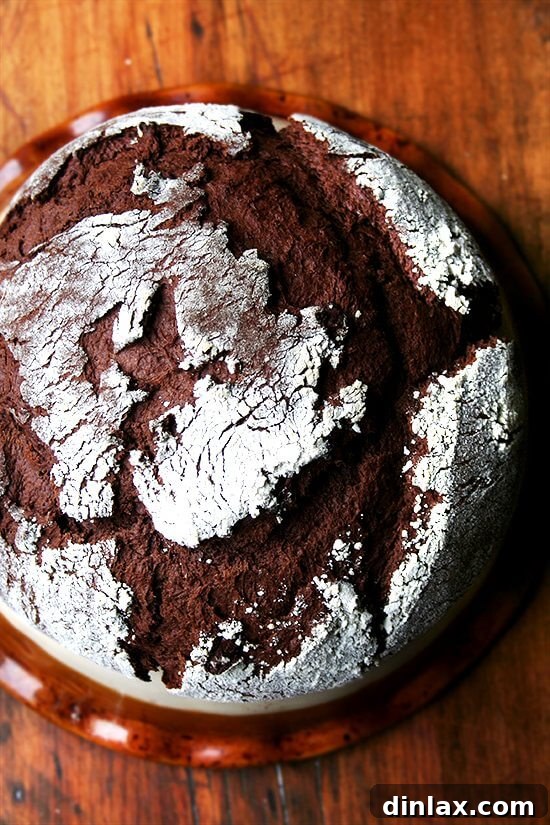
Failed chocolate bread, captured during its rise:
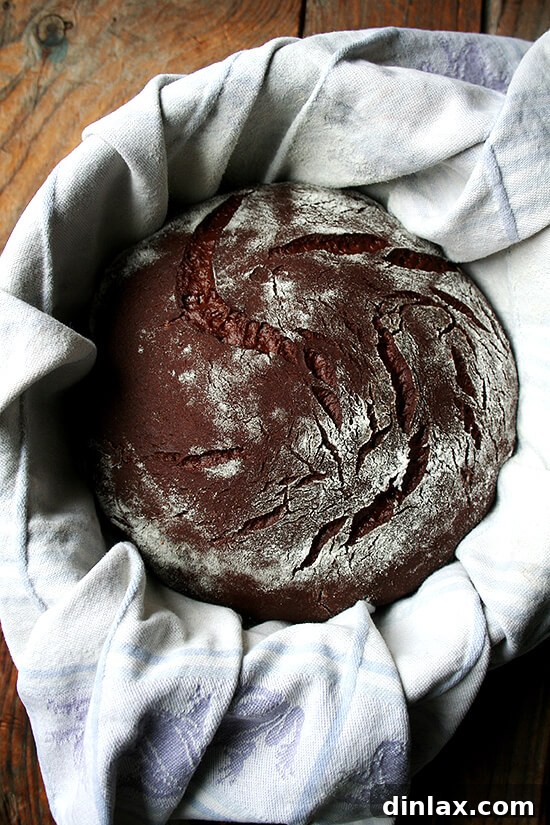
Failed chocolate bread, after baking:
The Triumph of Rosemary Semolina Bread
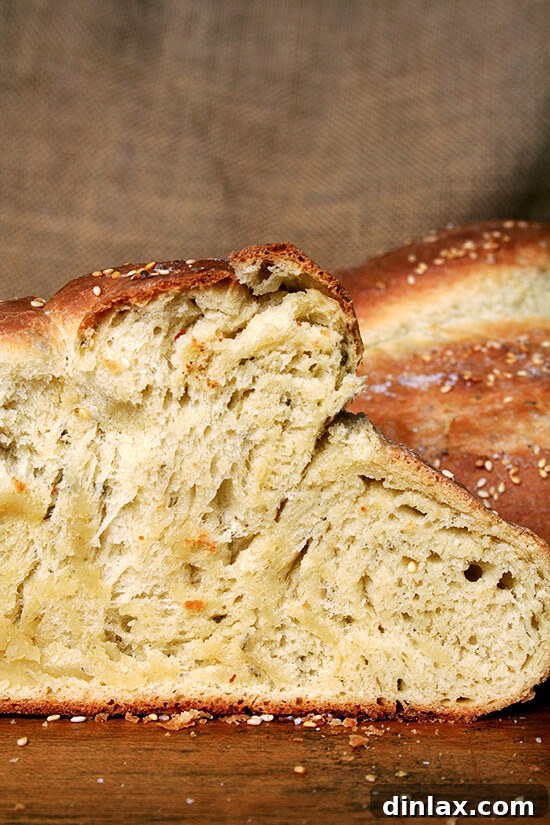
Steering away from the complexities of sweet-savory fusions, I turned my attention to a more harmonious blend of ingredients known for their robust compatibility. This led me to rediscover the unparalleled beauty of rosemary, olive oil, and semolina flour. This Rosemary Semolina Bread, inspired by the masterful creations of Macrina Bakery, is more than just a recipe; it’s an experience. Its moistness, imparted generously by extra-virgin olive oil, creates a tender crumb that melts in your mouth. But the true star, the ingredient that elevates this loaf to new heights, is semolina flour.
Semolina, with its coarse texture and golden hue, brings a unique character to bread. Unlike common all-purpose flour, semolina, made from durum wheat, gives the bread a formidable structure and a distinct chewiness, reminiscent of the finest pasta. As Leslie Mackie aptly states, it’s not just about a “hearty texture,” but also a “creamy, almost corn-like flavor” that truly distinguishes it. This subtle sweetness and rustic earthiness create a deep, satisfying flavor profile. When combined with the fragrant, slightly piney notes of fresh rosemary and a generous crunch of coarse sea salt on its crust, this bread becomes an irresistible symphony of textures and tastes.
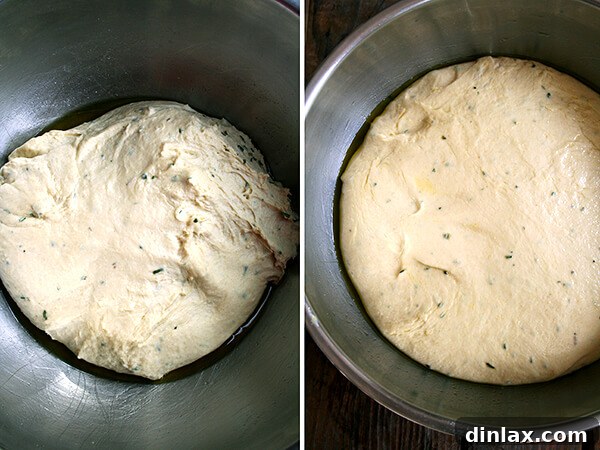
Rosemary semolina bread dough, just mixed (left) and after a successful rise (right):
Rosemary Semolina Bread
5 Stars from 1 review
- Author: Alexandra Stafford at alexandracooks.com
- Total Time: 3 hours 60 minutes
- Yield: 1 very large round 1x
Description
Source: Bon Appetit via Seattle’s Macrina Bakery & Cafe
Ingredients
- 1 3/4 cups warm water (105°F to 115°F), divided
- 1 tablespoon active dry yeast (measured from 2 envelopes)
- 2 1/4 cups (about) unbleached all purpose flour, divided
- 1/2 cup extra-virgin olive oil
- 2 teaspoons minced fresh rosemary
- 2 1/2 cups semolina flour (pasta flour)
- 2 teaspoons fine-grained sea salt
- Additional semolina flour
- 1 tablespoon sesame seeds, divided
- 1 teaspoon coarse-grained sea salt
*Semolina flour is available at specialty foods stores, Italian markets, and some supermarkets.
Instructions
- Activate the Yeast: In a medium bowl, combine 1 1/4 cups warm water with the active dry yeast. Stir gently to blend and allow it to stand for about 5 minutes until the yeast softens. Whisk until the yeast is fully dissolved. Incorporate 1 1/4 cups of all-purpose flour, whisking until the mixture is smooth and free of lumps. Cover the bowl with plastic wrap and let it sit at room temperature (ideally around 75°F) for approximately 45 minutes, or until bubbles form and the yeast mixture has more than doubled in volume. This step is crucial for developing the yeast’s activity and flavor.
- Forming the Dough: In a large mixing bowl, whisk together the remaining 1/2 cup warm water, extra-virgin olive oil, and minced fresh rosemary. Using a sturdy rubber spatula, gradually mix in the semolina flour and 2 teaspoons of fine-grained sea salt. The mixture will appear quite dry at this stage. Next, fold in the activated yeast mixture. Continue by adding 3/4 cup of all-purpose flour. Turn the nascent dough out onto a lightly floured surface. Knead the dough vigorously until it becomes smooth and elastic, adding more all-purpose flour a tablespoon at a time if you find it excessively sticky. Allow the dough to rest for 5 minutes, then resume kneading for about 8 minutes, or until the dough springs back readily when pressed with your thumb, indicating proper gluten development.
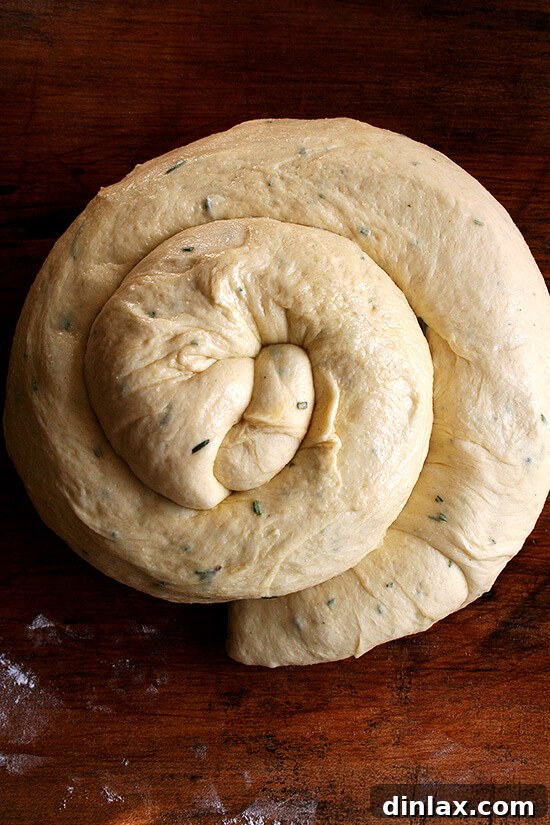
- First Rise and Shaping: Lightly oil a large clean bowl. Transfer the kneaded dough to the bowl, turning it once to ensure it’s coated with oil. Cover the bowl tightly with plastic wrap and let it rise at room temperature for about 1 hour, or until it has visibly doubled in volume. Once risen, gently turn the dough out onto a lightly floured surface. Flatten the dough into an 18×12-inch rectangle. Starting from one of the long sides, tightly roll the dough to form a 2 1/2-inch diameter, 20-inch-long log. With the seam side facing down, carefully shape the log into a ring, connecting one end into the other and smoothing the seam. (Note from the baker: I personally chose not to form a ring as it would have resulted in a massive loaf. Instead, I coiled the dough into a single, rustic mass. For future attempts, I might even divide the dough in half to create two simpler, boule-shaped loaves, offering more crust per serving.)
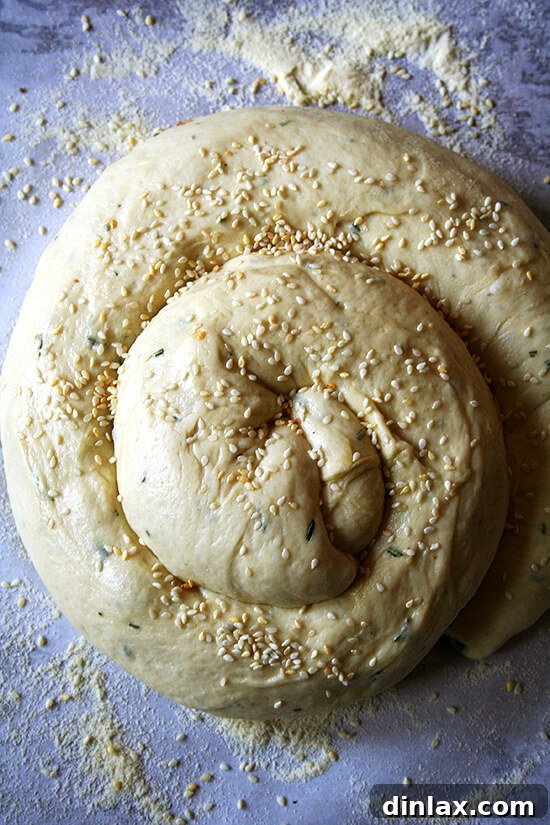
- Second Rise: Line a baking sheet with parchment paper and generously sprinkle it with additional semolina flour. Carefully transfer the shaped dough ring (or coil) to the prepared baking sheet, gently reshaping it as needed to form a smooth, even circle. Sprinkle 1 1/2 teaspoons of sesame seeds over the top, lightly pressing them to adhere to the dough. Loosely cover the bread with plastic wrap and allow it to rise at room temperature for approximately 45 minutes, or until it has almost doubled in volume. This second rise, or proofing, is vital for achieving a light and airy crumb.
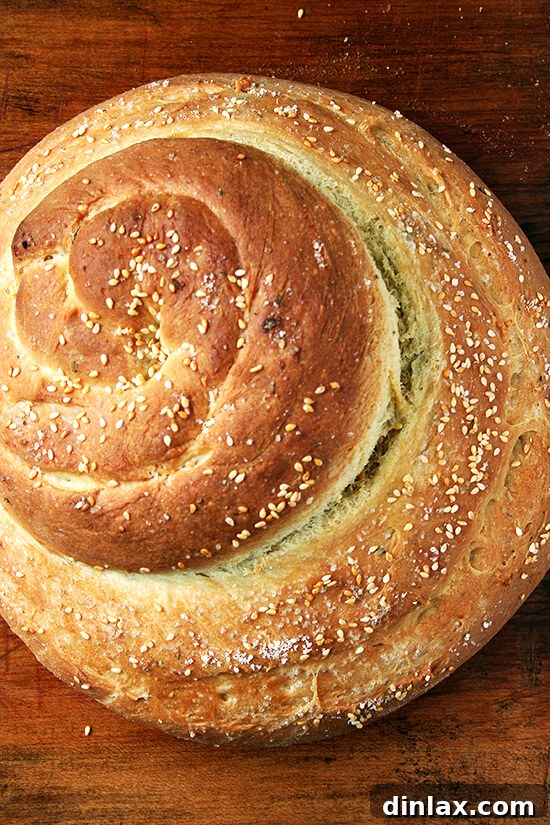
- Baking and Finishing: Preheat your oven to 400°F (200°C). Once the oven is ready, gently remove the plastic wrap from the bread. Using a very sharp knife or a bread lame, make a 1/4-inch-deep slit all the way around the top of the loaf. Lightly spray the bread with water (Note: I skipped this step as I do not own a spray bottle, but it helps create a crispier crust). Sprinkle the remaining 1 1/2 teaspoons of sesame seeds and 1 teaspoon of coarse-grained sea salt over the loaf. Carefully transfer the baking sheet to the preheated oven. Bake for 15 minutes, spraying lightly with water every 5 minutes during this initial phase (again, I omitted this due to lack of a spray bottle). Continue baking for an additional 30 minutes, or until the bread is a beautiful golden brown and sounds hollow when tapped on the bottom. This indicates it is fully cooked through. Transfer the freshly baked bread to a wire rack and allow it to cool completely before slicing and serving. Cooling fully is essential for the crumb to set properly and for the flavors to fully develop.
- Prep Time: 35 minutes
- Cook Time: 45 minutes
Serving Suggestions and The Unforgettable Experience
This Rosemary Semolina Bread is far more than just a side dish; it’s a culinary centerpiece. Its robust flavor and satisfying texture make it incredibly versatile. Imagine it sliced thickly, toasted lightly, and served alongside a rich, warming bowl of minestrone or a hearty lentil soup. It’s truly exceptional when paired with a selection of artisanal cheeses and cured meats, making for an impressive appetizer platter. For a simple yet exquisite delight, tear off a piece and dip it into a high-quality extra-virgin olive oil, perhaps infused with a touch of balsamic vinegar or red pepper flakes for an extra kick. It also makes a fantastic base for open-faced sandwiches or a gourmet bruschetta topped with fresh tomatoes, garlic, and basil.
The beauty of this bread lies not only in its taste but also in the sensory experience it creates. The intoxicating aroma of rosemary that fills your kitchen as it bakes, the satisfying crackle of its crust as you slice into it, and the comforting warmth of its moist, flavorful interior – these are the moments that make homemade bread so incredibly rewarding. While my initial venture into chocolate bread was a sweet, albeit flawed, dream, this savory masterpiece is a delicious reality. It embodies the essence of rustic baking, celebrating simple, high-quality ingredients that, when brought together with care, yield something truly magnificent. I encourage you to embark on this delightful baking adventure; your taste buds (and your family and friends) will thank you for it.