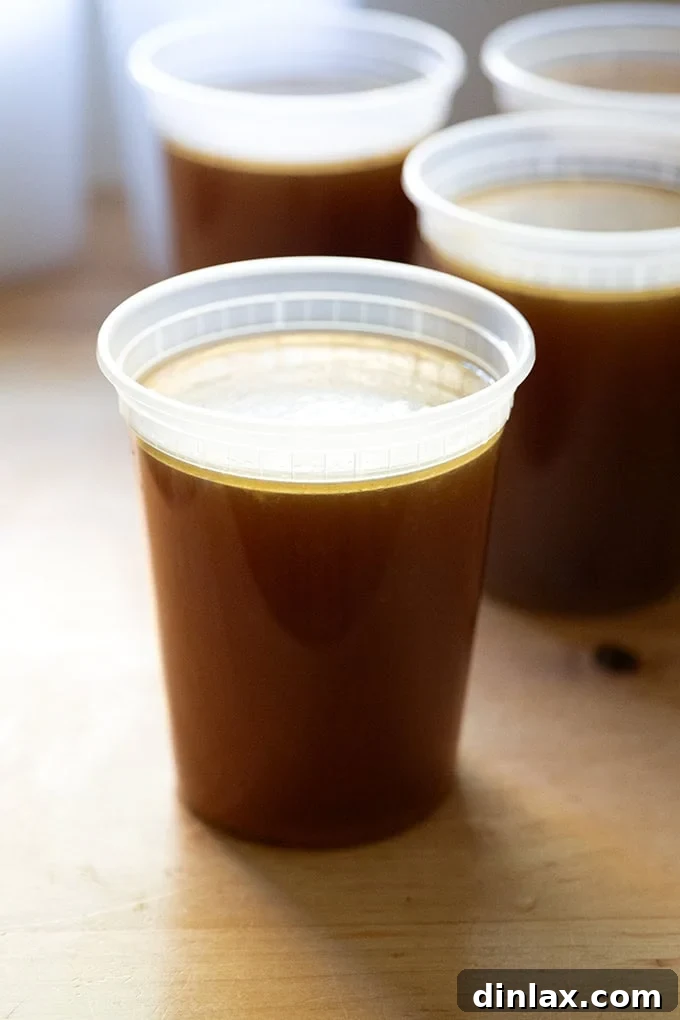
Unlock the secret to deeply flavorful holiday dishes and everyday culinary masterpieces with this incredible **Roasted Turkey Stock recipe**. Crafted from succulent turkey wings, aromatic carrots, robust onions, and crisp celery, this method yields over 6 quarts of rich, golden stock – a true kitchen essential ready for the festive season or year-round use. Prepare it in advance and store it in your freezer for up to three months, ensuring you always have a potent flavor base on hand for your most beloved stuffing, creamy potato gratin, and luscious gravy recipes. This isn’t just stock; it’s a foundational ingredient that elevates everything it touches, transforming ordinary meals into extraordinary experiences.
For years, I relied on a cherished recipe for homemade turkey stock, a tradition that brought the unmistakable scent of Thanksgiving into my home long before the actual holiday. There was a period when life got busy, and this annual ritual of crafting rich, golden stock from scratch fell by the wayside. But last year, I enthusiastically revived Gourmet’sclassic roasted turkey stock recipe, originally featured in their October 2006 issue (a copy I still treasure). Reintroducing this recipe into my holiday preparation routine has been a game-changer, and I’m genuinely thrilled to share its magic with you.
The beauty of this roasted turkey stock recipe lies in its method, which begins by intensifying the flavor of turkey wings (or drumsticks or thighs) through high-heat roasting. This initial step is followed by roasting a medley of aromatic vegetables—onions, carrots, and celery—alongside. The true flavor extraction happens next, as you deglaze the roasting pan, scraping up all the savory “fond” (those wonderfully browned, caramelized bits stuck to the bottom of the pan). These flavor-packed elements are then transferred to a large pot, covered with water, and gently simmered for several hours. This simple yet profound exercise not only fills your home with the most inviting, autumnal aromas—a prelude to Thanksgiving itself—but also leaves you with an immense sense of accomplishment. As you ladle your robust, golden, and deeply aromatic stock into storage containers, you’ll feel inspired and perfectly poised to tackle the bustling holiday season ahead with confidence.
Last year, this exceptional homemade stock became the foundational ingredient for many of my holiday favorites. It added unparalleled depth to my various stuffing recipes, including my go-to classic bread stuffing and a delicious freezable version with kale and caramelized onions. It also transformed my potato dishes, lending a luxurious touch to both Alice Waters’ Potato Gratin and the impressive Hasselback Potato Gratin. And, of course, it was the star of my simple make-ahead gravy. The best part? All these dishes, made richer by this stock, can be prepared well in advance, easing the pressure during busy holiday celebrations.
Why Roasted Turkey Stock is Unmistakably More Flavorful
The superior depth and complexity of roasted turkey stock, compared to its non-roasted counterparts, can be attributed to two fundamental culinary principles: the Maillard reaction and the formation of fond. These processes are not just scientific phenomena; they are the very essence of flavor development in countless beloved dishes.
The Maillard reaction is a complex chemical reaction that takes place between amino acids and reducing sugars when food is subjected to high heat. It’s what gives browned foods their distinctive flavor, aroma, and color. Think of the crispy, caramelized edges of a perfectly seared steak, the golden-brown crust of a rustic loaf of sourdough bread, or the deep, sweet notes of slowly caramelized onions. These aren’t just superficial changes; they are the result of thousands of new flavor compounds being created, transforming simple ingredients into something far more intricate and appealing.
In the context of roasted turkey stock, the Maillard reaction is intentionally maximized. When turkey wings and vegetables are roasted at high temperatures in the oven, their surfaces undergo significant browning. This browning isn’t merely aesthetic; it develops a profound depth of savory, slightly sweet, and earthy notes that would otherwise be absent in a stock made from raw ingredients. This initial roasting step is crucial, as it lays the groundwork for the extraordinary flavor profile of the final stock.
Complementing the Maillard reaction is the creation of “fond.” Fond is the concentrated layer of browned protein and sugar bits, often glistening with rendered fat, that sticks to the bottom of the roasting pan. This seemingly insignificant layer is a treasure trove of intense flavor. It’s a direct byproduct of the Maillard reaction and the evaporation of moisture during roasting. By deglazing the roasting pan—adding a liquid (like water, wine, or even more stock) and scraping up these caramelized bits—you are effectively dissolving and incorporating these incredibly flavorful compounds directly into your stock. This process infuses the liquid with unparalleled richness and a complex, savory character that forms the backbone of any exceptional gravy, soup, or sauce. Without these two powerful culinary techniques, your turkey stock would still be good, but it wouldn’t achieve the truly remarkable depth of flavor that makes this roasted version a superior choice.
Crafting Your Rich Roasted Turkey Stock, Step by Step
Embarking on the journey of making homemade roasted turkey stock is a rewarding experience. It’s a simple process, but each step is vital for building that incredible depth of flavor. Let’s gather your essential ingredients before we begin:
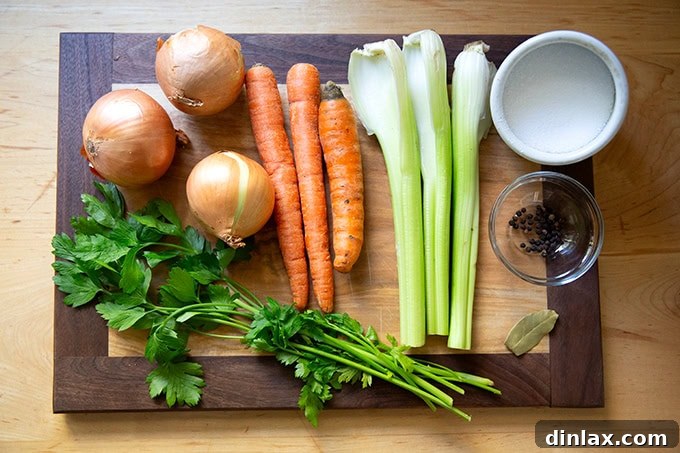
You’ll need fresh carrots, robust yellow onions (unpeeled is fine, as we’ll strain them out), crisp celery, a few sprigs of fresh parsley, a fragrant bay leaf, whole black peppercorns, and, of course, kosher salt. These aromatics will infuse your stock with classic, savory notes.
And the undisputed star of our stock: plump turkey wings! These are ideal because they contain a good amount of bone, meat, and skin, all contributing to a rich, gelatinous stock. Lay them out on a sturdy sheet pan.
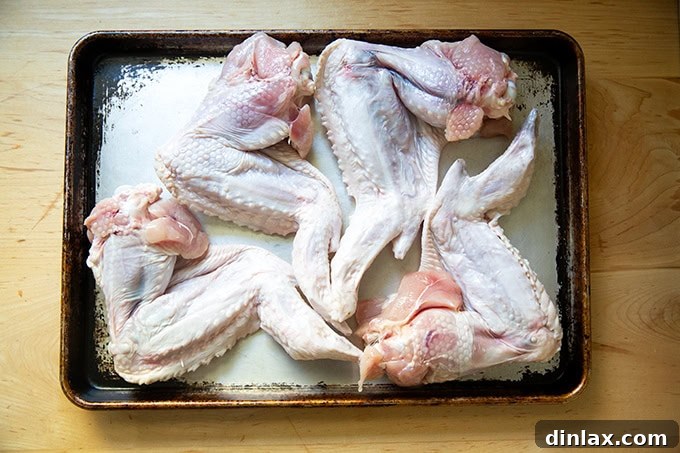
Your first step is to place the turkey wings skin-side down on a rimmed sheet pan. Season them generously with kosher salt, which helps draw out moisture and promote excellent browning. Then, roast them at a high temperature (500°F) until they are deeply browned and caramelized, typically about 45 minutes. This initial roasting is where the magical Maillard reaction truly begins, building the foundational flavor of your stock.
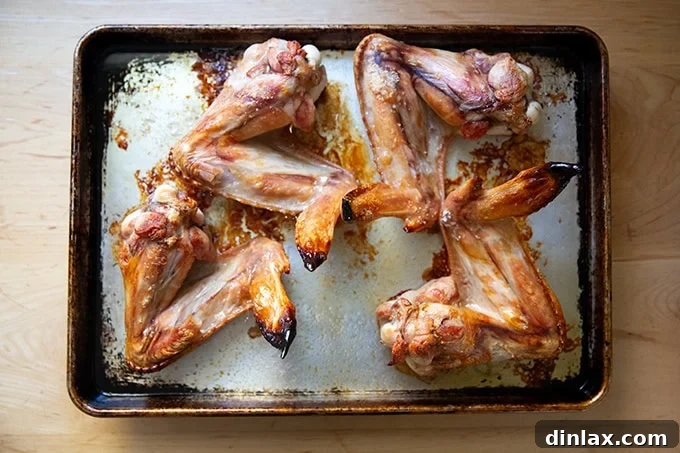
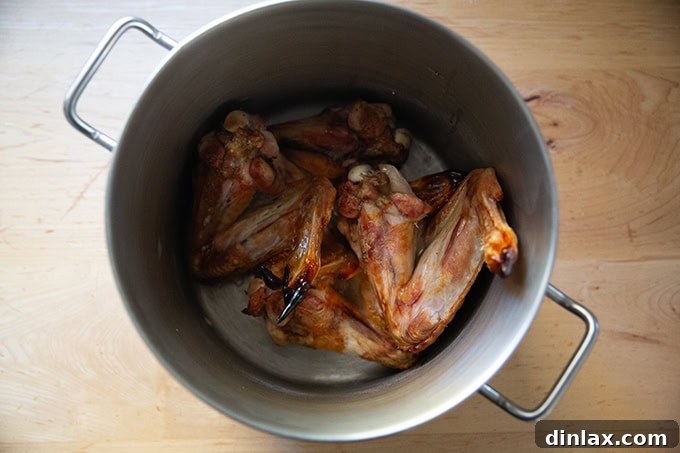
Once the turkey wings are beautifully browned, carefully transfer them from the sheet pan to a large 8- to 10-quart stockpot. It’s crucial to reserve that roasting pan; it holds the precious “fond” that we’ll extract for even more flavor.
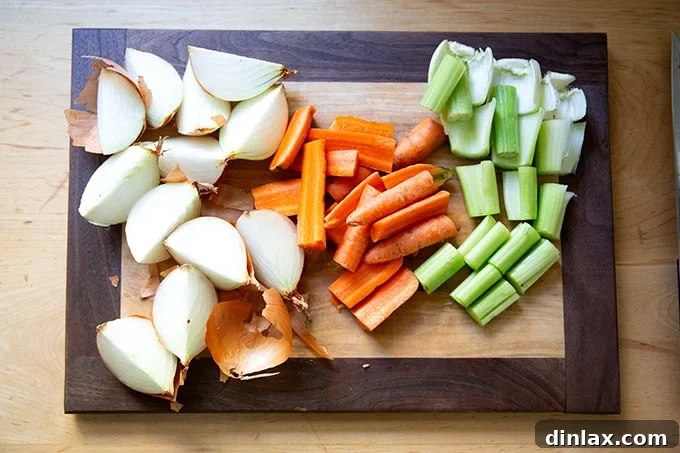
Next, we prepare our aromatic vegetables. Chop your onions, celery, and carrots into roughly 2-inch lengths. There’s no need for precision here, as they will be strained out later.
Add the chopped onions, celery, and carrots directly to the reserved sheet pan, spreading them out evenly. They don’t need additional seasoning at this point, as they will absorb flavor from the remnants on the pan.
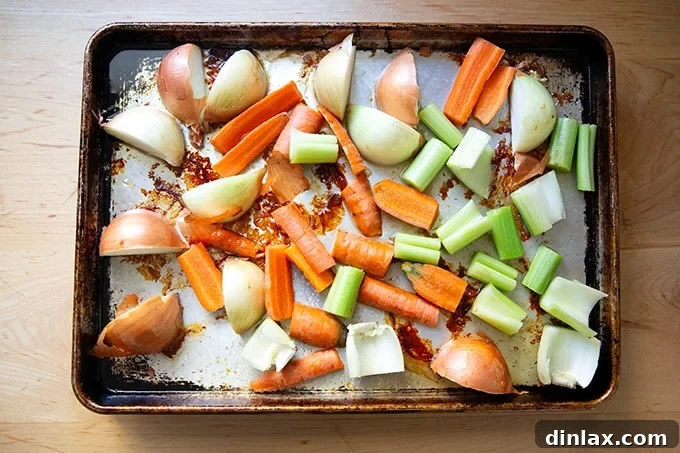
Transfer the sheet pan with the vegetables back into the hot oven. Roast them until they are tender and beautifully golden brown, which should take approximately 20 minutes. This roasting caramelizes their natural sugars, adding another layer of sweetness and depth to your stock.
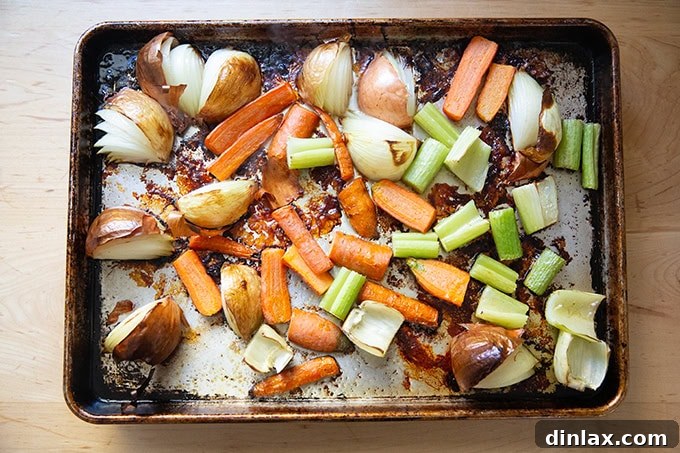
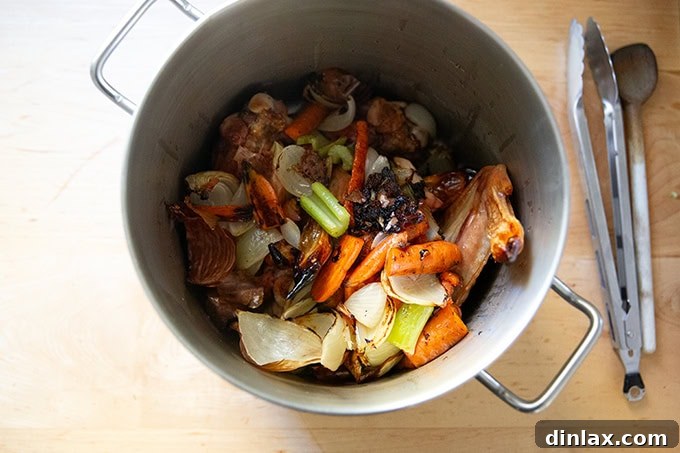
Once roasted, add these fragrant, golden vegetables to the stockpot with the turkey wings. The pot is now filling with all the primary flavor components.
Now comes the critical step of deglazing. Place the empty roasting pan across two burners on your stovetop. Carefully add about 2 cups of water. The sizzle and steam are normal!
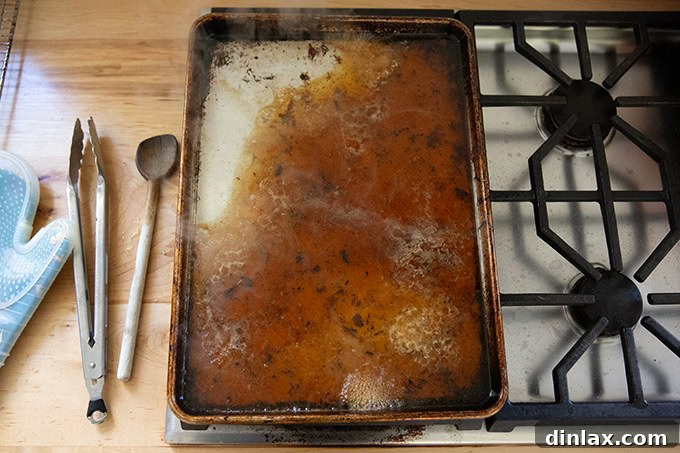
Bring the water to a boil, then use a sturdy wooden spoon to vigorously scrape up all the browned bits (the fond) stuck to the bottom of the pan. Stir and scrape for about one minute until all that caramelized goodness is dissolved into the liquid. This concentrated, flavorful liquid is then carefully poured into your stockpot, joining the turkey and vegetables.
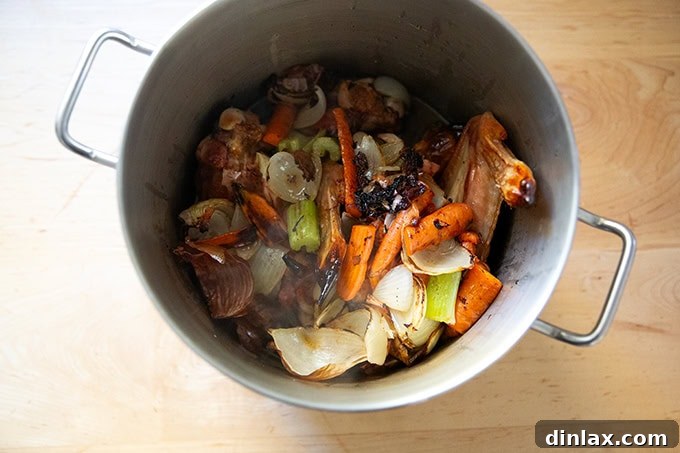
Finally, add the remaining aromatics and seasonings to the pot: the parsley sprigs, bay leaf, whole black peppercorns, and 1 tablespoon of kosher salt (adjust if using a different brand, like Morton). These ingredients will subtly enhance the overall flavor profile during the long simmer.
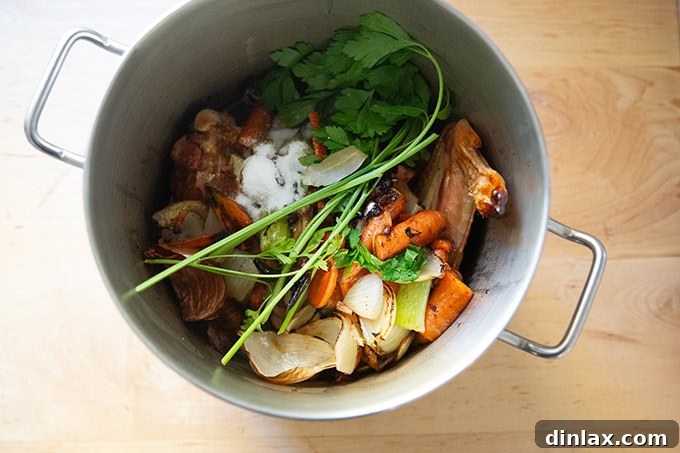
Now, fill your stockpot with 6 to 7 quarts of cold water, ensuring all the ingredients are fully submerged. The exact amount will depend on the size of your pot and how concentrated you desire your finished stock to be.
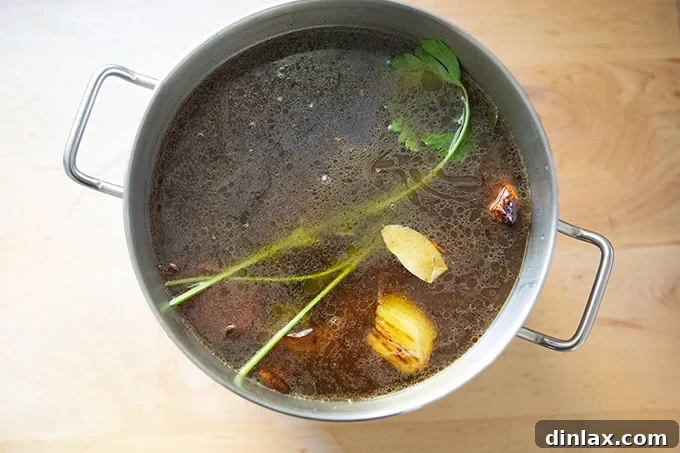
Transfer the heavy pot to your stovetop and place it over high heat. Bring the water to a rolling simmer. As soon as it begins to simmer, reduce the heat significantly to maintain a very gentle, slow simmer. This ensures clarity and optimal flavor extraction without clouding the stock.
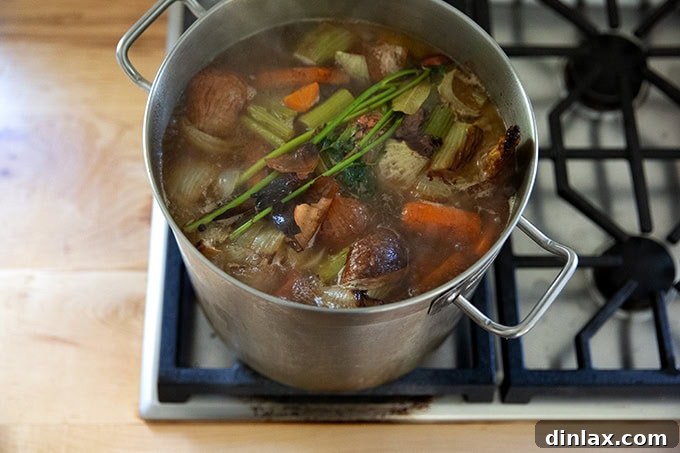
Allow the stock to gently simmer, uncovered, for a minimum of 3 to 4 hours. During this time, the flavors will meld, the bones will release their gelatin, and your kitchen will be filled with the most comforting and inviting aromas. You can occasionally skim off any foam or impurities that rise to the surface for a clearer stock, though it’s not strictly necessary.
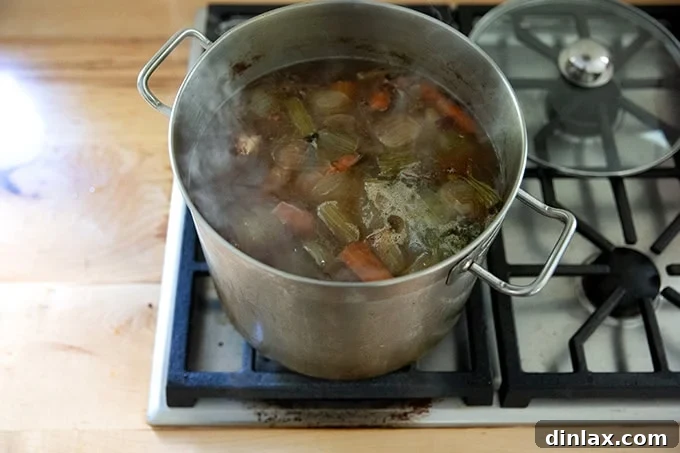
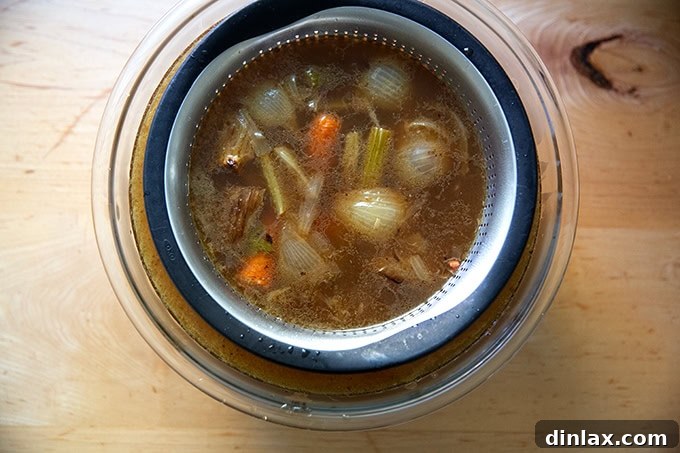
Once the simmering is complete, it’s time to strain your beautifully rich stock. Working in batches, carefully pour the contents of the pot through a colander or fine-mesh sieve set over a large, heat-proof bowl. This separates the liquid gold from the solids. You can press on the solids slightly to extract any remaining liquid, but avoid mashing them vigorously, as this can make your stock cloudy.
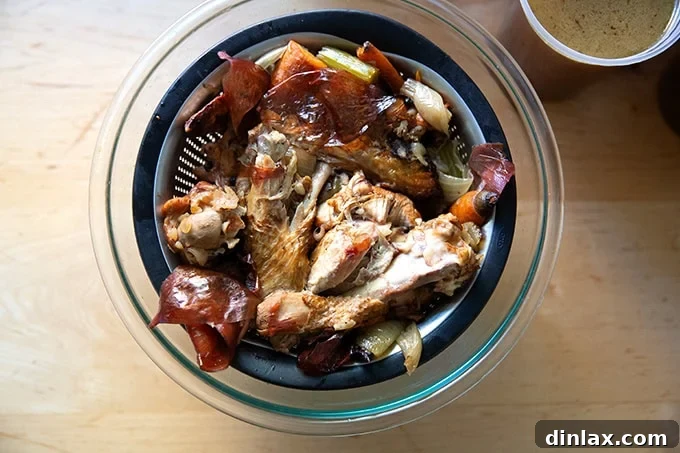
Discard all the cooked solids—the turkey wings, vegetables, and herbs—as their flavors have now been fully extracted into the stock.
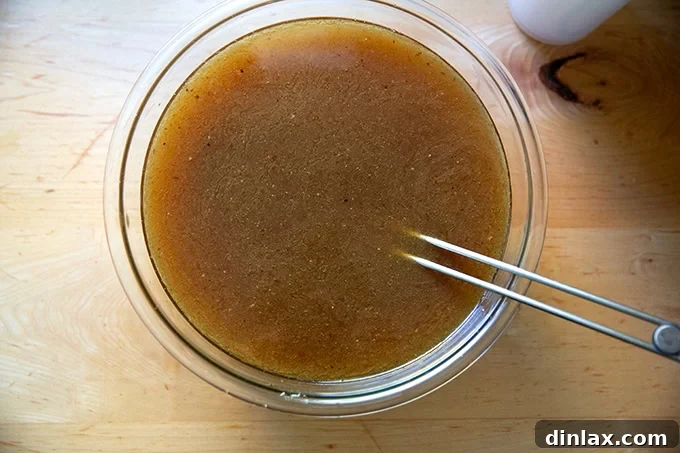
What remains is a pure, golden elixir—your homemade roasted turkey stock, brimming with incredible flavor.
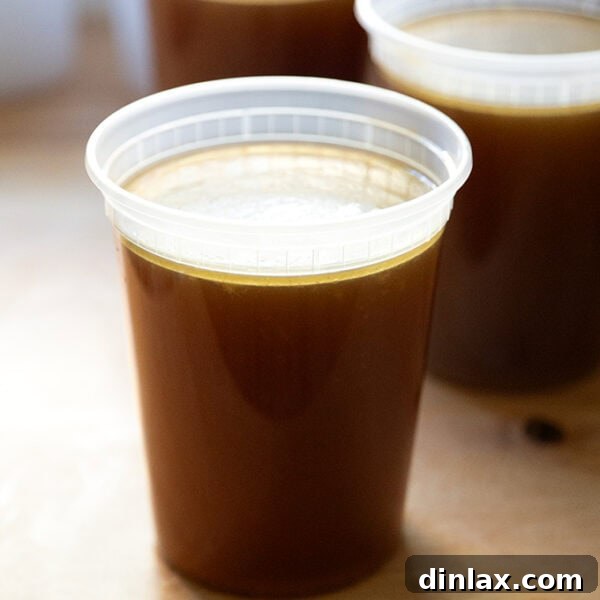
Once the stock has cooled to room temperature, transfer it to appropriate storage vessels. For convenience, I highly recommend these handy deli containers, especially useful during the busy holiday season. They come in various sizes, making portioning and storage a breeze.

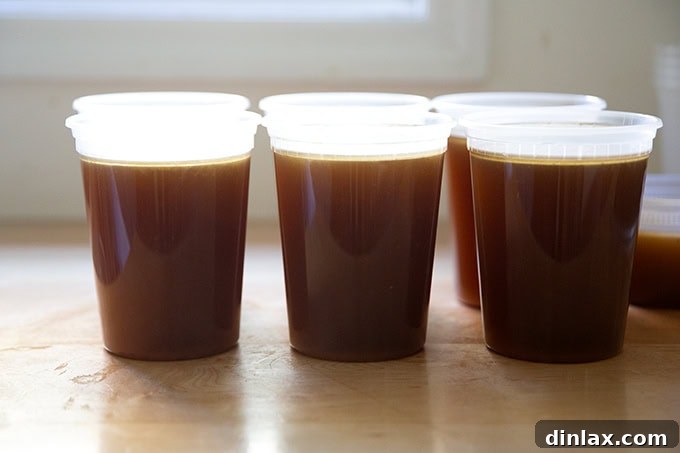
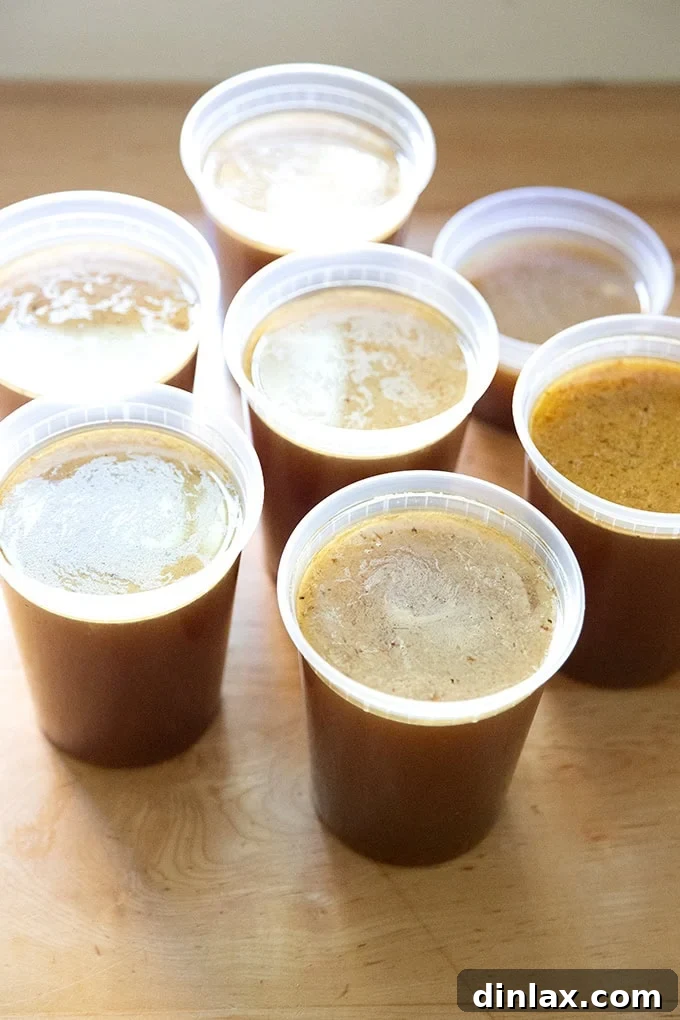
There’s truly no better feeling than surveying your countertop and seeing 6 or more quarts of rich, golden roasted turkey stock, all ready to be deployed in your next culinary creation. This homemade staple brings an unparalleled depth of flavor that store-bought versions simply can’t match.
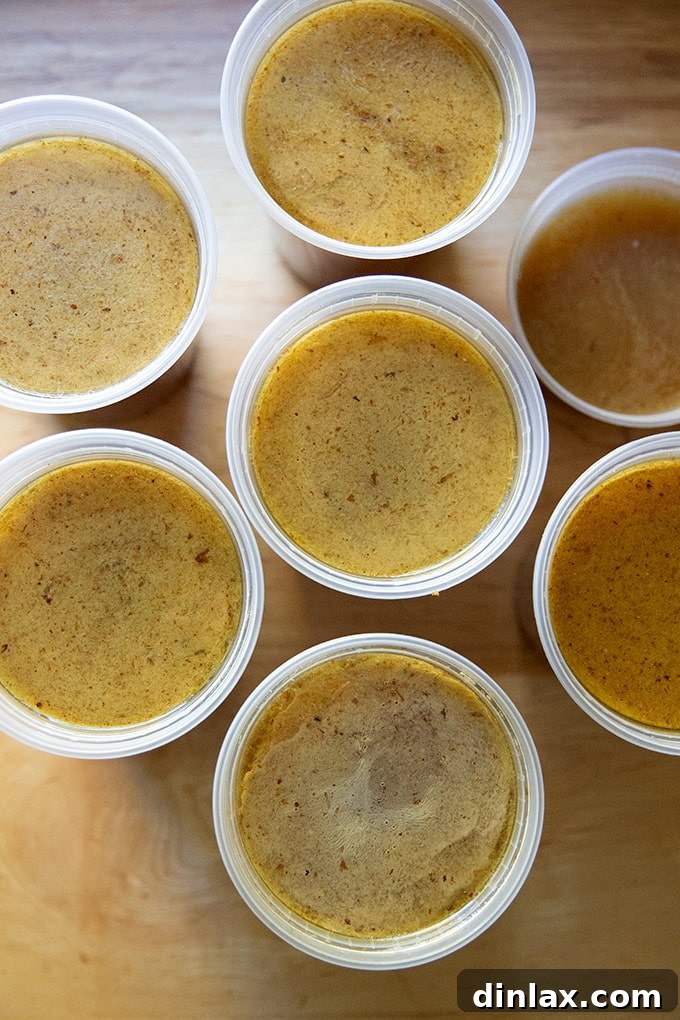
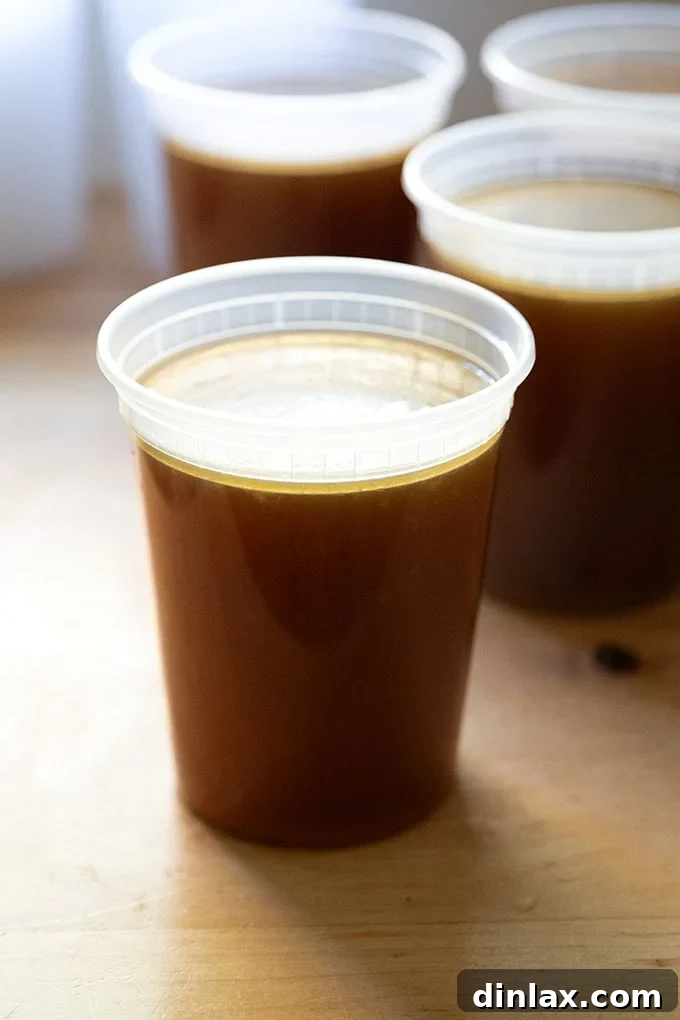
For ultimate convenience, this roasted turkey stock is highly freezer-friendly. You can safely freeze it for up to 3 months, making it perfect for preparing well ahead of the holidays. Alternatively, store it in the refrigerator for up to 1 week. Before freezing, I often chill my stock in the fridge overnight. This allows any residual fat to solidify on the top, making it incredibly easy to scrape off for a lighter, clearer stock, if desired. However, if there isn’t much fat, feel free to leave it—it adds flavor! Having this precious ingredient ready to go means less stress and more deliciousness when it matters most.
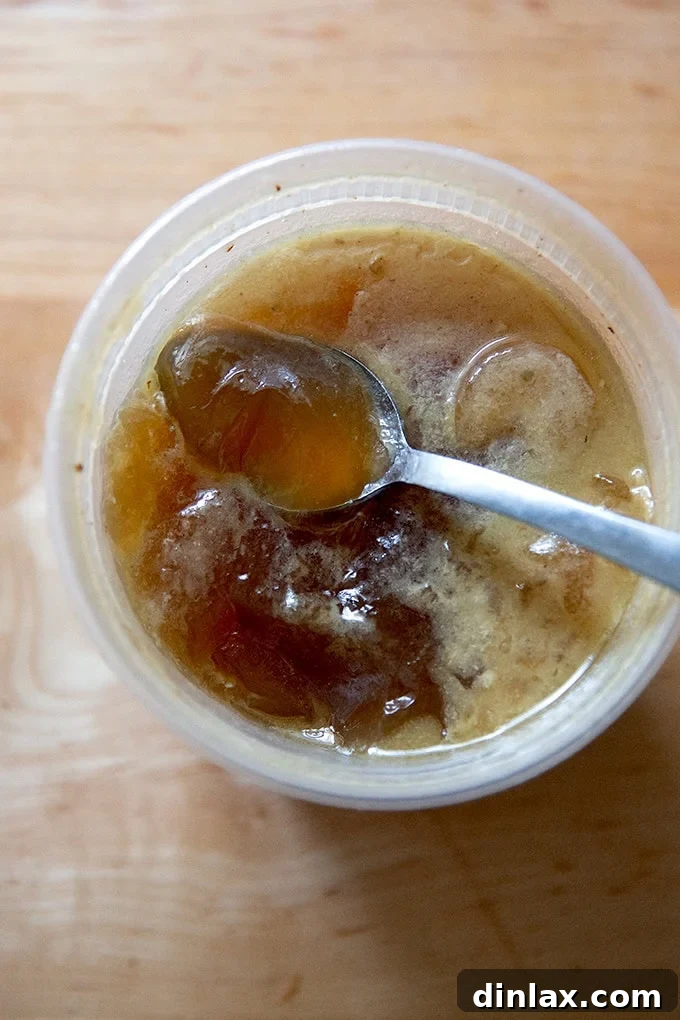
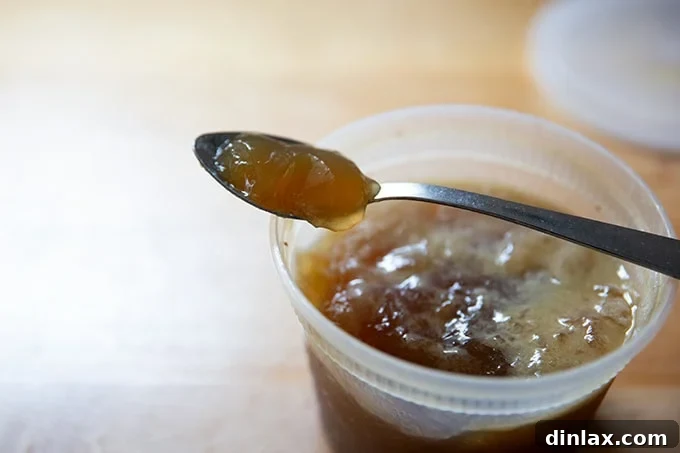
Behold this beautiful sight: perfectly solidified, jellied turkey stock. This gel-like consistency when cold is a clear indicator of a well-made, rich stock, brimming with natural gelatin from the turkey bones. This gelatin is what gives soups, sauces, and gravies their luxurious mouthfeel and body. It’s a hallmark of true culinary excellence.
Print
Roasted Turkey Stock (Wings, Make-Ahead)
5 Stars 4 Stars 3 Stars 2 Stars 1 Star
5 from 25 reviews
Author: Alexandra Stafford
Total Time: 4 hours 20 minutes
Yield: 6 to 7 quarts 1x
Description
This recipe for roasted turkey stock is adapted from a timeless Gourmet magazine classic, celebrated for its rich, deep flavor. The roasting of turkey wings and vegetables, followed by deglazing, ensures a stock bursting with savory notes—a far cry from bland, store-bought alternatives. It’s perfect for elevating holiday dishes like stuffing and gravy, or for everyday soups and risottos.
Storage vessels: For easy portioning and freezer storage, I highly recommend using sturdy deli containers. This set offers mixed sizes, which is incredibly versatile for various needs throughout the year. Additionally, a dedicated set of quart-sized containers is excellent for larger batches or for freezing standard portions.
Ingredients
-
5 to 6 pounds turkey wings
- kosher salt (for seasoning wings and later, 1 tablespoon for the stock; adjust if using Morton’s)
-
3 medium yellow onions, unpeeled and quartered
-
3 celery ribs, cut into 2-inch lengths
-
3 carrots, unpeeled and quartered
-
6 to 7 quarts of cold water (depending on stockpot size)
-
4 to 5 sprigs of fresh parsley
-
1 bay leaf
-
10 whole black peppercorns
Instructions
- Roast the Turkey Wings: Preheat your oven to a blazing 500°F (260°C). Arrange the turkey wings, skin-side down, on a large, rimmed sheet pan. Season them generously with kosher salt – this helps create that deep, flavorful crust. Transfer the pan to the hot oven and roast for approximately 45 minutes, or until the wings are very well browned and caramelized. This initial roasting step is crucial for developing the rich, savory base of your stock. Once browned, carefully transfer the roasted wings to an 8- to 10-quart stockpot, making sure to reserve the sheet pan with all its drippings and browned bits.
- Roast the Vegetables: Add the quartered onions (unpeeled is fine), 2-inch lengths of celery, and quartered carrots to the reserved sheet pan. Spread them out evenly. Place the pan back into the hot oven and roast for an additional 20 minutes, until the vegetables are tender and beautifully golden brown. The caramelization of these vegetables will add a subtle sweetness and depth to the stock. Once roasted, add these vegetables to the stockpot with the turkey wings.
- Deglaze the Pan and Assemble the Stock: Place the now empty sheet pan across two burners on your stovetop. Carefully add 2 cups of water to the hot pan. Bring the water to a boil, then immediately use a sturdy wooden spoon or spatula to vigorously scrape up all the precious brown bits (the “fond”) stuck to the bottom of the pan. Stir and scrape for about 1 minute, allowing all that concentrated flavor to dissolve into the liquid. This deglazing liquid is a flavor powerhouse! Carefully pour this deglazing liquid into the stockpot, joining the turkey and vegetables. Now, add the fresh parsley sprigs, bay leaf, 10 whole black peppercorns, and 1 tablespoon of kosher salt (if using Diamond Crystal brand; if using Morton kosher salt, reduce to ½ tablespoon as it’s saltier). Finally, cover all the ingredients with 6 to 7 quarts of cold water, ensuring everything is fully submerged. The exact water quantity will depend on your stockpot’s size.
- Simmer the Stock: Place the stockpot over high heat and bring the water to a rolling simmer. As soon as it reaches a simmer, reduce the heat to low and allow the stock to gently simmer, uncovered. A gentle simmer is crucial for a clear, flavorful stock; a hard boil can make it cloudy. Let it simmer undisturbed for a minimum of 3 to 4 hours. During this time, the flavors will meld, and the turkey bones will release their beneficial gelatin. You can occasionally skim any foam that rises to the surface for an even clearer stock.
- Strain and Store: Once the simmering is complete, carefully strain the stock in batches. I find it easiest to set a large colander (or a fine-mesh sieve lined with cheesecloth for extra clarity) over a substantial bowl or another clean pot. Pour the contents of the stockpot through the colander, separating the liquid from the solids. Discard all the solids—the turkey wings, roasted vegetables, and herbs—as their flavor has been fully extracted. Allow the strained stock to cool completely at room temperature before transferring it to storage vessels. I highly recommend chilling the stock in the refrigerator for at least a day. This allows any residual fat to solidify on the surface, making it incredibly easy to scrape off if you prefer a leaner stock. If there’s not much fat, it’s perfectly fine to leave it. Once chilled (and defatted, if desired), transfer the stock to freezer-safe containers. You can freeze this rich, homemade turkey stock for up to 3 months, or keep it in the refrigerator for up to 1 week.
- Prep Time: 20 minutes
- Cook Time: 4 hours
- Category: Sauce
- Method: Stovetop, Oven
- Cuisine: American