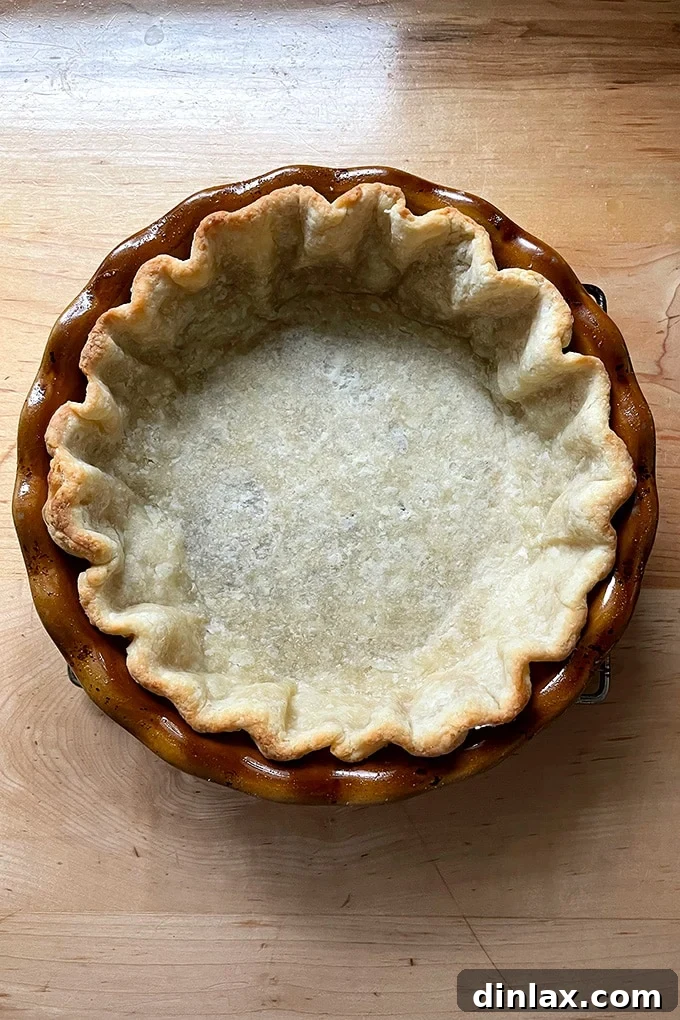
Welcome to the ultimate guide for crafting impeccable pie dough and mastering the essential techniques of parbaking and blind baking. This comprehensive method is meticulously designed to arm you with the knowledge and skills needed to achieve picture-perfect pie crusts that neither shrink in the oven nor succumb to the dreaded soggy bottom. Prepare to elevate your pie-making to an art form, ensuring every slice is a testament to flaky perfection and robust flavor.
For a significant period in my baking journey, the concept of parbaking my pie crusts felt like an optional, even bothersome, step. I often found myself skipping it, reasoning that the bottoms of my pies weren’t “terribly” soggy, and the additional process seemed unnecessarily time-consuming. From meticulously arranging pie weights to navigating the chilling and baking phases, it often felt like more trouble than it was worth. Furthermore, a common frustration was that the crust of my final baked pies would frequently turn out overbaked, losing that delicate balance of flavor and texture that truly elevates a homemade pie.
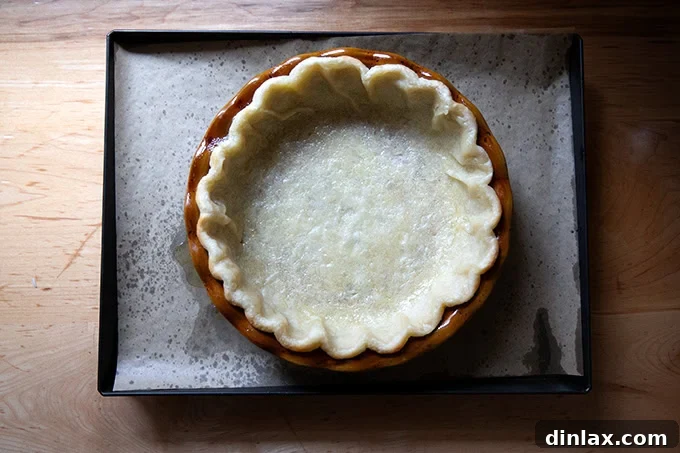
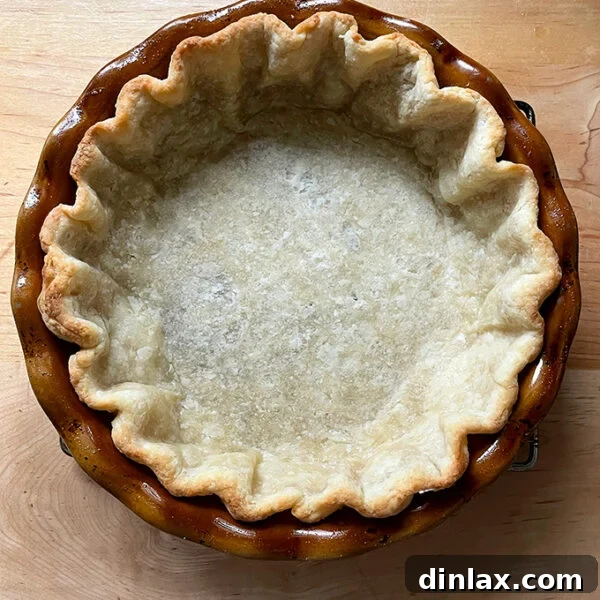
However, my perspective dramatically shifted several years ago after encountering a stunning photograph in The Book on Pie. The image showcased a perfectly parbaked pie crust, and it was a revelation. Unlike my overcooked attempts, this crust was barely toasted, predominantly a beautiful blonde with only the faintest whisper of golden brown around its edges. It exuded an understated elegance that promised both structural integrity and a harmonious blend with its filling. The accompanying baking method was equally eye-opening, advocating an initial 15-20 minutes with pie weights, followed by a mere 2-3 minutes without them. This precise, two-stage approach was unlike anything I had tried before.
Intrigued and hopeful, I adopted this new methodology. The results were nothing short of transformative. My parbaked crust emerged from the oven with subtly toasted edges and a largely blonde bottom surface, exactly as depicted. When eventually filled and baked, the finished pie crust was deeply caramelized, offering a rich, nuanced flavor without any hint of being overcooked or burnt. It was the perfect foundation, robust enough to support a luscious filling yet tender and flaky on its own. This experience solidified parbaking as an indispensable, non-negotiable step in my pie-making repertoire. It requires a bit of foresight and planning, certainly, but the improved outcome is undeniably worth the effort. The process, once intimidating, is actually quite straightforward, especially when you focus on two critical details:
- Ensuring your pie dough is adequately chilled both before rolling and prior to parbaking.
- Utilizing a generous and sufficient amount of pie weights during the initial bake.
Let’s delve deeper into each of these fundamental principles to understand their profound impact on achieving a truly exceptional pie crust:
The Undeniable Importance of Chilling Your Pie Dough
Once you’ve meticulously prepared your pie dough, it is absolutely crucial to allow it ample resting time in the refrigerator. A minimum of 30 minutes is acceptable, but for truly superior results, aim for a chill of 12 to 24 hours before you even consider rolling it out. This extended chilling period is not merely a suggestion; it is a vital step that underpins the success of your pie crust, primarily for two compelling reasons:
- **Enhanced Workability and Smooth Rolling:** Chilling the dough after mixing significantly improves its texture, making it far easier to roll out evenly and without tearing. This is because the chilling process allows the gluten strands – the natural proteins that develop when flour is hydrated – to relax and soften. Without this relaxation, the dough would be elastic and spring back, making it resistant to rolling. A relaxed dough yields to your rolling pin, creating a consistent thickness crucial for even baking.
- **Minimizing Shrinkage for a Perfect Fit:** A properly rested and chilled dough will exhibit significantly less shrinkage in the oven. This benefit, again, directly relates to the relaxed gluten. When dough is not adequately chilled, the tight, tense gluten strands contract rapidly under the heat of the oven, causing the crust to pull away from the edges of the pie plate. This leads to a smaller, misshapen crust that doesn’t hold its form. By giving the gluten time to relax, you ensure your beautifully crimped edges and well-fitted crust remain intact throughout the baking process, resulting in a visually appealing and perfectly sized pie.
Beyond these primary benefits, chilling also firms up the butter or fat within the dough, which is essential for achieving that desirable flaky texture. Cold fat creates steam pockets during baking, which separates the layers of dough, giving pie crust its characteristic flakiness. So, remember: patience with chilling is a virtue that pays off handsomely in pie perfection.
You Need More Pie Weights Than You Think: The Secret to a Stable Crust
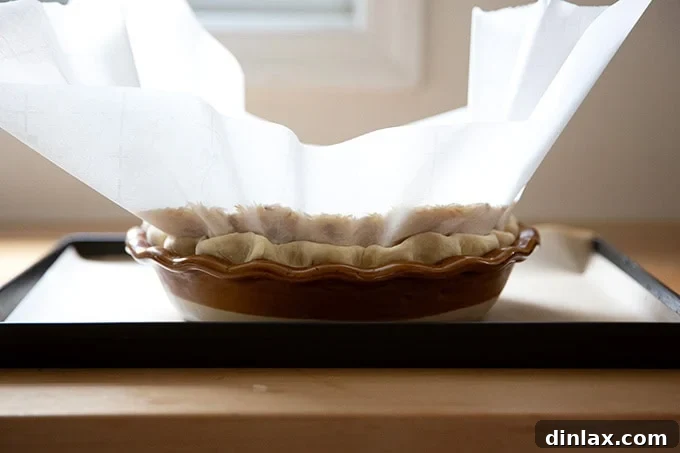
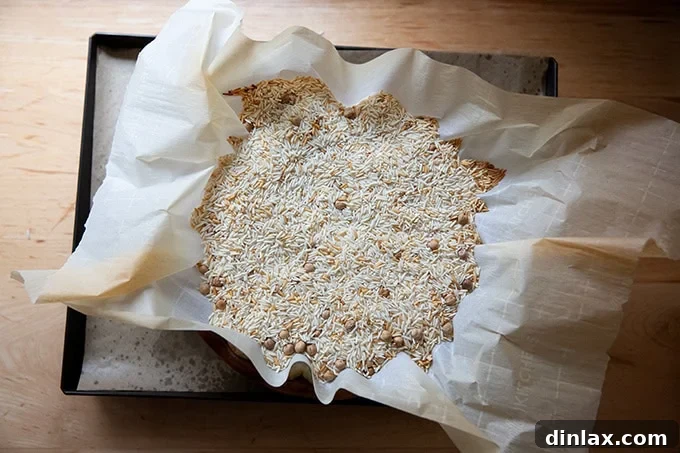
One of the most common mistakes in parbaking is underestimating the quantity of pie weights required. When it comes to filling your parchment-lined pie shell, adopt a “more is more” philosophy. I consistently use a generous 3.5 pounds of dried rice or beans for a single pie shell, and I don’t just fill it to the rim – I pile them high, ensuring they extend at least a half-inch above the dough’s edge. This might seem excessive, but it’s a critical factor in preventing common pie crust calamities.
The purpose of pie weights is twofold: first, to prevent the dough from puffing up unevenly, creating an air pocket under the crust, and second, to counteract the dough’s natural tendency to slump down the sides of the pie plate as it bakes. The substantial weight provides firm, consistent pressure against the dough, forcing it to maintain its shape, adhere to the contours of the pie plate, and prevent the sides from collapsing. This ensures that your crust bakes into a perfectly formed cup, ready to embrace its filling. Don’t worry about waste; dried rice or beans used as pie weights can be saved and reused indefinitely once cooled, making them an economical and sustainable choice. Simply transfer them to an airtight container after each use. For optimal results, ensure the weights are evenly distributed and pressed gently into every curve and crease of the crust.
How to Parbake Pie Dough, Step by Step for a Flawless Finish
Achieving a perfectly parbaked pie crust is a meticulous yet rewarding process. Follow these detailed steps to ensure a flawless foundation for your next pie:
-
Prepare Your Dough: Begin by removing your well-chilled round of pie dough from the refrigerator. If your dough has been chilling for an extended period (12-24 hours), it might be quite firm. Allow it to sit at room temperature for about 5-10 minutes, or gently tap it with a rolling pin a few times to make it slightly more pliable before rolling. (For a foolproof pie dough recipe, refer to the detailed recipe box below).

-
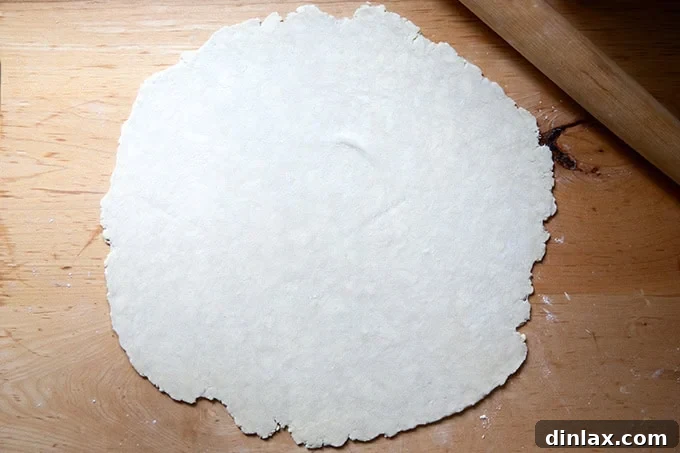
Roll Out the Dough: On a lightly floured, clean work surface, begin rolling out your chilled pie dough. Use smooth, even strokes, rotating the dough frequently and adding a touch more flour if it starts to stick. Aim for a round that is approximately 15 inches in diameter and about 1/8 to 1/16 inch thick. This size allows for sufficient overhang to properly fit and crimp in a standard 9-inch pie plate.
-
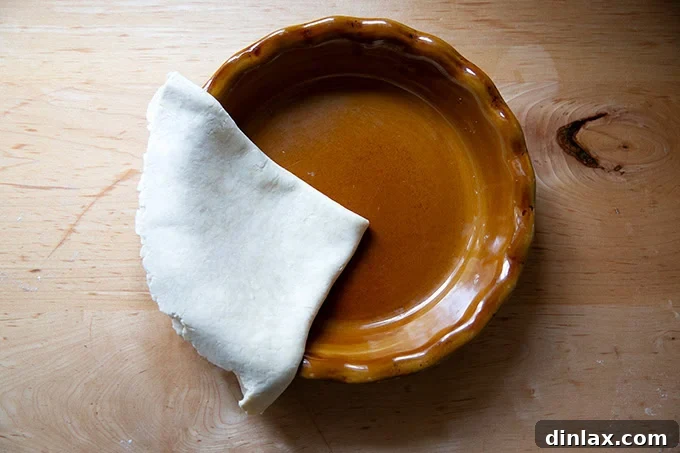
Transfer to Pie Plate: Carefully transfer the rolled dough into your pie plate. The easiest way to do this without tearing is to gently fold the dough in half, then fold it in half again (into quarters). Position the folded dough in the center of your pie plate, then carefully unfold it, allowing it to settle naturally into the pan’s contours. Avoid stretching the dough, as this can cause it to shrink back during baking.
-
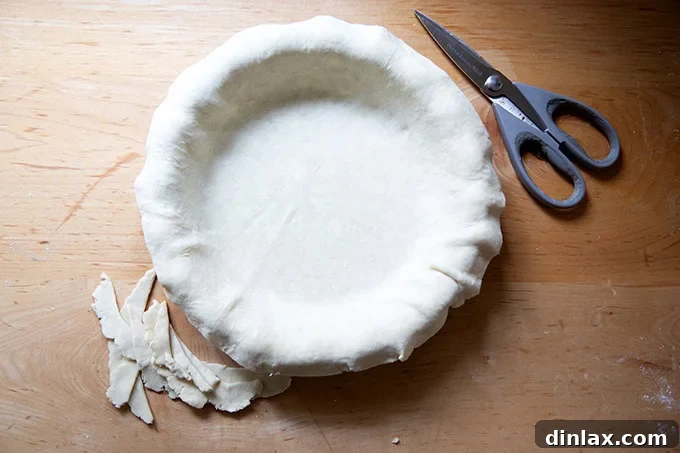
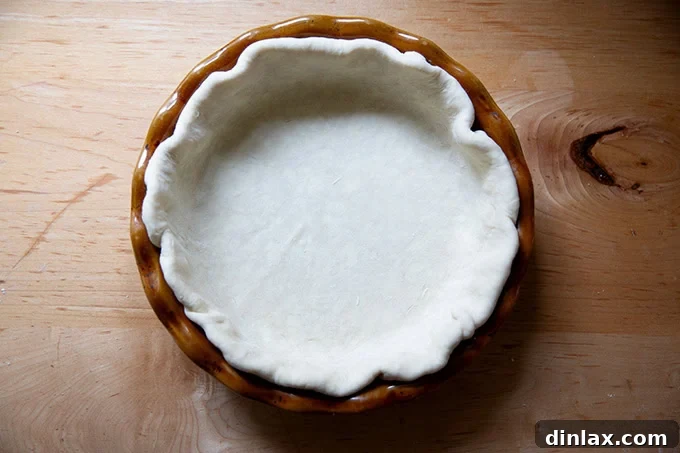
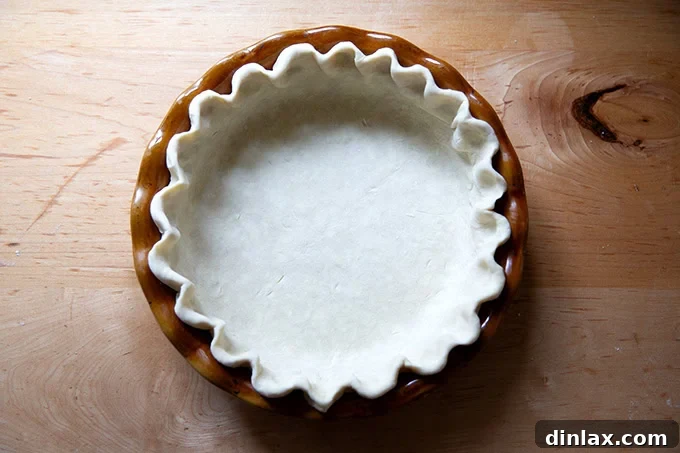
Trim and Crimp: Once the dough is in the plate, gently press it against the bottom and sides without stretching. Trim any excessive overhanging dough, leaving approximately a 1/2-inch to 1-inch border extending beyond the rim of the pie plate. This extra dough is crucial for creating a sturdy, beautiful edge. Next, tuck this overhanging dough neatly behind itself, pressing it against the inner rim of the pie plate to create a slightly thicker edge. Then, using both hands, pinch and crimp the dough to form a decorative, pleated edge. This not only looks attractive but also helps to reinforce the crust structure. After crimping, place the pie shell in the refrigerator to chill for at least 30 minutes. This chilling period is vital for setting the crimped edges and preventing shrinkage.
-
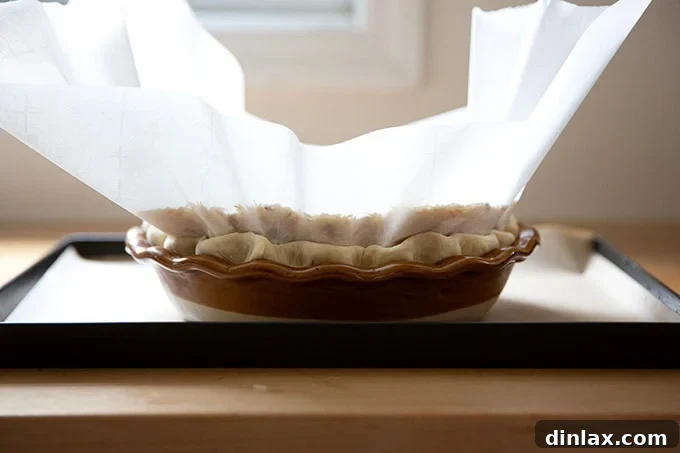
Line with Parchment and Fill with Weights: Once the dough is adequately chilled, lay a sheet of parchment paper directly over the dough, pressing it gently into the bottom and sides of the crust. Ensure the parchment extends over the crimped edges. Now, generously fill the parchment-lined shell with your pie weights (or dried beans/rice). Be truly generous here! I recommend filling it so the weights extend at least a half-inch, or even a full inch, above the rim of the crust. This substantial weight is crucial for preventing the crust from shrinking or slumping during baking, ensuring it maintains its perfect shape.
-
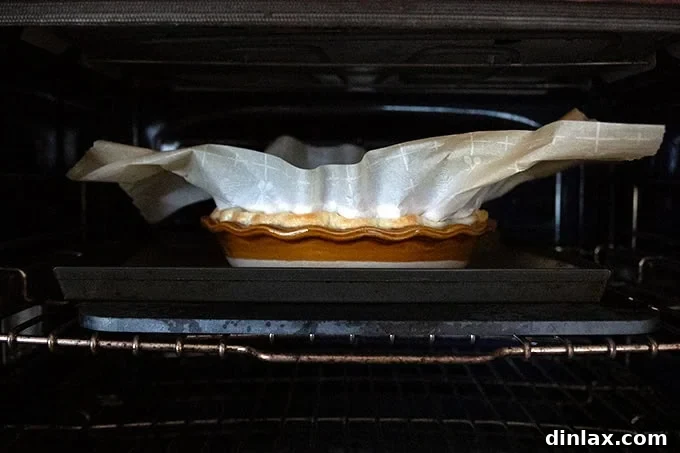
First Bake (with weights): Preheat your oven to 425ºF (220ºC). If you have a baking steel or pizza stone, place it on the lowest rack; it will help distribute heat evenly and prevent soggy bottoms. Transfer the filled pie crust (it’s best to place it on a parchment-lined sheet pan for easier handling and to catch any potential drips) to the preheated oven. Bake for approximately 15-20 minutes. Pay close attention to visual cues: the crust edges should just begin to show a light golden-brown color. Baking times can vary, so prioritize the visual readiness over strict timing. The bottom will still be blonde at this stage.
-
Remove Weights and Second Bake: Carefully remove the sheet pan from the oven. Using the edges of the parchment paper as a sling, gently lift the entire parchment-paper bundle containing the pie weights out of the parbaked crust. Be cautious, as the weights will be hot. Once the weights are removed, immediately return the pie pan, now sans weights, to the oven for another 2-3 minutes. This crucial short burst of direct heat allows the bottom of the crust to dry out and firm up further, taking on a very subtle hint of color without becoming deeply browned. This step is what truly prevents sogginess while keeping the crust from overbaking when the pie is later filled. If you are blind baking (meaning, fully baking the crust for a no-bake filling), continue baking for an additional 10-12 minutes, or until the entire crust is evenly golden brown. (Let the removed pie weights cool completely before storing them for future use).
-
Cool and Store: Once the parbaked crust emerges from its final bake, immediately transfer the pie plate to a wire cooling rack. Allow it to cool completely to room temperature before handling or storing. Proper cooling is essential to prevent condensation, which could reintroduce moisture and undermine your efforts to achieve a crisp crust. Once cooled, parbaked crusts are remarkably versatile and can be stored for later use, offering immense convenience for busy bakers. Refer to the “Storage Notes” in the recipe box for detailed guidance. These 2-gallon zip-top bags are incredibly handy for storing parbaked crusts and other large, delicate baked goods, keeping them fresh and protected.
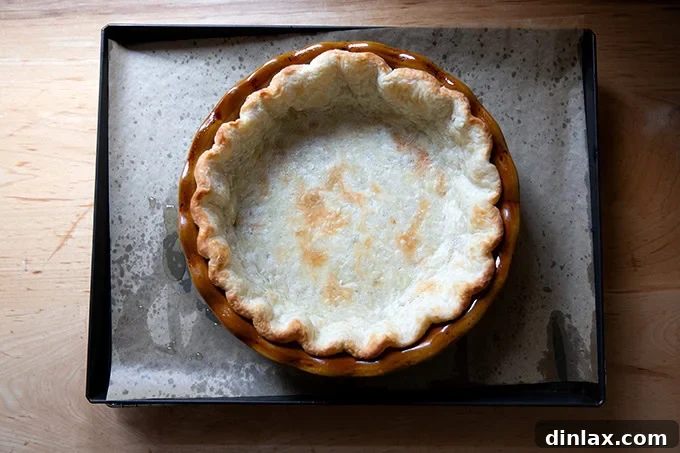
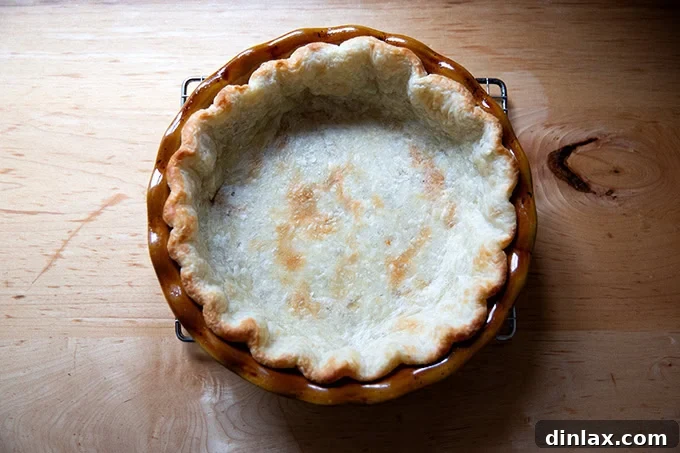
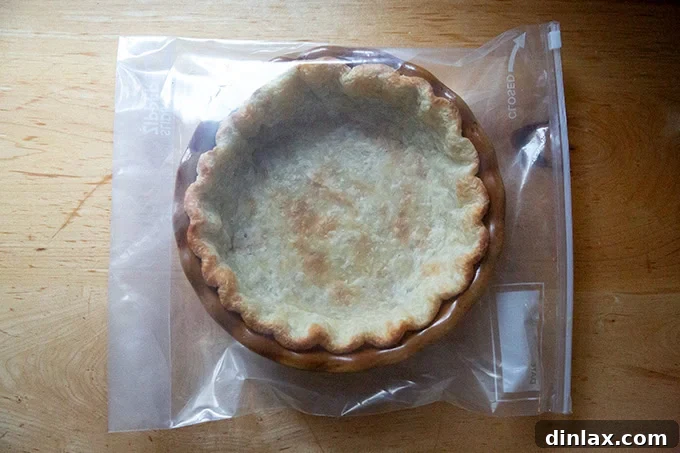
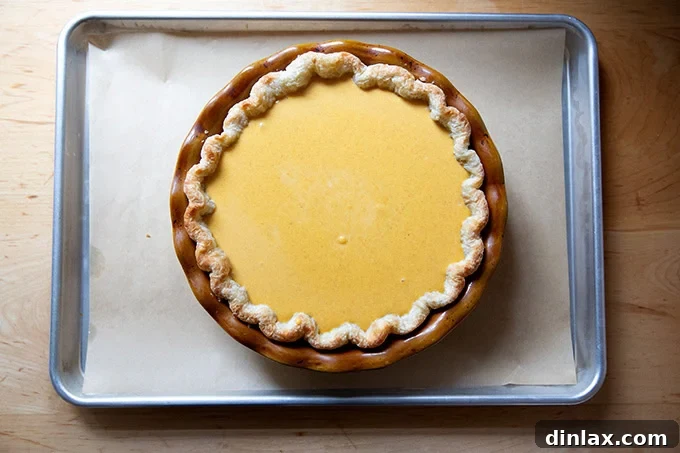
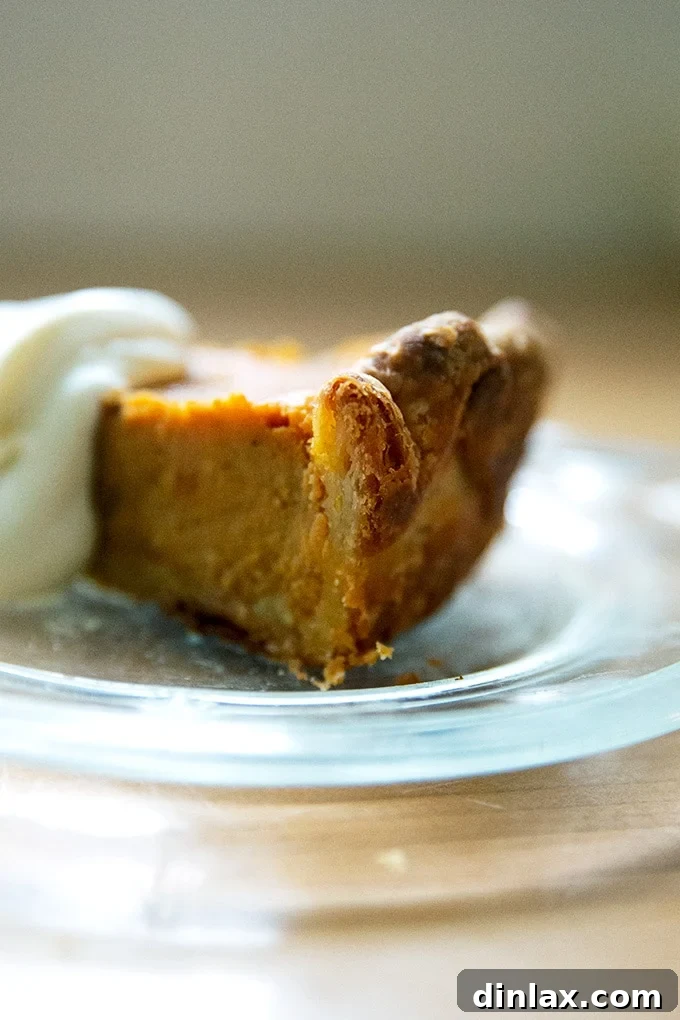
With your perfectly parbaked shell ready, the next step is effortless. Simply fill your sturdy, golden crust with your desired filling and bake according to your pie recipe’s instructions. The beauty of this method lies in its ability to handle moist fillings without compromising the integrity of the bottom crust. No more compromises between a perfectly cooked filling and an underdone, gummy crust! This particular image shows a butternut squash pie filling, a seasonal favorite that benefits immensely from a parbaked foundation.
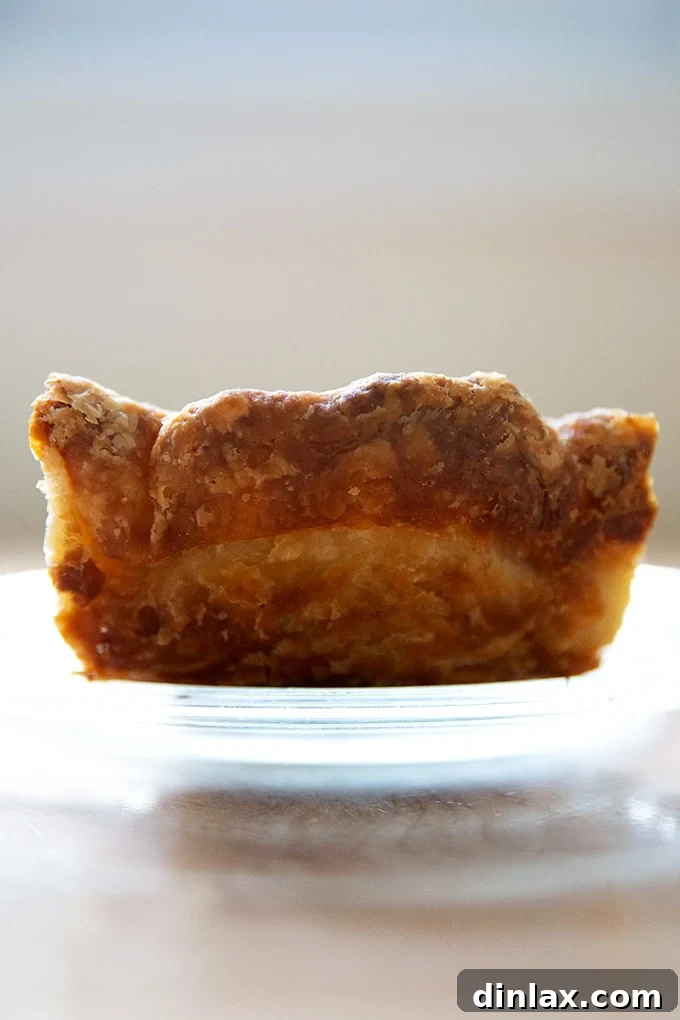
Just look at that magnificent flakiness! This is the hallmark of a truly well-made pie crust – layers upon layers of tender, buttery pastry that melt in your mouth, providing the perfect counterpoint to any sweet or savory filling. The parbaking process ensures that every bite, from the crimped edge to the very center of the bottom crust, offers that satisfying crunch and delicate texture, making your homemade pies an unforgettable delight for everyone who tastes them.
Print
How to Parbake (and Blind Bake) Pie Crust + Foolproof Flaky Pie Dough
5 Stars 4 Stars 3 Stars 2 Stars 1 Star
4.9 from 47 reviews
Author: Alexandra Stafford
Total Time: 1 hour 25 minutes
Yield: 2 pie crusts 1x
Description
Master the art of pie making with this foolproof guide to creating perfectly flaky pie dough and executing the essential techniques of parbaking and blind baking. Say goodbye to dreaded soggy bottoms and frustrating crust shrinkage; this method ensures your pie crusts emerge from the oven golden, crisp, and ready to hold any filling with grace. Whether you’re a seasoned baker or new to pie making, these detailed instructions and vital tips will transform your pie creations into consistent successes.
Here are a few cherished recipes that truly sing when paired with a perfectly parbaked crust:
- Bourbon Pecan Pie: The rich, gooey filling finds its perfect match in a sturdy, pre-baked crust.
- Roasted Butternut Squash Pie (often hailed as The Best Pumpkin Pie): A creamy, custardy filling demands a crust that can withstand moisture without losing its crispness.
- Salted Maple Pie: The sweet and salty complexity of this pie is beautifully grounded by a firm, flaky foundation.
Essential Notes for Pie Perfection:
- Plan Ahead for Optimal Dough Relaxation: For the most pliable and easy-to-roll dough, plan to make your pie dough at least 12 to 24 hours before you intend to roll it out. This extended chilling period is not just for convenience; it allows the flour to fully hydrate and, crucially, gives the gluten ample time to relax. This relaxation is key to a dough that rolls out smoothly without excessive shrinking, guaranteeing a perfectly sized and shaped crust.
- For a Double Batch, Process Separately: If you’re doubling your pie crust recipe, resist the urge to overload your food processor with double quantities. For the best results and to ensure even mixing, prepare the dough in separate batches. There’s no need to wash the food processor bowl between batches; simply process one, remove, then add ingredients for the second.
- Adjusting for a Half Batch: Should you only require a single pie crust, please refer to the precise ingredient quantities listed in the notes section further below for a half-sized recipe.
- My Favorite Pie Plate Recommendation: I wholeheartedly recommend and swear by my ceramic Emile Henry 9-inch Pie Plate. Its excellent heat distribution properties contribute significantly to a beautifully browned and evenly baked bottom crust.
- Always Use a Sheet Pan for Baking Pies: A critical piece of advice: never bake your pies directly on the oven rack. As pies bake, butter or filling might inevitably seep out. If this hits the hot oven floor or a baking steel, it will create a smoky, messy situation that’s difficult to clean. Always place your pie plate on a parchment-lined sheet pan. This provides a safety net for any spills and simplifies cleanup considerably.
- Dough Storage Guidelines: Freshly made pie dough is quite versatile. It can be prepared up to three days in advance and stored securely in the refrigerator. For longer-term planning, the dough freezes beautifully for up to three months. To thaw frozen dough, simply transfer it to the refrigerator overnight, allowing it to slowly come to a workable temperature before you plan to roll and bake. Importantly, once you’ve rolled out your dough and fitted it into a pie plate, avoid freezing it in this state. Baking directly from frozen can lead to an unevenly cooked or underbaked crust.
- Parbaked Crust Storage: Once your pie shells are perfectly parbaked, allow them to cool completely to room temperature on a wire rack. This prevents condensation from forming and making them soggy. Store the cooled shells in an airtight container or a large zip-top bag; a 2-gallon zip-top bag is particularly effective for protecting their delicate edges. They can be stored at room temperature for up to 3 days or frozen for up to 3 months. This preparation flexibility makes holiday baking a breeze!
- Optimized Pie-Making Schedule for Holidays: To streamline your baking process, especially during busy times like Thanksgiving or other holidays, consider this efficient schedule:
-
- Tuesday (or 2 days before serving): Prepare your pie dough from scratch and place it in the refrigerator to chill thoroughly.
-
- Wednesday: Take out your chilled dough, roll it, fit it into pie plates, and parbake the crusts. Let them cool completely, then store them until needed.
-
- Thursday: On the day of the event, retrieve your parbaked crusts, fill them with your chosen filling, and bake as directed by your recipe. This division of labor reduces stress and ensures a fresh, delicious pie.
-
Ingredients
- 2½ cups (320g) all-purpose flour
- 2 tablespoons (25 g) granulated sugar
- ½ teaspoon (3 g) kosher salt
- 16 tablespoons (227g) unsalted or salted butter, precisely cut into small, chilled pieces
- ½ cup + 2 tablespoons (142g) ice water (use sparingly, add more if needed)
For successful parbaking and convenient storage:
- **Pie weights or dried beans/rice:** I consistently opt for dried beans or rice due to their effectiveness and reusability. You will need a surprisingly large quantity – ideally over 3 pounds per pie shell – to ensure adequate pressure. These can be used perpetually; I prefer to store mine in this durable OXO vessel for easy access and organization.
- **Parchment paper:** Essential for lining the crust before adding weights, preventing sticking and allowing for easy removal. The large size of Reynolds parchment is particularly convenient for covering the entire surface during parbaking.
- **Jumbo zip-top bags:** Perfect for storing cooled, parbaked crusts. The 2-gallon size is especially useful for accommodating the diameter of pie shells.
Instructions
- Preparing the Dough (Food Processor Method): In the bowl of your food processor, combine the all-purpose flour, granulated sugar, and kosher salt. Pulse these dry ingredients together a few times to ensure they are well mixed. Next, add the chilled butter, which should be cut into small, even cubes. Pulse the mixture at 1-second intervals, approximately ten times, until the butter is roughly the size of small peas. This texture is crucial for flakiness. Finally, gradually add the ice water, pulsing about 10 more times until the mixture appears crumbly but holds together when you pinch a small amount between your fingers. Be careful not to overmix, as this develops too much gluten and can lead to a tough crust. (To make without a food processor: In a large mixing bowl, whisk together the flour, sugar, and salt. Distribute the cold, cubed butter evenly into the flour mixture. Using the back of a sturdy fork or a pastry cutter, work the butter into the flour until it forms small, pea-sized pieces. Gradually add the ice water, stirring with a fork until the mixture is crumbly but cohesive when pinched.)
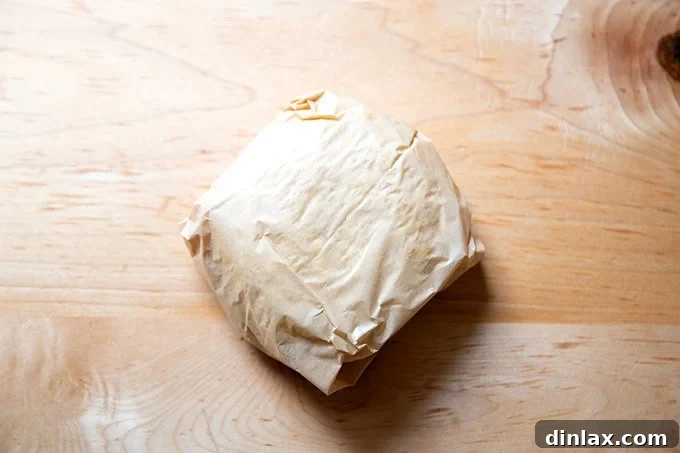
- Forming and Chilling the Dough Rounds: Divide the crumbly dough mixture equally into two portions (each should be roughly 350 grams). Lay two clean tea towels or large sheets of parchment paper on your work surface. Place one portion of dough into the center of each. Gather the four corners of the towel (or parchment) and twist them to create a “beggar’s purse” effect, simultaneously pressing the dough inwards to form a compact round. Use your hands to further pack and flatten each round into a disc shape, about 1 inch thick. This ensures even chilling. Wrap each disc tightly in plastic wrap or parchment paper, then place them in separate zip-top bags or other airtight containers. Store in the refrigerator for a minimum of 30 minutes, but ideally 12 to 24 hours (or up to 3 days) for optimal gluten relaxation. For longer storage, the dough can be frozen for up to 3 months; thaw overnight in the refrigerator before use.
- Preheating and Rolling: Preheat your oven to 425ºF (220ºC). If you possess a Baking Steel or a pizza stone, position it on a rack in the lower third of your oven. These tools are excellent heat conductors, promoting even and proper browning on the bottom of the pie crust and helping to stabilize the oven temperature when the door is opened. Lightly flour a clean work surface. Take one chilled round of pie dough from the fridge (if it’s very cold and hard, gently pound it a few times with your rolling pin to make it more pliable). Roll the dough out, starting from the center and working outwards, flipping the round over every few strokes to prevent sticking and ensure even thickness. Continue until you achieve a circle roughly 15 inches in diameter and approximately 1/8 to 1/16 inch thick.
- Fitting, Trimming, and Chilling the Shell: Carefully transfer the rolled dough round into your chosen pie plate. To avoid stretching, you can gently fold the dough in half or quarters before positioning it. Ease the dough into the contours of the plate without stretching. Trim any excess dough hanging over the edge, leaving about a 1-inch overhang. Collect these scraps in an airtight container and store them in the fridge; they can be re-rolled for small decorations or tarts. Next, tuck the remaining 1-inch overhang of dough behind itself, pressing it firmly against the inside edge of the pie plate. Then, use your fingers to crimp or flute the edge into a decorative pattern. For visual guidance, you can refer to a video demonstrating crimping techniques here. If time allows, chill the formed pie shell for an additional 30 minutes to set the crimps and minimize shrinkage. Once chilled, lay a sheet of parchment paper over the dough, pressing it gently into the bottom and sides. Pour your pie weights (or dried beans/rice) into the center, filling the crust completely and piling them high so they extend at least a half-inch above the rim of the crust. Use your hands to gently press the weights down, ensuring they conform to the edges of the fluted crust.
- First Bake with Weights: Carefully transfer the weight-filled pie crust (it’s wise to place it on a parchment-lined sheet pan for stability and easy oven transfer) to the preheated 425ºF (220ºC) oven. Bake for 15-20 minutes. The most reliable indicator for readiness at this stage is visual: remove the pan from the oven when you observe the edges of the crust just beginning to develop a light golden color. The exact timing may vary slightly depending on your oven, so trust your eyes. The bottom of the crust should still be pale.
- Removing Weights and Second Bake: Once the edges show slight color, carefully remove the sheet pan with the pie from the oven. Using the parchment paper as a sling, gently lift the entire contents of pie weights (or dried beans/rice) out of the parbaked crust. Set the weights aside to cool completely before storing them for future use. Immediately return the now-empty pie shell, still on its sheet pan, to the oven. For a parbaked crust (partially baked): Bake for an additional 2 to 3 minutes. During this short interval, the bottom and sides of the crust will dry out and take on a very faint hint of golden color, but should not become deeply browned. This step is crucial for preventing a soggy bottom in a filled pie. For a blind-baked crust (fully baked, for no-bake fillings): Return the empty shell to the oven for a longer period, typically another 10 to 12 minutes, or until the entire crust, including the bottom, is an even, rich golden brown.
- Cooling and Storage of Parbaked Crusts: After either parbaking or blind baking, it is imperative to let your pie shells cool completely on a wire rack at room temperature. This prevents condensation and ensures the crust remains crisp. Once thoroughly cooled, store the shells in an airtight vessel or a large zip-top bag; a 2-gallon zip-top bag is highly recommended for protecting their delicate structure. Parbaked crusts can be stored at room temperature for up to 3 days or frozen for up to 3 months, providing fantastic convenience for advanced meal preparation. From this point, you are ready to proceed with any pie recipe you wish to make, confident that your foundation is perfectly prepared. I rely on this pie crust method for every single pie I bake, consistently delivering outstanding results. For further details and tips, please refer to the notes section above.
Notes
For a Half Recipe (resulting in one pie crust), adjust quantities as follows:
- 1¼ cups (160 g) all-purpose flour
- 1 tablespoon granulated sugar
- ¼ teaspoon table or kosher salt
- 8 tablespoons (114 g) cold, cubed butter, salted or unsalted
- ¼ C. + 1 T. (71 g) ice water (adjust as needed for consistency)
- Prep Time: 1 hour
- Cook Time: 25 minutes
- Category: Dessert
- Method: Oven, Food Processor
- Cuisine: American, French