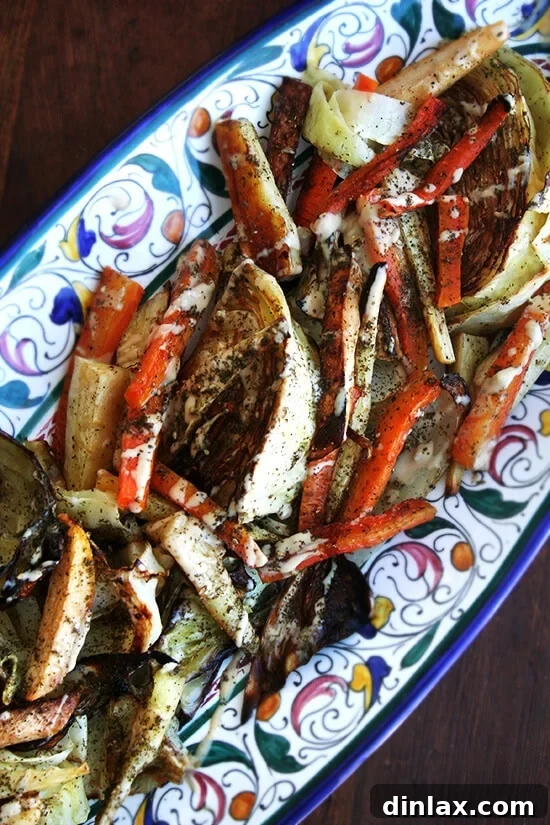
Transforming Winter Vegetables: The Irresistible Tahini, Lemon & Za’atar Dressing
As the chill of late winter lingers and spring feels perpetually on the horizon, our produce drawers and farmers’ market stalls often reflect the season’s weariness. You know the sight: vegetables looking a bit tired, pale, and wrinkled, lacking that vibrant freshness we crave. Perhaps you’ve even caught a glimpse of yourself in the mirror feeling much the same way, longing for a touch of sun and the renewal of spring. Just as we seek rejuvenation, so too do these resilient vegetables deserve a chance to shine, to be brought back to life with a simple yet profoundly flavorful transformation.
But fear not, for there’s a culinary secret that can awaken even the most lacklustre roots and greens, turning them into a dish so compelling you might just forget about spring’s delayed arrival. This isn’t just about making vegetables palatable; it’s about elevating them to a new level of deliciousness, making them the star of your plate and a beacon of flavor during these transitional months. Prepare to discover a dressing so potent, so utterly irresistible, that it will revolutionize your perception of humble roasted vegetables.
The Culinary Journey: Discovering the Magic of Tahini Dressing
My own journey to this extraordinary dressing began with a revered cookbook, Jerusalem, a masterpiece known for its exquisite Middle Eastern-inspired cuisine. While the book features this tahini sauce in several recipes, most notably with roasted butternut squash, it was a simple note from a friend on Instagram that truly sparked my inspiration: “I will never tire of this: roasted CSA root veg and squash, tahini with lemon and za’atar.” This succinct endorsement was all it took to compel me to action.
Since that moment of revelation, this magnificent dressing has become a staple in my kitchen, prepared every few nights to accompany an array of roasted delights. From robust cauliflower and tender broccoli to sweet carrots and earthy parsnips, firm onions, and crisp cabbage – no vegetable is safe from its enchanting embrace. And when my usual suspects have run out, I’ve found myself rummaging through the vegetable drawer, discovering new canvases for this versatile sauce, from endive heads to unexpected companions like grapefruit segments and delicate pea shoots. Its power to transform is truly boundless, proving that the simplest ingredients, when combined with intention, can yield the most remarkable results.
Unlocking Flavor: Why This Dressing Works Wonders
What makes this particular tahini, lemon, and za’atar dressing so profoundly effective at transforming vegetables? It’s a symphony of textures and tastes, each component playing a crucial role in creating a balanced and addictive flavor profile that complements the inherent sweetness and earthiness developed through roasting.
The Creamy Foundation: Tahini
At the heart of this dressing is tahini, a paste made from ground sesame seeds, a cornerstone of Middle Eastern cuisine. Tahini contributes a rich, nutty, and slightly earthy flavor, alongside a luxuriously creamy texture that coats the roasted vegetables beautifully. Beyond its exquisite taste, tahini is also a nutritional powerhouse, packed with healthy fats, protein, and essential minerals like calcium, magnesium, and iron. It provides a satisfying depth that makes the dish feel substantial and incredibly comforting, especially during cooler months.
The Brightness Factor: Lemon
Lemon juice is the essential counterpart to tahini’s richness. Its vibrant acidity acts as a natural brightener, cutting through the nutty intensity of the tahini and the caramelized sweetness of the roasted vegetables. This touch of tartness awakens the palate, adding a zesty freshness that makes each bite invigorating. The interplay between the creamy tahini and the sharp lemon is what creates that irresistible balance, ensuring the dressing is never too heavy but always refreshing.
The Aromatic Soul: Garlic
No savory dressing is complete without the pungent, aromatic kick of fresh garlic. Crushed garlic infuses the dressing with its characteristic warmth and depth, marrying seamlessly with the other ingredients to create a cohesive and deeply satisfying flavor. It’s the foundational spice that quietly elevates everything it touches, providing that indispensable savory undertone.
The Exotic Flourish: Za’atar
Za’atar, a traditional Middle Eastern spice blend, is the secret weapon that truly elevates this dish from delicious to extraordinary. Typically composed of dried thyme, oregano, marjoram, toasted sesame seeds, and sumac, za’atar offers a complex flavor profile that is simultaneously herbal, nutty, and tangy. The sumac contributes a bright, citrusy tartness, while the herbs provide an earthy, aromatic quality, and the sesame seeds add a delightful crunch and nutty depth. Sprinkled over the finished roasted vegetables, za’atar adds an exotic, intriguing layer of flavor that is truly captivating.
From Market Basket to Masterpiece: Choosing and Roasting Your Vegetables
The beauty of this recipe lies in its adaptability. You can use virtually any vegetable that lends itself well to roasting. Even those that appear a bit “past their prime” at the market can be transformed into culinary gems. Roasting brings out the natural sugars in vegetables, caramelizing their exteriors and tenderizing their interiors, resulting in a depth of flavor that steaming or boiling simply cannot achieve.
Selecting Your Produce
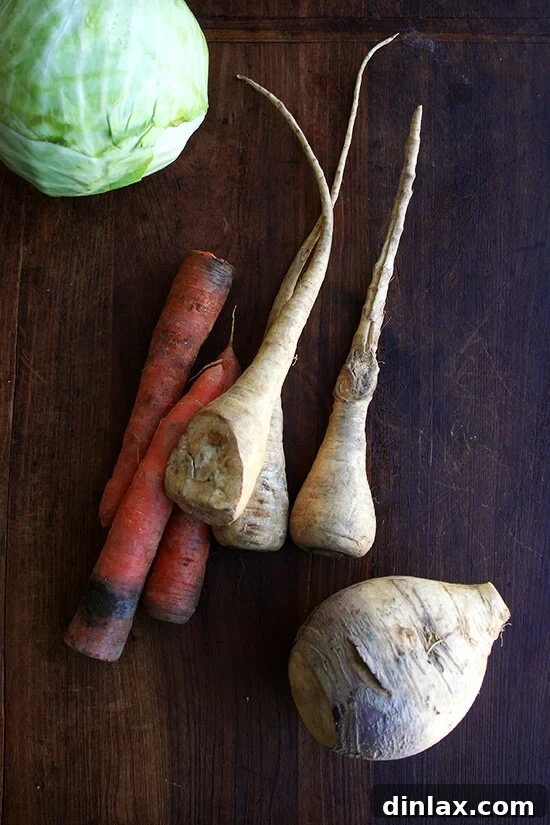
When selecting vegetables, look for firmness and vibrant color, even if they show a few wrinkles. Root vegetables like carrots, parsnips, and sweet potatoes are excellent choices as they become incredibly sweet and tender when roasted. Cruciferous vegetables such as cauliflower, broccoli, and Brussels sprouts develop delightful crispy edges and a nutty flavor. Heartier greens like cabbage wedges or even endive can also be beautifully transformed. Don’t shy away from onions, bell peppers, or even asparagus and green beans when in season – the dressing complements a wide variety.
The Art of Roasting
Achieving perfectly roasted vegetables is simpler than you might think. The key is high heat, ample space on the baking sheet to allow for proper caramelization (avoid overcrowding!), and a generous drizzle of olive oil, seasoned simply with salt and freshly cracked black pepper. The high temperature ensures a crisp exterior and a tender interior, while the olive oil facilitates the browning and helps the seasonings adhere. This process concentrates their flavors, creating a natural sweetness and a satisfying texture that perfectly primes them for the tahini dressing.
Print Recipe
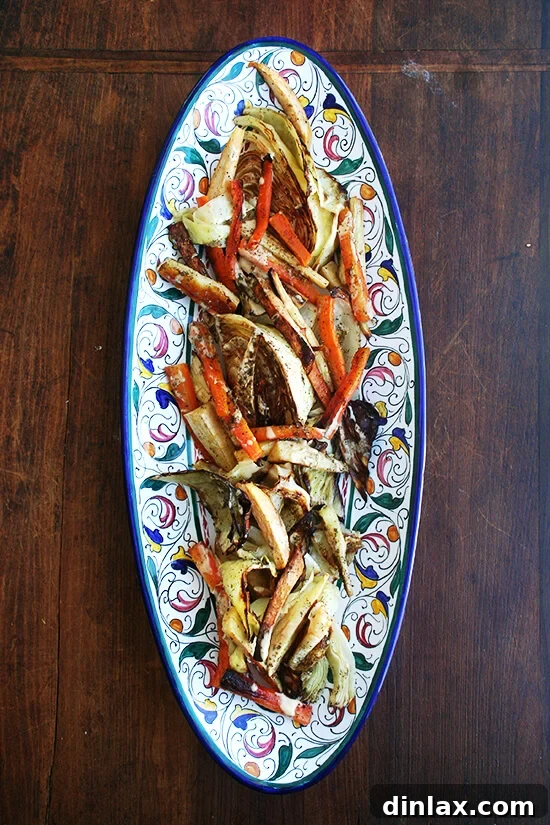
Roasted Vegetables with Tahini, Lemon & Za’atar
★ ★ ★ ★ ★
5 from 17 reviews
- Author: Alexandra Stafford at alexandracooks.com
- Total Time: 50 minutes
Description
A vibrant, flavor-packed tahini, lemon, and za’atar dressing perfectly complements a medley of roasted vegetables, transforming them into an irresistible dish. Inspired by my friend, Emily Teel, and adapted from the acclaimed Jerusalem cookbook.
Ingredients
For the roasted vegetables:
- A diverse mix of your favorite hearty vegetables, such as cabbage (cut into wedges), carrots, parsnips, onions, sweet potatoes, butternut squash, cauliflower florets, or broccoli florets. Choose what’s freshest or what needs using up!
- 2-3 tablespoons olive oil
- Kosher salt, to taste
- Freshly cracked black pepper, to taste
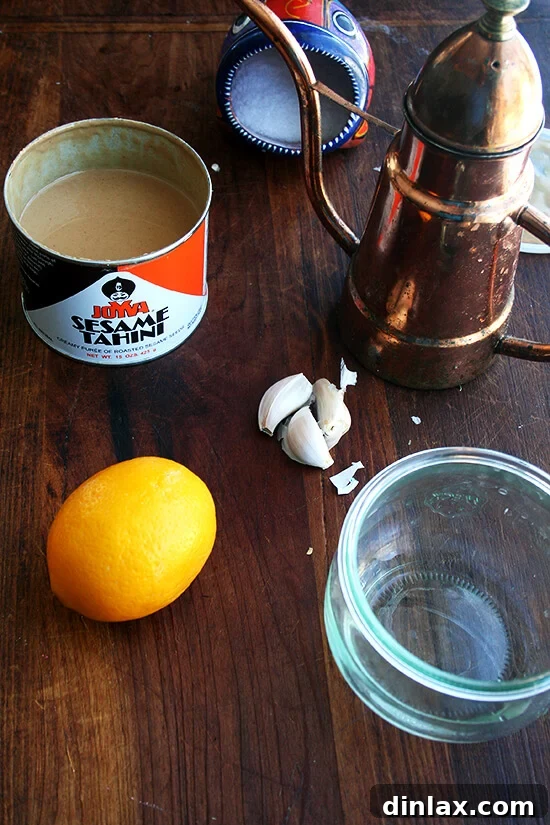
For the tahini sauce:
- 3 Tbsp. high-quality olive oil
- 3 Tbsp. tahini (ensure it’s well-stirred in its jar before measuring)
- 1½ Tbsp. fresh lemon juice (from about ½ a medium lemon)
- 2 Tbsp. cold water (or more, to adjust consistency)
- ¼ teaspoon kosher salt
- 1 to 2 cloves garlic, crushed or finely minced
- 1 teaspoon maple syrup, optional (for a hint of sweetness)
For finishing:
- Za’atar (to taste), for its unique herbal and tangy notes
- Flaky sea salt (like Maldon), for an extra textural and flavor pop
- Freshly ground black pepper, for added aroma and subtle heat
Instructions
- Prepare the Oven: Preheat your oven to a high temperature of 450ºF (230ºC). This high heat is crucial for achieving crisp, caramelized edges on your vegetables.
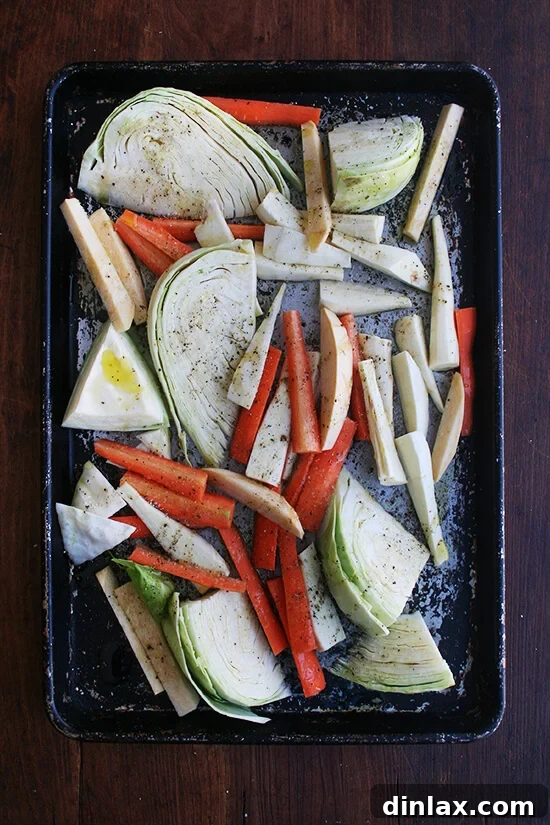
- Prep the Vegetables: Wash and dry all vegetables thoroughly. Peel any vegetables that require it (like carrots or parsnips). Cut them into uniform pieces – whether sticks, cubes, florets, or wedges – to ensure even cooking. If using cabbage, cut it into sturdy wedges, making sure to keep a portion of the core intact for each wedge to help hold it together during roasting.
- Season and Roast: Spread the prepared vegetables onto a large sheet pan in a single layer. Avoid overcrowding the pan; if necessary, use two sheet pans to ensure proper caramelization rather than steaming. Drizzle generously with 2 to 3 tablespoons of olive oil, ensuring all pieces are lightly coated. Season liberally with kosher salt and freshly cracked black pepper. Toss gently to distribute the oil and seasonings evenly. Spread them back into an even layer and roast in the preheated oven for 20 minutes. After 20 minutes, check the vegetables and give them a stir or flip. Continue roasting for another 15 to 20 minutes, or until they are tender, beautifully caramelized, and slightly browned at the edges. *Chef’s Note: Some vegetables, like cabbage, might cook faster than harder roots. Feel free to remove any cooked vegetables from the pan after about 30 minutes, then return the pan to the oven for the remaining, denser vegetables to finish cooking.*
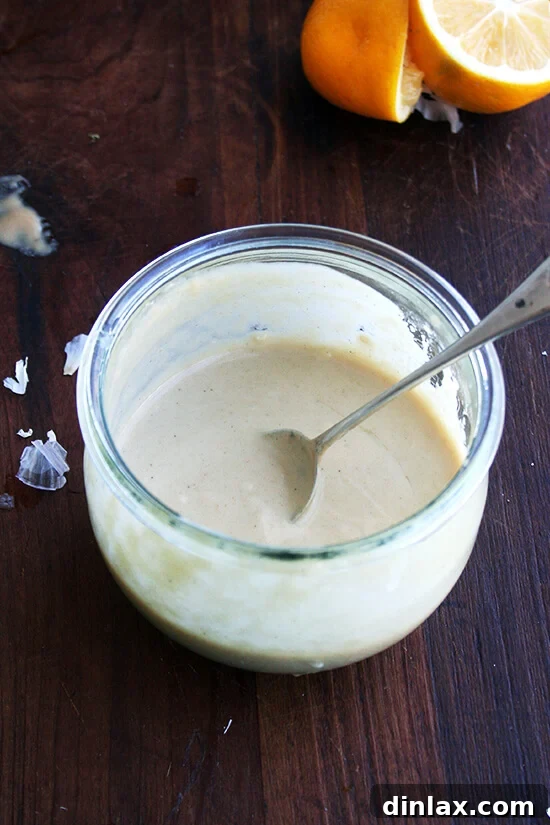
- Prepare the Tahini Dressing: While the vegetables are roasting, prepare your dressing. In a small bowl, combine the 3 tablespoons of olive oil, 3 tablespoons of tahini (remember to stir the tahini in its jar thoroughly before measuring to ensure it’s well-emulsified), 1½ tablespoons of lemon juice, 2 tablespoons of cold water, ¼ teaspoon of kosher salt, and the 1-2 crushed cloves of garlic. Whisk vigorously until smooth and creamy. Taste the dressing. If you prefer a touch of sweetness, stir in the optional 1 teaspoon of maple syrup. Taste again and adjust the seasoning with more salt or lemon juice if needed. The dressing should have a pourable consistency, similar to a traditional salad dressing; if it’s too thick, add a bit more water, a teaspoon at a time, until desired consistency is reached.
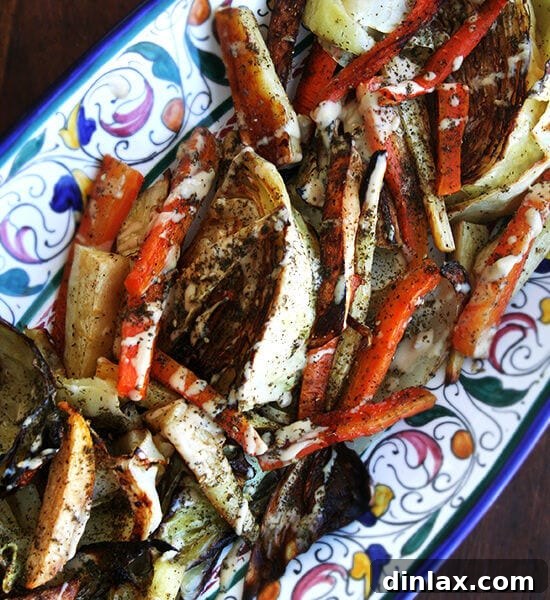
- Serve and Garnish: Carefully transfer the hot, roasted vegetables to a serving platter. Before drizzling, taste a piece to assess its seasoning. Add an extra pinch of flaky sea salt and more freshly ground black pepper if desired. Generously spoon the prepared tahini dressing over the roasted vegetables. You may not need all of the dressing, depending on the quantity of vegetables. Finish by sprinkling za’atar generously over the top to taste, adding that final, aromatic flourish. Serve immediately and enjoy!
- Prep Time: 15 minutes
- Cook Time: 35 minutes
Beyond the Basics: Versatile Uses for Your Tahini Dressing
While this tahini dressing is a match made in heaven for roasted vegetables, its versatility extends far beyond. Don’t let any leftover dressing go to waste; its creamy, tangy, and nutty profile makes it a fantastic addition to numerous dishes. Drizzle it over fresh green salads for an elevated flavor, or incorporate it into hearty grain bowls alongside quinoa, roasted chickpeas, and fresh herbs. It makes an excellent spread for sandwiches and wraps, adding moisture and a burst of flavor. Consider using it as a dip for raw vegetables, falafel, or even as a unique sauce for grilled chicken or fish. Its ability to complement a wide range of ingredients means you’ll find endless ways to enjoy its delightful taste.
A Note on Tahini: Embracing a Unique Flavor
It’s important to acknowledge that tahini, with its distinct flavor, isn’t universally beloved. As Yotam Ottolenghi himself cautions in Jerusalem, for some, the flavor of tahini can overshadow or even spoil other ingredients. If you’re new to tahini or have had less-than-stellar experiences in the past, don’t let that deter you from this recipe. I highly encourage you to give it another try, especially in this context where it’s balanced by bright lemon, aromatic garlic, and earthy za’atar.
For those on the fence, consider starting with a slightly smaller amount of tahini in the dressing and adjusting to your preference. The combination of flavors here is designed to be harmonious, allowing tahini to shine without being overpowering. Once you experience how this dressing awakens those languishing vegetables, bringing an unexpected vibrancy and depth, you might just become a tahini convert. It’s a flavor worth exploring, and this dish could be your gateway to a newfound appreciation for this incredible ingredient.
Share Your Culinary Adventures
The transformation this dressing brings to humble vegetables is nothing short of miraculous. From turning tired roots into bright, flavorful morsels to enlivening caramelized cabbage wedges with a zesty, herbaceous kick, it’s a recipe that inspires joy in the kitchen. We encourage you to embark on this culinary adventure and witness the magic firsthand. And while we’ve not personally tried rubbing this wondrous sauce on our faces hoping for similar miracles, we’d love to hear about your experiences and any creative twists you bring to the recipe! Please share your delicious creations with us.
PS: For more ways to make the most of your produce, check out these helpful resources: Making the most of your CSA | A few ideas for using those CSA vegetables
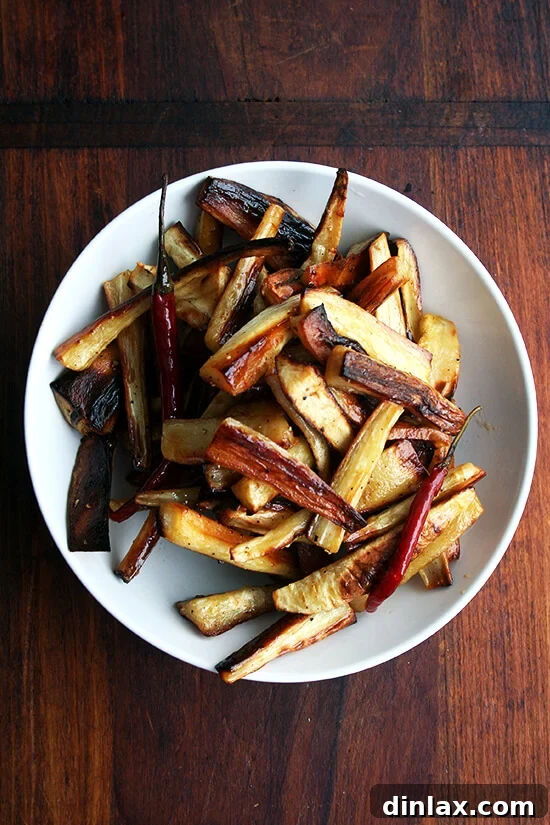
Here is another fantastic recipe to help you navigate these last months of winter vegetables: Bon Appetit’s Roasted Parsnips with Chili Maple Butter. They are truly exceptional: