

Embrace Winter Warmth with MFK Fisher’s Timeless Creamy Potato Soup
As the chill of winter deepens, there’s nothing quite like a hearty, comforting bowl of soup to warm the soul. Recently, my kitchen has been enveloped in the inviting aroma of MFK Fisher’s renowned creamy potato soup, a recipe I discovered thanks to a thoughtful Christmas gift from my mother: Fisher’s classic cookbook, How to Cook a Wolf. This book has quickly become a cherished companion, its pages dog-eared with recipes I eagerly anticipate trying.
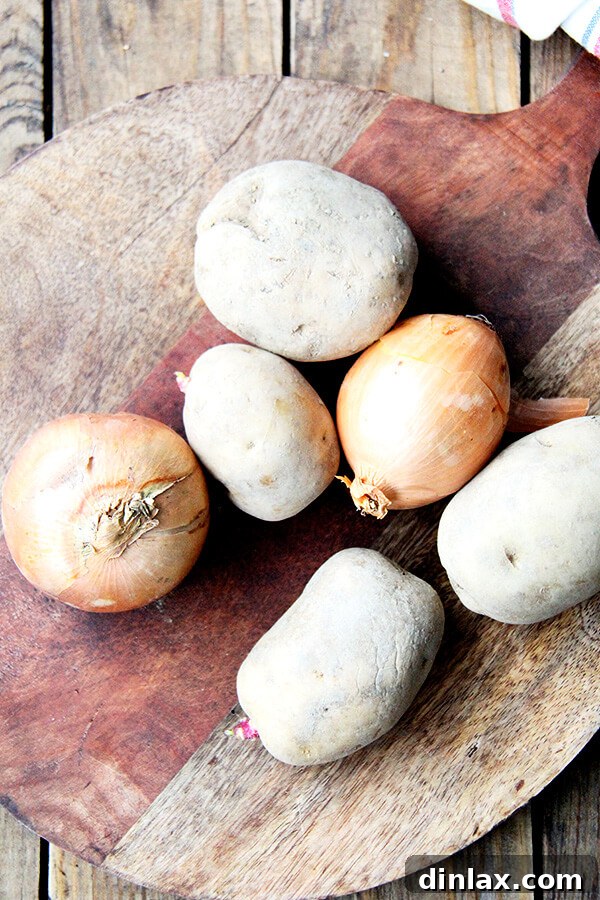
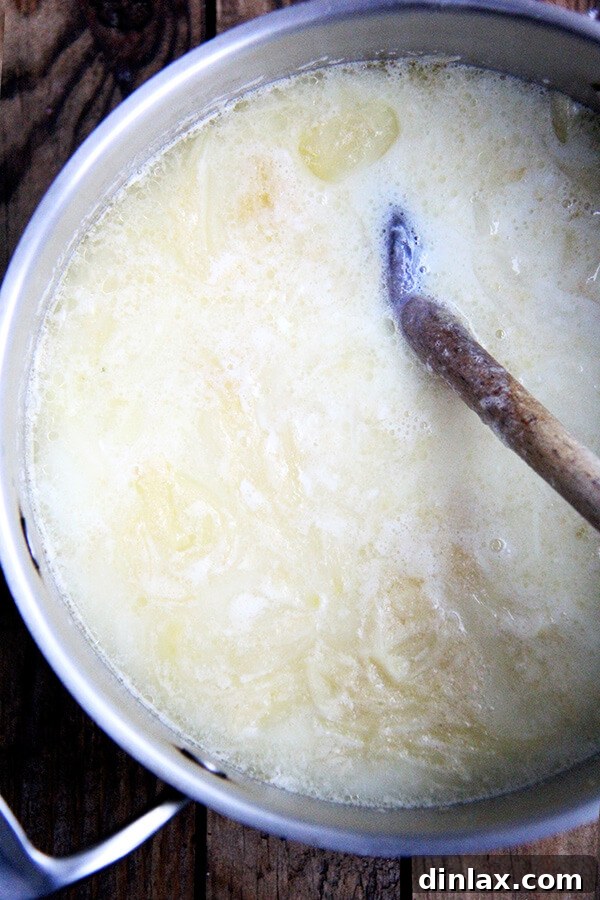
This particular creamy potato soup has become a household staple for several reasons. For one, I still find myself with an abundance of potatoes from a recent harvest. Secondly, a dear friend, who I encouraged to join a winter CSA (Community Supported Agriculture), might be feeling a tad overwhelmed by her own potato haul – Martha, this one’s for you! But above all, the primary reason for my devotion to this soup is its sheer, undeniable deliciousness. Its preparation is surprisingly straightforward: gently sautéing two onions, adding four peeled potatoes with water, simmering until tender, then enriching the mixture with milk (thickened to perfection with a roux), and finally, puréeing to a luxurious smoothness.
The Wisdom of MFK Fisher: A Culinary Education
Before diving into this recipe, I hadn’t had the pleasure of exploring MFK Fisher’s culinary writings. What I’m quickly learning is that her recipes bestow a significant amount of credit upon the reader. Unlike some modern cookbooks that offer exhaustive, step-by-step instructions for every minute detail, Fisher operates on the assumption that you possess a foundational knowledge of cooking. Much like Alice Waters might expect you to have a pig’s foot readily available in your refrigerator for a specific dish, MFK Fisher trusts that you understand the fundamental technique of preparing a roux. There’s no exhaustive hand-holding in her primary directions; instead, her profound insights and nuanced advice are woven into detailed, often witty, notes.
A prime example of her exacting standards comes from this very potato soup recipe. Fisher adamantly insists that the vegetables be passed through a strainer, and not just any strainer, but “a fine strainer.” She further muses on the culinary habits of the average cook: “increasingly that most average cooks … grow careless about sieves and strainers. They usually compromise after a few years in the kitchen with one general-utility implement that will cope more or less with their normal duties. Tut tut tut!” This observation highlights her dedication to texture and quality, a hallmark of her approach to food.
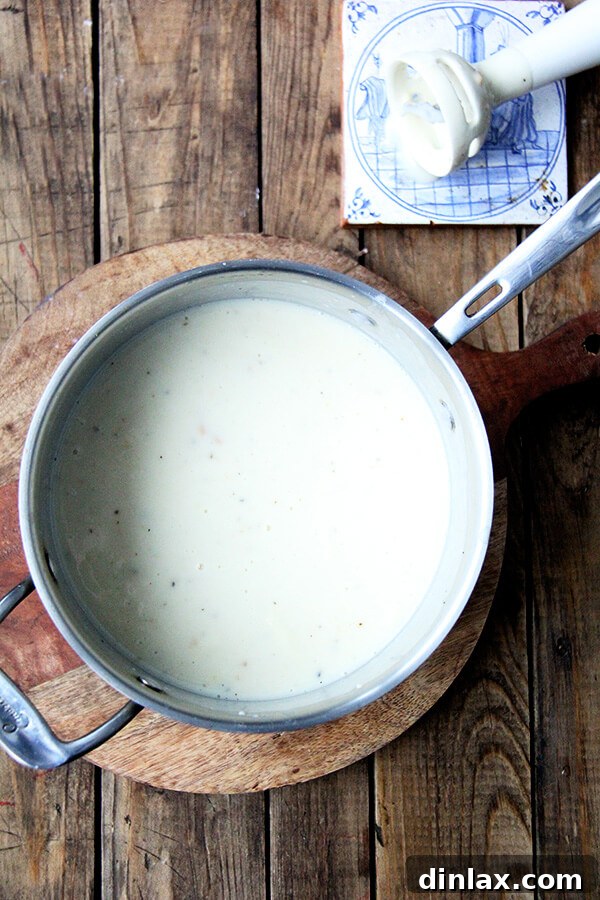
While MFK Fisher might indeed be mildly horrified by my modern shortcut of using a general-utility immersion blender to achieve the soup’s silky texture, I must confess, it works remarkably well and saves a considerable amount of time. Sometimes, practical convenience must win out, even against the purist’s ideals. The result is still a wonderfully smooth and creamy soup that honors the spirit of her recipe.
“How to Cook a Wolf”: More Than Just a Cookbook
I am still midway through reading How to Cook a Wolf, but I am utterly captivated by it. Fisher penned this remarkable book during the tumultuous years of World War II, a period marked by severe shortages and the widespread use of ration cards. Her intention was not merely to provide recipes but to uplift spirits and encourage people to find joy and dignity in good cooking and mindful living, even in times of scarcity. She held a profound belief that “one of the most dignified ways we are capable of, to assert and then reassert our dignity in the face of poverty and war’s fears and pains, is to nourish ourselves with all possible skill, delicacy, and ever-increasing enjoyment. And with our gastronomical growth will come, inevitably, knowledge and perception of a hundred other things, but mainly ourselves.”
This philosophy resonates deeply, transcending its wartime origins to offer timeless wisdom. Fisher’s book is not solely a collection of food recipes; it’s a guide to resourcefulness and a celebration of the human spirit. Within its pages, you’ll find an eclectic mix, from recipes for mouthwash and soap to an intriguing tomato soup cake. She dispenses a wealth of advice, interspersed with charmingly funny anecdotes that bring her voice to life. There are moments where her prose is wonderfully enigmatic, leaving me to ponder her meaning, and then there are sentences that strike with such clarity and beauty that I savor every word. For example, her declaration: “Probably the most satisfying soup in the world for people who are hungry, as well as for those who are tired or worried or cross or in debt or in a moderate amount of pain or in love or in robust health or in any kind of business huggermuggery, is minestrone.” This perfectly encapsulates her blend of wit, empathy, and deep understanding of food’s power.
Preparing for Soup Season: Essentials for a Flavorful Winter
Friends, with temperatures plummeting to a brisk 1 degree this morning, it’s clear that winter has truly settled in. If you haven’t yet geared up for soup season, now is the perfect time. Having the right tools and staples on hand can transform your winter cooking experience. Here’s a quick review of some essential items to ensure your soup-making endeavors are both efficient and delicious:
- Homemade Stock: The foundation of any great soup. Whether you prefer vegetable or chicken stock, making it from scratch elevates the flavor profile exponentially. It’s an investment of time that pays dividends in taste.
- Freezing Containers: For preserving that precious homemade stock or excess soup, plastic quart containers are indispensable. They allow for convenient portioning and easy access to nourishing meals on busy days.
- Quality Peeler: A sharp, ergonomic peeler makes quick work of preparing root vegetables, ensuring your prep time is efficient.
- Sharp Knife: A reliable, sharp knife is perhaps the most fundamental tool in any kitchen. It ensures precision and safety when dicing onions, potatoes, and other ingredients.
- Immersion Blender: While MFK Fisher might raise an eyebrow, an immersion blender is a game-changer for achieving perfectly smooth soups directly in the pot, minimizing clean-up.
Having these simple items at the ready will make your winter soup-making an enjoyable and seamless process. Dive into the world of comforting, homemade soups this season – your taste buds will thank you!
PS: For even more warming inspiration, explore my other soup recipes!


Serving Suggestions: Elevate Your Potato Soup Experience
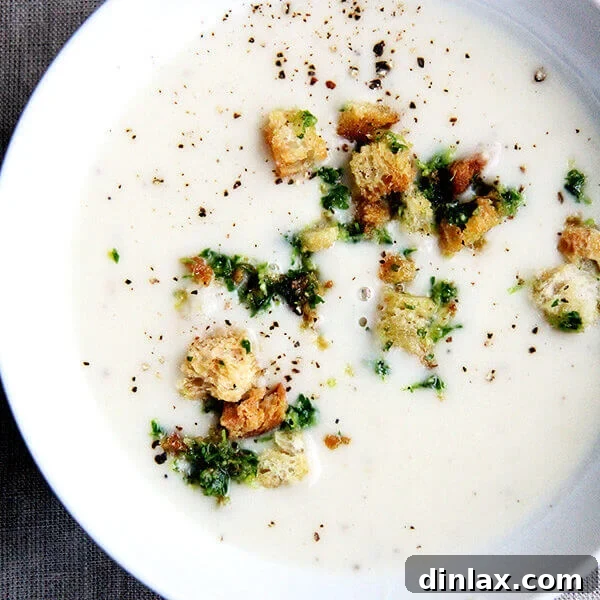
While MFK Fisher’s creamy potato soup is undeniably satisfying on its own, pairing it with the right accompaniments can elevate the entire meal. I recently served my rendition with some aromatic herby croutons, which added a delightful textural contrast and a burst of fresh flavor. However, the possibilities extend far beyond! Imagine mini loaves of freshly baked bread, their crusty exteriors giving way to a soft, warm interior, perfect for dipping into the rich soup.
For this meal, I opted to split my favorite peasant bread dough into four portions and baked these charming miniature loaves in repurposed McCann steel cut oat tins. This not only created individual, perfectly sized servings of bread but also added a rustic, homemade touch to the table. Other fantastic accompaniments could include a crisp green salad with a light vinaigrette to cut through the soup’s richness, or perhaps a sprinkle of crispy bacon bits, a dollop of sour cream, or extra fresh chives for added indulgence and visual appeal.

MFK Fisher’s Creamy Potato Soup Recipe
5 Stars
4 Stars
3 Stars
2 Stars
1 Star
5 from 1 review
Yield: 4 generous servings 1x
Description
A simple yet incredibly satisfying creamy potato soup recipe, adapted from the brilliant culinary insights of MFK Fisher’s How to Cook a Wolf. This hearty soup is perfect for cold weather and requires minimal ingredients to achieve maximum flavor and comfort.
Ingredients
- 2 large yellow onions, thinly sliced
- 4 medium-sized Russet or Yukon Gold potatoes, peeled and thinly sliced (approximately 1.33 lbs | 600 g)
- 2 tablespoons all-purpose flour
- 4 tablespoons unsalted butter, divided
- Salt and freshly ground black pepper to taste
- 3 cups milk, preferably 2% or whole milk for creaminess
- Approximately 2½ cups water (or vegetable broth for added depth)
- Optional garnishes: chopped fresh herbs such as parsley or chives, a swirl of cream, or crispy bacon bits
Instructions
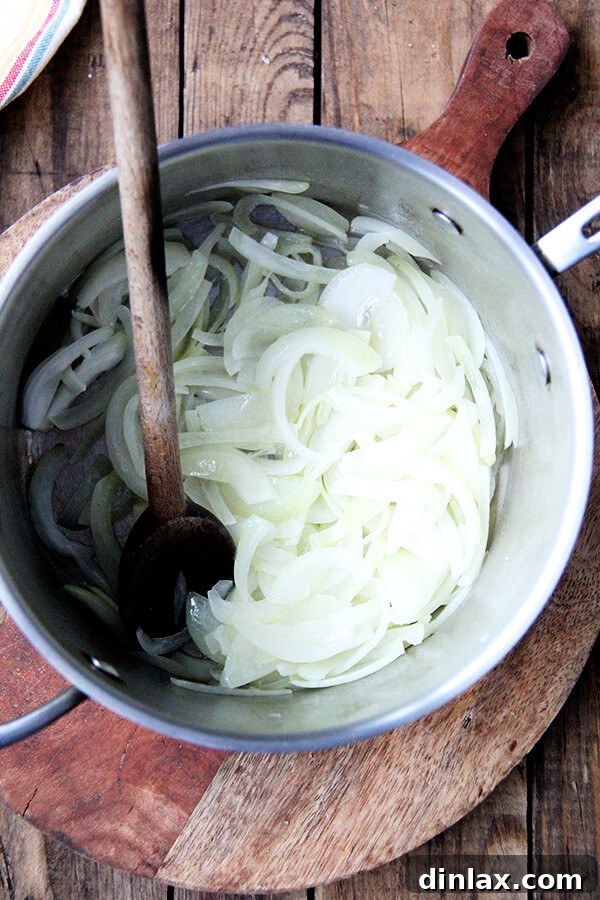
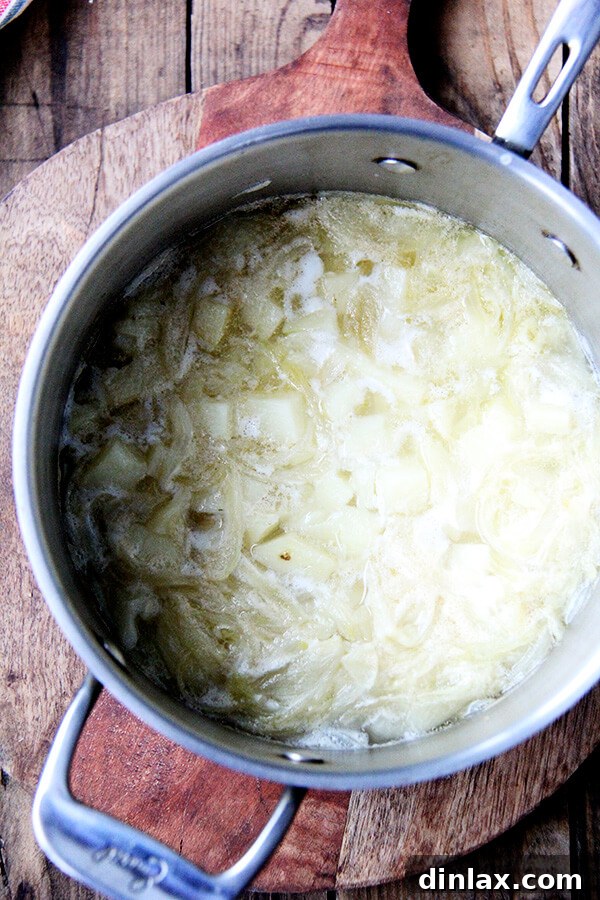
- Sauté Onions and Simmer Potatoes: In a large, heavy-bottomed pot or Dutch oven, melt 2 tablespoons of the butter over medium to medium-low heat. Add the thinly sliced onions and sauté gently for about 15 minutes, stirring occasionally, until they are very tender and just beginning to turn a pale golden color. Avoid browning them too much. Stir in the peeled and thinly sliced potatoes. Add enough water (or vegetable broth) to just cover the potatoes and onions, typically about 2½ cups. Bring the mixture to a gentle simmer and cook for approximately 20 minutes, or until the potatoes are completely tender and easily pierced with a fork.
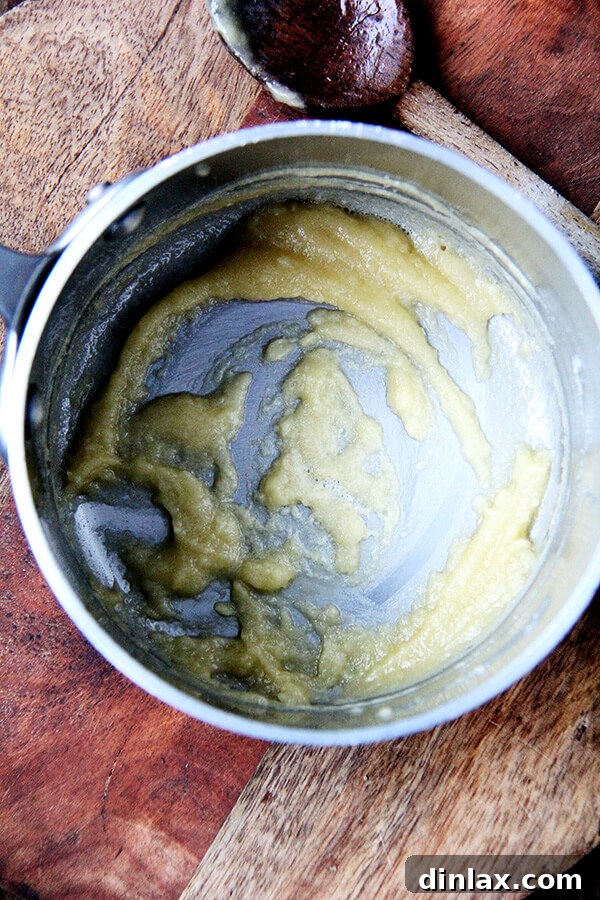
- Prepare the Roux and Milk Mixture: While the potatoes are simmering, prepare the roux in a separate medium-sized saucepan. Melt the remaining 2 tablespoons of butter over medium heat. Once the butter is melted and gently bubbling, add the 2 tablespoons of flour. Stir continuously with a wooden spoon or whisk for about a minute, until a light brown, smooth paste forms. This is your roux, which will thicken the soup. Slowly pour the milk into the roux, whisking constantly to prevent lumps. Continue whisking until the mixture comes to a gentle simmer and begins to thicken slightly. Remove from heat and keep warm.
- Combine and Purée the Soup: Once the potatoes are tender, carefully add the warm milk and roux mixture to the pot with the potatoes and onions. Stir to combine. For a perfectly smooth and creamy soup, use an immersion blender directly in the pot to purée the mixture until it reaches your desired consistency. Alternatively, you can carefully transfer the mixture in batches to a food processor or a traditional blender. (If using a blender for hot liquids, be extremely cautious: fill the blender no more than halfway, secure the lid, and start on a low speed, gradually increasing. I recommend covering the lid with a kitchen towel and holding it down firmly, as hot liquids can create pressure that causes the lid to pop off.) Season the puréed soup generously with salt (at least a teaspoon or to your preference) and plenty of freshly cracked black pepper. Return the soup to a gentle simmer, stirring frequently to ensure it doesn’t stick to the bottom of the pot. Taste and adjust seasonings as needed, adding more salt or pepper if desired. If using, stir in chopped fresh herbs like parsley or chives at this stage. If the soup is too thick, thin it with a little more water or milk until it reaches your preferred consistency.
- Reheating and Adjusting: When reheating any leftover soup, you may find it has thickened considerably. Simply thin it with a little water or milk as needed, stirring well, and bring it to a gentle simmer. Always taste and adjust the seasoning before serving, as flavors can mellow or intensify upon reheating.