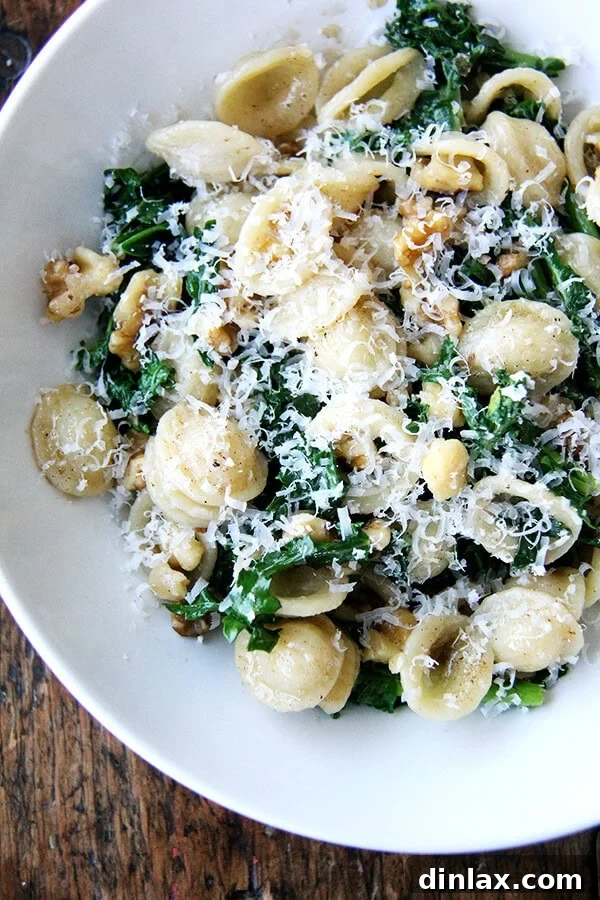
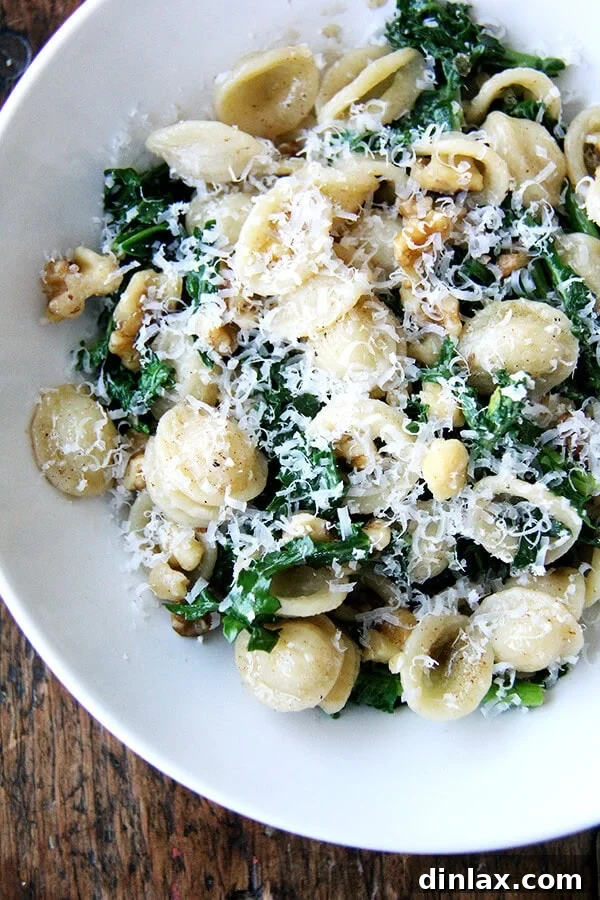
As the colder months fade and the vibrant energy of spring awakens, our palates often crave lighter, fresher flavors. While hearty winter dishes have their charm, there’s a unique satisfaction in preparing meals that celebrate the season’s bounty. This delightful Orecchiette with Swiss Chard, Brown Butter, and Walnuts recipe perfectly embodies that transition. It’s a beautifully simple yet incredibly flavorful pasta dish that comes together quickly, making it an ideal choice for a busy weeknight or a relaxed weekend lunch.
This recipe is a cherished variation of a beloved winter favorite: my Orecchiette with Brussels Sprouts, Brown Butter, and Walnuts. While that dish holds a special place in my repertoire with its deeply roasted Brussels sprouts, it does involve a little more prep work, primarily the somewhat time-consuming task of peeling and trimming each sprout. With this Swiss chard iteration, we embrace simplicity without sacrificing an ounce of flavor.
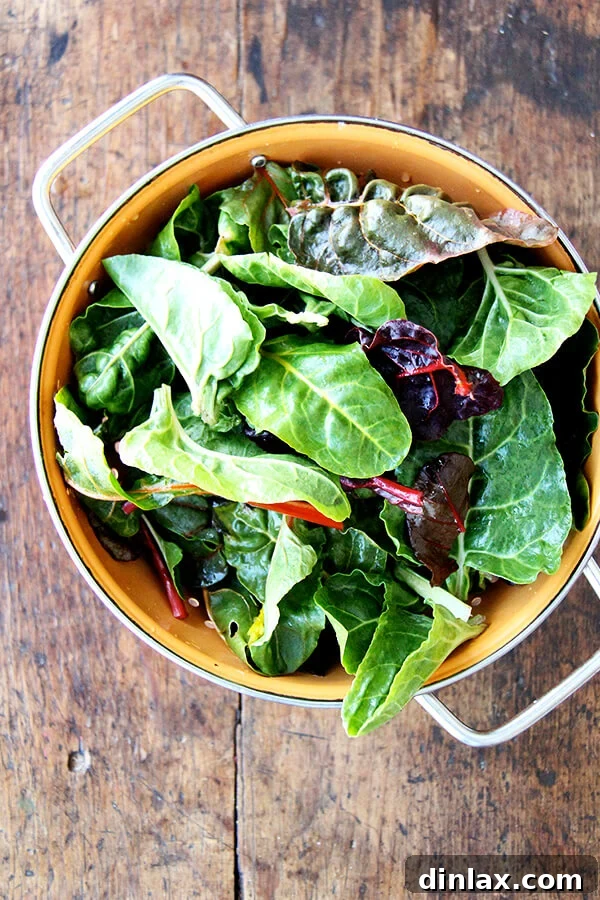
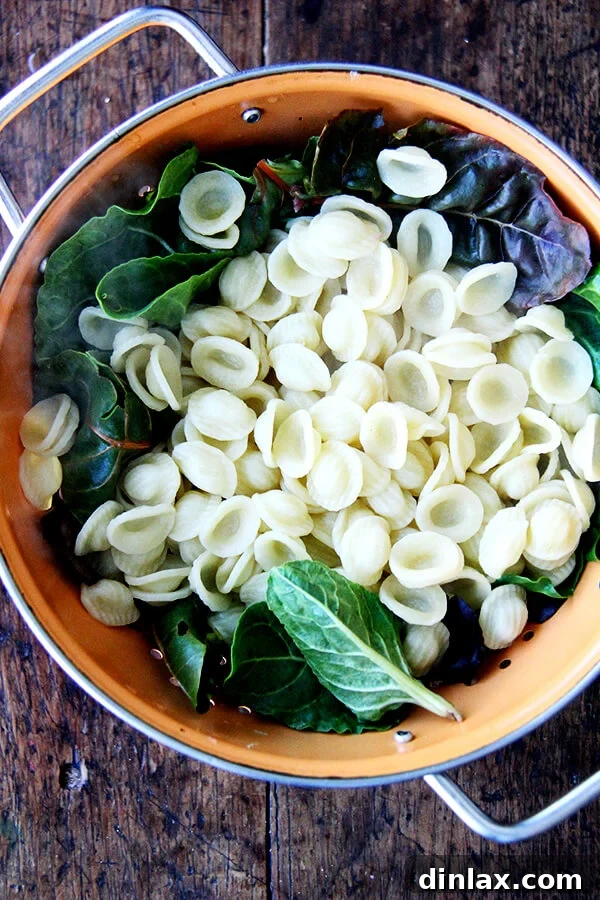
The magic of this spring adaptation lies in its ingenious method for preparing the greens. Instead of cooking them separately, the fresh Swiss chard (or baby kale, or even tender spinach) is simply placed in a colander, and the hot, starchy pasta water is drained directly over it. This gentle blanching method is just enough to perfectly wilt the greens, preserving their vibrant color and delicate texture. When you use tender baby Swiss chard or baby kale, as I was fortunate enough to find at my local Green Market last Sunday, the results are particularly exquisite. The freshness of the greens truly shines through.
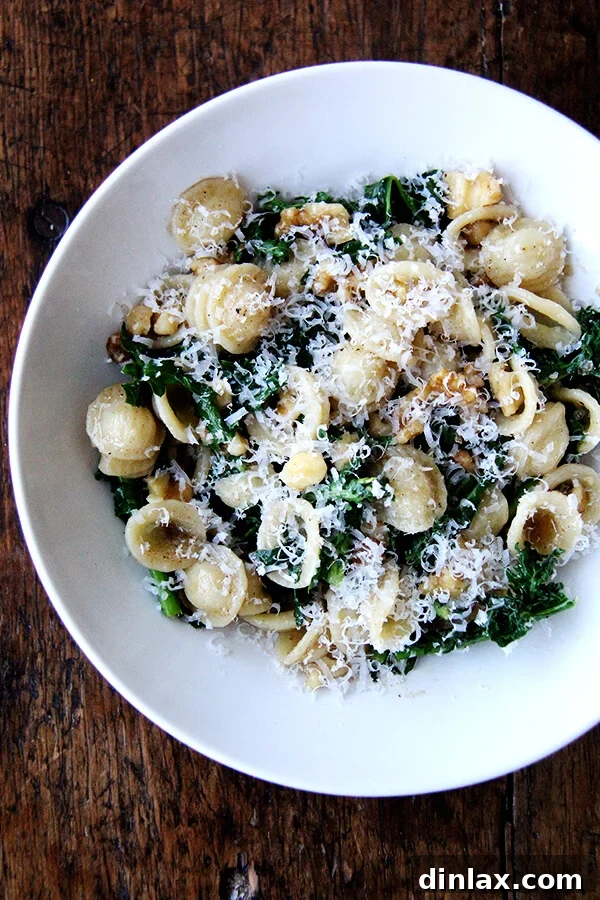
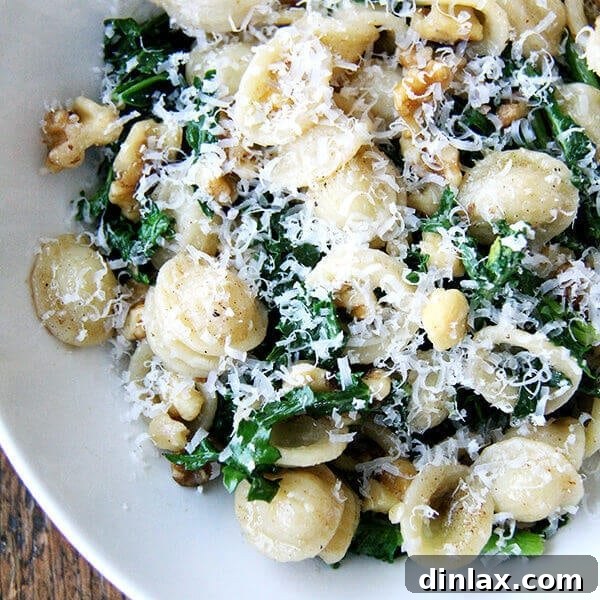
Once the pasta and greens are perfectly prepared, the rest is a culinary dance of tossing and seasoning. The wilting greens and al dente pasta are brought together with the rich, nutty aroma of browned butter, the satisfying crunch of toasted walnuts, and a generous shower of finely shaved Parmesan or Pecorino cheese. The combination creates a symphony of textures and tastes: the chewiness of the orecchiette, the tender greens, the earthy sweetness of the walnuts, and the salty depth of the cheese, all enveloped in the luxurious warmth of the brown butter. It’s a dish that feels sophisticated but is remarkably straightforward to execute. Just a quick toss, and dinner is done—simple, wholesome, and utterly delicious.
Print
Pasta with Swiss Chard, Brown Butter, and Walnuts
Discover this effortlessly delicious pasta dish, highlighting tender Swiss chard, rich brown butter, and crunchy walnuts for a quick and satisfying meal. Perfect for spring!
5 Stars 4 Stars 3 Stars 2 Stars 1 Star
5 from 6 reviews
Author: Alexandra Stafford
Total Time: 25 minutes
Yield: 4 1x
Ingredients
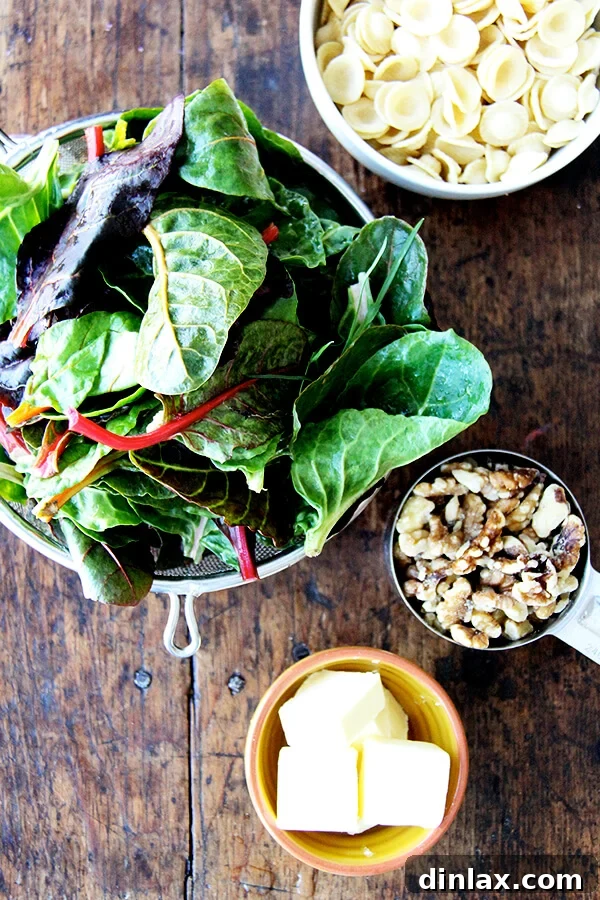
- 8 cups (about 9 oz.) packed baby Swiss chard, baby kale or spinach* – Choose fresh, vibrant greens with no wilting or yellowing. Baby greens are preferred for their tenderness.
- 1 tbsp. kosher salt – Essential for seasoning the pasta water, ensuring the pasta itself is flavorful.
- 1/2 lb. (8 oz.) orecchiette – The “little ear” shape is perfect for catching bits of chard and brown butter sauce.
- 6 tbsp. unsalted butter – Crucial for achieving that rich, nutty brown butter flavor. Unsalted allows you to control the seasoning.
- 1 cup walnuts – For a delightful crunch and earthy depth. Toasting them properly enhances their flavor.
- a handful (about 1/4 cup) of grated Pecorino or Parmigiano – Adds a salty, umami finish. Freshly grated is always best.
- salt and freshly cracked pepper, to taste – To adjust the final seasoning of the dish.
*These were the greens I found at the market most recently, and they were all incredibly tender. If you are using more mature greens and the stems feel tough, remove greens from stem for a better texture. Also, feel free to get creative with your greens! Asparagus, Brussels sprouts, or peas—anything green, really—can be substituted for the chard. If you choose to use one of these tougher vegetables, add them to the pot of pasta during the last two minutes of cooking time to ensure they cook through to a tender-crisp texture. This flexibility makes the dish adaptable to whatever fresh produce is available.
Instructions
- **Prepare the Greens:** Begin by placing your chosen greens (Swiss chard, kale, or spinach) in a large bowl. Cover them completely with cold water and allow them to sit undisturbed for approximately five minutes. This step is essential as it permits any lingering dirt or grit to settle at the bottom of the bowl. After soaking, gently scoop the greens from the water, leaving the sediment behind, and transfer them to a large colander set in your sink. Don’t worry about patting them dry; any water clinging to the leaves is perfectly fine and will help them wilt beautifully.
- **Cook the Pasta:** Fill a large pot with a generous amount of water. Bring the water to a rolling boil over high heat. Once boiling, add the tablespoon of kosher salt. This significantly seasons the pasta from within, enhancing its flavor. Stir in the orecchiette pasta, ensuring it’s submerged. Cook according to package directions until the pasta is al dente – tender with a slight bite.
- **Brown the Butter:** While the pasta cooks, prepare the brown butter. In a large sauté pan (one that will eventually be spacious enough to accommodate all the cooked pasta and greens), melt the unsalted butter over medium heat. Keep a close eye on the butter as it melts. It will first foam, then the milk solids will begin to separate and settle at the bottom, gradually turning a rich golden-brown color. You’ll notice a distinct, enticing nutty aroma. This entire process typically takes about 5-7 minutes. As soon as the butter reaches this beautiful golden-brown stage and smells fragrant, immediately remove the pan from the heat to prevent it from burning. The residual heat will continue to cook it slightly.
- **Toast the Walnuts:** Concurrently with the butter and pasta, toast the walnuts. In a separate small sauté pan, place the walnuts over medium heat. Dry-toast them, stirring frequently, until they become lightly browned and release a fragrant, nutty scent, which usually takes around 8-10 minutes. Alternatively, you can spread the walnuts on a baking sheet and toast them in a preheated oven at 350°F (175°C) for 8 to 10 minutes, watching them closely to prevent burning. Once toasted, transfer the warm walnuts to a clean tea towel. Rub the walnuts vigorously within the towel to remove their papery skins. This might seem like a fussy step, but it significantly reduces any bitterness and enhances the nutty flavor and texture. Then, transfer the walnuts to a sieve and shake again to remove any additional loose skin fragments. Set the perfectly toasted and cleaned walnuts aside.
- **Combine Pasta and Greens:** Once the orecchiette is cooked to al dente, quickly reserve about half a cup of the starchy pasta cooking liquid before draining. This liquid is a secret weapon for emulsifying the sauce and adding moisture if the dish becomes too dry; you might not need it, but it’s always good to have on hand. Carefully drain the hot pasta directly over the colander filled with the waiting greens. The steam and residual heat from the pasta will gently wilt the greens to perfection, infusing them with subtle pasta flavor.
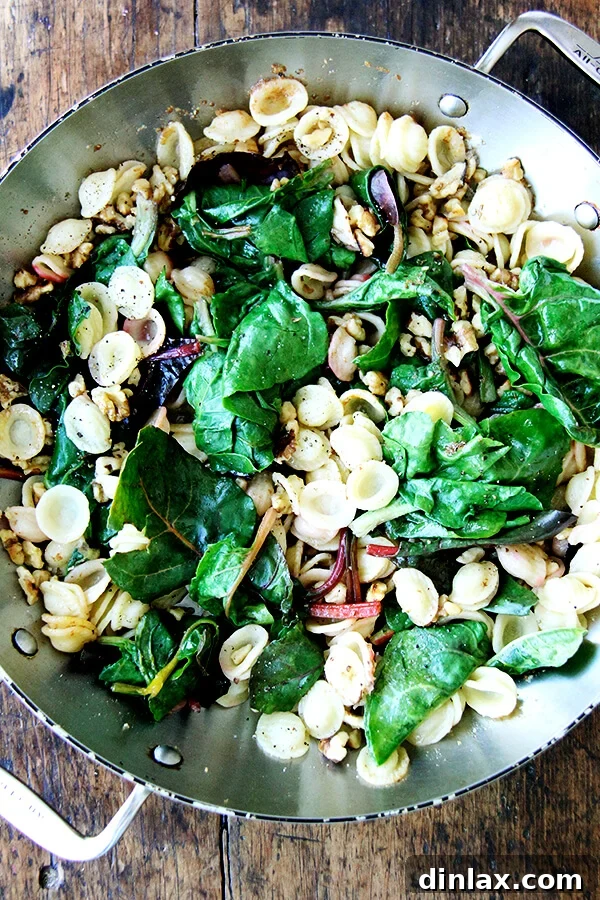
- **Finish the Dish:** Return the large sauté pan with the browned butter to medium or medium-high heat to warm it slightly. Add the drained pasta and the wilted greens directly into the pan with the brown butter. Sprinkle in the toasted walnuts and toss everything together thoroughly to ensure the pasta and greens are beautifully coated in the rich, nutty butter. Grate a generous amount of Pecorino or Parmigiano cheese over the top and toss again. Taste the dish and adjust seasoning as needed, adding more salt and freshly cracked pepper to your preference. Remember, if you salted your pasta water adequately, you might not need much additional salt. If the pasta seems a little dry, gradually add a tablespoon or two of the reserved pasta cooking liquid, tossing until the desired consistency is achieved. This reserved liquid is especially useful if you prepare the dish ahead of time and need to reheat it, but be mindful of its saltiness. Serve immediately, passing extra cheese at the table for those who desire more.
- Prep Time: 15 minutes
- Cook Time: 10 minutes
- Category: Pasta, Vegetarian
- Method: Stovetop
- Cuisine: Italian-American
Tips for Perfecting Your Pasta with Swiss Chard
Achieving culinary perfection with this seemingly simple dish is all about paying attention to a few key details. Here are some tips to ensure your Orecchiette with Swiss Chard, Brown Butter, and Walnuts turns out exquisitely every time:
- **Embrace the Pasta Water:** That starchy water isn’t just for cooking the pasta; it’s a critical component of your sauce! The starch helps emulsify the brown butter, creating a silky, cohesive coating for your pasta and greens. Always reserve at least a half-cup before draining.
- **Don’t Overcook the Greens:** The beauty of wilting the Swiss chard with hot pasta water is that it keeps the greens tender-crisp and vibrant. Overcooking can lead to limp, dull greens and a loss of their fresh flavor and nutritional value.
- **Master the Brown Butter:** Browning butter is a transformative technique. Keep the heat medium, stir occasionally, and watch for those golden-brown flecks at the bottom of the pan and that unmistakable nutty aroma. Pull it off the heat *just* as it hits that sweet spot to prevent burning, which can turn it bitter.
- **Toast Walnuts Carefully:** Toasted walnuts add immense depth and crunch. Use a dry pan over medium heat and stir constantly, or bake them, but keep a vigilant eye. Nuts can go from perfectly toasted to burnt in seconds. Removing the papery skin is an extra step, but it significantly improves flavor and texture by reducing bitterness.
- **Taste and Adjust Seasoning:** Don’t be shy about tasting as you go. The salt in your pasta water will season the orecchiette, but the greens and butter will need their own balance. Add salt and freshly cracked black pepper in small increments until the flavors sing. A squeeze of fresh lemon juice at the end can also brighten the entire dish.
Variations and Serving Suggestions
While this recipe is fantastic as is, it’s also incredibly versatile. Feel free to experiment with these ideas to suit your taste or what you have on hand:
- **Alternative Greens:** Beyond Swiss chard, baby kale, and spinach, consider using beet greens (remove tough stems), arugula for a peppery kick (add it at the very end to prevent over-wilting), or even sautéed zucchini for a different texture. For tougher vegetables like asparagus or broccoli florets, blanch them in the pasta water during the last few minutes of cooking.
- **Add Protein:** For a more substantial meal, stir in cooked, shredded chicken, grilled shrimp, crispy pancetta or bacon, or plant-based proteins like white beans or chickpeas during the final toss.
- **Boost the Flavor:** A pinch of red pepper flakes can add a subtle warmth and kick. For a brighter profile, a tablespoon of fresh lemon juice or a sprinkle of lemon zest tossed in at the end can work wonders. Minced garlic, lightly sautéed in a bit of olive oil before adding the brown butter, can also deepen the savory notes.
- **Different Nuts:** Pecans or almonds could be lovely substitutes for walnuts, offering their own unique nutty nuances. Ensure they are toasted for maximum flavor.
- **Serving:** This pasta is a complete meal on its own. However, it pairs beautifully with a simple side salad dressed with a light vinaigrette or a slice of crusty bread to soak up any leftover sauce. A glass of crisp white wine, such as a Sauvignon Blanc or Pinot Grigio, would complement the fresh flavors beautifully.
Frequently Asked Questions (FAQs)
- Can I use frozen Swiss chard or spinach?
- Yes, you can, but fresh is always preferred for flavor and texture. If using frozen, thaw it completely and squeeze out as much excess water as possible before adding it to the colander to wilt. The texture might be softer than fresh greens.
- What if I don’t have orecchiette pasta?
- While orecchiette is excellent for catching the sauce, you can substitute it with other small pasta shapes like cavatelli, shell pasta (conchiglie), farfalle (bow ties), or even penne. Choose a pasta that can hold the sauce well.
- How do I store and reheat leftovers?
- Store any leftover pasta in an airtight container in the refrigerator for up to 3-4 days. To reheat, gently warm it in a skillet over low heat, adding a splash of water or vegetable broth (or more reserved pasta water if you have it) to loosen the sauce and prevent it from drying out.
- Is this recipe vegetarian? Can it be made vegan?
- Yes, the recipe is naturally vegetarian. To make it vegan, you would need to substitute the butter with a plant-based butter alternative and use a nutritional yeast or a vegan Parmesan substitute instead of dairy cheese.
- My brown butter looks burnt/too dark. What went wrong?
- Brown butter can burn quickly. It sounds like it stayed on the heat too long. The key is to remove it as soon as the milk solids turn golden-brown and it smells nutty, before it goes dark brown or black, which indicates burning and a bitter taste. Next time, keep a closer watch and err on the side of under-browning if you’re unsure.
This Orecchiette with Swiss Chard, Brown Butter, and Walnuts offers a beautiful fusion of rustic charm and refined flavors. It’s a testament to how a few quality ingredients, thoughtfully prepared, can create a truly memorable meal. Whether you’re seeking a quick weeknight solution, a vibrant vegetarian option, or simply a delicious way to incorporate more greens into your diet, this recipe delivers. So, grab your greens, brown some butter, and let the delightful aromas fill your kitchen. Enjoy the simplicity and exquisite taste of this perfect spring pasta!