Skip to Recipe
Paul Steindler’s Cabbage Soup: A Timeless Winter Comfort
There’s an undeniable charm to returning home, especially when it involves delving into my parents’ two basement refrigerators in Connecticut. These aren’t merely cold storage units; they are veritable culinary sanctuaries, brimming with my mother’s meticulously prepared treats and an impressive array of gourmet provisions. From comforting homemade soups, flaky spanakopita, and decadent Grand Marnier chocolate truffles to carefully stocked smoked mussels, delicate white anchovies, and a selection of cheeses vast enough to cater to an entire neighborhood, these hidden treasures promise weeks of delightful indulgence. Each descent into the basement is an irresistible invitation to explore, and inevitably, to savor a hidden truffle or two.
The true challenge during these cherished holiday visits isn’t finding exquisite food, but rather practicing moderation amidst such abundance. My days transform into a continuous gastronomic journey, commencing with the first fragrant bite of homemade cinnamon oatmeal bread in the morning and culminating with the rich taste of flourless chocolate-almond torte in the evening. Culinary delights greet me at every turn, with perhaps none more anticipated (in my humble opinion) than lunchtime. For over a decade, our holiday midday meal has faithfully followed a beloved tradition: a steaming bowl of soup, a savory square of spanakopita, and a generous slice or two of freshly baked homemade bread. During my most recent visit, we feasted on bowls of the rich Vermont cheddar cheese soup—a long-standing personal favorite—and a creamy rosemary butternut squash bisque, both served with slices of perfectly toasted, buttered rye bread. It was, quite simply, an ethereal dining experience.
The Irresistible Allure of Homemade Cabbage Soup
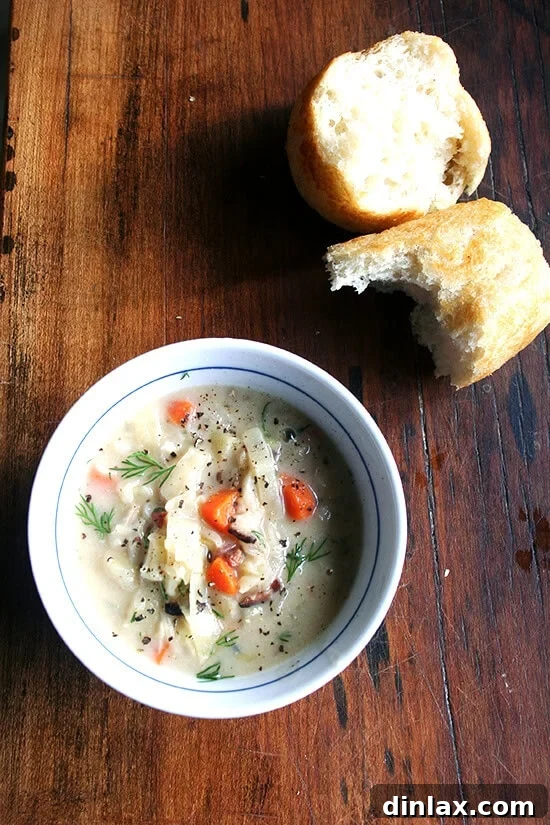
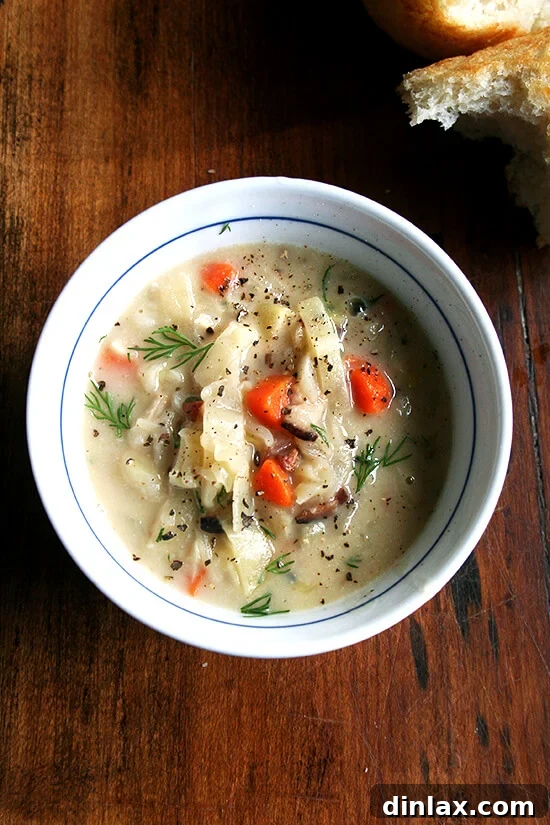
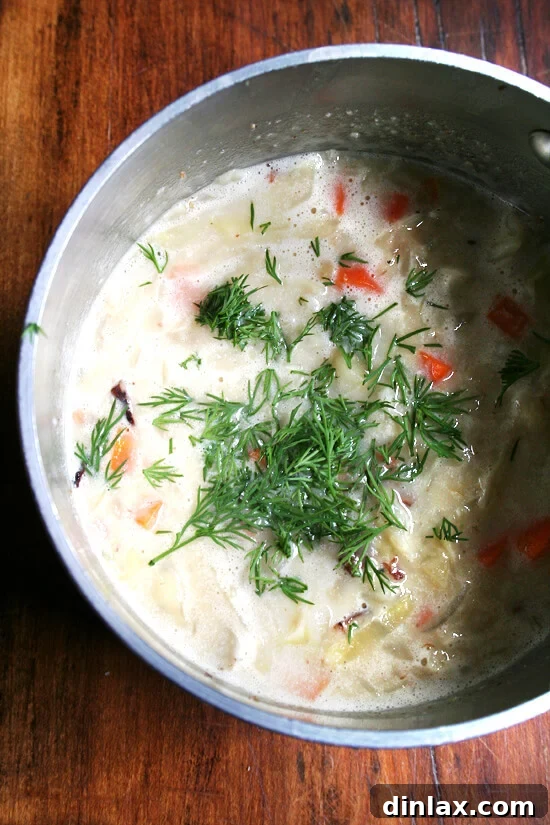
After five blissful days steeped in this comforting soup-and-bread routine, the return to my own relatively bare refrigerator was a stark and immediate reminder of what I missed. However, a large, vibrant head of cabbage and a few forgotten carrots nestled in my vegetable drawer quickly lifted my spirits, sparking a culinary epiphany. I realized that, with the sole exception of fresh dill, I possessed every ingredient necessary to recreate another one of my mother’s deeply cherished recipes—a staple she’s been perfecting since the early 1980s. This was none other than Paul Steindler’s Cabbage Soup with caraway seeds, a recipe originally brought to prominence by the legendary food critic Craig Claiborne in The New York Times Magazine and later enshrined in The Essential New York Times Cookbook. This particular soup is the epitome of comfort food: hearty, profoundly flavorful, and immensely satisfying, making it the perfect antidote to a cold winter day.
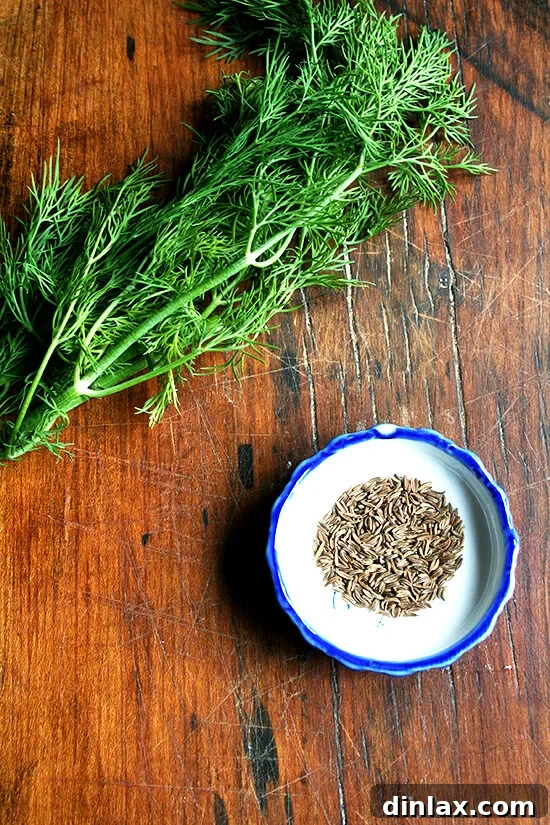
What truly distinguishes Paul Steindler’s Cabbage Soup and elevates it beyond the ordinary is its thoughtful combination of humble ingredients transformed into a symphony of flavors. It’s generously loaded with tender carrots, soft potatoes, sweet onions, and an abundant quantity of fresh cabbage, forming a robust and wholesome foundation. A touch of savory bacon introduces a wonderful depth of umami, while a swirl of heavy cream provides a luxurious, silky finish. Yet, the real magic, for me, lies in the distinctive aromatic profile created by fresh dill and the subtle, earthy warmth of caraway seeds. These two spices imbue the soup with a unique character, setting it apart from any other cabbage soup I’ve ever tasted. The caraway seeds, in particular, lend a beautiful, slightly peppery, and delicately sweet note that lingers pleasantly, making this soup an ideal partner for a hunk of crusty bread and a perfect meal on its own.
The act of making soup from scratch offers more than just a delicious meal; it’s a practice rich in benefits. Homemade soup is incredibly nourishing, packed with fresh vegetables that provide essential vitamins and minerals, a stark contrast to many processed alternatives. It’s also remarkably economical, often utilizing inexpensive, seasonal produce and turning kitchen staples into a feast. Furthermore, homemade soup is infinitely customizable, allowing you to adjust spice levels, vegetable ratios, and protein additions to suit any dietary preference or restriction. The simmering process fills your home with inviting aromas, fostering a sense of warmth and well-being long before the first spoonful. It’s a wonderful way to practice mindful cooking and provides convenient, healthy meals that can be enjoyed throughout the week, making it a cornerstone of thoughtful home cooking.
Mastering Peasant Bread: A Guide to the Perfect Rise
I am convinced that no winter lunch is more satisfying than a bowl of homemade soup accompanied by a warm, rustic slice of bread. With this culinary philosophy at heart, I felt compelled to provide an important follow-up to my widely celebrated peasant bread recipe. While it has garnered immense success and brought joy to countless home bakers, I’m aware that some readers continue to face challenges, particularly with the dough’s second rise, which in turn, deeply concerns me.
The most frequently reported issue is that, after a seemingly successful first rise, the dough mysteriously refuses to rise a second time. This enigma has truly puzzled me for months. Initially, when these comments first appeared, I suspected the size of the mixing bowl might be the culprit. I wondered if larger bowls might not provide the necessary containment and support for this delicate dough’s structure to achieve a vigorous second rise. However, when several bakers reported the same problem despite using appropriately sized bowls, I realized the underlying cause had to be something entirely different.
A significant breakthrough occurred during a recent email exchange with a diligent reader. I discovered that she had, quite understandably, misinterpreted my instructions, which I have since taken care to clarify directly within the original recipe post. Instead of briefly preheating her oven for a mere one minute to create a gently warm environment ideal for dough rising, she had preheated her oven to its highest setting and maintained that intense temperature for one minute before switching it off. What transpired was that while her dough did indeed rise initially in this excessively hot environment, it also, critically, began to partially bake. Consequently, when she later “punched down” the dough, the yeast within it had been fatally compromised by the high heat, rendering it inactive and incapable of performing the essential second rise. This revelation highlights the critical sensitivity of yeast to temperature extremes.
This insight led me to ponder: could other aspiring bakers who struggled with the second rise have inadvertently subjected their dough to an oven that was too hot for the crucial initial rise? This is a common pitfall, as many recipes generically advise finding a “warm place” for dough to rise, and an oven often seems like an intuitive choice. However, for delicate yeast doughs like this peasant bread, precise temperature control is paramount. Yeast is a living organism; it thrives within a specific temperature window, typically between 75-85°F (24-30°C). If the environment is too cold, the yeast remains sluggish; if it’s too hot, as in the case of a fully preheated oven, even for a brief moment, the yeast can be killed, halting fermentation. I strongly urge anyone experiencing this issue to meticulously verify their rising environment. Perhaps a pilot light, a sun-drenched spot, or simply a room-temperature counter might offer a more consistently gentle warmth than a hastily warmed oven, unless carefully monitored with a thermometer.
To my esteemed fellow bread bakers within this community, if the oven temperature is definitively not the issue you’ve encountered, I eagerly invite your collective wisdom: do you have any alternative insights or hypotheses as to why a yeast dough might exhibit a robust first rise but then inexplicably fail to achieve a second? Your diverse experiences and troubleshooting expertise are incredibly valuable, and any thoughts you can share would be immensely appreciated. My unwavering goal is for this exceptional peasant bread recipe to yield perfect results for every single person who attempts it; it truly is a remarkable recipe, delivering a loaf that is both deceptively simple to prepare and exquisitely delicious.

Print Recipe Card
Paul Steindler’s Hearty Cabbage Soup Recipe
5 Stars
4 Stars
3 Stars
2 Stars
1 Star
5 from 6 reviews
Author: Alexandra Stafford at alexandracooks.com
Total Time: 50 minutes
Yield: 8 servings 1x
Description
This heartwarming Paul Steindler’s Cabbage Soup recipe is a slightly adapted version of a classic, originally penned by the renowned culinary figures Craig Claiborne and Pierre Franey. It promises an exceptionally hearty and flavorful experience, perfect for sharing with company or enjoying over several comforting meals.
Cook’s Notes: This recipe is designed to produce a generous double batch, yielding a substantial amount of delicious, robust soup. It’s ideal for entertaining or ensuring you have plenty of nourishing leftovers, which often taste even better the next day as the flavors deepen. This rich cabbage soup pairs magnificently with a hunk of fresh, crusty bread; traditional rye bread, with its distinct tang, is particularly complementary, though any homemade loaf will elevate the meal. While the ingredient list may suggest a fair bit of chopping, don’t feel overwhelmed. You can efficiently manage the prep by adopting a “chop as you go” approach: for instance, dice the onions while the bacon renders, then move on to the carrots and potatoes as the onions sauté. This method makes the cooking process much more streamlined and enjoyable.
Ingredients for Paul Steindler’s Hearty Cabbage Soup
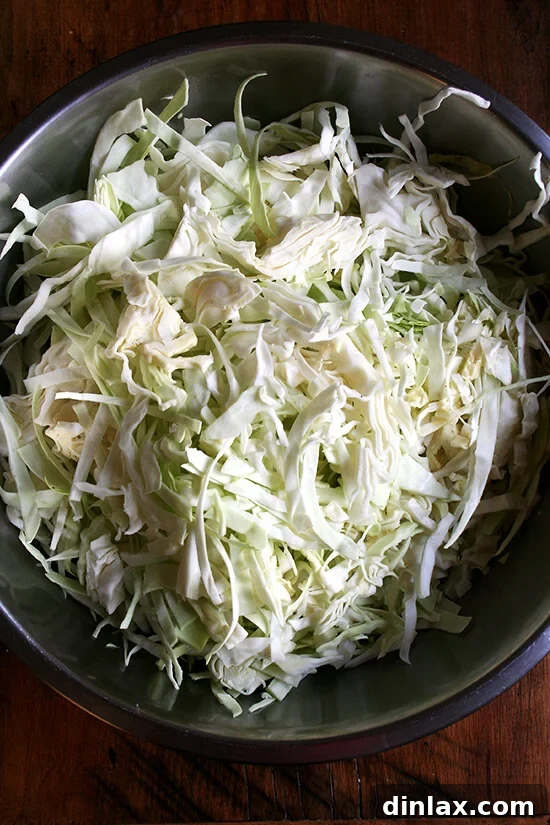
- 12 cups shredded cabbage*
- 2 cups (about 12 oz.) finely diced bacon or pancetta or a mix
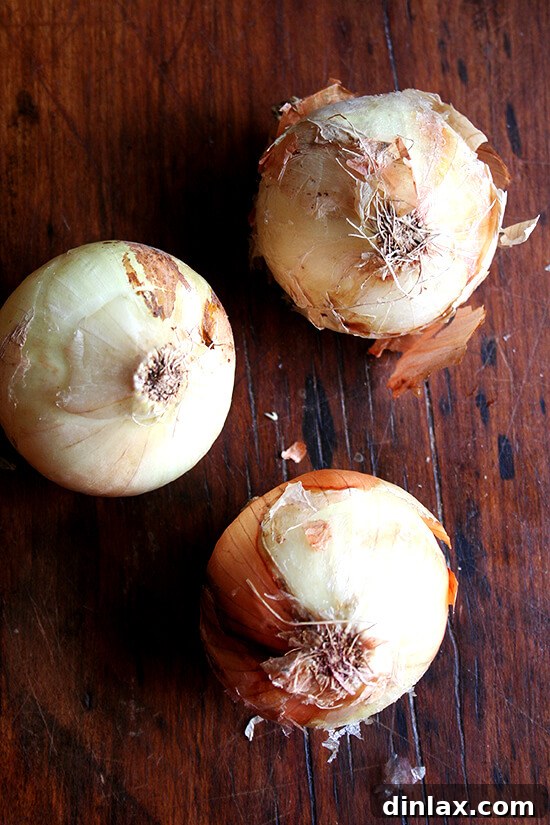
- 2 cups finely diced onions (about 2 medium-large onions)
- 1/2 cup all-purpose flour
- 10 cups rich homemade chicken stock (or high-quality store-bought broth for depth)
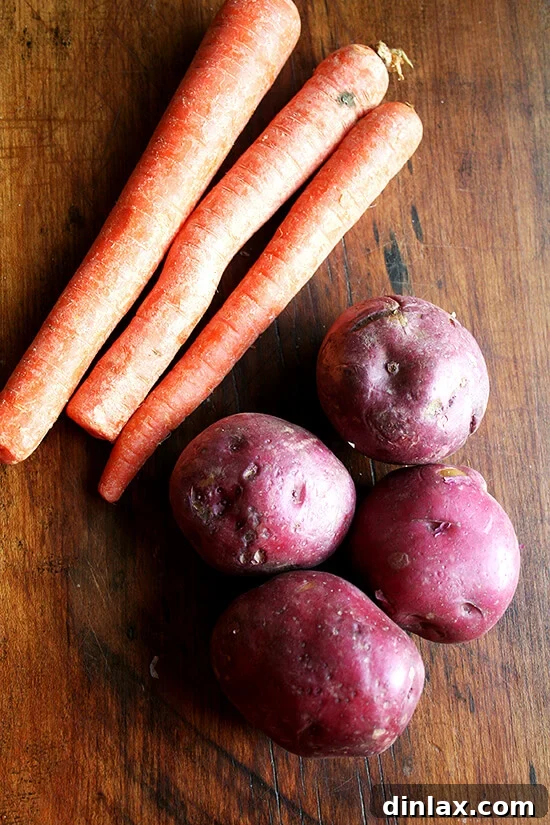
- 2 cups finely diced carrots (approximately 3-4 medium carrots)
- 2 to 3 cups finely diced potatoes (about 2-3 large Russets or Yukon Golds, peeled if desired)
- Kosher salt and freshly ground black pepper to taste
- 2 teaspoons whole caraway seeds, crushed or pulverized (essential for the signature subtle flavor)
- 2 tablespoons white wine vinegar (adds a vital bright tang that cuts through richness)
- 1 teaspoon sugar (to balance acidity and enhance flavors)
- 1 cup heavy cream (for luxurious richness and smooth texture)
- 1/4 cup finely chopped fresh dill (or more, to taste, for a vibrant, aromatic finish)
*Note on Cabbage Quantity: When shredding a relatively large head of cabbage, you might find yourself with as much as 14 cups or even more. Don’t hesitate to use all of it; the more cabbage, the heartier and more robust your soup will be!
Step-by-Step Cooking Instructions
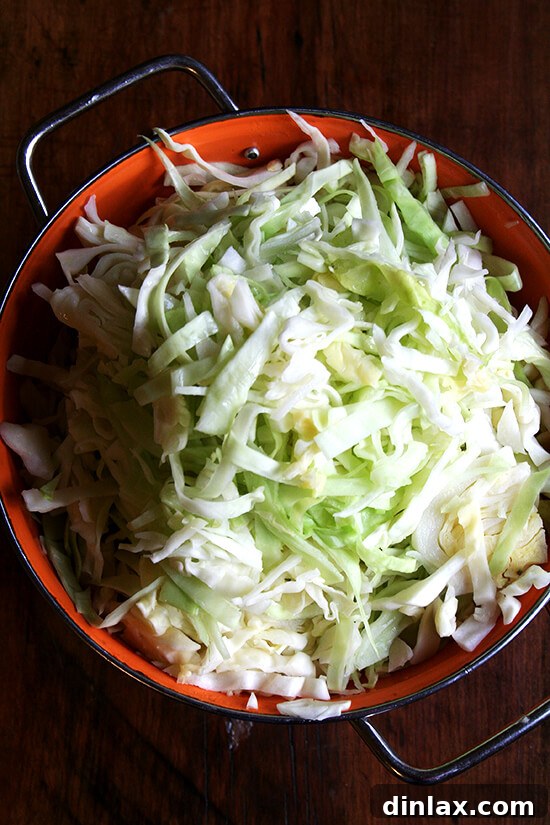
- Blanch the Cabbage: Place all the shredded cabbage into a very large, heatproof bowl. Bring enough water to a rolling boil to fully submerge the cabbage – a tea kettle is convenient for this, or you can fill a large saucepan. Carefully pour the boiling water over the cabbage. Allow it to sit for exactly one minute, then promptly drain the cabbage thoroughly using a colander. This blanching step helps to slightly tenderize the cabbage and mellow its flavor.
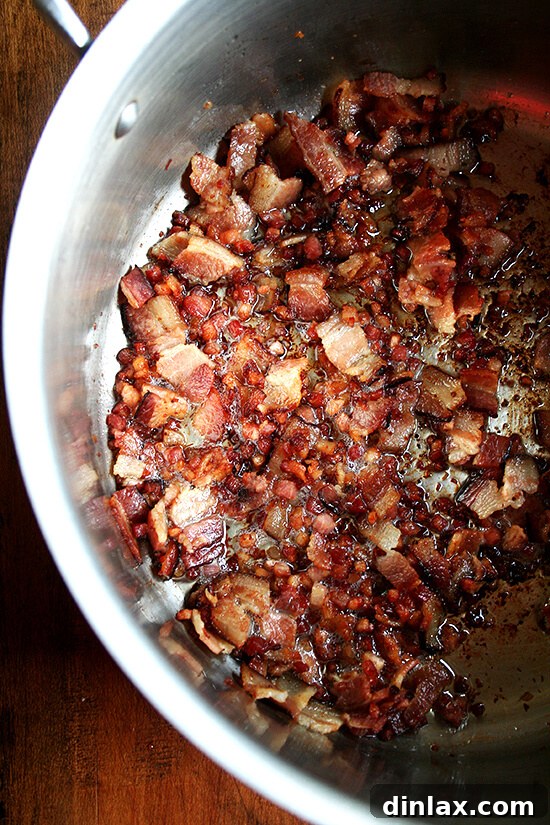
- Build the Flavor Base: Meanwhile, in a generously sized heavy-bottomed pot or Dutch oven (ideal for soup making), cook the finely diced bacon or pancetta over medium heat. Stir occasionally until the fat has fully rendered and the bacon bits are wonderfully crisp, typically about 10 minutes. Using a slotted spoon, transfer the crispy bacon pieces to a plate lined with paper towels, leaving the rendered fat in the pot. Add the finely diced onions to the pot with the reserved bacon fat and cook, stirring frequently, until they become beautifully softened and translucent, which should take approximately 15 minutes. Sprinkle the all-purpose flour evenly over the softened onions and stir continuously for about one minute to create a light roux. Gradually pour in the chicken broth, whisking rapidly with a wire whisk to prevent any lumps and ensure a smooth, cohesive mixture. Bring the mixture to a gentle simmer. Once simmering, add the blanched cabbage, diced carrots, diced potatoes, a generous seasoning of kosher salt and freshly ground black pepper, the crushed caraway seeds, white wine vinegar, and sugar. Stir all ingredients well to combine them thoroughly.
- Simmer and Finish: Reduce the heat to low, cover the pot, and allow the soup to simmer gently. Stir often from the bottom to prevent any sticking, for approximately 30 minutes, or until the carrots and potatoes are tender to your liking. Once the vegetables have reached the desired tenderness, stir in the heavy cream and continue to simmer for an additional five minutes, allowing all the magnificent flavors to meld beautifully and the soup to achieve a slight richness. Finally, remove the pot from the heat and stir in the finely chopped fresh dill. Serve this comforting soup hot, and if desired, garnish each bowl with an extra sprinkle of fresh dill for added aroma and visual appeal. This soup is renowned for tasting even better the next day!
- Prep Time: 5 minutes
- Cook Time: 45 minutes
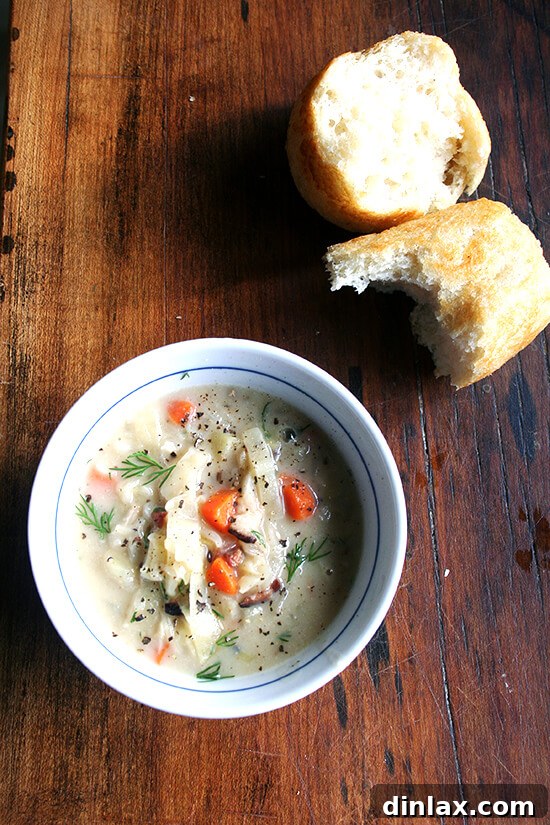
Pairing your robust Paul Steindler’s Cabbage Soup with homemade bread is truly a culinary match made in heaven. Here, I’m showcasing charming mini loaves—perfectly sized for individual servings alongside your soup—made using my mother’s renowned peasant bread recipe. These were baked conveniently in a popover pan, offering a delightful twist:
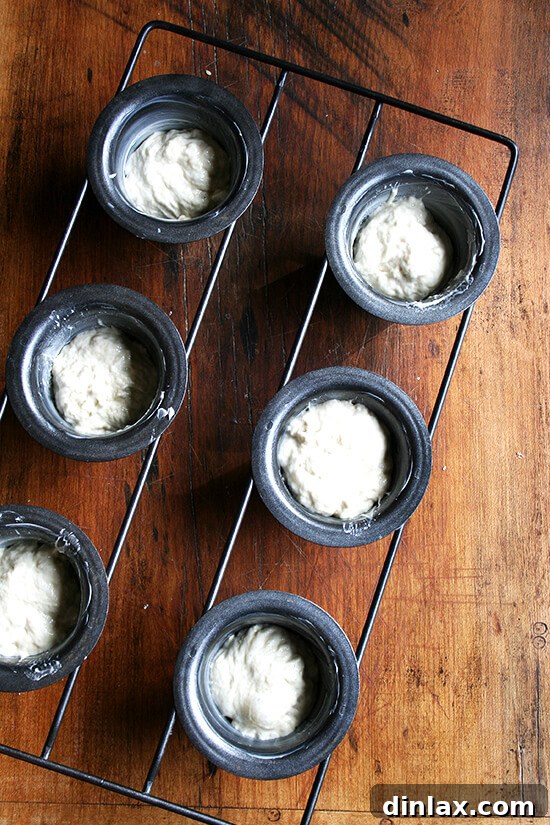



These mini loaves are more than just aesthetically pleasing; they offer a practical and delightful way to capture the attention of younger diners. Their perfect individual portion size provides a satisfying, easy-to-handle treat that can bring a moment of delicious calm to any family meal.

Embrace the Comfort and Flavor of Homemade Meals
In a world that constantly beckons us to speed up, taking the deliberate time to prepare a homemade meal like Paul Steindler’s Cabbage Soup or a batch of freshly baked peasant bread is a profound act of self-care and an expression of love. These meticulously crafted dishes extend beyond merely filling stomachs; they nourish the soul, evoke cherished memories, and lay the foundation for new ones. The subtle, aromatic spice of caraway, the vibrant freshness of dill, the comforting embrace of a rich, savory broth, and the satisfying, rustic chew of a perfectly risen homemade bread—each individual element contributes to a culinary experience that is far greater than the sum of its parts, leaving a lasting impression of warmth and contentment.
Whether you find yourself battling a persistent winter chill or simply yearning for a taste of authentic, home-cooked goodness, this timeless Paul Steindler’s Cabbage Soup recipe promises unparalleled warmth, deep satisfaction, and a connection to culinary heritage. And with the enhanced troubleshooting tips for our beloved peasant bread, there’s absolutely no reason to shy away from embarking on your very own rewarding baking adventure. Embrace the inherent joy of cooking, allow the captivating aromas to fill your bustling kitchen, and revel in the unparalleled pleasure of sharing these wonderfully simple, yet extraordinarily delicious, homemade delights with your dearest loved ones. We wholeheartedly encourage you to try these recipes and infuse a little more comfort, flavor, and heartfelt warmth into your everyday life.