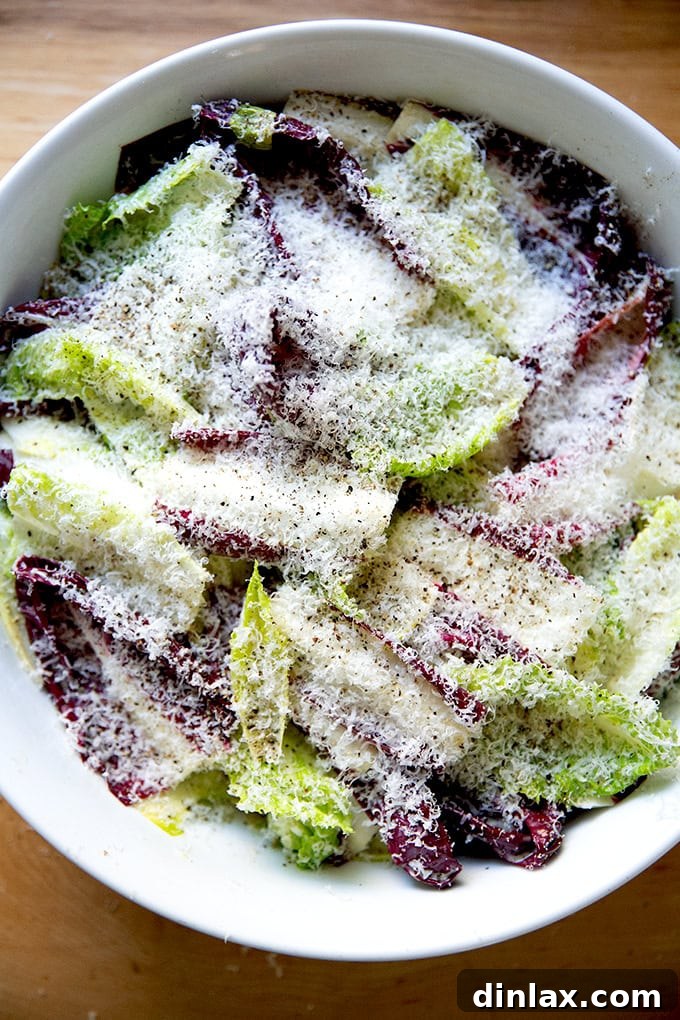
Ready to elevate your home cooking with a classic that never disappoints? This isn’t just any Caesar dressing; it’s a meticulously balanced blend of fresh lemon juice and white balsamic vinegar, offering that perfect dance of zesty acidity and creamy richness. Whether you’re whipping up a quick weeknight meal or preparing for a gathering, having a batch of this homemade Caesar dressing on hand is an absolute game-changer. It stores beautifully in your fridge for up to two weeks, making last-minute meal prep incredibly simple. Say goodbye to store-bought varieties and hello to the freshest, most flavorful Caesar dressing you’ve ever tasted!
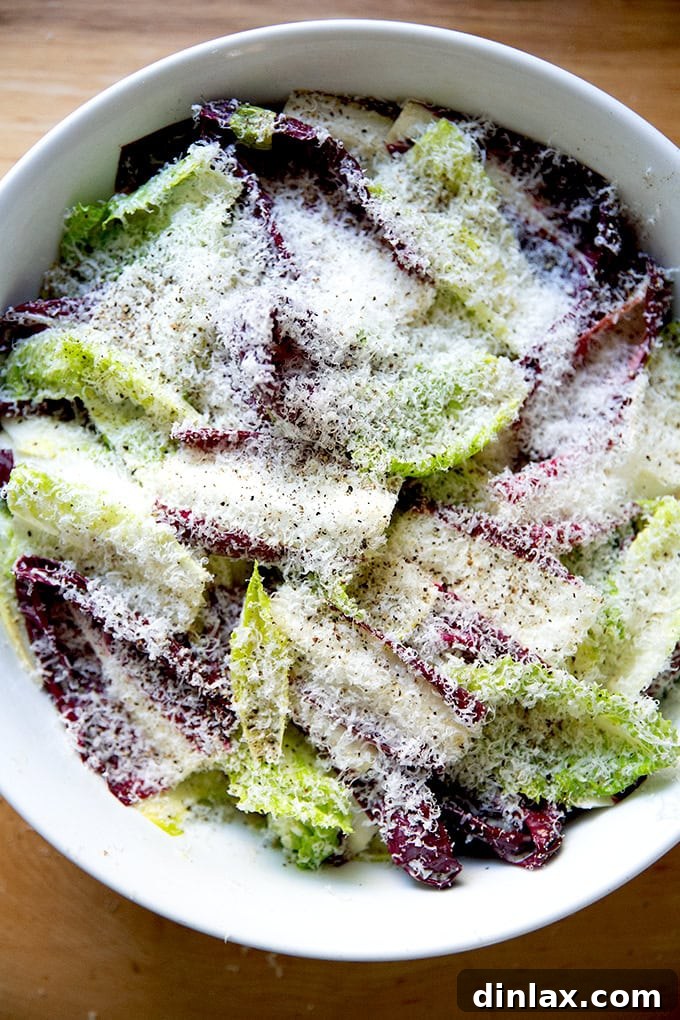
Life often throws unexpected entertaining opportunities our way, whether it’s a spontaneous family dinner or a team celebration. Recently, I found myself hosting on several occasions – first for a lively family dinner, and then for my daughter’s entire soccer team. For the family feast, I fired up a medley of homemade pan pizzas, and for the soccer squad, a comforting baked penne (recipe coming soon!). What tied both events together, and what proved to be a resounding success, was a monumental Caesar salad. Not only was it universally adored, but it also offered remarkable ease for a host.
Unlike some of my other go-to salads for entertaining, such as this vibrant Greek salad or this hearty chopped salad—both of which demand a fair amount of meticulous chopping—Caesar salad stands out for its minimal prep. The secret to its simplicity, and what makes it truly spectacular, is inspired by the iconic Caesar served at Speedy Romeo in Brooklyn. Their approach involves cutting heads of Romaine lettuce (or other sturdy greens) simply in half, keeping the leaves wonderfully large and intact. This means less time in the kitchen and more time enjoying your guests, with the salad served elegantly, ready to be tackled with a fork and knife.
This “large-leaf” method isn’t just about reducing prep time; it brings multiple benefits to your Caesar salad experience. Firstly, the generous size of the leaves creates a visually stunning presentation, adding a rustic yet refined touch to your table. More importantly, large leaves stand up better to the dressing. They don’t wilt as quickly, maintaining their crisp texture and fresh appearance even after being dressed, ensuring your salad stays vibrant throughout the meal.
To further enhance the salad’s texture and longevity, and to introduce a delightful complexity of flavor, I love incorporating a mix of Romaine lettuce with various chicories. Varieties like radicchio or Treviso, if you can get your hands on them, along with Belgian endive, are naturally sturdier than Romaine. Beyond their robust structure, these chicories bring a wonderful, subtle bitterness that perfectly complements the sweeter notes of Romaine and the bright, lemony punch of the dressing. This interplay of textures and flavors elevates a simple Caesar salad into something truly extraordinary.
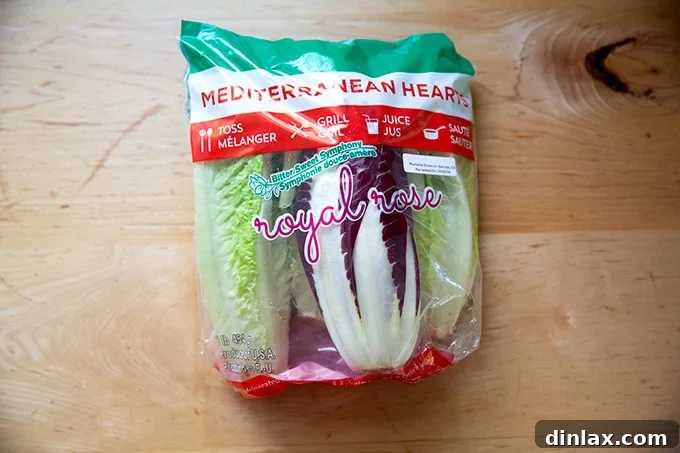
Speaking of Treviso, I recently had a stroke of luck at the grocery store, stumbling upon a mix of Romaine and Treviso—a combination I adore but rarely find pre-packaged. For those unfamiliar, Treviso is a particular variety of radicchio. It boasts a beautiful, elongated shape and vibrant color, appearing almost like a sophisticated cross between Belgian endive and traditional radicchio. Its crisp texture and gentle bitterness are a fantastic addition to any salad, especially Caesar.
Essential Tips for Your Perfect Caesar Salad
Before we dive into the step-by-step instructions for crafting this incredible dressing and salad, here are a few additional notes to help you achieve Caesar salad perfection, tailored to your preferences and needs.
- To Crouton or Not to Crouton? Often, when I serve Caesar salad, it’s alongside rich dishes like pizza or pasta, which already provide plenty of satisfying carbs. In such cases, I typically omit croutons or breadcrumbs to keep the meal balanced. However, if you’re making Caesar salad as a standalone main or simply crave that delightful crunch, croutons are a classic addition! For homemade, perfectly seasoned croutons, check out this recipe. If you prefer the finer texture, learn how to make delicious breadcrumbs to sprinkle over your salad.
- Understanding Egg Yolks: Traditional Caesar dressing relies on raw egg yolks for their emulsifying properties, which create that signature creamy texture. If you’re hesitant about using raw egg yolks, don’t worry! You can easily substitute each egg yolk with 1 tablespoon of good-quality mayonnaise. Mayonnaise already contains egg and oil, providing a similar richness and helping to achieve a stable emulsion without the raw egg concern.
- Embrace the Large Batch Method: Once you discover the sheer convenience and efficiency of making salad dressings in large batches, you’ll wonder how you ever managed otherwise. It’s a habit that transforms meal prep! Just like my popular large-batch tahini dressing and large-batch shallot vinaigrette, this Caesar dressing recipe is designed for maximum yield with minimal effort. The larger recipe below cleverly utilizes an entire 2-ounce tin of anchovies, which means no more half-used tins languishing in your fridge! A generous supply of dressing lasts for up to two weeks, providing a true culinary gift when the dinner hour arrives and you need a quick, flavorful side.
Below, you’ll find comprehensive, step-by-step instructions to guide you through both the creation of this exquisite Caesar dressing and the assembly of a show-stopping Caesar salad. Get ready to impress!
How to Craft Your Perfect Caesar Dressing, Step by Step
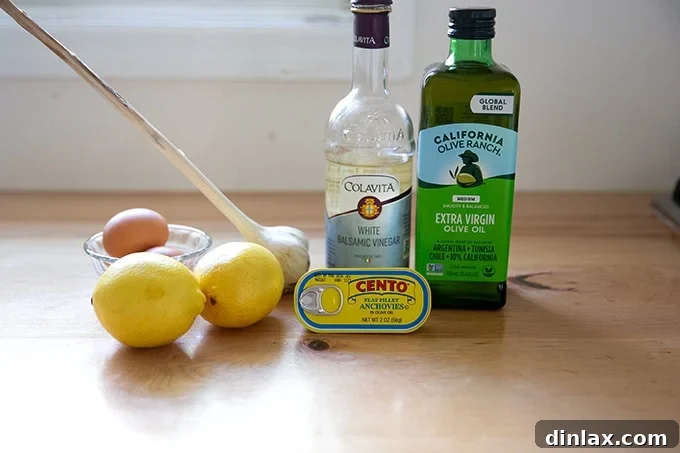
Making your own Caesar dressing from scratch is surprisingly simple and incredibly rewarding. The fresh, vibrant flavors are unmatched by anything you can buy. Let’s gather your core ingredients: fresh lemons, savory anchovies, pungent garlic, rich egg yolks, tangy vinegar, and a high-quality extra-virgin olive oil. Remember, if you have concerns about using raw egg yolks, a simple and effective substitution is to replace each yolk with 1 tablespoon of your favorite mayonnaise.
Begin by preparing your foundational flavor base. Into the bowl of a food processor or blender, place your peeled garlic cloves and the drained anchovy fillets. Add a generous pinch of flaky sea salt; this helps to break down the ingredients and enhance the overall seasoning.
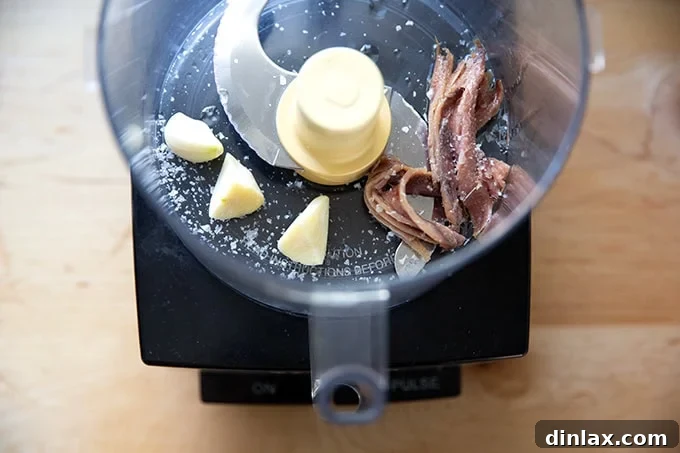
Process these ingredients until you achieve a perfectly smooth paste. This step is crucial for distributing the intense flavors of garlic and anchovy evenly throughout the dressing. Once smooth, stop the machine, scrape down the sides of the bowl to ensure everything is incorporated, then add the fresh lemon juice, your chosen vinegar (white balsamic works wonderfully), and the egg yolks (or mayonnaise, if using).
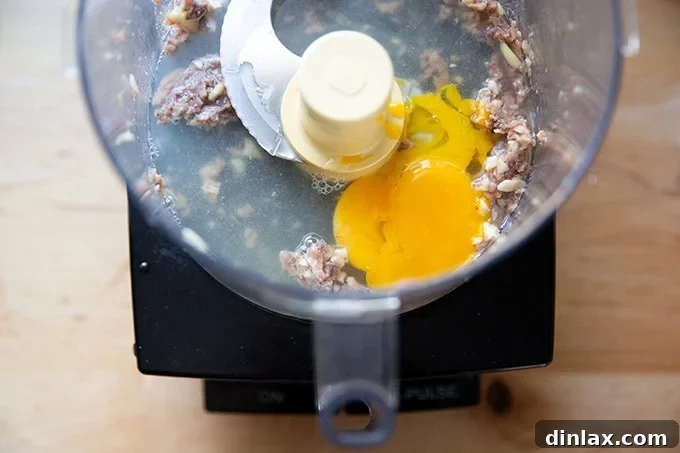
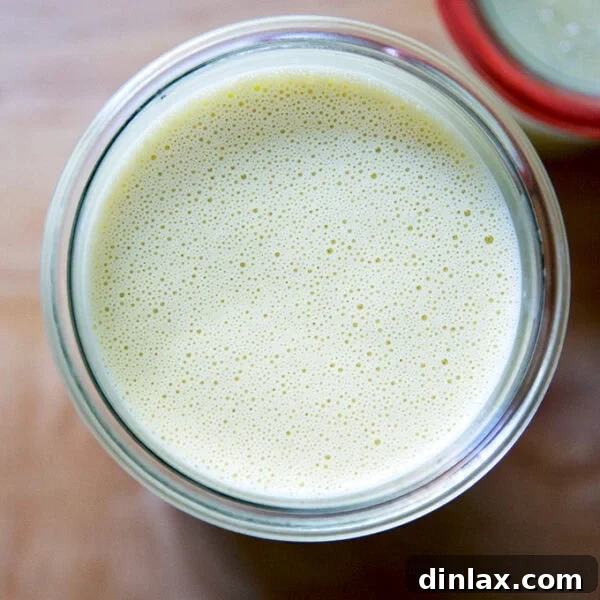
Continue to process the mixture until all the newly added ingredients are thoroughly blended and the mixture is uniformly smooth and light yellow in color. This ensures that the acidity and richness are perfectly integrated before the oil is introduced.
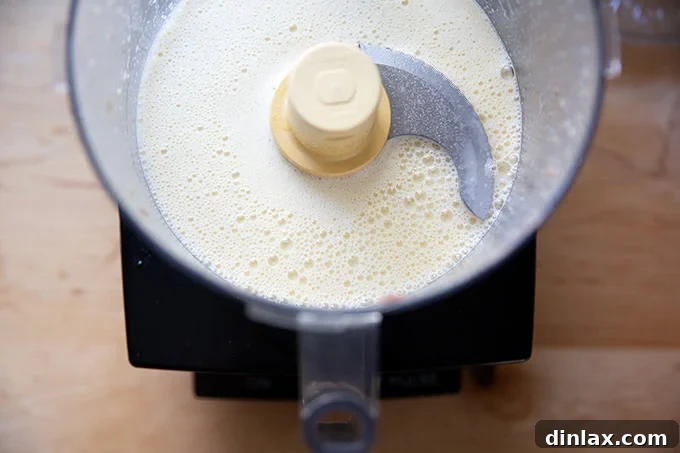
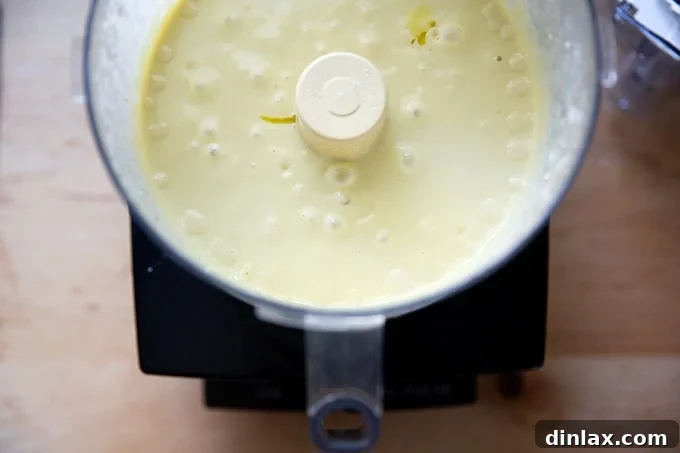
Now comes the magical part: emulsification. With the food processor or blender running continuously, very slowly stream in the extra-virgin olive oil through the feed chute. If you’re using a Cuisinart food processor, utilize the small pinhole located at the bottom of the food pusher insert—it’s designed to deliver the oil at the perfect slow drizzle for a stable emulsion. The key here is patience; a slow and steady stream allows the oil to gradually combine with the other ingredients, creating a thick, creamy, and wonderfully emulsified dressing.
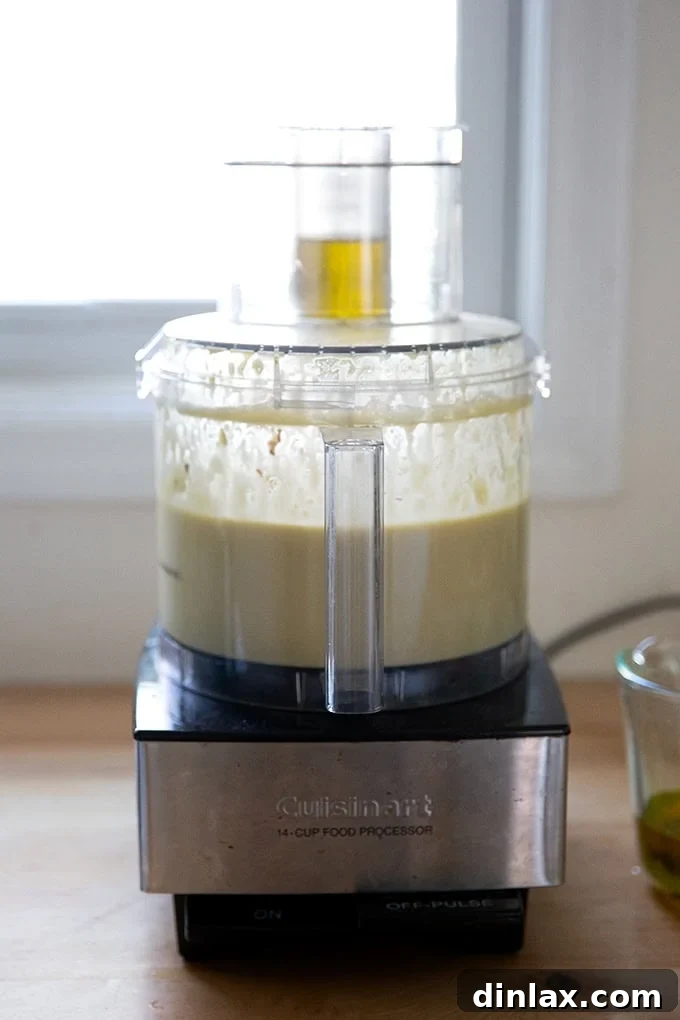
Once all the oil has been incorporated and the dressing is thick and creamy, it’s time for the crucial taste test. Sample a small amount and adjust the seasoning as needed. You might want a little more salt to enhance the flavors or an extra squeeze of lemon juice to brighten the dressing and add more zing. If the dressing is too thick for your liking, you can thin it out by adding a few tablespoons of water, one at a time, with the machine running, until it reaches your desired pourable consistency.
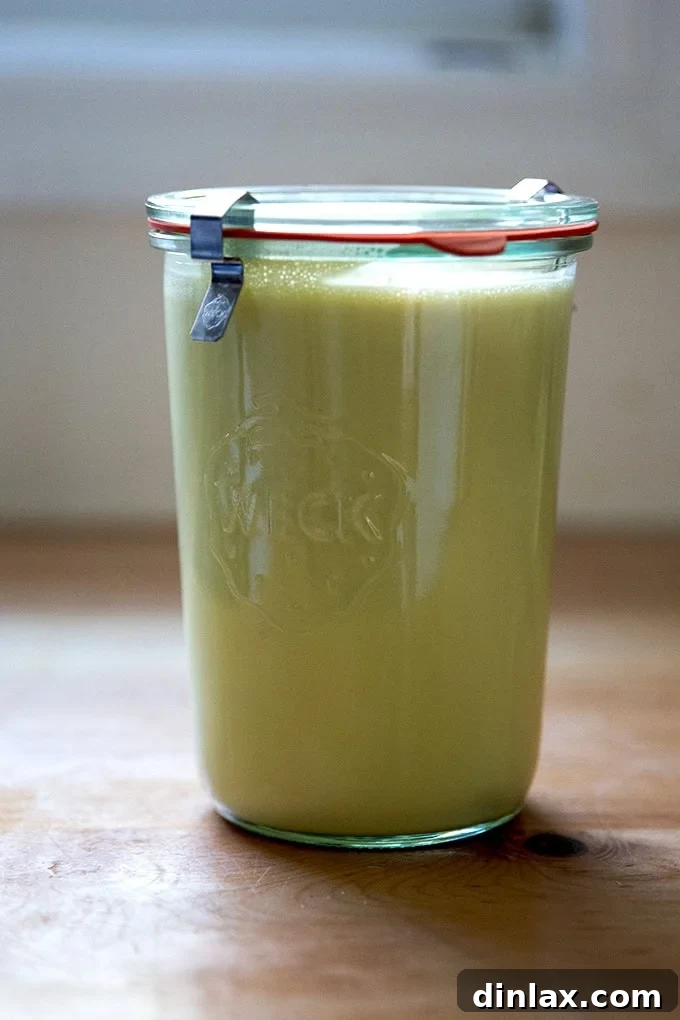
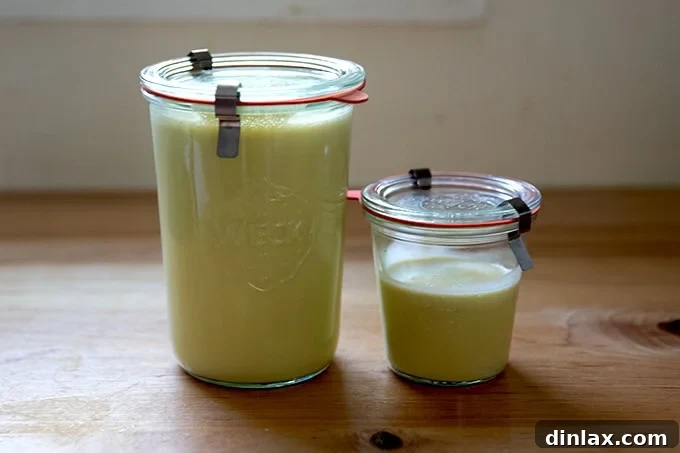
Finally, transfer your freshly made Caesar dressing into airtight storage vessels. Glass jars, such as these charming Weck Jars, are ideal for both storage and presentation. Store the dressing in the refrigerator, where it will stay fresh and delicious for up to two weeks. Having this vibrant, homemade dressing readily available makes spontaneous salads a breeze!
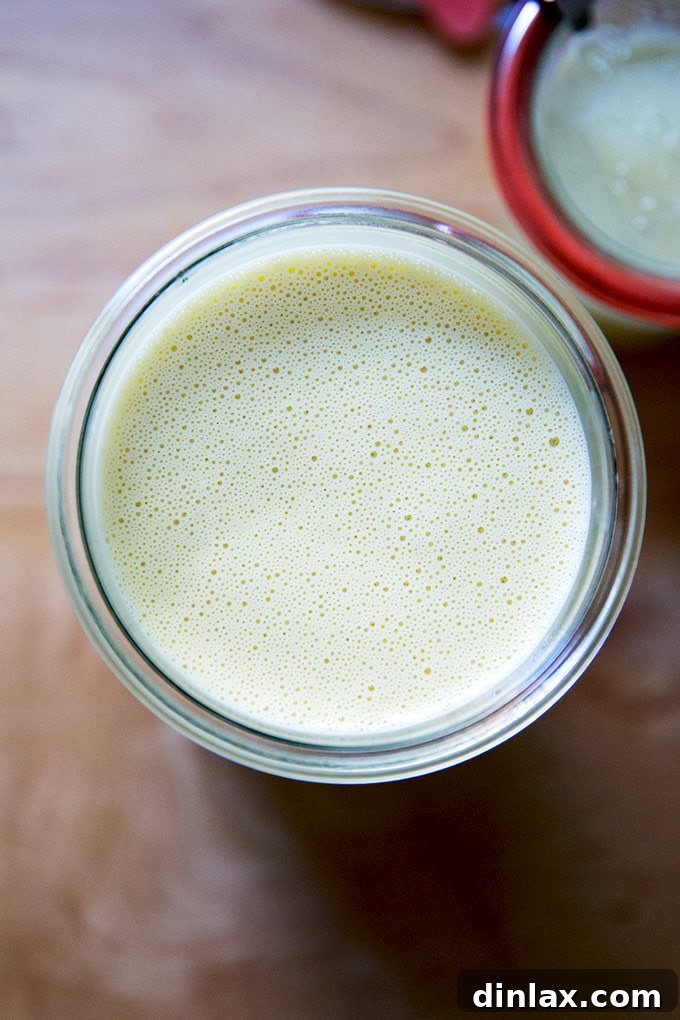
These Weck Jars are not only practical for storage but also add a lovely aesthetic to your fridge.
How to Assemble a Restaurant-Quality Caesar Salad, Step by Step
With your incredible homemade Caesar dressing ready, the next step is to assemble a salad that’s as impressive to look at as it is delicious to eat. The key to a truly great Caesar salad lies in the quality of your greens and Parmesan.
Start by gathering your greens. As previously mentioned, I highly recommend a thoughtful mix of crisp Romaine lettuce and a flavorful chicory like Belgian endive or radicchio (or even Treviso, if you’re lucky enough to find it). This combination provides both texture and a pleasant bitter counterpoint to the rich dressing. You’ll also need a high-quality wedge of Parmigiano Reggiano; its nutty, salty flavor is indispensable. Make sure your greens are thoroughly washed and dried, as excess water will dilute the dressing and make your salad soggy. A salad spinner is an excellent tool for this task.
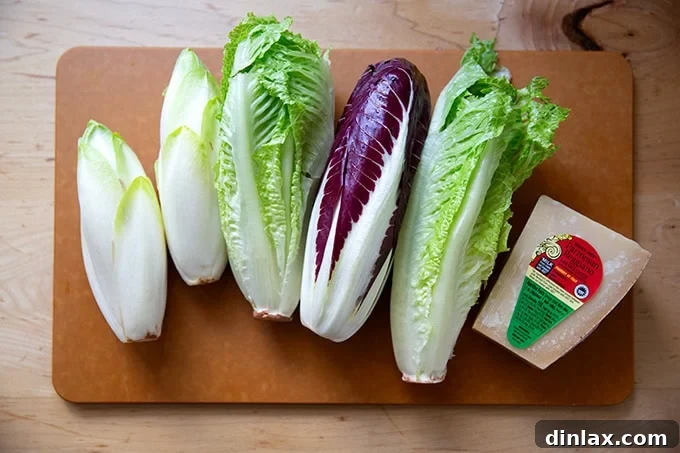
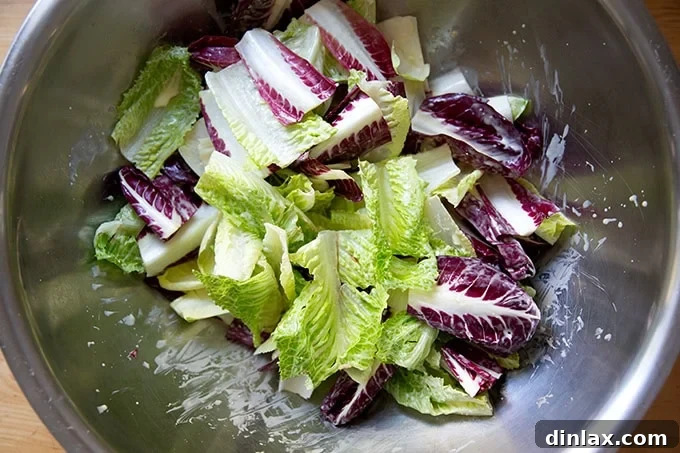
Following the Speedy Romeo inspiration, I prefer to keep my greens large. Instead of tearing or chopping them into small pieces, simply cut heads of Romaine or chicories in half lengthwise, or into large, manageable wedges. This method not only looks elegant but also helps the leaves retain their structure and crispness. In a spacious mixing bowl—I particularly love this large bowl for tossing—gently toss your greens with a light coating of the Caesar dressing and a pinch of flaky sea salt. The goal is to lightly dress the leaves, ensuring every piece is coated but not drowned, preventing an overly heavy or soggy salad.
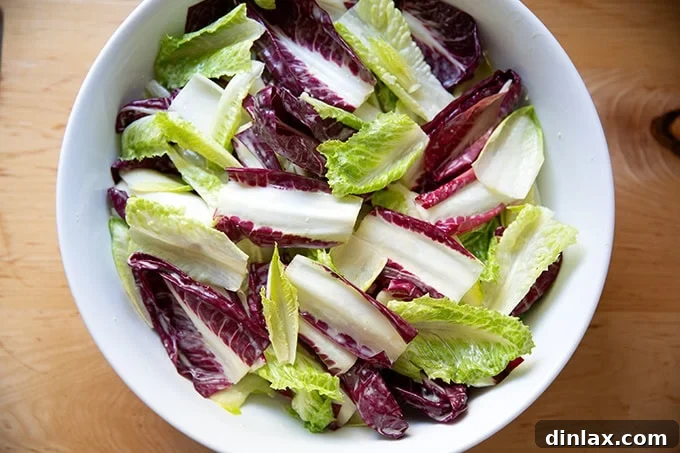
Once the greens are beautifully dressed, transfer them to your chosen serving bowl. Arrange them artfully to create an inviting presentation.
… and now for the magnificent finale: liberally shower the salad with finely grated Parmigiano Reggiano. The aim is to create a visual effect where the green leaves appear as though they are blanketed in a pristine layer of snow. For this, a microplane grater is absolutely essential. It produces airy, delicate shavings of cheese that melt enticingly on your tongue and adhere beautifully to the dressed leaves, creating that iconic Caesar aesthetic and flavor.
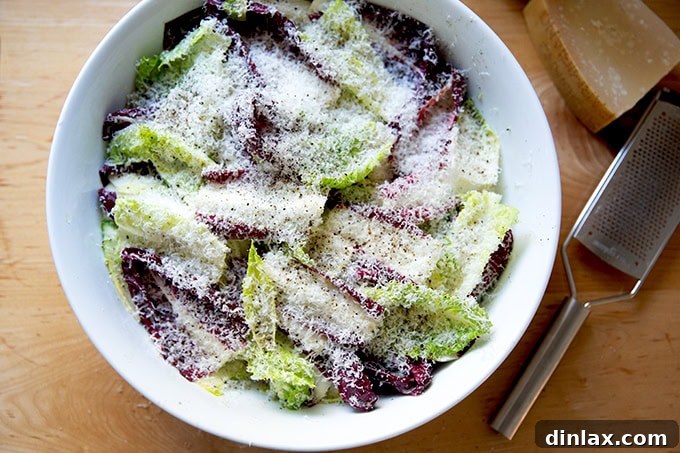
Finish your masterpiece by seasoning generously with freshly cracked black pepper to taste. The robust, aromatic pepper adds a perfect counterpoint to the salty cheese and tangy dressing, enhancing the overall complexity of the salad.
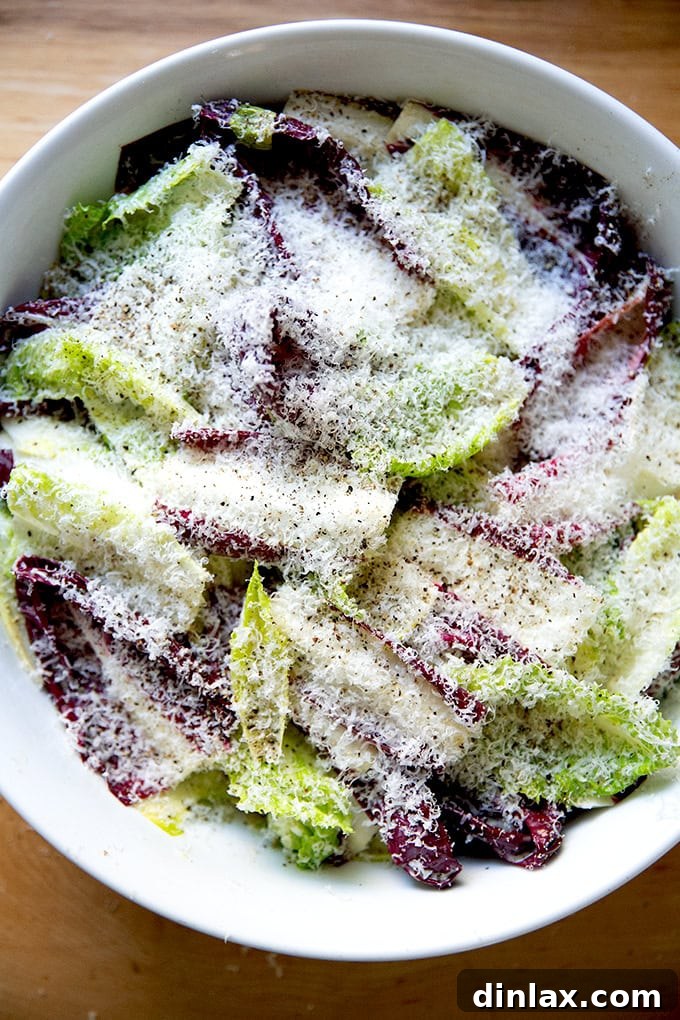
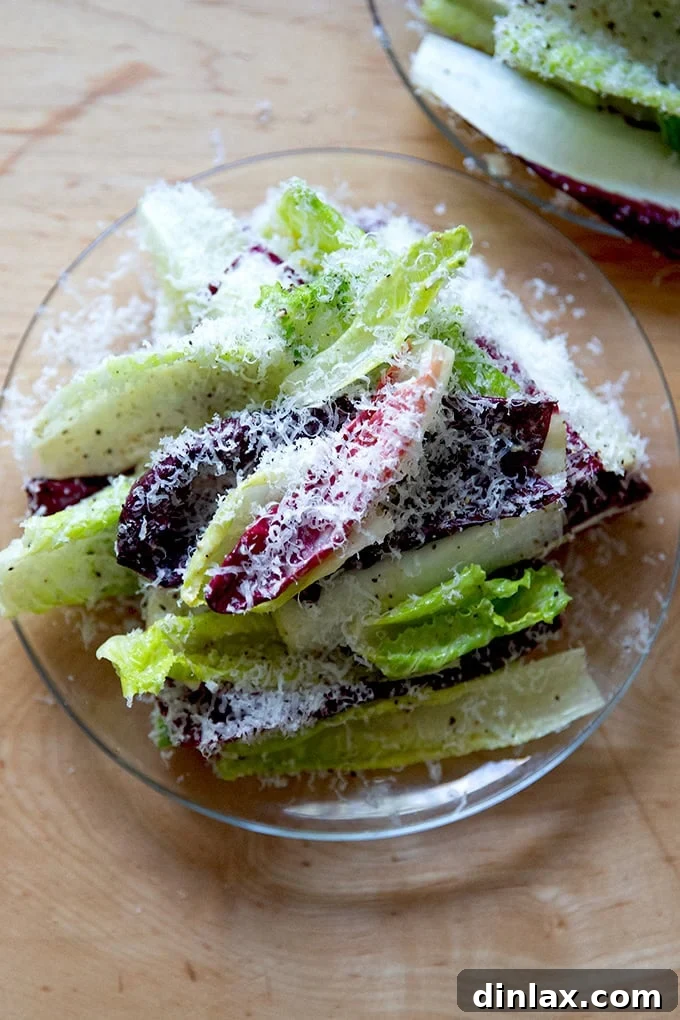
When serving, transfer individual portions to plates. For an extra flourish and intensified flavor, shave a little more Parmesan directly over each serving and crack additional fresh black pepper right before your guests enjoy. This final touch makes all the difference!
Classic Caesar Dressing (Large Batch or Small)
5 Stars 4 Stars 3 Stars 2 Stars 1 Star
5 from 6 reviews
Author: Alexandra Stafford
Total Time: 10 minutes
Yield: 2 2/3 cups 1x
Description
This classic Caesar dressing recipe, adapted from my cookbook, Pizza Night, delivers unparalleled flavor and richness. Whether you make a large batch for future meals or a small one for immediate enjoyment, its balanced acidity and creamy texture are sure to impress. Store it in the fridge for up to two weeks and elevate any salad!
No Food Processor? No Problem! Make it by Hand: If you don’t own a food processor, you can still achieve a fantastic dressing. Begin by using a sharp knife to very finely mince the garlic and anchovies until they form a smooth paste. Transfer this paste to a medium bowl. Whisk in the egg yolk (or mayonnaise), vinegar, and fresh lemon juice until the mixture is smooth. Then, very slowly drizzle in the extra-virgin olive oil while continuously whisking vigorously. This constant whisking is key to creating a stable emulsion. Continue until all the oil is incorporated and the dressing is thick and creamy. Taste and adjust with more salt and/or lemon juice as needed. If the dressing is too thick, thin it with 2 to 4 tablespoons of water, whisking well after each addition.
Two kitchen tools I highly recommend for crafting the perfect Caesar salad:
- Microplane Grater: Absolutely essential for finely grating Parmigiano Reggiano, creating that desirable “snow-like” blanket over your salad.
- 14-Cup Food Processor: Ideal for quickly and efficiently emulsifying the dressing to a perfect, creamy consistency, especially for larger batches.
For a small batch of dressing, use the following reduced proportions:
- 3 garlic cloves, minced
- 6 olive oil–packed anchovy fillets, minced
- 1 large egg yolk or 1 tablespoon mayonnaise
- 2 tablespoons white balsamic vinegar
- 2 tablespoons fresh lemon juice, plus more to taste
- 1 cup extra-virgin olive oil
- 1-2 tablespoons water (optional, for thinning)
Ingredients
- 3 large garlic cloves
- a 2-ounce tin of anchovies, drained (roughly 12 olive oil–packed anchovy fillets)
- Flaky sea salt or kosher salt, to taste
- 2 large egg yolks or 2 tablespoons mayonnaise
- 1/4 cup white balsamic vinegar
- 1/4 cup fresh lemon juice, plus more to taste
- 2 cups high-quality extra-virgin olive oil
- 3 to 4 tablespoons water, or more as needed to thin
Instructions
- Prepare the Flavor Base: In the bowl of a food processor or blender, combine the garlic cloves, drained anchovies, and a pinch of flaky sea salt. Process until a very smooth paste forms, about 15-20 seconds. Scrape down the sides of the bowl. Add the egg yolks (or mayonnaise, if using), white balsamic vinegar, and fresh lemon juice. Puree again for another 15 seconds until all ingredients are well combined and smooth.
- Emulsify with Oil: With the food processor or blender running on low speed, slowly and steadily stream in the extra-virgin olive oil through the feed chute. (Tip: If using a Cuisinart, the small hole in the bottom of the food pusher insert provides an ideal slow drizzle for emulsification.) Continue to stream the oil until it is fully incorporated and the dressing is thick, creamy, and beautifully emulsified. Taste the dressing and adjust with more salt and/or lemon juice to achieve your desired flavor balance. If the dressing is too thick, with the machine still running, gradually add 3 to 4 tablespoons of water, one tablespoon at a time, until it reaches a pourable consistency.
- Store Your Dressing: Transfer the finished Caesar dressing to an airtight jar or container. Store it in the refrigerator, where it will maintain its freshness and flavor for up to 2 weeks.
- Prep Time: 10 minutes
- Category: Dressing, Sauce
- Method: Food Processor, Blender, Whisking
- Cuisine: American, Italian-American