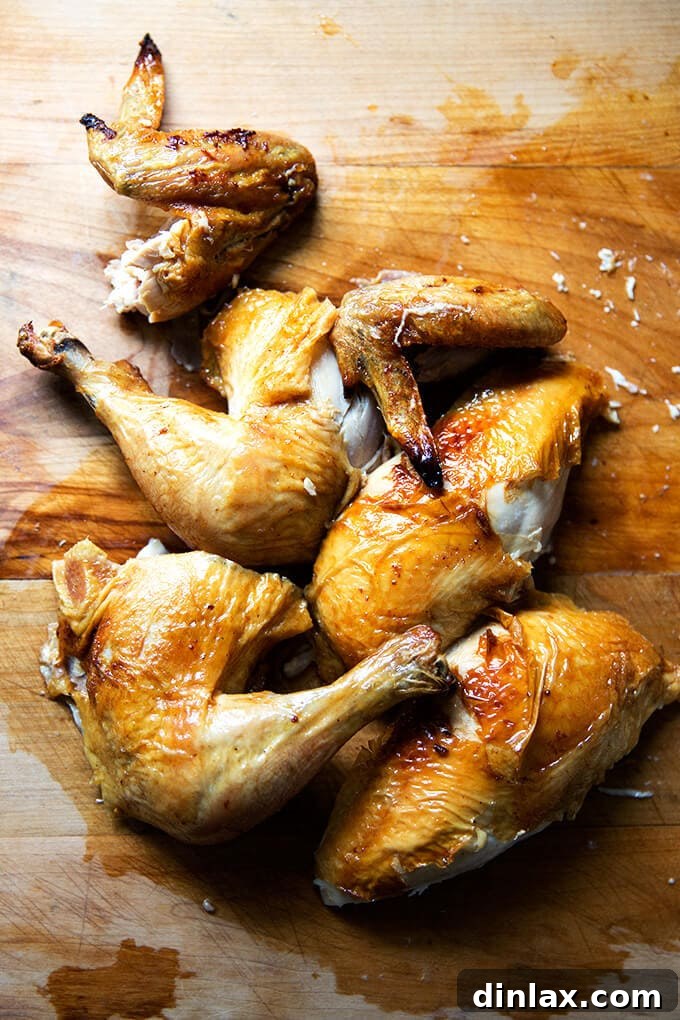
Welcome to the ultimate guide for mastering the art of roasting a whole chicken. Imagine a dish with impossibly crisp, golden skin, and incredibly juicy, tender, flavorful meat that practically falls off the bone. This isn’t just a dream; it’s a culinary reality, and the secret lies in one simple, yet often overlooked, step: salting your chicken a full day in advance. This method, inspired by renowned culinary wisdom, transforms a humble bird into a show-stopping meal using just a handful of ingredients, guaranteeing a perfect roast chicken every single time.
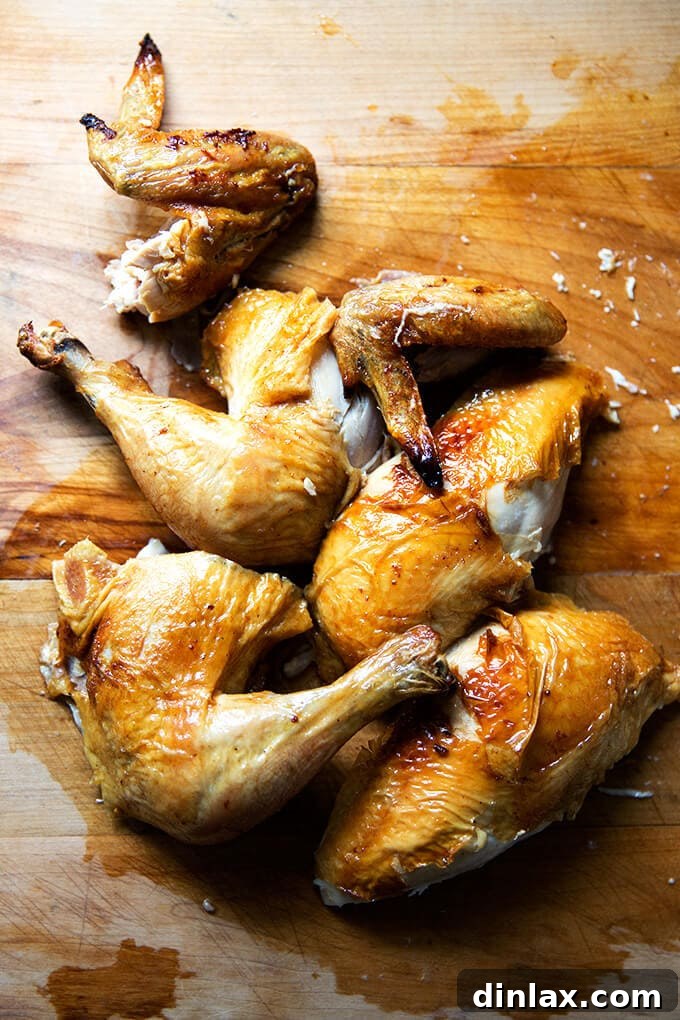
There’s a unique satisfaction that comes from roasting a whole chicken. It’s more than just a meal; it’s an investment that keeps on giving. For families, it offers a generous and wholesome centerpiece that comfortably feeds several people. Beyond the initial meal, a single roasted chicken provides invaluable culinary resources. The carcass, rich with flavor and nutrients, becomes the foundation for a deeply nourishing homemade stock. Any leftover meat can be effortlessly transformed into a second, or even third, meal – perfect for quick salads, hearty soups, or savory sandwiches on subsequent nights. This approach minimizes waste and maximizes flavor, making roast chicken an incredibly economical and versatile staple in any kitchen.
This exceptional roasting technique draws its inspiration from the revered pages of The Zuni Cafe Cookbook by Judy Rodgers. Her meticulous approach emphasizes the profound impact of salting the chicken a day or two in advance. Rodgers dedicates considerable detail to explaining the science behind this method, illuminating how pre-salting dramatically enhances the meat’s juiciness, refines its texture, and ensures comprehensive seasoning throughout the entire bird. This isn’t merely a seasoning step; it’s a transformative process, often referred to as “dry brining,” which profoundly alters the meat at a molecular level. Unlike wet brining, which involves submerging the bird in a saltwater solution, dry brining allows the chicken to draw moisture back into its cells more effectively, concentrating its natural flavors.
In essence, the magic unfolds in two key stages:
- **Protein Transformation:** Initially, the applied salt begins to dissolve specific proteins within and surrounding the muscle fibers. These proteins, when unaltered, typically cause meat to be tougher and more resistant to chewing. By breaking them down slightly, the salt tenderizes the meat, making it more palatable and enjoyable. This process also creates more space within the muscle structure, preparing it for the next crucial step.
- **Moisture Reabsorption (Reverse Osmosis):** While it might seem counterintuitive, salt initially draws moisture out of the chicken’s cells. However, with sufficient time, a remarkable phenomenon known as reverse osmosis occurs. The salty liquid on the surface of the chicken is reabsorbed back into the muscle fibers. Because the salt has already modified the proteins, allowing them to “open up,” these transformed cells can now trap and hold significantly more moisture than they could before. This increased moisture retention is critical for achieving an exceptionally juicy bird.
As Judy Rodgers eloquently explains, “When you heat these transformed proteins, they don’t coagulate and squeeze out moisture quite the same way unaltered proteins do; some of the recovered moisture survives the ravages of heat. All of this results in seasoned, moisture-laden cells, less tenaciously attached to one another than their unseasoned counterparts.” This scientific foundation is the cornerstone of why this method consistently yields a superior roast chicken, ensuring every bite is succulent and bursting with flavor. The proof is truly in the poultry: this recipe unfailingly produces a chicken adorned with crisp, uniformly golden skin and meat that is both incredibly juicy and perfectly seasoned, from the outermost layer to the very bone.
Crafting the Perfect Roast Chicken: A Step-by-Step Guide
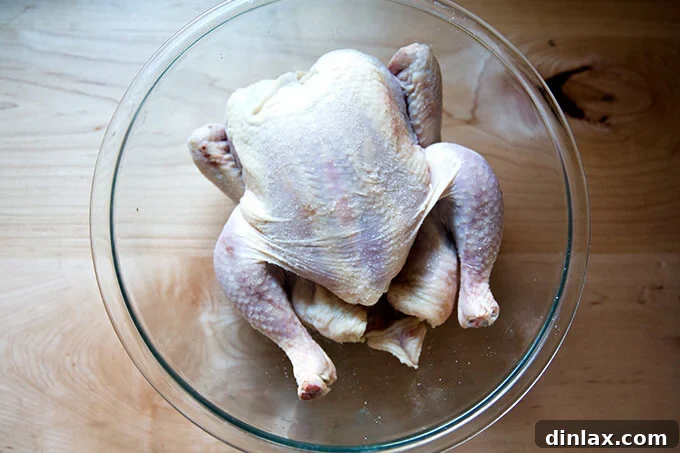
Achieving roast chicken perfection begins long before it ever enters the oven. The cornerstone of this method is the advance salting, which acts as a dry brine, transforming the bird’s texture and flavor. For a typical 3-4 pound chicken, you’ll need approximately 1 teaspoon of kosher salt per pound. This precise measurement ensures optimal seasoning without over-salting. Thoroughly rub the kosher salt all over the chicken, both inside the cavity and across its exterior. Once seasoned, place the chicken in a large bowl, cover it, and refrigerate for a minimum of 24 hours, or up to two days. This crucial resting period allows the salt to work its magic, drawing out moisture and then reabsorbing it, creating a naturally tender and juicy bird. On roasting day, try to remove the chicken from the refrigerator about an hour before cooking to allow it to come closer to room temperature for more even cooking.
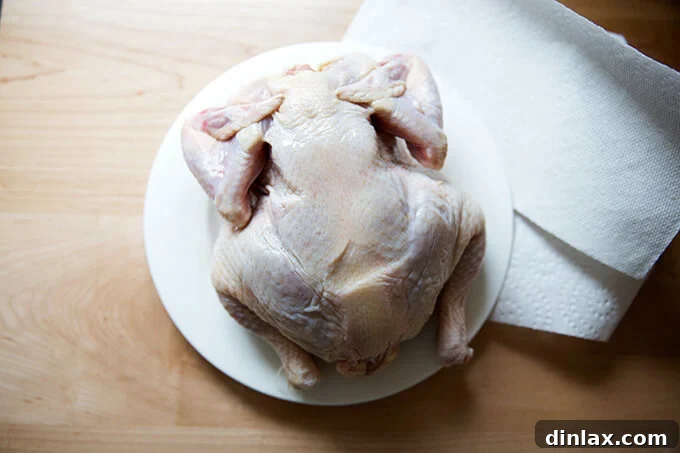
The next critical step on your roasting day is ensuring the chicken’s skin is bone-dry. Vigorously pat the entire surface of the chicken, inside and out, with paper towels until absolutely no moisture remains. This step is non-negotiable for achieving that coveted, shattering crispy skin. Any residual moisture will steam the skin instead of allowing it to crisp up. While optional, a light seasoning of freshly cracked black pepper can be added at this stage, or reserved for after roasting.
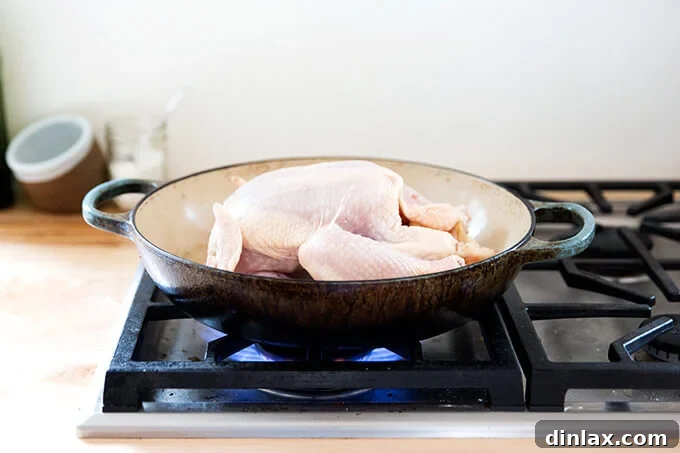
Preheat your oven to a high temperature, ideally 475°F (245°C). Select a heavy, oven-safe skillet – cast iron is excellent for this. Place the empty skillet over medium heat on your stovetop for approximately 5 minutes until it’s very hot. A hot pan is essential for creating an immediate sizzle and crisp crust on the chicken’s skin. Carefully place the thoroughly dried chicken, breast-side up, into the preheated skillet. You should hear a distinct sizzle as the chicken makes contact with the hot surface.
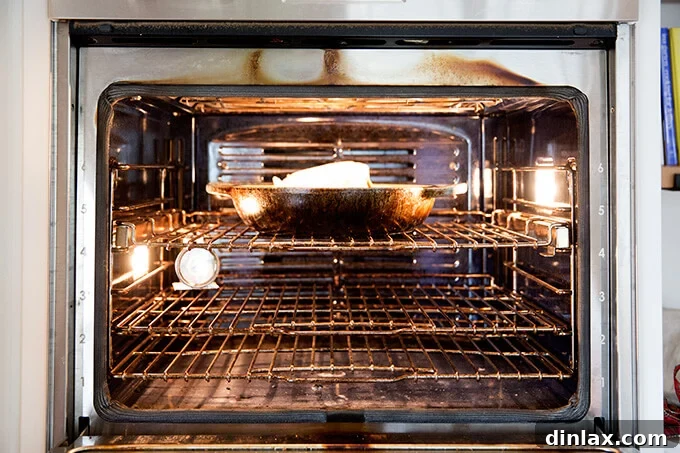
Immediately transfer the skillet with the chicken to the preheated oven. Allow the chicken to roast undisturbed for 25 minutes. This initial high-heat blast helps to render the fat and begin the crisping process of the skin, while ensuring the internal temperature starts to rise quickly.
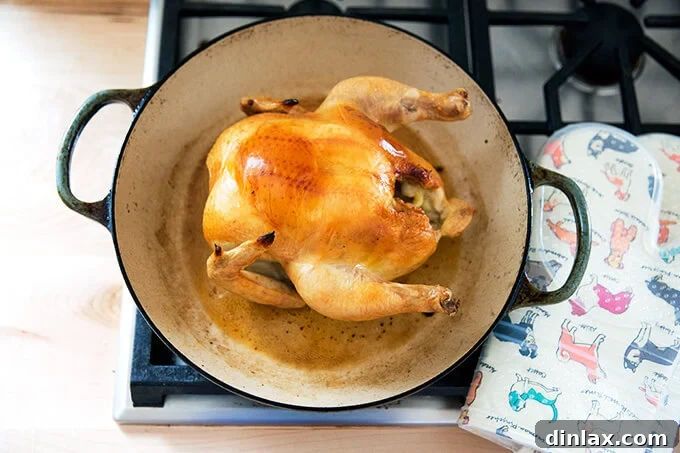
After the initial 25 minutes, carefully remove the skillet from the oven. Using tongs or oven mitts, gently flip the chicken over so it is now breast-side down. The pre-salting and dry patting should prevent the skin from sticking to the pan. Return the skillet to the oven and continue roasting for another 10 minutes. This step ensures that the thighs and darker meat cook more evenly and the back skin gets its share of crisping.
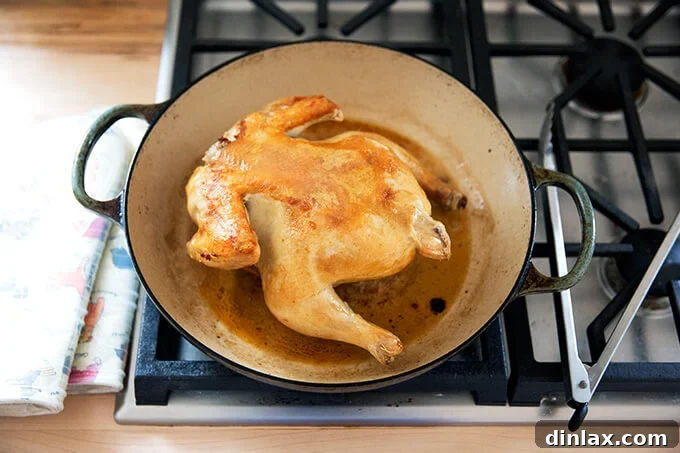
Once the 10 minutes are up, remove the chicken from the oven again. Flip it back over to its original breast-side up position. This final orientation allows the breast skin to re-crisp and achieve a beautiful golden hue. Continue roasting for another 5 to 10 minutes. At this point, the chicken should be nearing its final internal temperature. To ensure perfect doneness, use an instant-read thermometer inserted into the thickest part of the thigh, avoiding the bone. The temperature should register around 165°F (74°C). If it hasn’t reached this temperature, continue roasting for a few more minutes, checking frequently.
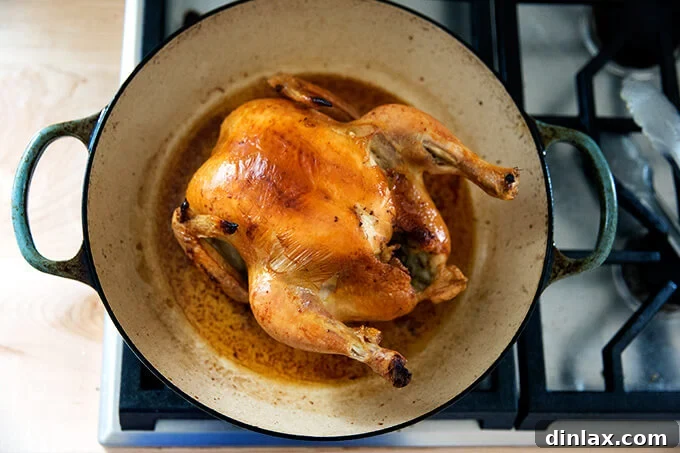
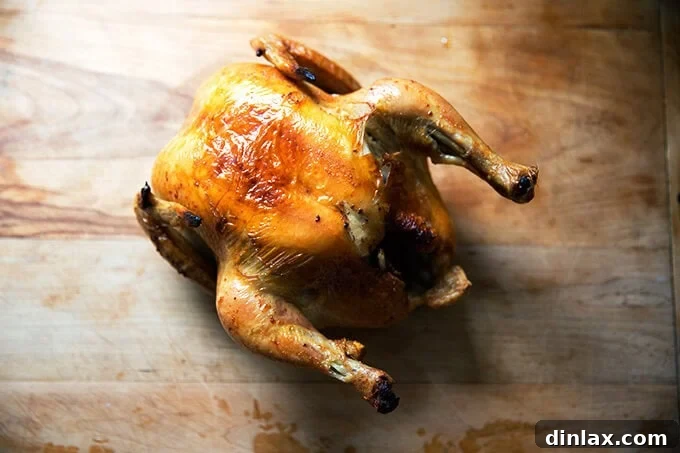
Once cooked to perfection, remove the chicken from the oven and turn off the heat. Transfer the chicken from the hot roasting pan to a clean cutting board or plate. It’s crucial to let the chicken rest for at least 15 minutes before carving. This resting period allows the juices, which have been driven to the center of the bird during cooking, to redistribute throughout the meat. Carving too early will result in a loss of these precious juices, leading to drier meat.
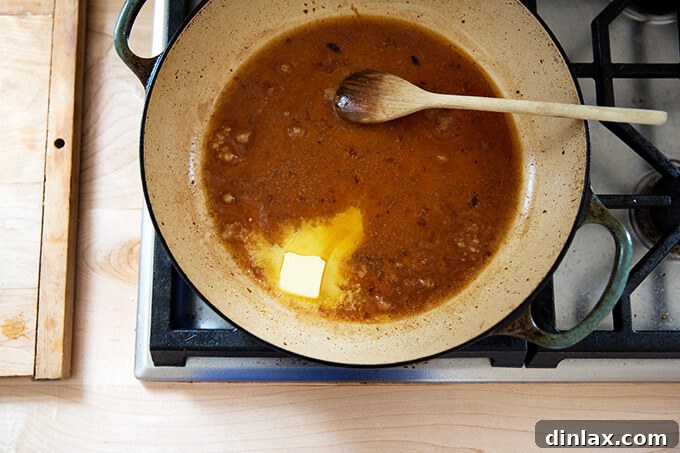
While the chicken is resting, don’t let those flavorful pan drippings go to waste! You can quickly prepare a simple yet delicious pan sauce. Return the hot skillet (with the drippings) to the stovetop over medium-low heat. Add about a tablespoon or two of water, chicken stock, or even white wine to deglaze the pan. Use a wooden spoon to scrape up any browned bits stuck to the bottom of the pan – these are packed with flavor. For added richness and silkiness, swirl in a tablespoon or so of cold butter. A squeeze of fresh lemon juice can brighten the flavors and cut through the richness, if desired. Taste and adjust seasoning as needed. This homemade sauce will beautifully complement your roasted chicken.
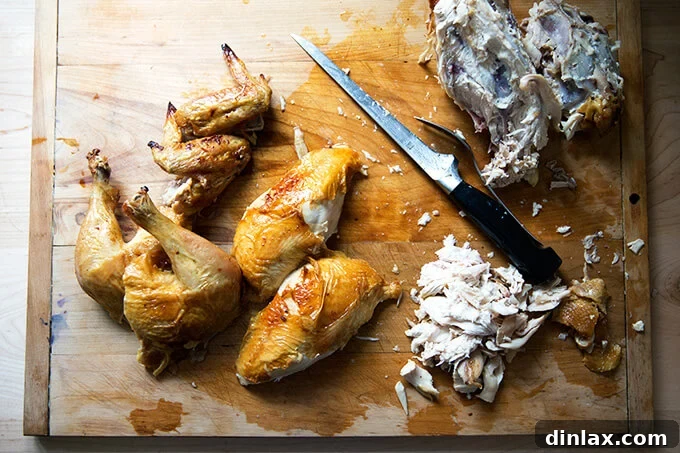
After the resting period, it’s time to carve the chicken. Use a sharp carving knife and fork to separate the legs and thighs, then the wings, and finally slice the breast meat. Arrange the carved pieces attractively on a platter, ready to be served with the delicious pan sauce.
Maximizing Your Roast: Homemade Chicken Stock and Leftover Creations
One of the greatest advantages of roasting a whole chicken is the opportunity to create incredible homemade chicken stock from the carcass. This golden elixir is far superior to store-bought versions, offering a depth of flavor that enhances countless dishes. To begin, strip any remaining meat from the bones – don’t forget the tender bits around the backbone and breast. Set this meat aside for future meals. Place all the bones, including the carcass, in a 4-quart (or larger) pot. Cover completely with cold water. For extra flavor, you can add aromatic vegetables such as a chopped onion, a few celery stalks, and a carrot, along with a bay leaf and a few peppercorns. Bring the pot to a gentle simmer over medium heat, then reduce the heat to low, cover partially, and let it simmer slowly for 2 to 3 hours. Avoid boiling vigorously, as this can make the stock cloudy. Skim off any foam that rises to the surface during the first hour of simmering.
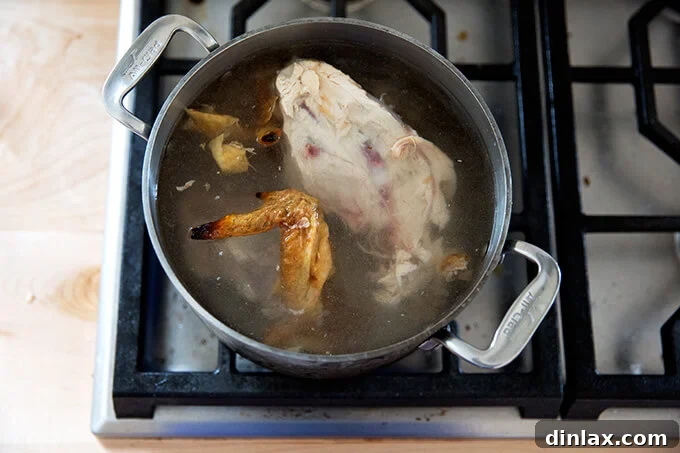
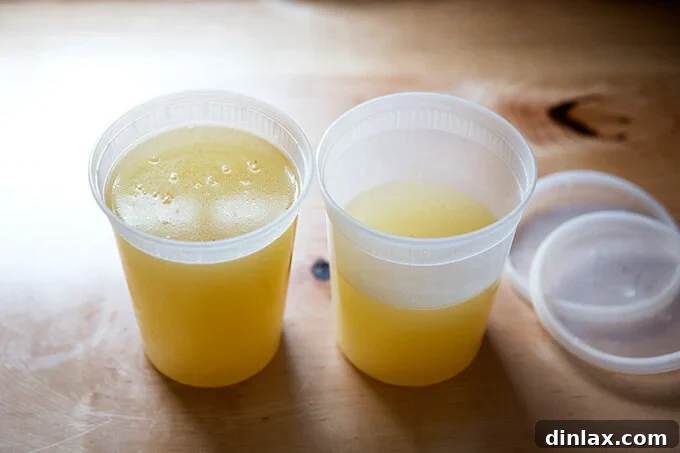
Once the stock has simmered, turn off the heat and allow it to cool slightly. Carefully strain the stock through a fine-mesh sieve into a large bowl, discarding the bones and vegetables. For an even clearer stock, you can line the sieve with cheesecloth. Once strained, let the stock cool completely to room temperature before transferring it to airtight containers, such as quart-sized jars or freezer-safe bags. Homemade stock is incredibly versatile; use it as a base for soups, sauces, gravies, or to cook grains like rice and quinoa. You should yield approximately 1.5 to 2 quarts of rich, flavorful stock from one chicken carcass.
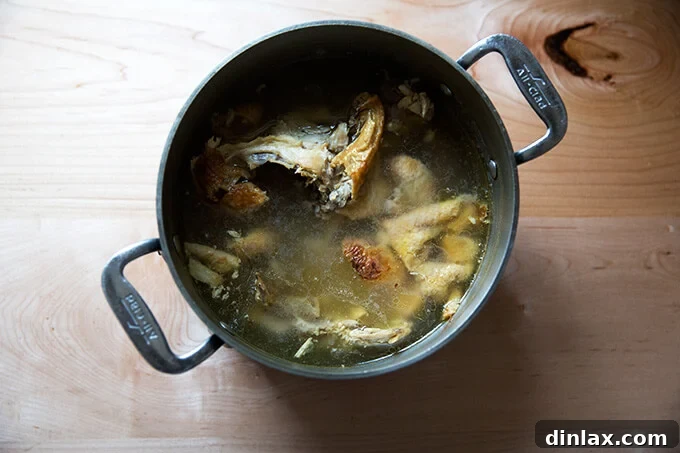
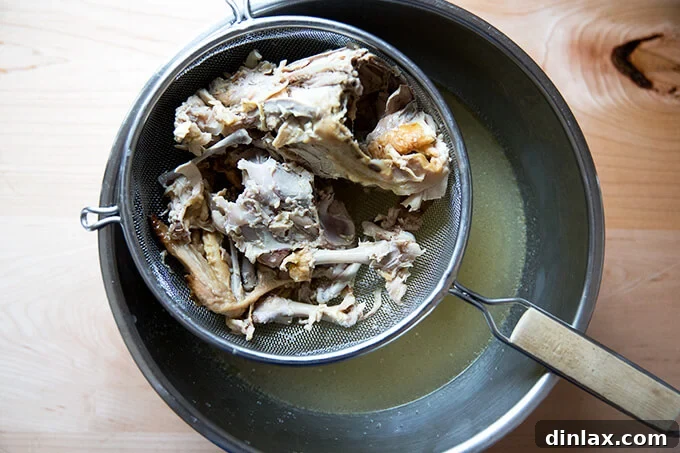
Store your freshly made stock in the refrigerator for up to a week, or freeze it for up to 6 months for longer-term storage. Freezing in smaller portions (e.g., 1-cup increments in ice cube trays or small containers) makes it easy to thaw just the amount you need for various recipes.
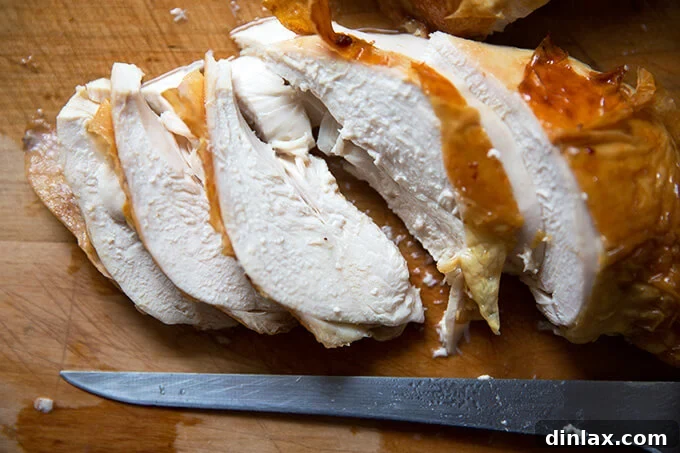
As you carve the chicken, you’ll be able to appreciate the incredible juiciness that this salting method imparts. Even the often drier breast meat will be succulent and tender, a testament to the power of proper preparation.
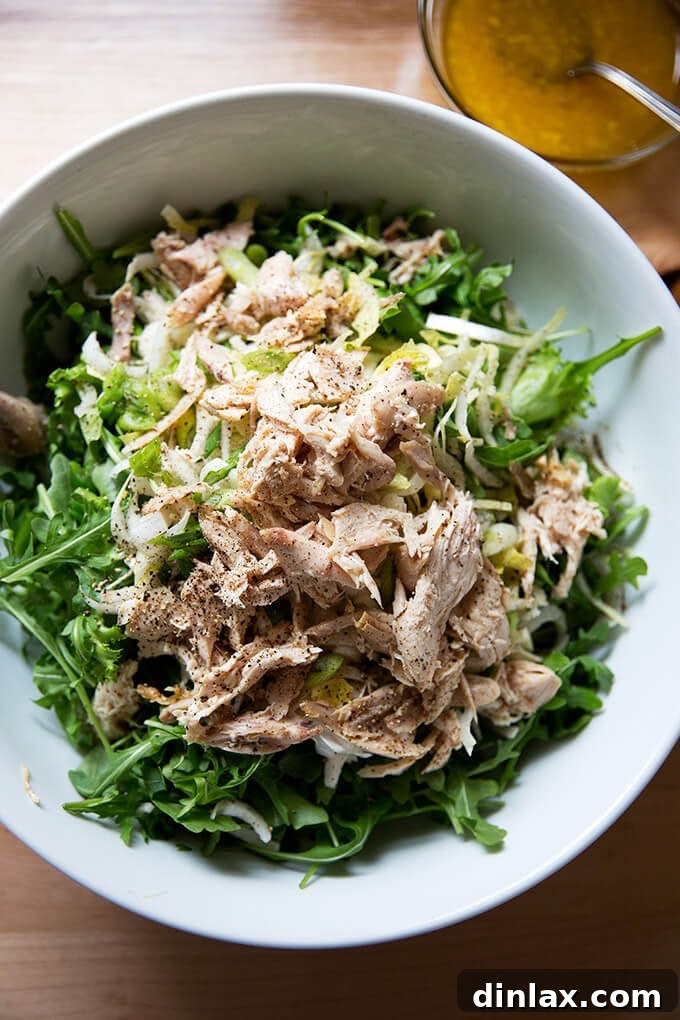
Beyond the main meal and stock, any leftover roast chicken meat is a treasure trove for quick and delicious subsequent meals. Flaked or diced, it can be the star of a vibrant, fresh salad. Combine it with crisp greens, a light vinaigrette, and your favorite vegetables for a satisfying lunch or light dinner.
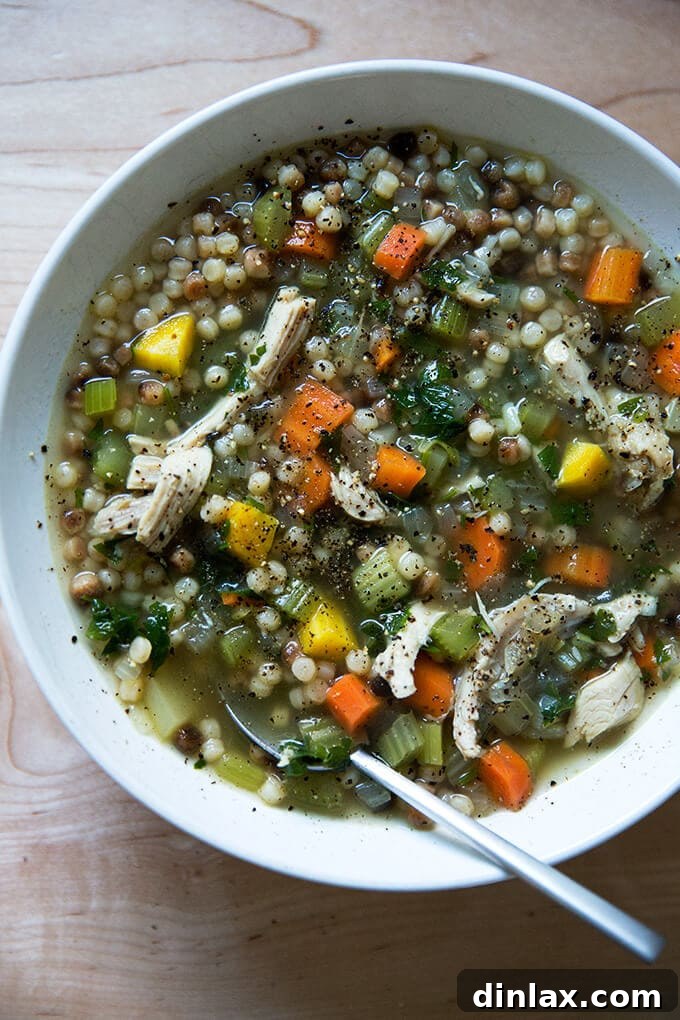
Or, transform it into a comforting homemade chicken soup. Combine your freshly made chicken stock with some leftover chicken, your favorite noodles or pasta, and a medley of vegetables for a nourishing and easy meal that tastes even better the next day.
Print Recipe
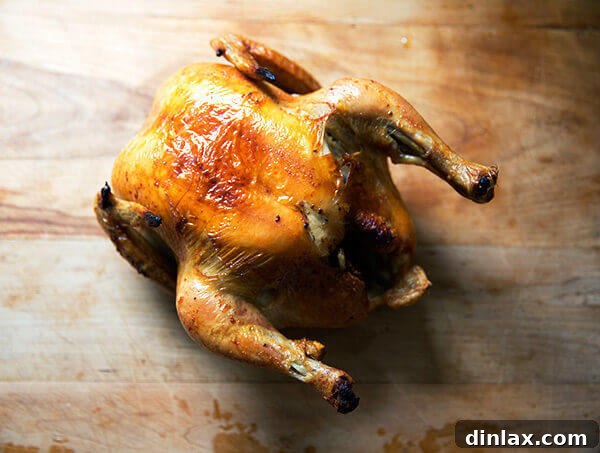
Perfect Roast Chicken (Juicy! Crisp! Tasty!)
Rating: ★★★★★ (5 out of 5 stars from 16 reviews)
- Author: Alexandra Stafford
- Total Time: 50 minutes
- Yield: 4 to 6 servings
Description
The secret to making a roasted chicken with crisp skin and super flavorful, juicy meat is to salt it a day in advance. This recipe calls for just a handful of ingredients and truly produces the best roast chicken.
Notes:
Adapted from The Zuni Cafe Cookbook
The key is to salt ahead of time. Two to three hours ahead of time is great; one to two days is even better. A good rule of thumb: use 1 teaspoon kosher salt (I use Diamond Crystal) per pound of chicken.
I store the salted chicken in the fridge in a 4-qt Pyrex bowl that has a lid. When I’m ready to roast, I’ll try to pull the chicken out an hour beforehand, and I pat it very dry with paper towels.
Ingredients
- One chicken, 3 to 4 lbs.
- kosher salt
- freshly cracked black pepper
- pad of butter, optional
- squeeze of lemon, optional
Instructions
- A day before (or at least 2 to 3 hours before) you plan on roasting the chicken place it in a large bowl (4-qt or so). Season it all over with kosher salt using about 1 teaspoon for every pound of meat. Cover the bowl and stick it in the fridge. Remove bowl from fridge an hour (if possible) before you plan on roasting the chicken.
- Preheat the oven to 475°F. Choose a shallow oven-safe skillet. Preheat the pan over medium heat for about five minutes. Wipe the chicken dry (very dry!). Season all over with pepper if you wish. Set it breast side up in the pan. It should sizzle.
- Place the chicken in the pan in the center of the oven for 25 minutes. Turn the bird over — drying the bird and preheating the pan should keep the skin from sticking. Roast for another 10 minutes, then flip back over to re-crisp the breast skin, another 5 to 10 minutes. If you have an instant-read thermometer, it should register about 165ºF.
- Remove the chicken from the oven and turn off the heat. Lift the chicken from the roasting pan and set on a plate. Add about a tablespoon or two of water to the hot pan and swirl it. Slash the stretched skin between the thighs and breasts of the chicken, then tilt the bird and plate over the roasting pan to drain the juice into the drippings. Add a pad (a tablespoon or so) of butter to the pan, if you wish. Using a wooden spoon, scrape up any chicken bits stuck to the pan. Taste the sauce. Add a squeeze of lemon if you wish.
- Let the chicken rest 15 minutes before carving it. Serve with the sauce on the side.
- To make a stock with the carcass, remove any remaining meat from the bones. Be sure to really get into the breast and backbone and extract any meat. Save this meat for a salad or soup. Place all of the bones in a 4-qt pot and cover with water. Simmer slowly for about 2 to 3 hours. Strain into a bowl. Transfer stock to quart containers and store in the fridge for a week or the freezer for up to 6 months. You should have about 1.5 to 2 quarts of stock.
- Prep Time: 5 minutes
- Cook Time: 45 minutes
- Category: Dinner
- Method: Baked
- Cuisine: American