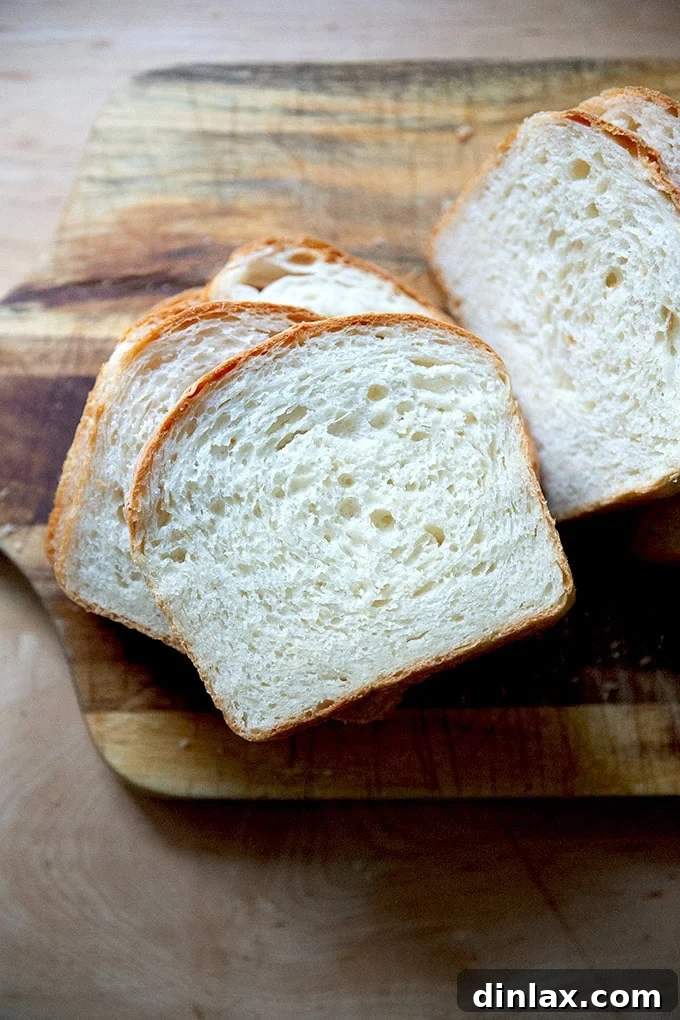
Welcome to the ultimate guide for creating incredibly soft, homemade sandwich bread that requires no kneading and uses only six simple ingredients. Imagine slicing into a warm, fragrant loaf, knowing you made it yourself with minimal effort. This recipe is designed for everyone, from novice bakers to seasoned pros, proving that delicious, healthy bread is always within reach. If you can whisk and stir, you can bake this bread – it’s that straightforward.
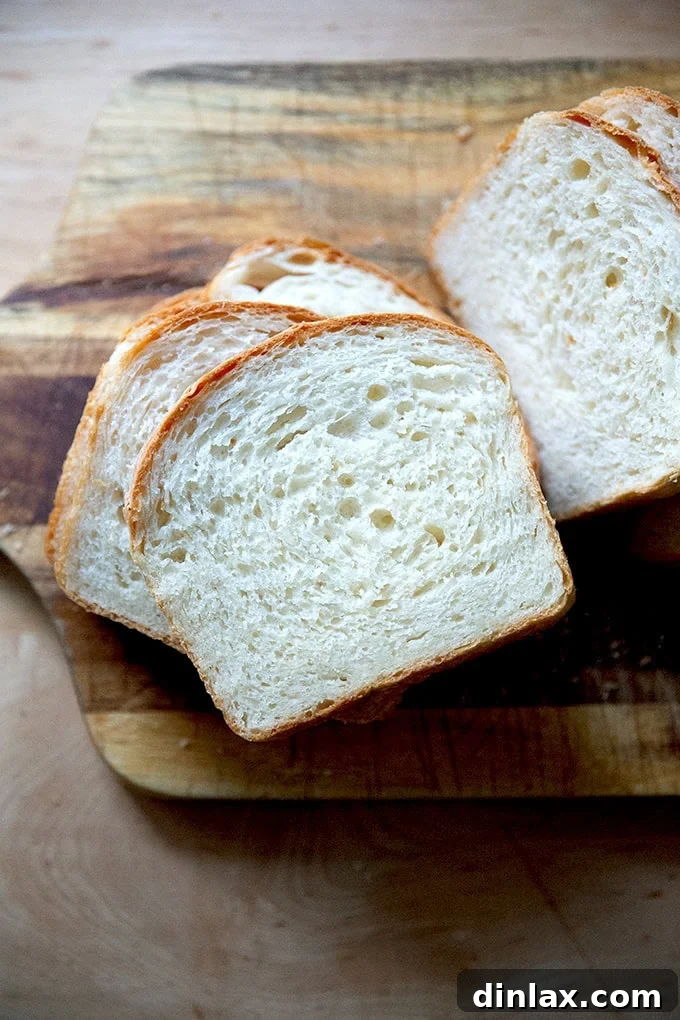
For years, my simple sourdough sandwich bread has been a cherished recipe. However, many of you requested a yeasted alternative – an equally delicious, soft, and easy-to-make option for your everyday sandwiches. The wait is over! This no-knead, six-ingredient recipe is the answer, designed to streamline your bread-making process without compromising on taste or texture. It requires only about five minutes of active preparation, making it perfect for busy schedules.
The journey to perfecting this recipe involved numerous trials and valuable feedback, particularly from my eldest daughter, who is a connoisseur of turkey sandwiches and isn’t shy about sharing her opinions. We started with the foundational bread components: flour, water, salt, and yeast. To achieve that desired softness for ideal sandwich bread, I initially incorporated olive oil. However, when the bread didn’t quite hold up until lunchtime, leading to somewhat crumbly sandwiches, I delved into extensive research.
My investigations led to several adjustments. First, I introduced honey for added moisture and flavor. Then, milk was added to the mix, further enhancing tenderness. After further testing, I decided to remove the honey, aiming for a less sweet, more versatile loaf. The final, most impactful change was swapping out the olive oil for melted butter. This proved to be the turning point. The combination of water and milk, alongside butter (and no sweetener), yielded a loaf that perfectly matched my vision: soft yet robust, well-seasoned, and distinctly savory – an ideal foundation for any sandwich filling. This evolution highlights the nuanced art of baking, where small adjustments can make a significant difference in the final product’s texture, flavor, and resilience.
One of the beauties of this recipe is its flexibility in timing. You can choose a quicker bake or a longer, slower rise, depending on your schedule. I typically opt for 1/2 teaspoon (2 grams) of instant yeast, allowing for a leisurely overnight rise. This method not only deepens the flavor profile but also fits seamlessly into my routine. However, if you’re pressed for time, the recipe includes notes on how to accelerate the process by adjusting the yeast quantity. This adaptability makes homemade bread a practical reality for any day of the week, promising a delightful aroma that fills your kitchen and a fresh loaf ready for countless culinary creations.
Baking bread at home is more than just making food; it’s an experience that offers unparalleled satisfaction. The aroma of freshly baked bread is incredibly comforting, transforming any kitchen into a cozy haven. Beyond the sensory pleasure, making your own bread gives you complete control over the ingredients. You can avoid unnecessary additives, preservatives, and excessive sugars often found in store-bought options, ensuring a healthier loaf for your family. This control translates into peace of mind, knowing exactly what goes into every slice. Moreover, it’s often more economical than purchasing artisanal breads regularly, especially if you enjoy having fresh bread frequently. This recipe demystifies bread baking, proving that you don’t need specialized equipment or extensive experience to produce a truly exceptional loaf.
The “no-knead” method is a game-changer, especially for those who find traditional bread making daunting. The magic lies in extended fermentation. By allowing the dough to rest for several hours (or overnight), the gluten naturally develops without the need for intense manual kneading. This process, known as autolysis, allows the flour to fully hydrate and the gluten proteins to align themselves, creating a strong yet elastic network. The result is a wonderfully airy crumb and a tender texture, all achieved with minimal effort from the baker. This method is a testament to the fact that sometimes, the best results come from letting time and nature do most of the work.
How to Make Soft Sandwich Bread: A Detailed Step-by-Step Guide
Embark on your bread-making journey by first gathering your six essential ingredients: bread flour, salt, instant yeast, water, milk (2% or whole), and melted butter. Each plays a crucial role in achieving the perfect texture and flavor. While bread flour is recommended for its higher protein content, yielding a chewier crumb, notes within the recipe card provide guidance on using other flours if preferred. This thoughtful selection of ingredients, combined with the no-knead technique, ensures a delightful baking experience from start to finish.
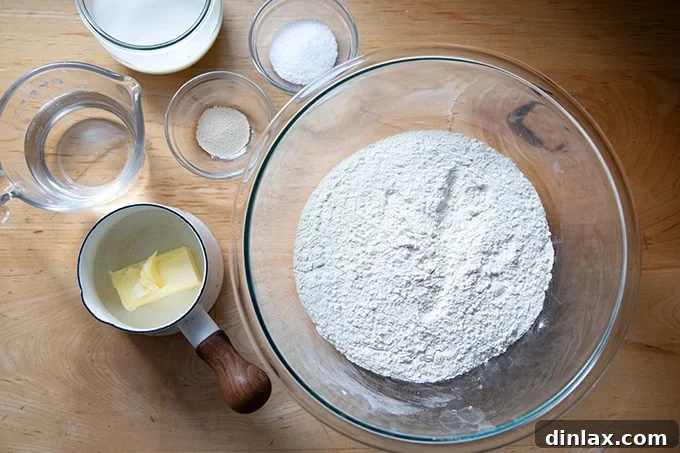
For precision, especially with smaller quantities like salt and yeast, a digital scale is invaluable. It ensures accuracy, which is key in baking. I highly recommend a dual-platform scale like the Ooni scale for its ability to measure both larger and smaller amounts with exceptional precision. While cup measurements are provided, using a scale will consistently yield the best results, making your bread-making experience even more reliable and rewarding.

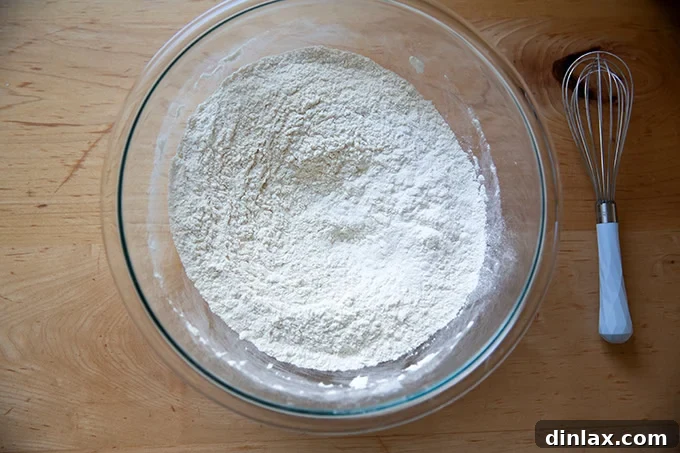
Begin by combining the dry ingredients. Place the measured bread flour, salt, and instant yeast into a large mixing bowl. This initial step is critical for ensuring that all the dry components are uniformly distributed before the wet ingredients are added, preventing pockets of unmixed yeast or salt that could affect the dough’s rise and flavor.
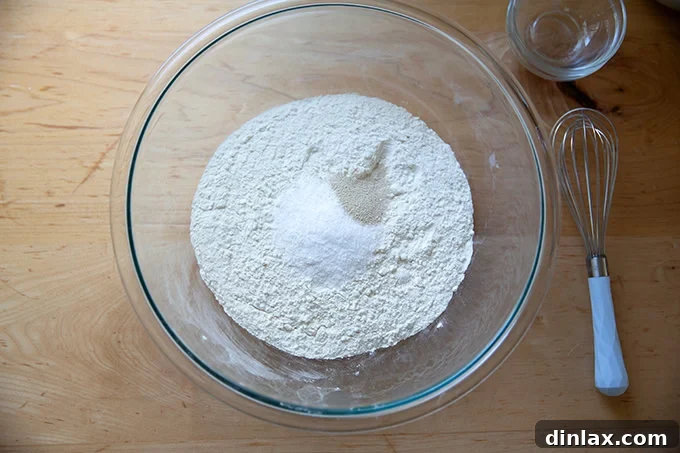
Using a whisk, gently incorporate the flour, salt, and yeast until they are thoroughly combined. This ensures that the leavening agent (yeast) and seasoning (salt) are evenly dispersed throughout the flour, leading to a consistent rise and flavor in your finished bread. This simple action is key to building a harmonious dough.
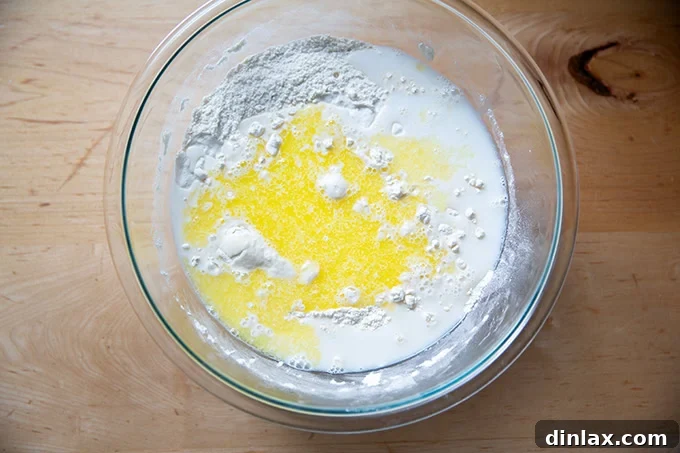
Next, introduce the liquid components: water, milk, and melted butter. Pour them directly into the bowl with the whisked dry ingredients. The combination of water and milk contributes to the dough’s hydration and the bread’s soft, tender crumb, while melted butter adds richness and further enhances the texture, making this sandwich bread truly exceptional.
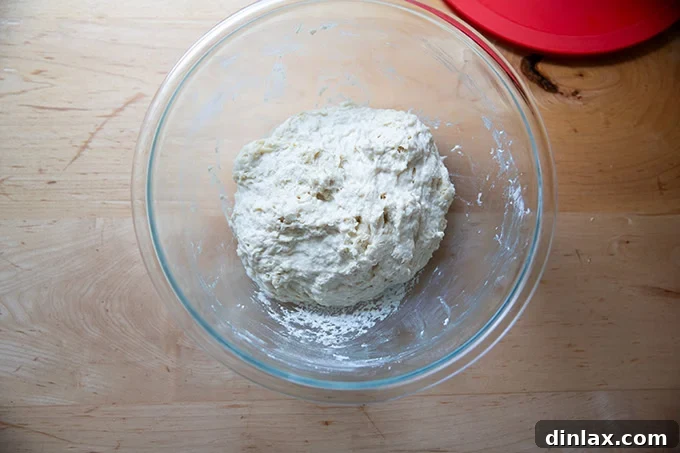
Using a sturdy spatula, stir the ingredients together until they form a shaggy, sticky dough ball. It’s important to note that this is an 80% hydration dough, meaning it will naturally be quite sticky. This high hydration is intentional, contributing significantly to the bread’s characteristic softness and open crumb structure. Don’t be alarmed by the stickiness; it’s a sign that you’re on the right track towards a wonderfully tender loaf.
Once mixed, cover the bowl and allow the dough to rest for at least 30 minutes, or up to an hour. This initial rest period, often called autolysis, allows the flour to fully hydrate and the gluten to begin developing naturally without any manual kneading. After this rest, use a wet hand to perform a series of stretches and folds. This technique is a gentle alternative to traditional kneading, building strength and structure in the dough while keeping it soft. It’s mesmerizing to watch the dough transform under your touch, becoming more cohesive and elastic with each fold. For visual guidance, refer to the instructional video provided, demonstrating the proper technique.
After completing the stretch and fold sequence, you’ll notice a remarkable transformation. The dough, which was initially sticky and shaggy, will now appear smooth, elastic, and much more cohesive. This indicates that the gluten structure has developed beautifully, laying the foundation for a bread with excellent texture and rise. This stage is a rewarding moment in the no-knead process, showcasing the power of gentle manipulation and rest.
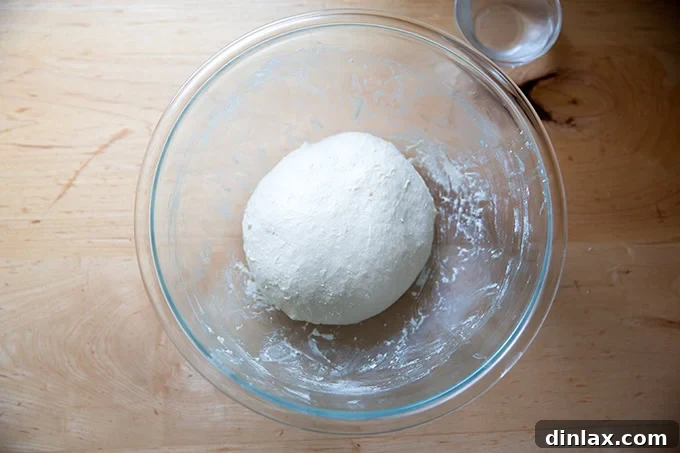
To prepare for its first rise, lightly drizzle the dough with olive oil and gently rub it to coat the entire surface. This prevents a skin from forming and keeps the dough pliable. Cover the bowl securely, either with plastic wrap, a damp kitchen towel, or a reusable cover, creating a humid environment for the yeast to work its magic. The dough is now ready for its crucial bulk fermentation stage.
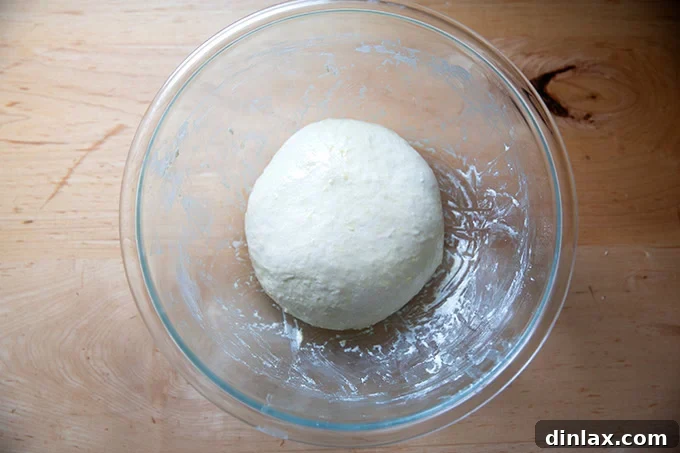
Allow the dough to rise at room temperature until it has visibly doubled in volume. This could take anywhere from 2-3 hours with more yeast to 8-10 hours for a slow overnight rise with less yeast. The duration depends largely on the amount of yeast used and the ambient temperature of your kitchen. A warm, draft-free spot is ideal for consistent rising. This rise is essential for developing the bread’s flavor and creating its light, airy texture.
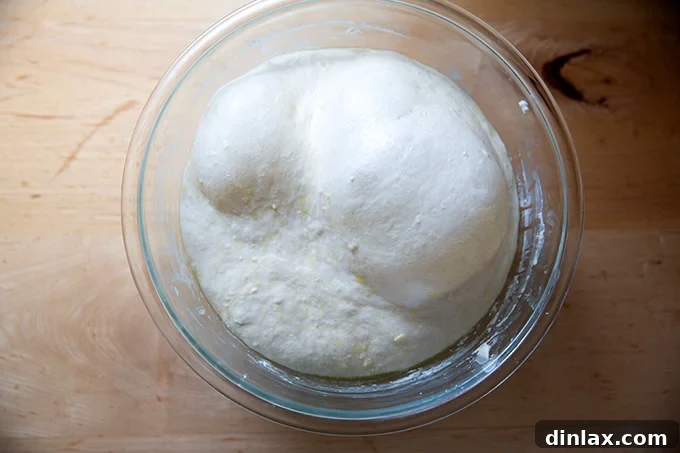
Once doubled, gently deflate the dough. This step, known as “punching down” or “degassing,” releases the large pockets of carbon dioxide produced during fermentation, allowing for a more even texture and preventing overly large air bubbles in the final loaf. You can do this by gently pressing down with your hand or using a flexible bench scraper.
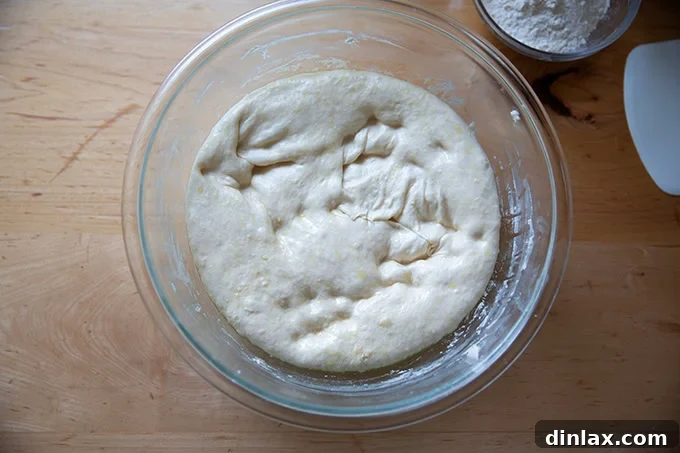
Carefully turn the deflated dough out onto a lightly floured work surface. A gentle dusting of flour will prevent sticking without making the dough tough. This prepared surface gives you ample space to begin the shaping process, transforming the amorphous dough into a neat rectangle, ready to be coiled into a perfect loaf.
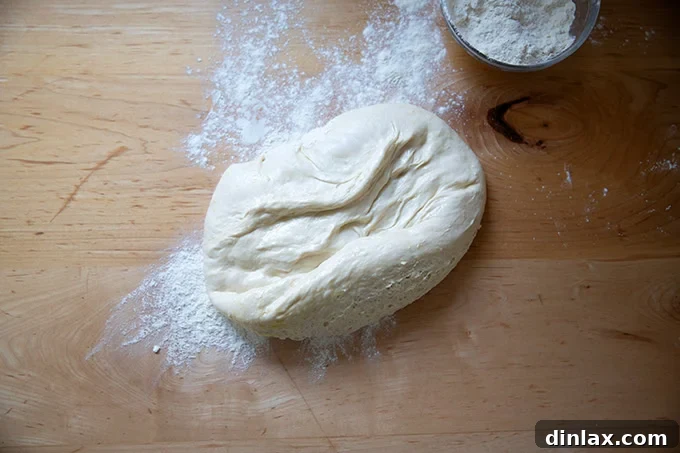
Pat the dough into a rectangle, aiming for a width of approximately 8 inches. The length is less critical, as it will be rolled, but maintaining the 8-inch width is important because it ensures the coiled dough will fit perfectly into a standard loaf pan. This careful shaping helps create a uniform crumb and an aesthetically pleasing loaf.
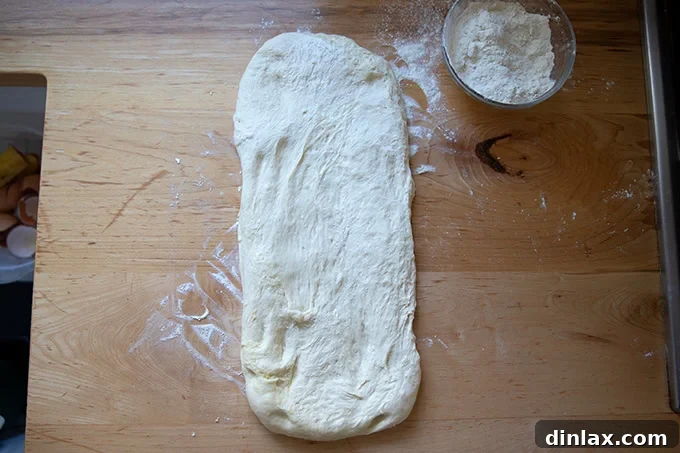
Now, carefully coil the dough into a tight log. Start from one of the shorter ends of your 8-inch wide rectangle and roll it up firmly, sealing the seam at the bottom. This coiling technique creates layers within the bread, contributing to its soft texture and even structure, and ensures a uniform loaf that bakes beautifully. For a clear demonstration of this shaping method, please refer to the accompanying video.
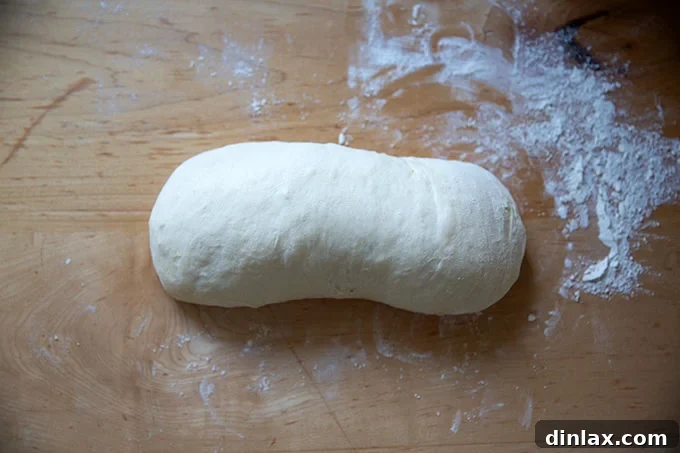
Achieving a perfectly shaped loaf is easier with a visual aid. Watch this video to see the coiling technique in action, ensuring your dough is rolled tightly and correctly for optimal results. This step is key to creating that desirable uniform texture and high rise in your finished sandwich bread.
Carefully transfer the coiled dough log into a greased loaf pan. Ensuring the pan is adequately greased, either with softened butter or olive oil, is crucial for preventing sticking and allowing for easy removal after baking. This step sets the stage for the dough’s final rise, where it will expand to fill the pan and crown its rim, indicating it’s ready for the oven.
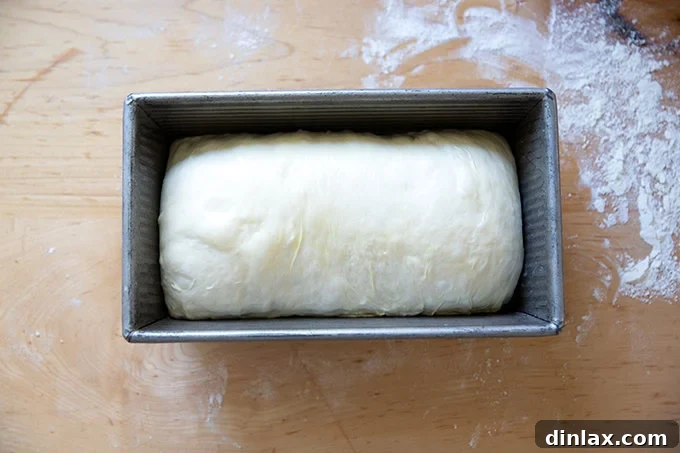
Allow the dough to undergo its final proof, or second rise, until it visibly crowns the rim of the loaf pan. This means the dough should extend slightly above the edges of the pan, signifying that it has developed sufficient volume and is ready for baking. This stage is vital for a light, airy loaf, so be patient and let the dough reach its peak. Once it does, your oven should be preheated and ready to go.
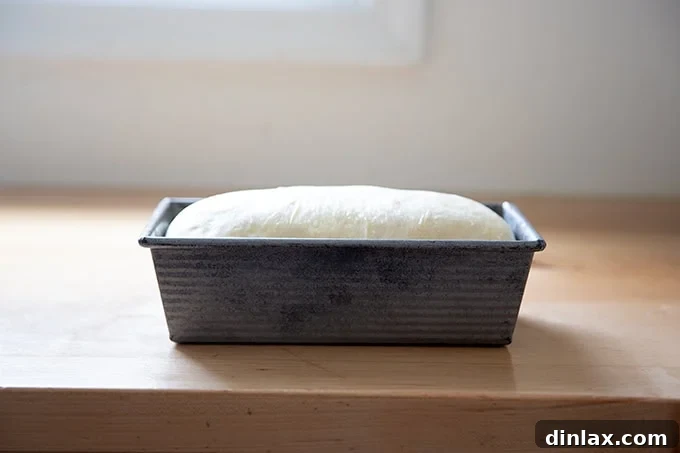
Bake the bread in a preheated oven at 375ºF (190ºC) for approximately 45 minutes. The baking time may vary slightly depending on your oven, so keep an eye on the loaf. It should develop a beautiful golden-brown crust and sound hollow when tapped on the bottom, indicating it’s fully cooked through. This baking process transforms the dough into a wonderfully aromatic and visually appealing loaf.
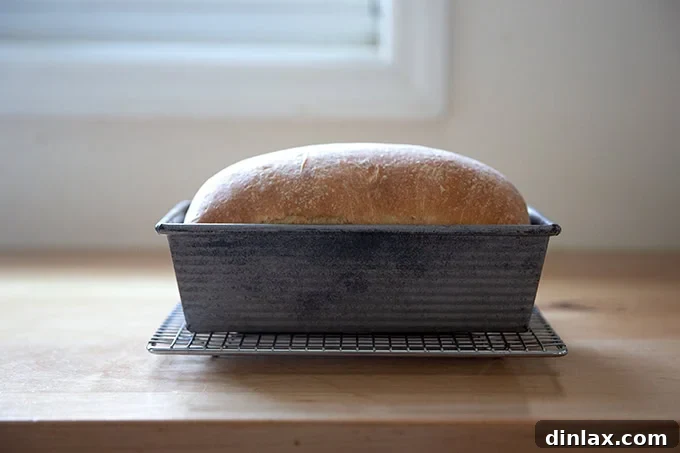
Once baked, immediately turn the loaf out of its pan onto a cooling rack. This prevents the bottom from becoming soggy by allowing air to circulate around the entire loaf. It’s crucial to let the bread cool completely before slicing. While tempting to cut into a warm loaf, cooling allows the internal structure to set and steam to dissipate, resulting in cleaner, more uniform slices and a much better texture. Patience here truly pays off, ensuring every slice is perfect.
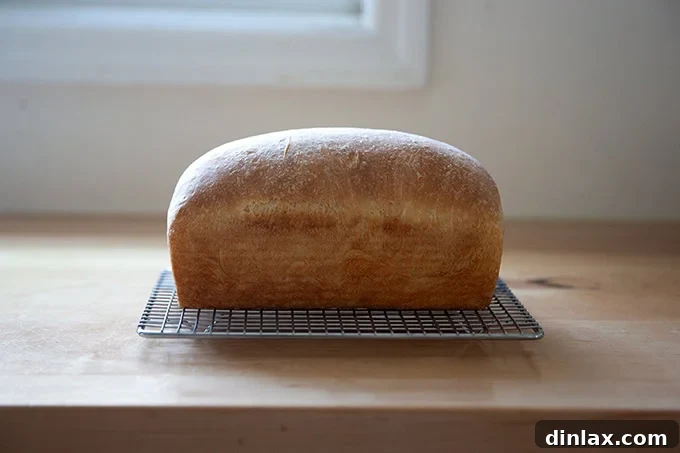
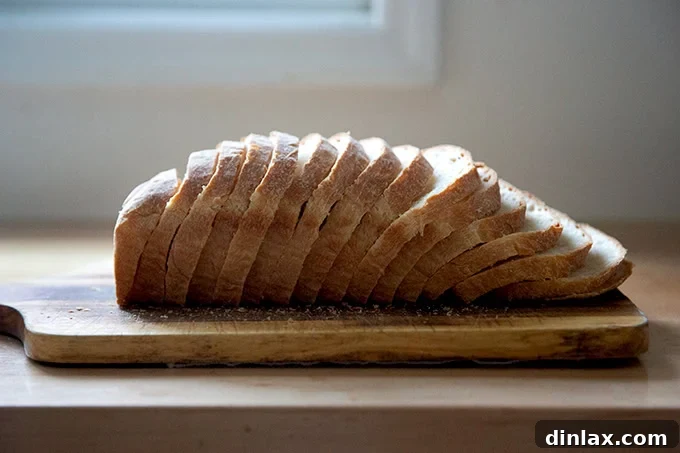
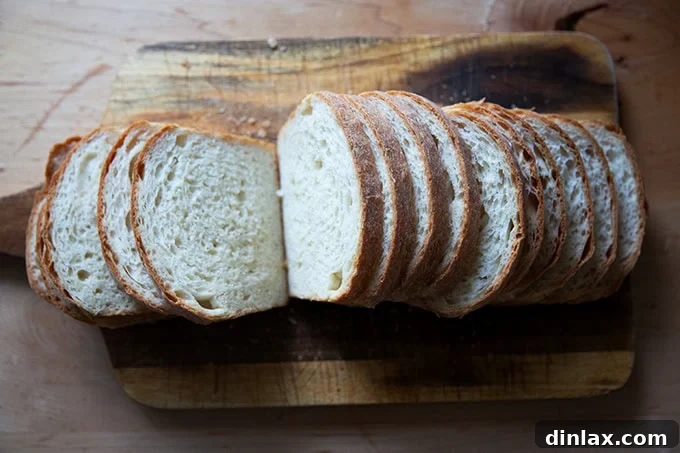
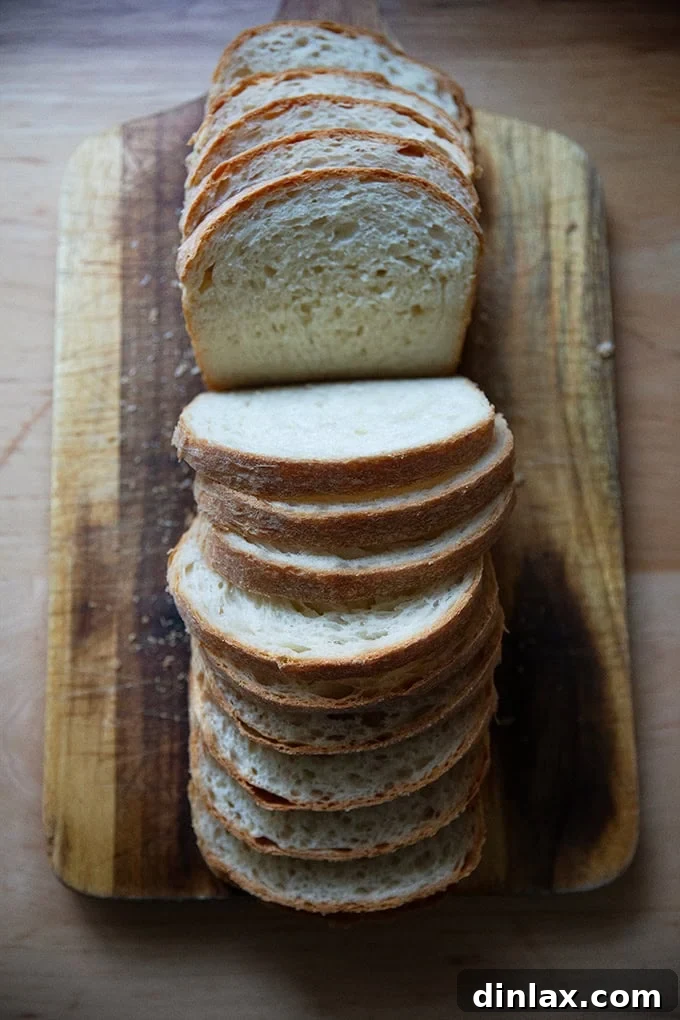
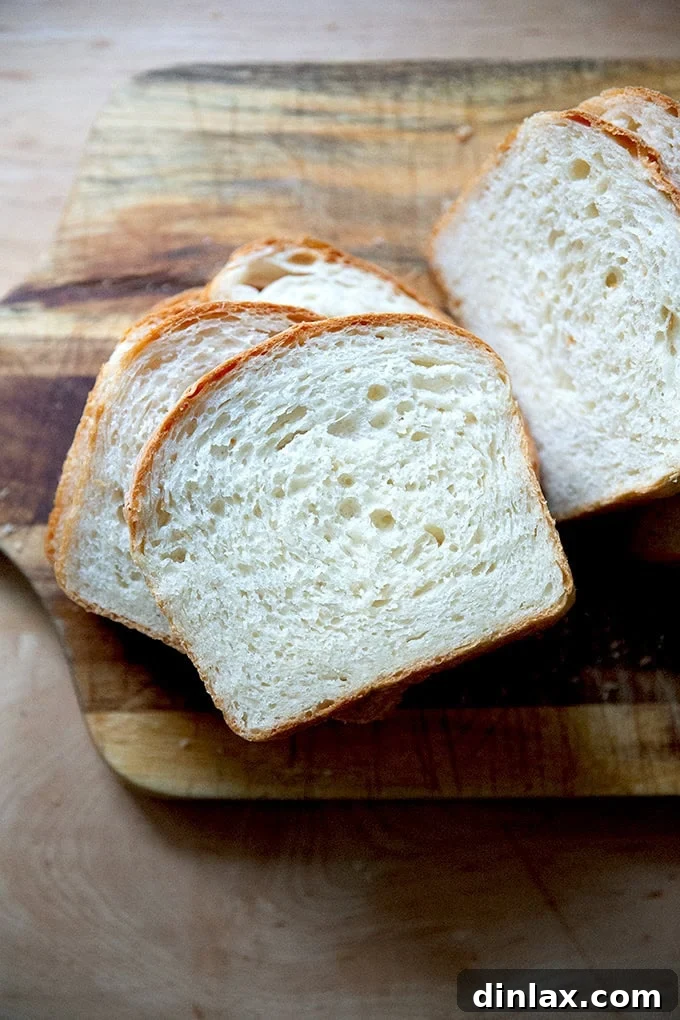
Having this incredibly soft, fresh homemade sandwich bread on hand is truly a treat. It elevates any sandwich, from a simple grilled cheese to a gourmet club. The versatility of this loaf extends beyond sandwiches – it’s perfect for toast, garlic bread, or even just enjoyed with a smear of butter. Its superior texture and flavor will make you rethink ever buying store-bought bread again.
Print Recipe
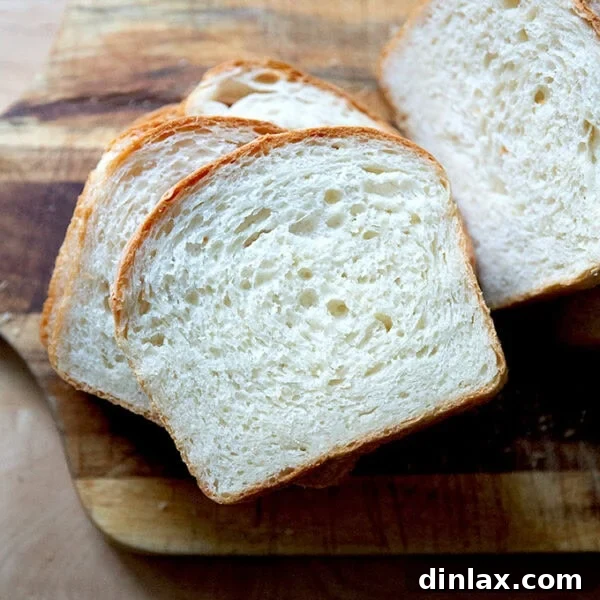
Simple Soft Sandwich Bread (6-Ingredients, No-Knead)
5 Stars 4 Stars 3 Stars 2 Stars 1 Star
5 from 90 reviews
Author: Alexandra Stafford
Total Time: 5 to 24 hours
Yield: 1 loaf 1x
Description
This simple, no-knead soft sandwich bread recipe, made with just 6 ingredients, is a game-changer for homemade bread enthusiasts. It’s incredibly easy to make, requires no mixer, and yields a beautifully soft yet sturdy loaf perfect for all your sandwich needs. If you can whisk and stir, you can create this culinary delight!
Baker’s Notes for Success:
- As always in baking, precision is paramount. For the most consistent and best results, we highly recommend measuring all ingredients by weight using a digital kitchen scale. Our preferred choice is this Ooni dual-platform scale, which offers exceptional accuracy, especially when measuring smaller quantities of vital ingredients like salt and yeast.
- Loaf Pan Selection: A 9×5-inch loaf pan is the ideal size for this recipe, ensuring the bread rises and bakes evenly to achieve the perfect shape. For reliable non-stick performance and excellent heat distribution, we particularly love this USA Pan.
- Salt Considerations: The general rule of thumb for bread baking dictates that salt should constitute 2 to 3% of the flour’s weight. For this recipe, that translates to 10 to 15 grams. I personally use 15 grams of salt, finding it perfectly seasons the bread without being overly salty, but individual taste preferences vary. Adjust the amount to suit your own palate. I consistently use Diamond Crystal kosher salt, but feel free to use your preferred fine sea salt or any other type.
- Flour Choices: The majority of our recipe development and testing was conducted using King Arthur Bread Flour, known for its high protein content which contributes to a strong gluten structure and a delightful chew. We have also achieved excellent results with 100% Petra 0102 and 100% Cairnspring Mills Glacier Peak bread flour. Experimenting with different bread flours can subtly alter the texture and flavor, adding another layer to your baking adventure.
- Yeast Type: SAF instant yeast is my consistent preference due to its reliability and ease of use, as it can be added directly to dry ingredients without pre-hydrating. If you’re using active dry yeast instead, remember to “bloom” it first by sprinkling it over the water (or a small portion of it) and letting it sit for about 15 minutes until foamy, before proceeding with the rest of the recipe.
Understanding Your Timing Options:
- This recipe offers flexibility to accommodate your schedule. For a deep, complex flavor and a more hands-off approach, you can opt for a long, slow rise by using 2 grams (1/2 teaspoon) of instant yeast. Alternatively, if you need a quicker turnaround, increase the yeast to 8 grams (2 teaspoons).
- For the Long, Slow Rise (2 grams yeast): The initial rise (bulk fermentation) will typically take 8 to 10 hours. This is my preferred method; I often mix the dough in the evening and let it rise overnight, allowing it to be ready for shaping and baking the following morning. The second rise (final proof) in the loaf pan will then take approximately 2 to 3 hours. Always wait until the dough has proudly crowned the rim of the pan before advancing to baking.
- For the Faster Rise (8 grams yeast): If time is of the essence, using 8 grams of yeast will significantly shorten the rising times. The first rise will be completed in about 2 to 3 hours, and the second rise in the pan will take just 1 to 2 hours. This option is perfect when you crave fresh bread on short notice.
Ingredients
Please read all notes above before proceeding for best results:
- 500 grams (approximately 4 cups) bread flour, plus additional for dusting the work surface
- 2 to 8 grams (1/2 teaspoon to 2 teaspoons) instant yeast (adjust quantity based on desired rise time, see notes)
- 10 to 15 grams salt (adjust to your preference, see notes)
- 200 grams (approximately 3/4 cup + 1 tablespoon) cold or room temperature water
- 200 grams (approximately 3/4 cup + 1 tablespoon) milk, preferably 2% or whole milk for richness
- 57 grams (4 tablespoons) melted butter, salted or unsalted
- softened butter or olive oil for greasing the loaf pan
Instructions
- Prepare and Mix the Dough: In a generously sized mixing bowl, combine the bread flour, salt, and instant yeast with a whisk until they are thoroughly blended. This ensures even distribution for consistent fermentation. Next, add the measured water, milk, and melted butter. Using a sturdy spatula, stir the ingredients until they coalesce into a sticky, shaggy dough ball. It’s crucial to understand that this dough is designed to be at 80% hydration, meaning a sticky consistency upon mixing is absolutely correct and desired for the soft texture of the final bread. Cover the bowl loosely and allow the dough to rest for a minimum of 30 minutes, or up to an hour, for the initial autolysis.
- Perform Stretch and Folds: Prepare a small bowl of water to keep your hand wet during this process, which prevents sticking. Gently stretch and fold the dough by reaching under an edge, pulling it upwards, and folding it towards the center of the bowl. Rotate the bowl slightly and repeat this action with a new section of dough. Continue this stretching and folding process, moving around the entire circumference of the dough, for several rounds (typically 4-6 folds). As you work, you will feel the dough visibly transform from its initial shaggy, sticky state to a much smoother, more cohesive, and elastic mass. Don’t be concerned if you feel small bits of butter solidifying; this is normal and will integrate during the bake. Refer to the video guidance above for a visual demonstration of this technique.
- First Rise (Bulk Fermentation): After the stretch and folds, lightly drizzle the dough with a small amount of olive oil and gently rub it over the surface to prevent a dry skin from forming. Cover the bowl securely, ensuring an airtight seal. Let the dough rise at room temperature. The duration of this rise is dependent on the amount of yeast used: if you’re using 2 grams of yeast for a slow fermentation, expect it to take anywhere from 8 to 10 hours (ideal for an overnight rise). If opting for a faster process with 8 grams of yeast, the dough should double in volume within 2 to 3 hours. The dough is ready when it has noticeably doubled in size.
- Prepare Your Loaf Pan: Thoroughly grease a 9×5-inch loaf pan. For superior non-stick results, especially if you have concerns about sticking, softened butter is an excellent choice. Alternatively, you can brush the pan with 2 teaspoons of olive oil. If you are using a high-quality nonstick pan, such as a USA Pan, olive oil alone provides sufficient greasing. I personally find olive oil works beautifully and is my preferred method for ease.
- Shape and Coil the Dough: Gently deflate the risen dough using your hand or a flexible bench scraper, releasing the accumulated gases. Turn the dough out onto a lightly floured work surface. Carefully pat the dough into a rectangular shape, aiming for dimensions of approximately 8 inches wide by 16 inches long. While the exact length is flexible, it’s crucial to maintain the 8-inch width so the coiled dough fits snugly into your loaf pan without being squeezed. Starting from one of the shorter ends of the rectangle, firmly roll the dough into a tight coil. Once coiled, transfer it to your prepared loaf pan, ensuring the seam is facing down. Drizzle about 1 teaspoon of olive oil over the surface of the dough in the pan and gently rub to coat, which will help create a softer crust.
- Final Rise (Proofing): Allow the dough in the loaf pan to undergo its final rise. This is complete when the dough has risen sufficiently to crown the rim of the pan, indicating it has achieved maximum volume before baking. Similar to the first rise, the duration depends on yeast quantity: expect approximately 3 hours if using 2 grams of yeast, or a quicker 1 hour if using 8 grams. As the dough approaches the rim, preheat your oven to 375ºF (190ºC).
- Bake the Bread: Once your oven is preheated and the dough has crowned the pan, place the loaf pan into the oven. Bake for a duration of 45 minutes. The bread should develop a deep golden-brown crust and be cooked through.
- Cool Completely Before Slicing: Immediately after baking, carefully turn the hot loaf out of its pan onto a wire cooling rack. This is a critical step. Although it’s tempting to slice into warm bread, allowing it to cool completely is essential for achieving the best texture and making it much easier to slice into thin, uniform pieces. Cooling allows the internal structure of the bread to set and the steam to dissipate, preventing a gummy texture.
- Storage Instructions: Store your freshly baked, cooled bread in an airtight bag or container at room temperature. It will remain wonderfully fresh for 3 to 4 days. For longer storage, this bread freezes exceptionally well; wrap it tightly and freeze for up to 6 months. Thaw at room temperature for a delicious return to homemade goodness.
- Prep Time: 20 minutes
- Cook Time: 45 minutes
- Category: Bread
- Method: no-knead
- Cuisine: American