Polyface Farm: A Deep Dive into Regenerative Agriculture and Sustainable Food Systems
Embarking on a journey to Polyface Farm in Swoope, VA, is an experience that transcends a mere farm visit; it’s an immersion into a visionary approach to agriculture. My recent trip to this iconic farm was nothing short of inspiring, offering a firsthand look at the pioneering methods championed by Joel Salatin. For nearly three hours, Salatin, with his characteristic charisma, illuminated his innovative farming techniques, revealing a system where nature’s intelligence guides every decision. Adding to the profound impact of the visit was the opportunity to stand in the very barn where Michael Pollan experienced his transformative epiphany during his week-long stay, a moment vividly captured in his seminal work, The Omnivore’s Dilemma. This visit solidified Polyface Farm’s reputation not just as a farm, but as a living blueprint for a healthier, more sustainable food future.
The Polyface Philosophy: Mimicking Nature’s Design
At the heart of Polyface Farm lies Joel Salatin’s philosophy, which he succinctly describes as being a “grass farmer.” This perspective is fundamental to understanding the farm’s success. Instead of battling nature with synthetic inputs, Salatin harnesses the abundant, free energy of the sun to grow lush pastures. These vibrant grasses, in turn, nourish his animals, creating a mutually beneficial cycle where land, livestock, and humans all thrive. This approach sharply contrasts with conventional industrial agriculture, which often relies on monocultures, chemical fertilizers, and feedlots, leading to ecological degradation and less nutritious food.
Through meticulously managed controlled grazing, Polyface’s ruminants—primarily cattle—play a crucial role in enhancing the land. As they move across pastures, they naturally spread and fertilize grass seeds with their nutrient-rich manure. This process fosters a healthier, more diverse, and significantly more productive ecosystem. The revitalized land, teeming with life, then supports healthier and more resilient cows, ultimately yielding superior quality meat. This continuous cycle of improvement demonstrates how thoughtful agricultural practices can build, rather than deplete, natural resources.
Winter Innovations: The Barn, Beds, and Beneficial Pigs
One of Polyface’s most remarkable innovations is its approach to winter animal management. Unlike traditional methods that often involve concrete feedlots and waste lagoons, Salatin’s system leverages natural processes for composting and soil enrichment. During the colder months, a portion of the cattle herd resides in open-sided shelters, specifically designed for comfort and ecological benefit.
Inside these shelters, the cows subsist on hay, harvested and dried during the peak growing season. Their bedding is a carefully constructed blend of woodchips, sawdust, and old hay, meticulously chosen for its absorbency. This carbon-rich bedding effectively captures the cows’ nitrogen-rich excrement. As the heavy cattle tread upon this mixture, they compact it, initiating a natural anaerobic composting process. This fermentation begins to break down the organic matter, preventing runoff and sequestering nutrients.
The ingenuity doesn’t stop there. Salatin strategically introduces corn into the bedding. This entices his pigs, known for their natural rooting behaviors, to become active participants in the composting process. When the cattle return to the pastures in early spring, the pigs eagerly move into the winter barn. Driven by their instinct to forage for the fermented corn, they diligently dig through the densely packed bedding. This activity serves multiple critical functions: it thoroughly aerates the compost pile, preventing putrefaction and speeding up decomposition, and transforms the rich mixture into high-quality, biologically active compost, ready to be spread on fields for spring planting. This integrated system virtually eliminates waste, turning what would typically be a problematic byproduct into a valuable resource.
The Connected Ecosystem: Beyond the Barn
Polyface Farm truly excels in its intricate web of interconnected systems. Everything is designed to work in harmony, demonstrating a deep understanding of ecological relationships. Far from being a collection of separate enterprises, the farm operates as a single, synergistic entity, where each component supports and enhances the others.
The Eggmobile: Pasture-Raised Poultry and Pest Control
One of Salatin’s most famous inventions, the Eggmobile, perfectly illustrates this interconnectedness. This mobile chicken coop houses laying hens and follows the cattle herd, typically arriving on a pasture roughly four days after the cows have grazed it. The timing is crucial: by this point, fly larvae and various insects are thriving in the cow pies.
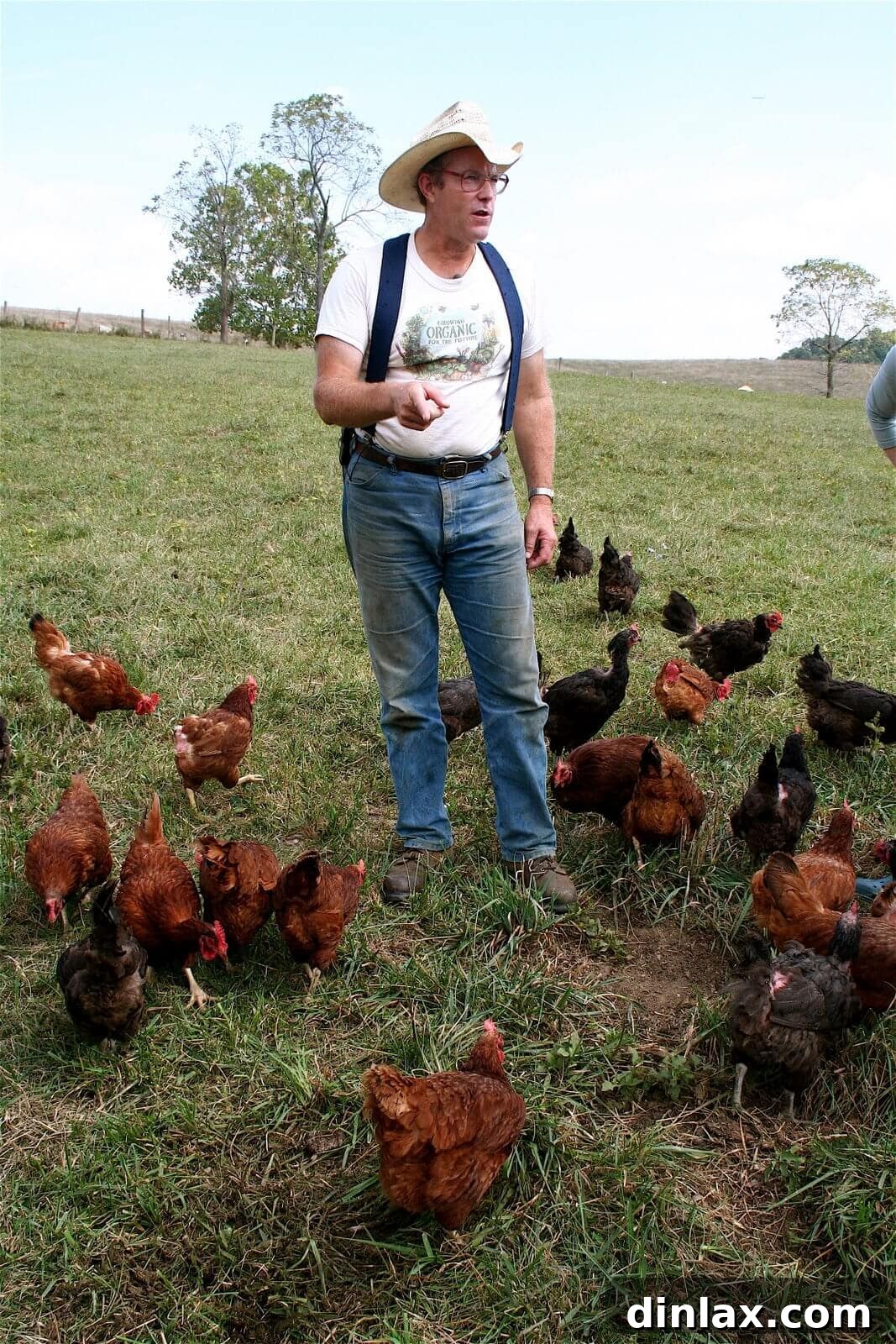
The hens, often referred to as Polyface’s “sanitation crew,” then descend upon these four-day-old cow droppings. They enthusiastically peck and scratch, devouring fly larvae, parasites, and other insects. This provides them with a rich source of protein, significantly reducing the need for purchased feed. Simultaneously, the hens perform vital ecological services:
- Pathogen Control: By consuming fly larvae and parasites, they effectively break the life cycle of potential pathogens and disease vectors, contributing to a healthier environment for all animals.
- Nutrient Distribution: Their scratching activity breaks apart and spreads the cow manure, allowing nutrients to quickly sink into the soil rather than sitting on the surface and potentially running off. This natural fertilization boosts grass growth and soil fertility.
- Pest Reduction: They reduce the population of flies and other nuisance insects, which are significant irritants for cattle, enhancing the cows’ comfort and well-being.
The result is a pasture that grows back thicker and healthier, requiring no artificial fertilizers or pesticides. The cows remain healthier without antibiotics because they are not forced to consume grains their ruminant stomachs struggle to digest, and the land benefits from natural fertilization and pest control.
Forest-Finished Pigs: “Olive Oil Pork”
Polyface’s pigs enjoy a truly unique upbringing, culminating in what Salatin affectionately calls “olive oil pork.” Rather than being confined to barren pens, these intelligent animals spend their final weeks foraging freely in the farm’s forests. Their diet consists of high-protein nuts, acorns, and various tree bark, which they enthusiastically root for. This natural, diverse diet not only imparts an exceptional flavor profile to their meat but also significantly improves the nutritional quality of their fat, making it richer in beneficial compounds. This practice highlights Salatin’s commitment to allowing animals to express their natural behaviors while producing superior, healthier products.
The “Raken House”: Multilayered Living
Another ingenious multi-species system is the “Raken House,” where rabbits and chickens coexist in a harmonious, stacked environment. Rabbits are housed in cages suspended from the ceiling, their waste falling onto the bedding below. Chickens roam freely on the ground level, scratching through the bedding material that includes rabbit droppings. This natural behavior aids in breaking down and composting the waste, maintaining sanitation, and providing the chickens with additional foraging opportunities. This efficient use of space and natural processes demonstrates how diverse species can contribute to a self-cleaning and productive environment.
Pastured Broilers: Mobile Shelters for Meat Birds
Polyface’s meat birds, or broilers, live in floorless pens directly on the grass. Each morning, Joel Salatin or his team manually drags these pens to a fresh patch of pasture. This constant rotation ensures that the birds always have access to clean grass, insects, and sunshine, promoting their health and natural behaviors. The grass, fertilized by the chickens’ droppings, is given a full 364 days to rest and regenerate before another group of chickens feeds on it. This meticulous rotation prevents overgrazing and pathogen buildup, contributing to soil health and flavorful, healthy meat birds.
The Environmental and Economic Imperatives of Polyface
The operational efficiency and ecological soundness of Polyface Farm offer a compelling alternative to industrial agriculture. By relying primarily on solar energy captured by grass, Salatin drastically reduces the need for external inputs such as fossil fuels, purchased grain, synthetic fertilizers, and chemical pesticides. This not only represents a wise business strategy, minimizing overhead and maximizing profit margins, but also delivers immense benefits to the environment.
- Reduced Carbon Footprint: Minimal reliance on machinery and synthetic inputs translates to a significantly lower carbon footprint compared to conventional farms. The regenerative practices actively sequester carbon in the soil.
- Water Quality Protection: Integrated waste management, natural composting, and rotational grazing prevent nutrient runoff, protecting local waterways from pollution.
- Biodiversity Enhancement: Healthy pastures, diverse animal life, and symbiotic relationships foster a rich ecosystem, supporting pollinators, beneficial insects, and wildlife.
- Healthier Food: Animals raised on their natural diets in clean, stress-free environments produce meat, eggs, and dairy that are not only tastier but also nutritionally superior, often higher in beneficial omega-3 fatty acids and vitamins.
A Memorable Visit: Personal Reflections and Visual Insights
My visit to Polyface Farm, eagerly anticipated after reading Michael Pollan’s The Omnivore’s Dilemma, was profoundly memorable. The ability to witness these principles in action, to hear Joel Salatin articulate his vision, and to interact with the animals and the land, provided an invaluable perspective on food production.
Connecting with the Animals
My companion, Ben, particularly enjoyed the pigs, who seemed equally delighted by his presence. This interaction highlighted the calm and healthy demeanor of animals raised in an environment that respects their natural instincts.
Meeting the Visionary
Standing with Joel Salatin in the very barn that inspired Michael Pollan’s pivotal insights was a poignant moment, solidifying the realization of how dramatically Polyface diverges from the norms of conventional agriculture.
The “Sanitation Crew” in Action
Witnessing Salatin explain the cow-chicken symbiosis while surrounded by his laying hens, his “sanitation crew,” offered a tangible example of the farm’s integrated systems. His passion for these natural processes was infectious.
Touring the Farm
The three-hour tour provided ample time to delve into the intricacies of Polyface’s operations, walking across pastures and observing the various animal systems. It was a privilege to be part of a group learning from such an influential figure.
A Glimpse of New Life
Even small moments, like Joel showing a baby rabbit to a young girl in the “Raken House,” underscored the wholesome, educational, and family-friendly nature of the farm’s operations. It truly highlighted the connection between healthy animals and a vibrant community.
Conclusion: The Promise of Regenerative Agriculture
Polyface Farm is more than just a farm; it is a beacon of hope for a food system in crisis. Joel Salatin’s commitment to mimicking natural processes, creating symbiotic relationships between species, and prioritizing soil health over quick profits offers a powerful model for sustainable agriculture. His methods demonstrate that it is possible to produce healthy, flavorful, and ethically raised food while simultaneously regenerating the land, reducing environmental impact, and building a resilient local economy. The lessons learned at Polyface Farm are crucial for anyone interested in the future of food, proving that intelligent design in agriculture can lead to abundance for all – animal, land, and humankind alike.