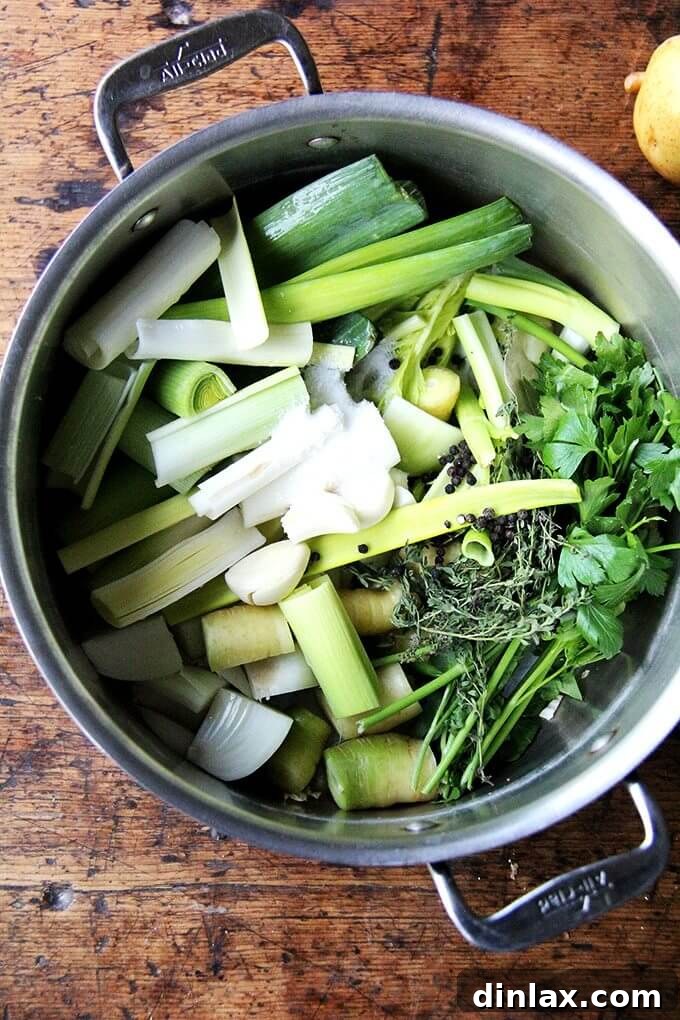
Welcome to the definitive guide for crafting your own homemade vegetable stock – a foundational ingredient that promises to elevate your cooking from good to extraordinary. Forget bland, store-bought cartons; this recipe transforms humble vegetable scraps into a rich, aromatic broth in just 45 minutes. It’s astonishingly flavorful, incredibly versatile, and freezes beautifully, ensuring you always have a secret weapon in your culinary arsenal. If you’ve never ventured into the world of homemade stock, prepare for a delightful treat that will revolutionize your kitchen.
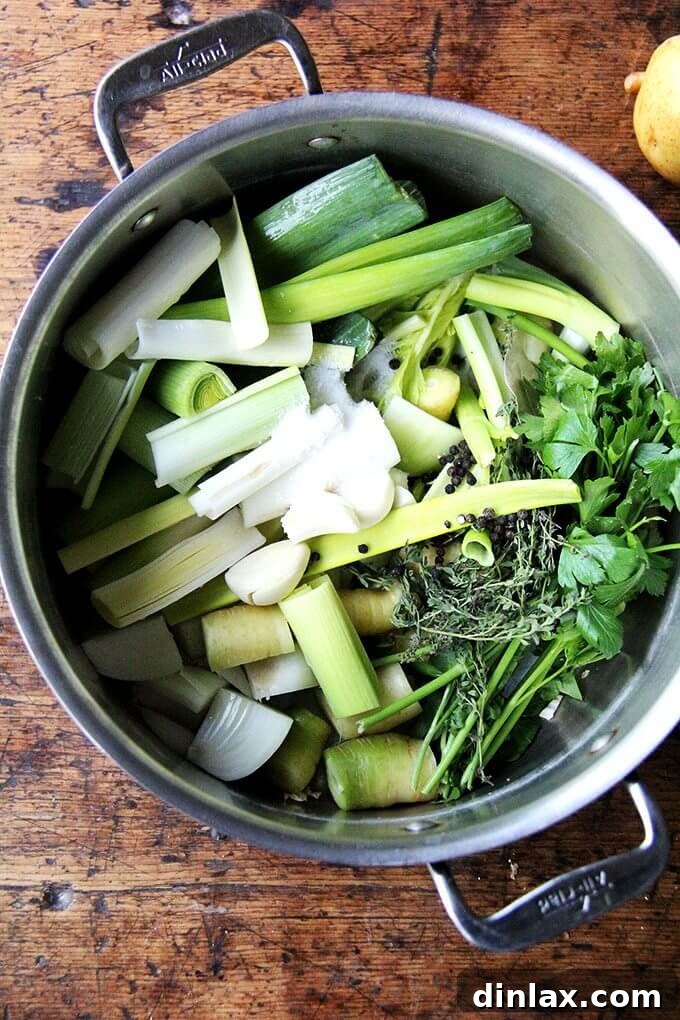
As soup season unfurls its cozy embrace, there’s no better time to master the art of homemade vegetable stock. This cherished recipe, which I wholeheartedly endorse, deserves its dedicated spotlight. It’s more than just a recipe; it’s an invitation to infuse your cooking with unparalleled depth and a wholesome goodness that only scratch-made ingredients can provide.
From start to finish, this process takes a mere 45 minutes, culminating in approximately 2 quarts of exquisitely flavorful broth. This liquid gold will serve as the perfect base for countless culinary creations, particularly your favorite homemade soups, gracing your table throughout the colder months and beyond.
Imagine the rich aroma filling your kitchen as you prepare a comforting bowl of Roasted Butternut Squash & Garlic Soup, or the creamy indulgence of Vermont Cheddar Cheese Soup, both elevated by the pure, clean taste of your homemade stock.
Unlocking Flavor: The Art of Homemade Vegetable Stock
Making vegetable stock from scratch is a surprisingly simple process that yields incredible rewards. It’s an act of culinary alchemy, transforming humble vegetables and often discarded scraps into a foundational liquid that enhances countless dishes. The secret lies in a gentle simmer, allowing the vegetables to release their essential oils and soluble compounds, creating a complex and deeply satisfying flavor profile.
Why Choose Homemade Vegetable Stock?
- Superior Flavor: Store-bought stocks often contain artificial flavors, excessive sodium, and lack the nuanced depth of homemade versions. Crafting your own allows for a fresher, more vibrant taste.
- Ingredient Control: You dictate what goes into your stock. This means no unwanted additives, preservatives, or high levels of sodium, making it a healthier choice for you and your family. It’s particularly beneficial for those with dietary restrictions or allergies.
- Cost-Effective & Eco-Friendly: Homemade stock is incredibly economical. It’s an excellent way to utilize vegetable scraps that might otherwise go to waste—think onion skins, carrot peels, celery ends, and herb stems. This zero-waste approach is not only kind to your wallet but also to the planet.
- Versatility: A good vegetable stock is the backbone of so many recipes. From soups and stews to risottos, sauces, and cooking grains, its applications are endless.
Ingredients for Your Best Vegetable Stock
The beauty of vegetable stock lies in its flexibility. While a core set of ingredients provides the classic flavor, feel free to experiment with what you have on hand. The key is to use fresh, aromatic vegetables, and yes, even their skins and ends contribute significantly!
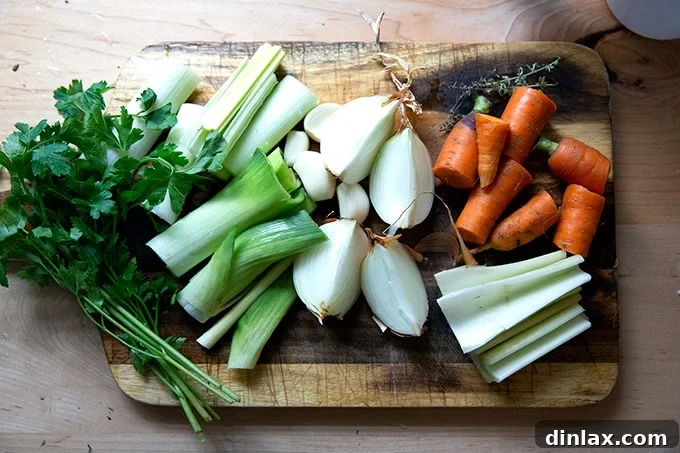
Gather your chosen vegetables and herbs. There’s no need for meticulous peeling or precise chopping; a rough chop is all that’s required. In fact, leaving skins on onions and carrots can add a beautiful golden hue and extra nutrients to your finished stock.
What Vegetables & Scraps to Use:
- Aromatics (The Foundation): Onions (skins included!), carrots (peels too!), and celery form the classic “mirepoix” base, providing a sweet and savory foundation. Leeks, thoroughly washed and roughly chopped, add an exquisite sweetness and depth that sets this stock apart.
- Garlic: Peeled and crushed cloves release their pungent, aromatic compounds, contributing savory notes.
- Herbs: Fresh parsley sprigs and thyme sprigs are essential for their bright, earthy flavors. A bay leaf adds a subtle, almost floral undertone. Consider adding rosemary or a touch of sage for different aromatic profiles.
- Spices: Coarse salt and black peppercorns are vital for seasoning and drawing out the flavors from the vegetables.
- Water: Use cold water to start. As it heats slowly, it extracts more flavor from the vegetables.
Tips for Using Scraps Effectively:
- Save Your Scraps: Keep a bag in your freezer and add vegetable trimmings throughout the week. Good additions include onion ends and skins, carrot tops and peels, celery ends, mushroom stems, parsley and cilantro stems, and even corn cobs (for a subtly sweet note).
- What to Avoid: Steer clear of cruciferous vegetables like broccoli, cabbage, cauliflower, or Brussels sprouts, as they can impart a bitter or overly sulfurous flavor to your stock. Starchy vegetables like potatoes can make the stock cloudy. Also, avoid anything moldy or rotten.
Step-by-Step Guide to Making Your Stock
With your ingredients prepped, the process is incredibly straightforward. Consistency in technique will ensure a clear, flavorful stock every time.
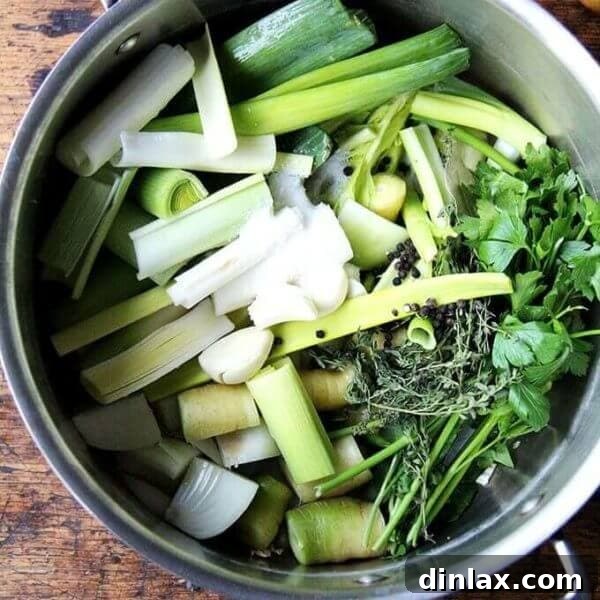
Place all your prepared vegetables and herbs into a large, sturdy pot. Ensure the pot is spacious enough to accommodate all ingredients comfortably, allowing for even heat distribution.
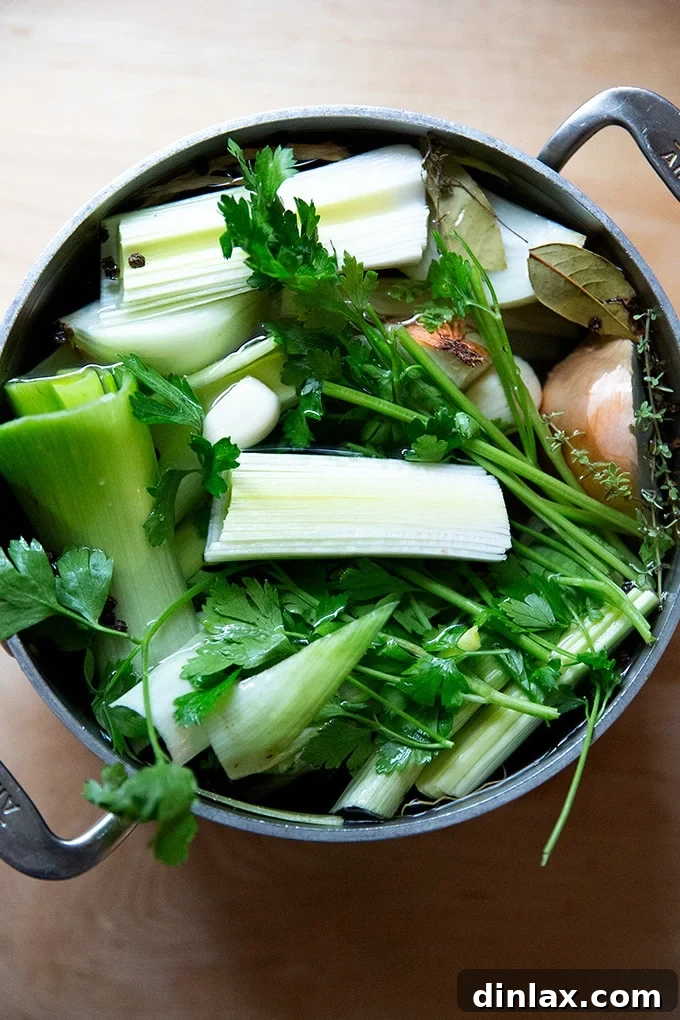
Next, cover the vegetables with approximately 3 quarts of cold water. Make sure all solids are fully submerged. The cold water is important because it allows for a gradual extraction of flavors as the temperature slowly rises, yielding a more robust and complex stock.
Bring the pot to a boil, then immediately reduce the heat to a gentle simmer. This low, consistent heat is crucial; a rolling boil can emulsify fats (if any) and make the stock cloudy. Allow it to simmer for precisely 45 minutes. This duration is ideal for extracting maximum flavor without over-extracting bitter notes that can develop from prolonged cooking of certain vegetables. After simmering, remove the pot from the heat and let it cool slightly before proceeding to strain.
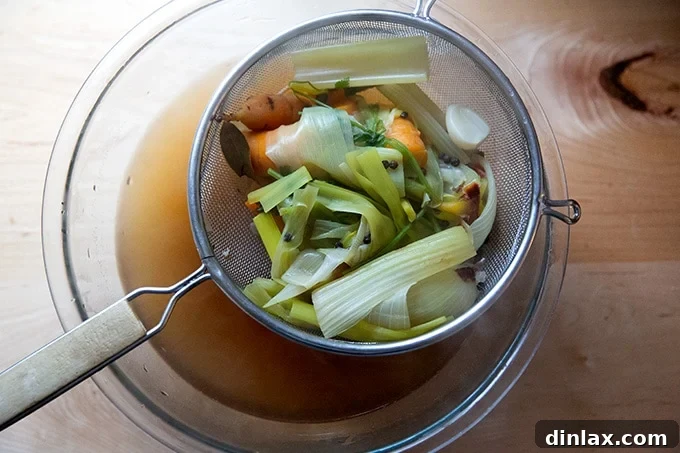
Once strained through a fine-mesh sieve (or a sieve lined with cheesecloth for extra clarity), discard the cooked vegetables. There’s no need to press them, as this can release starchy components and cloud your beautiful, clear stock.
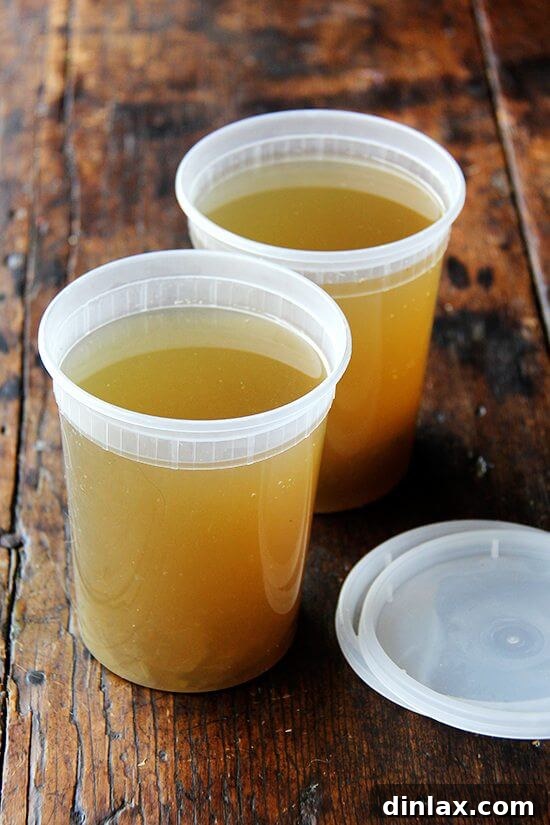
Transfer the golden liquid to storage containers. I particularly love using these deli quart containers for their convenience and stackability. Allow the stock to cool completely before storing it in the refrigerator, where it will remain fresh for 7-10 days, or freeze it for up to 3 months. For longer freezer storage and easy portioning, consider freezing in ice cube trays, then transferring the cubes to freezer bags.
Print
Homemade Vegetable Stock: The Ultimate Flavor Enhancer
5 Stars 4 Stars 3 Stars 2 Stars 1 Star
5 from 10 reviews
Author: Alexandra Stafford
Total Time: 55 minutes
Yield: 2 quarts 1x
Diet: Vegan
Description
This phenomenal vegetable stock recipe is a true gem, originally inspired by my friend Darcy, who sourced it from Gwyneth Paltrow’s acclaimed cookbook, My Father’s Daughter. What makes this recipe particularly special is its inherent adaptability and forgiveness, allowing you to create a deeply flavorful broth with ease, even if your pantry isn’t fully stocked.
Think of this recipe as a flexible guide rather than a strict mandate. Don’t have leeks on hand? Onions will serve as a perfectly fine substitute, though I often recommend leeks for the unique sweetness and depth they contribute to stock, making them a worthwhile purchase if you’re heading to the store. Similarly, if fresh thyme or tarragon aren’t available, simply omit them or swap them for other aromatic herbs you might have, such as a sprig of rosemary or a few sage leaves. The beauty of homemade stock is in utilizing what you have to create something wonderful. Each batch can be a unique reflection of your ingredient choices and preferences, always resulting in a robust and delicious base for your culinary adventures.
I find myself reaching for this versatile stock time and again, and it truly shines in numerous recipes. It’s particularly fantastic in this delightful dish, which, while a little more involved, is utterly delicious and worth every effort: Farro Risotto with Butternut Squash and Kale.
Ingredients
- 1 large yellow onion, quartered through the root (no need to peel, skins add color and flavor)
- 2 large carrots, roughly chopped (peels can stay on)
- 1 stalk celery, roughly chopped
- 1 large leek, washed thoroughly and roughly chopped (optional, but highly recommended for sweetness)
- 3 cloves garlic, peeled and gently crushed with the back of your knife
- 4 sprigs fresh parsley
- 4 sprigs fresh thyme
- 1 bay leaf
- 1 teaspoon coarse salt (adjust to taste after simmering)
- 1 teaspoon whole black peppercorns
- 3 quarts cold water
Instructions
- Combine All Ingredients: Place the quartered onion, roughly chopped carrots, celery stalk, chopped leek (if using), crushed garlic cloves, fresh parsley and thyme sprigs, bay leaf, coarse salt, and black peppercorns into a large, heavy-bottomed pot. Pour in 3 quarts of cold water, ensuring all the vegetables are fully submerged.
- Simmer to Perfection: Bring the mixture to a rolling boil over high heat. Once boiling, immediately reduce the heat to low, cover the pot, and let it simmer gently for 45 minutes. A gentle simmer is key to extracting maximum flavor and maintaining a clear stock. Avoid a hard boil, which can make the stock cloudy.
- Cool and Strain: After 45 minutes, remove the pot from the heat. Allow the stock to cool slightly. Once cool enough to handle, carefully strain the stock through a fine-mesh sieve into a large heatproof bowl or another pot. Discard all the cooked vegetables and herbs – their flavor has now been transferred to your liquid gold. Do not press the solids, as this can release starchy particles and make your stock murky.
- Store for Future Use: Transfer the cooled, strained stock into clean, airtight containers (quart-sized deli containers are perfect). Ensure the stock is completely cool before sealing and refrigerating. Store in the refrigerator for up to 1-2 weeks for immediate use, or in the freezer for up to 6 months for long-term storage. Freezing in ice cube trays before transferring to freezer bags can be an excellent way to portion for individual recipes.
- Prep Time: 10 minutes
- Cook Time: 45 minutes
- Category: Stock, Broth, Pantry Staples
- Method: Stovetop, Simmer
- Cuisine: American, Global
Frequently Asked Questions About Homemade Vegetable Stock
Can I use different vegetables?
Absolutely! This recipe is incredibly adaptable. Feel free to use what you have on hand or what’s in season. Great additions include mushroom stems for umami, parsnips for sweetness, or even a small amount of tomato paste for a richer color and depth. Just remember to avoid cruciferous vegetables (like broccoli or cabbage) as they can impart a bitter flavor, and starchy vegetables (like potatoes) which can make your stock cloudy.
What if my stock turns out cloudy?
Cloudy stock is often a result of boiling too vigorously, which can break down vegetables and emulsify starches or fats. To prevent this, always maintain a gentle simmer. Also, avoid pressing the vegetables when straining, as this can release fine particles that contribute to cloudiness.
How can I make my stock even more flavorful?
For an extra layer of flavor, consider roasting your vegetables (onions, carrots, celery) before adding them to the pot. This caramelization adds a deep, savory note. You can also add dried mushrooms (like porcini) for an intense umami boost, or a splash of white wine at the beginning of the cooking process to deglaze and add acidity.
Can I make this in an Instant Pot or Slow Cooker?
Yes, homemade vegetable stock is excellent in both! For an Instant Pot, combine all ingredients and cook on high pressure for 20-30 minutes, then allow for natural release. For a slow cooker, cook on low for 6-8 hours or on high for 3-4 hours. These methods are fantastic for hands-off cooking and often result in a deeply flavored stock.
Is it necessary to cool the stock completely before storing?
Yes, it’s crucial for food safety. Storing hot stock in sealed containers can create a breeding ground for bacteria as it cools slowly. Always allow your stock to cool uncovered at room temperature for an hour or two, then transfer it to the refrigerator to finish cooling before sealing and storing. For faster cooling, you can place the pot in an ice bath.
Elevate Your Cooking with Homemade Vegetable Stock
Embracing homemade vegetable stock is more than just a recipe; it’s a fundamental step towards more flavorful, healthier, and sustainable cooking. This simple, 45-minute process yields a versatile liquid gold that will become an indispensable staple in your kitchen. From enhancing your favorite soups and stews to enriching risottos and sauces, the depth of flavor you’ll achieve is unmatched by any store-bought alternative.
So, gather your ingredients, repurpose those vegetable scraps, and embark on this rewarding culinary journey. The rich aromas and exquisite taste of your own homemade vegetable stock will inspire countless delicious meals, proving that the best flavors often come from the simplest, most mindful preparations. Happy cooking!