Authentic Homemade Tzatziki: Your Essential Guide to the Refreshing Greek Cucumber-Yogurt Dip
Tzatziki is more than just a dip; it’s a cornerstone of Greek and Mediterranean cuisine, renowned for its creamy texture and incredibly refreshing flavor profile. This beloved condiment is crafted from a base of thick Greek yogurt, combined with crisp cucumbers, aromatic garlic, fresh herbs like mint and dill, and a bright squeeze of lemon juice. Growing up, this vibrant sauce was a constant companion to many meals, especially grilled chicken souvlaki, enhancing every bite with its cool, tangy essence. But its versatility extends far beyond traditional pairings, making it a perfect accompaniment for an array of dishes, from savory meats to hearty vegetarian options.
What is Tzatziki? A Staple of Greek Cuisine
At its heart, tzatziki is a traditional Greek sauce or dip. The name itself, “tzatziki,” hints at its origins and ingredients. It’s characterized by its delightful tang and cooling properties, making it an ideal refreshment, particularly in warmer climates. The rich, strained Greek yogurt forms the backbone, providing a luxurious creaminess and a probiotic boost. Freshly grated cucumbers introduce a watery crunch and vital hydration. Minced garlic adds a pungent depth, while a medley of fresh herbs—most commonly mint and dill—infuses an herbaceous freshness. A dash of lemon juice brightens all the flavors, tying them together into a harmonious whole.
Beyond Greece, similar yogurt and cucumber-based dishes are found throughout the Middle East and Southeast Europe, each with its unique twist. From Turkish cacık to Indian raita, these regional variations highlight the universal appeal of this simple yet profound combination of ingredients. However, Greek tzatziki stands out with its distinct blend of garlic, dill, and usually, a generous drizzle of olive oil before serving.
Why Make Tzatziki at Home? Freshness and Flavor Unmatched
While store-bought tzatziki is readily available, preparing it from scratch offers an unparalleled experience. Homemade tzatziki guarantees the freshest ingredients, allowing you to control the quality and intensity of flavors. You can adjust the amount of garlic, the type and quantity of herbs, and the tartness from the lemon to perfectly match your palate. Furthermore, the process is incredibly simple and quick, requiring minimal effort for maximum flavor payoff. The vibrant taste of freshly grated cucumber and minced herbs truly shines through, offering a crispness that pre-packaged versions often lack.
Making tzatziki at home also allows for dietary customization. If you prefer a dairy-free option, coconut or almond-based yogurts can be substituted. For those who enjoy a richer dip, full-fat Greek yogurt is recommended, while a low-fat version can be used for a lighter alternative. The transparency of knowing exactly what goes into your food is a benefit that cannot be overstated, especially when it comes to healthy eating.
The Versatility of Tzatziki: Beyond a Simple Dip
One of tzatziki’s most appealing qualities is its incredible versatility. While it’s famously paired with chicken souvlaki, its refreshing character makes it a fantastic match for a wide range of dishes, both meat-based and vegetarian:
- Roasted Vegetables: Transform simple roasted vegetables into a gourmet experience. It’s particularly delightful with dishes like Roasted Eggplant Salad, providing a cool contrast to warm, smoky flavors. It also complements roasted zucchini, bell peppers, or even grilled asparagus beautifully.
- Veggie Burgers & Wraps: Elevate your vegetarian meals. Tzatziki is an excellent spread for various veggie burgers, from classic black bean patties to more inventive creations like Mushroom and Sweet Potato Veggie Burgers or crispy Falafel Burgers. It also makes a superb sauce for wraps and pitas, adding moisture and flavor.
- Grilled Meats & Seafood: Tzatziki is a classic accompaniment for grilled chicken, lamb, and beef. It cuts through the richness of the meat, offering a refreshing palate cleanser. Try it with Smoky Grilled Chicken with Schug for a memorable summer meal. It also pairs wonderfully with grilled fish or shrimp, enhancing their delicate flavors.
- Salads & Bowls: Use it as a creamy dressing for grain bowls or hearty salads. It adds a delicious zest to dishes like Spiced Tomato and Chickpea Salad, making it a meal in itself.
- Appetizers & Spreads: Serve it simply with warm pita bread, crispy pita chips, or a vibrant crudités platter. It’s also fantastic smeared on flatbreads or as a dollop beside Cauliflower Steaks with Walnut-Caper Salsa.
Mastering the Perfect Tzatziki: The Crucial Step of Draining Cucumbers
The process of making tzatziki is quite straightforward, but there’s one step that truly elevates the dip from good to outstanding: properly draining the cucumbers. Historically, I might have skipped this step, but taking the time to do so yields significant benefits, creating a superior tzatziki experience.
- It prevents the tzatziki from becoming too liquidy: Cucumbers are naturally high in water content. If you incorporate them directly into the Greek yogurt without draining, their moisture will gradually release, thinning out your tzatziki. For those who appreciate a thick, rich, and spoonable consistency, draining is paramount. If a thinner, more saucy tzatziki is your preference, you can certainly reduce or skip this step, but be prepared for a less robust dip.
- Draining the cucumbers gives you a few tablespoons of fresh cucumber juice: This might seem like a small detail, but the collected cucumber juice is a delightful byproduct! It offers a subtle, refreshing flavor that can be utilized in creative ways. Consider adding it to water with a sprig of mint, a touch of honey, and a slice of lemon for a hydrating, flavored drink. Alternatively, for the adventurous, it makes an excellent addition to cocktails, such as a cucumber-gin gimlet, adding a sophisticated, fresh note.
This simple act of straining ensures your tzatziki maintains its luxurious thickness and prevents it from becoming watery and bland, allowing the rich yogurt and fresh herbs to truly shine.
Essential Ingredients for Your Authentic Tzatziki
Crafting exceptional tzatziki begins with selecting high-quality ingredients. Here’s what you’ll need:
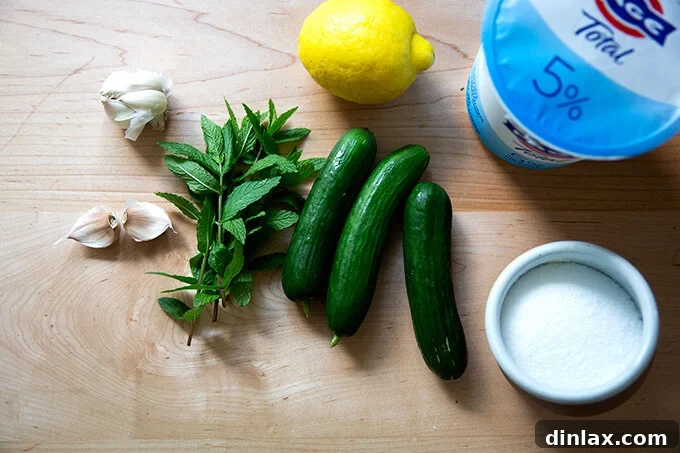
- Cucumbers: 1 large or 3 small (about 8-10 oz). English or Persian cucumbers are often preferred for their thinner skins and fewer seeds, making them easier to grate. If using standard slicing cucumbers, you might consider peeling them and scooping out the seeds for a smoother texture.
- Greek Yogurt: 1 cup plain Greek yogurt. Opt for a full-fat variety (like Fage 5%) for the creamiest, most authentic texture and flavor. The thickness of Greek yogurt is crucial as it holds up well to the moisture from the cucumbers.
- Garlic: 1 clove, minced. Fresh garlic is key for that characteristic pungent kick. Adjust to your preference – some prefer a milder hint, others a stronger presence.
- Fresh Herbs: 2-3 tablespoons minced. Mint and dill are the traditional choices. The combination of both offers a balanced herbaceousness, but you can use one or the other, or even a touch of parsley.
- Lemon Juice: 1.5 tablespoons fresh-squeezed (from about ½ a lemon). Fresh lemon juice provides acidity and brightens the overall flavor profile.
- Kosher Salt: ½ teaspoon, or to taste. Salt enhances all the flavors and helps draw out moisture from the cucumbers.
- Extra Virgin Olive Oil (for serving): A generous drizzle of good quality olive oil just before serving adds richness and a beautiful sheen.
Step-by-Step: Crafting Your Delicious Homemade Tzatziki
Let’s walk through the simple steps to create your own fresh and flavorful tzatziki. The key to perfection lies in the details:
1. Prepare the Cucumbers
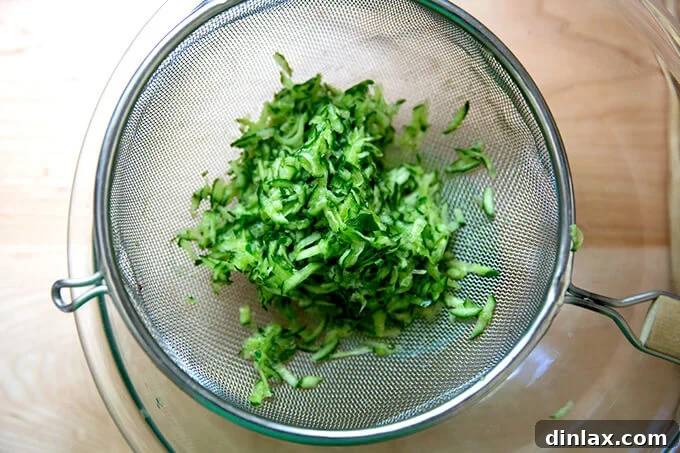
Begin by washing your cucumbers thoroughly. Using a box grater, coarsely grate the cucumbers. If you’re using larger cucumbers with thick skins, you may wish to peel them first. For standard slicing cucumbers, you can also remove the watery seed core before grating to further reduce moisture.
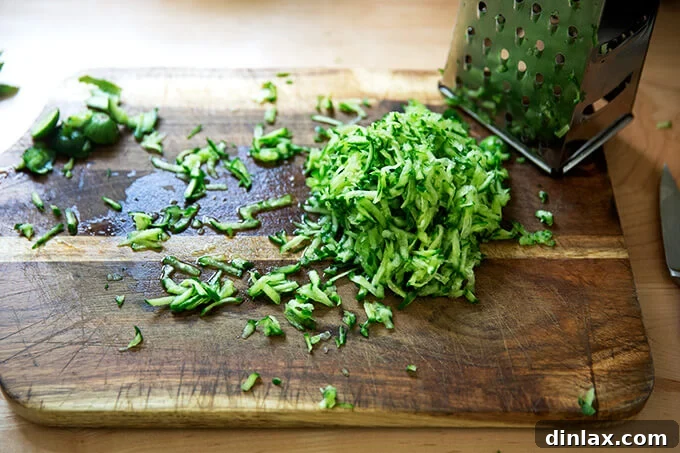
Transfer the grated cucumber to a fine-mesh sieve. Place the sieve over a bowl to catch the liquid. You can press down on the grated cucumber with the back of a spoon or your hand to encourage more moisture to drain. For optimal thickness, let the cucumbers drain for at least 5 minutes, or up to 30 minutes. You’ll be surprised how much liquid comes out!
2. Mince Your Aromatics and Herbs
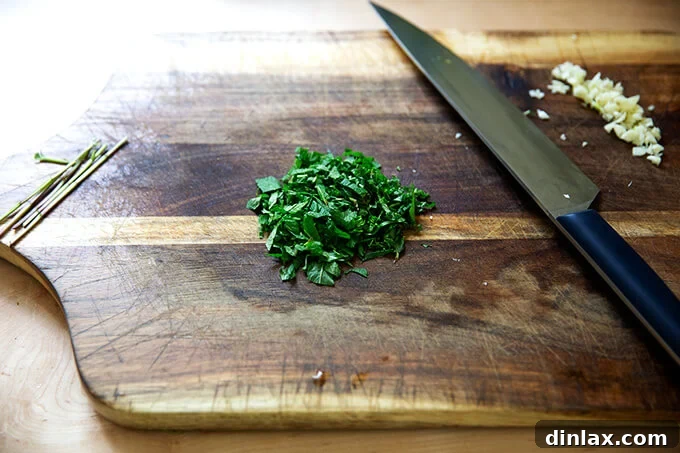
While the cucumbers are draining, prepare your other fresh ingredients. Finely mince the garlic clove. For the herbs, finely chop your fresh mint and dill. The finer the chop, the better the flavors will meld throughout the dip. Freshness of these ingredients makes a world of difference.
3. Combine and Season
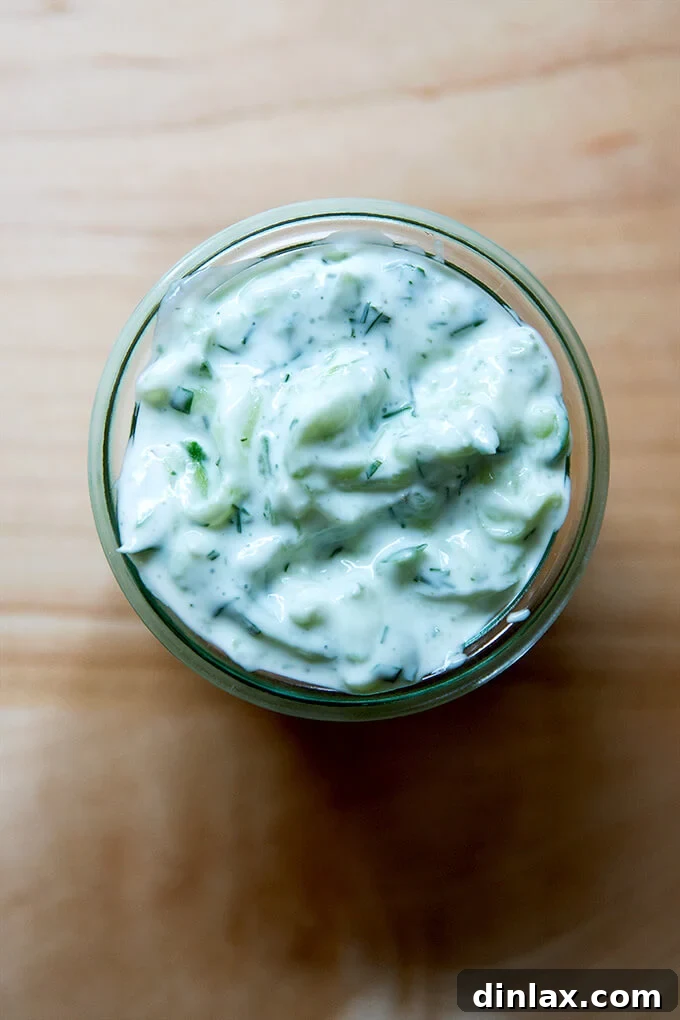
In a medium mixing bowl, combine the thick Greek yogurt with the thoroughly drained cucumber. Add the minced garlic, chopped herbs, fresh lemon juice, and kosher salt. Stir all the ingredients together until they are well incorporated and the mixture is uniform. Give it a good taste. This is your moment to adjust the seasoning – you might want a little more salt, a squeeze of extra lemon for brightness, or even a bit more garlic if you like a bolder flavor.
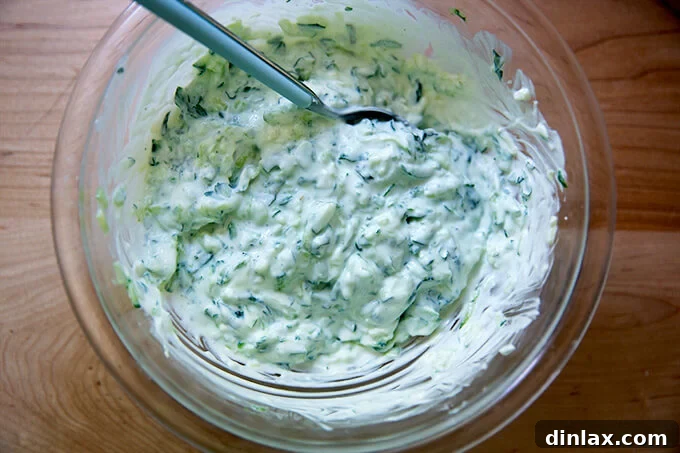
For best results, cover the bowl and refrigerate the tzatziki for at least 30 minutes before serving. This chilling time allows the flavors to meld and deepen, resulting in a more harmonious and delicious dip.
Serving and Storing Your Fresh Tzatziki
Tzatziki is best served shortly after it’s made and chilled, but it will maintain its deliciousness in the refrigerator for a day or two. Store it in an airtight container to keep it fresh and prevent it from absorbing other odors from your fridge. If you notice any excess liquid accumulating on top after storage, simply stir it back in or gently pour it off before serving.
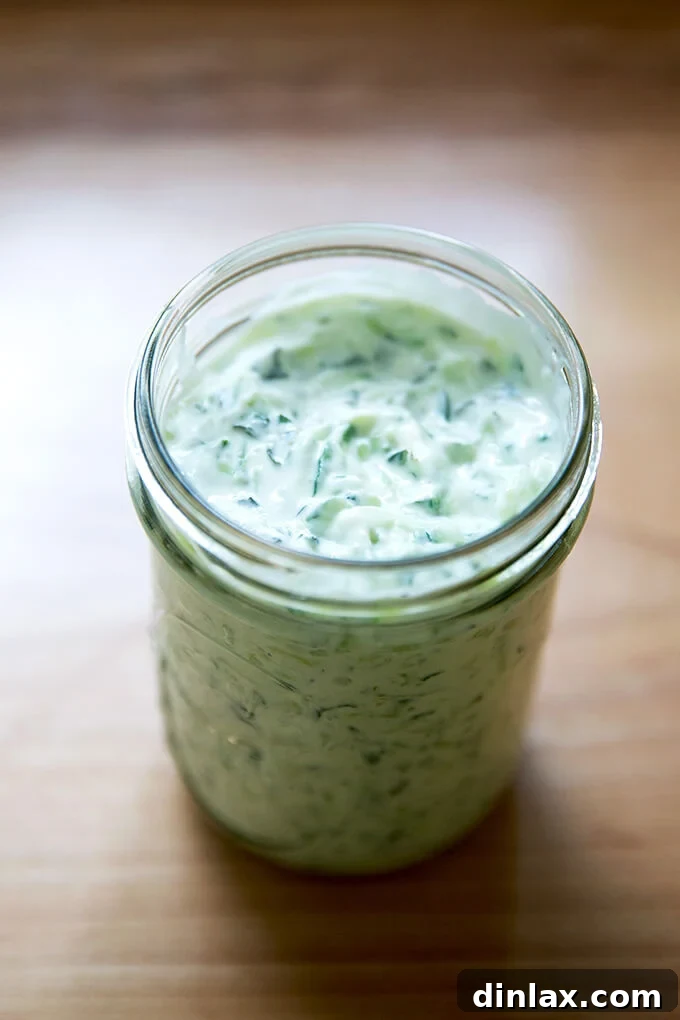
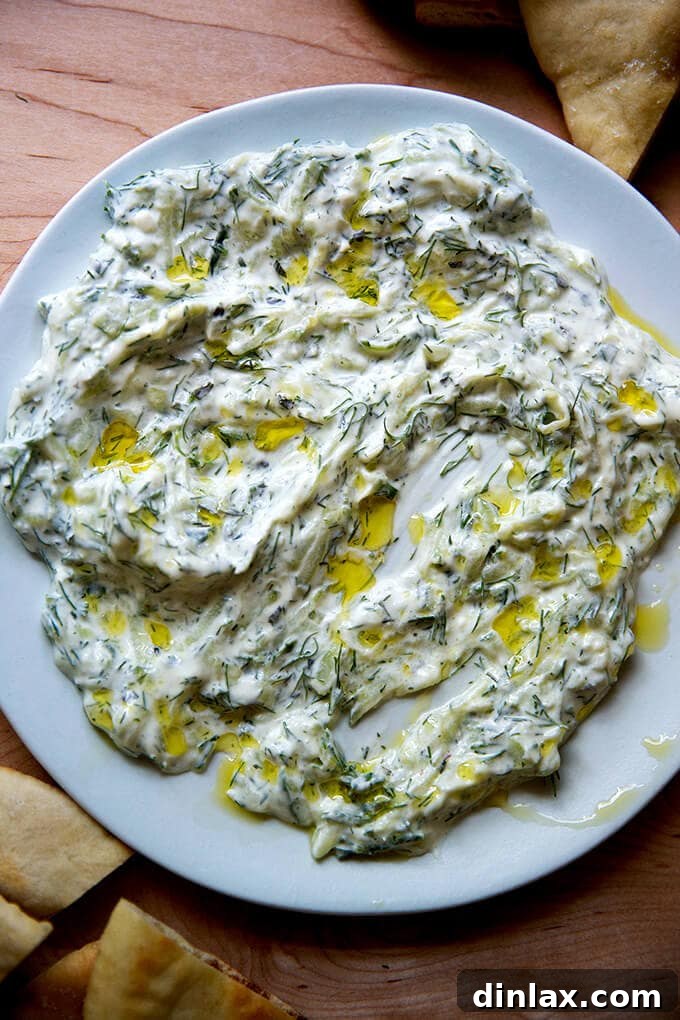
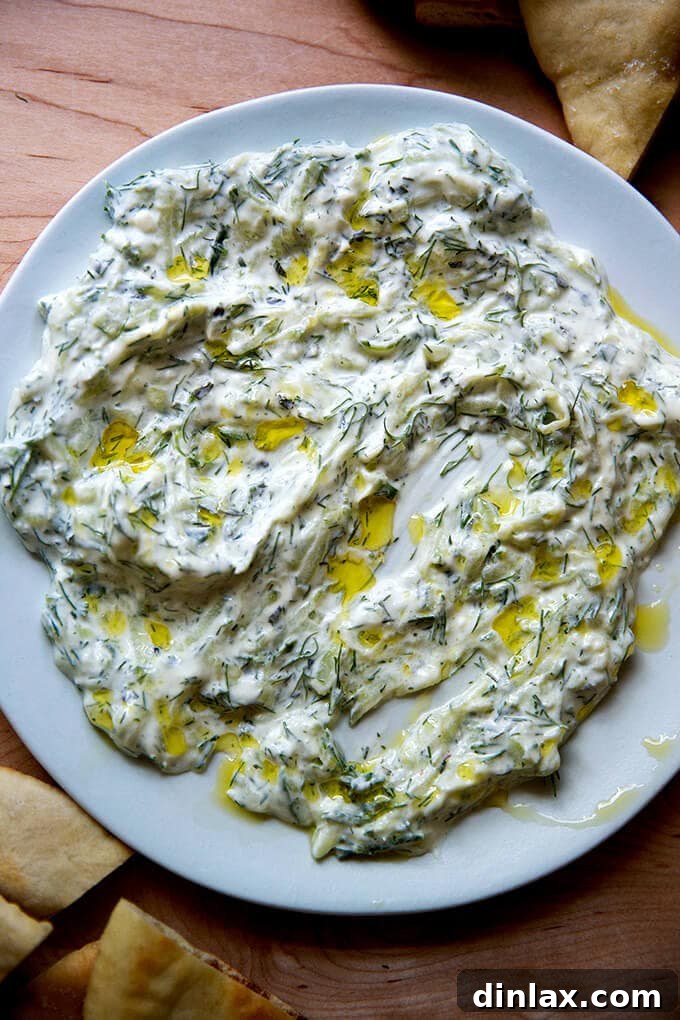
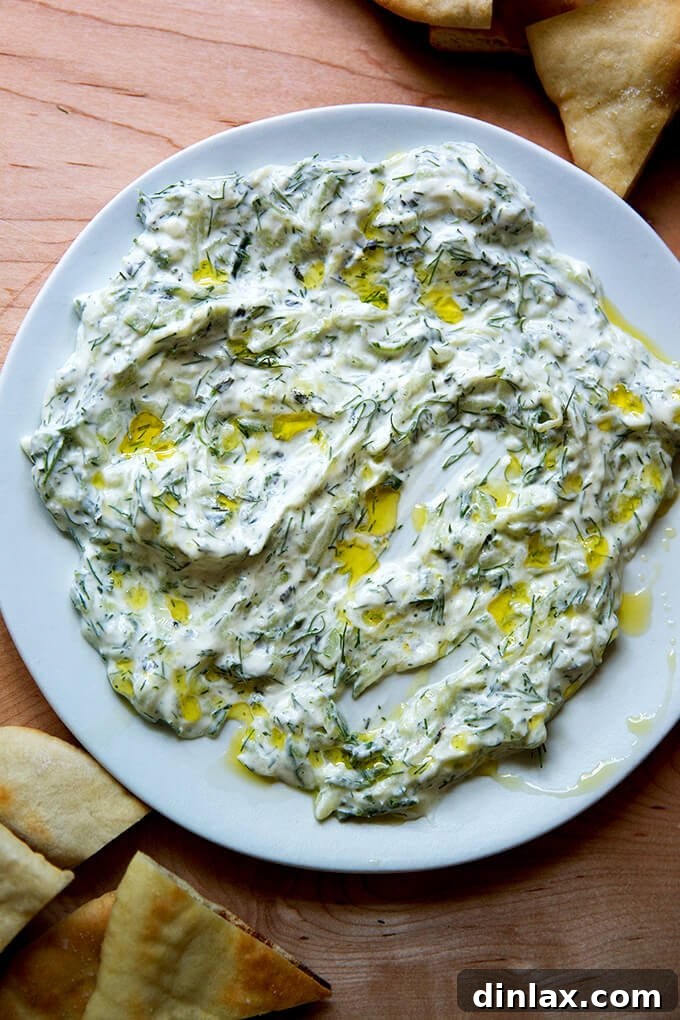
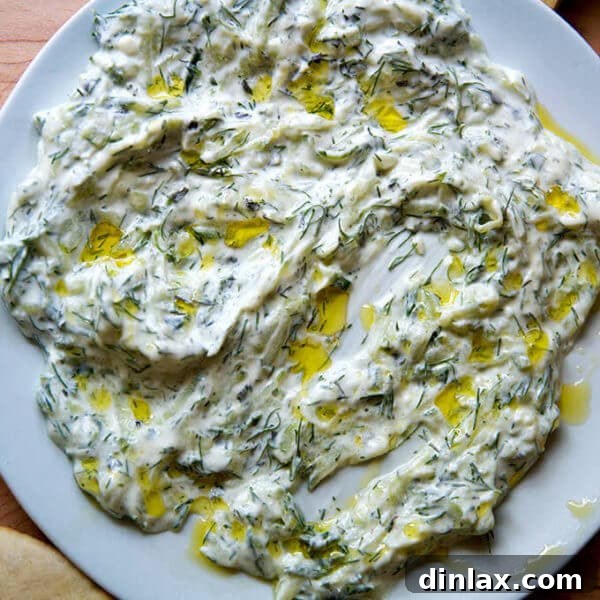
When it comes to serving, presentation can elevate the experience. I often serve tzatziki with grilled meat, such as this chicken souvlaki or this smoky grilled chicken, or alongside vibrant roasted vegetables like this roasted eggplant salad. However, it’s equally delightful on its own as a simple appetizer. Spread a generous layer of tzatziki onto a platter, create a swirl with the back of a spoon, and drizzle generously with a good quality extra virgin olive oil. Garnish with a few fresh mint or dill sprigs for visual appeal and an added burst of freshness. Serve with warm, soft pita bread, crispy pita chips, or even fresh vegetable sticks like carrots, celery, and bell peppers. The cool, creamy texture and zesty flavor of tzatziki make it an irresistible addition to any meal or snack.
Tzatziki (Greek Cucumber-Yogurt Sauce)
Rated 5 out of 5 stars from 11 reviews
- Author: Alexandra Stafford
- Total Time: 10 minutes
- Yield: 2 cups (1x)
Description
Tzatziki is a Greek yogurt- and cucumber-based condiment, typically seasoned with herbs such as mint and dill, garlic, and lemon. It’s a versatile dip that pairs wonderfully with grilled meats like chicken souvlaki, roasted vegetables such as eggplant salad, and various vegetable burgers, including mushroom and sweet potato veggie burgers or falafel burgers.
Ingredients
- 1 large or 3 small cucumbers (about 8 – 10 oz)
- 1 cup plain Greek yogurt, Fage 5% recommended
- 1 clove garlic, minced
- 2–3 tablespoons minced fresh herbs, such as mint and/or dill
- 1.5 tablespoons fresh-squeezed lemon juice (from about 1/2 a lemon)
- 1/2 teaspoon kosher salt
Instructions
- Grate and Drain Cucumbers: Grate the cucumber coarsely on a box grater. Transfer to a fine-mesh sieve and set over a bowl to drain. Gently squeeze the cucumber with your hands or the back of a spoon to encourage moisture to drain out. Let it drain for at least 5 minutes, or up to 30 minutes for a thicker consistency.
- Combine Ingredients: In a medium bowl, stir the thoroughly drained cucumber into the Greek yogurt, along with the minced garlic, fresh minced herbs, fresh lemon juice, and kosher salt. Mix until all ingredients are well combined.
- Taste and Adjust: Taste the tzatziki and adjust seasoning as needed. You may want to add more salt, lemon juice for brightness, or additional herbs to suit your preference. For optimal flavor, cover and refrigerate for at least 30 minutes before serving, allowing the flavors to meld.
- Prep Time: 10 minutes
- Category: Condiment
- Method: Stir
- Cuisine: Greek