The Ultimate Nectarine and Blackberry Crostata: A Rustic Homage to Family Traditions
There’s a unique comfort and timeless wisdom found in the kitchen, especially when it comes to family recipes. For many of us, the most revered culinary knowledge isn’t found in cookbooks or on trendy food blogs, but passed down through generations. Whenever I face a culinary quandary—be it a question about ingredient substitutions, a forgotten family classic, or simply verifying the ‘correctness’ of a technique—my first and most trusted consultants are always the matriarchs: my mother, my aunt, and my grandmother. These women are the custodians of a culinary heritage, dictating unwritten rules that, while occasionally tempting to challenge, I ultimately respect and fear breaking. After all, their kitchens have perfected countless dishes over decades, and their judgment is almost always infallible.
The Unwritten Rules of Family Baking: A Foundation of Quality and Tradition
The rules in our family kitchen are not mere suggestions; they are tenets. For instance, chicken stock must always be homemade, brimming with rich, slow-simmered flavor. Pie dough, in our culinary doctrine, must always be made with pure, unsalted butter for that quintessential flaky texture. Lamb is to be sourced from New Zealand, known for its superior quality, and chickens from a kosher market, ensuring specific standards of preparation and freshness. These aren’t arbitrary preferences; they are principles designed to ensure the highest quality and most authentic flavors in every dish that graces our table. While I occasionally find myself pondering a shortcut or a modern twist, the weight of tradition often keeps me in line, a silent nod to the wisdom accumulated over generations.
The Crisp Topping Conundrum: Oats vs. Innovation
Among these steadfast rules, one pertains specifically to crisps and crumbles. According to the family arbiters, the perfect crisp topping should never, under any circumstances, contain oats. Their cherished recipe is a simple yet sublime blend of flour, butter, sugar, and slivered almonds. It’s a topping that delivers consistent sweetness and a delightful crunch, perfectly complementing any seasonal fruit it accompanies. For years, this recipe has been the gold standard, a testament to its enduring appeal and flawless execution.
However, the culinary journey is one of continuous discovery, and sometimes, even within the confines of tradition, new favorites emerge. I recently stumbled upon a crostata topping recipe that not only rivals my family’s beloved classic but, dare I say, surpasses it for certain applications. The best part? It adheres strictly to the no-oat rule, earning an unspoken seal of approval. This revelation comes courtesy of Michael Chiarello, whose crostata topping recipe uses a unique mixture of cornmeal, flour, butter, and sugar. This innovative blend bakes up into an incredibly crisp, golden-brown crust that is perfectly sweet and wonderfully buttery, elevating the entire dessert experience.
The Magic of Cornmeal: Elevating Your Crostata with Unique Texture and Flavor
The secret ingredient here is cornmeal. While not a typical inclusion in traditional crisp toppings, its presence is a game-changer. The fine granules of cornmeal introduce an unparalleled texture—a delicate, sandy crunch that is distinct from the chewy density of oats or the uniform crispness of a plain flour-based crumble. This subtle textural variation adds a layer of sophistication to the crostata, making each bite an intriguing experience.
Beyond texture, cornmeal imparts a nuanced, earthy sweetness that beautifully complements the natural tartness and sweetness of the fruit. It’s a flavor profile that evokes rustic charm and wholesome goodness, creating a more complex and satisfying taste experience. This subtle corn essence doesn’t overpower; instead, it harmonizes with the fruit, enhancing its natural sugars and bringing out deeper notes. Whether paired with the juicy succulence of nectarines or the tart burst of blackberries, the cornmeal topping creates a symphony of flavors and textures that is truly exceptional.
Choosing Your Seasonal Fruit: The Heart of Your Crostata
While I adore the classic combination of stone fruit and berries—think plump nectarines with juicy blackberries, sweet peaches with vibrant raspberries, or delicate apricots with earthy blueberries—the beauty of a crostata lies in its adaptability. This recipe shines with virtually any seasonal fruit you have on hand. During the peak of summer, opt for ripe cherries, plums, or a medley of berries. In the fall, apples or pears can be transformed into a comforting autumnal treat. The key is to choose fruit that is fresh, ripe, and bursting with natural flavor. The better the fruit, the more exquisite your crostata will be.
Understanding the Crostata: A Rustic Italian Masterpiece
A crostata, at its heart, is a rustic Italian tart. Unlike a traditional pie with its precise crimped edges and often complex construction, a crostata embraces a free-form, unpretentious aesthetic. Its charm lies in its beautiful imperfections—the artfully folded edges, the glimpse of bubbling fruit, and the golden, crumbly topping. This makes it an ideal dessert for home bakers, offering a less intimidating alternative to a pie while still delivering on flavor and visual appeal. It’s a dessert that feels both elegant and effortlessly homemade, perfect for a casual family gathering or a more formal dinner party.
Nectarine and Blackberry Crostata: The Recipe
This recipe for the crostata topping is inspired by Michael Chiarello’s Tra Vigne, providing a sophisticated yet utterly comforting dessert that serves 8 to 10 people. It’s a testament to the idea that sometimes, the best innovations are those that gracefully blend with tradition.
Ingredients for the Cornmeal Crostata Topping:
- 1½ cups all-purpose flour: The structural base for our crisp topping.
- ¾ cup cornmeal: The star ingredient, providing unique texture and a subtle, earthy flavor.
- ½ cup granulated sugar: For perfect sweetness, balancing the fruit’s tartness.
- Large pinch of salt: Essential for enhancing all the flavors.
- 1½ teaspoons baking powder: To give the topping a slight lift and delicate crispness.
- 1 teaspoon aniseed, toasted (optional): Adds a wonderful, subtle liquorice-like aroma that pairs beautifully with stone fruits and berries. If using, toast lightly in a dry pan until fragrant before adding.
- 1 stick (8 tablespoons) unsalted butter, chilled and cut into small pieces: Cold butter is crucial for creating a flaky, crumbly topping that doesn’t melt too quickly.
- 1 large egg, lightly beaten: Acts as a binding agent, helping the topping mixture clump together and achieve its desired texture.
Ingredients for the Nectarine and Blackberry Filling:
- 2 tablespoons granulated sugar: To sweeten the fruit and create a luscious syrup. Adjust based on the sweetness of your fruit.
- 2 tablespoons all-purpose flour: This acts as a thickener for the fruit juices, preventing a watery filling and ensuring a perfectly jammy consistency.
- A knob of butter (for greasing): To prevent the fruit from sticking to the baking dish.
- 3 lbs. nectarines, pitted and sliced into thick wedges: Ripe nectarines are incredibly juicy and sweet. Keep the slices relatively thick so they hold their shape during baking.
- 8 oz. blackberries: These provide a beautiful tart counterpoint to the sweet nectarines, creating a vibrant flavor profile.
For Serving:
- Vanilla ice cream: The classic accompaniment, its creamy coolness perfectly contrasts the warm, crisp crostata.
Step-by-Step Instructions for Baking Your Crostata:
Follow these detailed steps to create a show-stopping Nectarine and Blackberry Crostata that will impress everyone at your table:
- Prepare the Topping:
- In the bowl of a food processor, combine the flour, cornmeal, sugar, salt, baking powder, and the toasted aniseed (if you’re using it). Pulse a few times until all the dry ingredients are thoroughly combined.
- Add the chilled, cut-up butter to the food processor. Pulse in short bursts until the butter pieces resemble the size of large peas. This is a critical step for achieving a crumbly, tender topping. Over-processing will lead to a tough topping.
- Transfer the butter-flour mixture to a large mixing bowl. Make a well in the center of the mixture and pour in the lightly beaten egg.
- Using a fork, gently work the dry flour mixture into the egg until the egg is uniformly distributed throughout the dough. You’ll notice that the dough won’t form a cohesive mass like traditional pie dough. Instead, it will look shaggy and crumbly, but if you press it together with your hand, it will clump. This is exactly the desired consistency for our unique cornmeal topping.
- Prepare the Fruit and Oven:
- Preheat your oven to 375ºF (190ºC).
- Lightly butter a 13 x 9 x 2-inch glass baking dish, or several individual ramekins or crème brûlée dishes if you prefer individual servings. The butter prevents the fruit from sticking and adds a hint of flavor.
- In a large bowl, whisk together the 2 tablespoons of sugar and 2 tablespoons of flour. This mixture will coat the fruit, ensuring the filling thickens beautifully and preventing the fruit from becoming watery during baking.
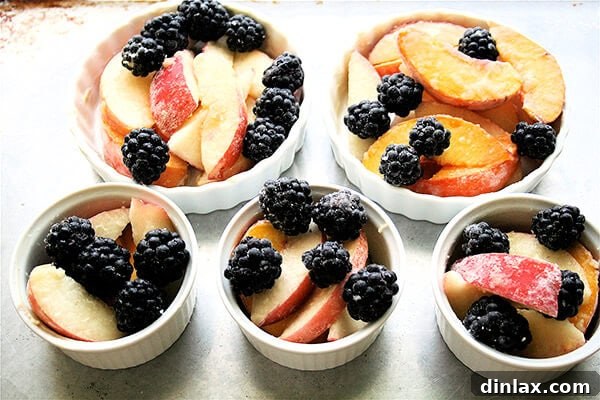
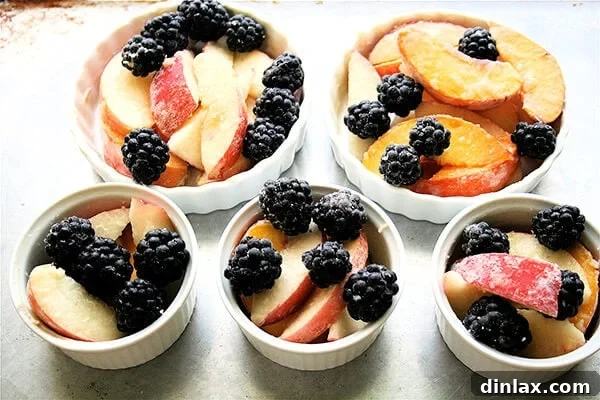
- Add the sliced nectarines and blackberries to the bowl with the sugar-flour mixture. Gently toss the fruit to ensure it’s evenly coated. Be careful not to mash the berries.
- Assemble and Bake the Crostata:
- Spoon the prepared fruit mixture evenly into your buttered baking dish or individual dishes. Distribute the fruit so it forms a relatively even layer.
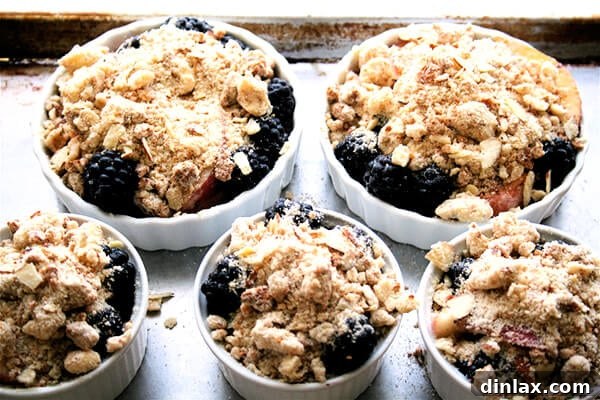
- Generously sprinkle the cornmeal topping over the fruit. Don’t press it down; simply let it fall loosely over the fruit to create that rustic, crumbly effect.
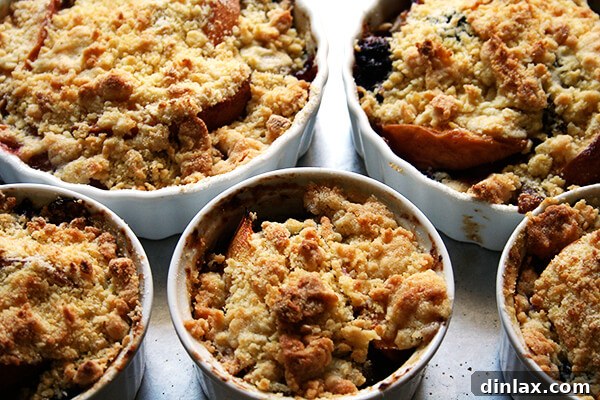
- Bake in the preheated oven. For individual servings, bake for approximately 30-40 minutes. For a large dish, it will take closer to an hour. The crostata is ready when the nectarines are tender (test with a fork), the fruit juices are bubbling, and the topping is beautifully golden brown and crisp.
- Once baked, remove the crostata from the oven and allow it to cool for at least 10 minutes. This cooling period is crucial as it allows the fruit juices to set and thicken, making for a cleaner and more enjoyable serving experience.
- Serve and Enjoy:
- Serve the warm Nectarine and Blackberry Crostata with a generous scoop of vanilla ice cream. The melting ice cream cascading over the warm, sweet fruit and crisp topping is an irresistible combination.
Tips for Success and Variations:
- Chilling the Butter: Always ensure your butter for the topping is very cold. This creates steam during baking, leading to a flakier, crispier texture.
- Don’t Overmix: When preparing the topping, pulse the ingredients just until combined. Overmixing can develop the gluten in the flour, resulting in a tougher topping.
- Fruit Quality: The success of this crostata heavily relies on the quality of your fruit. Use ripe, in-season nectarines and fresh blackberries for the best flavor.
- Adjust Sweetness: Taste your fruit before adding sugar. If your fruit is very sweet, you might reduce the sugar slightly in the filling. If it’s quite tart, you can add a little more.
- Spice It Up: If aniseed isn’t to your taste, consider other warm spices like a pinch of cinnamon, nutmeg, or cardamom in the topping, which also pair wonderfully with stone fruits.
- Storage: Leftover crostata can be stored at room temperature for up to 2 days, or in the refrigerator for up to 4 days. Reheat gently in a warm oven to regain some of its crispness.
The Enduring Appeal of Homemade Crostata
This Nectarine and Blackberry Crostata isn’t just a dessert; it’s a bridge between tradition and innovation, a delicious narrative that acknowledges the wisdom of culinary ancestors while embracing delightful new textures and flavors. It’s a testament to the fact that even within established rules, there’s always room for growth, discovery, and new favorites. The family authorities, I am confident, would undoubtedly approve of this delicious, oat-free triumph. So go ahead, bake this rustic masterpiece, share its warmth, and create new cherished memories around your own kitchen table.