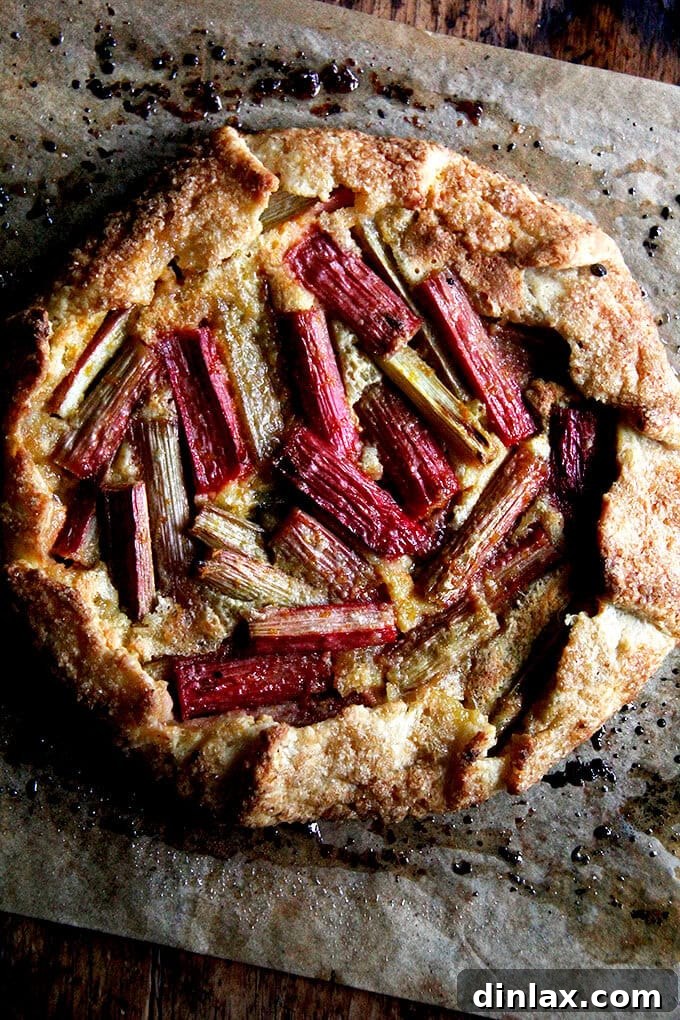
Rustic Rhubarb Frangipane Galette: An Easy & Flavorful Homemade Tart
There’s an undeniable charm to a galette. It’s the delightful, free-form cousin to the traditional pie, offering all the comforting flavors and textures with a fraction of the fuss. This particular Rhubarb Frangipane Galette is a testament to this, marrying a wonderfully flaky crust, a rich almond cream (frangipane) filling, and the vibrant, sweet-tart burst of seasonal rhubarb, all elevated by a delicate whisper of orange zest. It’s a combination I’ve cherished for years, and one I’m thrilled to share with you.
If the thought of baking a perfect pie crust has ever filled you with dread, fear not! This recipe is specifically designed to be foolproof, primarily thanks to the invaluable kitchen workhorse: the food processor. It makes both the pastry dough and the frangipane come together in mere minutes, often without even needing to wash the bowl in between stages. This efficiency means that with your ingredients prepped and ready, you can have this stunning, homemade dessert assembled and ready for the oven in as little as 15 minutes. The result is a rustically beautiful, utterly delicious tart that looks far more intricate than it is to create.
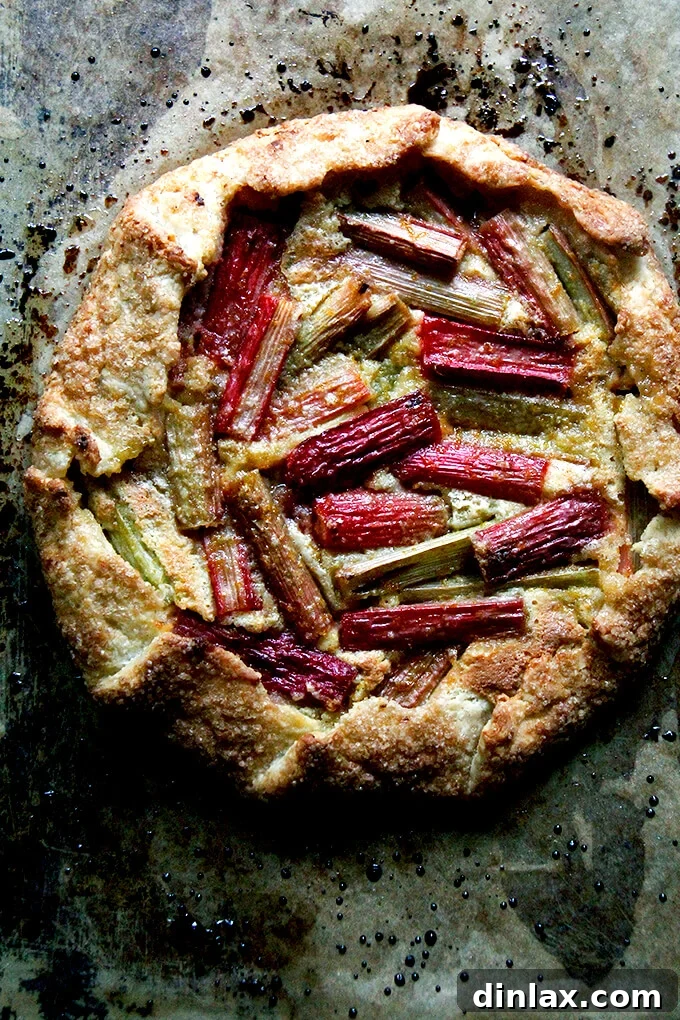
Why You’ll Love This Rhubarb Frangipane Galette: Easier Than Pie!
For many home bakers, the allure of a homemade pie is often overshadowed by the perceived complexity of crafting the perfect crust. This is precisely where the galette shines. Forget about lattice tops, intricate crimping, or the need for a pie plate – the galette is a celebration of simplicity and rustic charm. Its free-form nature means you simply roll out the dough, pile on the filling, and fold the edges casually over the fruit. The more organic and unrefined it looks, the more authentic and inviting it becomes.
But the ease doesn’t stop there. Our recipe utilizes a food processor for both the flaky pastry dough and the creamy frangipane. This means minimal effort, consistent results, and a significant reduction in cleanup. Imagine: a tender, buttery crust with delightful layers, paired with a rich almond cream, all complementing the vibrant seasonality of rhubarb. It’s a dessert that feels special, yet requires no advanced baking skills. It’s perfect for springtime gatherings, a lovely brunch addition, or simply a comforting treat on a quiet afternoon. And if you’re a fan of rhubarb, you might also enjoy a Rhubarb Schnapps for another delightful way to utilize this seasonal favorite, or explore more dessert recipes from our collection.
The Dynamic Trio: Rhubarb, Orange & Frangipane
The magic of this galette lies in the perfect synergy of its core ingredients, each contributing a unique profile that harmonizes beautifully with the others. Understanding these elements will deepen your appreciation for this delightful tart:
- The Star: Fresh Rhubarb. Rhubarb is truly the star of spring and early summer baking. Its distinct tartness is unparalleled, offering a bright, tangy counterpoint that prevents the dessert from becoming overly sweet. When baked, it softens into a tender, juicy filling, and its vibrant pink and red hues add a stunning visual appeal to the galette. Choosing fresh, firm stalks will ensure the best flavor and texture.
- The Zesty Companion: Orange. While rhubarb’s tartness is captivating, it benefits greatly from a complementary flavor. A generous amount of orange zest provides a bright, aromatic, and slightly sweet citrus note that beautifully mellows the rhubarb’s acidity without masking its unique character. It’s a classic pairing that brings a fresh dimension to every bite.
- The Luxurious Layer: Frangipane. What truly elevates this galette to an extraordinary level is the rich layer of frangipane, or almond cream. This creamy filling, made from finely ground almonds, butter, sugar, and egg, bakes up into a tender, moist, and subtly nutty layer beneath the fruit. It acts as a protective barrier, preventing the fruit’s juices from making the bottom crust soggy, while also adding a sophisticated depth of flavor and a luxurious texture that contrasts wonderfully with the flaky pastry and the soft rhubarb.
Secrets to a Flaky Crust and Perfect Galette
Even with the simplicity of a food processor, a few fundamental tips can make all the difference in achieving a truly exceptional galette:
- Keep It Cold: This cannot be stressed enough – cold butter and ice water are paramount for a flaky pastry. The tiny pockets of butter melt during baking, creating steam that separates the dough layers, resulting in that desirable flaky texture. If your kitchen is warm, consider chilling your food processor bowl and blade for a few minutes before you start.
- Pulse, Don’t Blend: When making the dough in the food processor, use quick pulses rather than continuous blending. This prevents the gluten from overdeveloping, which can lead to a tough crust. You want the butter pieces to be visible, roughly the size of small peas.
- Hydration is Key (but don’t overdo it!): Add ice water gradually, pulsing between additions, until the dough just comes together. It should be crumbly but cohesive when squeezed. Too much water makes the dough sticky and hard to handle; too little makes it dry and prone to cracking.
- Chilling Time Matters: After forming your dough discs, chilling them for at least 30 minutes (or even overnight) allows the gluten to relax, making the dough easier to roll out without shrinking back. It also re-chills the butter, enhancing flakiness.
- Parchment Paper is Your Best Friend: Rolling and baking your galette on a sheet of parchment paper eliminates sticking issues and makes transferring the delicate dough onto the baking sheet, and then to a cooling rack, incredibly simple and mess-free.
- Embrace Imperfection: Remember, a galette is meant to be rustic. Don’t strive for a perfectly round shape or uniformly crimped edges. The beauty lies in its handmade, artful imperfections.
Step-by-Step Culinary Journey: Creating Your Masterpiece Galette
1. Preparing the Vibrant Rhubarb Filling
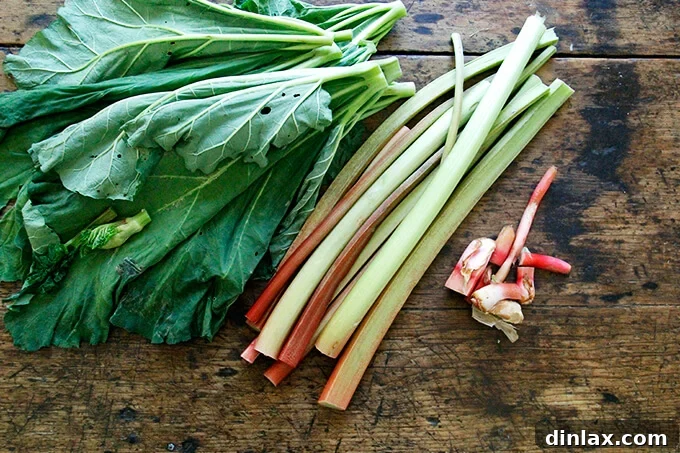
The journey begins with our star ingredient. For one galette, you’ll need approximately 3/4 lb (about 340 grams) of fresh rhubarb. Start by washing the stalks thoroughly. Trim off any tough or discolored ends. Next, cut the rhubarb stalks into uniform 2-inch (5 cm) lengths. While precision isn’t paramount, uniform pieces ensure even cooking.
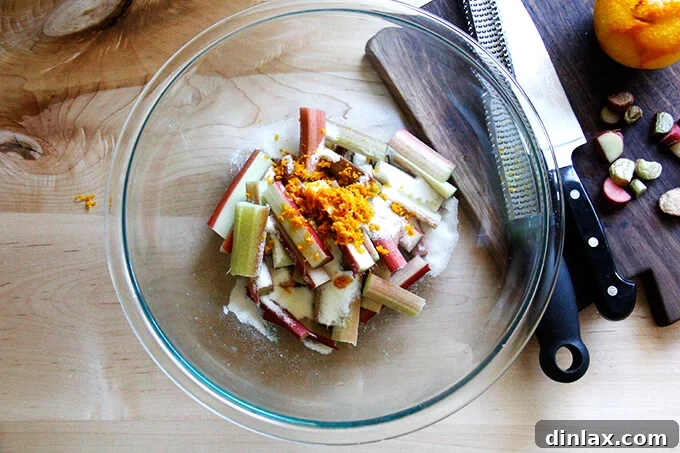
In a large mixing bowl, combine the cut rhubarb with about 1/4 to 1/3 cup of granulated sugar. The exact amount will depend on the tartness of your rhubarb and your personal preference for sweetness. To infuse a bright, citrusy note, finely grate the zest of one whole orange over the rhubarb. Toss all the ingredients gently until the rhubarb pieces are thoroughly coated. Set this bowl aside; the sugar will begin to draw out some of the rhubarb’s natural juices, forming a luscious syrup that will flavor the galette beautifully.
2. Crafting the Foolproof Flaky Pastry Dough in Minutes
This pastry dough recipe, inspired by the renowned David Lebovitz, is a game-changer. It leverages the food processor to create a perfectly flaky, tender crust with minimal effort, eliminating the need for extensive kneading or chilling times often associated with traditional pastry.
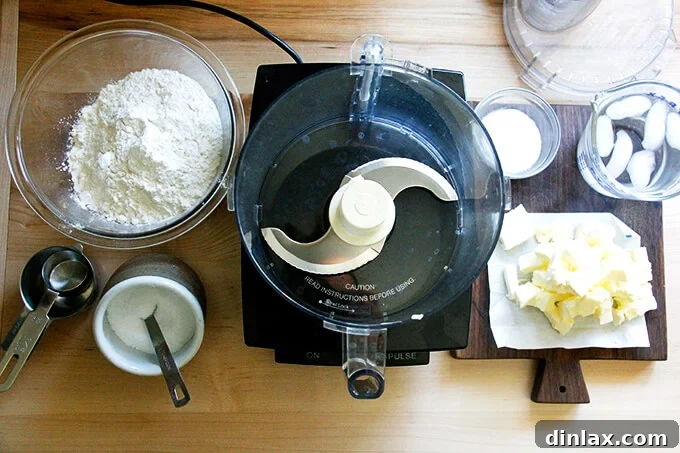
-
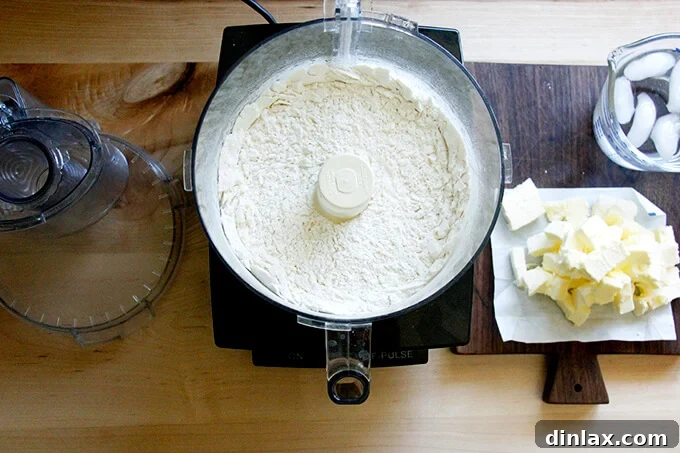
Initial Pulse of Dry Ingredients: Into the bowl of your food processor, add 2½ cups (320g) of all-purpose flour, 2 tablespoons of granulated sugar, and ½ teaspoon of kosher or table salt. Secure the lid and pulse these dry ingredients together a few times to ensure they are well combined.

The dry ingredients are perfectly blended, forming the base of our pastry. -
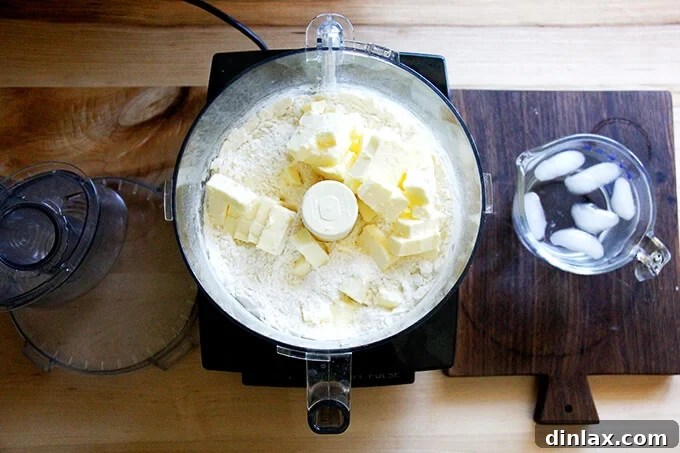
Incorporating Cold Butter: Next, add 2 sticks (16 tablespoons | 8 oz | 227 g) of very cold unsalted butter, which you’ve cut into small, even pieces. Distribute them over the dry ingredients. Pulse the food processor in short, 1-second bursts, approximately 10 times. You’re looking for the butter to be roughly the size of small peas. Don’t overmix; some larger pieces are desirable for flakiness.
The cold butter is expertly cut into small pieces and pulsed, creating the foundation for a remarkably flaky crust. Observe the ideal consistency: butter pieces resembling small peas, ensuring maximum flakiness. -
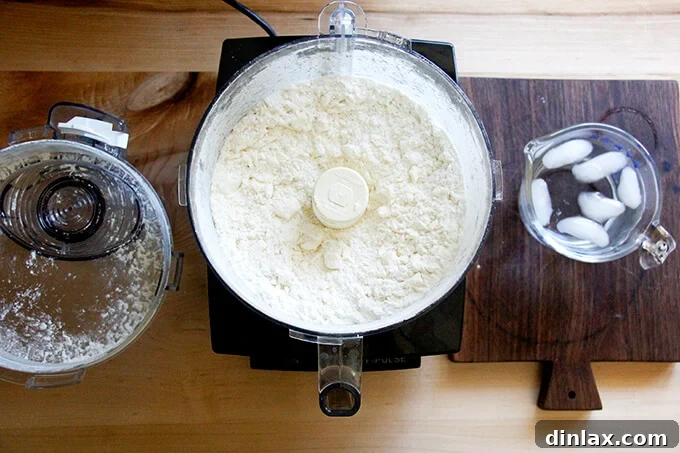
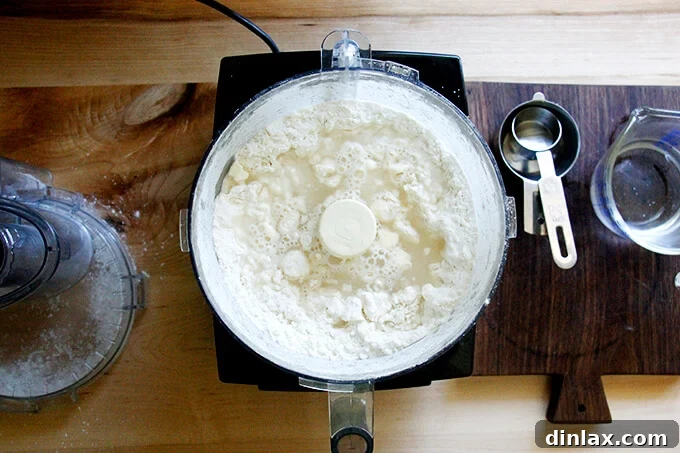
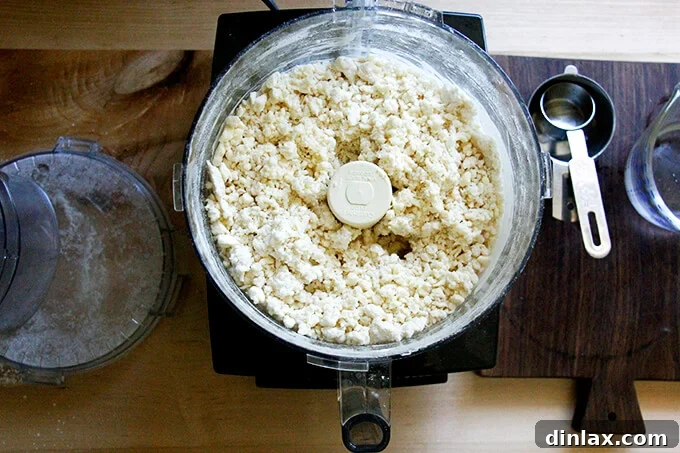
Adding Ice Water for Cohesion: Now, with the food processor running, gradually add ½ cup + 2 tablespoons of ice water through the feed tube. Pulse another 10 to 15 times until the mixture remains crumbly but, when pinched firmly between your fingers, holds together. Be careful not to add too much water, as this can make the dough tough.
The crucial addition of ice water, ensuring the perfect dough consistency without over-hydration. The dough has achieved the desired crumbly yet cohesive texture, ready for gentle shaping. -
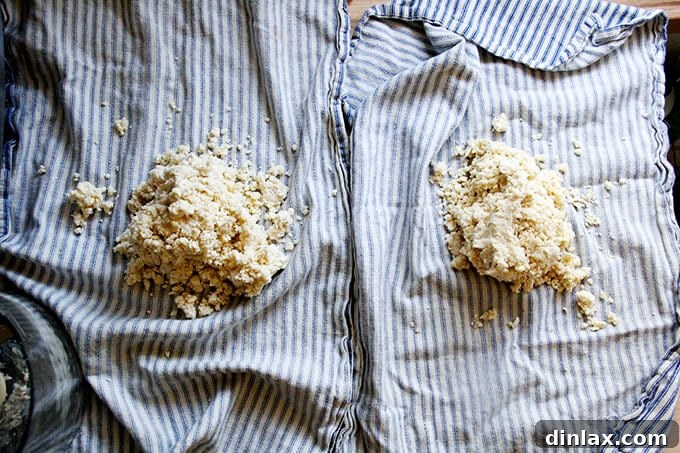
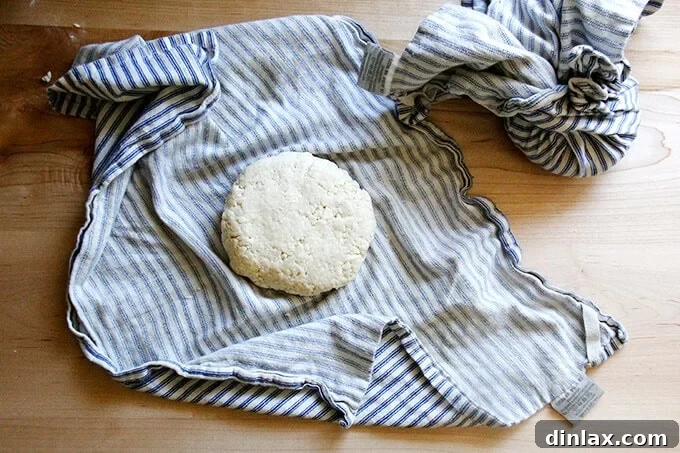
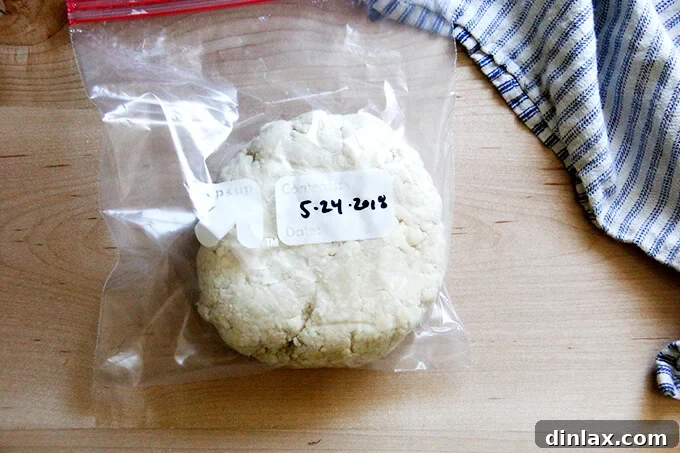
Forming and Chilling the Dough Discs: Lay two clean tea towels flat on your work surface. Divide the crumbly dough mixture evenly between the centers of the two towels. (A huge advantage here: you don’t need to wash the food processor bowl yet!). Gather the four corners of each towel, twisting them together to form a “beggar’s purse.” Gently squeeze and press the dough through the towel to form a round, flat disc. This technique helps compact the dough without overworking it. Store one dough disc in the freezer for future use – it keeps beautifully for several months! Keep the other dough disc wrapped or covered and refrigerate it for at least 30 minutes, or while you prepare the frangipane. Chilling the dough is crucial; it allows the gluten to relax, making the dough easier to roll out without tearing or shrinking, and further solidifies the butter for ultimate flakiness.
Dough divided and secured in tea towels, ready for shaping into discs. The rustic charm of shaping dough by hand, creating a perfect round within the towel. One dough round ready for the freezer – your future self will thank you! -
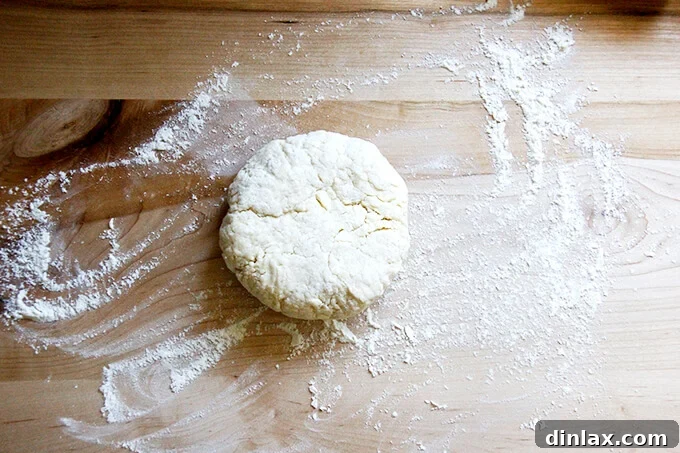
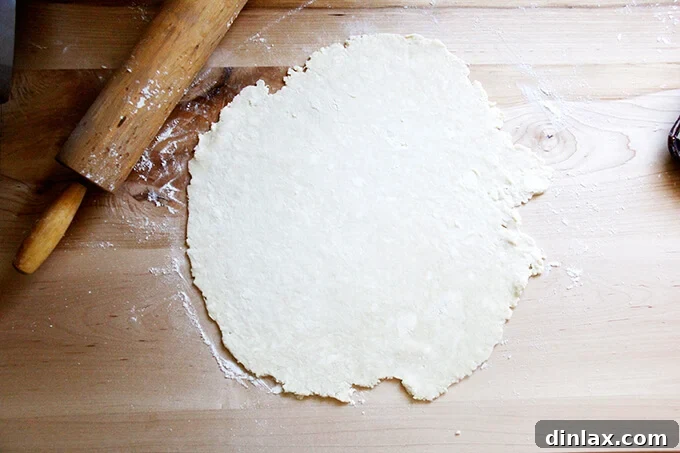
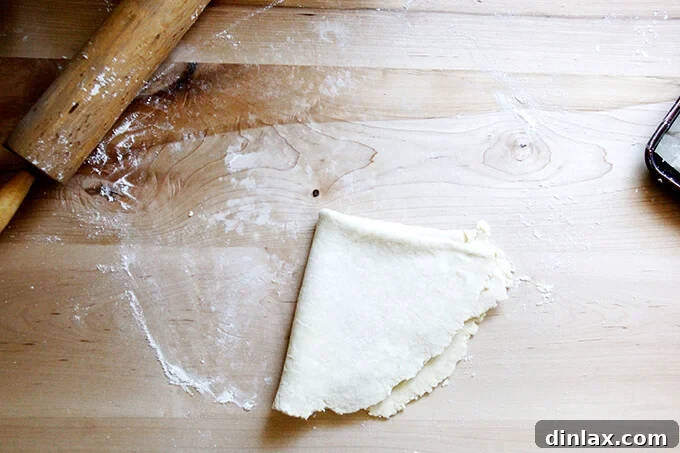
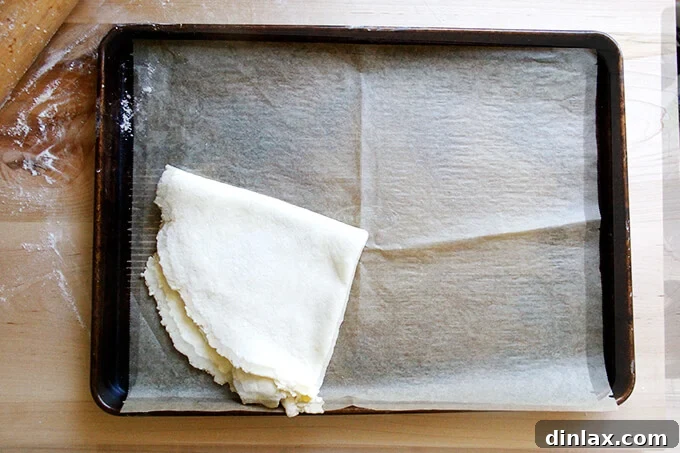
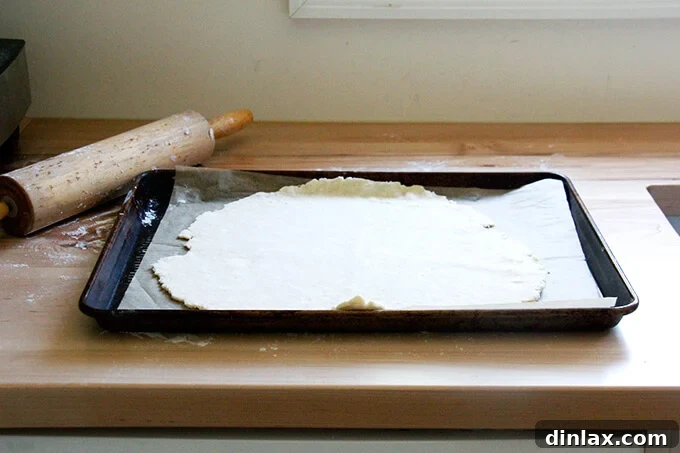
Rolling Out the Dough: On a lightly floured surface, unwrap one of your chilled dough rounds. Using a rolling pin, roll the dough out into a circle approximately 12 to 13 inches (30-33 cm) in diameter. To prevent sticking, use as little flour as possible, and occasionally lift and flip the dough. Once rolled, gently fold the dough into quarters to easily transfer it to a parchment-lined baking sheet.
The art of rolling dough: a smooth, evenly floured surface is key. Perfectly rolled: the dough achieves its ideal size, ready for the next stage of assembly. A clever folding technique ensures easy and intact transfer of your delicate dough. The carefully transferred dough, centered on the parchment-lined baking sheet, prepared for the filling. Ensuring a smooth baking experience, the dough rests perfectly on its parchment bed. -
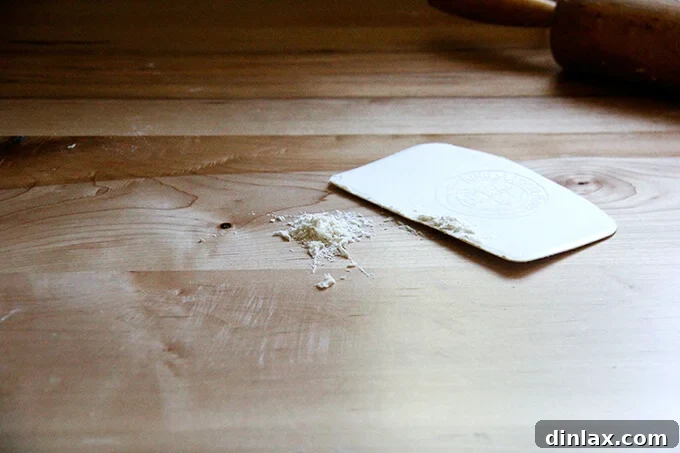
A Baker’s Handy Tool: Incidentally, I’ve found flexible dough scrapers to be incredibly helpful for moving and cleaning up dough. These from King Arthur Flour are particularly excellent for handling delicate pastry.
A humble yet indispensable tool for any baker: the flexible dough scraper.
3. Whipping Up the Velvety Frangipane (Almond Cream)
The frangipane layer is what truly sets this galette apart, adding a luxurious creaminess and nutty depth. Best of all, it can be prepared in the same food processor bowl you used for the dough, making this process incredibly streamlined!
-
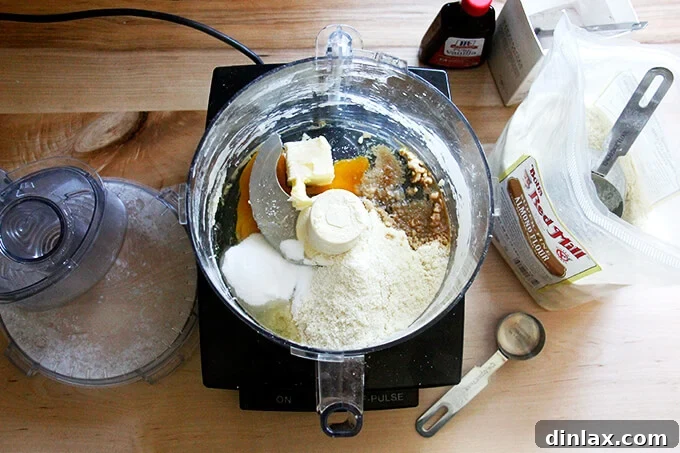
Combine Frangipane Ingredients: Into the (uncleaned) food processor bowl, add ½ cup almond flour (or finely ground almonds – see notes below for details), 2 tablespoons granulated sugar, a tiny pinch of salt, 2 tablespoons of unsalted butter (softened to room temperature), 1 egg (a smaller egg is preferred), and 2 teaspoons of vanilla extract. For an extra layer of warmth and complexity, you could substitute vanilla with rum, brandy, or bourbon.
The collection of ingredients poised to become rich, creamy frangipane. -
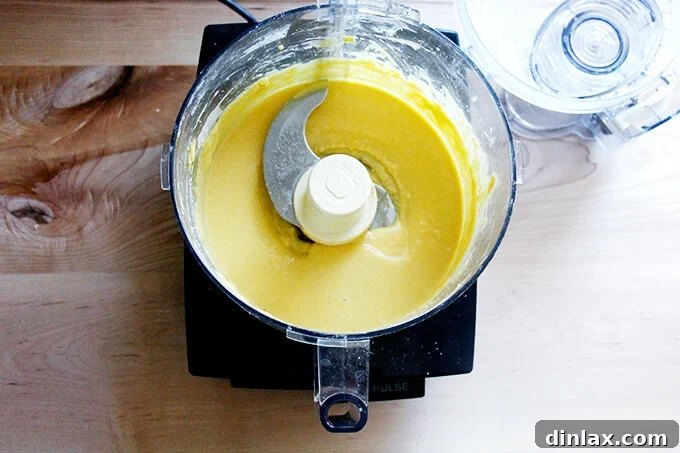
Purée until Silky Smooth: Process the mixture until it is completely smooth and homogeneous. Stop and scrape down the sides of the bowl with a spatula once or twice to ensure all ingredients are thoroughly incorporated. The resulting frangipane should be a velvety, pale cream.
The frangipane, transformed into a luxuriously smooth and creamy texture.
4. Assembling Your Rustic Galette Masterpiece
With all your components ready, the final assembly is quick and intuitive, transforming simple ingredients into a visually appealing and incredibly delicious dessert.
-
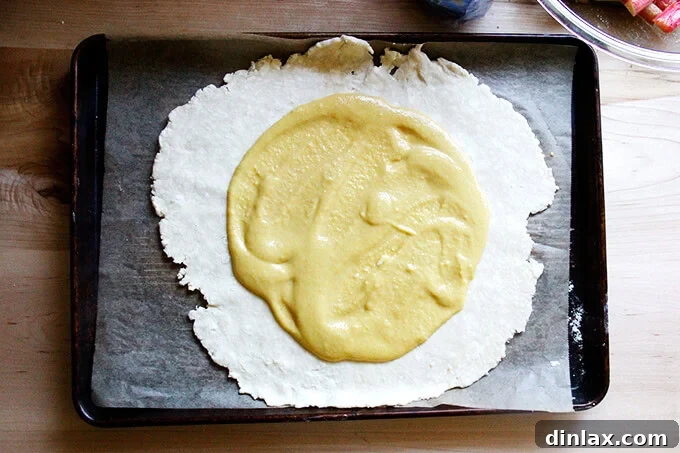
Spread the Frangipane: Spoon the smooth frangipane mixture onto the center of your rolled-out dough. Using the back of a spoon or an offset spatula, spread it evenly, making sure to leave a generous 1- to 2-inch (2.5-5 cm) border of plain pastry all around the edge. This border will be folded over to create the galette’s rustic crust.
The first layer: luscious frangipane, forming a creamy bed for the fruit. -
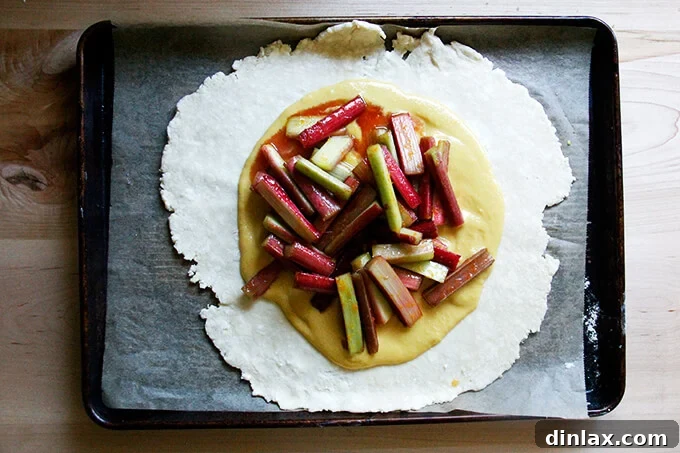
Layer with Rhubarb: Carefully heap the sugared rhubarb, along with any delicious juices that have accumulated in the bowl, over the frangipane layer. Spread the rhubarb out evenly. For an extra touch of beauty, you can strategically place some of the most vibrantly red rhubarb pieces on top, as these will truly pop after baking.
The star of the show: rhubarb, beautifully arranged over the almond cream. -
Fold the Edges: Gently begin to fold the exposed edge of the pastry dough inward over the rhubarb filling. Work your way around the circle, creating a rustic, pleated border that partially encloses the fruit. Don’t worry about making it perfect – the charm of a galette lies in its handmade, organic appearance. This folding technique is intuitive, and if you need visual guidance, refer to the video linked at the top of this article.
-
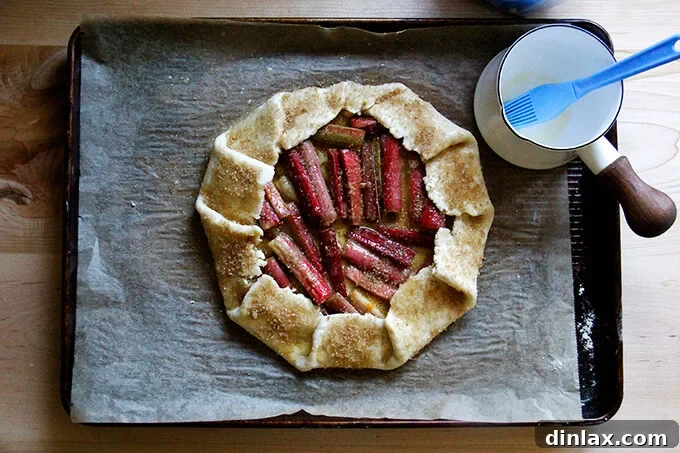
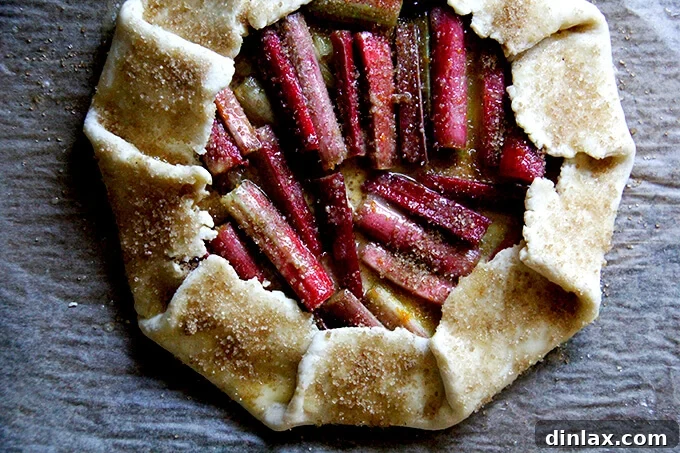
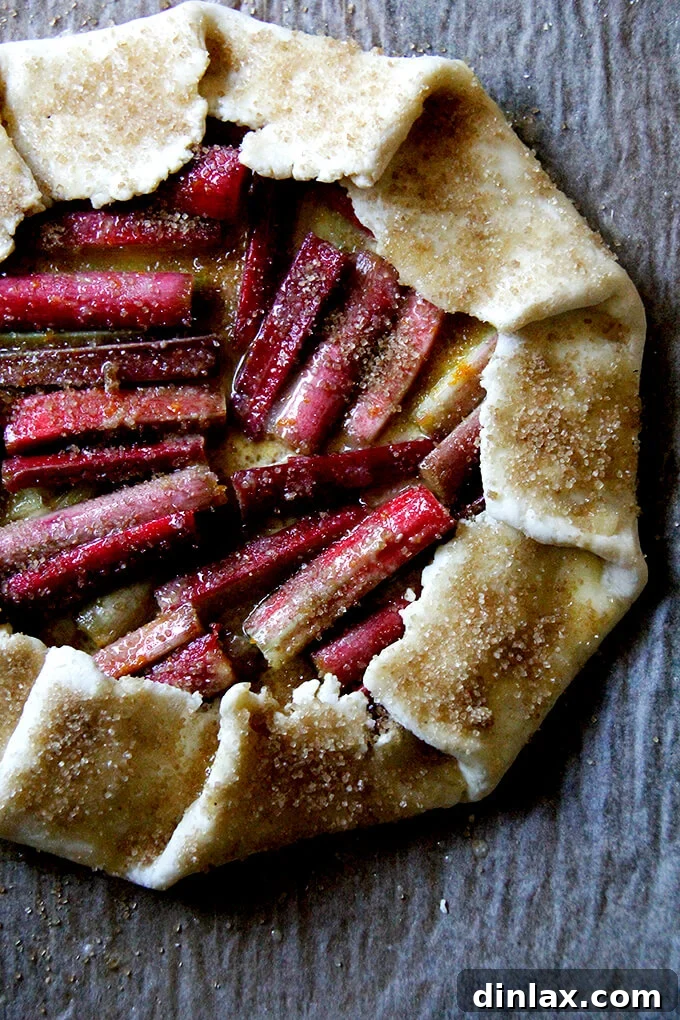
The Final Touches Before Baking: For a golden, inviting crust and a glistening fruit filling, brush the folded pastry edge with 2 tablespoons of melted butter. Drizzle any remaining melted butter over the exposed rhubarb filling. Finally, sprinkle 1 to 2 tablespoons of granulated sugar evenly over the entire galette. Turbinado sugar is an excellent choice here, as its larger crystals provide a lovely sparkle and a pleasant crunch once baked.
The galette is elegantly prepared, with a buttered crust and sugared fruit, promising a golden finish. Ready for its oven transformation: the details of the folded pastry and rich filling. A final look at your culinary creation before it enters the heat of the oven.
5. Baking to Golden Perfection & Serving Suggestions
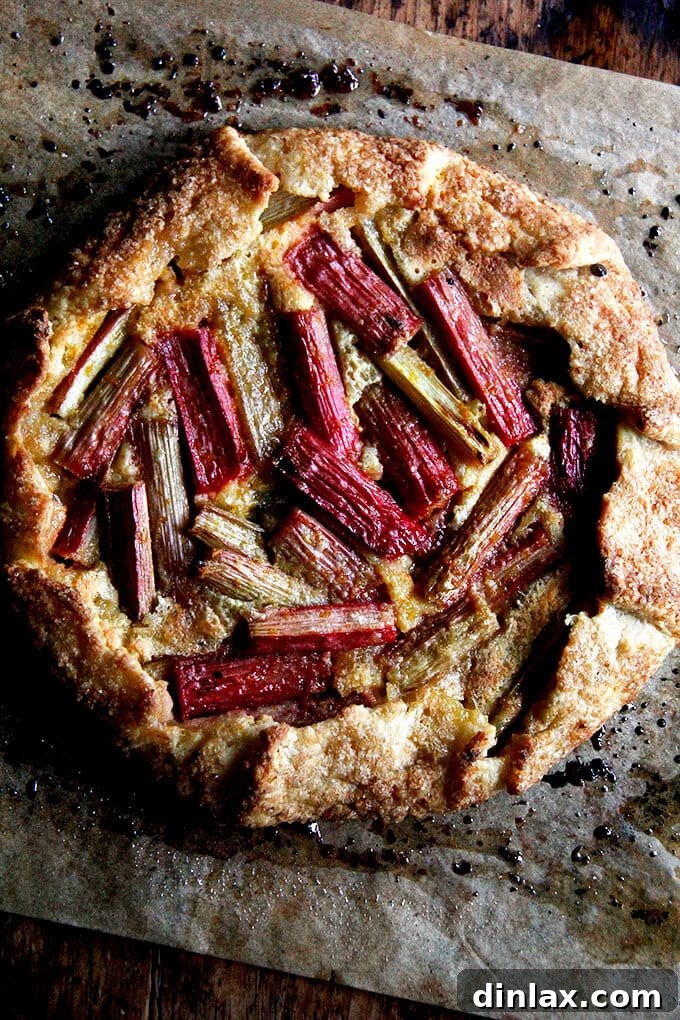
Preheat your oven to a welcoming 400°F (200°C), ensuring a rack is positioned in the center for even baking. Carefully slide your assembled galette into the preheated oven and let the magic happen. Bake for 35 to 40 minutes. You’ll know it’s ready when the pastry crust turns a beautiful golden brown, and the rhubarb filling is tender, bubbly, and fragrant. The aromas filling your kitchen will be absolutely irresistible!
Once baked, gently remove the sheet pan from the oven. Allow the galette to rest on a cooling rack for 5 to 10 minutes. This crucial resting period allows the parchment paper or Silpat to cool sufficiently, making it easier to handle. Then, carefully grasp the edges of the parchment or Silpat and slide the galette onto a wire cooling rack to cool further, or directly onto a cutting board if serving warm. Cut your magnificent galette into generous wedges.
This Rhubarb Frangipane Galette is utterly divine on its own, its balance of sweet, tart, and nutty flavors being perfectly satisfying. However, for an extra touch of indulgence, consider serving it warm with a scoop of creamy vanilla ice cream that slowly melts into the fruit, or a dollop of lightly sweetened whipped cream. The cool, rich accompaniments provide a wonderful contrast to the warm, flaky pastry and tender fruit.
Rhubarb Frangipane Galette Recipe
Description
This Rhubarb Frangipane Galette is a stunning yet simple rustic tart, perfect for showcasing seasonal rhubarb. It features a wonderfully flaky pastry crust made effortlessly in a food processor, a rich and creamy almond frangipane filling, and a sweet-tart rhubarb and orange zest topping. It’s a delightful alternative to traditional pies, offering robust flavor with a charming, free-form presentation.
- Author: Alexandra Stafford
- Total Time: Approximately 55 minutes (20 min prep + 35 min bake)
- Prep Time: 20 minutes
- Cook Time: 35 minutes
- Yield: 1 galette (serves 6-8)
- Category: Dessert
- Method: Baking
- Cuisine: French, American
- Rating: 5 out of 5 stars (based on 12 reviews)
Ingredients
For the Rhubarb Filling:
- ¾ lb (about 340g) fresh rhubarb stalks, ends trimmed, cut into 2-inch (5 cm) lengths
- ¼ to ⅓ cup granulated sugar (adjust according to rhubarb’s tartness and personal preference)
- Zest from 1 large orange
For the Foolproof Pastry Dough (Yields 2 discs):
- 2½ cups (320g) all-purpose flour
- 2 tablespoons granulated sugar
- ½ teaspoon kosher or table salt
- 2 sticks (16 tablespoons | 8 oz | 227g) unsalted butter, very cold and cut into small cubes
- ½ cup + 2 tablespoons ice water
For the Frangipane (Almond Cream):
- ½ cup almond flour or finely ground blanched almonds (see recipe notes below for details)
- 2 tablespoons granulated sugar
- Pinch of salt
- 2 tablespoons unsalted butter, softened to room temperature
- 1 egg (preferably small, to maintain frangipane consistency)
- 2 teaspoons vanilla extract (or rum, brandy, or bourbon for a different flavor profile)
For Assembly and Serving:
- 2 tablespoons unsalted butter, melted
- 1 to 2 tablespoons granulated sugar for sprinkling (turbinado sugar for extra crunch and sparkle is recommended)
- Vanilla ice cream or lightly sweetened whipped cream, for serving (optional, but highly recommended)
Instructions
- Prepare Oven & Baking Sheet: Preheat your oven to 400°F (200°C) and place an oven rack in the center. Line a large baking sheet with parchment paper or a silicone baking mat (Silpat) to prevent sticking.
- Prepare the Rhubarb: In a spacious bowl, combine the trimmed and cut rhubarb pieces with the granulated sugar and orange zest. Toss gently to ensure the rhubarb is evenly coated. Set this aside to allow the flavors to meld and juices to release.
- Make the Pastry Dough: In the food processor bowl, pulse together the all-purpose flour, 2 tablespoons sugar, and ½ teaspoon salt for a few seconds. Add the very cold, cubed unsalted butter. Pulse in short, 1-second bursts, about 10 times, until the butter pieces are roughly the size of small peas.
- With the food processor running, gradually add the ½ cup + 2 tablespoons of ice water through the feed tube. Continue to pulse for another 10 to 15 times, or until the mixture appears crumbly but holds together when firmly pinched between your fingers. Be careful not to overmix.
- Form & Chill Dough: Divide the dough mixture evenly into two portions. Place each portion into the center of a clean tea towel. Gather the towel’s corners and twist to form a “beggar’s purse,” then gently squeeze and press the dough into a flat, round disc (approximately 5-6 inches in diameter). Transfer one dough disc to a freezer-safe bag and freeze for up to 3 months. Refrigerate the other dough disc for at least 30 minutes, or while you prepare the frangipane.
- Roll Out Dough: On a lightly floured surface, unwrap the chilled dough disc. Roll it out into a circle about 12 to 13 inches (30-33 cm) in diameter. Use minimal flour to prevent sticking, and flip the dough occasionally to ensure even rolling. Carefully fold the rolled dough into quarters and transfer it to your prepared baking sheet. Unfold it gently.
- Make the Frangipane: Without washing the food processor bowl, add the almond flour (or finely ground almonds), 2 tablespoons sugar, pinch of salt, softened butter, egg, and vanilla extract (or chosen liquor). Process until the mixture is completely smooth and creamy, scraping down the sides as needed.
- Assemble the Galette: Spoon the prepared frangipane onto the center of the rolled-out dough, spreading it evenly and leaving a clear 1- to 2-inch (2.5-5 cm) border of plain pastry around the edges. Next, carefully heap the sugared rhubarb, along with any accumulated juices, over the frangipane layer. Spread the rhubarb out to cover the almond cream.
- Gently fold the exposed pastry border inward over the rhubarb filling, creating a rustic, pleated edge. Do not aim for perfection; the free-form look is part of the galette’s charm.
- Final Pre-Bake Touches: Brush the folded pastry edge with the 2 tablespoons of melted butter. Drizzle any remaining melted butter over the exposed rhubarb filling. Evenly sprinkle 1 to 2 tablespoons of sugar (turbinado sugar works wonderfully) over the entire galette for a golden, caramelized finish.
- Bake: Transfer the assembled galette to the preheated 400°F (200°C) oven. Bake for 35 to 40 minutes, or until the pastry crust is beautifully golden brown and the rhubarb filling is tender and bubbling.
- Cool & Serve: Remove the galette from the oven and place the baking sheet on a wire cooling rack for 5 to 10 minutes to cool slightly. Carefully slide the galette (still on its parchment paper) onto a wire rack to cool further, or directly onto a cutting board for serving. Cut into wedges. Serve warm, either on its own or with a scoop of vanilla ice cream or a dollop of lightly sweetened whipped cream for an extra layer of deliciousness.
Recipe Notes & Expert Tips:
- Almond Flour Alternatives: If you don’t have store-bought almond flour, you can easily make your own by pulsing blanched almonds (whole, sliced, or slivered) in your food processor until they form a fine meal. Be careful not to over-process, or you’ll end up with almond butter! Using whole, unblanched almonds will give your frangipane a slightly darker, more rustic appearance, but the flavor will still be fantastic.
- Sweetness Adjustment: Rhubarb’s tartness can vary significantly. The suggested ¼ to ⅓ cup of sugar is a good starting point, but feel free to taste a small piece of raw rhubarb (after sugaring for a few minutes) and adjust the sugar quantity to your preference. Remember, serving with a scoop of ice cream or whipped cream is a classic way to balance any residual tartness.
- Freezing Dough for Later: The convenience of having an extra dough disc in the freezer cannot be overstated. When you’re ready to bake another galette, simply thaw the frozen dough overnight in the refrigerator before rolling it out as directed. This makes impromptu baking a breeze!
- Fruit Variations: While rhubarb is spectacular, this galette recipe is incredibly versatile. Experiment with other seasonal fruits like thinly sliced apples, ripe peaches, mixed berries, plums, or even figs. Adjust sugar levels as needed for different fruits.
- Storage: Leftover galette can be stored at room temperature for up to 2 days, or in the refrigerator for up to 4 days. Reheat gently in a low oven for a few minutes to restore some of its crispness.