Skip to Recipe
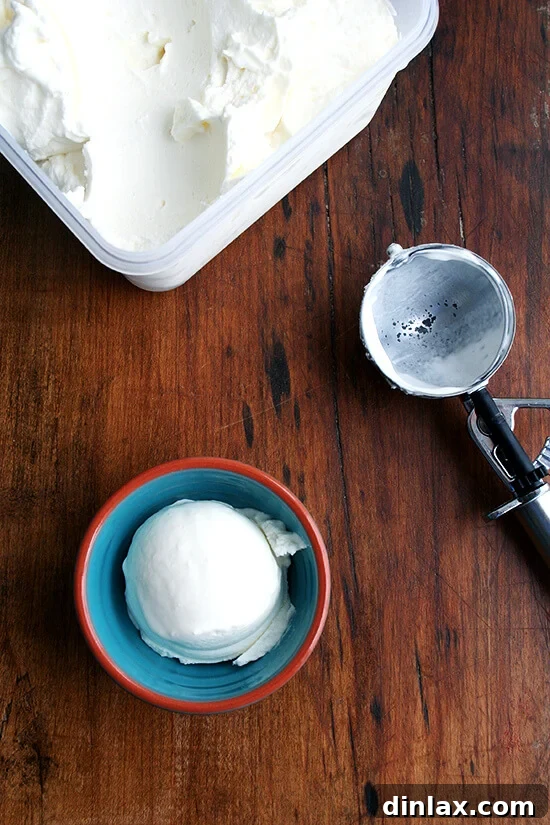
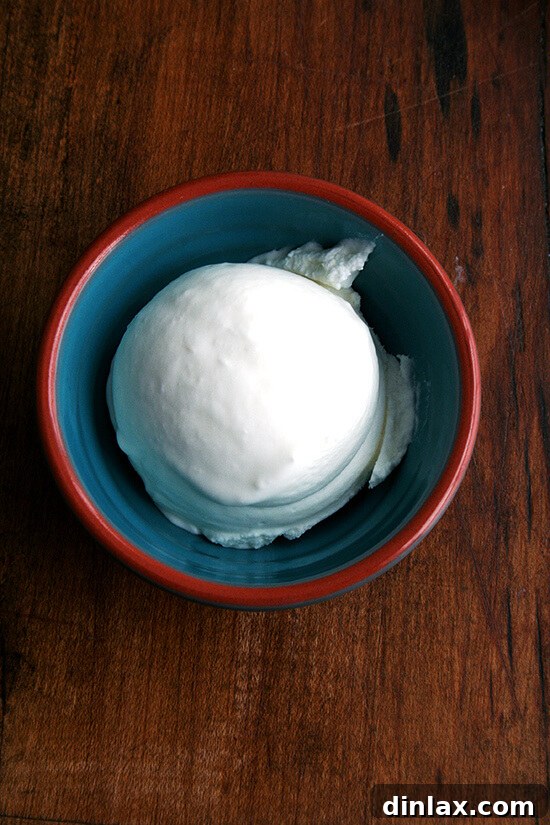
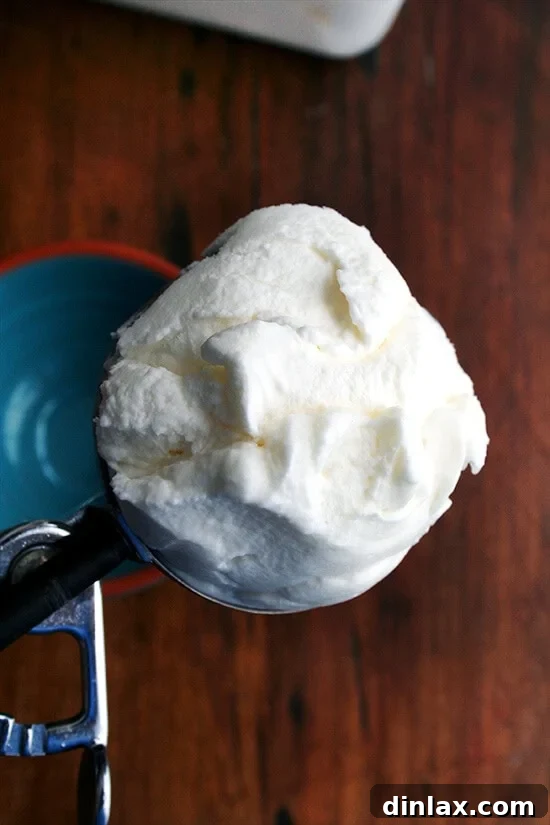
From Kitchen Chaos to Culinary Serenity: The Ultimate Easy Mascarpone Sorbet
Last week, my kitchen transformed into an arena of ambitious culinary experiments and an equally impressive string of mishaps. What began with the noble pursuit of crafting exquisite homemade dishes quickly devolved into a series of frustrating failures, wasted ingredients, and even (regrettably) a terse exchange with my bewildered three-year-old. It’s a tale I feel compelled to share, not merely for commiseration, but as a cautionary warning – and ultimately, a joyful testament to the soothing, transformative power of truly simple, delicious food.
It all started with an audacious decision: to finally conquer the art of homemade ricotta gnudi. Naturally, this wasn’t just about making gnudi; it was about elevating the entire experience. “Homemade gnudi,” I reasoned with an almost reckless optimism, “would surely be all the more delectable if I began with ricotta made from scratch.” And so, the intricate process began, a labor of love that promised unparalleled freshness and flavor. Little did I know, this initial stroke of culinary brilliance was merely the first domino in a chain of increasingly complex and ultimately disastrous endeavors.
Having successfully made the ricotta, a fresh wave of resourcefulness washed over me. Waste not, want not, right? The precious whey, a rich byproduct of the ricotta-making process, couldn’t possibly be discarded. Visions of rustic, wholesome bread danced in my head. I knew from past experience that baking bread was often a rewarding, no-fuss affair, always adored by my family and wonderfully convenient to have on hand. Two fragrant loaves were soon rising, adding yet another layer of activity and anticipation to an already bustling kitchen scene.
The Gnudi Saga: A Humbling Lesson in Patience and Precision
In the midst of bread-making and other kitchen pursuits, the gnudi assembly seemed deceptively simple. A swift mixing of ingredients, followed by precise piping, careful snipping, and a generous dusting of semolina flour. Each step felt like a small victory, each photo snapped for future sharing fueling my growing excitement. I envisioned showcasing these perfectly formed ricotta clouds. But gnudi, as I was about to learn with a disheartening thud, demand patience – a full three days of meticulous refrigeration, with daily flips to ensure an even coating and proper firming. The anticipation during these three days was excruciating, a silent promise of pillowy, melt-in-your-mouth goodness awaiting their moment of glory.
Day three finally arrived, brimming with nervous expectation. I meticulously re-read the instructions, my heart pounding with a mix of hope and trepidation. With the utmost care, I lowered a dozen of my precious ricotta creations into simmering water. This was it, the moment of truth. And then, the crushing reality: my beautiful gnudi, instead of firming up into delectable dumplings, began to dissolve. First, subtly in the boiling water, then irrevocably disintegrating in the sauté pan. A profound wave of disappointment washed over me. Was it the homemade ricotta? Had I missed a crucial step? Defeated and somewhat disheartened, I decided to postpone any further cooking until the next day, hoping a fresh perspective and a cool head would magically solve the mystery of the disappearing gnudi.
A Brief Respite: The Unsung Hero of Whey Bread
Amidst the gnudi-induced gloom and lingering questions, a beacon of undeniable success emerged: the whey bread. Its warm, comforting aroma now filled the kitchen, a welcome reminder that not all was lost. As I thoughtfully prepared knockout peanut butter and jelly sandwiches for the little ones cruising around (and for myself, in a moment of stress-eating comfort), I felt a flicker of genuine pride. Not a single drop of that ricotta-making byproduct had gone to waste. The bread was truly scrumptious, boasting a subtle tang and a wonderful texture – a small but significant win in an otherwise challenging culinary week.
This minor triumph, however, inadvertently sparked another “brilliant” idea. The next morning, that fantastic bread would become the star of a family breakfast: French toast. Even better, I decided, it would be baked French toast, a dish that could be gloriously assembled the night before for a stress-free morning. I envisioned my family waking to the inviting, comforting smells of cinnamon and sugar, greeted by a golden pan of homemade goodness and a jug of genuine Vermont maple syrup sitting invitingly on the table. It was going to be the perfect, harmonious family breakfast.
The French Toast Fiasco: A Parent’s Breaking Point
But perfection, it seemed, was not on the menu that day. One of my children, without even taking a single bite, declared with defiant certainty, “I don’t like this.” In that precise moment, the cumulative stress of the dissolving gnudi, the endless kitchen cleanup, the unfulfilled culinary ambitions, and this perceived ingratitude converged. Steam, I swear, shot from my ears and nose. My face flushed a vivid red, I might have (and likely did, if I’m being honest) lunge across the table, fork poised with a piece of French toast, issuing a dramatic ultimatum: “Eat this bite, or face a lifetime devoid of food, fun, stories, or songs!” It was a truly low point, a true testament to the emotional toll that kitchen failures, compounded by the pressures of parenthood, can inflict.
Suddenly, clarity struck amidst the chaos. The batch of uncooperative gnudi, the wasted effort, the perceived ingratitude – it was all weighing heavily on my mind. Perhaps, I conceded with a sigh, I was being a tad harsh on the small, pouting creature sitting across from me. A deep breath was definitely in order. I needed a pause, a moment to simply take a breather and enjoy my own French toast – so what if that child continued to pout, to play with her food, and to make no signs of ever putting it into her mouth?
A Culinary Revelation: The Simple Joy of Mascarpone Sorbet
As is often my habit in times of culinary distress, I sought solace in a well-worn cookbook. Perhaps my well-loved copy of Italian Easy London River Cafe held the key to my gnudi woes. I remembered seeing a chapter dedicated to gnudi recipes, and my spirits began to lift almost immediately. Surely Rose and Ruth, with their culinary wisdom, would offer the guidance I desperately needed. But then, as always happens when I open that particular book, I found myself delightfully sidetracked, especially upon reaching the chapter on fruits and ice creams. The lure of sweet, frozen treats proved irresistible.
Just as I began to unwind and relax a bit, I instinctively opened the window to find that spring – vibrant and alive with everything in bloom! – had truly arrived. A hint of humidity in the air suggested warmer days ahead, and suddenly, nothing sounded more appealing than a refreshing sorbet. And there it was, staring back at me from the pages: a recipe for a simple, elegant sorbet made with only four ingredients – water, sugar, lemon, and mascarpone. It felt like a culinary whisper, a gentle call to embrace simplicity and find joy in straightforward deliciousness.
Instead of returning to the unfinished business of the remaining gnudi, which lay in the fridge like unresolved culinary failures, I made an executive decision. The mascarpone sorbet it would be. It promised quick gratification: a mere five minutes of preparation, followed by a swift twenty minutes of churning in the ice cream maker. Within moments, the prospect of something cool, creamy, and utterly delicious was not just a distant dream, but a rapidly approaching reality, a true light at the end of a long, chaotic kitchen tunnel.
For a fleeting second, the old habit of overcomplication resurfaced. “Should I make the mascarpone from scratch?” I mused, knowing I could and believing it would somehow make the sorbet even better, more authentic. But then, the hard-earned lessons of the week clicked into place. No. I had learned my lesson. Simplicity, not complexity, was the virtue to embrace. And as that exquisitely lemony, perfectly sweet, and incredibly creamy-textured sorbet began to coalesce in my ice cream maker, I knew, with absolute certainty, that I had made the right choice. Never before had such little effort yielded something so profoundly refreshing, so undeniably delicious, and so utterly satisfying.
With each spoonful of that first glorious bowl of mascarpone sorbet, the anxieties of the gnudi, the French toast fiasco, and the overall kitchen chaos melted away. It was more than just a dessert; it was a revelation – a powerful reminder that sometimes, the most extraordinary culinary experiences come from the most unassuming combinations. From that moment, I resolved to approach future brilliant ideas with a newfound caution, always seeking the elegant path of simplicity. Because sometimes, true deliciousness doesn’t need to be complicated; it just needs to be perfect.
If you’ve ever found yourself in a similar culinary predicament, battling ambitious recipes only to yearn for a simple win, or if you simply crave an easy yet sophisticated dessert that will impress without the fuss, this mascarpone sorbet is your perfect escape. It’s a delightful reminder that beauty often lies in understatement, and true deliciousness can be achieved without unnecessary complications. Embrace the simplicity; your taste buds (and your sanity) will undoubtedly thank you for it.
The 4-Ingredient Mascarpone Sorbet: A Recipe for Effortless Bliss
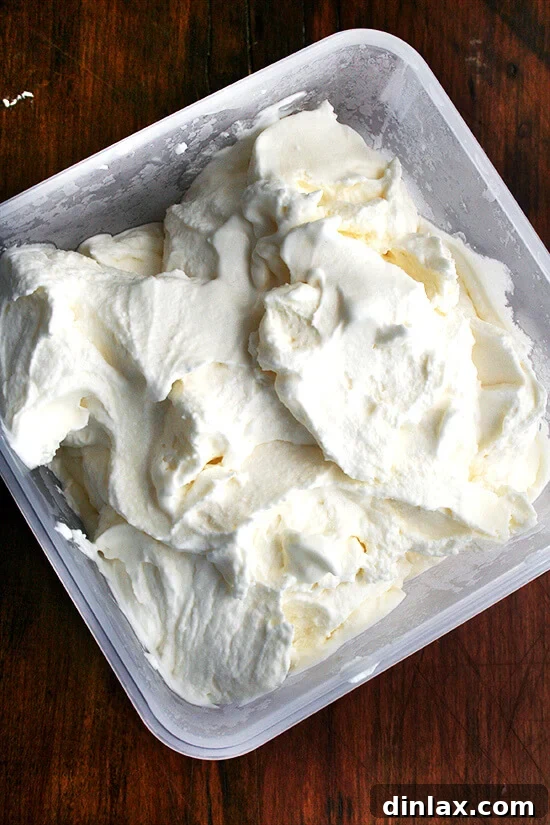
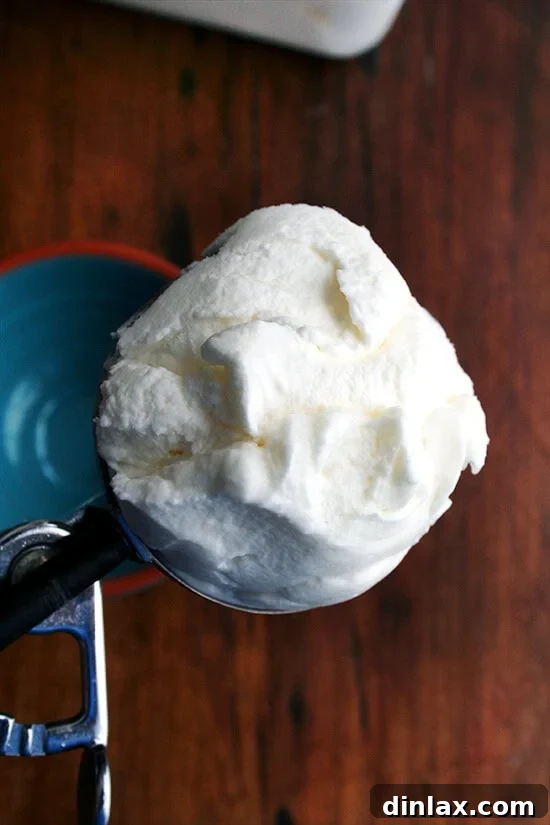
Just four essential ingredients come together to create this delightful and refreshingly creamy treat. Prepare to be amazed by the simplicity and the sublime taste!
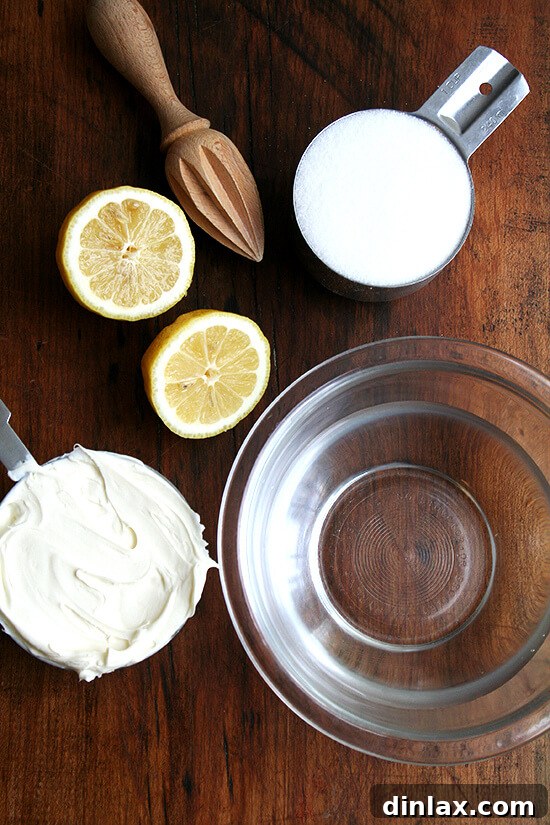
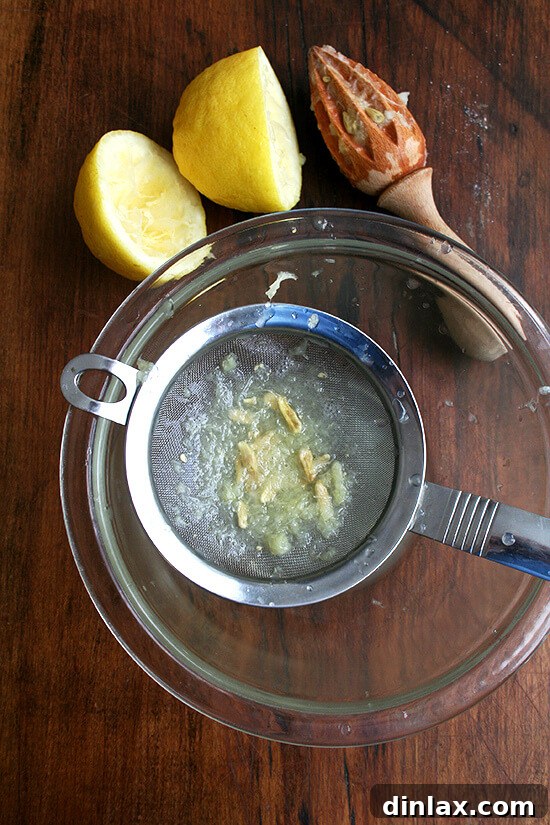
The most challenging part of this incredibly easy recipe? Likely just juicing a fresh lemon!
Print Recipe
Mascarpone Sorbet
5 Stars
4 Stars
3 Stars
2 Stars
1 Star
No reviews
- Author: Alexandra Stafford at alexandracooks.com
Total Time: 30 minutes
Yield: 4 servings 1x
Description
Source: Italian Easy: Recipes from the London River Cafe
Note: This delightful sorbet can be enjoyed immediately after churning for a softer, almost soft-serve consistency. However, for a firmer, more traditional sorbet texture, we highly recommend transferring it to an airtight container and allowing it to firm up in the freezer for at least an hour. If you’re planning to serve this for guests, the sorbet is at its absolute peak of creaminess and flavor on the day it’s prepared, offering the most luxurious experience. On subsequent days, it remains incredibly delicious but will benefit from sitting at room temperature for a few minutes before serving to soften slightly and regain its optimal scoopable texture.
Update (April 11, 2013): After some experimentation, I’ve discovered a crucial tip for texture perfection. Storing the sorbet in my main freezer (the one attached to the fridge) consistently yields a perfect texture. It seems my free-standing deep freezer might be a bit too intense, causing the sorbet to become overly hard. For optimal results and that ideal creamy consistency, use your regular freezer.
This recipe transforms incredibly simple, readily available ingredients into an extraordinary and unexpectedly elegant dessert. Its bright, zesty lemon flavor, perfectly balanced with the rich, subtle creaminess of mascarpone, creates a refreshing sorbet that’s surprisingly easy to achieve. It’s the ideal treat for a warm day, a light and sophisticated finish to any meal, or a blissful escape from overly complicated culinary adventures.
Ingredients
- 1 cup superfine sugar (If superfine sugar is unavailable, regular granulated sugar works perfectly well. The whisking in the first step will help dissolve it sufficiently for a smooth sorbet.)
- 1 1/2 cups cold water
- 1 large fresh lemon, juiced to yield approximately 3 tablespoons of juice (Freshly squeezed lemon juice is key for the best flavor!)
- 1 1/2 cups high-quality mascarpone cheese
Instructions
- In a medium mixing bowl, vigorously whisk together the sugar and cold water until the sugar mostly dissolves, forming a light, clear syrup. Don’t be concerned if you still feel a few sugar granules or if the syrup isn’t particularly thick; a smooth base is the primary goal here. Once combined, stir in the freshly squeezed lemon juice until it’s thoroughly incorporated into the sugar-water mixture.
- In a separate, larger bowl, gently whisk the mascarpone cheese until it becomes noticeably lighter and wonderfully smooth. This crucial step helps to aerate the mascarpone, contributing to the wonderfully creamy and luxurious texture of the final sorbet. Ensure there are no lumps remaining.
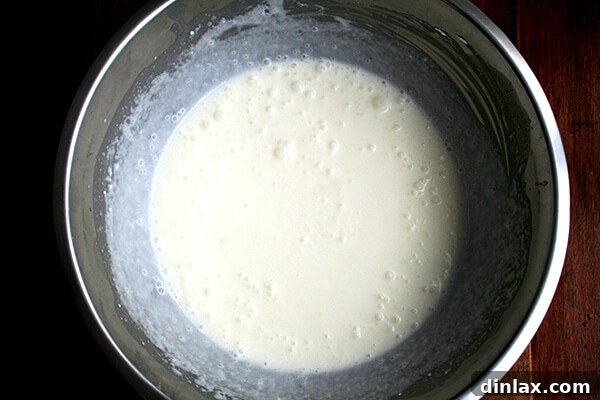
- Gradually pour the lemon-sugar-water mixture into the bowl with the whisked mascarpone, whisking continuously and gently as you add it. Continue whisking until the entire mixture is perfectly smooth, homogenous, and completely free of any mascarpone lumps. The consistency should be uniform and velvety.
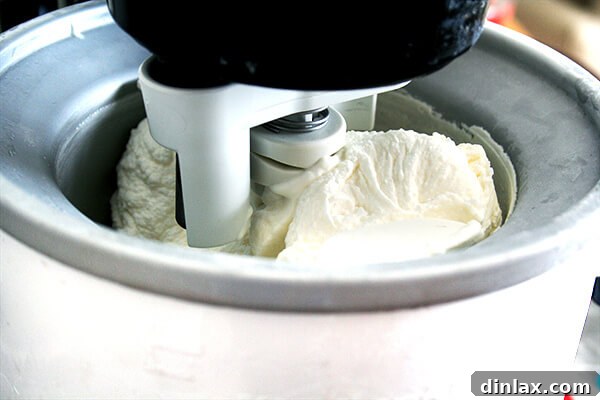
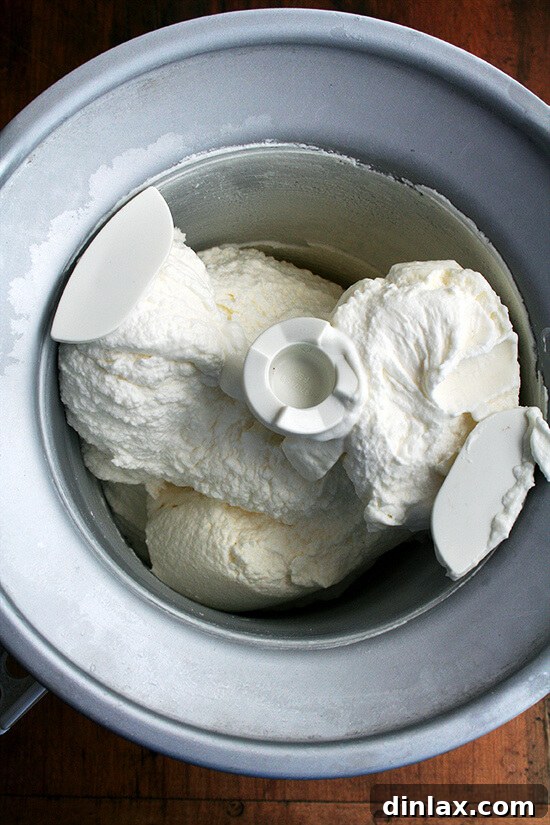
- Transfer this prepared mixture to your ice cream machine. Churn it according to your manufacturer’s instructions. Typically, this process takes about 20 minutes to reach a luscious, soft-serve consistency. (Alternative Method without an Ice Cream Machine: If you don’t own an ice cream machine, you can still make this sorbet! Pour the mixture into a shallow, freezer-safe container. Freeze for 30 minutes, then remove and stir thoroughly, breaking up any ice crystals. Repeat this stirring process three times, every 30 minutes, for about 3 hours in total, or until the desired creamy, icy consistency is achieved. While an ice cream machine yields the very best results, this manual method can still produce a delightful sorbet.)
- Once churned to your liking, you can serve the mascarpone sorbet immediately for a softer, more delicate texture. Alternatively, for a firmer set, transfer the sorbet to an airtight container and freeze it for at least an hour (or until it reaches your preferred firmness). For the most exquisite experience, we recommend consuming this sorbet on the day it’s made. If serving on subsequent days, allow it to sit at room temperature for a few minutes to soften slightly before scooping, ensuring that creamy, inviting texture.
- Prep Time: 30 minutes