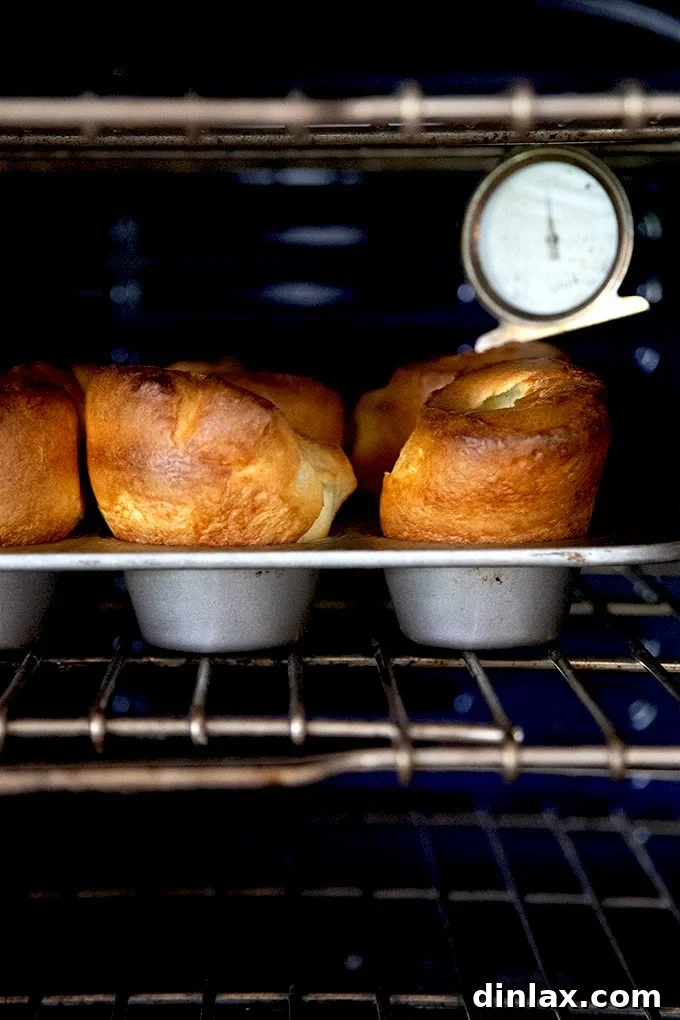
Achieve Lofty Popovers Every Time: The Ultimate Guide to Perfect Homemade Popovers (Yorkshire Pudding)
There’s a simple magic in baking, and few dishes capture it as elegantly as the humble popover. Imagine golden-brown, dramatically puffed pastries, light as air, with wonderfully crisp exteriors and tender, custardy centers. Whether you call them popovers or the traditional Yorkshire pudding, these delightful individual baked goods are remarkably easy to make, requiring just five basic ingredients and about 30 minutes from start to finish. They transform any meal into a special occasion, bringing a touch of festive elegance to your table. If you’ve ever dreamt of pulling a pan of perfectly risen, glorious popovers from your oven, begging to be slathered with butter, you’ve come to the right place. We’re about to unlock the secrets to foolproof popover success, ensuring impressive results every single time.
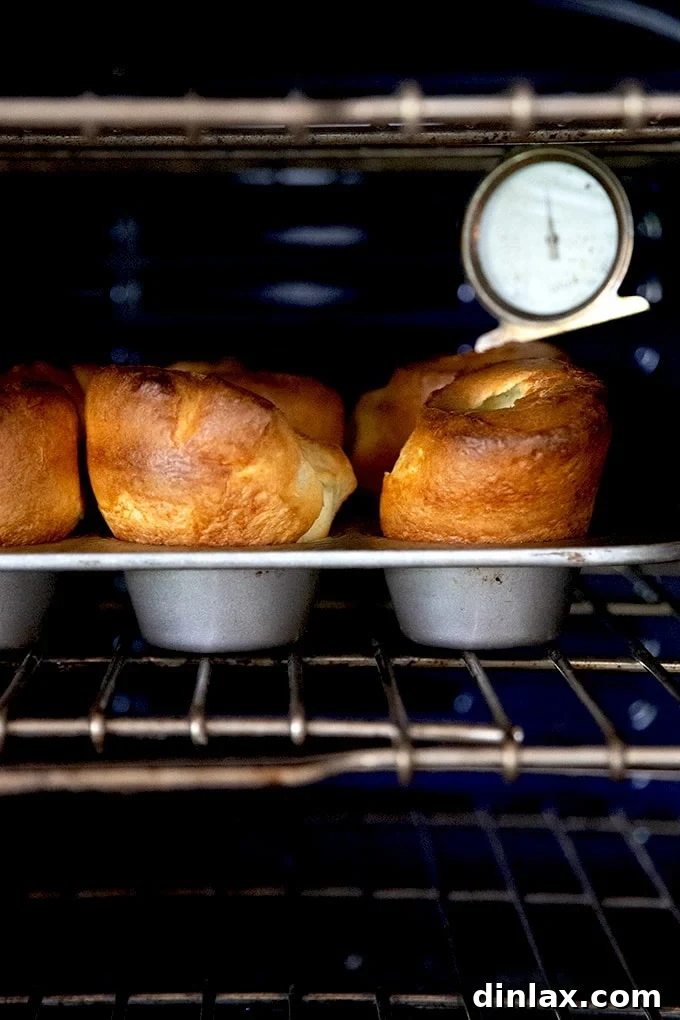
There’s truly nothing more delightful than serving a pan of piping hot, perfectly risen popovers. Their dramatic puff and inviting aroma can elevate a simple Sunday brunch or complement a hearty roast dinner. But what exactly gives them their signature ‘pop’? The secret lies in a fascinating interplay of science and heat. Unlike many other baked goods that rely on leavening agents like baking powder, baking soda, or yeast, popovers depend entirely on steam to achieve their impressive height and airy texture. This fundamental principle is critical to understanding how to consistently bake perfect popovers.
Through years of baking countless batches, I’ve distilled the art of making consistently lofty popovers down to a few core principles: room temperature ingredients combined with a very hot oven. This creates the optimal conditions for maximum steam generation within the batter, which is the driving force behind their impressive rise. As the batter, initially warmed by room-temperature ingredients, hits the intensely hot oven, the moisture rapidly converts into steam. This steam then pushes against the gluten structure of the batter, causing it to puff up dramatically. A brilliant article from King Arthur Baking Co. perfectly encapsulates this science: “The warmer your batter going into the oven, the more quickly it’ll produce steam: simple as that.” This rapid steam production, often referred to as “thermal shock,” is what makes popovers ‘pop’ so beautifully.
Another crucial factor for achieving the greatest height and a beautifully crisp texture is your choice of flour. While excellent results can be achieved with good quality all-purpose flour, for truly spectacular, sky-high popovers, bread flour is your best friend. Bread flour contains a higher protein content than all-purpose flour, which means it develops more gluten. This stronger gluten network provides a more robust structure, allowing the popovers to trap more steam and expand further without collapsing, resulting in an even more magnificent “loft.”
The Science of the Perfect Popover: Understanding the Key Principles
Baking popovers isn’t just about following a recipe; it’s about understanding the simple science that makes them work. By mastering these key principles, you’ll be able to bake flawless popovers every time, impressing family and friends with your culinary prowess.
1. The Magic of Room Temperature Ingredients
This is arguably the most vital tip for achieving truly lofty popovers. Eggs and milk that are at room temperature, or even slightly warmed, will integrate more smoothly into the batter. More importantly, they prevent the batter from cooling down your hot pan or oven too much when you introduce it. A warmer batter means the water in the milk and eggs will convert to steam much more rapidly when exposed to high heat. This immediate and intense steam production is what creates the initial dramatic rise, pushing the batter upwards and outwards. Cold ingredients, on the other hand, will delay this process, leading to less impressive puff.
2. The Power of a Hot Oven (and the Right Temperature Strategy)
Just as crucial as room temperature ingredients is a fiercely hot oven. Popovers need an initial burst of high heat to create that immediate thermal shock. This high temperature rapidly sets the exterior of the popover while simultaneously generating steam within. Most recipes recommend starting at 425°F (220°C) or even 450°F (230°C). After the initial rise, reducing the temperature, typically to 350°F (175°C), allows the popovers to continue cooking through without burning, ensuring a fully cooked interior and a sturdy structure that won’t collapse. Every oven is different, so you might need to experiment slightly to find your oven’s sweet spot, but always start hot!
3. The Gluten Advantage: Why Flour Matters
As mentioned, flour choice plays a significant role. Popovers require a strong gluten network to trap the steam and hold their puffed shape. Bread flour, with its higher protein content, excels at this. It creates a more elastic and resilient batter that can stretch further without tearing, leading to taller, more stable popovers. While all-purpose flour can certainly produce delicious results, using bread flour is a simple upgrade for those truly show-stopping giants.
4. The Unspoken Rule: Don’t Open the Oven Door!
This is critical. Once your popovers are in the oven, resist the temptation to peek! Opening the oven door, especially during the initial high-heat phase, causes a sudden drop in temperature. This can interrupt the steam-building process and cause your developing popovers to deflate before their structure is set, leading to sad, sunken results. Trust the process and your oven.
Essential Equipment for Popover Perfection
While the batter is simple, having the right tools can make all the difference in achieving consistently great results.
- Muffin Tin vs. Popover Pan: While traditional popover pans with deep, narrow wells are designed to encourage maximum vertical rise, a standard 12-cup metal muffin tin works exceptionally well and is often more accessible. My personal experience has shown that spreading the batter among 12 wells in a muffin tin can sometimes yield even better results than a 6-well popover pan, which can occasionally lead to sticking. I highly recommend a high-quality metal muffin pan for its heat conduction and non-stick properties when properly greased.
- Blender: A blender is highly recommended for achieving a silky-smooth batter quickly and efficiently. Smooth batter is key to a light and airy texture. While whisking by hand is possible, a blender ensures there are no lumps, which can hinder the rise.
- Kitchen Scale: For truly accurate baking, especially with flour, a kitchen scale is invaluable. Measuring by weight (grams) rather than volume (cups) provides consistent results every time, eliminating variables due to how flour is packed.
How to Make Lofty Popovers, Step by Step
Ready to embark on your popover journey? Gather your simple ingredients, and let’s create some magic.
Ingredients You’ll Need:
You’ll only need five core ingredients, emphasizing quality and proper temperature:
- Large Eggs: The structure and richness of your popovers. Crucially, they must be at room temperature. If you forget to take them out ahead of time, a quick soak in hot tap water for 10 minutes will do the trick.
- Milk: Provides moisture for steam, contributing to the custardy interior. Room temperature or slightly warmed milk (around 75°F/24°C) is ideal for the same reasons as eggs – promoting rapid steam generation. I typically use 2% milk, but whole milk works beautifully too.
- Flour: The backbone of the popover. As discussed, bread flour is preferred for maximum loft due to its higher protein content, but a good quality all-purpose flour will still yield delicious results. Accurately measure with a kitchen scale for best consistency.
- Salt: Enhances flavor. Use kosher salt (such as Diamond Crystal brand), adjusting quantity if using a finer salt like Morton kosher or fine sea salt (use 1/2 teaspoon).
- Melted Butter: Adds richness and contributes to the golden-brown crust. Salted or unsalted butter works fine.
- Softened Butter: For generously greasing your muffin tin. This is crucial for preventing sticking and ensuring easy removal of your beautiful popovers.
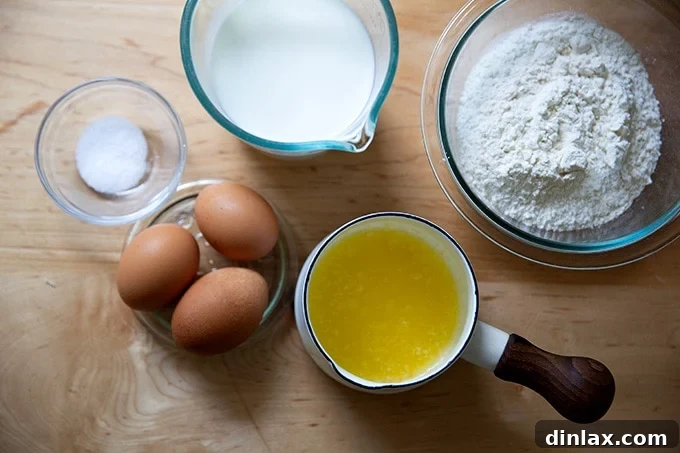
Preparation Steps:
- Prepare Your Oven and Pan: Begin by preheating your oven to a blazing 425ºF (220°C). Position a rack in the very center of the oven. While the oven heats, take your 12-cup muffin tin and generously grease each well with softened butter. Don’t be shy here; a well-greased tin is your insurance against sticking.
- Bring Ingredients to Temperature (If Necessary): If you forgot to set your eggs out, place them in a bowl and cover them with hot tap water. Let them sit for about 10 minutes while you prepare other items; this will gently warm them to room temperature. For milk, you can either leave it out for several hours or heat it briefly in the microwave for about 1 minute, or gently on the stovetop, until it’s warm to the touch (around 75ºF/24°C). This slight warmth will contribute to an even more dramatic rise.
- Blend the Main Batter: In a blender (a high-speed blender like a Vitamix works wonderfully, but any blender will do), combine your room-temperature eggs, warmed milk, measured flour, and salt. Blend for approximately 30 seconds on a medium speed (like speed 5 on a Vitamix). The goal here is a perfectly smooth batter, free of any lumps. A blender makes this effortless, ensuring consistency that’s hard to achieve by hand.
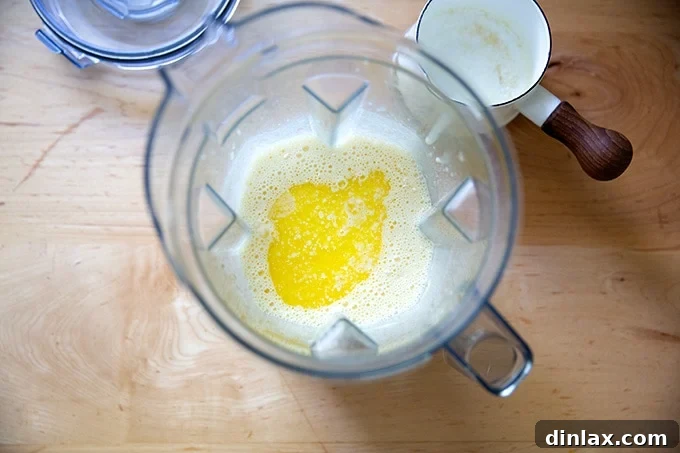
- Incorporate the Butter: Once the initial batter is smooth, add the melted butter to the blender. Blend for another 15 to 20 seconds to fully incorporate the butter. The batter should have a silky, uniform consistency. (If you’re whisking by hand, first whisk eggs, milk, and salt, then gradually add flour and whisk until smooth, and finally whisk in the melted butter until fully combined and smooth.)
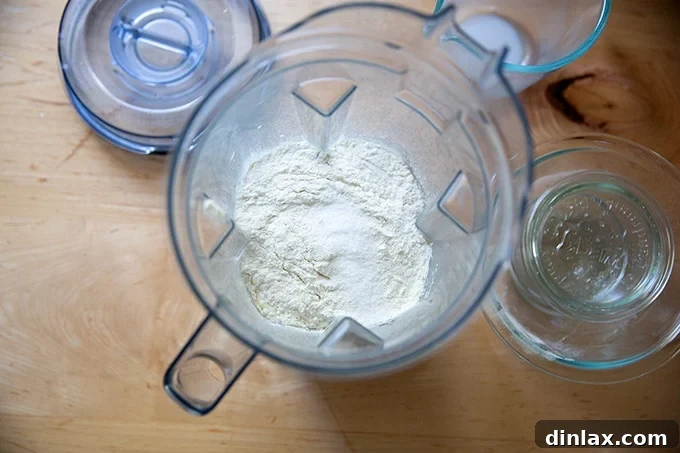
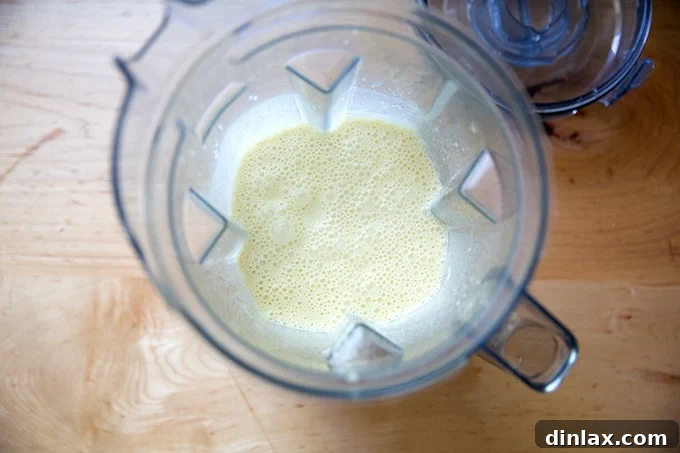
Your batter should now be beautifully smooth and ready for baking:
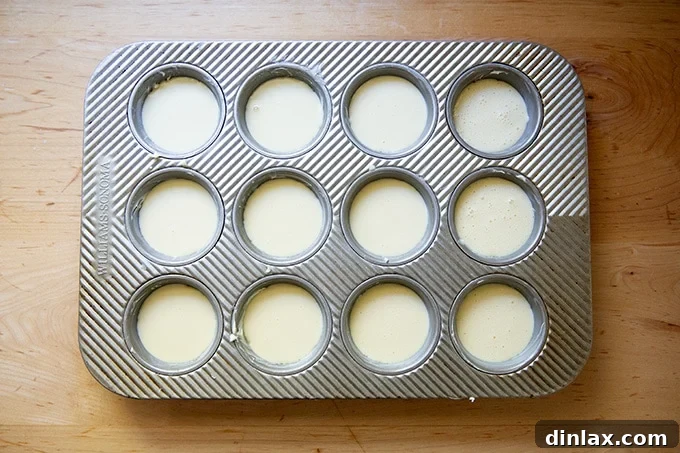
- Fill the Muffin Tin: Carefully pour the batter into your prepared muffin tin, aiming to fill each well about halfway. Once all wells have some batter, go back and divide any remaining batter as evenly as possible among them. This ensures even baking and consistent popover sizes.
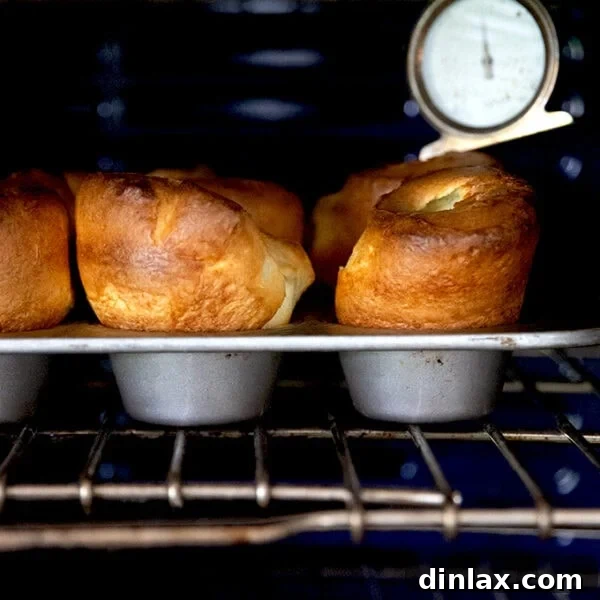
- Bake with Precision: Immediately transfer the filled muffin tin to your preheated oven. Bake at 425ºF (220°C) for 20 minutes. During this phase, you’ll witness the spectacular “pop” as steam rapidly inflates your popovers. After 20 minutes, reduce the oven temperature to 350ºF (175°C) and continue baking for another 10 minutes. This lower temperature allows them to finish cooking through and crisp up without over-browning. Remember: do not open the oven door during baking!
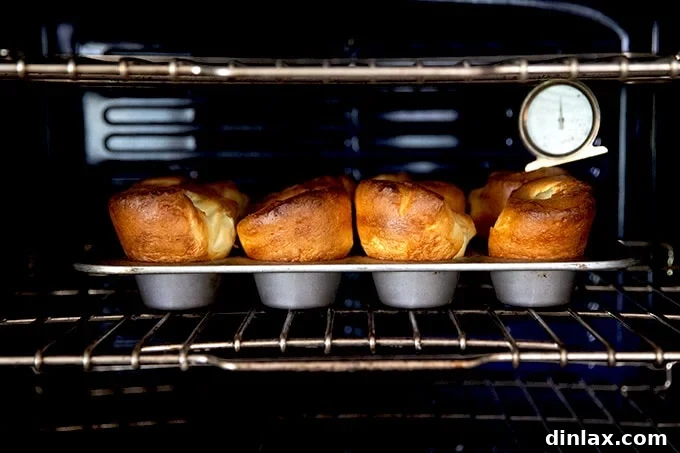
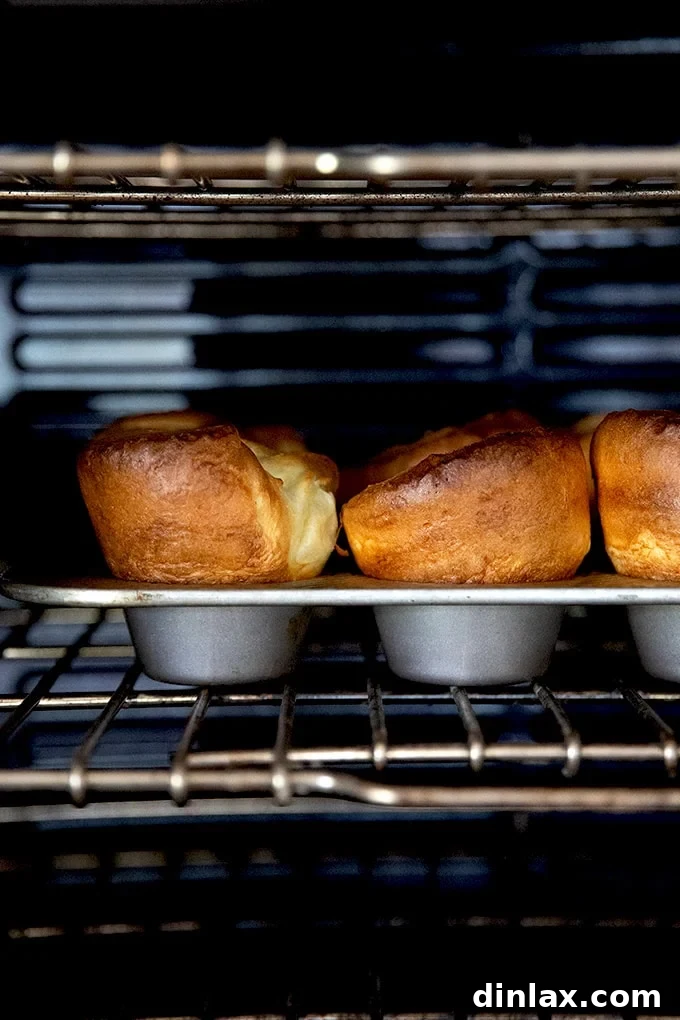
Ta-da! Observe their fun, lofty shapes—they truly are a sight to behold as they emerge from the oven. You’ve created something truly special!
- Serve Immediately for Best Enjoyment: Remove the golden-brown popovers from the oven and admire your magnificent work! While it’s tempting to let them cool on a rack, the cardinal rule of popovers is: Eat them immediately! Their crispy exteriors and airy interiors are at their absolute peak moments after leaving the oven. Transfer them directly to a serving bowl and pass them around the table while they’re still piping hot.
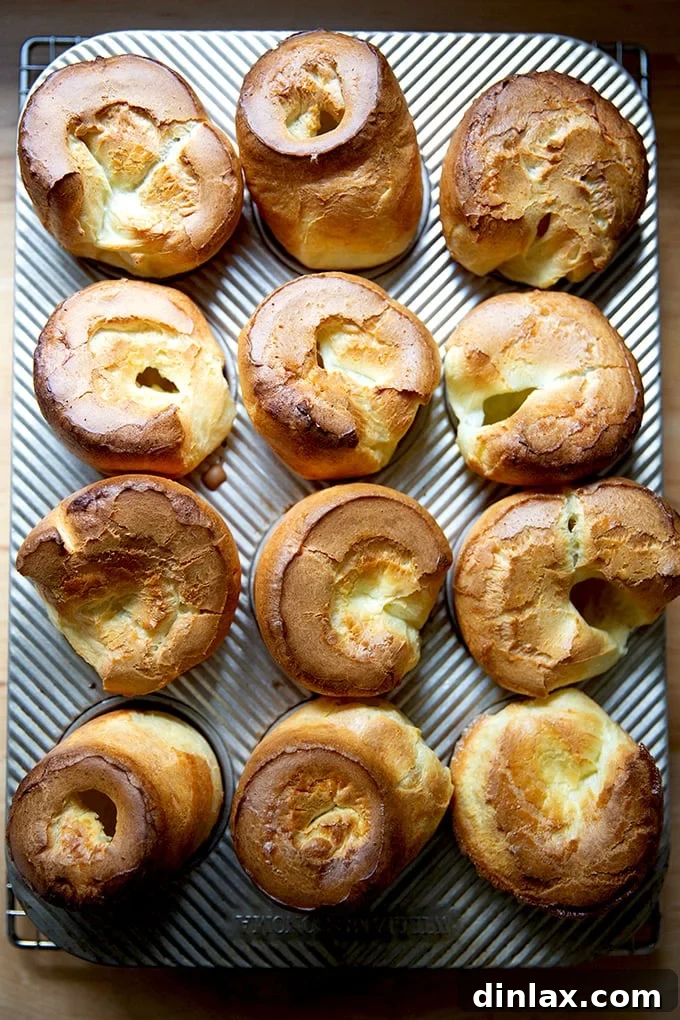
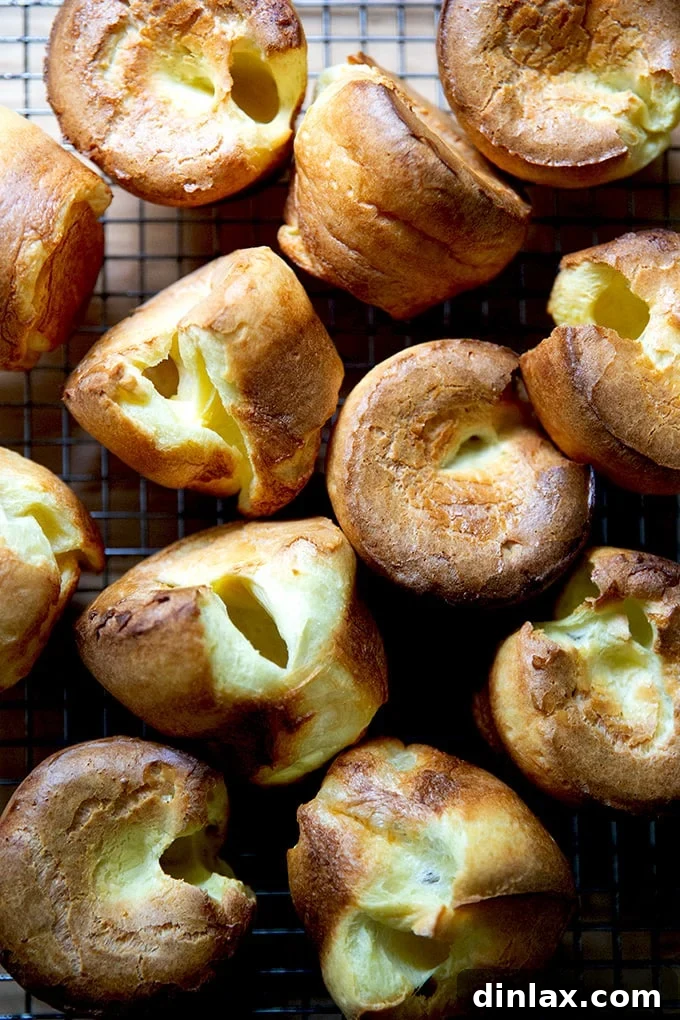
You might briefly turn them out onto a cooling rack, as I sometimes do for photos, but honestly, they belong straight on the table:
Gather them into a beautiful bowl, their peaks and valleys creating an inviting display.
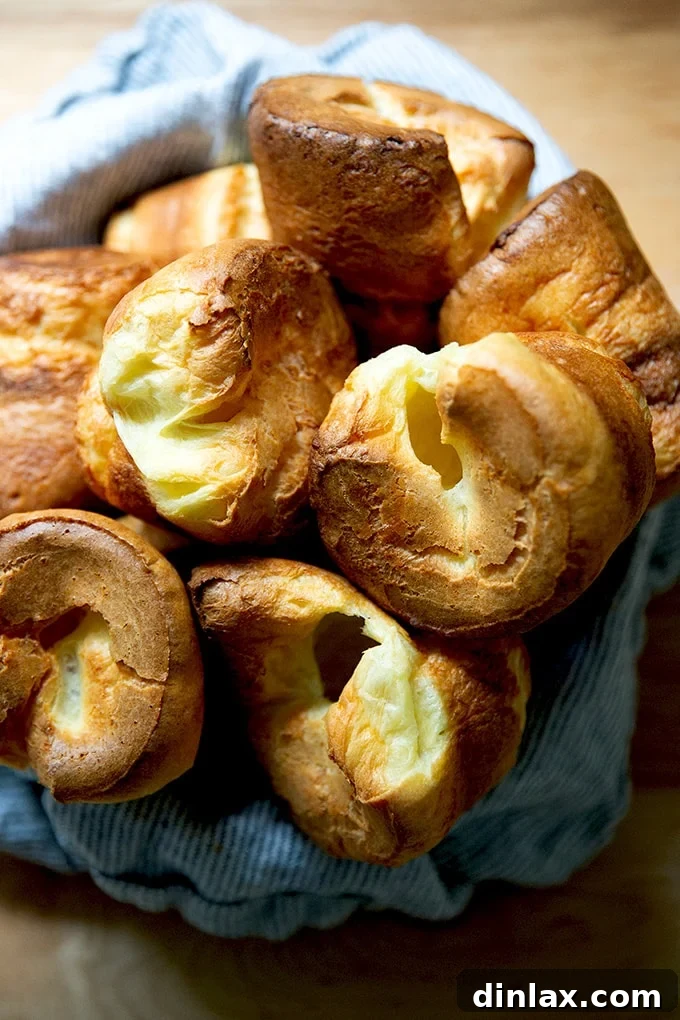
Serve them simply, with a generous pat of softened butter on the side, allowing guests to savor their natural flavor and exquisite texture.
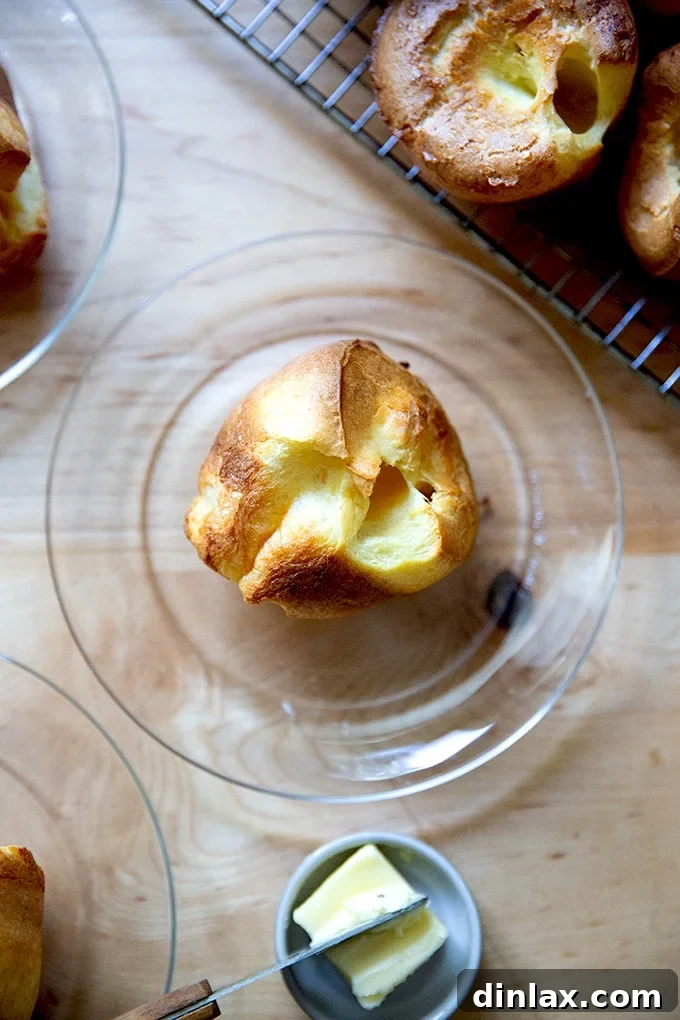
There’s nothing quite like that first bite – a crisp crackle yielding to a warm, airy, and custardy interior. Pure heaven.
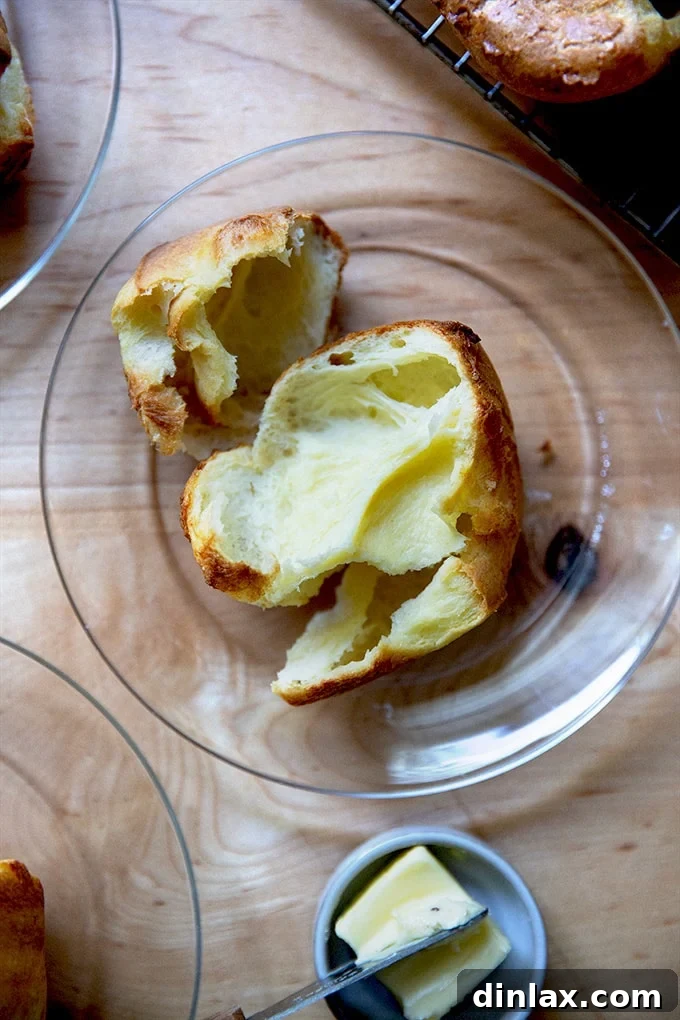
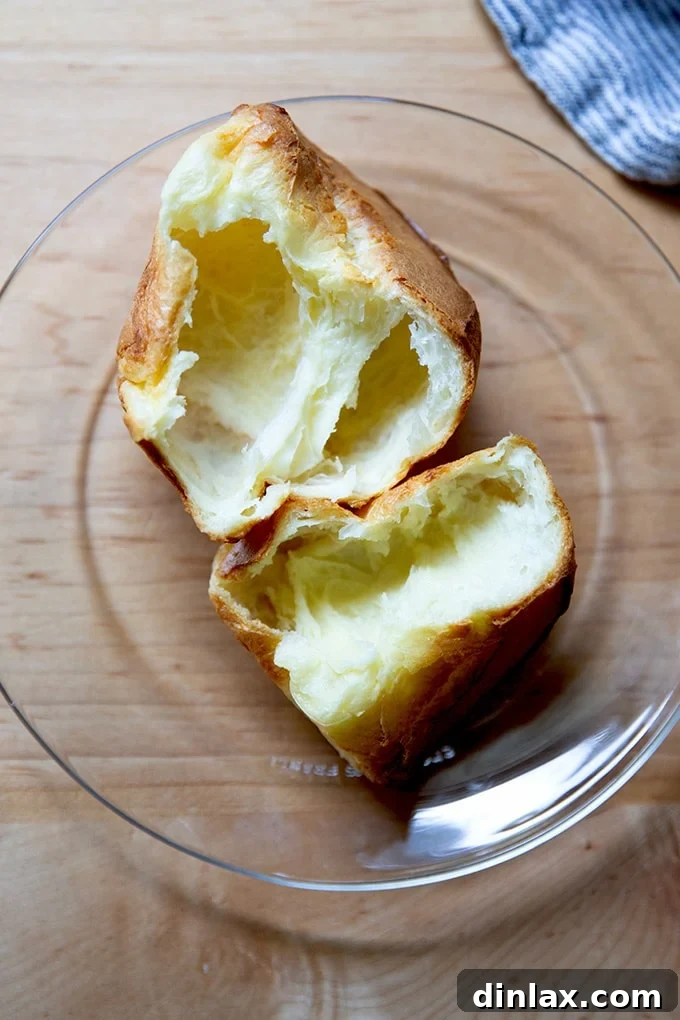
Troubleshooting & FAQs for Popover Perfection
Why Didn’t My Popovers Rise?
- Cold Ingredients: This is the most common culprit. Ensure your eggs and milk are at room temperature or slightly warmed to promote rapid steam generation.
- Oven Temperature Too Low: Popovers need that initial blast of high heat for thermal shock. Double-check your oven temperature with an oven thermometer.
- Opening the Oven Door: A sudden temperature drop will cause deflation. Resist the urge to peek!
- Under-mixed Batter: While you don’t want to overmix, an insufficiently blended batter can lead to an inconsistent gluten structure, hindering the rise. Aim for smooth, but don’t beat it endlessly.
- Pan Not Hot Enough: While less common for muffin tins, if using a traditional popover pan, sometimes preheating the greased pan in the oven can help get it extra hot before pouring the batter.
Why Are My Popovers Soggy or Dense?
- Not Baked Long Enough: If they collapse or feel damp, they likely needed more time in the oven, especially during the lower-temperature phase, to fully cook through and dry out.
- Too Much Moisture in Batter: Ensure accurate measurement of milk and flour. Using a kitchen scale helps prevent errors.
- Overmixing: While uncommon, overmixing can develop too much gluten, leading to a chewy, dense texture rather than light and airy.
Can I Make Popovers Ahead of Time?
Popover batter can be made up to a few hours in advance and stored in the refrigerator. However, it’s best to let it come back to room temperature (or slightly warmed) before baking. For the best texture and dramatic rise, baking the batter fresh is always recommended. Baked popovers are best eaten immediately; they lose their crispness quickly. If you absolutely must, you can reheat them briefly in a hot oven (350°F/175°C) for 5-7 minutes to crisp them up, but they won’t be quite the same as fresh.
What’s the Difference Between Popovers and Yorkshire Pudding?
The batter for popovers and Yorkshire pudding is essentially identical. The primary difference lies in the baking method and serving tradition. Yorkshire pudding is traditionally baked in a pan that has been preheated with drippings from a roasting joint of meat (like beef or lamb). This adds incredible savory flavor and a richer crust. Popovers, on the other hand, are typically baked in buttered muffin tins or specific popover pans and can be served with sweet or savory accompaniments. This recipe provides a fantastic base for both, with the notes on buttered pans making it more akin to a classic American popover, but you could easily adapt it for Yorkshire pudding by using beef drippings in a hot pan.
Serving Suggestions: Beyond Just Butter
While a simple pat of softened butter is pure perfection, popovers are incredibly versatile! Here are a few ideas to enhance your popover experience:
- Savory Pairings:
- Alongside roasted meats like prime rib, roast beef, or lamb.
- With rich stews or gravies, perfect for soaking up delicious juices.
- For breakfast or brunch, serve with scrambled eggs, bacon, or sausage.
- Sweet Pairings:
- Drizzled with maple syrup or honey.
- Served with your favorite fruit jams, jellies, or preserves.
- A dusting of powdered sugar and fresh berries for a dessert-like treat.
With these comprehensive tips and detailed instructions, you’re now equipped to bake the most impressive, lofty popovers your kitchen has ever seen. Embrace the simplicity, understand the science, and get ready to enjoy one of the most rewarding and delicious baking experiences. Happy popping!
Print Recipe
Lofty Popovers (Yorkshire Pudding)
5 Stars 4 Stars 3 Stars 2 Stars 1 Star
4.9 from 33 reviews
Author: Alexandra Stafford
Total Time: 45 minutes
Yield: 12 1x
Description
Making popovers couldn’t be simpler: the 5-ingredient batter comes together in seconds, and 30 minutes later, they’re done! Read on to learn the tips for making foolproof popovers every time.
Notes:
Most popover recipes are basically the same — if you compare recipes, you’ll find they differ slightly in the number of eggs and quantities of milk and flour, but you’ll also see that the basic ratio of flour to milk to eggs is roughly the same.
*Another name for popovers is Yorkshire pudding, the only difference being the baking method. Yorkshire pudding calls for preheating the pan with meat drippings before pouring the batter over the top.
This recipe is influenced by both King Arthur Baking Co. and America’s Test Kitchen, both of which emphasize using room-temperature or slightly warmed ingredients. In summary, the keys to success here are:
- Use a scale to measure — it’s the only way to measure accurately.
- Use room-temperature eggs. If you forget to bring your eggs to room temperature, you can plunge them into a bowl of hot tap water for 10 minutes. With popovers, this step truly makes a difference.
- Use room-temperature milk. If you forget to bring your milk to room temperature, you can heat it briefly in the microwave or on the stovetop — just until it’s warm to the touch, about 75ºF (24°C).
- Hot oven. You’ll want to start with your oven at 425ºF (220°C) at a minimum. Some recipes call for 450ºF (230°C), but I find that temperature can brown the popovers a little too much for my liking. Every oven is different, however, so you may find 450ºF works better for you.
- Bread flour: For especially lofty popovers, bread flour is your best choice! While great loft can be achieved with all-purpose flour, I’ve consistently achieved the greatest heights when using bread flour.
A note on salt: If you are using Morton kosher salt or fine sea salt, use 1/2 teaspoon.
The pan: I love this USA muffin pan. You can use a traditional 6-well popover pan, but I prefer the results when the batter is spread among 12 wells. My batter has stuck in popover pans before, which made for mangled popovers upon removal. I highly recommend simply using a metal muffin pan for the best results here.
Ingredients
- Softened butter, for greasing, plus more for serving
- 3 large eggs, room temperature (see recipe notes if you forget to take your eggs out ahead of time)
- 1 1/2 cups (375 grams) room-temperature milk — I’ve been using 2% (see recipe notes if you forget to leave your milk out ahead of time)
- 1 1/2 cups (192 grams) bread flour or all-purpose flour
- 1 teaspoon (3 grams) kosher salt, I use Diamond Crystal brand (see notes above)
- 3 tablespoons (43 grams) melted butter — I use salted, but unsalted is fine
Instructions
- Preheat the oven to 425ºF (220°C) with a rack in the center. Generously grease a 12-cup muffin tin with softened butter.
- If your eggs are not at room temperature, place them in a bowl and cover with hot tap water. Let stand for 10 minutes, then remove.
- Place your milk in the microwave for 1 minute. Remove. It should be roughly 75ºF (24°C), but slightly warmer is fine, too. I have also used milk that I’ve left at room temperature for several hours, and that has worked great, but you’ll likely get even more loft if you warm the milk slightly. You can do this on the stovetop, too — just heat it until it is warm to the touch.
- Place the eggs, milk, flour, and salt in a blender and blend to combine, roughly 30 seconds. I use my Vitamix, and I blend at speed 5. You want a smooth batter here, and using a blender ensures your batter will be perfectly smooth.
- Add the melted butter and blend for another 15 to 20 seconds. (Alternatively, if whisking by hand: whisk together the eggs, milk, and salt first; add the flour and whisk until combined and smooth; then add the butter and whisk again until smooth.)
- Pour the batter into the prepared muffin tin, aiming to fill each well halfway with the batter. Once you’ve filled each well, divide any remaining batter as evenly as possible among the wells.
- Transfer to the oven immediately and bake for 20 minutes at 425ºF (220°C). After 20 minutes, lower the heat to 350ºF (175°C) and bake for 10 minutes more. Do not open the oven door during baking.
- Remove from the oven, quickly transfer to a serving bowl, and eat immediately! Serve with softened butter on the side.
- Prep Time: 15 minutes
- Cook Time: 30 minutes
- Category: Bread
- Method: Oven
- Cuisine: American