The Slow Food Revolution: A Leaderless Movement Cultivating Change
Emerging from the vibrant atmosphere of Slow Food Nation, I found myself invigorated yet deeply contemplative about the formidable challenges confronting our nation and the world regarding food production. This gathering underscored a critical truth: the “slow food” and “local food” movements have always been inherently grassroots, propelled by the collective will of individuals. As the esteemed farmer and author Wendell Berry eloquently described, these ongoing revolutions are truly a “leaderless movement.” This article delves into the insights garnered from the various “Food For Thought” sessions, exploring the intricate connections between our food system, political leadership, environmental sustainability, and public health.
Food, Politics, and the Interconnected Crisis
A striking observation from Slow Food Nation was the unanimous critique from various speakers directed at both then-presidential candidates, Obama and McCain. Their oversight in addressing the urgent need for a comprehensive reformation of our food system was a significant point of concern. Panelists passionately argued that establishing policies promoting sustainable agriculture would not only revolutionize our plates but would simultaneously unlock solutions to a myriad of other pressing national and global issues.
The Unsettling Truth: Politicians’ Stance on Food
When confronted with questions about the presidential candidates’ positions on food and agriculture, author Michael Pollan offered a stark and honest assessment: “They don’t stand.” This blunt response highlighted a profound disconnect between political priorities and a foundational aspect of human existence. At the time, the incoming president of the United States faced three paramount challenges: mitigating our country’s reliance on foreign oil, reining in escalating healthcare costs, and actively combating global warming. While Senators Barack Obama and John McCain proposed diverse strategies—ranging from offshore drilling to universal health coverage and cap-and-trade policies—a glaring omission from their national discourse was any substantive plan to reform our outdated and inefficient food system.
The Unbreakable Link: Food as the Common Denominator
During the Slow Food Nation event in San Francisco over Labor Day weekend, Pollan powerfully articulated a fundamental truth: food is the inextricable common link weaving through all these critical subjects. Achieving energy independence, drastically reducing healthcare expenditures, and reversing the ominous trajectory of climate change are ambitions that hinge directly on the fundamental transformation of our food system. The statistics he cited painted a grim picture of our industrial food landscape:
- Energy Inefficiency: Alarmingly, it requires an estimated 10 calories of fossil-fuel energy to produce just one calorie of food energy within our current industrial model. This unsustainable ratio underscores the profound energy dependence embedded within our dietary choices.
- Public Health Crisis: The proliferation of cheap, calorie-dense but nutrient-deficient food has fueled a national obesity epidemic, contributing significantly to a rise in diet-related illnesses and subsequently skyrocketing healthcare costs.
- Environmental Impact: Industrial agriculture is a major contributor to global warming, accounting for an estimated 25 to 30 percent of global greenhouse gas emissions through practices such as deforestation, livestock farming, and the production of synthetic fertilizers.
These compelling figures unequivocally demonstrate that food production, energy policy, public health, and environmental stewardship are not isolated concerns but rather components of an intricately connected web. To address one effectively, we must address them all through the lens of a reformed food system.
The Irony of Cheap Food: A Policy Paradox
A diverse coalition of activists, including acclaimed authors, innovative chefs, and dedicated farmers, converged at Slow Food Nation to collectively criticize both Obama and McCain for their failure to acknowledge the far-reaching repercussions of our existing food system. Michael Pollan conceded that elected officials have historically harbored a political vested interest in maintaining the illusion of “cheap food.” This seemingly benevolent goal, however, is largely achieved through a convoluted system of subsidy payments primarily benefiting corn and soybean farmers—an antiquated policy perpetuated by subsequent farm bills.
Ironically, this very policy of cheap food—a cornerstone of political expediency—serves as the principal catalyst for our burgeoning dependence on foreign oil, the unrelenting surge in healthcare costs, and the accelerating pace of global warming. These are the very problems our politicians purport to solve, yet their foundational food policies actively exacerbate them. If the axiom of perpetually cheap food continues to guide political decisions, then the vital push for truly sustainable agriculture, as Wendell Berry presciently noted, will regrettably persist as “a leaderless movement.” Berry, himself a practicing farmer and profound author, has been an indispensable intellectual force shaping the Slow Food movement within the United States.
The Slow Food Revolution: A Grassroots Awakening
Despite the conspicuous absence of political leadership on food system reform, the agricultural revolution has, against all odds, steadily gathered significant momentum. The trajectory of Slow Food International serves as a compelling testament to this fact. What began in 1986 as a passionate demonstration in Rome, protesting the planned construction of a McDonald’s near the iconic Spanish Steps, has blossomed into a formidable worldwide movement. Today, it boasts over 85,000 dedicated members across 132 countries, championing a philosophy of good, clean, and fair food.
The sheer scale of engagement at Slow Food Nation, which attracted over 60,000 enthusiastic supporters to San Francisco over a single Labor Day weekend, powerfully underscored this burgeoning grassroots fervor. Increasingly, Americans are actively “voting with their forks,” a concept popularized by Michael Pollan, by making conscious choices that support a more sustainable and equitable food system. This includes a burgeoning participation in farmers’ markets, the widespread adoption of CSAs (Community Supported Agriculture) programs, and a growing advocacy for fair trade practices and truly sustainable farming methods. A quiet but powerful revolution is indeed unfolding, driven by the collective decisions of informed citizens.
Wendell Berry’s Renewed Hope and Alice Waters’ Vision
While Wendell Berry candidly admitted to having lost faith in the political system back in 1990, he now expresses renewed hope in a “growing cooperative spirit” that he observes taking root across communities. He firmly believes that “if the right thing has a loud enough voice, [politicians] will do the right thing because they have to.” This sentiment underscores the power of persistent public demand to eventually sway political will.
Alice Waters, the visionary chef and founder of Chez Panisse, harbors an inspiring dream of installing a victory garden on the White House front lawn—a powerful symbolic gesture for food sovereignty. Waters recounts a personal anecdote, vividly describing how she filled the lunchboxes of Obama’s campaign staff with the juiciest, most flavorful peaches and plums. She contends that such food “awakens the senses,” believing that if political leaders could simply taste and experience the profound difference of local, organically grown produce, perhaps the momentum for change would accelerate dramatically. Her approach emphasizes sensory experience as a pathway to political awakening regarding food quality and origin.
The Call to Action: Every One a “Rosa Parks of Food”
The question of whether a political leader will eventually summon the resolve to elevate agricultural policy to the forefront of national discussion remains unanswered. However, until such a time arrives—and perhaps until a Slow Food chapter thrives in even the most conventional agricultural heartlands like central Iowa—the impetus for driving an agricultural revolution unequivocally rests with the people. As the esteemed author and activist Dr. Vandana Shiva poignantly articulated during the final panel discussion at Slow Food Nation, “Every one of us has to be the Rosa Parks of food.” This powerful metaphor calls for individual acts of defiance, conscious choices, and sustained advocacy to dismantle a broken system and build a more just and sustainable food future. It implies that systemic change in our food ways requires the same courage and collective action that propelled civil rights movements.
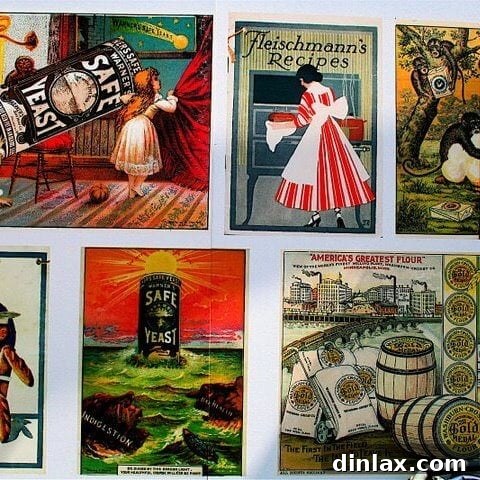
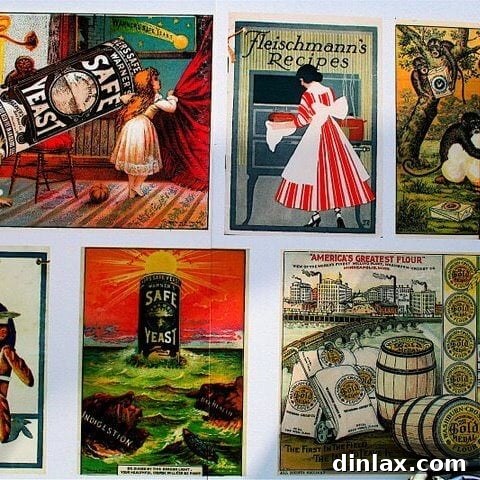
Vintage posters lining the walls of the bread stalls at Slow Food Nation’s Taste Pavillion:
Personal Reflections and Profound Takeaways
An Unforgettable Encounter with Michael Pollan
The opportunity to meet Michael Pollan, one of the most influential voices in contemporary food discourse, was a highlight of my Slow Food Nation experience. After patiently waiting in line for an hour, clutching six of his transformative books, a surge of panic struck when I saw him begin to stand. “He’s leaving,” I thought, my heart sinking. “Michael Pollan is leaving.” For a fleeting moment, I contemplated an act of sheer desperation—leaping out of line like a zealous fan to beg him for just one more autograph before his departure. Fortunately, such a display of craziness proved entirely unnecessary.
Michael Pollan, who, surprisingly, was receiving less attention than Wendell Berry at the book-signing table, graciously stepped away to greet the eager individuals still waiting in line. One by one, he engaged with Slow Food devotees, indulging in brief small talk, signing books, and offering a personal touch. When he finally reached me, I was so overwhelmed that I could barely articulate a coherent sentence.
“Who should I make this out to?” he inquired with a warm smile.
“Well, I’m Ali,” I managed to stammer. “And, I absolutely love your books,” I blurted out, a wave of genuine admiration overcoming my nerves.
“Well, thanks, Ali,” he replied simply.
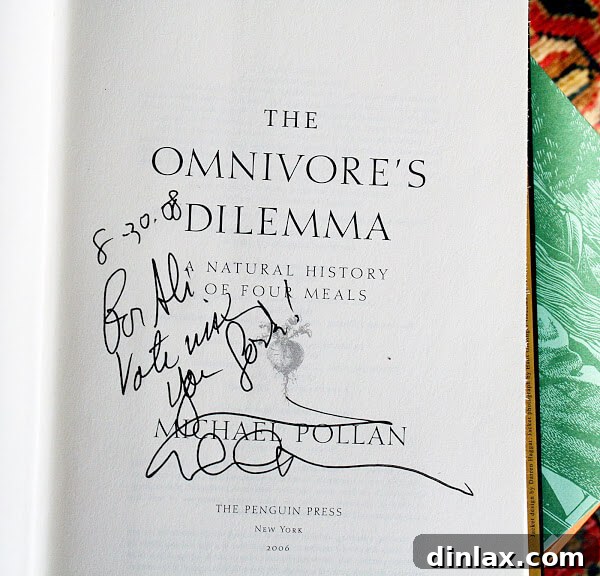
And that was it—a mere 30-second exchange that felt both momentous and fleeting. My heart was pounding, a clear indicator of the profound impact his work has had on me. I won’t deny it: I am incredibly thrilled to have my personal copy of The Omnivore’s Dilemma personally signed by Michael Pollan. His inscription, which might be hard to decipher from the photograph, reads: “For Ali, Vote With Your Fork.” This simple yet powerful directive encapsulates the core message of his advocacy and continues to resonate deeply with me.
Deconstructing the “Corn Burger” and Our Food Reality
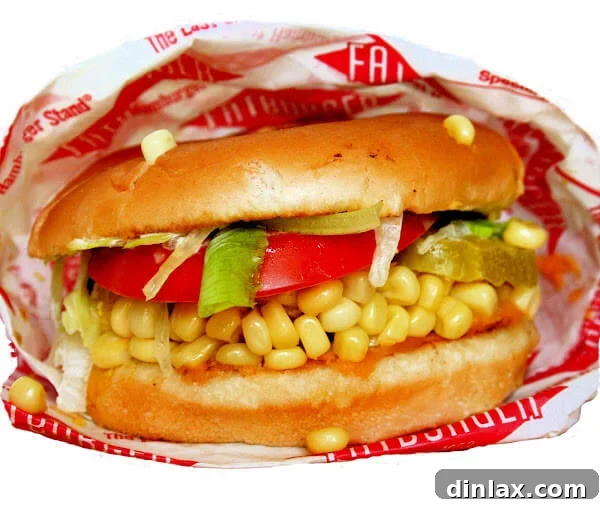
The concept of a “corn burger,” an image that springs to mind as something that would feature prominently in a Michael Pollan nightmare, serves as a poignant symbol of our modern food system. This idea was particularly vivid for me after recently completing an introductory graphic design course at UCLA Extension. One of our projects involved creating a “teaser” movie poster—those minimalist posters released months before a film’s debut, offering minimal information, no credits, and often no title. My chosen subject was “King Corn,” a compelling 2007 documentary that meticulously explores the pervasive nature of corn production in the United States.
The two college friends who are the protagonists of “King Corn” embark on a journey that reveals corn’s astounding ubiquity in our food supply. From the burgers we consume to the breads we eat, and even the beer and soda we drink, corn and its derivatives are hidden ingredients in an overwhelming number of products. This profound insight into corn’s dominance is an idea Michael Pollan extensively deconstructed and illuminated in his seminal work, The Omnivore’s Dilemma. The “corn burger” thus becomes a metaphor for the hidden, processed ingredients that permeate our diet, often without our conscious awareness. “King Corn” is an incredibly insightful film, readily available for rent or purchase, and serves as an excellent companion piece to Pollan’s writings for anyone seeking to understand the foundational issues of our food system.
Cultivating a Sustainable Future: A Collective Endeavor
The experiences and lessons from Slow Food Nation, amplified by the voices of pioneers like Michael Pollan, Wendell Berry, Alice Waters, and Vandana Shiva, paint a clear picture: our food system is at a critical juncture. The interconnectedness of our agricultural practices with national challenges like energy dependence, healthcare costs, and climate change can no longer be ignored. While political leadership has been slow to embrace the necessary reforms, the grassroots momentum of the Slow Food and local food movements demonstrates that change is not only possible but already underway.
The call to “vote with your fork” is more than a slogan; it is an empowering directive for every individual to become an active participant in shaping a healthier, more equitable, and more sustainable food future. By choosing local, seasonal, and ethically produced foods, supporting sustainable farmers, and advocating for policies that prioritize public health and environmental stewardship over industrial efficiency and cheap calories, we collectively contribute to a powerful, leaderless revolution. This transformation requires conscious choices, informed decisions, and a commitment to nurturing a food system that truly nourishes both people and the planet. The journey ahead demands continued vigilance and collaboration, ensuring that the legacy of Slow Food Nation inspires action long after its pavilions close.