

Mastering the Art of Cheater’s Kouign-Amann: A Culinary Journey
In the culinary world, there’s a growing appreciation for dishes that demand more than just a quick assembly. This philosophy was beautifully captured by Bon Appetit when they launched their column, The Project, dedicated to exploring involved, ambitious dishes like cassoulet, ramen, and the exquisite Kouign-Amann. These are recipes that call for energy, thoughtful planning, and a genuine passion for cooking – a sentiment that deeply resonates with many home bakers and chefs alike.
Embracing the Spirit of Ambitious Baking
There’s a unique satisfaction that comes from tackling a complex recipe, transforming simple ingredients into a masterpiece. In our fast-paced lives, it’s easy to fall into the routine of prioritizing convenience and speed in the kitchen. We often gravitate towards recipes promising “dinner on the table fastest,” sacrificing the joy of a more involved culinary journey. I recall a time, perhaps in my younger, more carefree days, when coming home with fresh ingredients, like a rabbit, would inspire hours spent poring over cookbooks. Sally Schneider’s intricate ragù, served over homemade pappardelle, despite pushing dinner to 10 PM, epitomized this love for the process. Today, if a recipe lists more than a handful of ingredients, my eyes might glaze over, mentally filing it away for a “someday” project, as I seek out the next “fast, easy, fresh” meal.
This evolving relationship with cooking highlights a common dilemma: how do we balance the demands of modern life with the profound rewards of ambitious home cooking? The concept of The Project column is a powerful reminder that some culinary endeavors are worth the extra effort, fostering a deeper connection to our food and the act of creation. It’s about rediscovering the pleasure of the process, savoring each step from preparation to presentation. It challenges us to slow down, to engage our senses, and to create something truly memorable. This ethos is particularly true for baking, where patience and precision often yield the most spectacular results.
The Allure of Kouign-Amann: Brittany’s Buttery Delight
The very mention of Kouign-Amann conjures images of rustic French bakeries and the irresistible aroma of caramelized butter and sugar. This iconic pastry, hailing from Brittany, France, is celebrated for its distinctive flaky layers, rich buttery flavor, and a uniquely caramelized, slightly crispy exterior. Traditionally, Kouign-Amann is known for its labor-intensive preparation, involving multiple rounds of butter lamination, similar to croissants, but with generous layers of sugar incorporated into the folds. The result is a pastry that is both delicate and robust, sweet and savory, an experience that transcends mere breakfast food. Its reputation for difficulty often places it in the realm of professional bakers or extremely dedicated home enthusiasts, making it a true “project” indeed.
Nigella Lawson’s Game-Changing Method: A Smart Shortcut
It was this very challenge of Kouign-Amann that made me pause. One glimpse of those golden, flaky, caramelized swirls, and an immediate craving struck. But facing the prospect of traditional lamination, I confess, I sought a shortcut. And it was Nigella Lawson, with her ingenious food processor Danish pastry dough, who came to my rescue. Her method, which I’d previously adored for making cheese danishes with lemon-ricotta filling and even playful cronuts, felt like a revelation. For years, the idea of properly laminating dough seemed like a distant dream, a skill I might master in two decades. Until then, any recipe demanding intricate butter blocks and endless folding would be met with my “cheater’s” approach, and I wouldn’t look back.
But here’s the crucial distinction: calling Nigella’s method “cheating” doesn’t do it full justice. This isn’t about opening a box of pre-made puff pastry, dusting it with sugar, and calling it a day. This innovative approach offers a genuine shortcut to achieving a remarkably similar texture and flavor profile without the most intimidating aspects of traditional laminated dough. It respects the craft while making it accessible. The process still requires thoughtful planning, a touch of elbow grease, and several crucial steps that build anticipation and depth of flavor. The dough, primarily mixed in a food processor with butter, flour, yeast, and other essential ingredients, needs an overnight rest in the refrigerator. This slow fermentation is vital for developing flavor and making the dough manageable. The next day involves repeated rolling and folding, creating the essential layers that give Kouign-Amann its characteristic flakiness. And for Kouign-Amann specifically, another overnight chill is recommended, allowing the flavors to meld and the butter to firm up for perfect baking.
The Reward: Deserving Your Homemade Kouign-Amann
The timeline for this “cheater’s” Kouign-Amann truly highlights the dedication involved. If your goal is to enjoy freshly baked Kouign-Amann on Easter Sunday, your journey begins on Friday night. That’s a commitment spanning over 36 hours. This isn’t just baking; it’s a testament to planning, diligent work, and a profound act of love. It’s the effort you pour into creating something special for yourself or your loved ones. And it is precisely for this reason – for the planning, the work, the love – that you absolutely deserve to indulge in Kouign-Amann on Easter morning, or indeed, on any morning you choose. The level of effort, even with a clever shortcut, makes the reward infinitely sweeter. Each bite, a symphony of crisp, caramelized sugar, tender, buttery dough, and delicate flakiness, is a delicious validation of your culinary ambition. It’s a moment of pure bliss, earned through patience and passion.


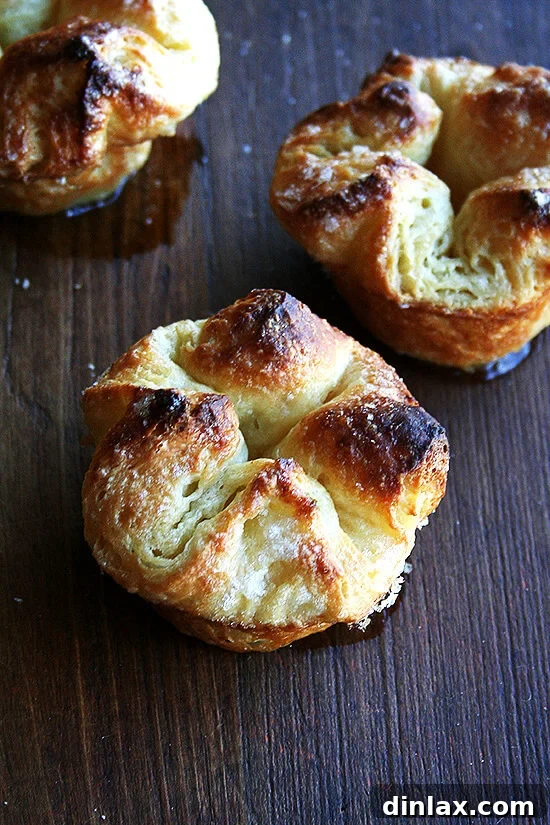
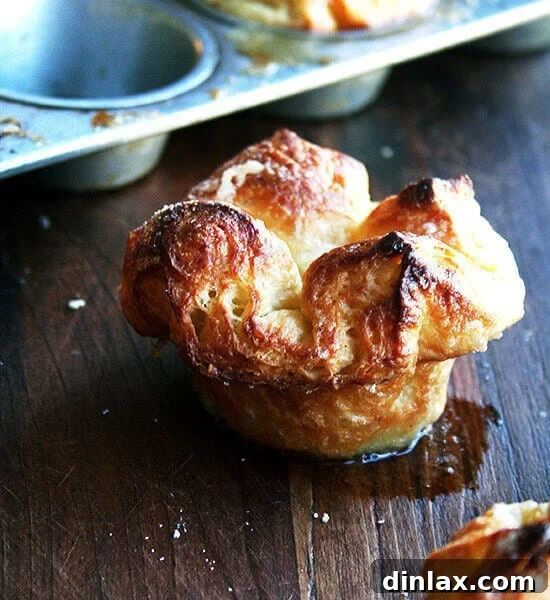
Among all the delightful pastries I’ve crafted using Nigella’s food processor Danish pastry dough, this Kouign-Amann stands out for its elegant simplicity and irresistible charm. Unlike many other pastries that require elaborate fillings or intricate glazes, the beauty of Kouign-Amann lies in its core ingredients: butter, sugar, and dough. There are no fussy egg washes or complex toppings needed. The magic happens in the oven as the sugar caramelizes into a beautiful, crisp crust, enveloping the tender, flaky layers within. They emerge golden, burnished, and utterly irresistible, disappearing from the plate far too quickly. Most likely, you already possess all the necessary ingredients in your pantry, but the key to success, as with any truly rewarding culinary project, is to plan ahead and allow ample time for the dough’s essential resting periods.
The Versatility of the Processor Danish Pastry Dough
This remarkable food processor Danish pastry dough is a true workhorse in the kitchen, offering endless possibilities beyond Kouign-Amann. Its ease of preparation and excellent texture make it a fantastic base for a variety of sweet and savory treats:
- Cheese Danishes: Imagine a fluffy lemon-ricotta filling nestled within flaky pastry – a truly delightful breakfast or brunch item that consistently earns rave reviews.
- Prosciutto & Gruyère Croissants: A sophisticated savory option, perfect for an elevated breakfast or a light lunch. The salty prosciutto and nutty Gruyère complement the rich pastry beautifully.
- Cronuts: For those adventurous bakers, this dough can even be adapted to create the viral cronut, a hybrid of a croissant and a donut. While I haven’t detailed the process on the blog, the dough provides a fantastic starting point for this decadent creation. Feel free to reach out if you’d like guidance on this exciting variation!
Print Recipe
Cheaters Kouign-Amann Recipe
No reviews yet. Be the first!
- Author: Alexandra Stafford
- Total Time: 13 hours 55 minutes
- Yield: 12 servings 1x
Description
Source: Nigella Lawson’s How to Be a Domestic Goddess
Important Notes for Planning: This processor Danish pastry dough requires an overnight rest in the refrigerator to properly develop its texture and flavor. Furthermore, once the Kouign-Amann are shaped, they also need a second overnight rest in the fridge. Therefore, to ensure you can enjoy freshly baked Kouign-Amann for a special occasion like Easter Sunday, it’s essential to begin preparing the dough on Friday evening.
Should you find yourself in a rush and need to expedite the process, you can refer to the Cheese Danishes post for guidance on a quicker method, though the longer rests are highly recommended for optimal results with Kouign-Amann.
Ingredients
- 1/4 cup (60 ml) warm water
- 1/2 cup (125 ml) milk at room temperature
- 1 large egg at room temperature
- 2 1/4 cups (10 1/8 oz | 286g) all-purpose flour
- 1 package (2.25 tsp. | 1/4 oz | 7g) rapid rise yeast (instant) or 1 tablespoon fresh yeast*
- 1 teaspoon kosher salt
- 1 tablespoon (1 oz. | 25g) sugar
- 1 cup (8 oz | 250g) unsalted butter, cold, cut into thin slices
* For active dry yeast, combine it with the milk and water and let it sit for approximately 10 minutes until it becomes slightly foamy before proceeding with the recipe.
- 1/2 cup plus 2 tablespoons sugar, divided
Instructions
- Prepare the Wet Ingredients: In a measuring cup, combine the warm water and room temperature milk. Crack in the large egg and beat the mixture gently with a fork until all ingredients are well combined. Set this liquid mixture aside.
- Initial Dough Mixing (Food Processor): Position a large mixing bowl conveniently near your food processor. Add the all-purpose flour, yeast (rapid rise or instant), kosher salt, and the first tablespoon of sugar into the food processor. Pulse briefly, just once or twice, to ensure these dry ingredients are thoroughly mixed. Next, add the cold, thinly sliced unsalted butter. Process with approximately 5 short pulses. The goal here is to cut the butter into smaller pieces, but it’s crucial to leave visible chunks of butter, ideally about 1/2 inch in size. Over-processing at this stage will hinder the flaky texture.
- Combine and Chill Dough: Transfer the contents from the food processor into the large bowl you prepared. Pour the reserved milk-egg mixture over the flour and butter. Using your hands or a sturdy rubber spatula, gently mix the ingredients until they just come together. Avoid overworking the dough; expect it to be a somewhat gooey mess with noticeable lumps of butter marbled throughout. This is exactly what you want! Cover the bowl tightly with plastic wrap and refrigerate overnight, or for up to 4 days. This extended chill is vital for developing flavor and creating the perfect consistency for lamination.
- First Rolling and Folding Sequence: In the late afternoon or evening of the day before you plan to bake the Kouign-Amann, remove the chilled dough from the refrigerator. Allow it to rest at room temperature for about 15 minutes to make it more pliable. Lightly flour your work surface and rolling pin as needed. Roll the dough out into a large square, approximately 20 inches by 20 inches, or as large and thin as you can manage while maintaining a square shape. Don’t get overly concerned with exact measurements; the key is a relatively thin, large square. Fold the dough into thirds, similar to how you would fold a business letter. After folding, rotate the dough 90 degrees so that the closed fold is on your left, resembling the spine of a book. Repeat the rolling out into a large square and folding into thirds process two more times. This sequence helps create the many flaky layers. A video tutorial (see below) can be very helpful for visualizing this technique.
- Second Sugar Incorporation & Cutting: After completing the three rolling and folding cycles, roll the dough into a final rectangle measuring about 16×12 inches. Evenly sprinkle 1/4 cup of sugar over the entire surface of the dough, then gently pat the sugar into the dough to ensure it adheres. Carefully flip the rectangle over. Sprinkle the other side with another 1/4 cup of sugar and gently pat it in. Using a sharp knife or pastry wheel, cut the dough into 12 equal squares, aiming for a 4×3 grid. Before shaping, lightly brush off any excess flour from the dough and your work surface.
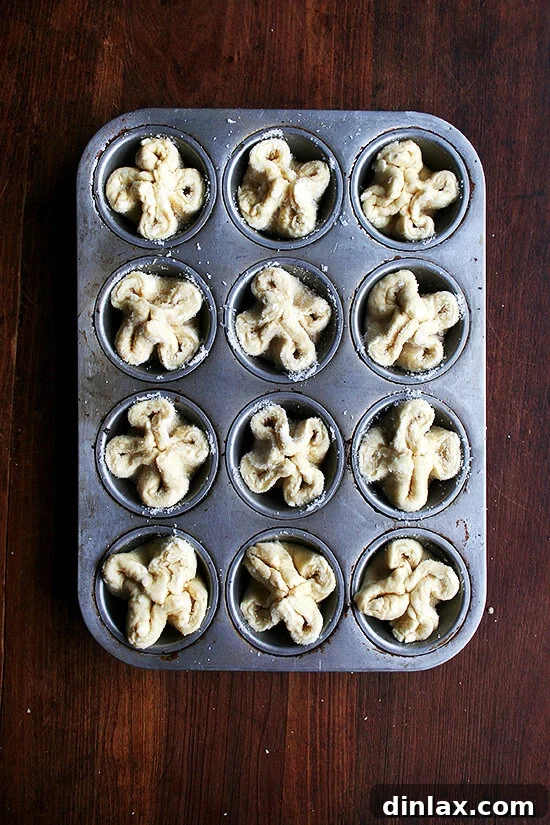
- Shape and Chill Kouign-Amann: Generously butter a 12-cup muffin tin. Take each dough square and carefully lift its corners, bringing them together and pressing them firmly into the center of the square to form a pinched parcel. Gently place each shaped parcel into a well-buttered muffin cup, ensuring it fits snugly. Cover the entire muffin tin loosely with plastic wrap and return it to the refrigerator for another overnight rest. This second chill allows the pastries to further develop and the butter to re-solidify, which is crucial for achieving that signature caramelized crust.
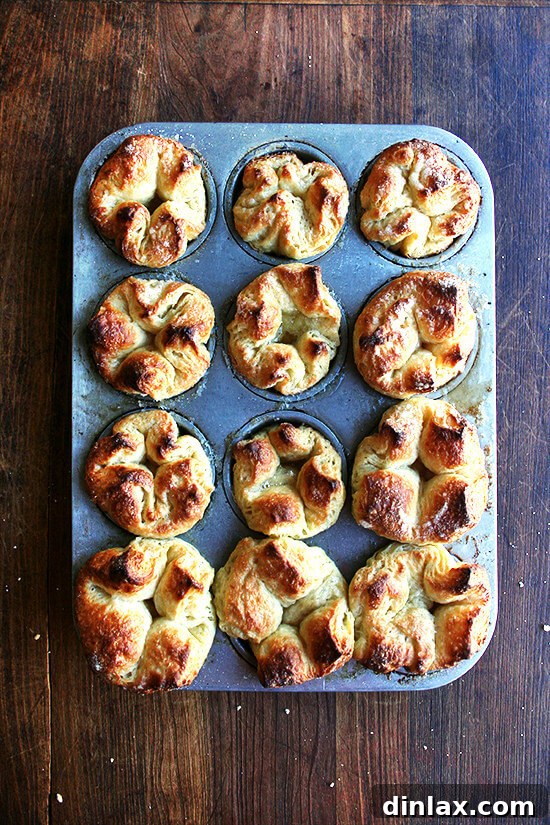
- Bake and Serve: Approximately one hour before you intend to bake, remove the muffin tin from the refrigerator to allow the pastries to come closer to room temperature. Preheat your oven to 375ºF (190ºC). Just before baking, sprinkle the remaining two tablespoons of sugar generously over the tops of the pastries. Bake for 20 to 25 minutes, or until the tops are beautifully golden brown and caramelized. The sugar will melt and bubble, creating a delectable crunchy exterior. Once baked, let the Kouign-Amann cool briefly in the muffin tin before carefully removing them. Serve them warm for the ultimate experience.
- Prep Time: 30 minutes
- Cook Time: 25 minutes