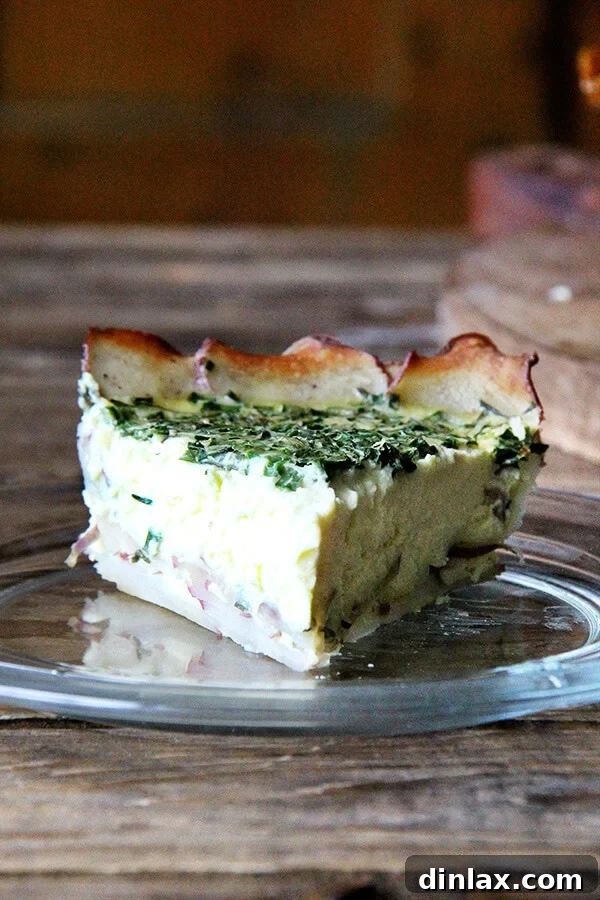
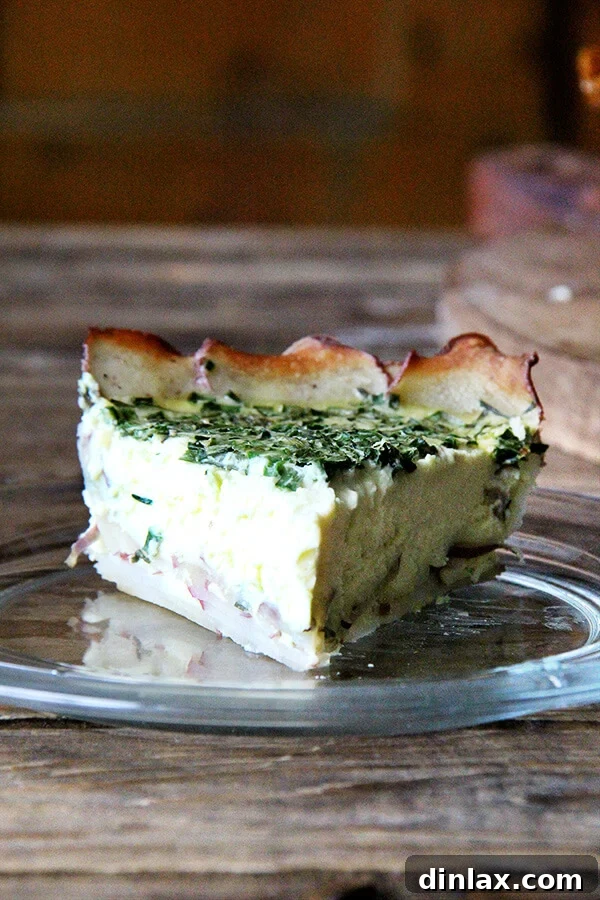
Discover the Ultimate Potato-Crusted Quiche: Tartine’s Secret Revealed
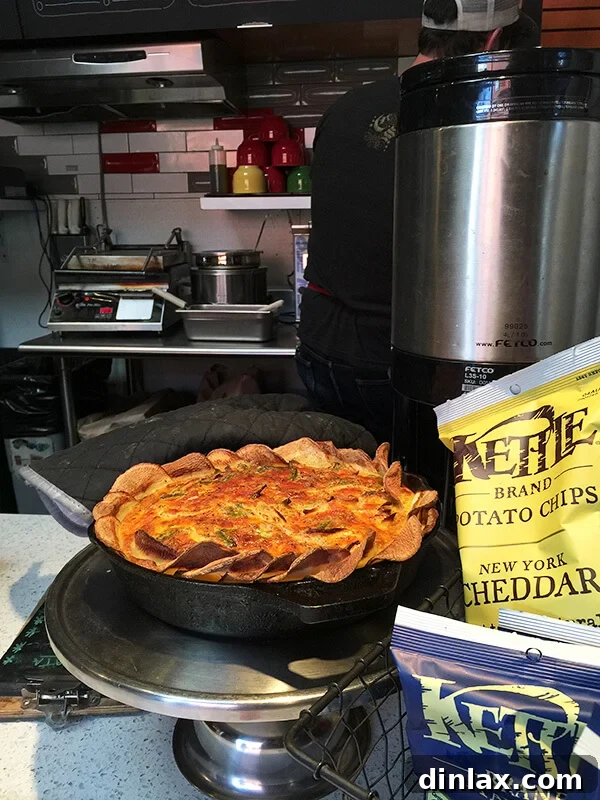
Every culinary journey has an origin, a moment of inspiration that sparks creativity. For this particular recipe, it began a few weeks ago during a trip to Oakland for the Bread Toast Crumbs photoshoot. Amidst the hustle and excitement, my mom and I discovered a charming cafe named Farley’s, just a stone’s throw from the studio. Our initial visits were filled with delightful coffee, buttery scones, and irresistible kouign amann. However, one morning, a truly captivating sight emerged from the kitchen: a magnificent frittata, its surface shingled with perfectly crispy-edged potatoes, resembling tempting chips. It was an instant favorite, quickly becoming a cherished morning ritual.
From Farley’s Frittata to Tartine’s Masterpiece: The Journey of a Recipe
The memory of Farley’s potato-topped frittata lingered long after I returned from California. Its unique presentation and delicious interplay of textures inspired me to recreate a similar experience at home. My first attempts focused on replicating Farley’s vegetable-loaded frittata. Yet, I soon found myself drawn to a simpler, more elegant approach. Instead of partially cooking the eggs stovetop, as is traditional for a frittata, I envisioned a dish that combined the crispy potato shell with the unparalleled silkiness of Tartine’s quiche custard – a long-standing favorite recipe of mine. To truly let the custard shine, I opted for a vibrant blend of fresh herbs, including chives, thyme, and tarragon, foregoing heavier vegetables and cheese that might otherwise dominate the delicate flavor profile.
Unveiling Tartine’s Legendary Quiche Custard: A Silky Perfection
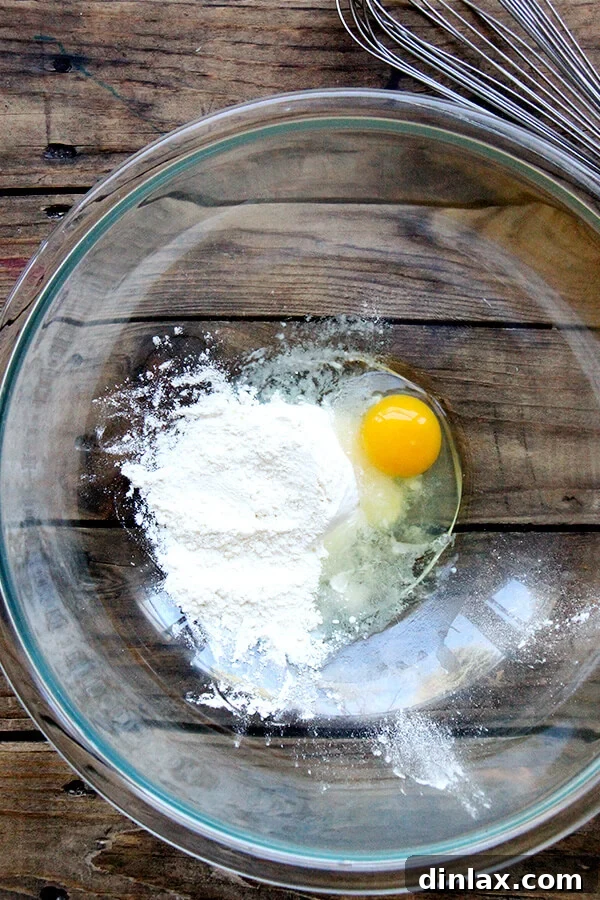
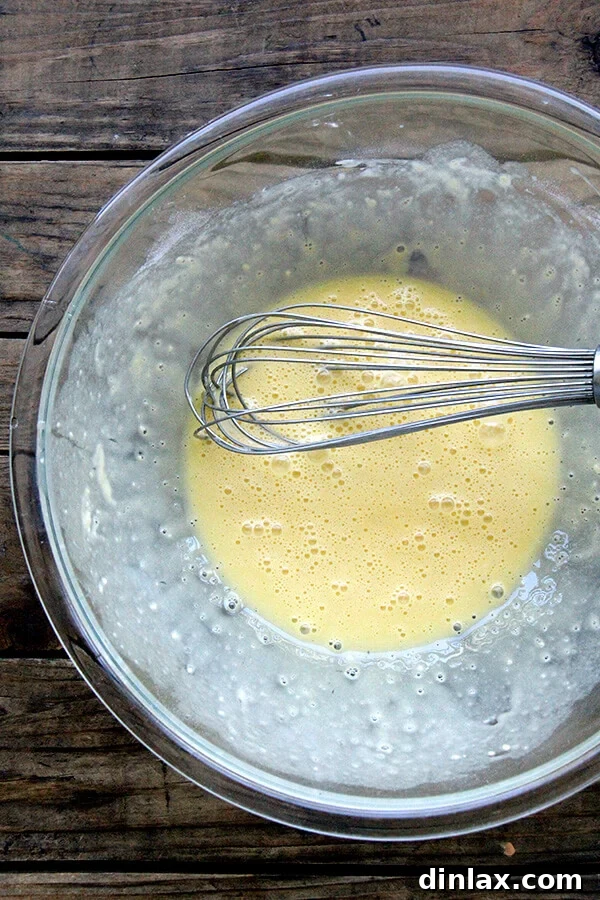
The Tartine quiche method, perfected by Liz Prueitt and Chad Robertson during their apprenticeship at a French bakery, is undeniably unique, almost peculiar in its steps. It begins with whisking just one egg with three tablespoons of flour, creating an initial slurry. Then, the remaining four eggs are whisked in, resulting in a smooth, unified mixture. The final, crucial step involves straining this egg mixture into a luxurious blend of crème fraîche and milk. This seemingly unusual technique is the secret behind the silkiest, most beautiful, and intensely flavorful custard imaginable. Its inherent richness and delicate texture are so profound that it requires very little else to be utterly delicious, making a simple addition of fresh herbs more than sufficient to elevate it to perfection. This method stands in stark contrast to many traditional quiche recipes, yielding a custard that is both light and decadent, with an almost ethereal quality that sets it apart.
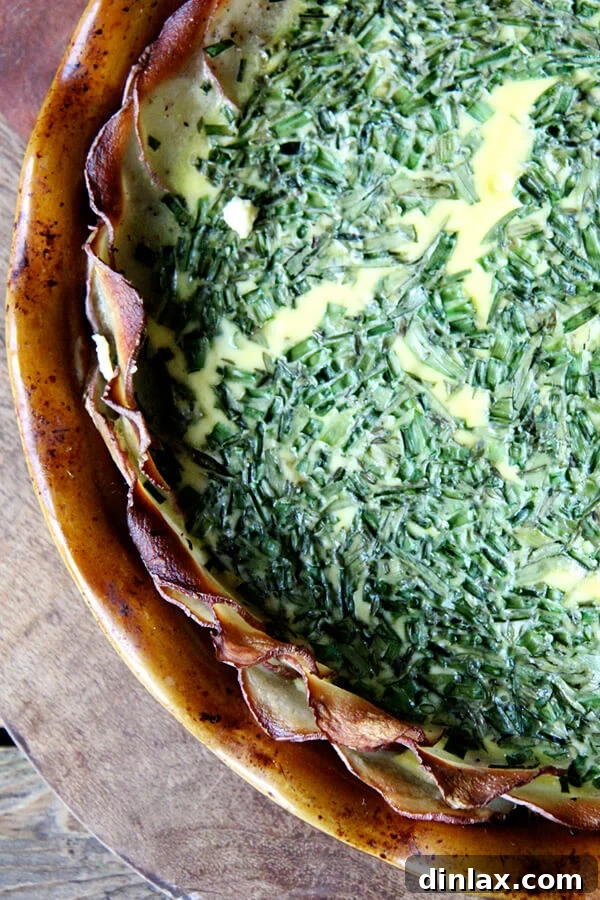
Whether crafted with a traditional flaky, buttery pastry shell or in its crustless form, loaded with kale, the Tartine quiche has always been a beloved treat. However, this latest variation, featuring a savory potato crust, has quickly become my new favorite. While it requires just a touch more effort than its crustless predecessor, the results are undeniably worth it. The potato crust is not only incredibly tasty, offering a satisfying crunch and earthy flavor, but also visually stunning. And, for those fortunate enough to own a mandoline, assembling this beautiful crust is surprisingly simple and quick, transforming a humble ingredient into an elegant foundation for this extraordinary quiche.
The Allure of the Potato Crust: More Than Just a Base
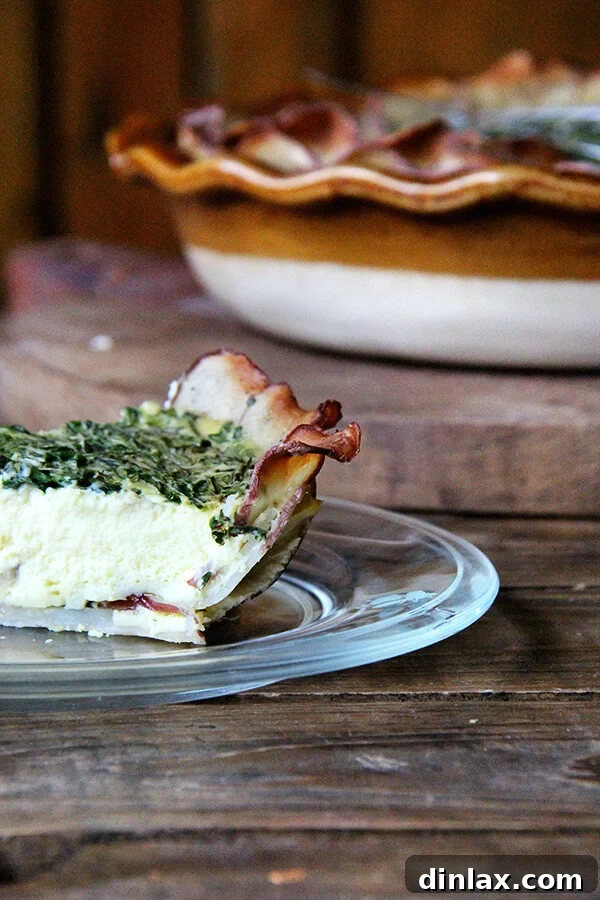
The potato crust is not merely a substitute for traditional pastry; it’s an enhancement that brings its own distinct character to the quiche. Beyond being a fantastic gluten-free alternative, it offers a delightful textural contrast to the creamy custard. Each bite delivers a satisfying crispness from the thinly sliced potatoes, which develop a golden-brown, slightly caramelized edge during baking. The subtle sweetness of the potato pairs beautifully with the rich, savory custard and bright herbs, creating a harmonious flavor profile that is both comforting and sophisticated. Furthermore, the aesthetic appeal of overlapping potato slices, forming a rustic yet elegant shell, transforms the quiche into a true showstopper for any brunch table or dinner gathering. It’s a testament to how simple ingredients, when thoughtfully prepared, can create a truly memorable culinary experience.
Crafting Your Perfect Potato-Crusted Quiche: A Step-by-Step Guide
Preparation and Planning for Success
Success with this potato-crusted quiche hinges on a little foresight. While there’s nothing inherently complicated about the process, understanding the timing is key to achieving optimal results. You’ll need to preheat your oven to 350°F (175°C) and then prepare your potatoes. For the best crust, opt for red-skinned potatoes or other varieties that hold their shape well when thinly sliced. Using a mandoline is highly recommended for achieving uniform 1/8-inch (or thinner) slices, which are crucial for a crispy and evenly cooked crust. If you don’t have a mandoline, a very sharp knife and a steady hand will also work. Toss the potato slices generously with extra-virgin olive oil, ensuring each slice is lightly coated, and season them with a liberal pinch of kosher salt and freshly ground black pepper. This seasoning is vital for the crust’s flavor.
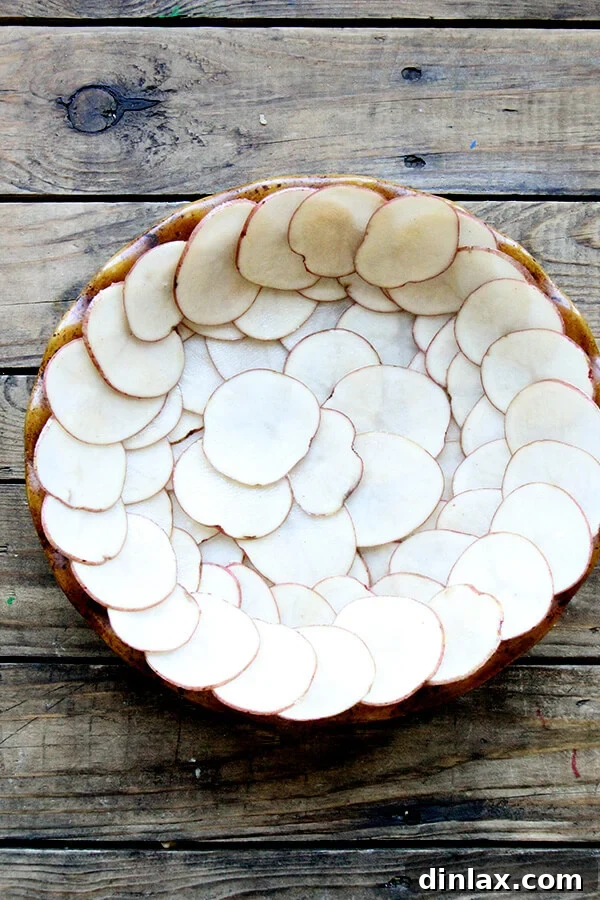
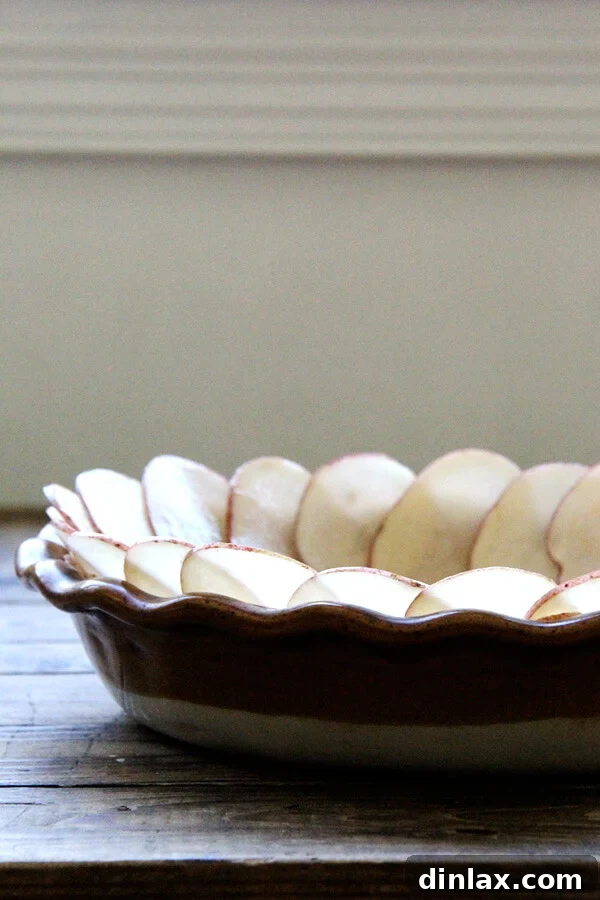
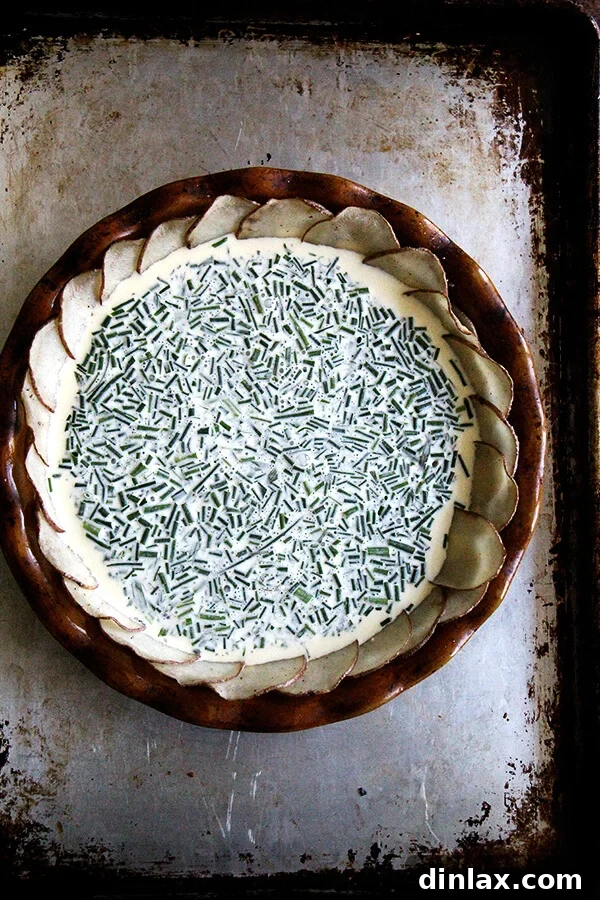
Next, line your chosen quiche pan—whether it’s a pie plate, a cast iron skillet, or another oven-safe dish—with the prepared potato slices. Arrange them in an overlapping pattern, starting from the center and working your way outwards, creating a sturdy base and sides. Critically, ensure that the potato layer closest to the edge extends slightly above the rim of the pan. This provides a beautiful, rustic edge and helps contain the custard during baking. Once arranged, place the pan on a sheet pan (to catch any potential drips) and transfer it to the preheated oven. Bake the potato crust alone for 20 minutes. This par-baking step is essential for creating a firm, golden, and crispy base that won’t become soggy when the custard is added.
Assembling the Silky Custard
While your potato crust is par-baking, turn your attention to the star of the show: Tartine’s remarkable custard. In a large mixing bowl, combine one large egg with three tablespoons of all-purpose flour. Whisk these together vigorously until you achieve a completely smooth, lump-free paste. This initial step is key to the custard’s unique texture. Then, incorporate the remaining four large eggs into the mixture, whisking until everything is thoroughly blended and uniform. In a separate medium-sized bowl, whisk one cup of crème fraîche until it is smooth and creamy, then gradually whisk in one cup of whole milk until well combined. The crème fraîche adds an unparalleled richness and tanginess that elevates the custard’s depth of flavor.
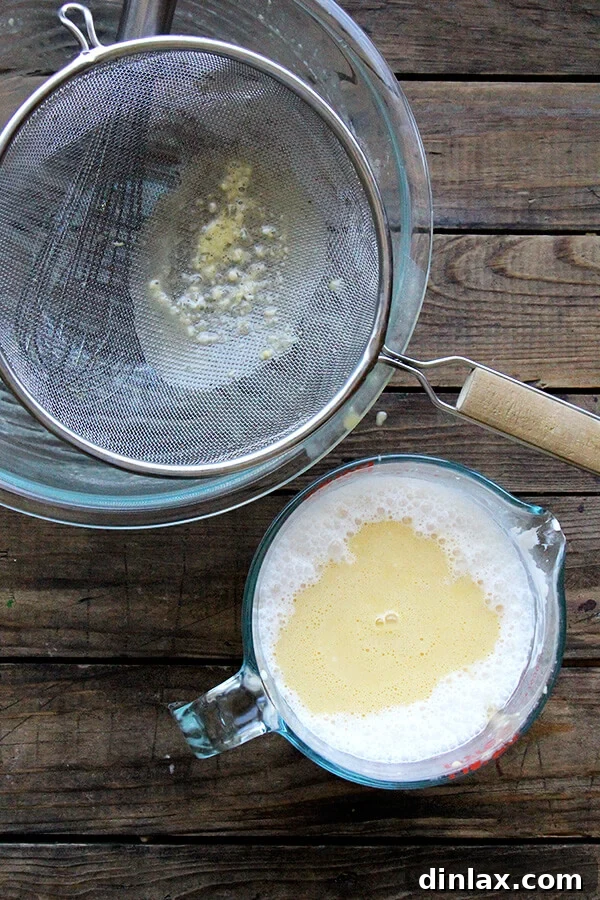
Now comes the crucial straining step. Hold a fine-mesh sieve over the bowl containing your crème fraîche and milk mixture, and slowly pour the egg mixture through it. This simple action removes any bits of chalaza, stray flour lumps, or small air bubbles, ensuring the custard achieves its signature silky-smooth texture. Once strained, whisk in one teaspoon of kosher salt, half a teaspoon of freshly ground black pepper, and your chosen finely chopped fresh herbs. The combination of half a cup of chives, two teaspoons of fresh thyme, and a quarter cup of fresh tarragon provides a bright, aromatic counterpoint to the rich custard. Be sure to mix everything well to evenly distribute the seasonings and herbs.
The Baking Process and Resting Period
Once your potato crust has completed its initial 20-minute bake, carefully remove the pan from the oven. Reduce the oven temperature to 325°F (160°C). Pour the perfectly prepared, herb-infused custard gently into the warm, par-cooked potato crust. Ensure the custard is evenly distributed. Return the quiche to the oven and bake for approximately 40 minutes, or until the filling is just set. The center of the quiche should still feel slightly firm, rather than liquidy, when gently touched. Avoid overbaking, as this can lead to a dry custard; a slight wobble in the very center is acceptable, as it will continue to set as it cools.
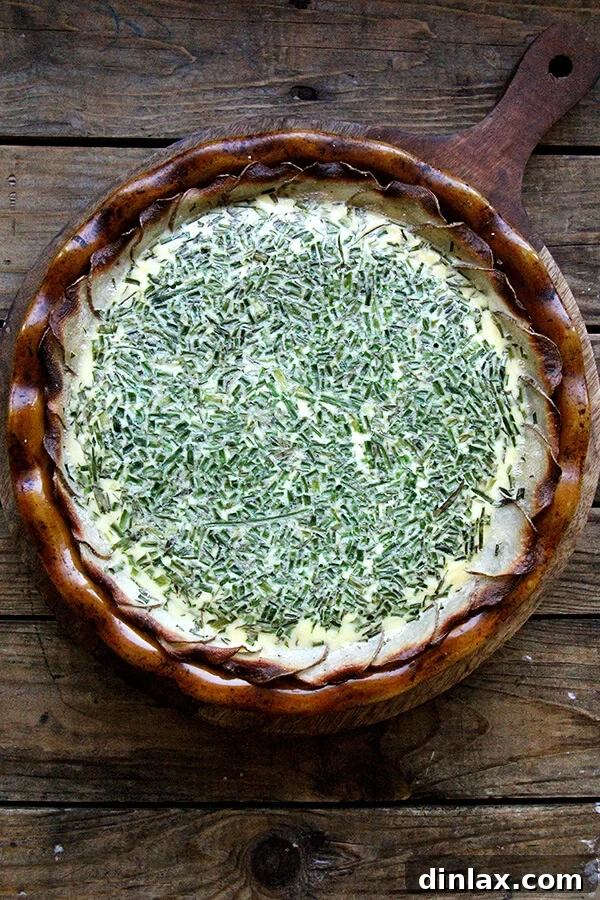
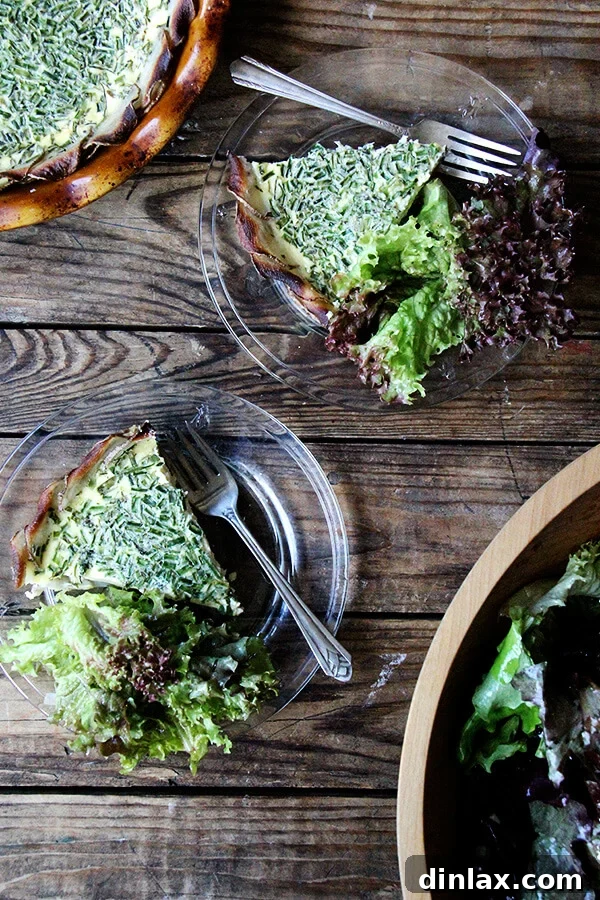
After baking, the most challenging part (for eager eaters!) is the waiting. Let the quiche cool on a wire rack for at least 20 minutes before attempting to slice it. This crucial resting period allows the custard to fully set, ensuring clean, beautiful slices. The potato-crusted quiche is wonderfully versatile and can be served warm, at room temperature, or even reheated. If you’ve prepared it ahead of time and wish to serve a fully cooled quiche warm, simply cover it with aluminum foil and reheat it in a 325°F (160°C) oven for about 15 minutes. This quiche is perfect as a standalone dish or paired with a simple, vibrant salad for a complete and satisfying meal, especially during a refreshing spring evening.
Ingredients for Your Culinary Masterpiece
To create this exquisite potato-crusted quiche, you will need the following:
- About 1 pound of red-skinned (or similar firm, waxy) potatoes
- Extra-virgin olive oil, for tossing potatoes
- Kosher salt and freshly ground black pepper, to taste
- 5 large eggs
- 3 tablespoons all-purpose flour
- 1 cup crème fraîche
- 1 cup whole milk
- 1 teaspoon kosher salt, for custard
- ½ teaspoon freshly ground black pepper, for custard
- A vibrant mix of finely chopped fresh herbs, such as:
- ½ cup fresh chives
- 2 teaspoons fresh thyme leaves
- ¼ cup fresh tarragon leaves
Detailed Instructions for a Flawless Quiche
- Prepare the Potato Crust: Preheat your oven to 350ºF (175°C). Using a mandoline or a very sharp knife, thinly slice the potatoes to about 1/8-inch thickness or thinner. Place the slices in a large bowl, toss them generously with at least a couple of tablespoons of olive oil, and season with a liberal pinch of salt and pepper. Line your quiche pan (a 9-inch pie plate or cast iron skillet works well) with the seasoned potato slices, overlapping them as you arrange them to form a cohesive crust. Ensure the potato layer extends slightly above the rim of the pan. Place the pan on a baking sheet and transfer to the preheated oven. Bake for 20 minutes.
- Start the Custard: While the potato crust is baking, begin preparing the custard. In a large mixing bowl, combine 1 large egg and the 3 tablespoons of all-purpose flour. Whisk vigorously until the mixture is completely smooth and free of lumps. Then, whisk in the remaining 4 large eggs until fully blended.
- Combine and Strain Custard: In a separate medium bowl, whisk the crème fraîche until it is smooth. Gradually whisk in the whole milk until well combined. Position a fine-mesh sieve over the milk mixture, and slowly pour the egg and flour mixture through it. This step is crucial for achieving a silky-smooth custard. Discard any solids caught in the sieve. Finally, whisk the 1 teaspoon of kosher salt, ½ teaspoon of freshly ground black pepper, and the finely chopped herbs into the strained custard mixture.
- Bake the Quiche: Carefully remove the par-baked potato crust from the oven. Reduce the oven temperature to 325ºF (160°C). Pour the prepared custard mixture into the warm potato crust, ensuring it’s evenly distributed. Return the quiche to the oven and bake for about 40 minutes, or until the filling is just set. The center of the quiche should feel slightly firm when gently touched, rather than liquidy. A slight wobble in the very center is normal and indicates perfect doneness.
- Cool and Serve: Once baked, transfer the quiche to a wire rack and allow it to cool for at least 20 minutes before slicing. This essential resting period allows the custard to fully set, ensuring neat and beautiful slices. The quiche can be served warm or at room temperature. To reheat a fully cooled quiche, cover it loosely with aluminum foil and warm it in a 325ºF (160°C) oven for approximately 15 minutes.
Recipe Summary
- Author: Alexandra Stafford
- Total Time: 1 hour 15 minutes (15 minutes prep, 1 hour cook)
- Yield: 6 to 8 servings
- Category: Breakfast
- Method: Oven Baked
- Cuisine: American, French
Tips for Elevating Your Potato Quiche Experience
To ensure your potato-crusted quiche is nothing short of spectacular, consider these additional tips:
- Potato Selection: While red-skinned potatoes are excellent for their texture and color, waxy potatoes like Yukon Gold also work beautifully, offering a slightly creamier interior to the crust. Avoid starchy potatoes like Russets, as they tend to fall apart when sliced thinly and can become mushy.
- Mandoline Mastery: Investing in a good mandoline is a game-changer for this recipe. It ensures consistent, paper-thin slices, which are vital for a crispy, even crust. If using a knife, take your time to achieve slices as thin and uniform as possible.
- Seasoning the Potatoes: Don’t skimp on seasoning the potatoes! A well-seasoned crust forms the flavor foundation for the entire quiche. A good sprinkle of onion or garlic powder can also add an extra layer of savory depth.
- Preventing a Soggy Bottom: The par-baking step for the potato crust is critical. Ensure it browns sufficiently to become firm and slightly crispy before adding the custard. You can also brush a very thin layer of beaten egg white onto the par-baked crust before adding the custard to create an extra barrier against moisture, although with Tartine’s method, this is often unnecessary.
- Herb Customization: While chives, thyme, and tarragon offer a classic flavor, feel free to experiment with other fresh herbs. Dill, parsley, or a touch of rosemary can also be wonderful additions, depending on your preference.
- Cheese (Optional): If you simply can’t resist a cheesy quiche, a modest sprinkle of Gruyère or a good quality sharp cheddar (about ½ cup) can be added to the custard along with the herbs. However, Tartine’s custard truly shines on its own, so consider trying it as written first!
Beyond Breakfast: Versatility of Potato-Crusted Quiche
This potato-crusted quiche transcends the traditional breakfast or brunch plate. Its robust yet refined flavor profile makes it suitable for a variety of occasions:
- Elegant Lunch: A slice of this quiche, served with a fresh green salad or a cup of light soup, makes for an ideal and satisfying lunch.
- Light Dinner: Paired with a more substantial side like roasted asparagus or a vibrant mixed greens salad with a vinaigrette dressing, it transforms into a perfect light dinner.
- Meal Prep Powerhouse: Prepare a whole quiche on Sunday and enjoy slices throughout the week. It reheats beautifully and makes for a quick, wholesome meal on busy days.
- Picnics and Potlucks: Quiche is an excellent dish to bring to gatherings. It travels well and tastes just as delicious at room temperature, making it a crowd-pleasing addition to any spread.
More Tartine Quiche Inspirations
If you’ve fallen in love with Tartine’s custard method, you might also enjoy exploring its other delightful incarnations:
- Crustless Quiche, Loaded with Kale: A lighter, equally delicious option packed with greens.
- Tartine’s Ultimate Quiche with a Pastry Shell: For those who appreciate the classic flaky, buttery crust.
Conclusion: A Recipe Worth Savoring
This potato-crusted quiche, infused with the genius of Tartine’s custard method and inspired by a memorable frittata, is truly a dish to behold. It harmonizes crisp, savory potatoes with a creamy, herb-kissed filling, creating a culinary experience that is both comforting and sophisticated. It’s more than just a recipe; it’s an invitation to elevate your home cooking, to savor the simple beauty of quality ingredients, and to impress your guests with a quiche that stands out. Whether for a special brunch or a weeknight dinner, this quiche is destined to become a cherished addition to your recipe repertoire. Give it a try – you might just find your new favorite quiche here.