Unearthing Tat Soi: A Culinary Journey from Farmers Market to Farm Table
Last Sunday, the vibrant San Clemente farmers’ market offered a bounty that left me feeling more than satisfied – a sensation akin to a treasure hunter who’s struck gold. Amidst the lively chatter and the fragrant aroma of fresh produce, my eyes landed on six petite bundles of what I initially believed to be baby bok choy. Nestled invitingly atop a bed of crisp arugula at the Peterson Specialty Produce stand, these greens called to me, and without a moment’s hesitation, I purchased every single one. The excitement of discovering such a delightful find, especially something that promised the delicate texture and flavor of baby bok choy, was palpable. My long-standing affection for baby bok choy dates back to a memorable dish at Twenty Manning in Philadelphia – their perfectly steamed baby bok choy side, a dish that imprinted its simple elegance on my palate and set a high bar for this versatile Asian green. It’s a rare sight at our local farmers’ markets, making this particular discovery all the more thrilling. Little did I know, this seemingly familiar purchase would lead me down a fascinating path of culinary distinction and local farm exploration.
Tat Soi vs. Bok Choi: Unraveling the Mystery of Asian Greens
My initial assumption that I had stumbled upon baby bok choy was understandable, given the striking resemblance. However, as I later learned, these lovely greens were in fact tat soi. This leafy green, a member of the Brassica family, is closely related to bok choy but possesses its own distinct charm. Visually, tat soi forms a tighter, flatter rosette shape with dark green, spoon-shaped leaves and short, tender stems that are slightly thicker than spinach but much more delicate than bok choy. In contrast, baby bok choy typically has a more upright growth habit with thicker, crisp white stems and lighter green leaves, offering a more pronounced crunch. Both offer a mild, slightly sweet flavor with a hint of mustard, but tat soi tends to be a bit more delicate and buttery in texture when cooked, while bok choy provides a more substantial, crisp bite.
The culinary uses for both greens are often interchangeable, yet discerning cooks appreciate the subtle nuances each brings to a dish. Tat soi, with its elegant form and tender leaves, is particularly wonderful in quick sautés or as a vibrant addition to salads, while bok choy excels in stir-fries and soups where its sturdy stems can absorb flavors. The true clarification came from Andrea Peterson herself, the passionate grower behind Peterson Specialty Produce. When I excitedly told her about my “bok choy” purchase, she kindly corrected me over the phone: “Tat soi, not bok choi.” This simple statement sparked my curiosity even further, highlighting the invaluable knowledge that local farmers possess about their produce. Engaging with growers like Andrea not only deepens our understanding of the food we eat but also fosters a greater appreciation for the diversity of agricultural offerings and the stories behind them.
Meet the Growers: A Glimpse into Blue Heron Farm’s Bounty
Intrigued by the tat soi and Andrea’s extensive knowledge, I reached out to learn more about her operation, Blue Heron Farm. Our conversation revealed a world far richer than I had imagined. Blue Heron Farm, nestled in the sun-drenched hills of Fallbrook, California, is a testament to sustainable farming practices and a passion for cultivating exceptional produce. Each week, I had been delighting in a variety of greens from her stand—the peppery bite of arugula, the robust flavor of rapini, and an assortment of tender baby lettuces—and now, the elegant tat soi. Andrea’s dedication to quality, her careful stewardship of the land, and her innovative approach to agriculture are truly inspiring. It’s through farms like hers that we gain access to seasonal, ultra-fresh ingredients that elevate home cooking.
What truly astonished me during our discussion was the revelation that her Fallbrook farm also boasts an unexpected tropical bounty: ripe bananas and juicy mangos. This unusual combination speaks volumes about the unique microclimates of Southern California and Andrea’s profound expertise in nurturing such diverse crops. It’s a remarkable example of how local farms can offer so much more than conventional supermarket fare, providing a connection to unique flavors and sustainable practices that benefit both consumers and the environment. The stories behind these farms and the people who tend them are often as rich and varied as the produce they yield.
My conversation with Andrea was so captivating that it inspired me to pen a story about Blue Heron Farm and its offerings for San Clemente’s Sun Post News. It’s incredibly rewarding to find employment that aligns with my passions, allowing me to share these wonderful discoveries with a wider audience and support the local food community. While the article about Blue Heron Farm may not yet be uploaded to their website, you can delve into another one of my pieces, titled “Rapini To Relish,” to get a taste of the local culinary scene and further explore the fascinating world of farm-fresh produce.
The Art of Simplicity: Sautéed Tat Soi Recipe
One of the best ways to truly appreciate the delicate flavor and tender texture of tat soi is through a simple sauté. This method beautifully highlights its natural sweetness and slight peppery notes, making it an ideal side dish that complements a wide array of main courses, from roasted chicken to pan-seared fish or even grilled tofu. The beauty of this recipe lies in its minimal ingredients and quick preparation, allowing the fresh quality of the tat soi to shine. It’s a fantastic way to introduce new vegetables into your diet or to simply enjoy a healthy, flavorful green. Here’s how you can transform these delightful greens into a flavorful and healthy accompaniment in minutes.
Ingredients:
- 5 bundles tat soi (approximately three small tat soi per bundle, yielding about 15 individual greens. Look for fresh, vibrant green leaves with no wilting.)
- 1½ tablespoons high-quality olive oil (extra virgin is preferred for its robust, fruity flavor, which will greatly enhance the dish.)
- 2 cloves fresh garlic, finely minced (Choose plump, firm cloves. Freshly minced garlic provides the best aroma and flavor profile.)
- Crushed red pepper flakes to taste (Start with a small pinch, about ¼ teaspoon, and adjust to your desired level of heat. A little heat can beautifully awaken the flavors.)
- Kosher salt to taste (Fine-grained kosher salt helps distribute flavor evenly and quickly. Begin with about ¼ to ½ teaspoon.)
Instructions:
1. Prepare the Blanching Water: Begin by bringing a large pot of water to a rolling boil. It’s important to use a pot large enough to comfortably submerge all the tat soi at once. A rapid, rolling boil is crucial for the quick blanching process, which helps preserve the greens’ vibrant color and crisp-tender texture. Ensure the water is generously salted, similar to pasta water, to enhance the tat soi’s flavor.
2. Clean the Tat Soi: Carefully unwrap the bundles of tat soi. Place the individual greens in a large bowl filled with cold water. Gently swish them around to dislodge any soil or grit that might be clinging to the leaves and stems. Allow them to sit for a few minutes, letting any sediment settle to the bottom of the bowl. This crucial step ensures a clean, grit-free eating experience, which is particularly important with leafy greens straight from the farm. Lift them out of the water, leaving the dirt behind.
3. Infuse the Oil: While the tat soi is soaking or draining, place the olive oil and finely minced garlic in a large nonstick sauté pan or cast-iron skillet. Turn the heat to medium. As soon as the garlic begins to sizzle and become fragrant, reduce the heat to low. Cook gently, stirring occasionally, for about 2 to 3 minutes, being extremely vigilant to prevent the garlic from browning, which can impart a bitter, unpleasant taste. The goal here is to infuse the olive oil with the sweet, aromatic essence of garlic. After this gentle sauté, add the crushed red pepper flakes to your preference and immediately turn off the heat. This allows the flavors to meld beautifully without overcooking the garlic or the spice.
4. Blanch the Tat Soi: Once the salted water in the pot is boiling vigorously, carefully add the cleaned tat soi. Blanch for a very short period—only 10 to 30 seconds maximum. This ultra-quick blanching softens the greens just enough to enhance their tenderness while preserving their natural crispness and bright green hue. Overcooking will result in limp, dull tat soi that loses its appeal. Immediately after blanching, drain the tat soi thoroughly and rinse it under cold running water or plunge it into an ice bath. This “shocking” process instantly halts the cooking, maintaining their vibrant color and fresh, firm texture. Squeeze out any excess water gently.
5. Final Sauté and Serve: Return the sauté pan with the infused garlic-pepper oil to medium-high heat. When the garlic and pepper flakes begin to sizzle again and become fragrant, add the blanched, drained tat soi to the pan. Season generously with kosher salt to taste, ensuring it’s evenly distributed. Using tongs or by shaking the pan, quickly toss the tat soi to ensure it is evenly coated in the aromatic olive oil-garlic mixture. Sauté for just 1-2 minutes, allowing the flavors to marry and the greens to gently warm through without becoming overcooked. Serve immediately as a vibrant and flavorful side dish that truly celebrates the simplicity and elegance of fresh tat soi. It’s best enjoyed hot, straight from the pan, to capture its delicate texture and robust flavor.
Beyond Tat Soi: Exploring More Farm-Fresh Delights
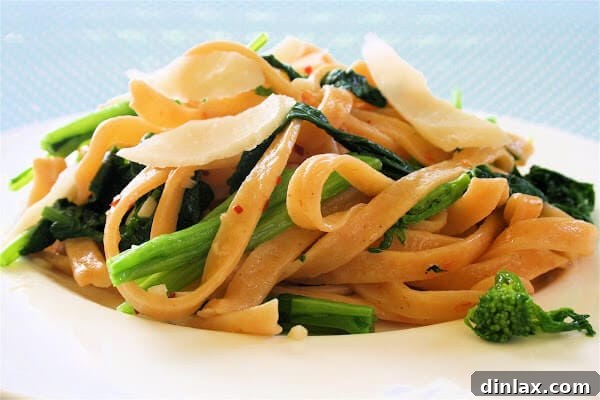
The journey through Blue Heron Farm’s offerings doesn’t end with tat soi. Another delightful discovery from Andrea Peterson’s stand led to a memorable dish: rapini-linguini. This simple yet profound recipe was shared with Andrea by two Italian customers who generously brought her rapini seeds directly from Italy, hoping she would cultivate this beloved green. Rapini, often confused with broccolini (which is a hybrid of broccoli and Chinese kale), boasts a distinct, slightly bitter, nutty flavor with tender florets, leaves, and stems, all edible. It’s a staple in Italian cuisine, prized for its robust character that stands up beautifully to garlic, olive oil, and a touch of heat, making it perfect for pasta dishes, sautés, and even pizzas.
My rendition of this dish follows Andrea’s straightforward instructions, resulting in a comforting and intensely flavorful meal. The recipe, as fate would have it, found its perfect partner in Delaney’s Culinary Fresh red pepper linguini – a truly delightful surprise. The subtle heat and vibrant color of the pasta complements the rapini’s earthy notes, creating a harmonious and utterly satisfying experience. This story is a beautiful illustration of how food connects us, bridging cultures and fostering community through shared recipes and fresh, local ingredients. It underscores the profound impact that farmers like Andrea have, not just by growing food, but by preserving culinary traditions and enriching our tables with unparalleled freshness. Exploring the diverse offerings from local farms like Blue Heron Farm ensures that every meal can be an adventure, a celebration of flavor, and a connection to the rich tapestry of our agricultural landscape.
Pictured above is the rapini-linguini I made following Andrea Peterson’s instructions. She learned this simple recipe from two Italian customers who brought her rapini seeds (from Italy) for her to grow. For the recipe and to read more about Blue Heron Farm, click here. The recipe … shocker … features none other than Delaney’s Culinary Fresh red pepper linguini.