Transform Your Leftovers: The Ultimate Teriyaki Grain Bowl Adventure
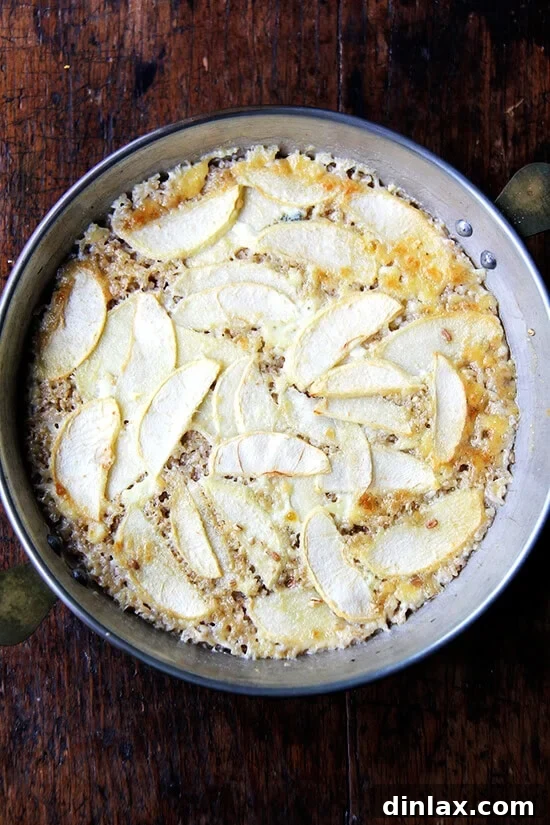
Every home cook knows the struggle and the occasional triumph of managing leftovers. Sometimes, a culinary experiment doesn’t quite hit the mark, leaving you with a fridge full of ingredients that need a second chance. This week, what started as a promising “two-bowl wonder” – a baked blend of wheat berries and butternut squash with bacon and parmesan – took an unexpected turn. The squash, alas, became lost in the robust texture of the wheat berries, resulting in a dish that, while sporting an irresistible bacon and parmesan crust, ended up being mostly a heap of grains and rather bland, mushy squash beneath.
After enjoying the savory top layer, the rest found its way into the refrigerator, posing the familiar question: “What now?” The answer, as it often is for the resourceful cook, lay in the art of reinvention. The idea of embracing the popular “whole grain bowl” concept immediately came to mind. This wasn’t just about finishing off food; it was about transforming disparate elements into a cohesive, flavorful, and exciting meal. The plan was simple yet ambitious: combine our existing grains and vegetables with a few vibrant, fresh components – specifically, a zesty pickle and a rich, tangy sauce – then crown it all with perfectly soft-boiled eggs. Dinner, we declared, would be a done deal.
Before diving into the kitchen, I sought inspiration from Melissa Clark’s insightful piece in theNew York Timeson crafting your own grain bowls. Her guidance provided an excellent framework, ensuring all the essential elements were covered: whole grains (check, thanks to our wheat berries!), greens (sautéed kale and steamed broccoli were on hand), a bright pickled element (still to be determined but high on the list), a protein boost (eggs, ready for their moment), and a flavorful dressing (the final touch). This methodical approach not only helped conceptualize the dish but also ensured a balanced and satisfying meal, perfectly showcasing the potential of a well-executed grain bowl.
The Philosophy of the Grain Bowl: A Culinary Canvas for Sustainability and Flavor
Grain bowls have surged in popularity not just for their aesthetic appeal but for their incredible versatility, health benefits, and significant role in sustainable eating. They serve as a perfect canvas for culinary creativity, allowing you to combine various textures, flavors, and nutritional components into one harmonious, satisfying dish. A well-constructed grain bowl is more than just a convenient meal; it’s a statement against food waste, a celebration of whole, unprocessed ingredients, and a testament to how simple cooking can be profoundly satisfying and endlessly adaptable.
Why Grain Bowls Are Your Kitchen’s Best Friend:
- Unmatched Versatility: Almost any cooked whole grain – be it fluffy quinoa, chewy farro, nutty brown rice, hearty wheat berries, or pearl barley – can serve as the foundational base. This flexibility extends to toppings, inviting you to use leftover roasted vegetables, crisp fresh greens, grilled proteins, or anything else you have on hand that needs a creative outlet.
- Nutritional Powerhouses: Grain bowls are inherently balanced and nutritious. They are typically packed with essential fiber from whole grains, a rich array of vitamins and minerals from diverse vegetables, and vital protein from various sources, contributing to sustained energy and overall well-being.
- Effortless Meal Prep: For those seeking efficiency, grain bowls are a meal prep champion. Dedicate a small amount of time at the beginning of the week to cook a batch of grains, roast a medley of vegetables, and prepare a versatile sauce. You’ll then have quick, healthy, and delicious meals ready to assemble in mere minutes throughout your busy week.
- Food Waste Reduction: This is arguably where the grain bowl truly shines brightest. It provides an elegant and practical solution for repurposing small quantities of leftovers – those odds and ends that might otherwise go uneaten. By giving these ingredients a new purpose, you actively contribute to reducing household food waste.
- Customizable to Any Diet: Whether you’re vegetarian, vegan, gluten-free, or a dedicated meat-lover, grain bowls are incredibly easy to adapt. Simply swap out components to align with your dietary preferences, making them a universally appealing meal option for any household.
Crafting the Key Components: The Essential Pickle and Flavorful Sauce
With our foundation of hearty grains and vibrant greens secured from the fridge, the next crucial steps involved preparing two fresh elements that would truly elevate our grain bowl from simple leftovers to a gourmet experience: a quick pickle for a burst of invigorating acidity and delightful crunch, and a rich, umami-packed sauce to skillfully tie all the disparate flavors together. These carefully chosen additions are essential for transforming an ordinary meal into something extraordinary, providing critical contrast, profound depth, and an irresistible zest.
The Quick Pickle: A Tangy, Refreshing Counterpoint
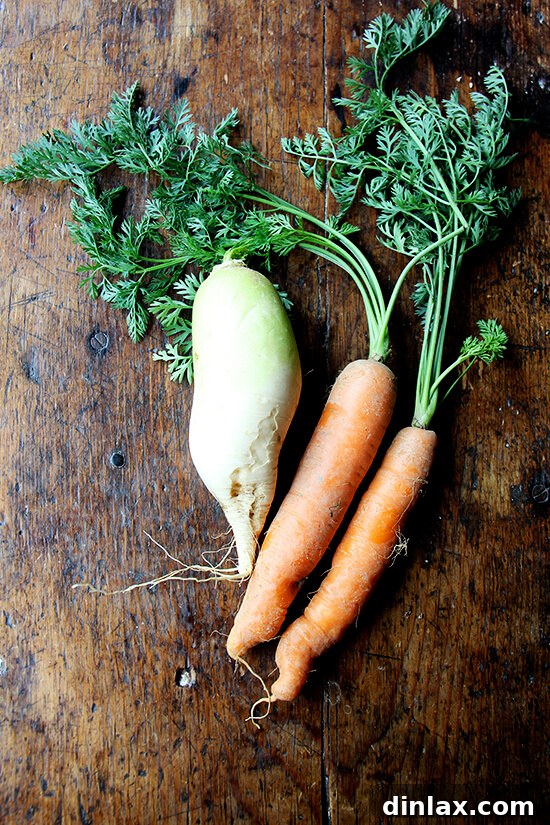
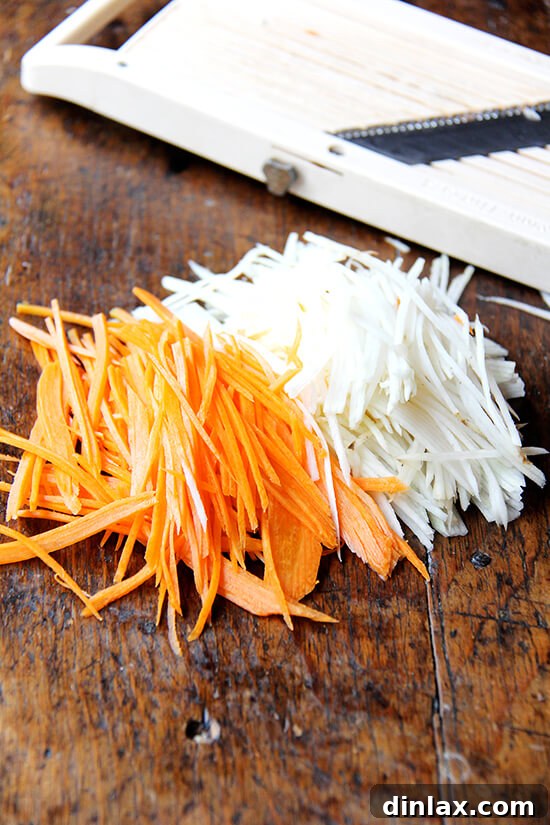
My inspiration for the pickle came directly from the vivid, refreshing pickled carrots and daikon that are an iconic staple at Vietnamese restaurants. Their distinct bright, slightly sweet-and-sour profile effortlessly cuts through richer, heavier flavors, providing a much-needed textural and acidic contrast that awakens the palate. Fortunately, I happened to have both carrots and daikon radish readily available in my pantry, making this element an easy choice. Whipping out my trusty mandoline, I set to work slicing them thinly into elegant juliennes, ensuring maximum surface area for the pickling liquid to penetrate and impart its tangy essence.
The pickling liquid itself is remarkably simple and fast-acting, requiring minimal effort for maximum flavor impact: a mere 1 teaspoon of sugar to balance the acidity, 1/4 teaspoon of kosher salt to draw out moisture and enhance flavor, and 1 teaspoon of rice vinegar for that quintessential tang. Tossed thoroughly together, these humble ingredients miraculously transform the raw, plain vegetables into a piquant delight in a matter of minutes. While carrots and daikon are undeniably a classic and harmonious combination, this quick pickling method is highly adaptable and encourages experimentation. Feel free to explore with other vegetables you might have on hand – thinly sliced fennel, vibrant slivers of beets, or crisp shreds of cabbage would all work wonderfully, adding their own unique character. And if you’re truly short on time or simply prefer a convenient, ready-made option, Melissa Clark’s excellent suggestion of kimchi is an outstanding substitute, offering a similar fermented tang, a delightful crunch, and an added layer of spicy complexity.
The Sauce: Homemade Teriyaki, A Sweet, Savory, and Umami Delight
A truly exceptional sauce is the undeniable soul of any outstanding grain bowl, serving as the unifying element that brings all components into perfect harmony. For this particular culinary assembly, a classic, richly flavored teriyaki sauce was the undeniable and perfect choice. The rich, glossy sheen and irresistible balance of sweet-and-savory flavors characteristic of teriyaki, especially when generously draped over wholesome grains like brown rice, always brings to mind the comforting simplicity and balanced perfection of traditional Japanese bento boxes. Many might mistakenly assume that creating a delectable teriyaki sauce is a complicated affair best left to commercially produced, store-bought bottles; however, the delightful truth is that crafting it at home is incredibly easy, immensely rewarding, and yields a vastly superior product, free from unnecessary additives and bursting with fresh flavor.
Our homemade teriyaki sauce recipe calls for a harmonious blend of fundamental pantry staples: chicken stock (preferably homemade for depth or a good quality low-sodium variety), low-sodium soy sauce for the savory base, sugar to provide sweetness and gloss, mirin (a sweet rice wine) for subtle complexity, and sake (or dry sherry or even a dry white wine for a nuanced variation) to round out the flavors. These ingredients are simply combined in a saucepan and gently simmered together for about 20 minutes, or until the mixture gradually reduces, thickens slightly, and achieves a wonderfully syrupy, lustrous consistency. The transformation is nothing short of magical – a few basic kitchen staples coalesce into a thick, intensely flavorful sauce that adds profound depth, an undeniable “umami” kick, and a beautiful sheen to every single bite of your grain bowl.
Prepping Your Leftovers: The Art of Smart Reheating
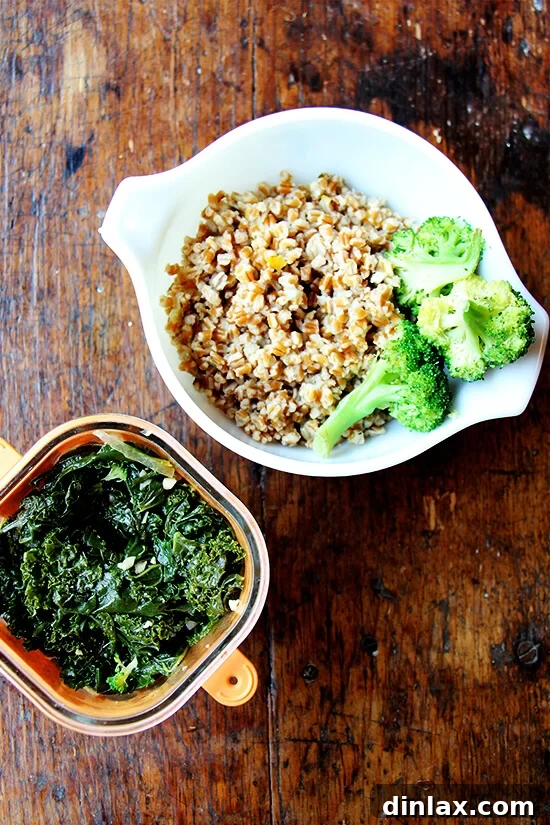
One of the true secrets to a successful and delicious leftover grain bowl is not just what ingredients you choose to use, but crucially, how you thoughtfully prepare and reheat them. Simply nuking your precious ingredients in the microwave can often lead to undesirable results, such as dry, stiff grains and limp, overcooked vegetables that lack their original vibrancy and texture. To impeccably revive our cooked wheat berries, vibrant sautéed kale, and tender steamed broccoli, I employed a simple yet highly effective method for reheating: gentle stovetop steaming. This time-honored technique ensures that the grains retain their delightful fluffy texture and the vegetables regain a pleasant, al dente crisp-tenderness, tasting almost as fresh and appealing as when they were first lovingly cooked.
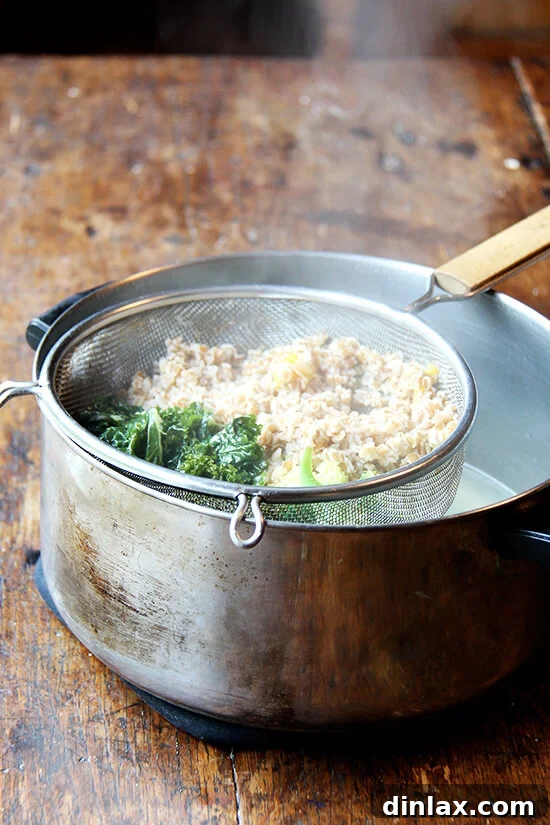
The process for this gentle reheating is remarkably straightforward and requires minimal specialized equipment: pile all your leftover grains and vegetables into a large colander or a sturdy metal strainer. Carefully set this colander over a pot containing approximately an inch of water, ensuring with certainty that the water does not make direct contact with the food itself. To create a sealed steaming environment, cover the entire top surface of the colander and pot tightly and securely with aluminum foil, effectively trapping the steam within. Place the pot over high heat and allow the contents to steam for approximately 6 to 8 minutes, or until the food is thoroughly heated through and delightfully refreshed. A crucial safety tip that cannot be overstated: exercise extreme caution when removing the aluminum foil, as the trapped steam will be intensely hot and can cause severe burns if not handled with care. This method yields wonderfully reheated food, making your grain bowl experience truly exceptional.
The Grand Assembly: Bringing Every Component Together for a Culinary Masterpiece
With all our meticulously prepared components finally ready – the re-steamed, fluffy grains and vibrant vegetables, the bright and crisp quick-pickled carrots and daikon, the warm and lusciously syrupy homemade teriyaki sauce, and the perfectly cooked soft-boiled eggs waiting in anticipation – it was time for the grand assembly. This is the moment where the grain bowl truly comes to life, a testament to how simple, thoughtfully combined ingredients can transcend their individual forms to create a meal that is undeniably greater than the sum of its parts. Each element, crafted with care, plays a crucial role in the symphony of flavors and textures.
The Perfect Soft-Boiled Egg: A Golden, Creamy Crown
No truly satisfying grain bowl feels genuinely complete without a substantial protein element, and for this particular dish, perfectly soft-boiled eggs were destined to be the crowning star. Achieving that elusive, ideal six-minute egg – characterized by firm, yielding whites, beautifully jammy edges, and a gloriously runny, rich golden yolk – is surprisingly simple once you know the technique, and it makes all the delightful difference. The luxuriant, oozing yolk, when gently broken, acts as another decadent layer of natural sauce, enriching and binding the entire bowl with its creamy texture and rich flavor. The secret lies in precision: boiling the eggs for exactly 6 minutes, then immediately plunging them into an ice bath to swiftly halt the cooking process and prevent overcooking. An added benefit of this method is that it also makes them incredibly easy to peel, thankfully avoiding frustrating shell-cling and ensuring a smooth, beautiful presentation.
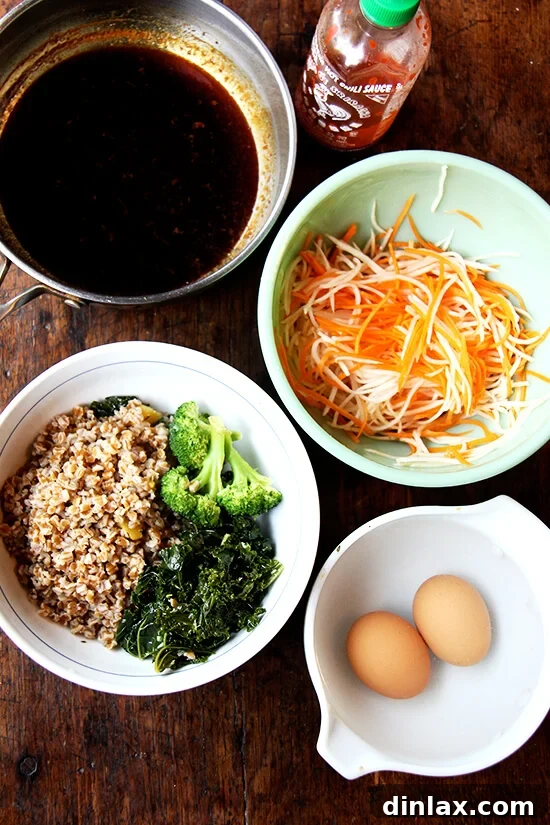
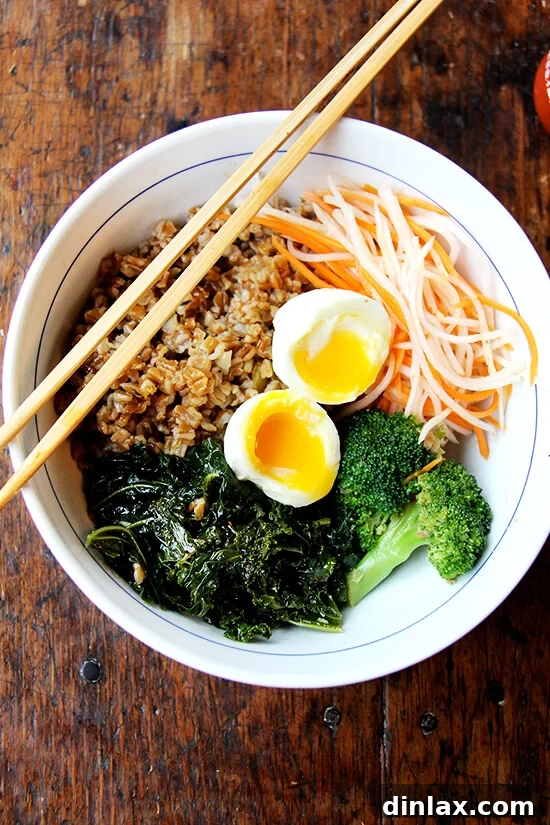
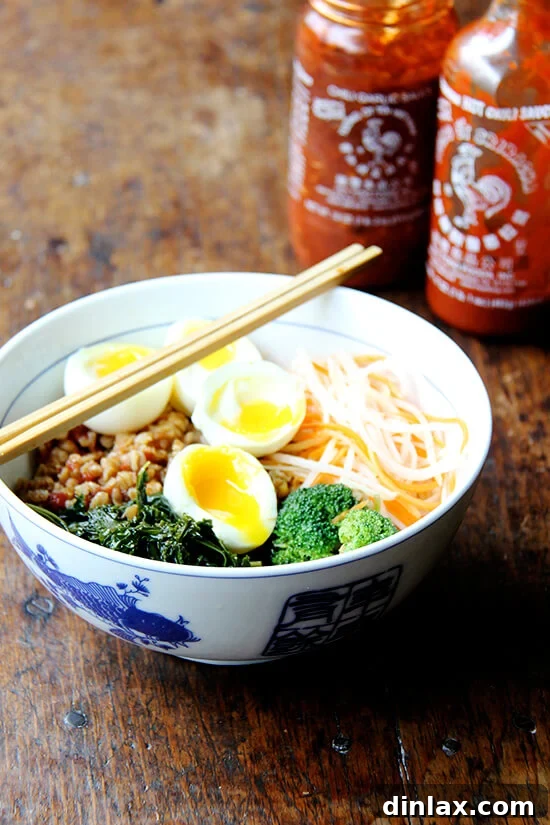
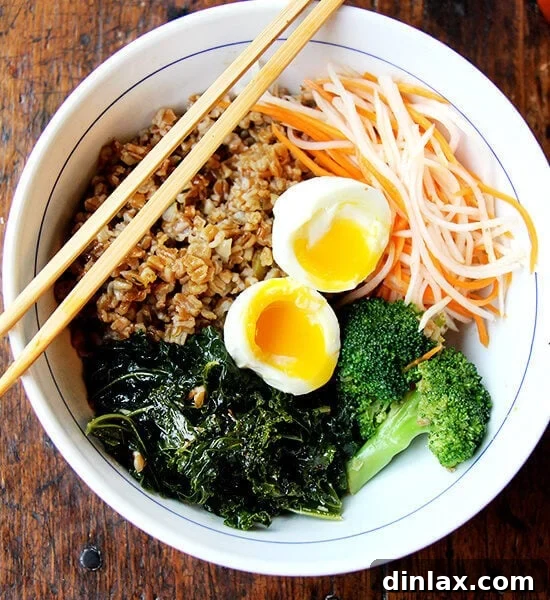
To serve, I carefully piled the fluffy, beautifully re-steamed grains and the vibrant, tender vegetables into individual, inviting bowls, forming a substantial base. The bright, quick-pickled carrots and daikon were then artfully arranged on the table, offering a delightful, tangy, and crunchy counterpoint to the softer textures within the bowl. Alongside them, a thoughtful selection of various hot sauces was made available for those who desired an extra kick of spice (a particular favorite addition for my husband, Ben, who always appreciates a fiery component in his meal!). The homemade teriyaki sauce was kept wonderfully warm, ready to be generously drizzled over each bowl, providing that crucial sweet, salty, and umami cohesion that ties all the diverse elements together. Finally, just before serving, the freshly peeled, perfectly soft-boiled eggs were gently placed on top of each bowl and halved, allowing their rich, golden yolks to gloriously mingle with the other ingredients. The resulting combination was nothing short of spectacular: the earthy grains, the tender, verdant greens, the bright, crunchy pickles, the savory, glossy teriyaki, and the creamy, luscious egg yolk united in an exquisite symphony of harmonious flavors and contrasting textures, truly a feast for the senses.
Recipe: Teriyaki Grain Bowl with Quick Pickles & Soft-Boiled Eggs
Author: Alexandra Stafford
Description
This flexible and incredibly delicious recipe provides an ingenious way to repurpose your everyday leftovers into a gourmet-level meal. It masterfully combines wholesome cooked grains and tender vegetables with bright, piquant quick-pickled elements, a rich and savory homemade teriyaki sauce, and perfectly cooked soft-boiled eggs for a complete, satisfying, and deeply flavorful culinary experience. This dish is not only a triumph in flavor and texture but also a testament to creatively reducing food waste without ever compromising on taste, nutrition, or culinary satisfaction. For more inspiring ideas and comprehensive guidance on building your own diverse and delicious grain bowls, we highly recommend exploring Melissa Clark’s insightful guide.
Ingredients
For the Homemade Teriyaki Sauce:
- 1 cup chicken stock (preferably homemade, or a high-quality low-sodium variety)
- 1/3 cup low-sodium soy sauce
- 1/3 cup granulated sugar
- 2 tablespoons mirin (sweet rice wine)
- 2 tablespoons sake (or dry sherry, or a dry white wine like Sauvignon Blanc)
For the Quick Pickle:
- 1 medium carrot, julienned (cut into thin matchsticks)
- 1 small daikon radish, julienned
- 1 teaspoon granulated sugar
- 1/4 teaspoon kosher salt
- 1 teaspoon vinegar (such as rice vinegar, white wine vinegar, red wine vinegar, or white balsamic vinegar)
To Assemble (Flexible Leftovers & Fresh Additions):
- Any cooked sautéed greens or steamed vegetables (e.g., spinach, bok choy, asparagus, green beans, or the mentioned kale and broccoli)
- Cooked whole grains (e.g., quinoa, brown rice, farro, wheat berries, bulgur, or barley)
- Eggs (as many as desired, typically 1-2 per serving for protein)
- Optional garnishes: your favorite hot sauce, toasted sesame seeds, fresh cilantro, thinly sliced scallions, or chili flakes
Instructions
- Prepare the Homemade Teriyaki Sauce: In a medium-sized saucepan, combine the chicken stock, low-sodium soy sauce, granulated sugar, mirin, and sake (or your chosen wine substitute). Place the saucepan over high heat and bring the mixture to a rolling boil, stirring continuously to ensure that the sugar fully dissolves. Once boiling, reduce the heat to a moderate setting and allow the sauce to simmer gently. Continue to simmer for approximately 20 minutes, or until the teriyaki sauce has visibly reduced to about 1/2 cup and has achieved a luscious, syrupy consistency that coats the back of a spoon. Set aside, keeping warm if you plan to serve your bowls immediately.
- Make the Quick Pickle: Take your thinly sliced or julienned carrot and daikon radish and place them into a medium mixing bowl. Evenly sprinkle the granulated sugar, kosher salt, and your chosen vinegar over the vegetables. Toss all the ingredients thoroughly to combine, ensuring that every piece of vegetable is coated in the pickling mixture. Let the mixture stand at room temperature for at least 10 minutes to allow the flavors to meld and the vegetables to slightly soften (you can let it sit longer for a more intense pickle flavor, or store it covered in the refrigerator for up to a few days).
- Reheat Your Leftovers with Care: To gently and effectively reheat your cooked grains and vegetables, pile them into a large strainer or a sturdy colander. Position this colander directly over a pot containing approximately one inch of water, taking care to ensure that the bottom of the colander does not touch the water. Cover the entire top surface of the colander and pot tightly with aluminum foil to create a sealed steaming environment. Place the pot over high heat and allow the contents to steam for 6 to 8 minutes, or until the food is thoroughly heated through, tender, and refreshed. Always exercise extreme caution when removing the aluminum foil, as the trapped steam will be intensely hot and can cause burns.
- Cook the Perfect Soft-Boiled Eggs: Bring a medium pot filled with water to a vigorous rolling boil. Using a slotted spoon to prevent cracking, carefully lower the desired number of eggs into the boiling water. Boil for precisely 6 minutes for a perfect soft-boiled egg with a firm white and a wonderfully runny, golden yolk. Immediately transfer the cooked eggs to a bowl of ice-cold water (or under cold running water) to halt the cooking process. Once cooled slightly, carefully peel the eggs under cold water for ease.
- Assemble Your Vibrant Grain Bowls: Divide the re-heated grains and vegetables evenly among your serving bowls, creating a substantial and inviting base. Arrange the quick-pickled carrots and daikon artistically around the grains and vegetables. Drizzle a generous amount of the warm, homemade teriyaki sauce over all the components, ensuring every element is coated with its rich flavor. Finally, place the peeled soft-boiled eggs on top of each bowl. For an appealing presentation and to allow the rich yolk to mingle beautifully with the other ingredients, you can halve the eggs once they are nestled in the bowl. Optionally, garnish with a dash of hot sauce, a sprinkle of toasted sesame seeds, or fresh herbs like cilantro or scallions for an added touch of freshness and flavor.
The Triumph of the Leftover Grain Bowl: A Culinary Conclusion
There’s a unique and deeply satisfying sense of accomplishment that comes with efficiently clearing out the fridge, especially when that effort culminates in a meal as satisfying, vibrant, and utterly delicious as this Teriyaki Grain Bowl. What began as a collection of disparate leftovers – some overcooked squash and sturdy wheat berries – was not merely repurposed but truly transformed into a cohesive, gourmet culinary experience. This bowl was a testament to culinary ingenuity and the joy of resourceful cooking; a vibrant, flavorful, and incredibly nourishing dinner that proves leftovers are far from mundane. It was more than just a meal; it was a triumph over potential food waste, a nod to creative kitchen practices, and a delightful journey of contrasting textures and harmonious tastes.
Embrace the versatile and rewarding art of the grain bowl, and you will undoubtedly discover that transforming humble leftovers can become one of the most exciting, sustainable, and creatively fulfilling parts of your ongoing kitchen adventure. This recipe isn’t just about eating well; it’s about cooking smart, living sustainably, and savoring every delicious moment.