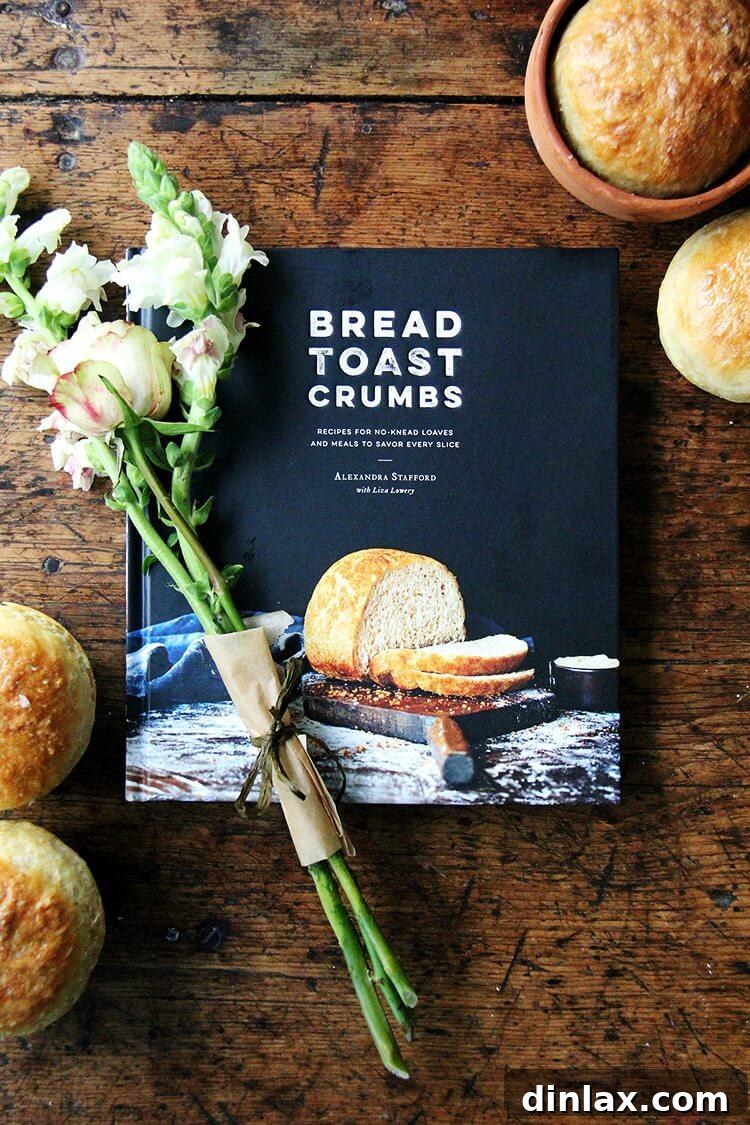
Bake Irresistible Flowerpot Peasant Bread: A Rustic & Heartfelt Treat
Imagine the delightful surprise on a loved one’s face when they receive a warm, crusty loaf of homemade bread, not in a traditional tin, but baked right inside a charming terra cotta flowerpot. This unique and heartwarming presentation elevates simple peasant bread into a truly special gift, perfect for any occasion, or simply to say, “I love you.”
The inspiration for this enchanting culinary creation struck about a month ago, sparked by a friend’s text. She shared a photo of an utterly adorable flowerpot bread, discovered during her visit to Terrain’s garden café in Westport, CT. That place, known for its magical ambiance reminiscent of its captivating catalog pages, clearly knows how to turn a simple meal into an experience.
Inspired by her discovery, I immediately set out to gather a half-dozen small flowerpots from a local garden shop. Applying the technique to a tried-and-true peasant bread dough, the result was nothing short of perfection. Each golden-brown loaf, brushed with melted butter and adorned with a sprinkle of sea salt, emerged as a testament to the simple joy of baking. Is there any gesture more sincere or heartfelt than a freshly baked, lovingly presented loaf of bread?
The Allure of Flowerpot Bread: More Than Just a Loaf
Flowerpot bread isn’t just a novelty; it’s a charming blend of rustic appeal and practical ingenuity. The individual serving size makes it ideal for gifting or for small gatherings, ensuring each recipient gets their own perfectly shaped loaf. The terra cotta pot itself acts as a natural baking vessel, providing even heat distribution and contributing to a wonderfully crusty exterior while keeping the interior tender and moist.
Beyond its aesthetic charm, baking in flowerpots taps into a sense of nostalgia and homespun goodness. It conjures images of simpler times, of gardens and kitchens intertwined. It’s a project that is both enjoyable and rewarding, promising a beautiful, delicious outcome that often sparks conversations and smiles. The earthy aroma of baking bread filling your home, combined with the anticipation of these unique loaves, creates an unforgettable culinary experience.
The beauty of this method lies in its simplicity and the transformation it brings to a classic recipe. Peasant bread, known for its straightforward ingredients and minimal kneading, becomes an artistic statement when baked in these humble containers. This article will guide you through creating your own flowerpot peasant bread, ensuring a successful and delightful baking adventure from start to finish.
Mastering Peasant Bread: The Foundation for Flowerpot Perfection
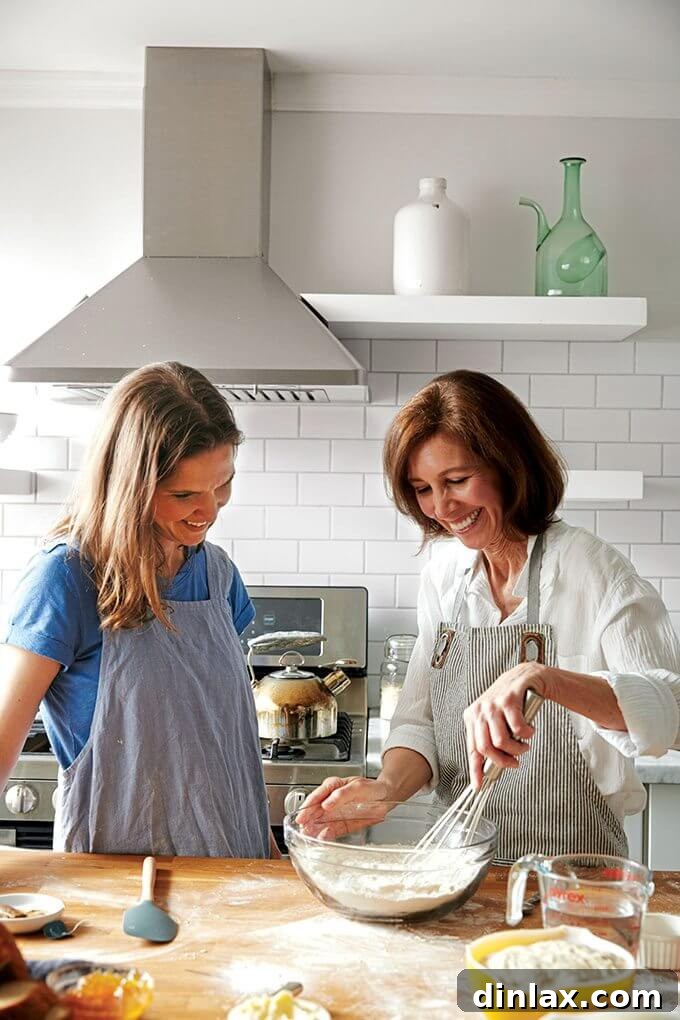
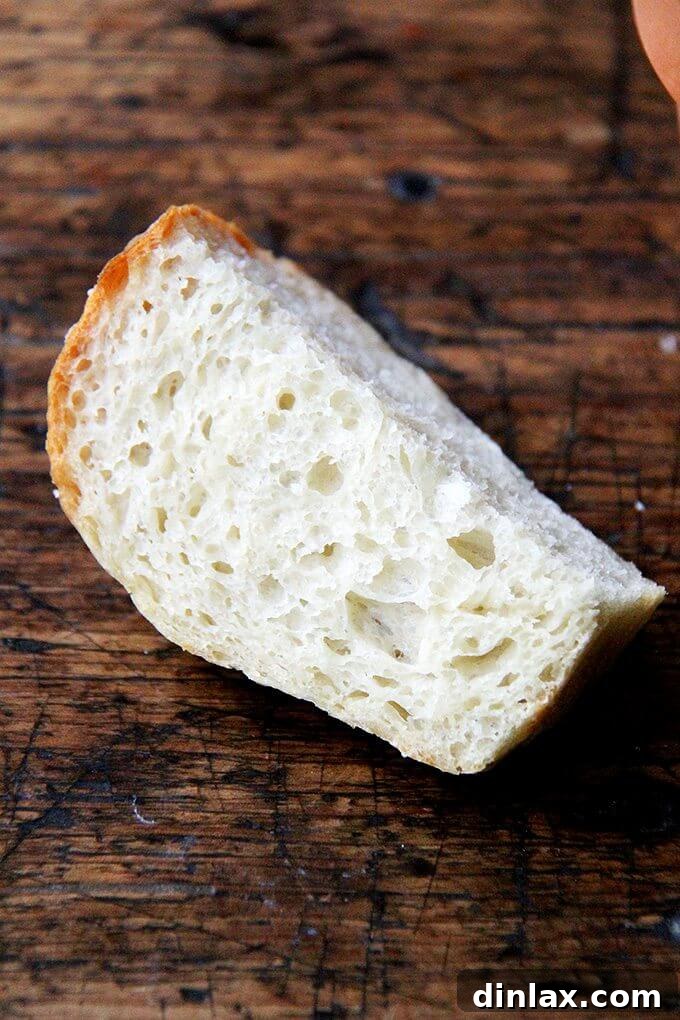
At the heart of our flowerpot creation lies a robust peasant bread recipe, adapted from the acclaimed “Bread Toast Crumbs” cookbook. Peasant bread is celebrated for its rustic charm, incredibly simple preparation, and consistently delicious results. It typically requires minimal kneading, relies on a long, slow rise, and produces a wonderfully chewy crumb with a satisfyingly crisp crust. These characteristics make it an excellent choice for baking in unconventional vessels like flowerpots, as the dough is forgiving and adapts well to different shapes.
Understanding the basics of peasant bread is key to achieving success with flowerpot baking. The dough is often wetter than traditional bread doughs, contributing to its signature open crumb structure. The simplicity of its ingredients – flour, water, salt, and yeast – belies the depth of flavor and texture it delivers. This accessibility makes it a fantastic recipe for both novice bakers looking to expand their skills and experienced bakers seeking a straightforward yet impressive loaf.
Preparing Your Flowerpots for Baking
Before you begin, selecting and preparing your flowerpots is crucial. I recommend using small terra cotta flowerpots, roughly 4 inches in diameter at the top opening and a little over 3 inches tall, yielding perfectly portioned loaves. While terra cotta is generally considered safe for baking once properly prepared, it’s always wise to ensure your pots are unglazed and free from any chemical treatments. Look for pots specifically labeled as “food safe” or “oven safe” if possible, or opt for those made from natural, unglazed terra cotta.
To prepare new terra cotta pots for baking:
- Clean: Wash them thoroughly with hot, soapy water, scrubbing away any dust or debris. Rinse meticulously.
- Soak: Submerge the pots in water for several hours or overnight. This saturates the porous terra cotta, preventing it from absorbing moisture from your bread dough during baking, which could lead to dry bread or cracking pots.
- Dry & Cure: Allow the pots to air dry completely. For an initial “curing,” you might lightly oil them and bake them empty at a low temperature (e.g., 250°F / 120°C) for an hour, then let them cool in the oven. This helps to further season them and reduce the chance of cracking with future use.
For subsequent uses, a good wash and thorough drying are usually sufficient. Always ensure the pots are completely dry before greasing and adding dough.
The Dough Making Process: Visual Guide
The journey from simple ingredients to delightful loaves is beautifully illustrated here:
Flowerpot Bread: Peasant bread dough mixed and ready for its first rise.
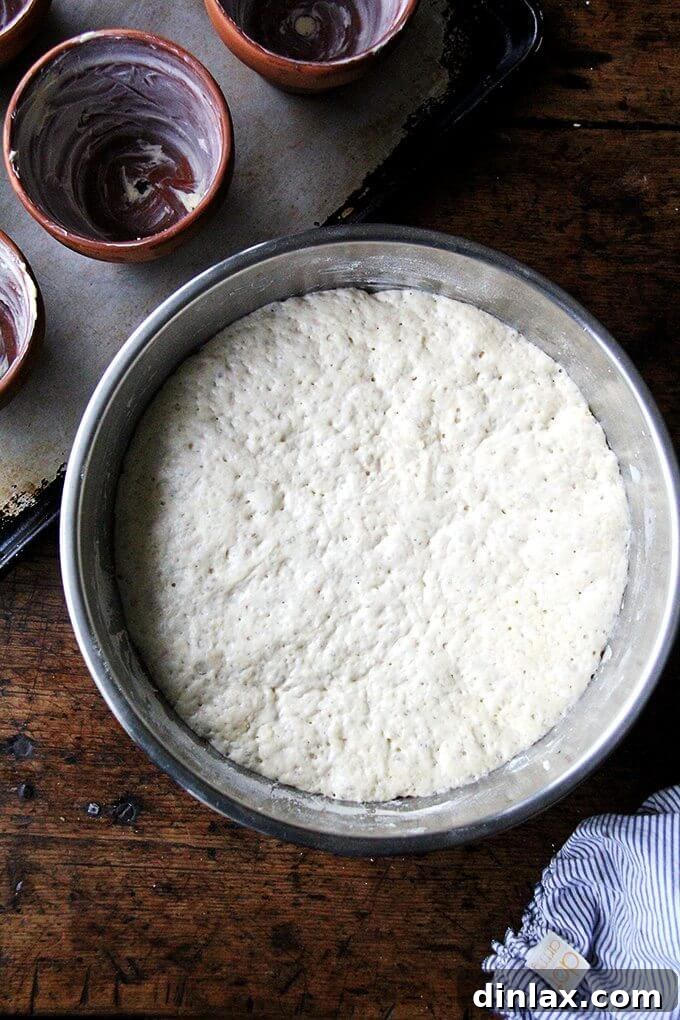
Dough, gently rising in a warm environment:
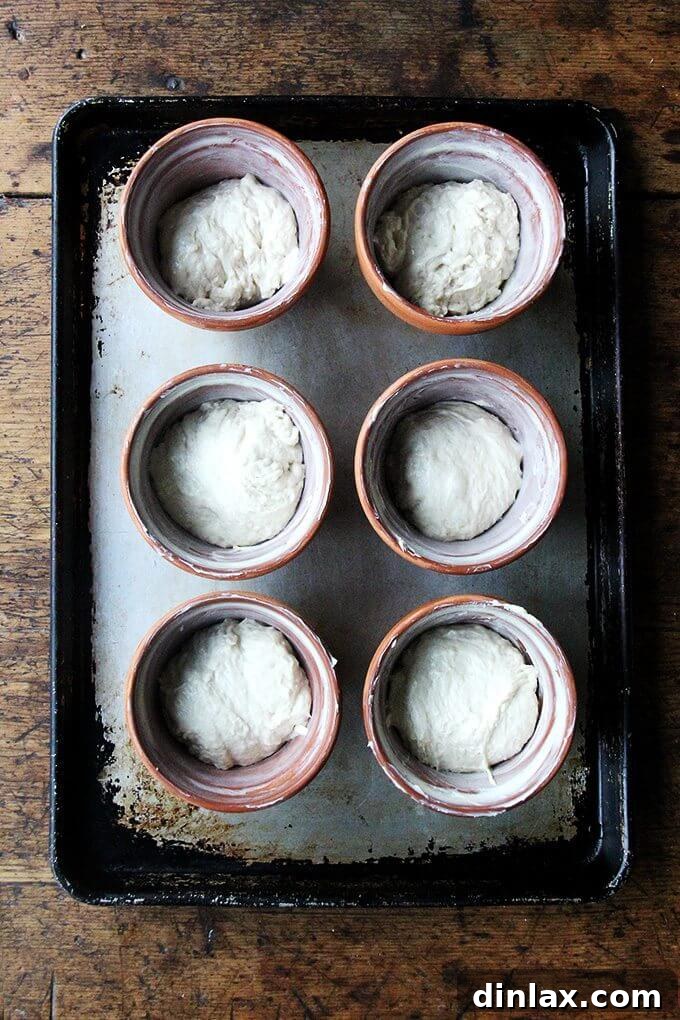
Dough, beautifully risen and full of airy pockets:
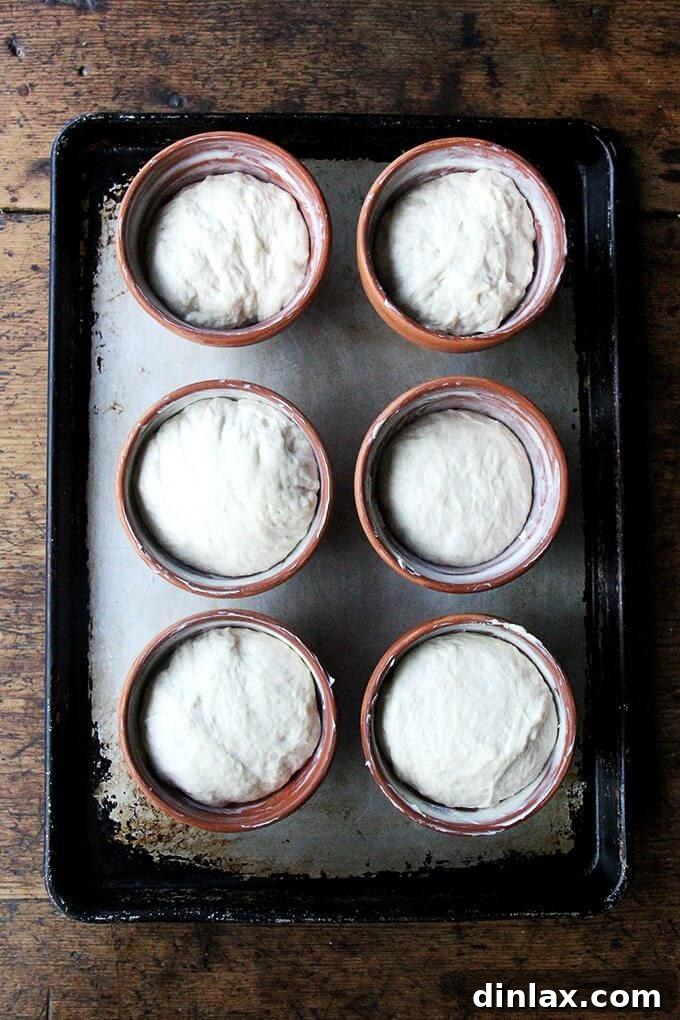
Portioned dough in buttered flowerpots, ready for the oven:
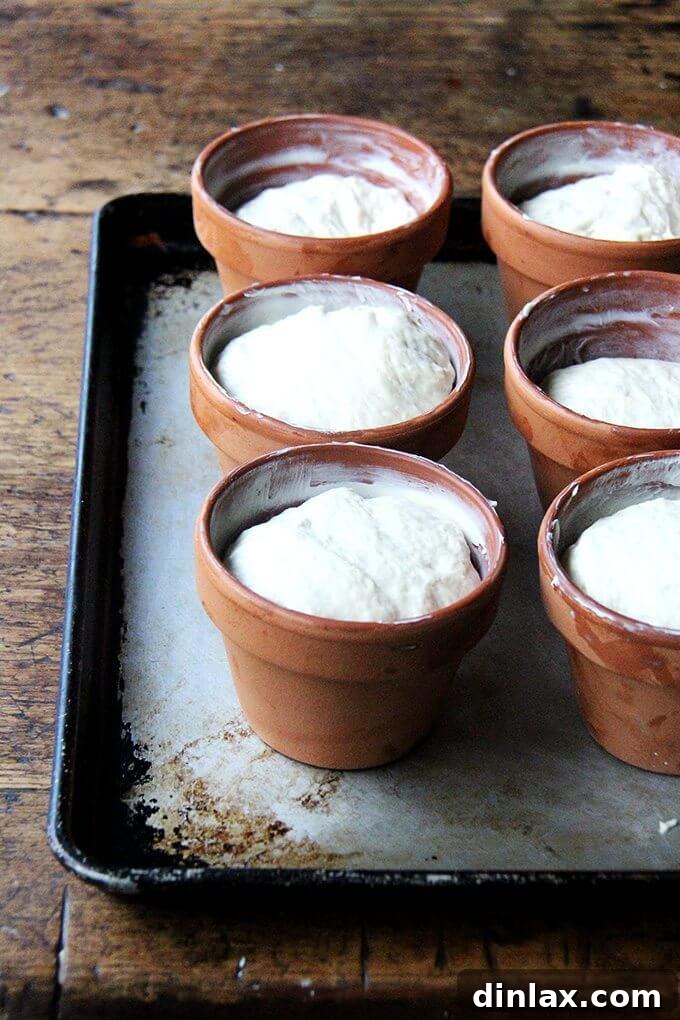
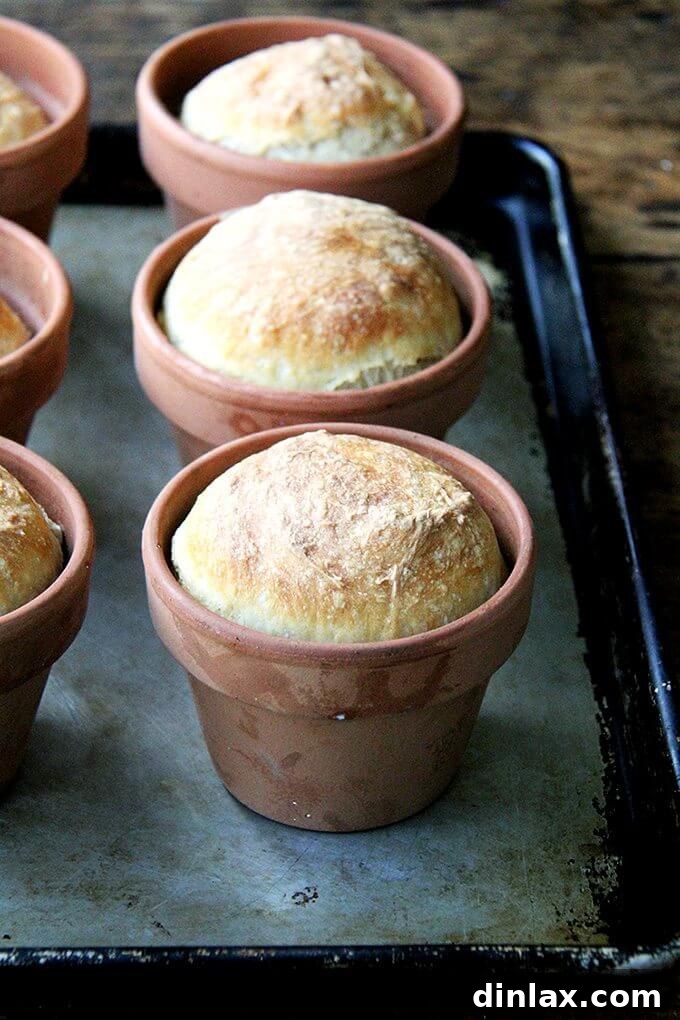
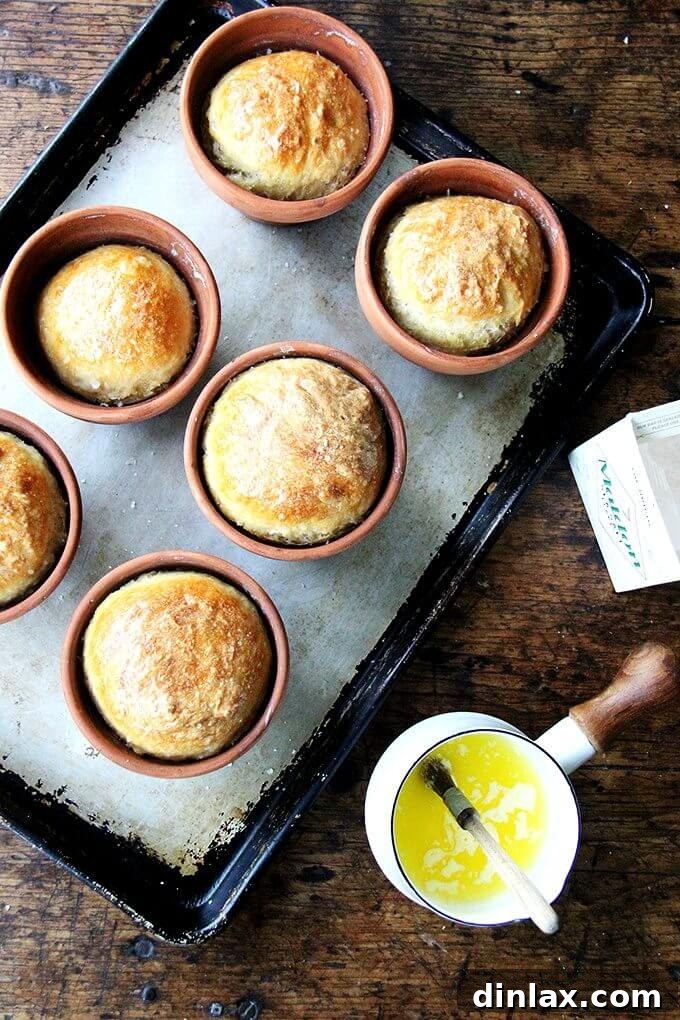
Freshly baked from the oven, golden and fragrant:
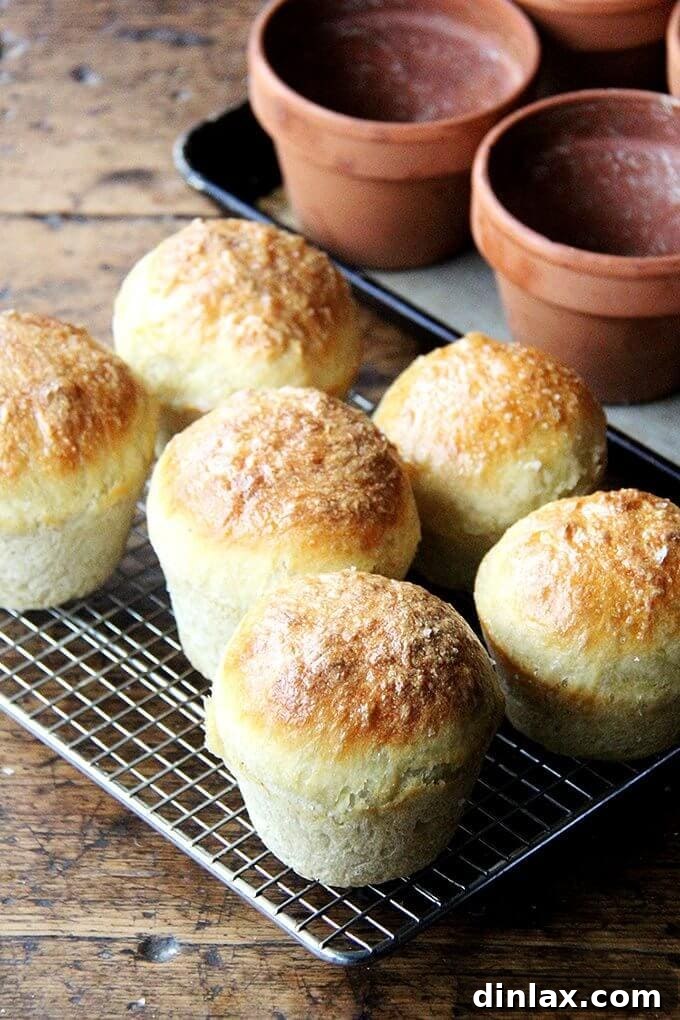
A simple sprinkling of sea salt adds a lovely finishing touch, enhancing the flavor and texture of the crust:
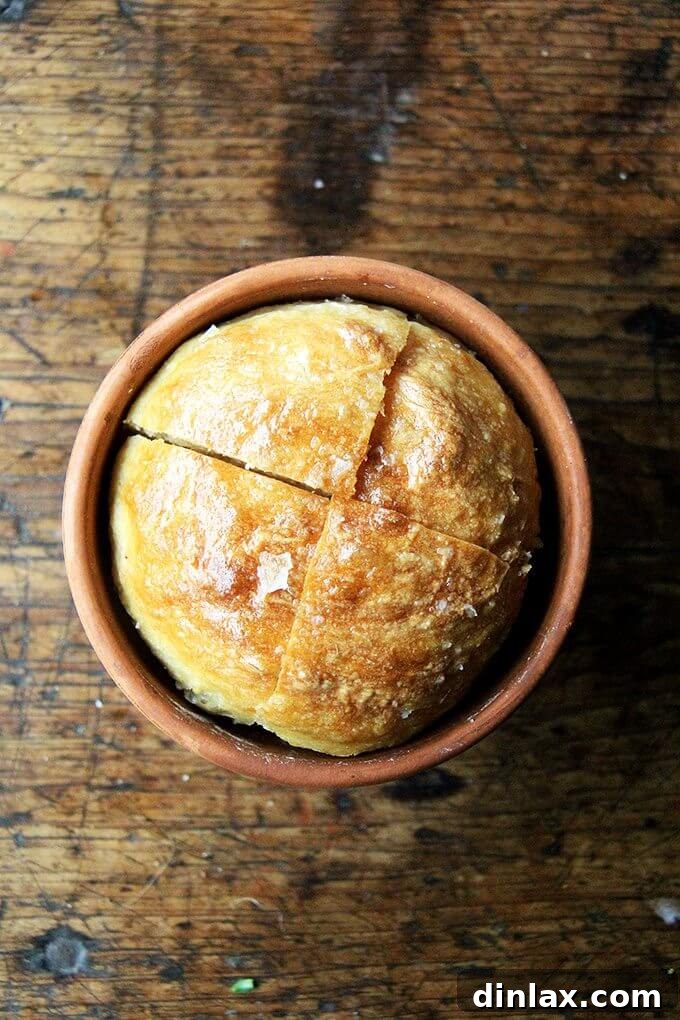

Flowerpot Peasant Bread
★★★★★
5 out of 5 stars from 8 reviews
- Author: alexandra
- Yield: 6 small loaves
Description
This delightful Flowerpot Peasant Bread recipe is adapted from the master peasant bread recipe found in the cookbook Bread Toast Crumbs. It’s a simple, no-knead recipe that produces incredibly flavorful and textured bread.
Flowerpots: For this recipe, I use 6 small terra cotta flowerpots, each measuring approximately 4 inches in diameter at the top opening and a little over 3 inches tall. It is crucial to use unglazed, food-safe terra cotta pots. While I cannot definitively guarantee the safety of all flowerpots, the ones I procured from a local shop, Faddegan’s, are made in Italy from terra cotta. Always ensure your pots are clean and properly cured before baking. If in doubt, opt for pots specifically designed for oven use.
Creating a Warm Spot for Rising: A slightly warm environment is ideal for optimal dough rising. To achieve this, turn your oven on to any temperature (around 350ºF or 175ºC) for precisely one minute, then immediately turn it off. The goal is to create a gentle warmth, not intense heat. Do not let the oven reach a high temperature before turning it off; just a minute of preheating should suffice, resulting in an internal temperature likely not exceeding 100ºF (38ºC). This subtle warmth will encourage your dough to rise beautifully.
Ingredients
- 4 cups (512 g) unbleached all-purpose flour
- 2 teaspoons kosher salt
- 2 cups lukewarm water (achieved by mixing 1 1/2 cups cold water with 1/2 cup boiling water)
- 2 teaspoons sugar
- 2 teaspoons instant or active-dry yeast
- Room temperature butter for generously greasing the flowerpots, plus extra melted butter if desired for brushing over the baked loaves
- Coarse sea salt for sprinkling on top
Instructions
-
Mixing the Dough:
- If you are using instant yeast: In a large mixing bowl, thoroughly whisk together the flour, kosher salt, sugar, and instant yeast. Add the lukewarm water to the dry ingredients. Mix until all the flour is fully absorbed and a shaggy dough forms.
- If you are using active-dry yeast: Begin by dissolving the sugar into the lukewarm water in a small mixing bowl. Gently sprinkle the active-dry yeast over the water. There is no need to stir at this point. Allow the mixture to stand for approximately 10 to 15 minutes, or until you observe a foamy and/or bubbling surface. This vital step confirms that your yeast is active and ready. Meanwhile, in a separate large bowl, whisk together the flour and kosher salt. Once the yeast-water-sugar mixture is foamy, give it a quick stir and then add it to the flour and salt mixture. Mix until all the flour is absorbed, forming a cohesive dough.
- First Rise: Cover the bowl containing your dough with a clean tea towel or plastic wrap. Place the covered bowl in a warm spot (refer to the “Creating a Warm Spot for Rising” note above for guidance) to rise. Allow the dough to rise for at least one hour, or until it has roughly doubled in size. During colder seasons or if your rising environment is cool, this process might take longer, potentially up to two hours.
- Preparing for Baking: Position an oven rack in the lower third of your oven. Preheat the oven to 425ºF (220ºC). Now, prepare your 6 flowerpots. It is absolutely crucial to grease each pot generously with about a tablespoon of room temperature butter. Ensure the butter coats the inside surface thoroughly to prevent sticking. Using two forks, gently punch down your risen dough, releasing it from the sides of the bowl where it will be clinging. As you release the dough, pull it towards the center of the bowl. Next, use your two forks to divide the dough into two equal portions. From one of these portions, use your forks to break off approximately one-third (this will be roughly one-sixth of the total dough amount), and carefully transfer it into one of the buttered flowerpots. Repeat this process until all of the dough has been portioned into the six pots. Don’t worry if the portions aren’t perfectly even—the rustic nature is part of the charm! Place the filled pots onto a rimmed baking sheet.
- Second Rise: Let the dough rise in the pots for about 20 to 30 minutes. Place the baking sheet with the pots on your countertop, ideally near the warm oven or another warm spot to encourage further rising. The dough should rise to just below the rim of each pot. Patience is key here, as it may take a bit longer depending on your environment.
- Baking and Finishing: Transfer the baking sheet with the flowerpots to the preheated oven. Bake for 15 minutes at 425ºF (220ºC). After 15 minutes, reduce the oven temperature to 375ºF (190ºC) and continue baking for another 15 minutes. Once baked, carefully remove the pan from the oven. If desired, brush the tops of the hot loaves with additional melted butter and sprinkle them with coarse sea salt for extra flavor and a beautiful finish. To release the bread from the pots, run a thin knife carefully around the edge of each flowerpot loaf. Turn each one out onto a cooling rack and allow them to cool for at least 20 minutes, or longer, before serving.
Tips for Perfect Flowerpot Bread Every Time
Achieving consistently wonderful flowerpot bread is straightforward with a few key considerations. Beyond the recipe steps, understanding the nuances of baking can make all the difference:
- Yeast Activation is Key: Whether using instant or active-dry yeast, ensuring your yeast is fresh and active is paramount. If using active-dry, don’t skip the proofing step in lukewarm water with sugar. If it doesn’t foam, your yeast might be old, and it’s best to start with a new packet.
- Don’t Rush the Rise: Bread baking thrives on patience. The rising times are approximate and can vary based on ambient temperature and humidity. Observe your dough; it should look visibly expanded and bubbly. A slow, steady rise often leads to better flavor development.
- Grease Generously: The instruction to generously butter the flowerpots cannot be overstated. Terra cotta is porous, and butter creates a crucial barrier to prevent the bread from sticking. Without adequate greasing, you’ll have a hard time extracting those beautiful loaves.
- Oven Temperature Consistency: Ensure your oven is fully preheated before placing the bread inside. An accurate oven thermometer can be a valuable tool, as oven temperatures can sometimes fluctuate.
- Cooling Completely: While tempting to dive in immediately, allowing the bread to cool on a rack is important. This allows the internal structure to set and prevents a gummy texture.
The Gift of Homemade: Presentation Ideas
One of the most appealing aspects of flowerpot bread is its inherent gift-ability. Each individual loaf is a ready-made present, imbued with the warmth of your kitchen and the thoughtfulness of a handmade item. Here are some ideas to elevate your flowerpot bread into an unforgettable gift:
- Rustic Charm: Once the bread has cooled and is nestled back in its pot, tie a simple bough of fresh herbs (rosemary or thyme work wonderfully) or a festive ribbon around the pot. A small, handwritten tag with a personal message adds a lovely touch.
- Gourmet Basket: Create a charming basket filled with complementary treats. Include a small jar of homemade jam or preserves, a cube of artisan butter, a block of delicious cheese, or even a small bunch of fresh flowers. This transforms a single loaf into a luxurious culinary care package.
- Themed Gifts: For a tea lover, pair the bread with specialty tea bags and a cute teacup. For a savory palate, include olive oil and balsamic vinegar. The possibilities are endless!
- For the Kids: Decorate the pots with child-friendly paint or stickers, then pair the bread with some fun spread like chocolate hazelnut spread for a delightful surprise.
Regardless of how you choose to present it, the act of baking flowerpot bread is a gesture of love and care. It’s a delicious, beautiful, and thoughtful way to share a piece of your heart with those you cherish.