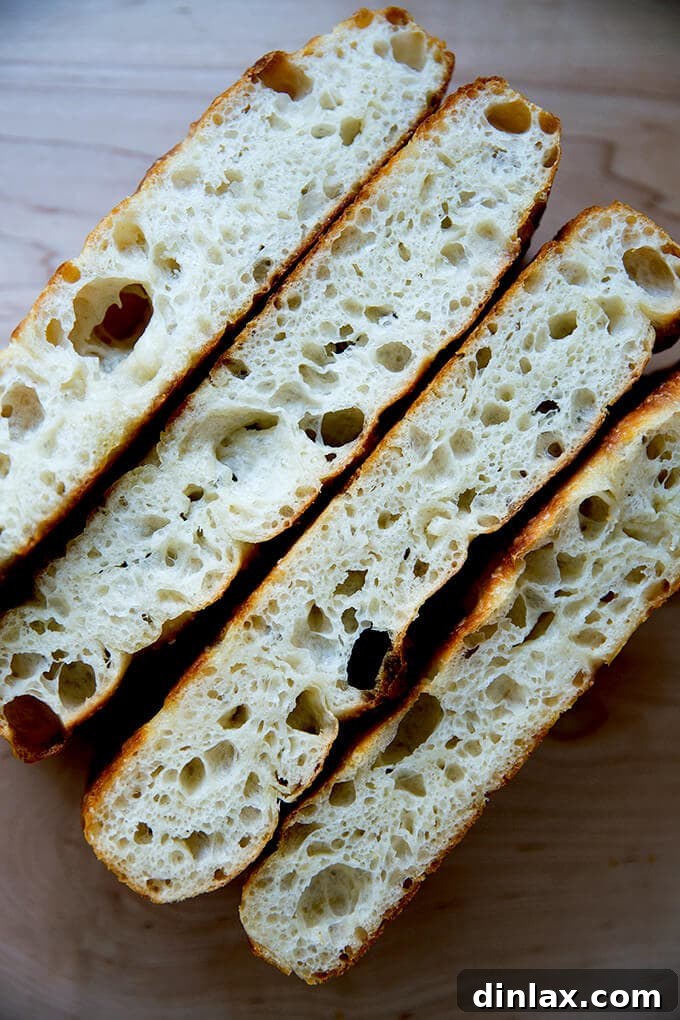
Welcome to the ultimate guide to creating magnificent **sourdough focaccia**, a bread that promises an unforgettable culinary experience. With its irresistibly oil-crisped crust, soft, airy, and deeply bubbly crumb, this artisanal bread stands out as both a versatile staple and a delectable treat. Imagine a bread perfect for crafting gourmet sandwiches, serving as an elegant appetizer, or complementing any dinner table. Best of all, it’s remarkably one of the most accessible sourdough breads for home bakers to master. If you’ve been curious about diving into the world of sourdough, but felt intimidated by complex techniques, this recipe is your ideal starting point. Below, you’ll discover comprehensive, step-by-step instructions to bake this wildly popular and utterly delicious bread right in your own kitchen.
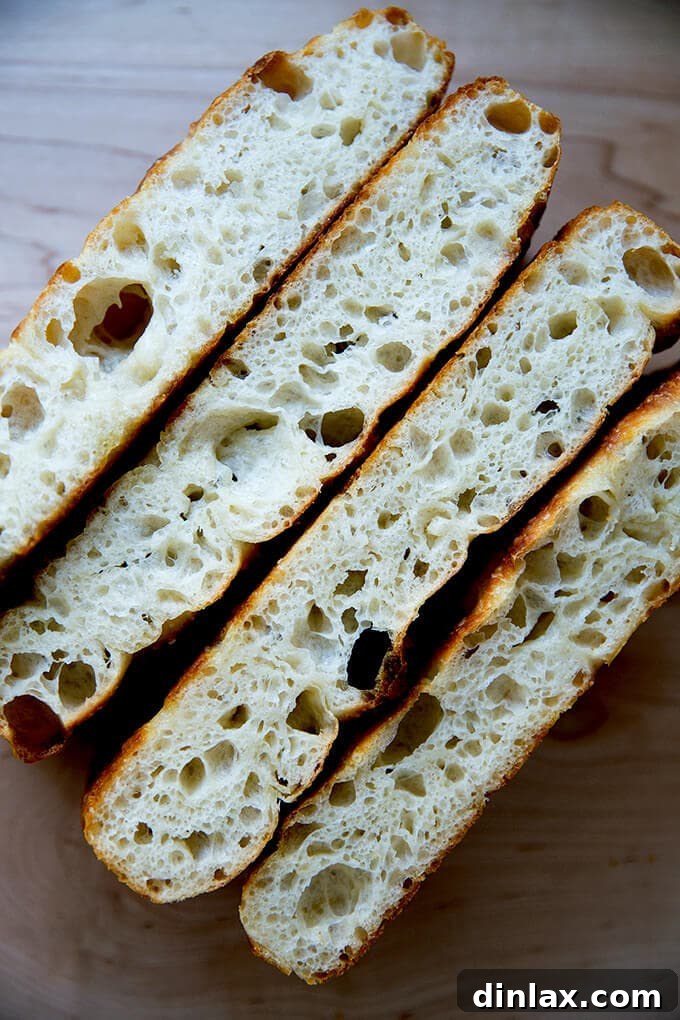
This exceptional sourdough focaccia recipe draws inspiration from a beloved yeasted, slow-rise focaccia, the overnight refrigerator focaccia, by cleverly substituting commercial yeast with the natural leavening power of an active sourdough starter. For anyone embarking on their sourdough journey, focaccia serves as the quintessential first project. Its forgiving nature and straightforward process make it an ideal entry point, allowing you to gain confidence and experience with sourdough without the common complexities associated with other sourdough breads.
So, what makes sourdough focaccia the perfect choice for beginners? Firstly, it requires no specialized or expensive equipment. Forget about investing in a heavy Dutch oven or a baking steel; all you truly need is a standard 9×13-inch baking pan, which most home kitchens already possess. This eliminates a significant barrier to entry, making sourdough baking accessible to everyone. Secondly, unlike the more intricate sourdough boules, which demand precise shaping techniques to achieve their iconic form, sourdough focaccia simplifies the process considerably. You’ll find yourself merely whisking ingredients, gently stirring the dough, and easily transferring it into a pan—no intricate folds or delicate handling required. Thirdly, and perhaps most liberating for new bakers, there’s no need for scoring. While traditional sourdough loaves are often intricately scored with a razor-sharp lame to control their oven spring and create beautiful patterns, focaccia embraces a more rustic approach. Instead of a lame, you’ll simply use your fingers to create characteristic dimples across the dough’s surface, a process that is both therapeutic and visually appealing. These unique qualities make focaccia an unparalleled choice for discovering the joys of sourdough baking without the usual hurdles.
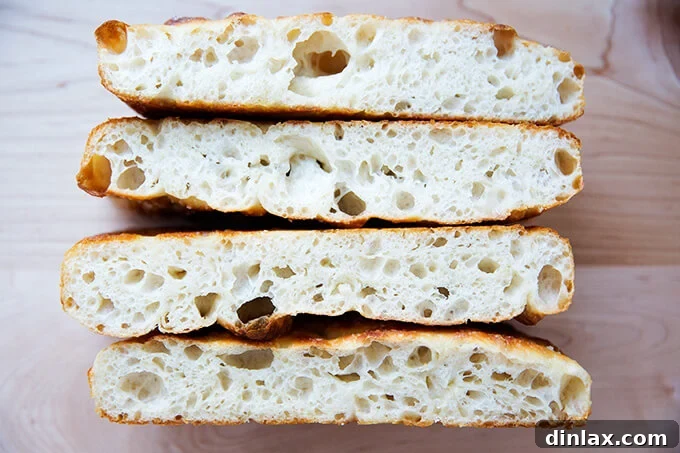
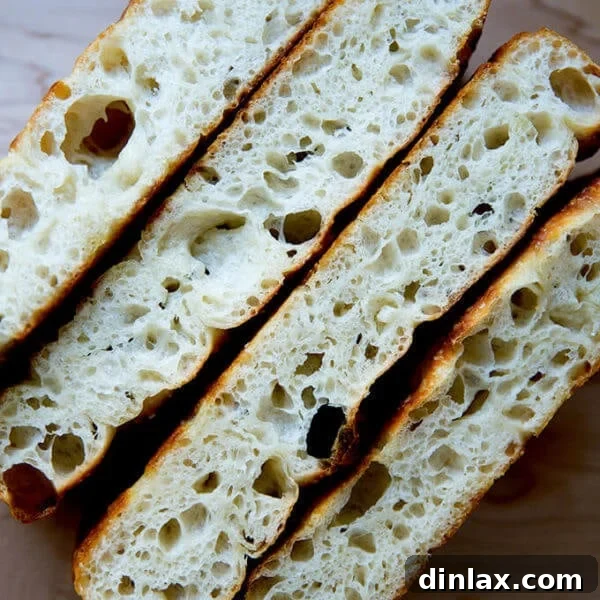
Beyond its beginner-friendly attributes, focaccia, whether made with sourdough or traditional yeast, holds a special place in the hearts of bread lovers for countless reasons. Its remarkable versatility means it can adapt to any meal or occasion—from robust sandwiches and elegant appetizers to a hearty companion for dinner. However, it’s the combination of its exceptional flavor and texture that truly captivates. The signature oil-crisped crust offers a delightful crunch, giving way to an incredibly generous amount of salt scattered across its surface that elevates every bite. Beneath this savory crust lies a chewy, open-crumbed interior, bursting with tiny pockets of air, a testament to its slow fermentation. This perfect harmony of textures and flavors makes homemade sourdough focaccia an absolute triumph. Embark on your baking adventure and learn to create this culinary masterpiece at home by following the simple, comprehensive guide provided below.
Crafting Sourdough Focaccia: A Step-by-Step Culinary Journey
The journey to an incredible sourdough focaccia begins with your sourdough starter. Ensuring your starter is active and vigorous is paramount for successful leavening. If you’re without a starter, you can either acquire one from a friend or consider purchasing a live starter from reputable sources like Breadtopia. Alternatively, for a truly hands-on experience, you can cultivate your own from scratch, a rewarding process that typically takes one to two weeks. Once you’re ready to feed your starter, gently discard most of it, leaving only a tablespoon or two. Then, introduce approximately 45 grams of all-purpose or bread flour into the vessel. This feeding process revitalizes the wild yeasts and bacteria, preparing them to leaven your dough effectively.
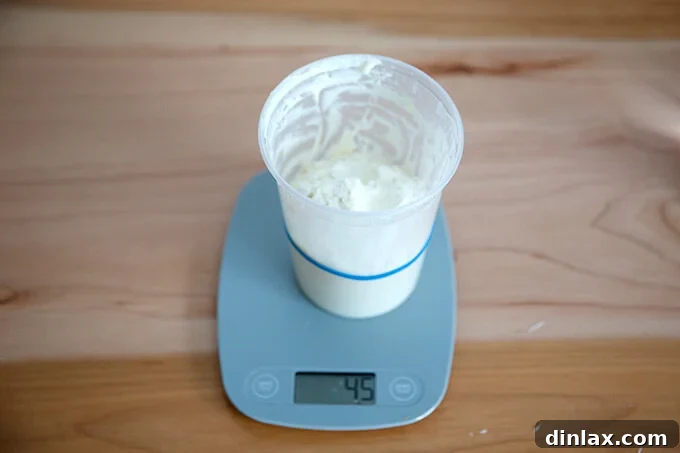
Following the flour, incorporate 45 grams of water. While precise measurements are beneficial, especially for beginners, a slight variation won’t drastically alter the outcome. Weighing both the water and flour ensures consistency and helps you understand the ideal hydration levels for your starter. Depending on the duration your starter has resided in the refrigerator, it may require one or two feeding cycles to reach peak activity before it’s ready for baking. An inactive starter will result in a flat, dense focaccia, so patience during this activation phase is key.
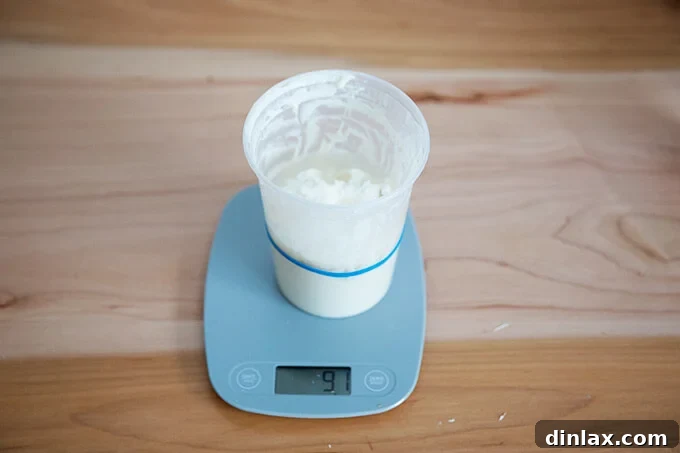
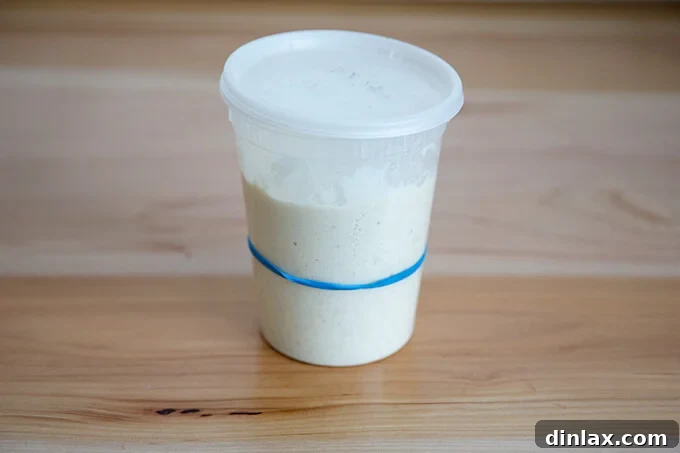
To accurately monitor your starter’s progress, a simple yet effective technique is to place a rubber band around your starter vessel at its initial level. This visual marker will allow you to precisely track its expansion, indicating when it has reached its optimal activity. An active starter should nearly double in size, showing visible bubbles and a dome-like top. This expansion signifies that the wild yeasts are actively fermenting, producing the gas necessary for your focaccia’s light and airy structure.
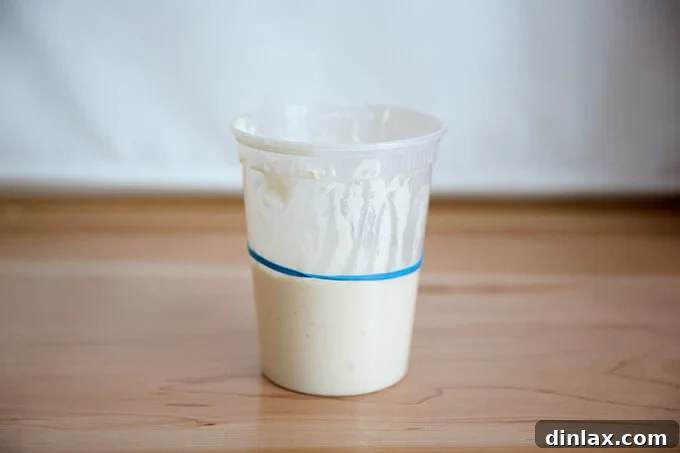
Once your starter has visibly doubled in volume and appears bubbly and active, it is ready for use. This stage indicates that the yeast population is thriving and prepared to do its work in your focaccia dough. The more active your starter, the more robust and flavorful your bread will be, contributing to that characteristic sourdough tang and incredible texture.
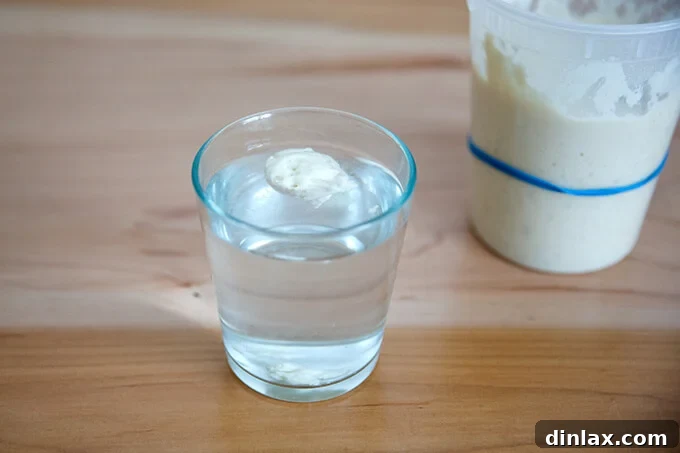
Should you require additional reassurance regarding your starter’s readiness, the “float test” is a foolproof method. Simply drop a small spoonful of your active starter into a glass of water. If it floats to the surface, it signifies that your starter is brimming with gas, indicating peak activity and readiness for incorporation into your dough. A starter that sinks may need another feeding or a little more time to become fully active.
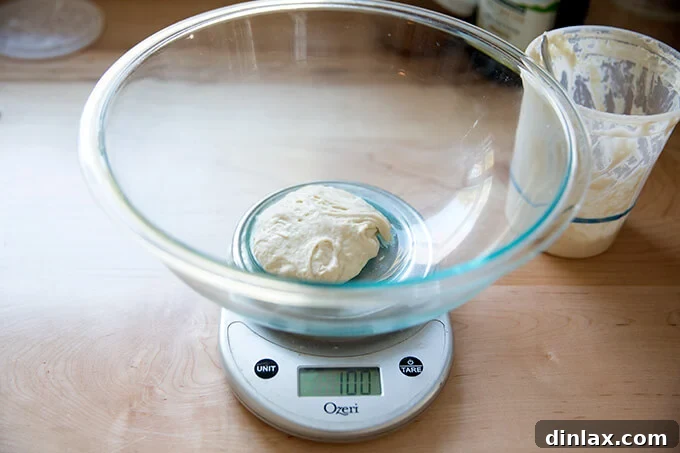
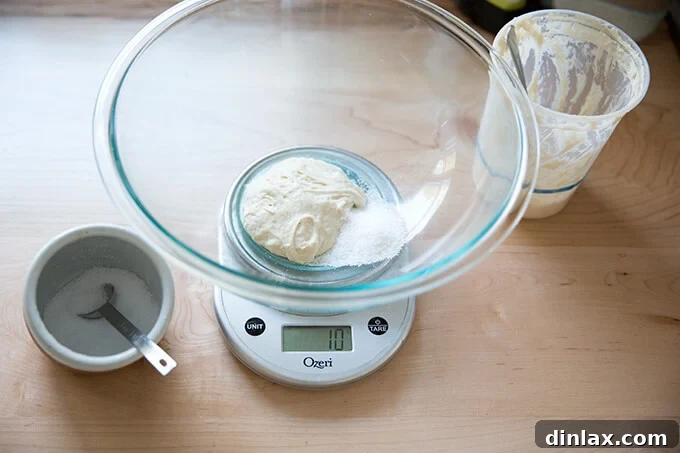
As with all sourdough and bread baking, precision is paramount. Therefore, when mixing your focaccia dough, it is highly recommended to weigh all your ingredients using a reliable digital scale. This ensures accurate hydration and consistent results every time. Begin by adding 100 grams of your active sourdough starter to a large mixing bowl. The starter is the heart of your sourdough focaccia, providing both leavening and its signature tangy flavor profile.
Next, incorporate 10 grams of kosher salt into the bowl. Salt is not merely for seasoning; it plays a critical role in controlling fermentation, strengthening the gluten network, and enhancing the overall flavor and crust development of your focaccia. Using kosher salt ensures a pure, clean taste without any metallic notes.
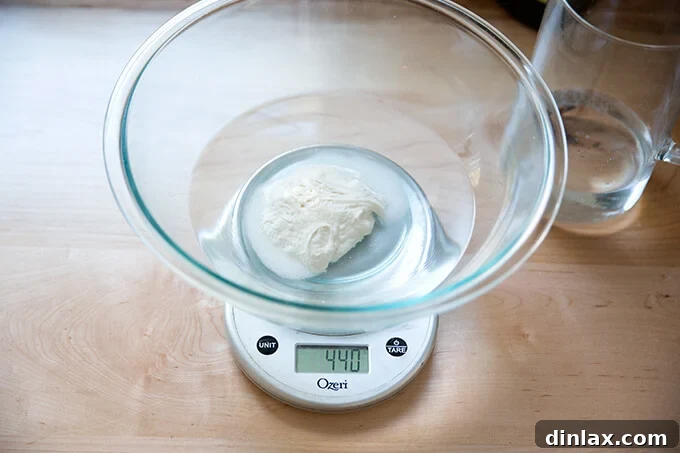
Pour in 440 grams of room-temperature water. Water quality is important for sourdough; chlorine can inhibit starter activity. If your tap water is heavily chlorinated, let it sit out for 24 hours to allow the chlorine to dissipate. (Refer to the recipe notes for a crucial tip: in humid climates, it’s advisable to start with slightly less water, around 430 grams, to achieve the perfect dough consistency, as flour absorbs moisture from the air.)
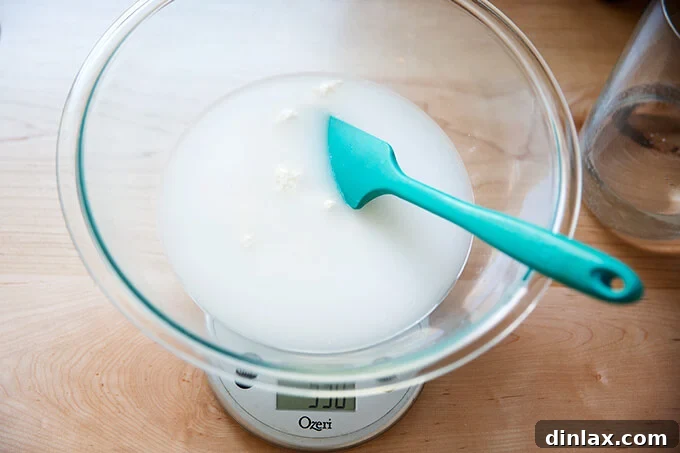
Using a spatula or your hand, stir the starter, salt, and water together until thoroughly combined. This initial mixing helps to evenly distribute the salt and starter throughout the liquid, creating a consistent base for your dough. Don’t worry about achieving a perfectly smooth mixture at this stage; a rough combination is sufficient before the flour is introduced.
Finally, add 512 grams of bread flour. Bread flour is preferred for its higher protein content, which contributes to a stronger gluten structure and a chewier texture, ideal for focaccia. While all-purpose flour can work in a pinch, bread flour will yield a more robust and resilient dough, better able to trap the gases produced during fermentation, resulting in a lighter and more open crumb.
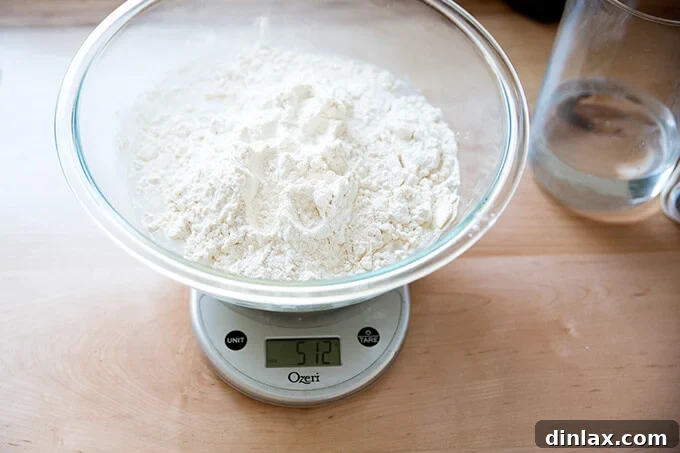
Mix all the ingredients until the flour is fully incorporated and a sticky, shaggy dough ball forms. Resist the urge to overmix; a few dry spots are acceptable, as the dough will continue to hydrate during the initial resting period. The sticky consistency is characteristic of high-hydration doughs like focaccia and contributes to its light, open texture. Once mixed, the dough is ready for its crucial first rise, also known as bulk fermentation.
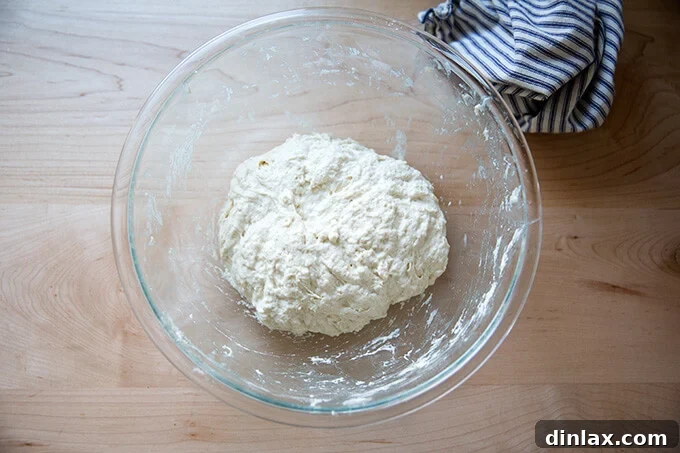
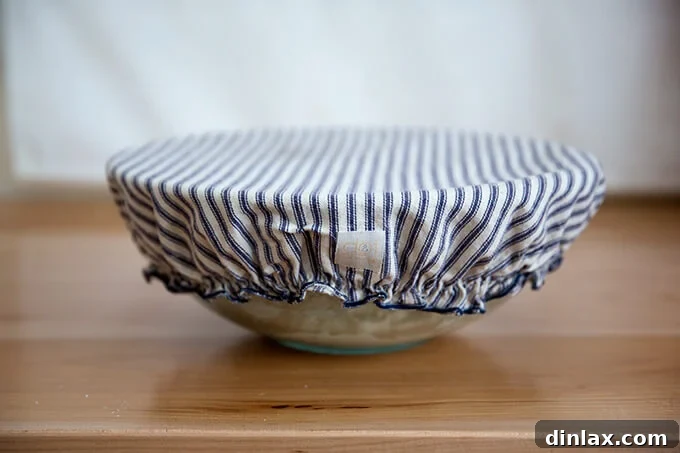
Cover your bowl with a clean tea towel or a reusable bowl cover, like those from Dot and Army, and allow the dough to undergo its first rise, or bulk fermentation, at room temperature. This stage can take anywhere from 8 to 18 hours, with significant variations depending on environmental factors. In warmer summer months, the dough might double in as little as 4-6 hours, while in cooler winter kitchens, it could stretch to 12-18 hours. The key indicator for completion is visual: the dough should nearly double in volume. Avoid using a warm oven with the light on, as this environment can be too hot and potentially overproof your dough. The temperature of your kitchen, the strength of your starter, and even the humidity levels will all play a role in the fermentation timeline. A straight-sided container can be particularly helpful for visually tracking the dough’s expansion during this critical phase, ensuring you catch it at its peak before it overproofs.
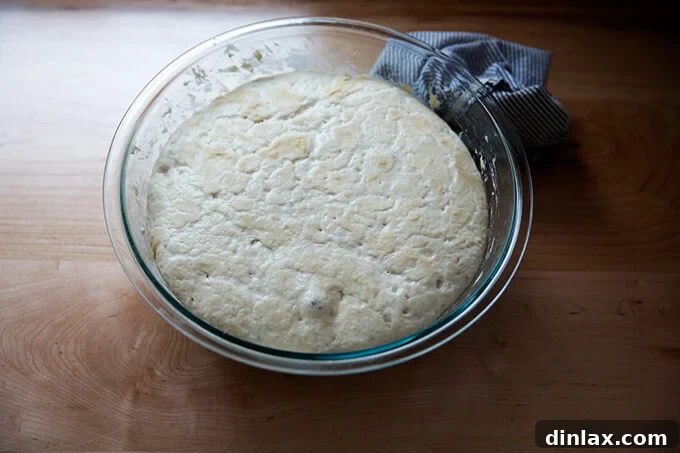
Once your dough has successfully doubled in size, showing a significant increase in volume and a bubbly surface, it’s a clear sign that the bulk fermentation is complete. This indicates that the yeast has produced ample carbon dioxide, creating the characteristic airy structure of focaccia. Now, the dough is ready for the next crucial steps that will shape its final texture and appearance.
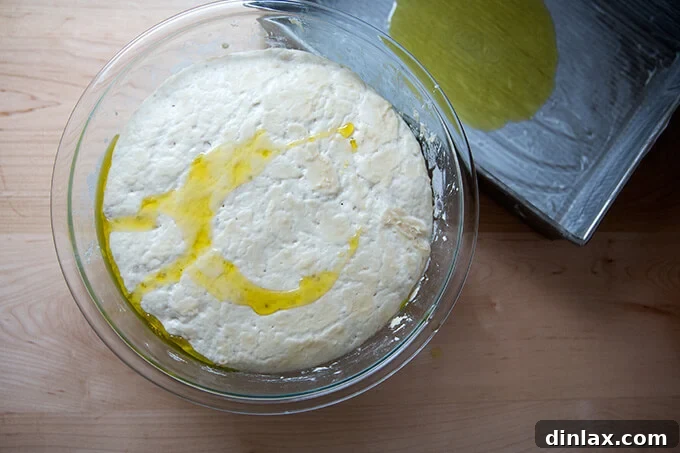
Gently drizzle the risen dough with a generous splash of high-quality extra virgin olive oil. This not only adds to the rich flavor profile but also prevents sticking during the next manipulation phase. The oil will create pockets of crispy goodness on the crust when baked, a hallmark of excellent focaccia. After drizzling, prepare to deflate and reshape the dough. This step is essential for redistributing the yeast and gluten, promoting an even crumb structure, and getting the dough ready for its final proof.
To deflate and strengthen the dough, gently pull the sides of the dough from the edge of the bowl towards the center. Repeat this motion several times, rotating the bowl as you go. This “punch down” or folding action releases some of the trapped gases, allowing for further gluten development and a more refined texture. It also helps to create a roughly rectangular shape, preparing it for transfer into your baking pan. Be gentle to avoid tearing the delicate gluten strands.
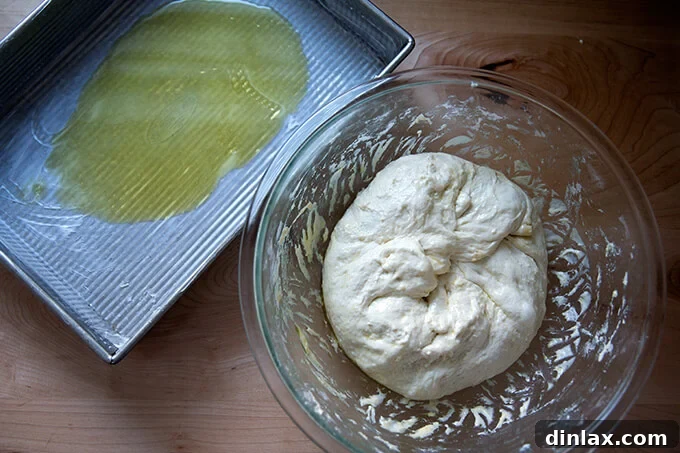
With the dough gently deflated and folded, it is now ready for its second rise, or proofing stage, in the prepared baking pan. This final rise will typically take 5 to 6 hours, allowing the dough to relax, expand further, and develop deeper flavors. For optimal results and ease of handling, a high-quality pan is indispensable. Many bakers, including myself, particularly love the USA Pan for its excellent non-stick properties and even heat distribution. Ensuring your pan is well-oiled is critical for achieving that signature crispy focaccia base and for effortless removal after baking. This second rise is where the dough develops its final airy structure before hitting the oven.
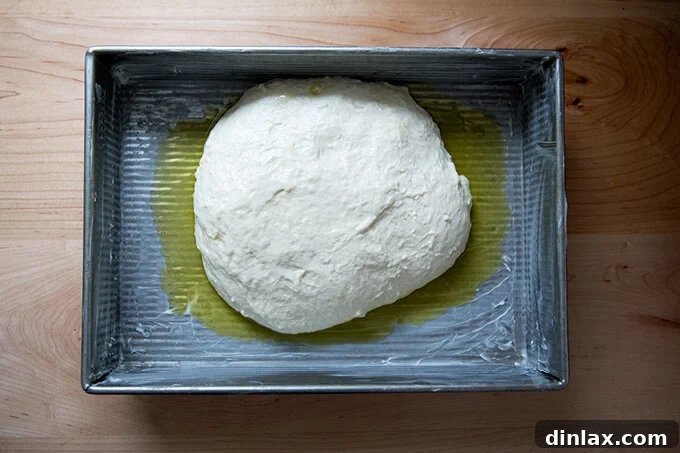
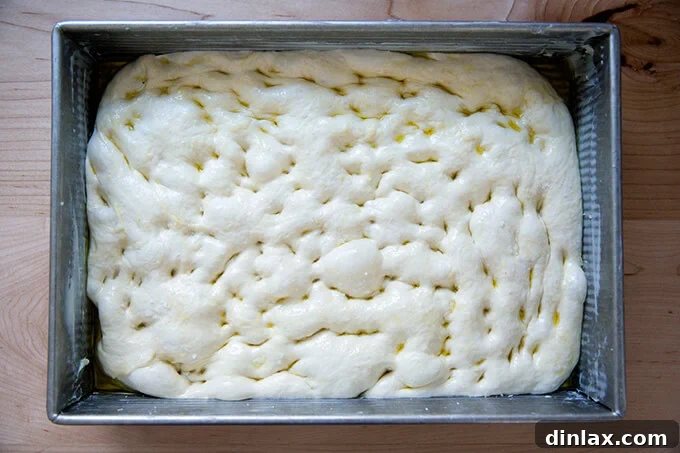
After a successful 5 to 6-hour second rise, your sourdough focaccia dough will appear puffy, expanded, and soft to the touch, indicating it’s perfectly proofed and ready for its final preparations before baking. At this stage, it’s time to lovingly dimple the dough, gently stretching it to nearly fill the pan. Use all ten fingers to create those characteristic indentations, which will not only give focaccia its unique texture but also create delightful reservoirs for olive oil and flaky sea salt. Sprinkle generously with a high-quality flaky sea salt, such as Maldon, for an exquisite burst of flavor and a beautiful finish. Preheat your oven to 425ºF (220ºC), ensuring it reaches the desired temperature for optimal oven spring. Once preheated, transfer the pan to the oven and bake for approximately 25 minutes, or until the crust turns a beautiful golden brown all around, signaling a perfectly cooked focaccia. The aroma filling your kitchen will be absolutely divine.
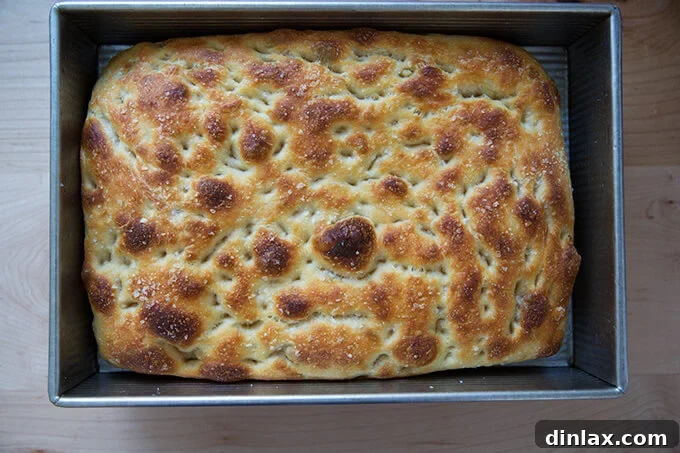
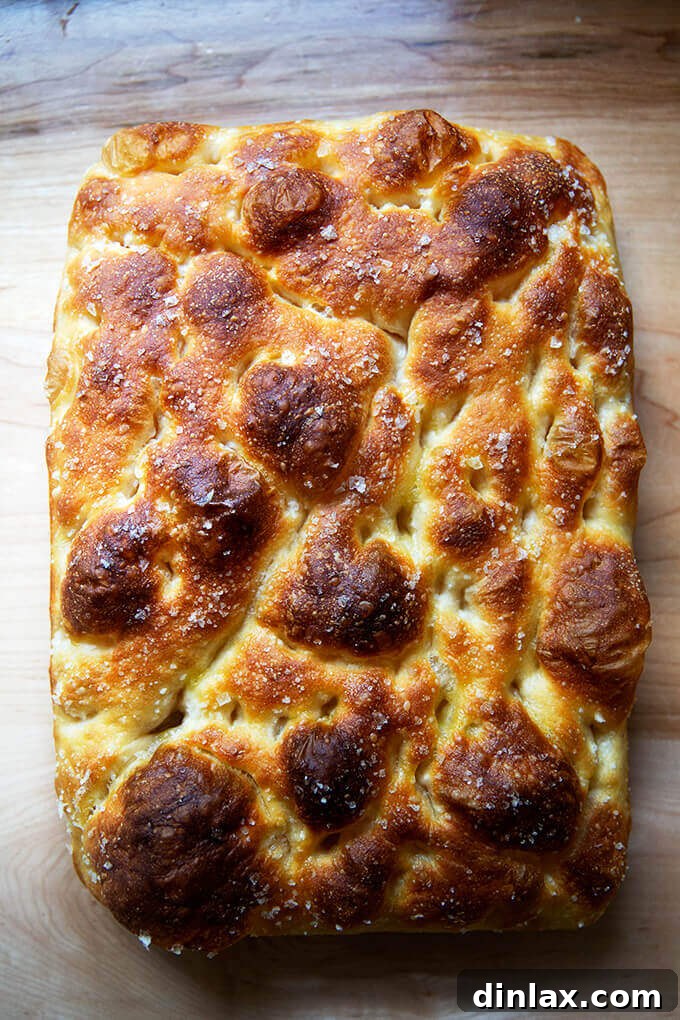
Behold your freshly baked sourdough focaccia! The golden-brown crust, the visible dimples, and the enticing aroma are all hallmarks of a successful bake. The high heat ensures a rapid rise and a crispy exterior, contrasting beautifully with the soft, airy interior. This bread is a testament to the magic of sourdough and the simple pleasure of homemade baking. While the temptation to slice into it immediately is immense, allowing it to cool properly is crucial for achieving the best texture and preventing it from becoming gummy.
Print
Simple Sourdough Focaccia: A Beginner’s Guide
5 Stars 4 Stars 3 Stars 2 Stars 1 Star
4.9 from 568 reviews
Author: Alexandra Stafford
Total Time: 24 hours 25 minutes
Yield: 1 loaf 1x
Description
With its perfectly oil-crisped crust and light, airy, and bubbly crumb, this sourdough focaccia recipe promises a delicious and incredibly versatile bread. It’s ideal for making flavorful sandwiches, serving as a sophisticated appetizer, or accompanying any dinner. Furthermore, it stands as one of the simplest and most forgiving sourdough breads to bake at home, making it a fantastic entry point for anyone curious about sourdough. Follow this step-by-step guide to create this widely adored artisanal bread.
Notes & Tips for Success:
Adapted from a favorite yeasted, slow-rise focaccia recipe, the overnight refrigerator focaccia, this recipe cleverly replaces commercial yeast with an active sourdough starter. For a more visual guide, refer to the embedded video and the detailed step-by-step instructions below.
Essential elements for this recipe:
- …An active sourdough starter: This is the heart of your focaccia. You can purchase a live starter from reputable online stores like Breadtopia or King Arthur Baking. Alternatively, for a truly rewarding experience, you can cultivate your own from scratch, a process that typically spans one to two weeks.
- …Patience and Time: Once your starter is robust and ready, this recipe involves a significant fermentation period. You’ll have an initial 4 to 18-hour bulk fermentation, followed by a second 4 to 6-hour proofing period. To fit baking into a busy schedule, you can gently deflate the dough after its initial rise and refrigerate it for 8 to 10 hours (or possibly longer). Remember, even after refrigeration, the dough will still require a 5 to 6-hour second rise at room temperature once transferred to its baking pan.
- …Quality Water: Chlorine found in tap water can negatively impact your sourdough starter and dough fermentation. To mitigate this, simply leave tap water at room temperature for at least 24 hours before use; this allows most of the chlorine to evaporate. When I’m regularly baking sourdough, I keep a large pitcher of water out at all times specifically for my starter and bread. While ideally you should declorinate, I have occasionally used water straight from the tap without a noticeable difference in results, but it’s a good practice to follow if possible.
- …Appropriate Mixing & Rising Vessels: For mixing and the initial bulk fermentation, a 4-quart bowl with a lid is ideal. For monitoring the bulk fermentation with precision, I highly recommend using a straight-sided vessel. This type of container allows you to clearly see how much your dough has risen, ensuring you can accurately gauge when it has doubled in volume, a key visual cue for perfect fermentation.
Adjusting Water Quantity for Success: Depending on your local environment and the time of year, you may need to adjust the water content slightly. If you reside in a humid climate, for example, it’s wise to begin with 430 grams of water rather than 440 grams, as the flour will absorb moisture from the air. Similarly, if you’re not using bread flour (which absorbs more liquid), you might need to reduce the water slightly to achieve the correct dough consistency.
Understanding Fermentation Timing: The more experience you gain with sourdough, the more you’ll realize that timing is heavily influenced by your kitchen’s ambient temperature and the season. In the warm summer months (in the Northern Hemisphere), the first rise (bulk fermentation) can take a mere 4 to 6 hours. Conversely, during colder winter periods, the same process might extend to 12 to 18 hours. The crucial factor in this recipe is ensuring the first rise does not overextend – you’re aiming for the dough to *nearly double* in volume. A straight-sided vessel (as opposed to a sloped bowl) greatly simplifies the task of gauging this rise. (Important note: If your dough happens to rise beyond double, don’t panic! Recently, my dough tripled in volume overnight, and the resulting focaccia was still exceptionally delicious, light, and airy.) A general guideline: if baking in summer, use 50g of starter and check the dough every couple of hours; in winter, use 100g of starter and plan for a longer first rise.
Troubleshooting Sticky Sourdough Dough: If you encounter issues with your dough being excessively sticky, a common concern for new sourdough bakers, please refer to this detailed post for solutions: Why is my sourdough so sticky? Plus fixes to 4 common sourdough mistakes and FAQs. This resource will help you identify the root cause and implement effective remedies.
Optimizing Flour Choice: For this recipe, bread flour is highly recommended due to its higher protein content (typically around 12.7%). This protein is essential for developing a strong gluten network, which gives focaccia its characteristic chewiness and open crumb structure. I often use King Arthur Flour’s special patent flour (which has a similar protein content to their bread flour), but I’ve also had success with all-purpose flour (around 11.7% protein). However, bread flour tends to be more reliable, especially for those in humid climates, as it absorbs slightly more liquid than all-purpose flour. If you only have all-purpose flour on hand, consider reducing the water by a small amount (5-10g) to compensate for its lower absorption capacity.
Ingredients
- 50 g – 100 g (1/4 to 1/2 cup) active sourdough starter, see notes above for optimal quantity based on season
- 10 g (approximately 2.5 teaspoons) kosher salt
- 430 – 440 g water (1.75 cups – 1.75 cups + 2 tablespoons), room temperature, filtered if possible (see notes above regarding quantity for humidity)
- 512 g (about 4 cups) high-protein bread flour, see notes above for flour choice considerations
- 3 tablespoons extra-virgin olive oil, divided, plus extra for drizzling and serving
- Flaky sea salt, such as Maldon, for finishing
Instructions
- Prepare the Dough: In a large mixing bowl, combine the active sourdough starter, kosher salt, and room-temperature water. Stir well with a spatula until loosely combined; perfect uniformity is not necessary at this stage. Add the bread flour and continue to mix until all the flour is fully incorporated, forming a sticky, shaggy dough.
- Perform Optional Stretch & Folds: If your schedule permits, perform one “fold” to enhance gluten development. Approximately 30 minutes after mixing the dough, moisten your hand and reach into the bowl. Gently pull a section of the dough up and fold it into the center. Rotate the bowl a quarter turn and repeat this pulling and folding motion 8 to 10 times. This helps to build strength in the dough. Refer to the video for a visual demonstration.
- First Rise (Bulk Fermentation): Drizzle the dough with a small splash of olive oil and gently rub it to coat the surface, preventing it from drying out. Cover the bowl with a clean tea towel or a reusable bowl cover. Allow the dough to rise at room temperature (ideally around 70ºF/21ºC) for 4 to 18 hours. The exact time will vary significantly based on your kitchen’s temperature, the season (faster in summer, slower in winter), and the activity level of your starter. Crucially, do not use an oven with the light on for bulk fermentation, as it can be too warm and lead to overproofing. It is best to rely on visual cues, specifically when the dough has doubled in volume, rather than strict timing. Using a straight-sided vessel for this stage makes monitoring the doubling in volume exceptionally easy.
- Prepare the Pan: Once your dough has visibly doubled, pour 2 tablespoons of extra-virgin olive oil into a 9×13-inch baking pan. I highly recommend using a USA Pan, which I find excellent for preventing sticking. If you are using a glass pan, as a precaution, you might want to butter it lightly first, in addition to oil, as glass pans can sometimes cause sticking issues with oil alone.
- Transfer and Shape: Drizzle the top of the dough in the bowl with an additional tablespoon of olive oil. Using your hand, gently coax the dough away from the sides of the bowl and scoop it into the center of the oiled baking pan, directly into the pool of oil. Gently fold the dough “envelope style” (top to bottom, then side to side) to form a rough rectangle. Flip the dough over so the seam-side is down, ensuring an even surface. Watch the video for detailed guidance on this step.
- Second Rise (Proofing): Rub the top of the dough lightly with a little more olive oil. Leave the dough uncovered in the pan at room temperature for its second rise, which typically takes 4 to 6 hours, or until it looks visibly puffy and has nearly doubled in size again. This final proof develops more flavor and creates the airy structure of the focaccia.
- Dimple, Season & Bake: Towards the end of the second rise, preheat your oven to 425ºF (220ºC). Lightly oil your hands, then gently press all ten fingers into the dough, creating deep dimples across the entire surface. Simultaneously, gently stretch the dough to almost fill the pan. Generously sprinkle the top with flaky sea salt. Transfer the pan to the preheated oven and bake for approximately 25 minutes, or until the focaccia is beautifully golden brown all around.
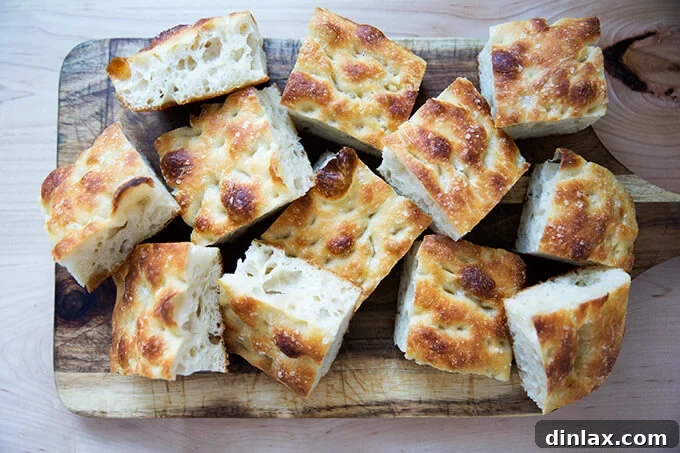
- Cool and Serve: Carefully remove the pan from the oven. Immediately transfer the baked focaccia to a wire cooling rack to prevent the bottom from becoming soggy. Allow it to cool for at least 20 minutes before slicing and serving. This cooling time is essential for the crumb to set properly and achieve its ideal texture. Enjoy your homemade sourdough focaccia!
- Prep Time: 24 hours
- Cook Time: 25 minutes
- Category: Bread
- Method: Oven
- Cuisine: Italian