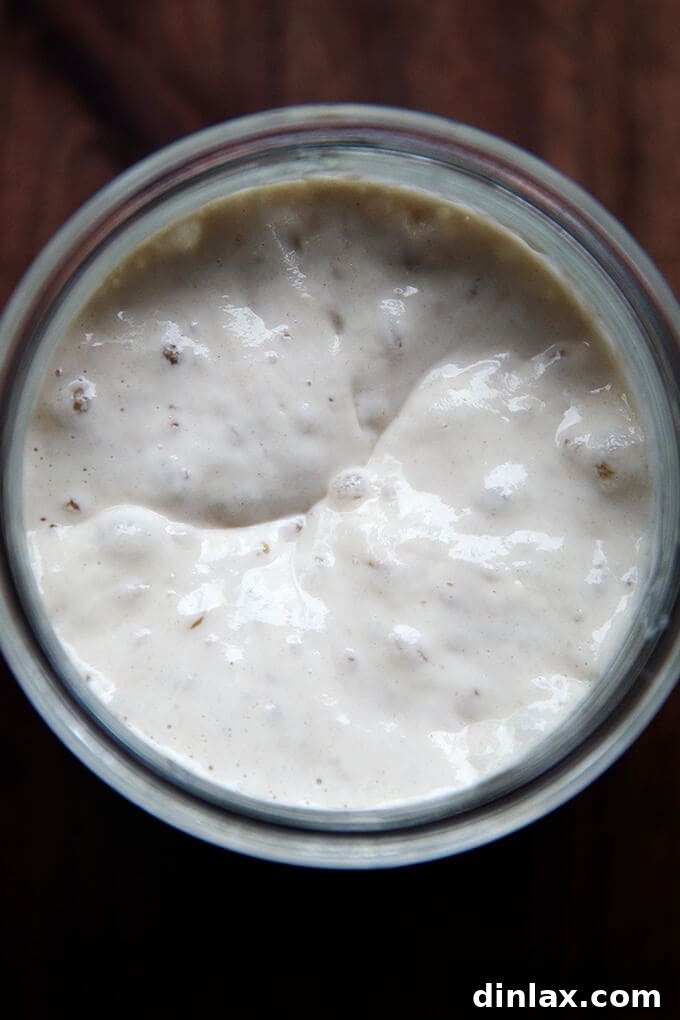
Embarking on the rewarding journey of sourdough baking begins with a vibrant, active sourdough starter. This comprehensive guide will equip you with all the essential knowledge for successfully buying, activating, feeding, maintaining, and storing a healthy sourdough starter. Whether you’re a complete novice or looking to refine your sourdough skills, you’ll find step-by-step instructions and expert tips to ensure your starter thrives, leading to delicious homemade bread.
In this ultimate sourdough starter guide, we will cover:
- Where to Purchase a Sourdough Starter Online
- How to Activate a Sourdough Starter for First Use
- The Art of Feeding Your Sourdough Starter
- Effective Sourdough Starter Maintenance Strategies
- Best Practices for Storing Your Sourdough Starter
- Identifying a Healthy vs. Unhealthy Sourdough Starter
- Creative Recipes for Sourdough Discard
Why Start with a Purchased Sourdough Starter?
While cultivating a sourdough starter from scratch can be a deeply gratifying experience, many passionate bakers, including myself, advocate for purchasing a starter, especially for beginners. The reasons are compelling and often lead to a more successful and less frustrating introduction to sourdough baking:
- Instant Gratification: Building a starter from flour and water can take anywhere from one to two weeks, sometimes longer. A purchased starter allows you to bypass this initial waiting period and dive straight into baking, which is incredibly motivating.
- Cost-Effective: Sourdough starters available online or from local bakeries are typically quite affordable, often costing less than a specialty bag of flour. Some friends or fellow bakers might even share a portion of their mature starter for free.
- Proven Strength and Activity: Commercial or established starters usually come from a lineage of well-maintained cultures, meaning they are often more robust and active than a brand-new, homemade starter. This can lead to more consistent and predictable baking results from the start.
- Trial Run for the Process: Before investing weeks into creating your own starter, a purchased one lets you quickly determine if sourdough baking is a hobby you genuinely enjoy. You can experience the feeding, rising, and baking cycles without the initial time commitment.
For more insights into getting started, you might find my guide on Sourdough Focaccia: A Beginner’s Guide helpful.
Where to Purchase a High-Quality Sourdough Starter
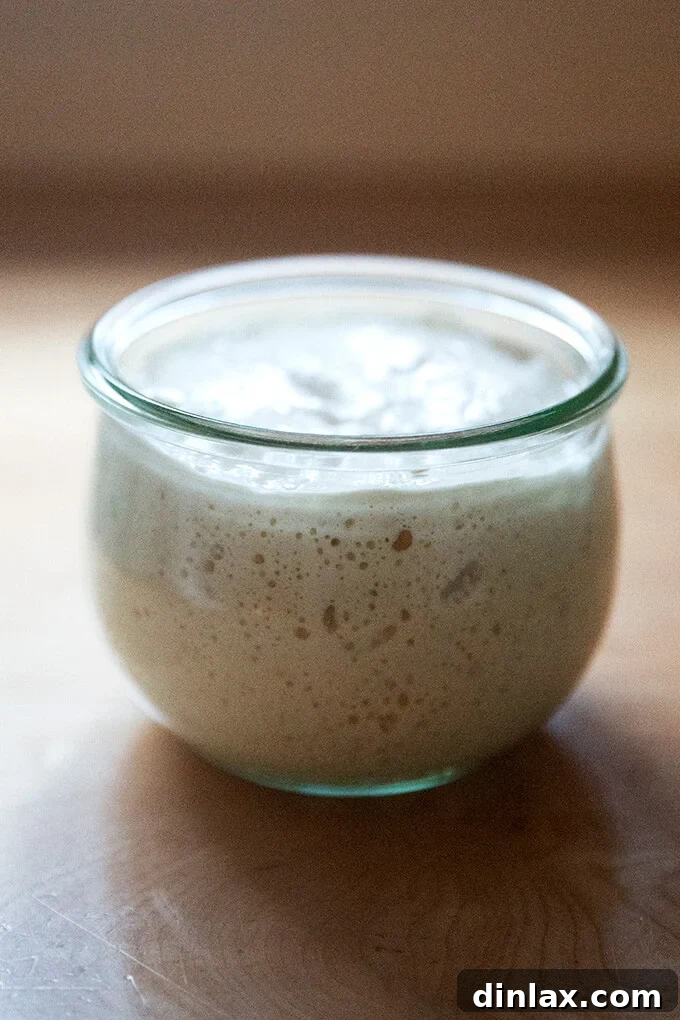
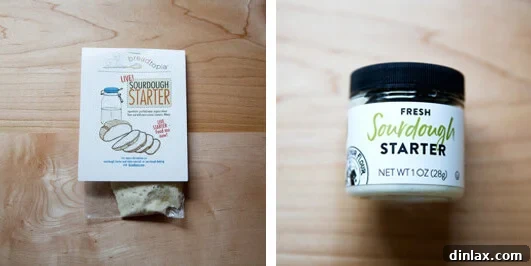
Finding a reliable source for your sourdough starter is key. I have personally experienced excellent results with starters purchased from the following reputable providers:
- Breadtopia (Typically around $9): Known for their comprehensive bread-baking supplies and educational resources. Their starters are generally very active.
- King Arthur Baking Company (Typically around $9): A long-standing and trusted name in the baking community. Their starters are fresh and come with detailed activation instructions.
- Cultures for Health (Typically around $11): Specializes in a wide range of fermentation cultures, offering a robust San Francisco sourdough strain known for its distinct flavor profile.
What to Expect When You Buy a Starter
Most purchased starters arrive dehydrated or in a dormant state, requiring activation. Each vendor provides specific instructions, often in a booklet or online. For instance, Breadtopia provides instructions directly on its website, King Arthur Flour includes a physical booklet and online resources, and Cultures For Health offers helpful video guidance. The basic principle remains the same: you rehydrate and “wake up” the starter by feeding it flour and water. This initial feeding is crucial for bringing it back to life.
How to Activate Your Sourdough Starter for First Use
Activating a dormant sourdough starter is a simple yet essential first step. Whether your starter arrives in a small bag or container, the process involves rehydrating it and providing its first meal. Below is a video guide demonstrating the activation of a King Arthur Flour sourdough starter, a process that can be applied to most purchased starters, including those from Breadtopia.
Step-by-Step Activation Process:
- Prepare Your Vessel: Transfer your purchased starter into a clean, appropriately sized vessel. I highly recommend using deli quart containers for their practicality and clear markings. Ensure it’s large enough to accommodate the starter doubling in volume.
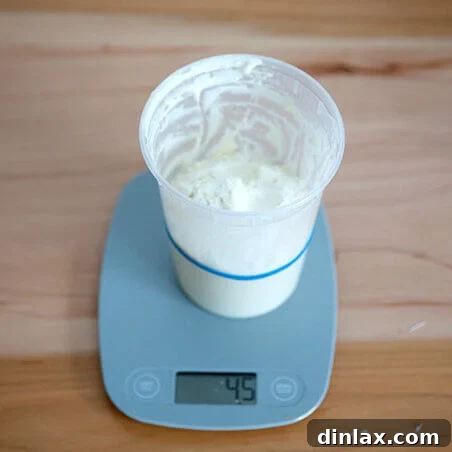
- Initial Feeding: Add 45 grams each of high-quality all-purpose flour (organic is often preferred for its robust microbial content) and room-temperature water. The ideal consistency should resemble a thick pancake batter, easily stirrable but not watery.
- The Waiting Game: Stir the mixture thoroughly until no dry spots of flour remain. Cover your vessel loosely (a breathable lid or cling film with a few holes is ideal) and place it in a warm spot in your kitchen (ideally 70-75°F or 21-24°C). You might observe activity, like small bubbles and a slight rise, within 6 hours, or it could take up to 18-24 hours. Factors like ambient temperature, water temperature, and specific flour type all influence this timeline.
- Checking for Readiness (The Float Test): Once your starter has visibly doubled in volume and shows plenty of bubbles, it’s likely active enough for baking. To confirm, perform a float test: drop a small spoonful of starter into a glass of water. If it floats on the surface, congratulations! Your starter is ready to go. If it sinks, it needs more time or another feeding.
- Troubleshooting – No Float After 24 Hours: If your starter hasn’t floated after the initial 24 hours, don’t worry. Simply add another equal amount of flour and water (e.g., 45g each), stir well, and let it sit again.
- Further Troubleshooting – Still Sluggish: If there’s still minimal activity after an additional 12 hours, discard most of the starter (leaving just a few tablespoons), then feed it again with equal parts fresh flour and water. Patience is key; it might take a couple of feedings to fully revive a dormant starter. Soon enough, you’ll see it bubbling and rising vigorously.
The Art of Feeding and Maintaining Your Sourdough Starter
Consistent feeding is the cornerstone of a healthy and active sourdough starter. This process replenishes the microbes with fresh nutrients, keeping them strong and ready to leaven your bread. Understanding when and how to feed is crucial for successful sourdough baking.
When to Feed Your Starter
If your starter passes the float test and you’re ready to bake, measure out the required amount for your recipe and proceed. However, if you’re not ready to bake, or if you’ve just activated your starter and want to establish a routine, you’ll need to feed it.
The standard feeding ratio for most sourdough recipes is 1:1:1 (starter:flour:water by weight). For example, if you keep 45g of starter, you would feed it 45g of flour and 45g of water. This creates a “100% hydration” starter, which is commonly called for in sourdough recipes.
Essential Ingredients for Feeding: Flour and Water
- Flour: While standard all-purpose flour works, organic all-purpose flour is often recommended as it may contain more natural microbes that benefit the starter. A small amount of rye flour or stone-milled flour can also significantly boost starter activity due to higher nutrient content. King Arthur Flour’s organic all-purpose flour is an excellent choice.
- Water: Chlorine in tap water can be detrimental to your starter’s delicate microbial ecosystem. Always use filtered water, or tap water that has been left uncovered overnight to allow chlorine to evaporate. In areas with high chlorine or chloramine levels, using bottled spring water or distilled water may be necessary if your starter struggles. Ensure the water is at room temperature.
Step-by-Step Regular Feeding Process:
This process demonstrates a typical feeding routine to keep your starter vibrant:
- Measure Flour: Place your starter vessel on a digital scale. Add 45 grams of your chosen flour (e.g., all-purpose or a mix with rye) to the starter.
- Add Water: Add 45 grams of room-temperature water to the vessel.
- Mix Thoroughly: Stir the flour, water, and existing starter together until well combined and smooth, with no dry pockets of flour remaining. Use a rubber band or marker to indicate the initial height of the mixture on the outside of the jar. This will help you track its rise.
- Observe the Rise: Cover your starter loosely with a breathable lid or cling film and allow it to sit at room temperature. Wait until it visibly doubles, or nearly doubles, in volume. This typically takes 4-12 hours depending on ambient temperature and starter activity.
- Final Float Test: Before baking, always perform the float test. If a spoonful floats in water, your starter is at its peak activity and ready to infuse your dough with robust flavor and lift.


With practice, you’ll develop an intuitive understanding of your starter’s behavior – its rise and fall, its smell at different stages, and how it responds to varying feeding schedules. The goal for baking is to use your starter at its peak, when it has doubled in volume and is full of bubbles. If you miss this window and it collapses, simply feed it again and allow it to rise.
Effective Sourdough Starter Maintenance Strategies
Maintaining a sourdough starter doesn’t have to be a daily chore. Strategic feeding and storage can minimize waste and fit seamlessly into your baking routine, whether you bake frequently or occasionally.
Minimizing Sourdough Discard
One common concern with sourdough is the amount of discard generated. However, with a lean maintenance approach, you can significantly reduce waste:
- Small Starter Approach: Instead of keeping a large quantity, maintain a smaller starter (e.g., 50-100 grams). When you need more for a recipe, simply take a small portion and build it up with a larger feeding a day or two before baking.
- Post-Baking Strategy: After using a portion of your starter for baking:
- If a fair amount (e.g., ½ cup or 100g) remains, simply stir it, cover it tightly, and place it directly into the fridge until your next feeding or baking session.
- If only a small amount (a few tablespoons) is left, replenish it with a minimal feeding (e.g., 45g flour and 45g water). Allow it to rise and show activity for a few hours at room temperature, then cover and refrigerate. This ensures it’s well-fed before going dormant.
Long-Term Maintenance and Revival
Life can get busy, and your starter might be neglected. Don’t worry, sourdough starters are incredibly resilient!
- Regular Fridge Maintenance: For infrequent bakers, a feeding every 1-2 weeks is ideal. Discard most of the old starter (leaving 2-3 tablespoons), then feed it with equal parts flour and water (e.g., 45g each). Let it sit at room temperature for a few hours until it shows signs of activity, then return it to the fridge.
- Reviving a Neglected Starter: If you’ve left your starter in the fridge for 3-4 weeks (or even longer), it might look dormant, smell very acidic, or have a layer of “hooch” (dark liquid) on top. This is usually not a sign of spoilage. Simply pour off the hooch, discard most of the starter, and feed it twice over 12-24 hours with fresh flour and water at room temperature. It typically springs back to life.
Best Practices for Storing Your Sourdough Starter
Proper storage is essential for maintaining your starter’s health and reducing the frequency of feedings. The refrigerator is your best friend if you’re not baking daily.
Refrigerator Storage (Dormant State)
If you are not baking regularly (i.e., less than 2-3 times a week), always store your sourdough starter in the refrigerator. The cool temperature significantly slows down microbial activity, extending the time between feedings.
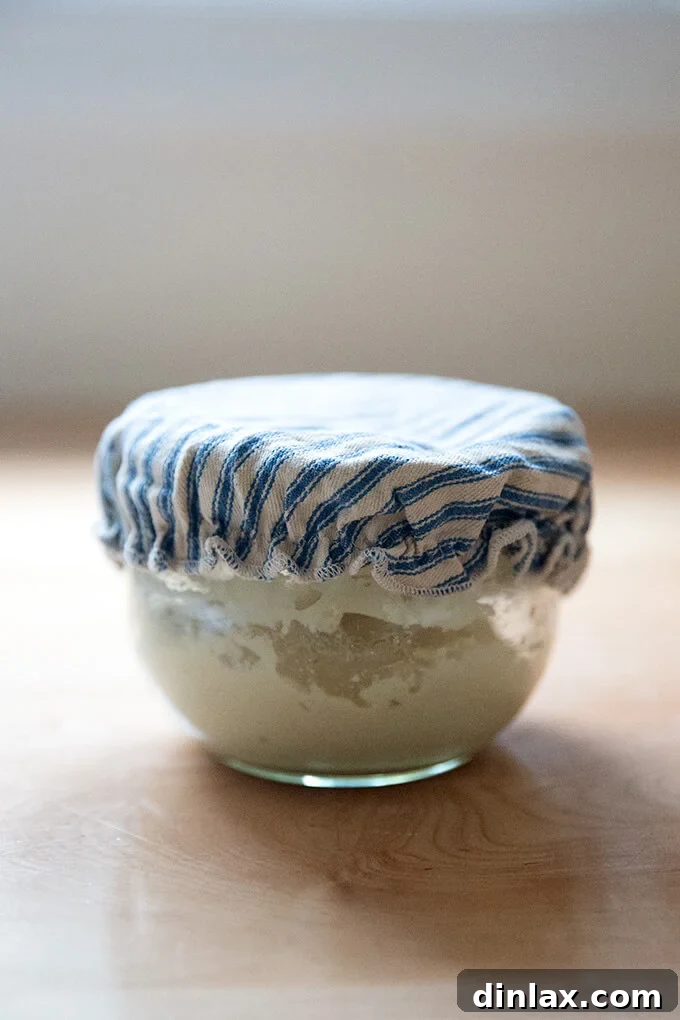
- Ideal Containers: My preferred storage vessel is a deli quart container. When storing in the fridge, use its airtight lid to prevent the starter from drying out.
- Breathable Lids for Room Temperature: When actively feeding your starter at room temperature, a breathable fermentation lid or even just loose cling film with a few holes is better, allowing gas exchange.
While I’ve successfully revived a starter left in the fridge for up to four weeks without feeding, I strongly advise feeding it every 1-2 weeks if possible. This minimizes stress on the culture and ensures it wakes up quickly and vigorously when you’re ready to bake.
When You’re Ready to Bake: Waking Up Your Starter
To prepare your refrigerated starter for baking, take it out 12-24 hours before you plan to mix your dough. Discard most of it (leaving 2-3 tablespoons), feed it with your standard ratio of flour and water (e.g., 45g each), and let it sit at room temperature until it has doubled in volume and passes the float test. This re-activates the yeasts and bacteria, making them potent leavening agents.
Identifying a Healthy vs. Unhealthy Sourdough Starter
Learning to “read” your sourdough starter is a skill developed over time. Its appearance, smell, and activity levels are all indicators of its health.
Signs of a Healthy Sourdough Starter:
- Predictable Rise and Fall: After feeding, a healthy starter will reliably double (or nearly double) in volume within 4 to 12 hours (depending on ambient temperature and flour type). It will then gradually fall back down as it consumes its food.
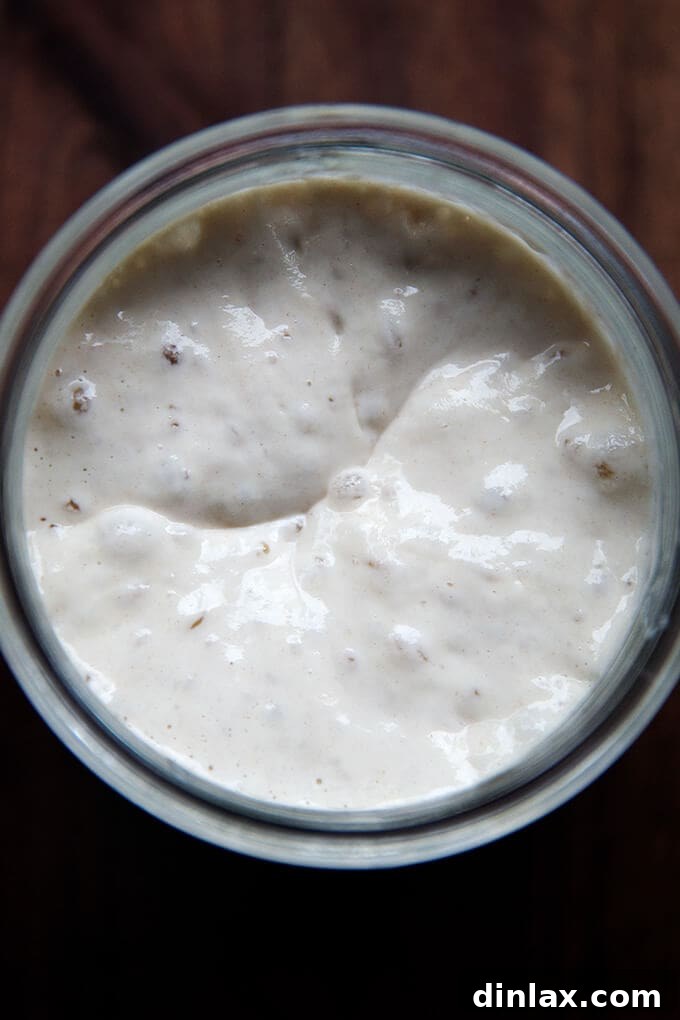
- Bubbly Texture: The surface and sides of the jar will show numerous small and large bubbles, indicating active fermentation.
- Pleasant Aroma: A freshly fed, active starter should smell sweet, yeasty, and slightly tangy, reminiscent of fresh bread dough or even mild yogurt.
- The Float Test: As previously mentioned, a spoonful of active starter floating in water is the ultimate confirmation of its readiness for baking.
- Hooch (Liquid Layer): A thin, light-colored layer of hooch on top of a refrigerated starter is normal. It indicates the starter is hungry. Simply pour it off and feed as usual.
Signs of an Unhealthy (or Struggling) Sourdough Starter:
- No or Slow Rise: If your starter consistently fails to double in volume or takes an unusually long time after feeding, it’s a sign of weakness.
- Offensive Odor: While a neglected starter from the fridge might smell strongly acidic, alcoholic, or even like “dirty socks,” this typically resolves after a feeding. However, a consistently foul or putrid smell even after feeding can indicate problems.
- Dark or Colored Hooch: While light hooch is fine, a dark grey, black, or pink hooch can sometimes indicate undesirable bacteria taking over.
- Mold Growth: This is the clearest sign of a bad starter. Mold can appear in various colors (fuzzy green, black, white spots). Unfortunately, if you see mold, it’s generally recommended to discard the entire starter and begin anew to avoid contamination. While some attempt to salvage by scraping off mold, it’s a risky endeavor.
Strengthening a Sluggish Sourdough Starter:
If your starter is slow to rise or just seems weak, here are aggressive but effective steps to bring it back to full strength:
- Aggressive Discarding: Drastically reduce the amount of old starter you keep. Leave behind only 1-2 tablespoons (around 20-30g) before each feeding. This ensures the fresh flour and water go to a smaller, more concentrated colony, promoting faster activity.
- Consistent Feeding Schedule: Feed your starter more frequently, ideally every 8-12 hours, leaving it at room temperature between feedings. Aim for it to double quickly before feeding again.
- Optimize Water Quality: Always use non-chlorinated water. If your tap water is suspect, switch to bottled spring water or distilled water.
- Boost with Nutritious Flour: Incorporate organic whole wheat flour or rye flour into your feedings. Even a small percentage (e.g., 10-20% rye with all-purpose) can provide a significant nutrient boost, as these flours contain more naturally occurring microbes and enzymes.
- Maintain Warmth: Ensure your starter is in a consistently warm environment (70-78°F or 21-25°C). Use a proofing box, oven with the light on (but off!), or a warm spot near a radiator (not on it!).
- Mark and Observe: Continue to mark the initial height with a rubber band to clearly gauge doubling. This visual feedback will confirm your efforts are working.
Once your starter consistently doubles in volume within 4-6 hours, it’s strong and ready for baking, or for returning to the fridge for maintenance.
Delicious Sourdough Discard Recipes: Don’t Let it Go to Waste!
Even with careful management and a lean starter, you’ll inevitably have sourdough discard from your feedings. Rather than throwing it away, transform it into a variety of delicious treats! Sourdough discard, which is unfed starter, adds a wonderful tangy flavor and unique texture to many recipes without providing leavening (as it’s not active).

Here are some popular and simple recipes that make excellent use of sourdough discard:
- Simple Sourdough Discard Crackers (Pictured above): A favorite for a quick, savory snack.
- Fluffy Sourdough Tortillas: Adds depth of flavor to your wraps and tacos.
- Favorite Sourdough Discard Pancakes: Light, airy, and tangy, perfect for breakfast.
- Hearty Irish Soda Bread: The acidity of discard reacts with baking soda to create a quick rise.
- Sourdough Discard Waffles: For a crispy, flavorful breakfast treat.
- Quick Breads & Muffins: Incorporate discard into banana bread, zucchini bread, or blueberry muffins for a subtle tang and moist crumb.
- Fritters or Savory Pancakes: Mix discard with vegetables and herbs for a delicious side dish.
Using your discard creatively not only prevents waste but also allows you to enjoy the unique flavor of sourdough in a broader range of dishes. Explore and experiment with recipes; you’ll be surprised by the versatility of this ingredient!
Conclusion: Embrace Your Sourdough Journey
Mastering your sourdough starter is an ongoing journey of observation and adjustment, but it’s one that rewards you with incredible flavor and the satisfaction of baking from scratch. By consistently applying these principles of activation, feeding, maintenance, and storage, you’ll cultivate a robust and reliable starter that will serve as the heart of all your sourdough creations. Don’t be afraid to experiment, pay attention to your starter’s cues, and most importantly, enjoy the process!
We hope this guide provides clarity and confidence as you delve deeper into the world of sourdough. Happy baking!