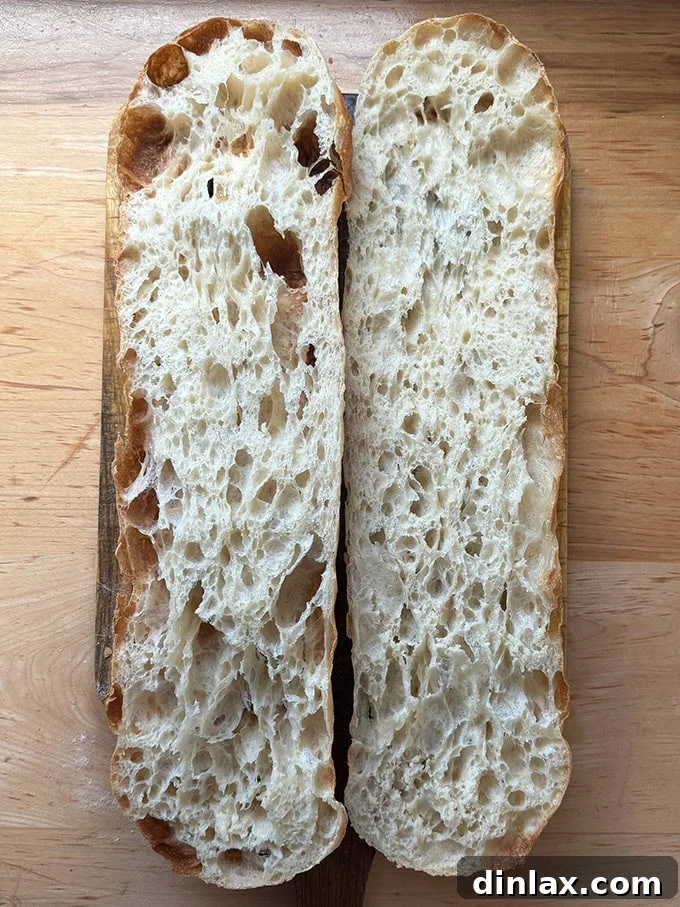
Unlock the secret to effortless artisan bread with our incredible Giant Overnight Sandwich Roll recipe. Imagine a loaf that perfectly marries the crisp, thin crust of a baguette with the airy, open crumb of ciabatta, all without the complex techniques typically required. This isn’t just another bread recipe; it’s a culinary revelation that simplifies baking, delivering a stunning, versatile roll perfect for any occasion. Made with just four simple ingredients and a no-knead method, this recipe promises a deeply flavorful bread that’s robust enough for hearty sandwiches yet delicate enough to enjoy on its own.
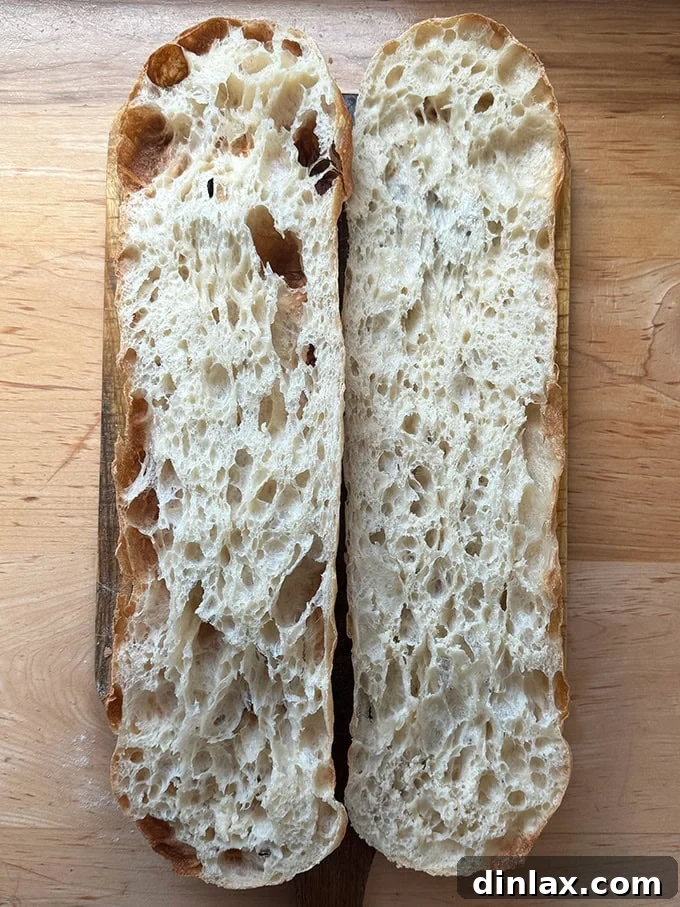
This remarkable Giant Overnight Sandwich Roll takes its cue from the innovative philosophy of Jim Lahey’s No-Knead Bread, a method celebrated for democratizing homemade bread. While honoring its no-fuss origin, our recipe diverges with distinct shaping and baking techniques tailored for convenience and maximum versatility. Forget the need for a preheated Dutch oven; this loaf gracefully bakes on an ordinary, unpreheated sheet pan. Instead of forming a traditional round, the dough is gently stretched into a long, elegant oval, designed specifically to cradle generous fillings, making it the ultimate foundation for unforgettable sandwiches.
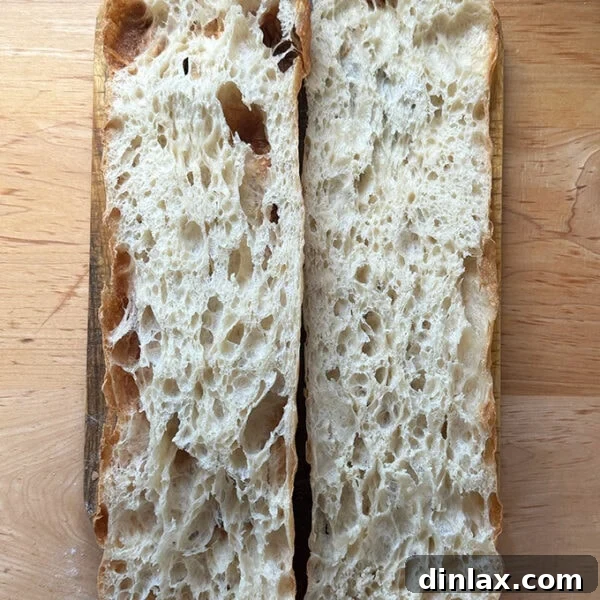
The magic of this dough lies in its minimalist composition: just four essential ingredients – high-quality flour, pure water, a touch of salt, and active instant yeast. This humble quartet comes together with surprising ease, requiring absolutely no vigorous kneading. The true genius, however, is unlocked through a single, gentle set of stretches and folds. This seemingly simple action is crucial; it quietly works to strengthen the gluten structure, transforming a sticky mixture into a cohesive, elastic dough. This improved gluten network is what allows the dough to effectively trap the carbon dioxide bubbles created during its long, slow fermentation, culminating in the exceptionally light, airy, and irregular crumb that defines an artisan loaf.
The resulting giant roll is a testament to the beauty of simplicity. Its character is truly unique, reminiscent of both the rustic charm of a European baguette and the chewiness of a ciabatta, yet it eliminates all the usual complexities. Every bite offers a delightful contrast: a wonderfully crisp, thin crust that yields to an interior with a wild, open, and amorphous crumb – a hallmark of expertly crafted bread. These exquisite qualities make it an unparalleled choice for an extensive array of sandwiches, from classic deli-style heroes to sophisticated gourmet creations. But its versatility doesn’t end there; it shines equally as a superb dinner bread, perfect for soaking up the rich flavors of a hearty soup or complementing any saucy main course. It’s also an excellent base for garlic bread, bruschetta, or simply enjoyed with good olive oil and a sprinkle of sea salt. Its impressive size makes it ideal for entertaining, ensuring there’s enough to go around for family and friends alike.
Crafting Your Giant Overnight Sandwich Roll: A Step-by-Step Culinary Journey
Embark on your bread-making adventure by first gathering your essential ingredients. This minimalist recipe calls for nothing more than unbleached bread flour, kosher salt, instant yeast, and cold tap water. The quality of these few components will significantly impact the final taste and texture of your homemade loaf, so choose them wisely.
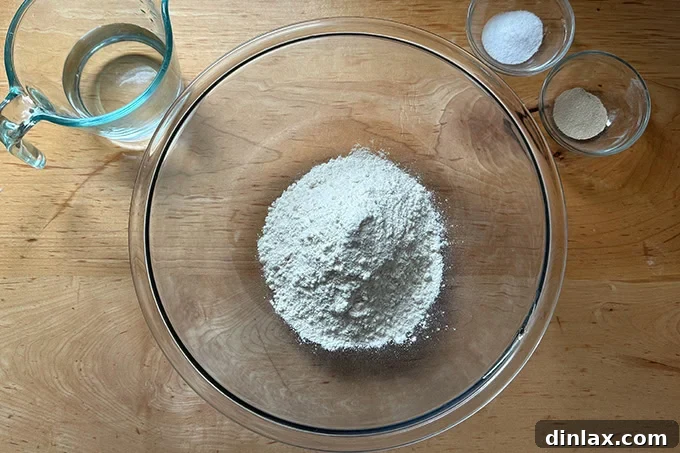
Begin by combining the dry ingredients. In a generously sized bowl, whisk together the measured flour, salt, and instant yeast. Ensuring these dry components are thoroughly blended before adding any liquid is a small but crucial step that promotes even flavor distribution and consistent yeast activation throughout the dough.
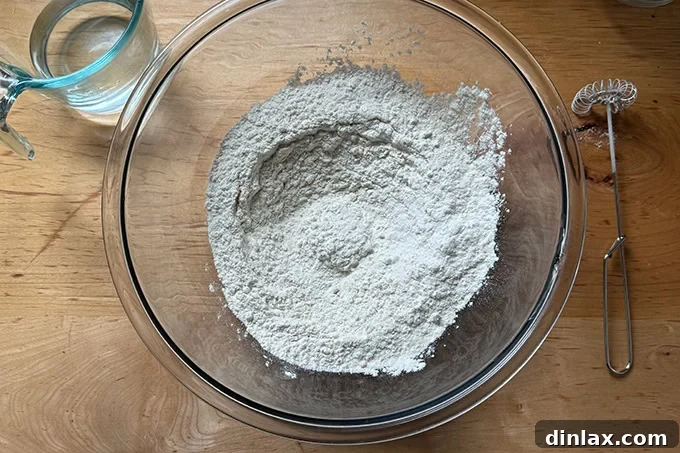
Next, carefully pour in the cold water. Using cold water, rather than warm, helps to slow down the initial yeast activity, which is perfectly suited for an overnight fermentation process. This extended, cooler fermentation contributes to a more complex flavor profile and improved crumb structure.
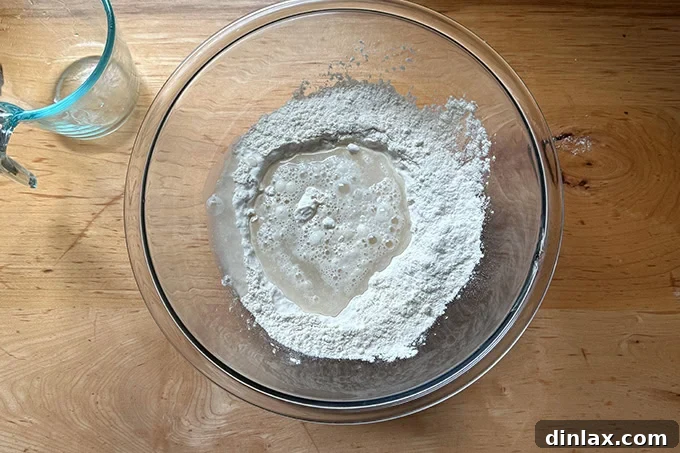
Using a sturdy rubber spatula or a strong spoon, mix the ingredients until all the liquid is absorbed and a shaggy, sticky dough ball forms. Resist the urge to overmix; the goal is just to bring everything together. The stickiness is completely normal at this stage and indicates proper hydration, which is essential for an airy crumb.
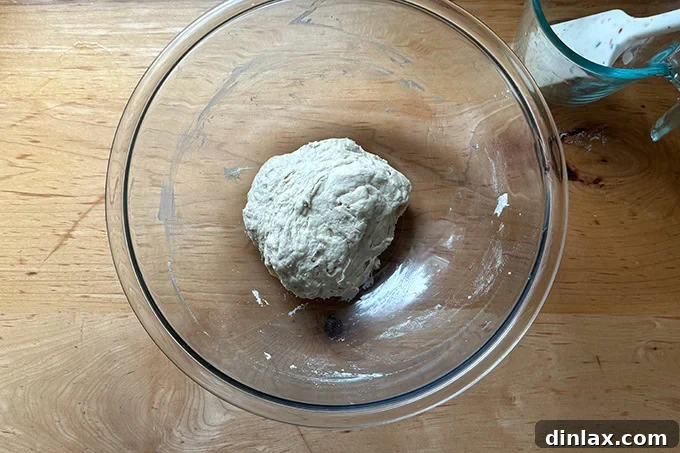
Cover the bowl securely with a lid or plastic wrap and allow the dough to rest undisturbed at room temperature for approximately 30 minutes. This initial rest, known as autolyse, allows the flour to fully hydrate and the gluten to begin developing naturally, even before the stretch and fold step. It’s a passive way to kickstart the dough’s structure.
After the initial rest, uncover the bowl to reveal a slightly smoother, more pliable dough. It still won’t look perfectly uniform, but you’ll notice a subtle change in its texture and cohesion.
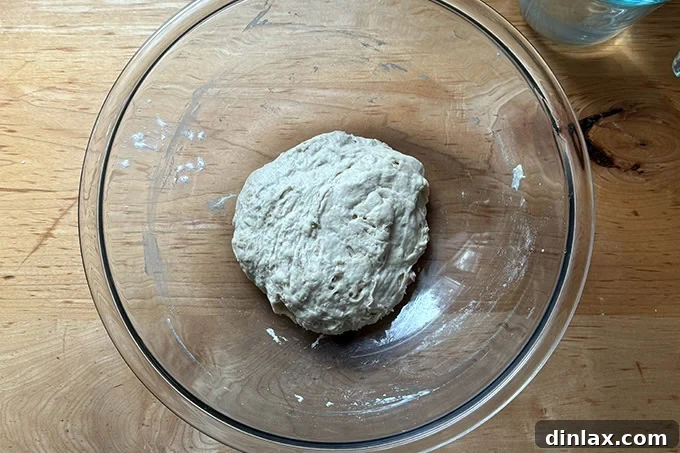
Now comes the crucial stretch and fold. Lightly wet one hand in a small bowl of water – this prevents the sticky dough from adhering to your fingers. Gently grab an edge of the dough, pull it upwards, stretching it gently, and then fold it back towards the center of the bowl. Rotate the bowl slightly and repeat this action 8 to 10 times, moving around the entire circumference of the dough. You will feel the dough transforming from shaggy and loose to smoother and more elastic with each fold, indicating the gluten is developing beautifully.
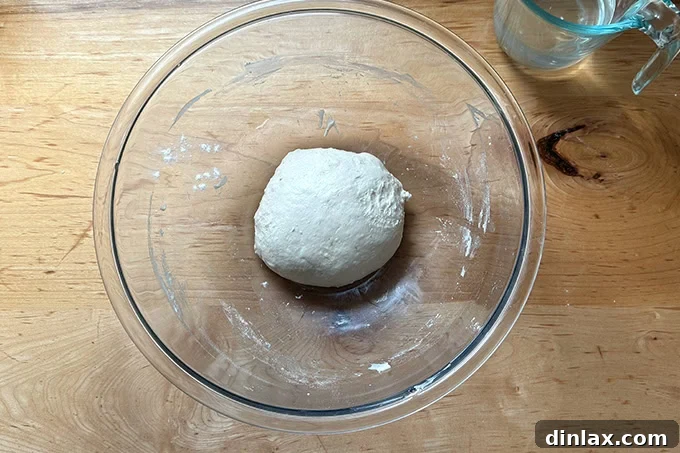
Re-cover the bowl tightly and allow the dough to undergo its long, slow fermentation at room temperature for 12 to 18 hours. This overnight rise is where the magic truly happens, developing deep flavors and the characteristic airy structure. The dough is ready when it has roughly doubled in volume and its surface is adorned with numerous tiny bubbles, indicating active yeast and robust gas production.
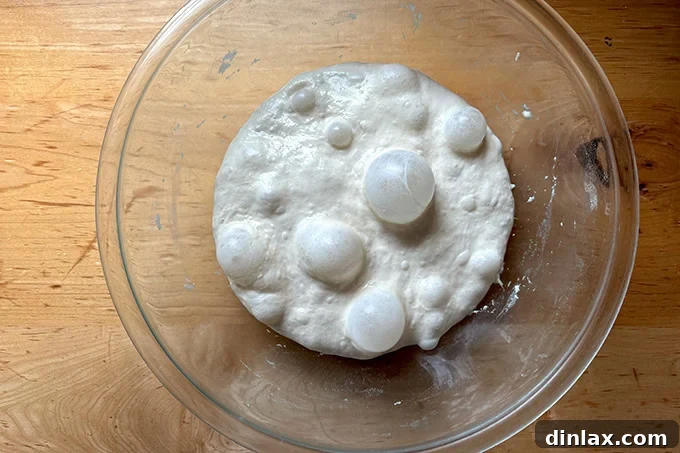
Once fermented, gently turn the bubbly dough out onto a lightly floured work surface. Handle it carefully to preserve as much of the trapped gas as possible, as these bubbles contribute to the final texture of the loaf.
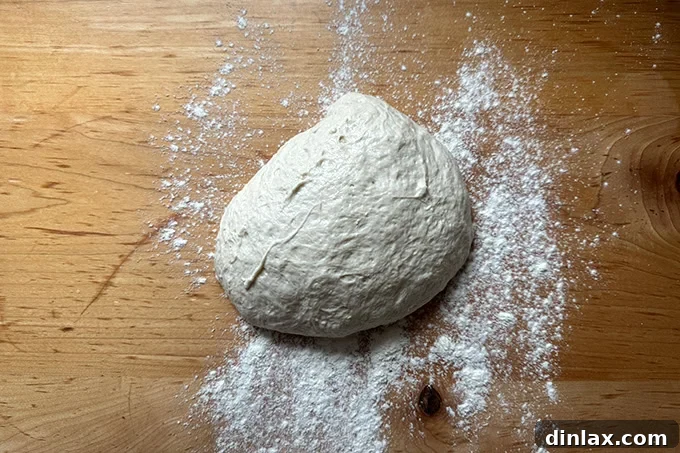
Using floured hands, gently form the dough into a loose ball. Avoid pressing out too much air. The goal is to create a cohesive shape that will hold its form during the subsequent proofing stage. Dust the surface lightly with a little more flour.
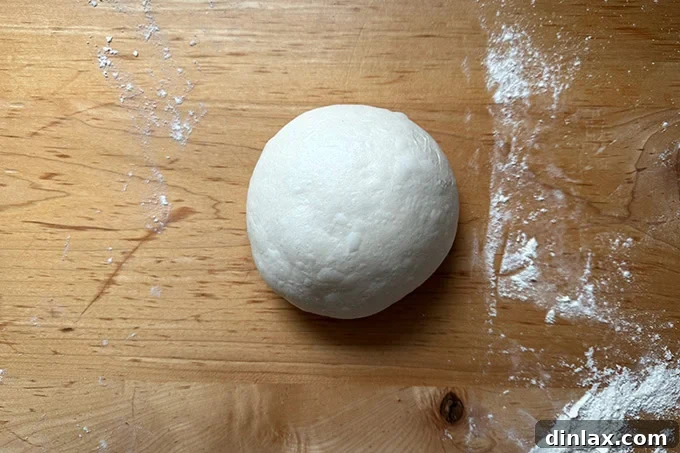
Transfer the balled dough to a lightly floured vessel for its secondary proof. A lidded DoughMate works perfectly, but a 9×13-inch baking pan or similar container covered with plastic wrap or another sheet pan to create an airtight seal will also suffice. This containment helps the dough retain moisture and rise evenly.
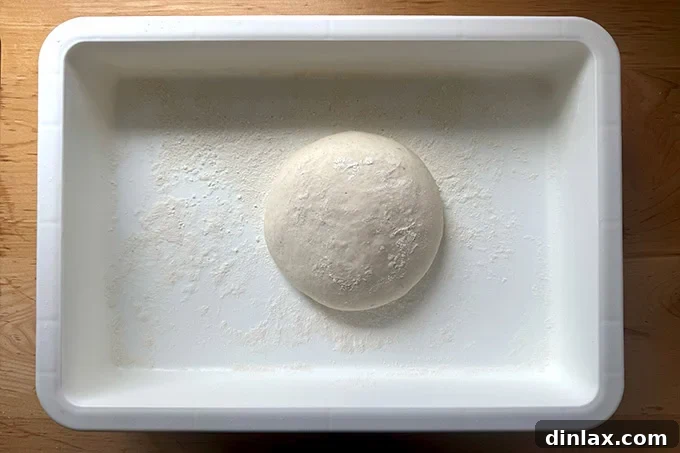
Let the dough rest in its vessel for approximately one hour. After this short rest, and with lightly floured hands, gently stretch the dough into a long oval shape that will fit your baking sheet. This initial shaping prepares it for its final form.
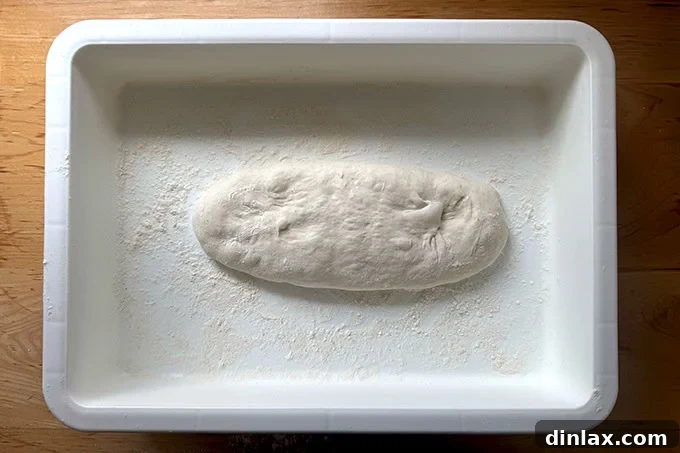
Cover the vessel once more and allow the dough to proof for another two hours at room temperature. During this crucial final proof, the dough will puff up considerably and become very light to the touch. This lightness is your key indicator that it’s fully proofed and ready for the oven, having developed its maximum airiness and optimal structure for baking.
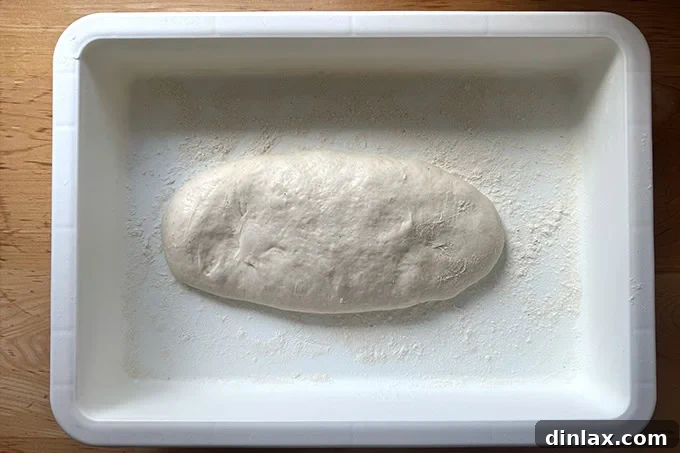
With lightly floured hands, carefully but swiftly, lift the incredibly delicate, fully proofed dough from its vessel. Gently stretch it lengthwise as you transfer it to a parchment-lined sheet pan. Once on the pan, use your fingertips to gently dimple the surface. This creates an inviting texture and helps prevent large, uneven air pockets. Immediately transfer the pan to a preheated oven to capture all that beautiful aeration.
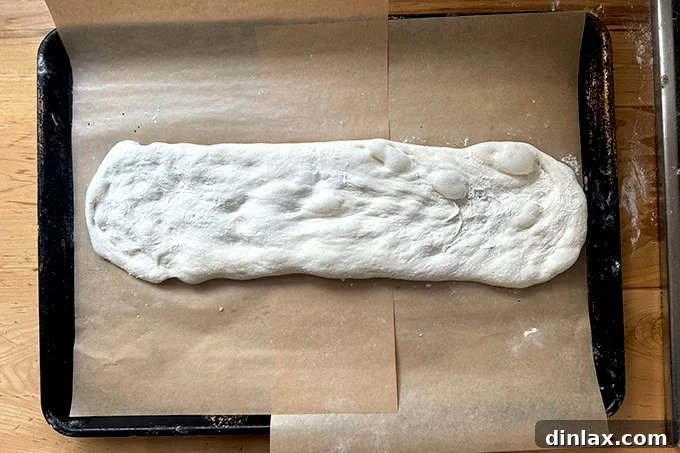
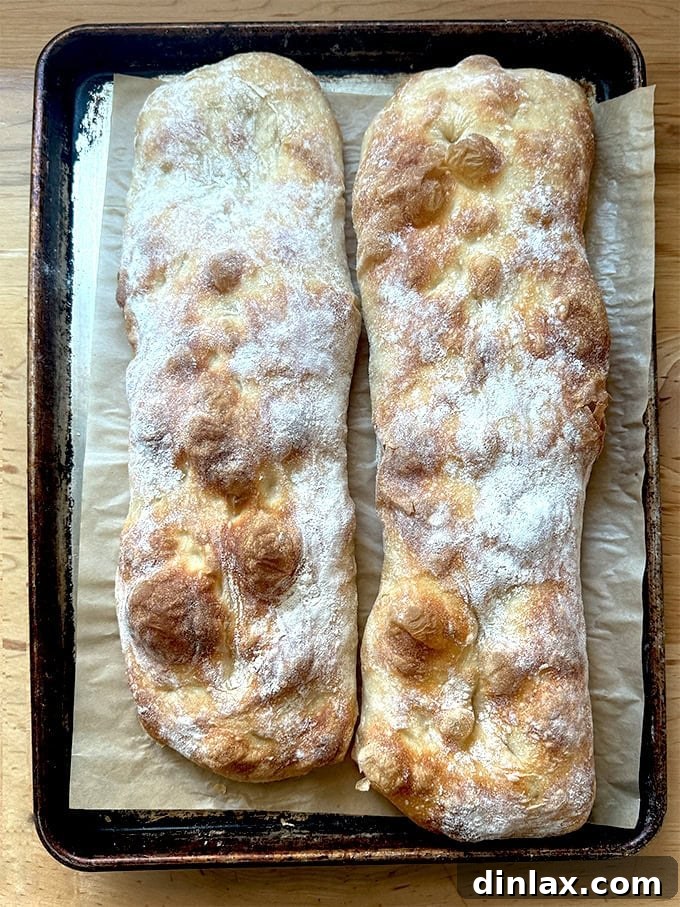
Bake the roll for approximately 20 minutes, or until it achieves a gorgeous golden-brown hue and a perfectly crisp crust. The baking process transforms the airy dough into a structurally sound, flavorful loaf, with the heat setting the delicate crumb and solidifying the crust.
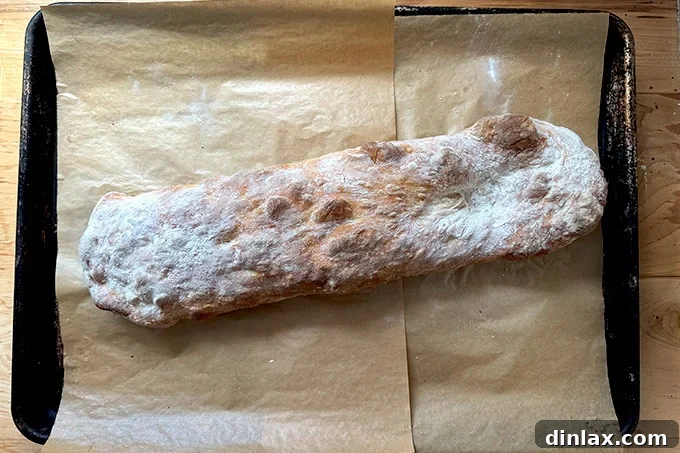
Once baked, remove the fragrant roll from the oven and transfer it to a cooling rack. Allow it to cool for at least 20 minutes, ideally longer, before cutting. This cooling period is vital; it allows the internal structure of the bread to set and the moisture to redistribute, resulting in the best possible texture and flavor.
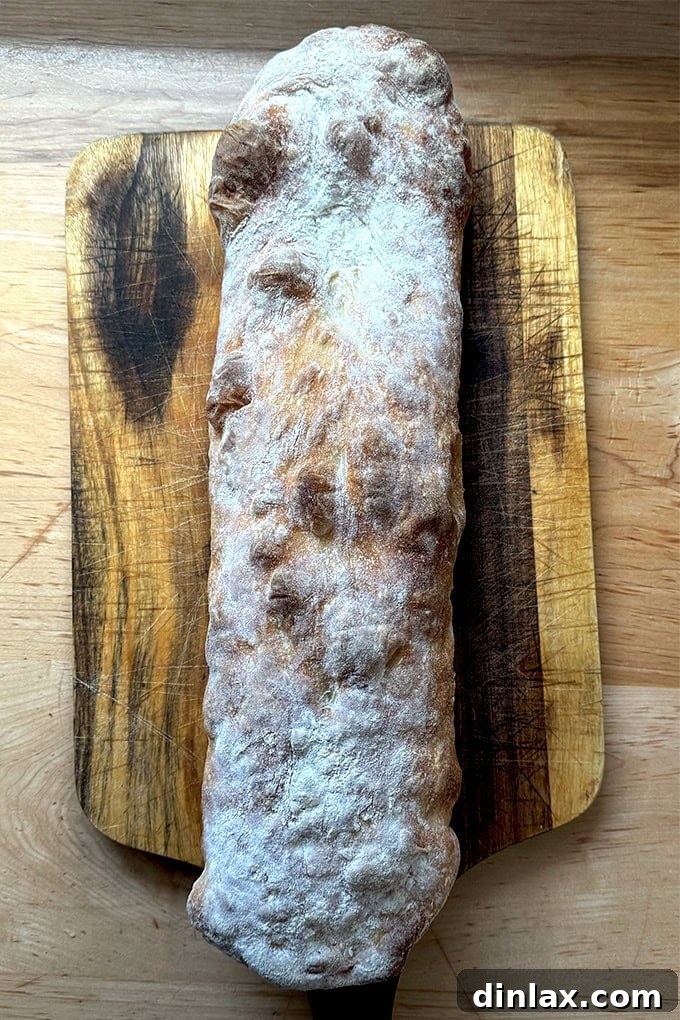
After sufficient cooling, you can proceed to halve the giant roll lengthwise, preparing it for its grand transformation into a magnificent sandwich.
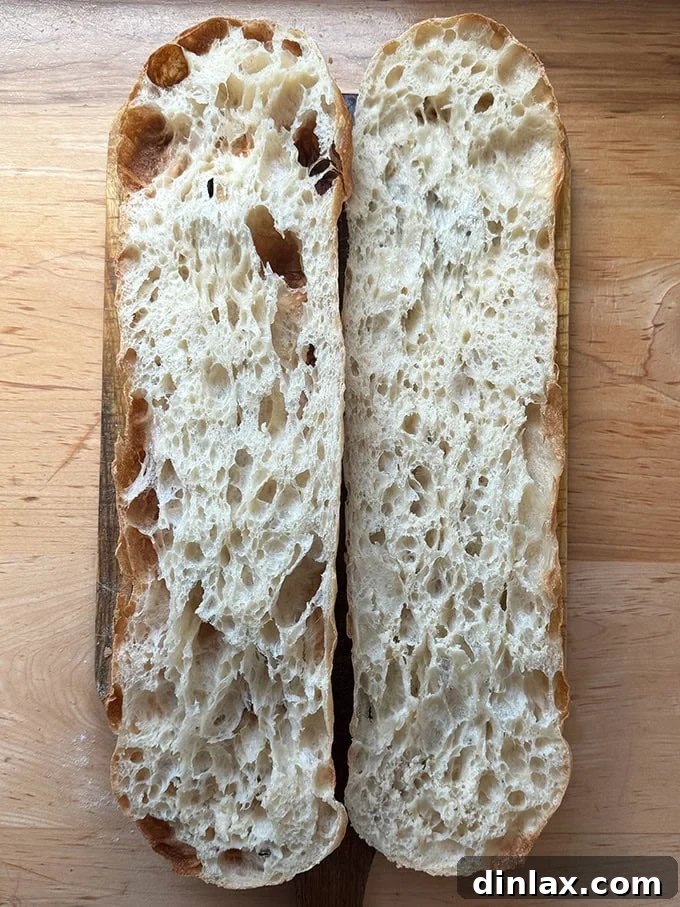
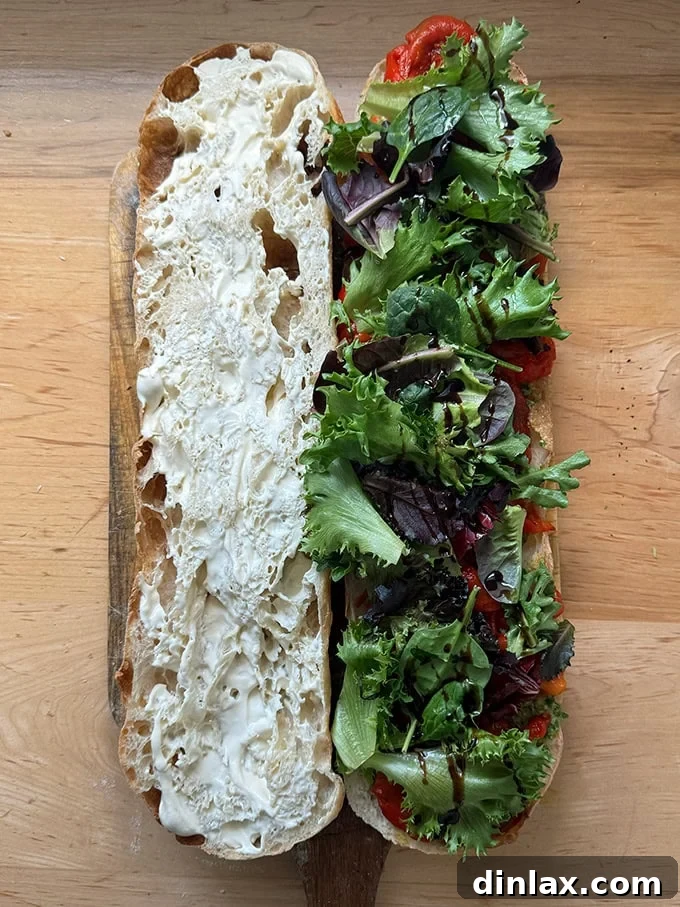
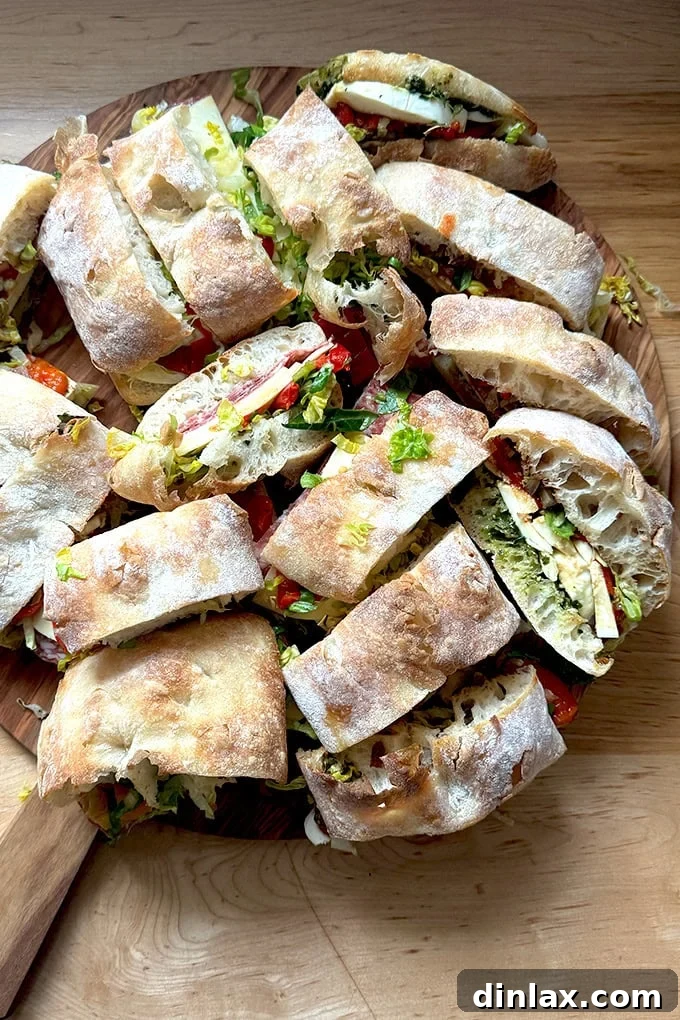
Now, unleash your culinary creativity and fill your homemade giant roll with your favorite ingredients. This particular example features succulent roasted red peppers generously paired with creamy whipped ricotta, a delightful vegetarian option that highlights the bread’s versatility.
For those craving a more robust flavor profile, an Italian combo is always a crowd-pleaser. This version is packed with classic cured meats, cheese, and fresh vegetables, proving the roll’s capacity to hold up to even the heartiest of fillings, making it perfect for picnics or game day spreads.
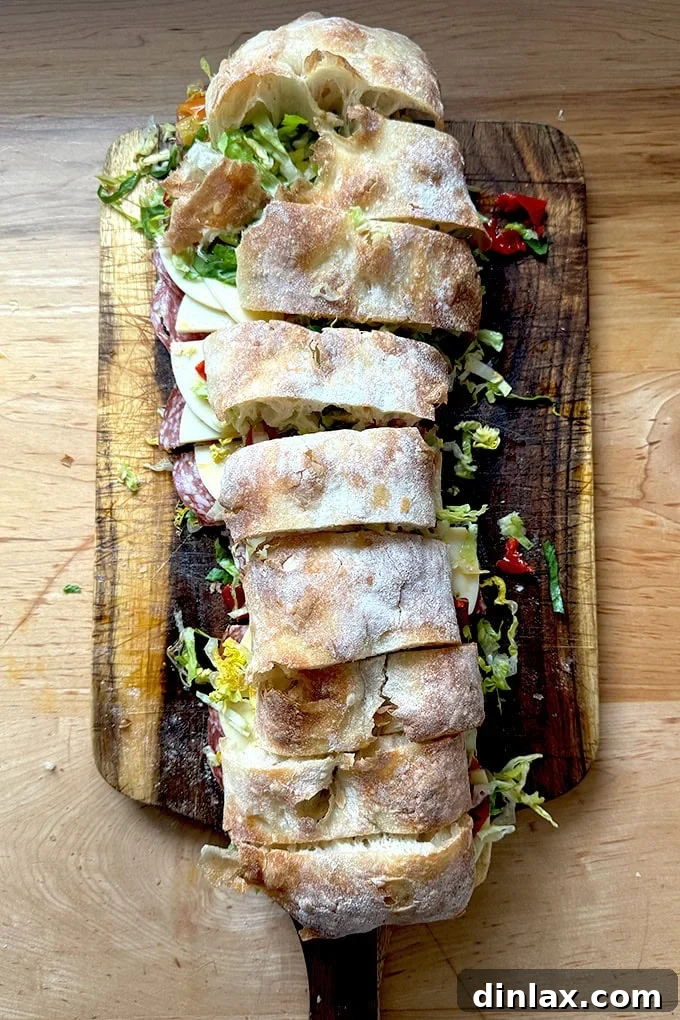
Whether you opt for a vibrant vegetarian delight or a savory meat-filled masterpiece, both sandwich variations are incredibly delicious and an absolute hit for any gathering or party. The substantial size and irresistible texture of the roll ensure every guest leaves satisfied.
A fantastic bonus: this recipe doubles beautifully! If you’re feeding a larger crowd or simply want to stock up on this sensational bread, feel free to prepare two loaves simultaneously. Just ensure you have an extra-large sheet pan or two standard sheet pans to accommodate both.
Print
Giant Overnight Sandwich Roll
5 Stars 4 Stars 3 Stars 2 Stars 1 Star
5 from 3 reviews
Author: Alexandra Stafford
Total Time: 18 hours 20 minutes
Yield: 1 giant loaf 1x
Diet: Vegan
Description
Discover the ultimate no-knead bread that’s as easy to make as it is delicious! This Giant Overnight Sandwich Roll delivers a phenomenal crisp, thin crust and an incredibly light, airy, and irregular crumb, perfect for sandwiches, dinner bread, or entertaining. Inspired by classic artisan loaves, this 4-ingredient recipe requires minimal effort for maximum reward, allowing for a long, slow fermentation that develops complex flavors. It’s a cross between a baguette and ciabatta, offering the best of both worlds in a single, impressive loaf that will elevate any meal or gathering.
Notes and Tips for Success:
- Flour Choice Matters: For exceptional results, we highly recommend using unbleached bread flour, which has a higher protein content than all-purpose flour, crucial for developing a strong gluten structure and that coveted airy crumb. We’ve had fantastic success with Petra 0102 flour, which is a favorite for both bread and pizza, and King Arthur bread flour, both yielding excellent texture and flavor.
- Accuracy is Key (Especially with Hydration): As with all baking, precision is important. For the most consistent and best results, always use a digital kitchen scale to measure your ingredients, especially the flour and water. This eliminates inconsistencies that can arise from volumetric measurements.
- Proofing Vessel Options: A DoughMate is a fantastic tool for proofing your shaped sandwich roll at room temperature, providing an ideal environment. If you don’t have one, a standard 9×13-inch (or larger) baking container will work perfectly. Just make sure to cover it tightly with plastic wrap or another sheet pan to create an airtight lid. This prevents the dough from drying out and forming a skin, which can inhibit its rise.
- Baking Pan Size: An extra-large sheet pan is ideal for baking this magnificent roll, especially if you plan on making a double batch and baking two loaves simultaneously. If you’re using a standard half-sheet pan, simply stretch the dough diagonally across the pan just before baking to maximize its length and achieve the desired shape.
- Cooling is Crucial: Patience during the cooling process is rewarded! Allowing the bread to cool completely, or for at least 30 minutes, ensures that the internal moisture redistributes evenly, preventing a gummy texture and allowing the crust to maintain its crispness.
Ingredients
- 2 cups (256 g) unbleached bread flour, plus additional for dusting work surface and dough
- 1 teaspoon (6 g) kosher salt (fine sea salt can also be used)
- 1/4 teaspoon (1 g) instant yeast (ensure it’s fresh for best results)
- 7/8 cups (205 g) cold water, straight from the tap is perfectly fine
Instructions
- Make the Dough (The No-Knead Method): In a spacious mixing bowl, thoroughly whisk together the unbleached bread flour, kosher salt, and instant yeast. This step ensures that all dry ingredients are evenly distributed, promoting consistent yeast activity. Next, pour in the cold water. Using a sturdy rubber spatula or a strong wooden spoon, mix until the flour has completely absorbed the liquid and the ingredients coalesce into a shaggy, sticky dough ball. Do not worry about achieving a smooth consistency at this stage; rustic is perfect. Cover the bowl tightly with its lid or plastic wrap and allow the dough to rest at room temperature for 30 minutes. This short rest allows the flour to hydrate fully and the gluten to begin developing without any manual effort.
- Perform the Stretch and Fold: Prepare a small bowl of water for wetting your hand. Gently uncover the dough. Dip one hand into the water, ensuring it’s wet enough to prevent the sticky dough from clinging to it. Carefully grab an edge of the dough from the bowl, stretch it upwards gently, extending it as much as it will allow without tearing, then fold it over itself towards the center of the bowl. Rotate the bowl a quarter turn and repeat this stretching and folding process. Continue this action 8 to 10 times, moving your wet hand around the perimeter of the dough with each set. As you perform these stretches and folds, you will notice the dough gradually transforming from a sticky, shaggy mass into a smoother, more cohesive, and elastic ball. This single set of folds significantly strengthens the gluten structure, which is vital for trapping air and creating the signature airy crumb.
- Execute the Overnight Rise (Bulk Fermentation): Once the stretch and fold is complete, re-cover the bowl securely with a lid or plastic wrap. Place the bowl at a cool room temperature (ideally between 68-72°F / 20-22°C) and let the dough rise undisturbed for an extended period, typically 12 to 18 hours. This long, slow overnight fermentation is crucial for developing deep, complex flavors and the characteristic open, airy structure of the bread. The dough is fully risen when it has visibly doubled in volume and its surface is adorned with numerous small to medium-sized bubbles, indicating vigorous yeast activity and gas production.
- Shape into a Ball (Pre-Shaping): Lightly flour your work surface, ensuring you have enough to prevent sticking without over-flouring. Gently turn the risen, bubbly dough out onto the prepared surface. Handle the dough with care to avoid deflating it too much, as the trapped gases are precious for the final texture. Using floured hands, gently form the dough into a loose ball. Avoid harsh kneading or pressing out air. The goal is simply to create a round, relatively smooth shape. Lightly dust the balled dough with a thin layer of flour.
- Initiate the Second Proof (Final Proofing): Prepare your proofing vessel. If you are using a DoughMate, dust it lightly with flour. If you don’t have one, a 9×13-inch (or larger) baking pan or similar container, dusted with flour, will work well. Using gently floured hands, carefully transfer the dough ball to your prepared vessel. Let it rest, uncovered, for approximately 1 hour. After this initial rest, and still with lightly floured hands, gently stretch the dough into a long, even log shape that will comfortably fit within your chosen baking pan. Cover the vessel tightly with a lid or plastic wrap once more, and allow the dough to undergo its final proof for another 2 hours at room temperature. The dough is perfectly proofed when it appears significantly puffed up and feels incredibly light and airy to the touch. This lightness indicates it has developed maximum internal aeration.
- Bake to Golden Perfection: Before the final proof concludes, preheat your oven to 425ºF (220ºC). Line an extra-large sheet pan (recommended for optimal space) or a standard half sheet pan with parchment paper. This prevents sticking and aids in easy transfer. Lightly dust the proofed dough log with a whisper of flour, and gently spread it across its surface with your hand. With lightly floured hands, swiftly and carefully lift the delicate dough log from its vessel. Transfer it to the prepared sheet pan, gently stretching it lengthwise as you do. If using an extra-large pan, aim for a length of about 18 to 19 inches. If using a standard half sheet pan, stretch it diagonally across the pan to maximize its length. Once on the pan, use lightly floured fingertips to gently dimple the surface of the log, creating a rustic texture. Immediately transfer the sheet pan to the preheated oven and bake for approximately 20 minutes, or until the roll is beautifully golden brown and sounds hollow when tapped on the bottom.
- Cool Before Serving: Once baked, carefully remove the sheet pan from the oven. Transfer the hot, fragrant loaf directly onto a wire cooling rack, still on its parchment paper or directly onto the rack. Allow the giant sandwich roll to cool completely, or for at least 30 minutes, before attempting to cut into it and serve. This critical cooling period allows the internal starches to set, the crumb to firm up, and the moisture to redistribute evenly, ensuring a superior texture and preventing a gummy interior. Enjoy your magnificent homemade creation!
- Prep Time: 18 hours
- Cook Time: 20 minutes
- Category: Bread
- Method: Oven
- Cuisine: American